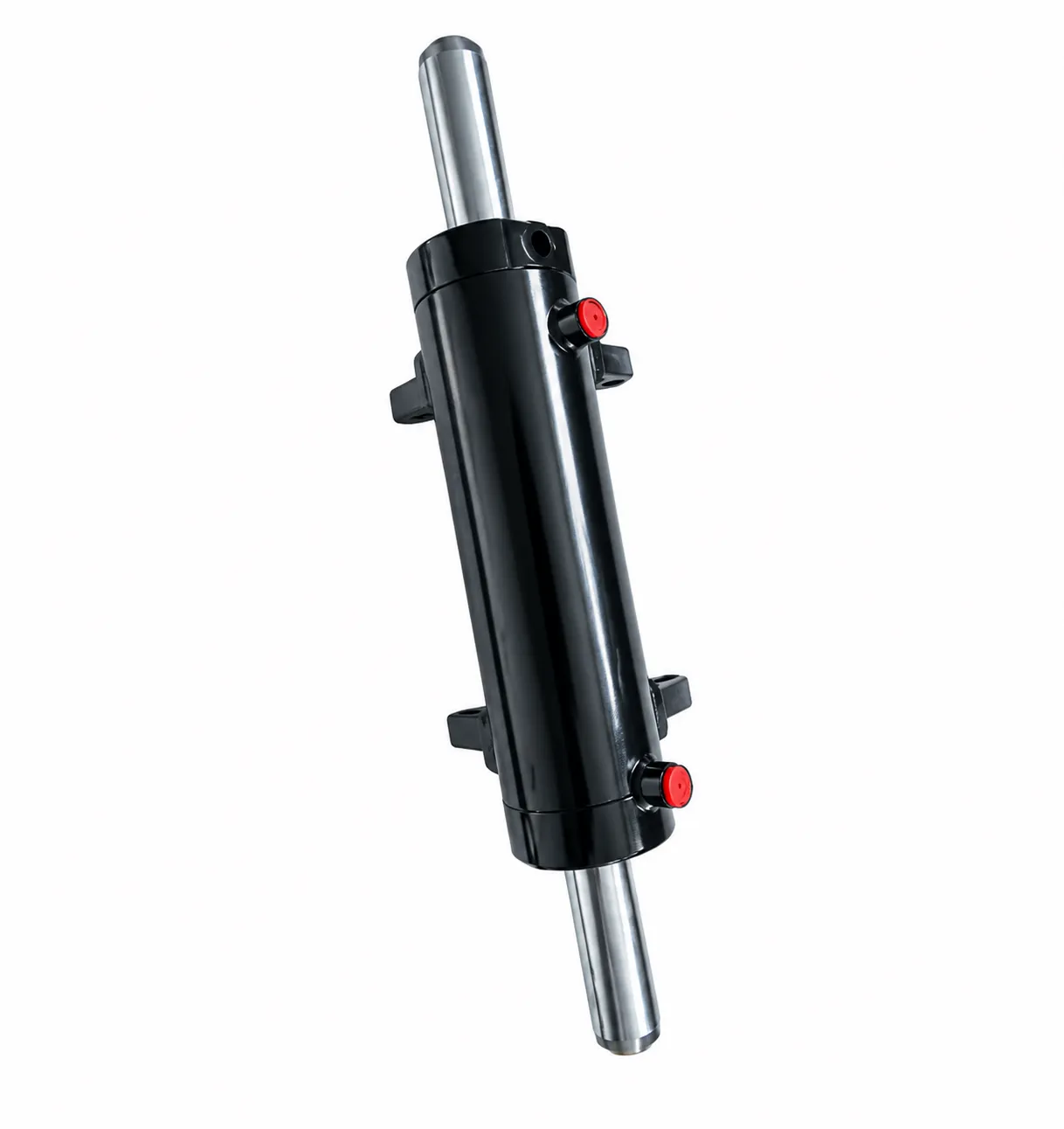
When engineers in Birmingham’s fabrication shops or Sheffield’s steel-adjacent supply chains sit down to specify a steering cylinder, the operating temperature window rarely tops the initial checklist — yet it consistently ranks among the top three root causes of premature hydraulic failure in the field. Thermal behaviour governs seal integrity, fluid viscosity, metal expansion rates, and surface finish longevity. Get it wrong and a cylinder that looks perfectly sized on paper can fail within months of commissioning. Get it right and the same component delivers a decade of reliable service across the most demanding drive-line environments the UK industrial sector has to offer.
This guide walks through every thermal variable a specifying engineer should account for — from ambient cold-start conditions on a Scottish winter morning to sustained heat generated inside a forklift mast channel during continuous warehouse shifts. The physics, the material science, and the practical procurement decisions are all covered in the detail they deserve.
Why Thermal Operating Range Is the Specifier’s First Duty
At -20 °C — a realistic figure for plant sitting overnight on a Scottish Highland construction site — standard mineral hydraulic oil viscosity can climb above 1000 cSt. A steering cylinder specified with standard seals and tolerances will generate excessive back-pressure, scoring the bore surface and fatiguing seals within weeks. The fix is matched seal compounds and pre-heat protocols, neither of which can be retrofitted without a rebuild.
At the opposite extreme, a hydraulic steering cylinder mounted in a confined engine bay or mast channel can see sustained fluid temperatures above 95 °C during peak loading. Beyond that threshold, standard nitrile seals begin to harden and crack. Oxidation of the hydraulic oil accelerates, depositing varnish on the spool valve and eroding clearance tolerances. Engineers specifying units for UK foundry vehicles or continuous-duty industrial trucks in the Midlands must account for cumulative thermal exposure, not just peak spikes.
Perhaps the most overlooked failure mode is thermal cycling — repeated expansion and contraction across wide temperature swings. A cylinder that warms from +5 °C at start-up to +80 °C under load and then cools overnight undergoes differential expansion between the chrome-plated piston rod, the steel barrel, and the end cap threads. Over thousands of cycles, micro-movement at threaded joints causes fretting corrosion and fatigue cracking in welds. High-amplitude thermal cycling is particularly punishing for steering cylinders on agricultural machinery operating across Yorkshire’s seasons.
Seal material is the single variable most directly tied to temperature range. Nitrile (NBR) remains the cost-effective general-purpose choice for -30 °C to +100 °C service. Viton (FKM) extends the upper limit to +200 °C and improves chemical resistance for synthetic fluid applications — a common requirement in UK pharmaceutical logistics vehicles where fire-resistant hydraulic fluid is mandated. Polyurethane seals offer outstanding abrasion resistance but narrow the temperature ceiling to around +80 °C. PTFE-based backup rings extend the range further but require tighter bore finishes to function correctly.
Working Principle: How a Steering Cylinder Converts Pressure Into Direction
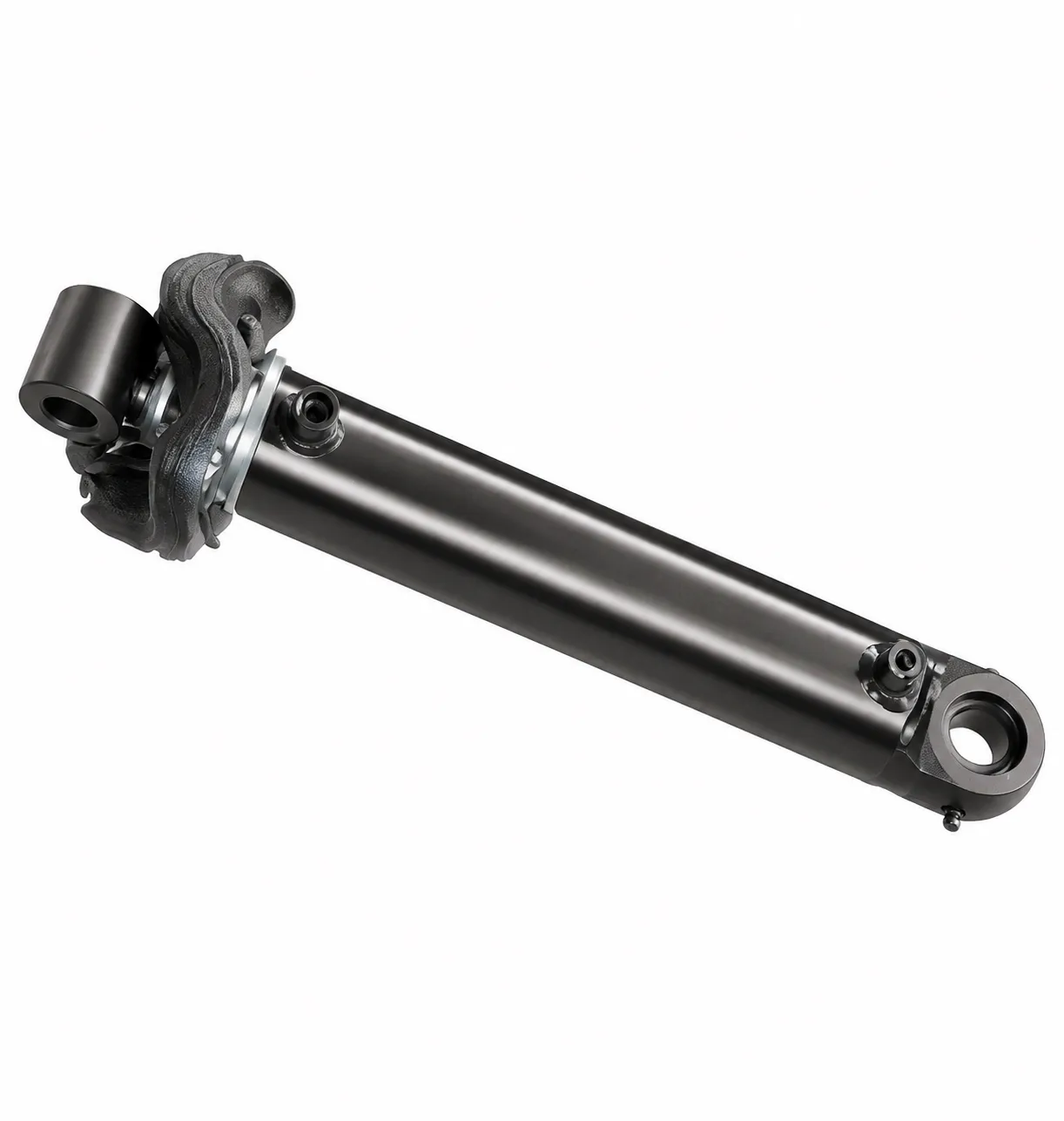 A steering cylinder is a double-acting linear actuator. High-pressure hydraulic fluid enters one port, drives the piston and rod assembly along the barrel’s internal bore, and exhausts from the opposing port back to the tank. The rod end connects via clevis or trunnion mounts to the steering linkage — tie rods, drag links, or axle knuckles depending on the vehicle architecture. The net effect is linear motion converted into angular rotation of the steered axle, giving the operator precise directional control.
Temperature directly modulates this core hydraulic circuit. As fluid warms, viscosity drops, internal leakage across the piston seal increases, and the volume of fluid required to maintain a given force output rises. A well-engineered steering cylinder compensates through tighter seal specification, closer bore-to-rod dimensional tolerances, and surface treatments that remain dimensionally stable across the expected thermal envelope. Conversely, cold conditions thicken the fluid, raising the pressure drop across ports and fittings — sometimes past the relief valve setting — before the system reaches operating temperature.
Core Materials and Their Thermal Performance Profiles
Material selection for a steering cylinder is never a single decision — it is a stack of inter-dependent choices that collectively define the thermal operating window. Barrel steel, rod surface treatment, seal compound, end-cap alloy, and port thread specification must all be evaluated as a system rather than in isolation. Engineers at manufacturing facilities from Coventry to Teesside have learned this the hard way: substituting a cheaper seal compound while retaining the rest of the design often narrows the operational temperature range by 30 °C in either direction.
Cold-drawn seamless steel tube with a minimum yield strength of 355 N/mm² provides the dimensional stability essential across thermal cycling. The material maintains its cylindricity within 0.01 mm across the range -40 °C to +150 °C — far beyond the fluid’s functional limits. Internal honing to Ra 0.2–0.4 µm ensures seal contact is consistent whether the bore is at cold-start contraction or peak expansion. Operators in Sheffield’s specialty steel processing facilities often specify this grade as an exact match to their existing maintenance inventory.
Medium-carbon steel with hard chrome plating to 20–25 µm delivers the combination of surface hardness (Hv 850+) and corrosion resistance demanded by outdoor UK applications. Chrome’s coefficient of thermal expansion (11 × 10⁻⁶ /°C) closely matches the underlying steel, preventing delamination during thermal cycling. For marine-adjacent applications — coastal logistics hubs, port handling equipment — electroless nickel or ceramic composite coatings are the preferred upgrade, maintaining adhesion at both cryogenic and elevated temperatures.
NBR (Nitrile Butadiene Rubber) covers the broadest standard application range (-30 °C to +100 °C) and remains the default for general mineral-oil hydraulic systems. FKM (Viton) seals extend performance to +200 °C and resist phosphate-ester and polyol-ester fire-resistant fluids used in UK underground mining equipment. PTFE guide rings and backup rings bridge the gap by adding dimensional stability that remains consistent from -60 °C to +250 °C — effectively making the outer limit of the design the fluid itself rather than the seal compound.
End caps carry port threads, cushion bushings, and the gland seal stack. Ductile iron (EN-GJS-500) serves standard pressure applications, offering superior thermal conductivity that helps dissipate heat spikes. For high-cycle or elevated-pressure duty, 42CrMo4 alloy steel forgings are the preferred specification — a common choice among Birmingham-based hydraulic system integrators who standardise on quenched-and-tempered forgings for all pressure-containing components. The material’s impact toughness remains above 35 J at -20 °C, covering British winter start-up conditions.
Steering Cylinder Technical & Performance Specification Table
The table below presents the standard performance envelope for Ever Power’s steering cylinder range, along with the optional extended-temperature configurations available on request. All data reflects in-house test bench verification under ISO 10100 and ISO 6020/1 conditions.
| Parameter | Standard Spec | Extended-Temp Option | Notes |
|---|---|---|---|
| Operating Temperature Range | -30 °C to +100 °C | -50 °C to +150 °C | FKM/PTFE seal upgrade required |
| Bore Diameter Range | 40 mm – 250 mm | Custom up to 400 mm | Honed to Ra 0.2–0.4 µm |
| Rod Diameter Range | 25 mm – 180 mm | Custom to project | Chrome 20–25 µm standard |
| Working Pressure | Up to 250 bar | Up to 350 bar | 42CrMo4 end cap upgrade |
| Proof Pressure Test | 1.5 × working pressure | 1.5 × working pressure | Per ISO 10100 |
| Stroke Length | 50 mm – 2000 mm | Custom to OEM spec | Multi-stage optional |
| Seal Material Options | NBR (standard) | FKM / PTFE / PU | Specify fluid type when ordering |
| Surface Finish — Rod | Ra 0.2 µm hard chrome | Electroless Ni / ceramic | Coastal / chemical environments |
| Fluid Compatibility | ISO VG 46/68 mineral oil | HF-D, HF-E, biodegradable | Seal selection dependent |
| Barrel Material | ST52-3 / E355 steel | 316L stainless option | For corrosive environments |
| Cushioning | End-of-stroke shock absorption | Adjustable needle valve | Reduces thermal shock at reversal |
| Mounting Options | Clevis, trunnion, flange | Custom bracket / foot mount | OEM interface drawings accepted |
| Paint / Coating Standard | Grey epoxy primer + topcoat | Custom RAL / high-temp coating | Salt spray 500 h minimum |
Industrial Application Scenarios Across the UK
Application: Construction Plant — Articulated Dump Trucks, West Midlands Quarries
Quarrying operations around Dudley and the wider West Midlands see plant working in sub-zero January mornings and exposed to sustained summer heat from diesel powertrains during long August shifts. Articulated dump truck steering cylinders must cold-start reliably at -15 °C, achieve full flow within two minutes, and sustain output at fluid temperatures up to 90 °C for eight-hour continuous cycles. The twin-cylinder articulation system on a 30-tonne ADT generates substantial heat at the pivot point during tight turning manoeuvres on loose stone. Specifiers in this sector routinely request FKM seals and nickel-plated piston rods as standard, not as premium options. Cushioning valves are critical: without adjustable end-stroke deceleration, the thermal shock from rapid direction reversals at -10 °C can crack conventional end caps within a single winter season.
Application: Agricultural Machinery — Row Crop Tractors and Combine Harvesters, Yorkshire Dales
Yorkshire’s farming calendar creates one of the most demanding thermal cycling profiles in UK agriculture. Tractors sit overnight at temperatures as low as -10 °C during spring drilling season, then run continuously for 14-hour days during July and August harvesting at fluid temperatures approaching 85 °C. The steering cylinder on a 150 kW row-crop tractor handles both extreme ends of this range multiple times per week during spring and autumn transition periods. Seal longevity under these cycling conditions depends not only on compound selection but on bore roughness: a honing surface finish below Ra 0.3 µm reduces seal wear rate during cold-start by ensuring lubricant film is retained between strokes. Biodegradable ester-based hydraulic fluids — increasingly specified on UK farms for environmental compliance — require FKM or PTFE seal specification, as they are incompatible with standard NBR compounds.
Application: Forklift Trucks — Cold-Store Logistics and Warehouse Operations, East Midlands Distribution Hubs
Forklifts operating within cold-store facilities in the East Midlands logistics corridor — around Northampton and Leicester’s distribution parks — present a uniquely challenging thermal specification problem. The hydraulic system must function reliably at -25 °C inside the cold store, yet the same truck may be driven outside onto a loading bay on a warm summer afternoon. This repeated transition between -25 °C and +25 °C ambient, compounded by heat generated from sustained mast cycling, creates a thermal range of 80+ °C that the steering cylinder experiences multiple times per shift. The tilt cylinder in a reach truck’s mast assembly is equally exposed to these conditions. Standard forklifts typically leave the factory with NBR seals rated to -20 °C, which means cold-store operators working below that threshold are regularly running cylinders outside their design limit — often without realising it until the first seal failure.
Application: Steel Processing — Slab Transfer Vehicles, Sheffield and Rotherham
Sheffield’s remaining special steel producers and Rotherham’s electric arc furnace operators run heavy transfer vehicles that carry molten metal in ladles or move heated slabs between process stages. The radiated heat from a 200-tonne ladle at 1600 °C can raise ambient temperature around the vehicle hydraulics to over 80 °C without any contribution from the hydraulic circuit itself. Steering cylinders on these vehicles must be specified with full-temperature FKM or PTFE seal packages, high-temperature hydraulic fluid, and often with protective heat shielding around the cylinder body. The performance requirement goes beyond temperature range: the cylinder must maintain zero-drift steering under sustained high-temperature conditions because any positional creep at these loads represents a catastrophic safety risk on the mill floor.
Core Technical Advantages of a Correctly Specified Steering Cylinder
A correctly specified steering cylinder maintains its dimensional tolerances across a 100 °C+ operating span, delivering the same positional accuracy and response time at -25 °C cold-start as at 95 °C sustained operating temperature. This directly translates into steering predictability — a safety-critical attribute for all powered industrial vehicles operating under PUWER regulations in the UK.
Matching seal compound to actual operating conditions — rather than specifying a generic standard seal — can extend the service interval for seal replacement from 2,000 hours to over 6,000 hours in typical UK industrial applications. For a fleet operator running 20 forklifts in a Leicester distribution centre, that difference in seal life translates directly into measurable maintenance cost reduction and reduced unplanned downtime across the fleet.
Internal leakage past the piston seal is the mechanism behind unwanted steering drift — where a vehicle’s wheels slowly turn off-centre without operator input. Tight bore-to-seal clearance, maintained by premium honing and precise seal sizing, keeps internal leakage below 0.5 cm³/min even at maximum operating temperature. For heavy articulated vehicles on public roads in UK, positional stability is a statutory safety requirement, not a performance preference.
Welded tie-rod and barrel designs, combined with stress-relieved end cap forgings, distribute thermal expansion stresses rather than concentrating them at joint interfaces. Finite element analysis of the cylinder assembly at both temperature extremes confirms that peak stresses remain below 60% of the material yield limit in properly designed steering cylinders — a margin that enables reliable service life of 20,000 thermal cycles before any fatigue-related inspection is warranted.
UK environmental legislation increasingly mandates biodegradable hydraulic fluid in applications near watercourses and in forestry operations. Many biodegradable fluids — polyalkylene glycol (PAG) and synthetic esters — are incompatible with standard NBR seals, causing swelling and softening that wipes out the temperature-related seal benefits. Ever Power’s extended-spec steering cylinders can be supplied with fluid-specific seal packages confirmed against UK-standard biodegradable fluid datasheets, future-proofing the installation against fluid specification changes.
Ever Power: Precision Manufacturing and Full Customisation for Temperature-Critical Steering Cylinders
Ever Power operates a purpose-built hydraulic cylinder manufacturing facility equipped with CNC deep-hole boring and honing centres capable of achieving bore tolerances of H8 class and surface finishes to Ra 0.2 µm as standard production output. Every steering cylinder that leaves the factory undergoes a full-pressure test protocol under ISO 10100, with proof pressure applied at 1.5 times working pressure for 30 seconds, followed by a leakage test at 100% working pressure for five minutes. Test records are retained as part of the traceability package supplied with each order.
The customisation capability at Ever Power covers the full engineering stack: bore and rod diameter, stroke length, seal compound, fluid compatibility, surface treatment, mounting interface, port specification, and cushioning configuration. UK OEM customers can submit their own engineering drawings or interface dimensions, and Ever Power’s application engineering team will confirm the thermal specification, validate the seal selection against the stated fluid type, and provide a full dimensional compliance report with the delivered batch. Lead times for custom steering cylinder orders are typically 15–25 working days ex-factory, with sea freight to UK ports or air courier options available depending on urgency.
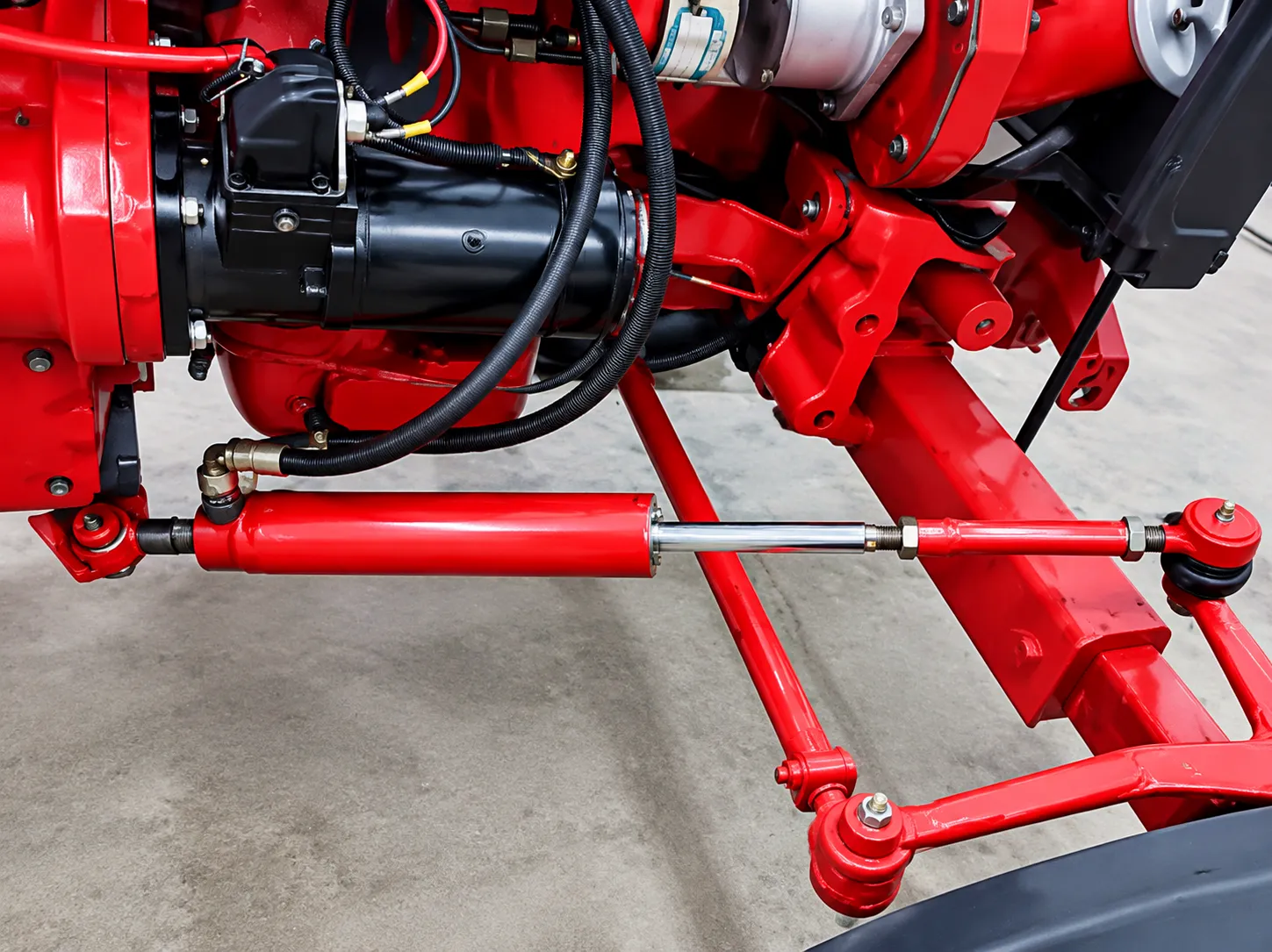
Ever Power sources barrel steel, rod material, and seal compounds from audited Tier-1 suppliers with full material traceability. Batch-level material certificates (EN 10204 3.1) are available on request — a common requirement for UK customers supplying into aerospace-adjacent or defence supply chains where material provenance is contractually mandated.
Customer Success: Solving Cold-Store Forklift Steering Failures for a Northampton 3PL Operator
A Northampton-based third-party logistics company operating a major cold-store distribution hub for a UK food retailer came to Ever Power in mid-2024 with a persistent steering cylinder failure problem. Their fleet of 22 stand-on reach trucks experienced steering cylinder seal failures at an average rate of 3.5 per month. The original equipment steering cylinders were fitted with NBR seals rated to -20 °C, but the cold-store ambient temperature ran at -28 °C — consistently 8 °C below the seal manufacturer’s lower limit. Each failure required a truck to be removed from service for between 6 and 14 hours while the cylinder was replaced, creating significant throughput impacts during peak shift periods.
After reviewing the installation drawings, fluid specification, and thermal logging data from the facility management system, Ever Power’s application engineering team recommended a complete retrofit programme. The solution centred on a purpose-designed steering cylinder with FKM inner seals and PTFE guide rings, a bore surface finish of Ra 0.2 µm to reduce dynamic seal friction at cold start, and a modified port configuration that reduced trapped volume at the end of stroke — minimising the pressure spike generated when cold, viscous fluid was forced through the cushioning orifice.
Ever Power supplied a pilot batch of six cylinders within 18 working days, including full dimensional inspection records and a pressure test certificate for each unit. After a six-month trial period covering the facility’s peak winter season, the operator recorded zero steering cylinder seal failures across all six pilot-fitted trucks. The programme was subsequently rolled out to the full fleet of 22 vehicles. Total maintenance cost reduction in the first 12 months was calculated at over £18,000 — primarily from reduced technician hours and avoided rental of replacement vehicles during downtime periods.
“We’d been chasing this problem for two winters. Ever Power’s team actually looked at our temperature data before recommending a seal grade — that’s the kind of technical engagement we’d been asking our previous supplier for years. The FKM-seal cylinders went in last November and we’ve had zero issues through the coldest period we’ve seen in three years.”
“The dimensional inspection report that came with the delivery batch was exactly what our QA process needed. Every bore measurement, every surface roughness reading — traceable and documented. For a safety-critical component like a steering cylinder on a 2.5-tonne reach truck, that level of traceability is non-negotiable. Ever Power’s paperwork was cleaner than some of our European OEM suppliers.”
“We switched our agricultural tractor steering cylinder supply to Ever Power 18 months ago. The PTFE guide rings and FKM seal option was something we’d been asking UK distributors about for years without getting a straight answer on lead time or pricing. Ever Power quoted within 48 hours, confirmed the fluid compatibility with our ester-based hydraulic oil, and delivered in three weeks. That’s exactly the commercial responsiveness we need when we’re sourcing for the harvest season.”
Frequently Asked Questions
Send your application temperature range, fluid type, bore and stroke requirements, and mounting interface details to the Ever Power engineering team. We’ll confirm the correct specification and provide a competitive price within 48 hours.
📧 Get a Quote — [email protected]