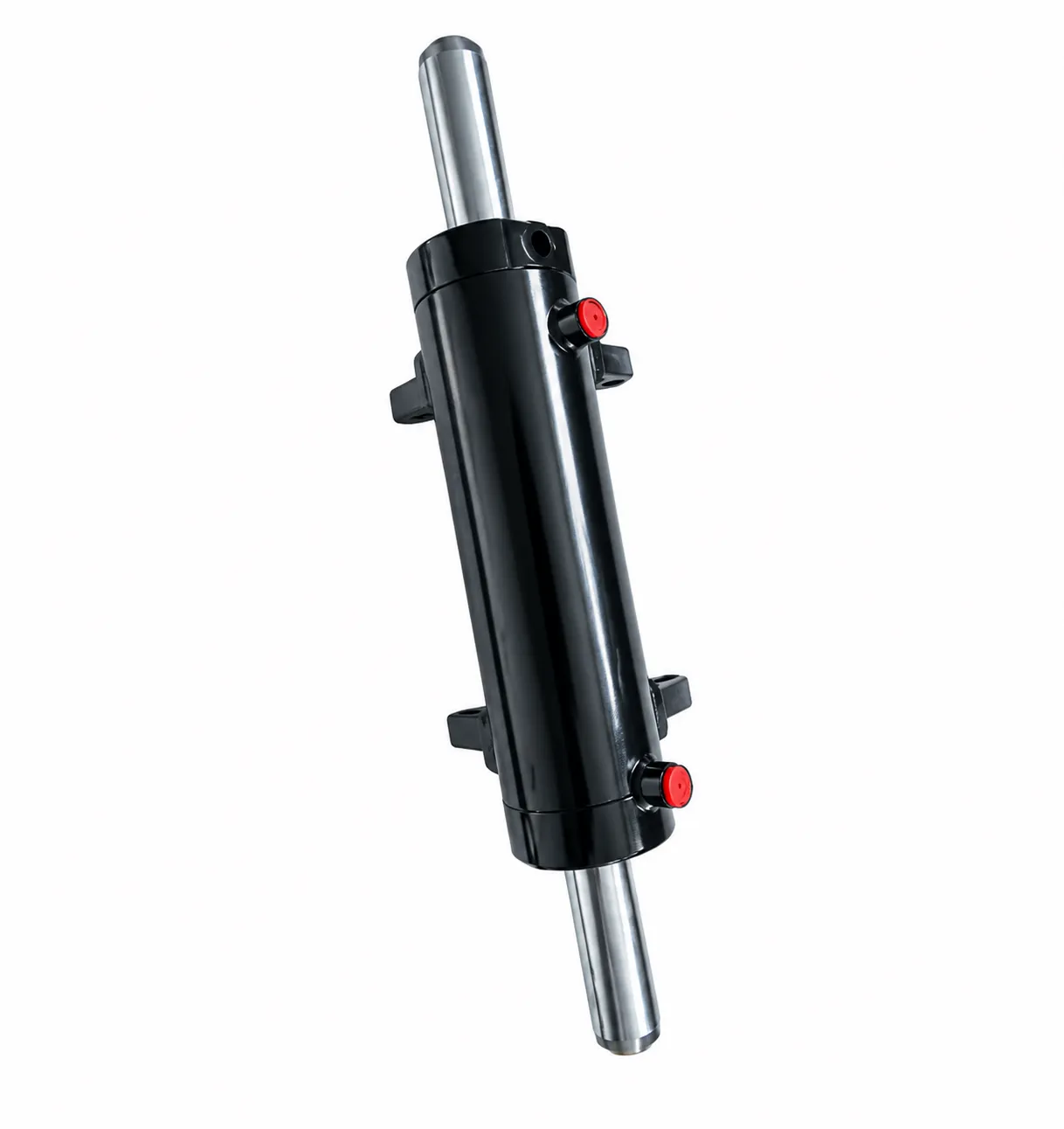
 Steering cylinders are engineered components responsible for converting hydraulic pressure into controlled mechanical movement that directs a vehicle or machine. In heavy-duty industrial and agricultural applications, the relationship between axle load and cylinder specification is not a matter of guesswork — it is a precise engineering discipline where undersizing causes premature failure and oversizing wastes energy and procurement budget. For British manufacturers, haulage operators, and off-highway equipment builders, getting this sizing relationship right is the difference between a machine that performs reliably across a 15-hour shift and one that demands costly downtime on the workshop floor of a Sheffield fabrication plant or a Birmingham logistics hub.
How Steering Cylinders Work: The Hydraulic Principle Behind Axle Control
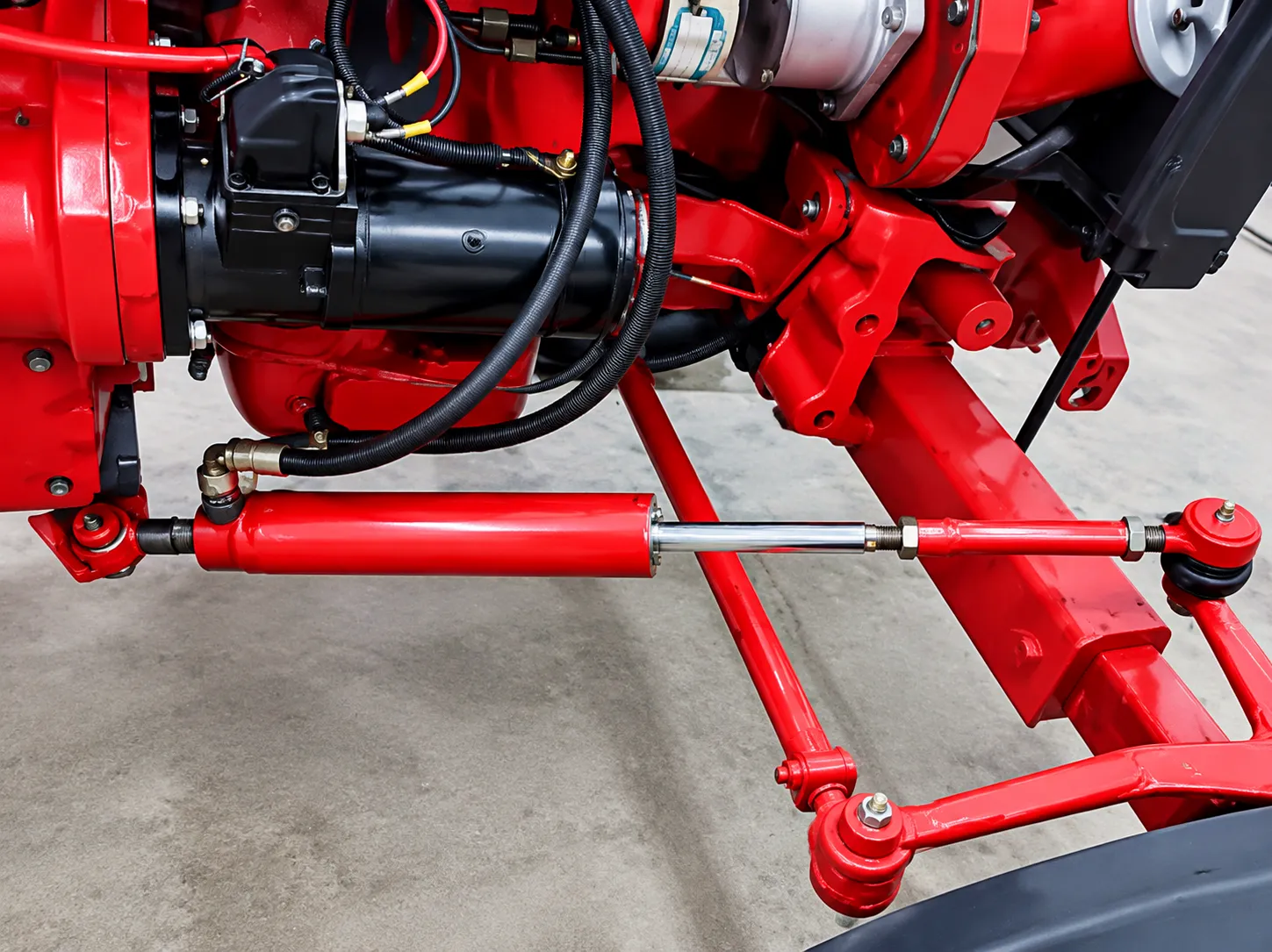 A steering cylinder is a double-acting hydraulic actuator mounted between the vehicle chassis and the steering knuckle or axle arm. Pressurised hydraulic fluid is directed by the steering control valve into either the extend or retract chamber of the cylinder. This differential pressure creates a force — measured in kilonewtons — that acts on the piston rod and translates into angular displacement at the road wheel. The mechanical advantage inherent in the hydraulic ratio means that a small driver input force results in very large output forces capable of overcoming the contact friction of heavily loaded tyres on surfaces ranging from tarmac to compacted earth.
The sizing calculation for a steering cylinder begins with the maximum steering force requirement, which is a direct function of axle load, tyre-ground friction coefficient, king-pin offset, and the geometry of the steering linkage. For a given axle load category, the bore diameter of the cylinder is selected so that the available hydraulic force — the product of system pressure and piston area — exceeds the required steering force by an appropriate safety margin, typically 1.3 to 1.6 depending on the application severity and duty cycle. The rod diameter is then selected to prevent buckling under compressive loads and to maintain an acceptable rod-to-bore ratio that preserves side-load capacity and seal integrity across the full range of articulation.
Axle Load Categories Explained: From Light Commercial to Heavy Off-Highway
Category 1 — Light Commercial (Up to 3.5 t Axle Load)
This category covers delivery vans, light pickups, small agricultural utility vehicles, and compact municipal machinery. Axle loads in this range stay below 3.5 tonnes, and steering cylinder bore diameters typically fall between 40 mm and 60 mm operating at system pressures of 100 to 140 bar. The relatively modest force requirement means that Chrome-plated carbon steel rods with NBR or HNBR seals are often sufficient. In UK urban logistics operations centred on cities like Leeds and Bristol, vehicles in this category make thousands of steering lock-to-lock cycles per working day, meaning seal durability under high-cycle fatigue is the primary specification driver rather than raw force capacity. Mounting is typically via clevis or ball-and-socket end fittings to accommodate the articulation geometry of compact suspension designs.
Category 2 — Medium Duty (3.5 t to 8 t Axle Load)
Medium-duty applications include 7.5-tonne distribution trucks, mid-size agricultural tractors in the 80–160 hp class, wheel loaders under 10 tonnes, and road construction plant such as motor graders working on secondary road maintenance contracts across the Midlands. Bore diameters in this category typically span 60 mm to 90 mm, and operating pressures rise to 160–200 bar to maintain manageable cylinder dimensions while delivering the required 15–40 kN of steering force. Rod diameters between 40 mm and 60 mm are standard, with hard chrome plating to a depth of 20–30 microns providing the corrosion resistance needed for mixed indoor/outdoor UK operating conditions. The transition from Category 1 to Category 2 also sees a shift toward integral cushioning at end-of-stroke positions to protect the cylinder and linkage from impact loads during abrupt full-lock manoeuvres.
Category 3 — Heavy Duty (8 t to 14 t Axle Load)
This segment covers heavy articulated trucks, large agricultural tractors above 200 hp, quarry dump trucks in the smaller size class, and forestry equipment operating across demanding terrain. Bore diameters scale to 90 mm through 120 mm, and system pressures of 200–250 bar are typical. The stroke must accommodate full lock angles that can exceed 35 degrees on tight-turning machines, translating to physical strokes of 180–320 mm depending on axle geometry. Sheffield-based heavy vehicle rebuilding workshops regularly encounter Category 3 cylinders where the original specification has been inadequately maintained, leading to piston seal extrusion from sustained operation at pressure peaks. At this load category, material selection becomes critical: 27SiMn steel for the cylinder barrel and 45# steel or 40Cr alloy rod material represent the minimum baseline, with ST52 or equivalent seamless tubing providing the wall thickness necessary to contain burst pressures of 4x operating pressure without permanent deformation.
Category 4 — Super Heavy and Off-Highway (Above 14 t Axle Load)
Large mining excavators, mega-class wheeled loaders, heavy port and quayside handling equipment, and specialised military logistics vehicles represent this uppermost category. Axle loads can reach 40 tonnes or beyond on twin-steer tractor units. Bore diameters of 130–200 mm at pressures of 250–350 bar are characteristic, and the cylinders themselves can weigh over 80 kg each. Specialised wiper seals rated for contaminated environments — critical in quarry and port settings across the North East of England — are standard, alongside chrome layer thicknesses of 40–60 microns. Finite element analysis of the end cap welds and barrel wall is typically required at this load category, and third-party pressure testing and dimensional certification against ISO 10100 or equivalent standards is expected by UK procurement departments purchasing plant of this magnitude.
Core Materials Used in Steering Cylinder Manufacturing
Cylinder Barrel — ST52 / 27SiMn Seamless Steel
The barrel forms the pressure-containing body of the cylinder and must combine yield strength above 350 MPa with the honing surface quality — Ra 0.4 or better — needed to sustain seal life over hundreds of thousands of cycles. ST52 seamless cold-drawn tubing is the standard choice for Categories 1–3, while 27SiMn alloy provides the additional yield strength and impact toughness needed for super-heavy Category 4 applications where dynamic shock loads from rough terrain can produce pressure spikes well above the nominal rating.
Piston Rod — 40Cr / 45# Steel with Hard Chrome
Piston rods must resist both tensile and compressive loads while providing a surface smooth enough to prevent seal abrasion and corrosion-resistant enough to survive the salt spray and humidity characteristic of UK coastal and upland environments. 40Cr alloy steel, quenched and tempered to 28–32 HRC, with 20–60 micron hard chrome plating ground and polished to Ra 0.2 or better, is the industry benchmark. For marine or coastal applications — relevant to port equipment in Liverpool, Southampton, and Newcastle — HVOF-applied tungsten carbide coatings are increasingly specified in preference to hexavalent chrome to meet evolving REACH regulations.
Seals — HNBR, Polyurethane, PTFE Composites
Seal selection is load-category dependent in a way that directly parallels bore size selection. NBR seals suffice for moderate pressures and temperatures up to 90°C. HNBR extends the operating range to 150°C with improved resistance to hydraulic oil additives. Polyurethane piston seals offer superior wear resistance under high-frequency cycling, making them the preferred choice for Category 2–3 machines engaged in repetitive duty cycles. PTFE-composite back-up rings prevent extrusion of the primary seal at high pressures and are mandatory at 250 bar and above. In Category 4 cylinders, a full Parker or equivalent premium seal kit specification is typically written into the UK procurement contract.
End Caps and Mounting Hardware — Cast Iron / EN8 Steel
End caps must provide thread engagement for the gland, structural containment for the barrel end load, and a secure port connection for hydraulic lines. EN8 medium-carbon steel forgings or high-grade grey cast iron are both used depending on batch size economics. Mounting eyes and clevises are machined from EN24T alloy steel for high-stress applications, with bronze bushings in the pivot bores to provide wear resistance and the slight conformability needed to accommodate the minor misalignment inherent in real-world vehicle steering geometry during full articulation.
Core Technical Advantages of Correctly Sized Steering Cylinders
Optimised Force-to-Weight Ratio
A correctly bore-sized cylinder delivers the exact steering force needed without unnecessary mass. For mobile plant where payload efficiency is commercially critical — quarry trucks operating under tight tonne-per-kilometre contracts in the Welsh valleys or Scottish Highlands — eliminating oversize cylinder weight directly improves productivity per unit of fuel consumed. The force balance between operating pressure, piston area, and mechanical advantage is the engineering foundation that makes this optimisation possible.
Extended Service Life Under Cyclic Loading
When the bore diameter, rod diameter, and operating pressure are matched to the actual axle load rather than a generic catalogue selection, stress concentrations in the piston-seal interface remain within the design envelope of the seal material. This directly extends mean time between overhaul — a key commercial metric for fleet operators procuring replacement cylinders through UK distributors. Field data from road maintenance plant in the East Midlands confirms that correctly specified cylinders achieve 3–5 times the service life of generic substitutions purchased on bore diameter alone.
Reduced Hydraulic System Heat Generation
An oversized cylinder operating at a fraction of its rated pressure generates more heat through internal leakage and throttling losses in the control valve than a correctly matched unit. In UK plant operating through warm summer periods — or in enclosed machine rooms where ambient temperatures are elevated — excessive heat shortens oil life and accelerates seal degradation. Correctly sized cylinders keep fluid temperatures within the 60–70°C target range, protecting the entire hydraulic circuit and reducing the frequency of oil change maintenance events.
Compliance with UK and European Safety Standards
Post-Brexit UK market access still requires alignment with BS EN ISO 4413 (hydraulic fluid power safety requirements) and the retained UK version of the Machinery Directive (UKMD). Steering cylinder sizing that is demonstrably matched to the axle load through documented engineering calculations forms a critical part of the technical file that UK manufacturers must maintain for CE/UKCA marking of vehicles and machines. Undersized or arbitrarily selected cylinders represent a significant regulatory liability that can invalidate type approval and expose the OEM to product liability claims.
Steering Cylinder Technical and Performance Parameters by Axle Load Category
| Parameter | Cat. 1 (≤3.5 t) | Cat. 2 (3.5–8 t) | Cat. 3 (8–14 t) | Cat. 4 (>14 t) |
|---|---|---|---|---|
| Bore Diameter (mm) | 40 – 60 | 60 – 90 | 90 – 120 | 130 – 200+ |
| Rod Diameter (mm) | 25 – 40 | 40 – 60 | 60 – 80 | 90 – 140 |
| Operating Pressure (bar) | 100 – 140 | 160 – 200 | 200 – 250 | 250 – 350 |
| Typical Stroke (mm) | 80 – 150 | 120 – 200 | 180 – 320 | 250 – 500 |
| Steering Force Output (kN) | 5 – 15 | 15 – 40 | 40 – 90 | 90 – 280+ |
| Barrel Material | ST52 / E355 | ST52 / 20# Seamless | 27SiMn / ST52 | 27SiMn Alloy |
| Rod Material & Chrome (µm) | 45# Steel, 20–25 µm | 40Cr, 20–30 µm | 40Cr/42CrMo, 30–40 µm | 42CrMo / HVOF, 40–60 µm |
| Seal Type | NBR / HNBR | HNBR / PU | PU + PTFE back-up | PTFE Composite Full Kit |
| Burst Pressure Safety Factor | 4x operating | 4x operating | 4x operating | 4x+ with FEA cert. |
| Max Steering Angle Supported | up to 45° | up to 40° | up to 35° | up to 30° (custom) |
| Mounting Options | Clevis, Ball & Socket | Clevis, Flange, Trunnion | Trunnion, Clevis, Custom | Full custom to drawing |
Industrial Application Scenarios Across UK Sectors
Agricultural Machinery — Lincolnshire and Yorkshire Farms
Large arable farming operations across Lincolnshire and the Yorkshire Wolds deploy high-horsepower tractors with rear axle loads in the 8–14-tonne Category 3 range. These machines navigate compacted headlands, sloped fields, and public roads, demanding steering cylinder specifications that combine robust force output with sufficient stroke to achieve full lock angles on tight field headlands. The consequences of a steering cylinder failure during peak harvest are commercially catastrophic in a way that small, incremental savings on a generic cylinder purchase can never justify. Correctly specified and certified cylinders are therefore a core part of the procurement policy for UK farm machinery dealers and cooperative purchasing groups.
Heavy Haulage and Logistics — M1 Corridor and Birmingham Freight Hubs
Articulated tractor units serving the major logistics parks along the M1 and M6 corridors, including the large freight distribution centres around Birmingham and Coventry, represent the Category 3 upper end and Category 4 lower bound for steering cylinder requirements. Legally loaded gross train weights of 44 tonnes on UK roads place front steering axle loads in the 7–8-tonne range, with dynamic load transfer under braking pushing peak dynamic axle loads significantly higher. The steering cylinders on these vehicles must tolerate sustained motorway operation combined with demanding low-speed terminal manoeuvring without seal leakage that would cause an immediate vehicle defect under DVSA roadworthiness inspection.
Construction and Civil Engineering Plant — Sheffield and Manchester Sites
Wheeled excavators, articulated dump trucks, and motor graders engaged in the major urban regeneration and infrastructure projects around Sheffield and Manchester require steering cylinders capable of functioning reliably under extreme contamination conditions — silica dust from demolition, clay from cut-and-fill earthworks, and road salt from winter maintenance. The cylinder specification for this application class must include wiper seals of sufficient lip pressure to exclude abrasive particles at the rod entry point, combined with a bore size and pressure rating matched to the machine’s gross axle load as stated in the manufacturer’s documentation. Also see our forklift tilt cylinder range for warehouse and indoor logistics steering needs.
Port and Quayside Handling — Liverpool, Southampton, Felixstowe
Reach stackers, heavy terminal tractors, and empty container handlers operating in the major UK container ports carry Category 4 axle loads and face the combined challenge of marine salt atmosphere, heavy cyclic loading from container weights, and tight turning radii in congested port lanes. Steering cylinders for this environment represent some of the most demanding specifications in the product range — large bore with HVOF-coated rods, full premium PTFE composite seal kits, and robust gland designs that allow field seal replacement without removing the cylinder from the machine. Procurement teams at port operators in Felixstowe and Southampton typically require third-party pressure test certification and material traceability documentation as conditions of supply approval.
Forklift and Warehouse Logistics — Nationwide UK Distribution Centres
Counter-balance forklifts in the 2–8-tonne capacity class and reach trucks in modern UK fulfilment centres represent Category 1 and Category 2 steering cylinder applications where cycle count rather than raw force is the primary life determinant. A forklift working two 8-hour shifts can complete over 1,000 full steering cycles per day. At that rate, seal wear and rod surface quality determine replacement interval more than bore sizing. Our forklift steering cylinder range is engineered specifically for this duty profile, with polyurethane seals and fine-ground chrome rods that consistently achieve 10,000+ hour service intervals in controlled warehouse environments across the UK.
Customer Success Story: Quarry Fleet Upgrade in South Wales
Application: Category 3–4 rigid dump trucks | Location: Merthyr Tydfil, South Wales
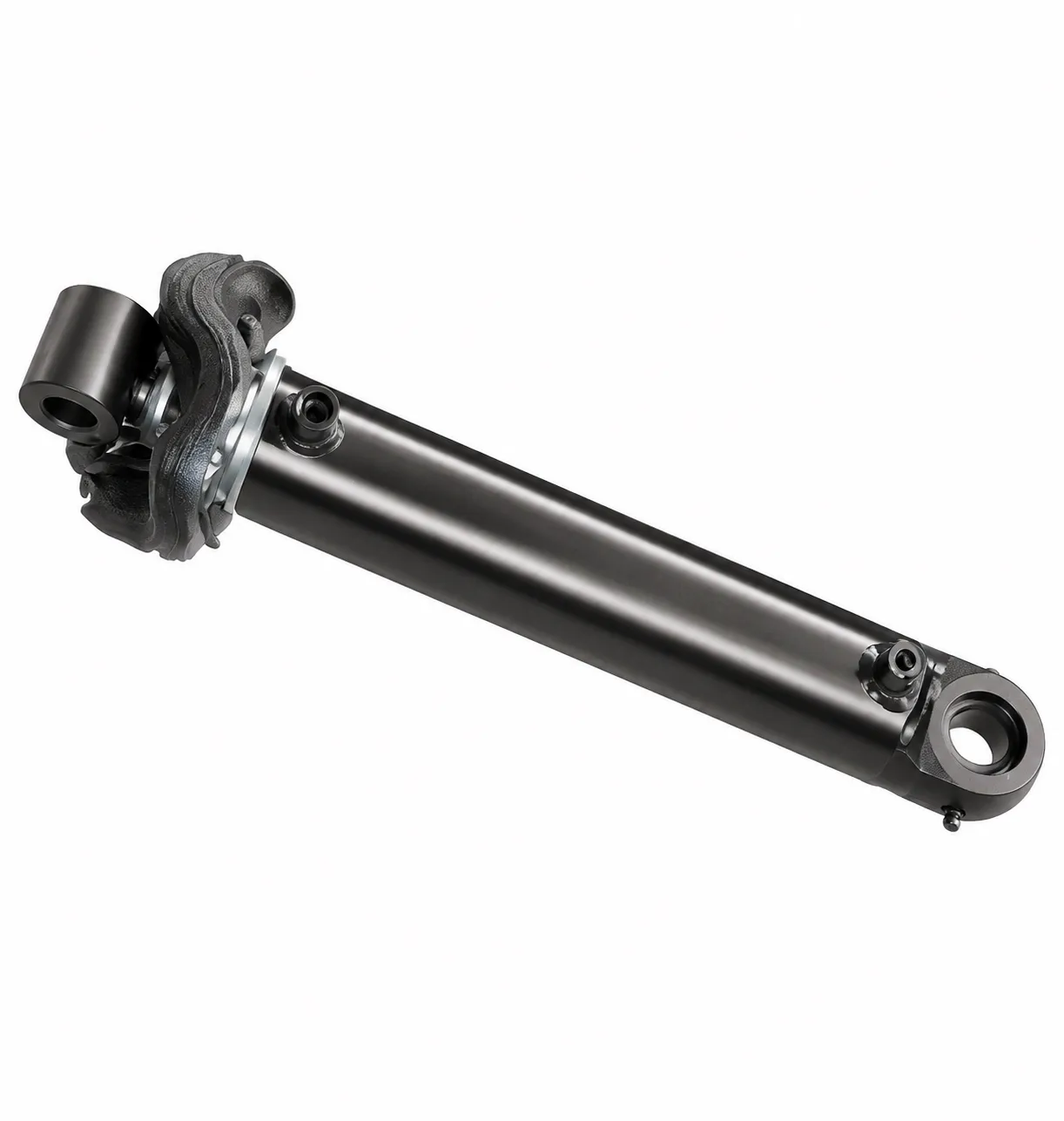 A quarry operation near Merthyr Tydfil running a fleet of 12 rigid dump trucks with 25-tonne payload capacity was experiencing premature steering cylinder failures at intervals of 6–9 months — well below the 24-month minimum the operation required to control maintenance costs within budget. The trucks’ front axle loads under full load ranged from 14.5 to 16 tonnes, placing them firmly in Category 4 territory. Analysis of the failed cylinders revealed that the previously sourced generic replacements had been sized for a Category 3 maximum axle load of 12 tonnes — a 25–30% underspecification — and used NBR seals rather than the PTFE composite kit required at the actual 260-bar system pressure.
Ever Power’s engineering team conducted a full application review, including review of the OEM documentation, actual hydraulic system pressure testing, and measurement of steering geometry to confirm true stroke requirements. The result was a custom cylinder specification with 160 mm bore, 110 mm rod diameter in 42CrMo with 50-micron HVOF coating, full PTFE composite seal kit, and trunnion mounting with reinforced bronze-bushed eyes. Prototype cylinders were sample-tested on one vehicle over a 3-month trial period before the fleet order for 24 units was placed.
Eighteen months after the fleet conversion, zero cylinder failures have been recorded. The operation has extended its service interval to 30 months and reduced annual hydraulic maintenance spend by approximately 38%. The cost premium of the correctly specified Ever Power cylinder over the previous generic supply was recovered within the first maintenance cycle. The fleet manager noted that the dimensional interchangeability of the Ever Power units with the original OEM specification was exact — a critical factor in avoiding any modification to the vehicles’ wiring or bodywork during the changeover.
What UK Customers Say About Ever Power Steering Cylinders
★★★★★
“We’d been through three different suppliers trying to solve persistent seal failures on our loading shovels. Ever Power came back with an actual engineering analysis rather than just quoting a catalogue bore size. The 42CrMo rods with HVOF coating have been running for 22 months without any sign of the corrosion pitting that killed our previous cylinders operating in our coastal aggregate plant environment.”
— Plant Manager, Quarry and Aggregates Operation, Cornwall
★★★★★
“The lead time from order to delivery on our custom trunnion-mounted Category 4 cylinders was 5 weeks including the additional 100% pressure test certification we require. Every unit arrived with the full material traceability pack. That documentation quality is what our quality team and our end customer both need — it’s simply not something most suppliers bother with.”
— Procurement Director, Heavy Plant OEM, West Midlands
★★★★★
“We run 34 tractors on our arable operation across three farms in Lincolnshire. After converting the entire fleet to Ever Power Category 3 steering cylinders matched to our actual rear axle loads, we’ve gone from repairing steering hydraulics three or four times per harvest season to zero incidents in the past two years. The payback on the upfront cost was within one harvest cycle.”
— Farm Operations Manager, Large Arable Enterprise, Lincolnshire
Frequently Asked Questions — Steering Cylinder Sizing for UK Industrial Applications
Ready to Specify the Right Steering Cylinder?
Send us your axle load data, machine type, and operating environment — our engineers will return a complete cylinder specification and quotation within 48 hours.
edit by gzl