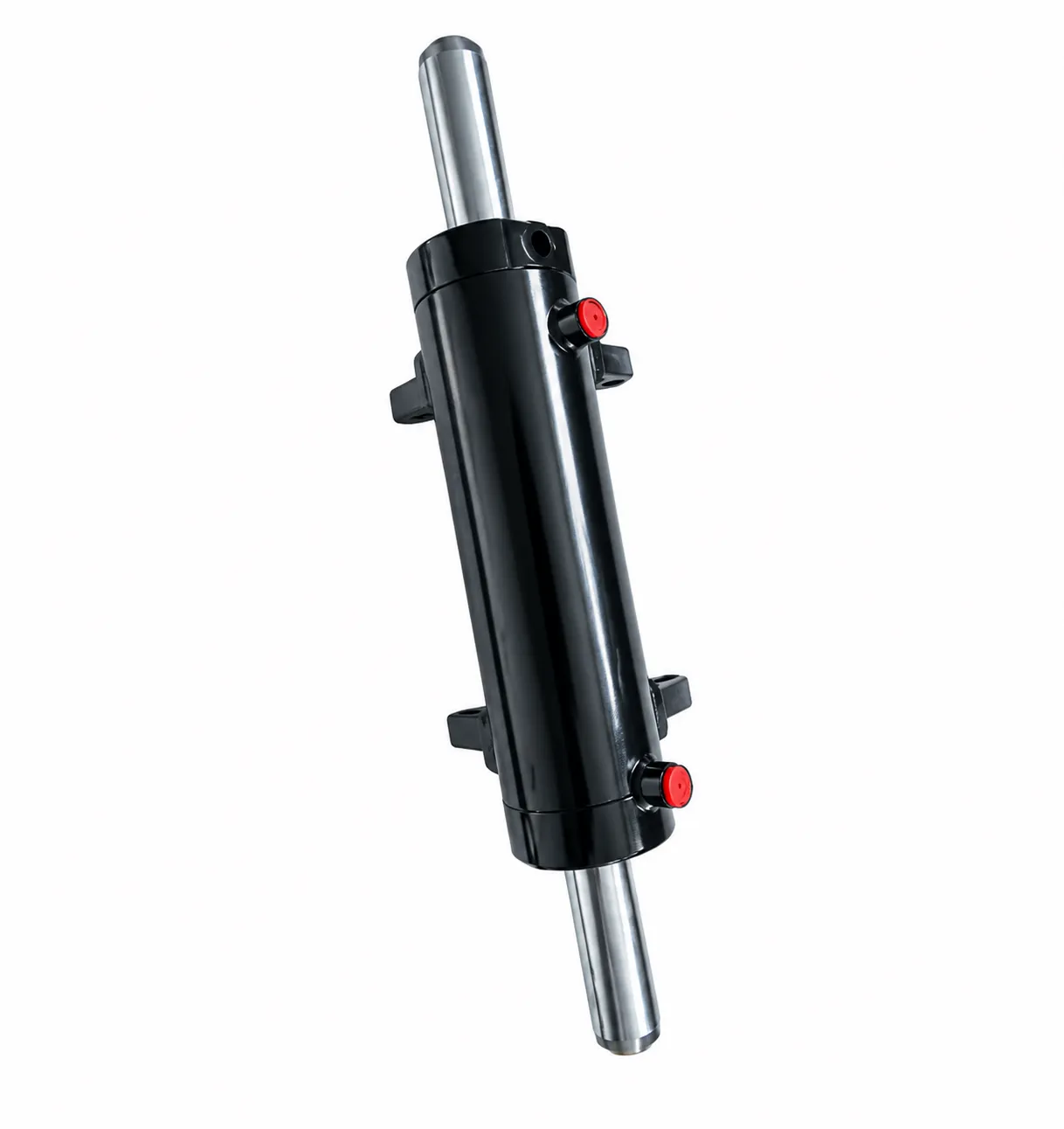
 The piston rod sits at the mechanical heart of every hydraulic steering cylinder, and its design is far more consequential than most purchasing specifications acknowledge. In heavy plant, agricultural machinery, and mobile industrial equipment operating across the UK — from the engineering corridors of Birmingham to the steel-working districts of Sheffield — the piston rod is the component under the greatest sustained stress during directional control. Get the geometry, surface treatment, and material selection right, and a steering cylinder delivers tens of thousands of operating hours with consistent force output. Get it wrong, and the failure cascade typically begins within the first season of work.
The Working Principle: How Piston Rods Transmit Steering Force
 A hydraulic steering cylinder converts fluid pressure into linear mechanical force, and the piston rod is the primary force-transmitting element throughout this conversion. When pressurised oil enters one port of the cylinder body — typically at pressures between 200 bar and 350 bar in heavy-duty steering applications — it acts on the face of the piston, driving it along the bore. The piston rod, rigidly attached to the piston, extends or retracts through the rod-end gland seal, translating this linear motion into the rotational movement of the steering linkage or kingpin assembly.
What makes this process mechanically complex is that the piston rod does not operate under simple axial tension or compression alone. In a working steering cylinder, the rod simultaneously carries bending loads — generated by offset mounting points and the dynamic geometry of the steering linkage — as well as side-loading forces transmitted through the rod seal when the vehicle is cornering under weight. These combined stresses mean the rod must have adequate section modulus to resist deflection while maintaining a surface finish smooth enough to prevent seal extrusion and premature wear.
The seal interface between the rod’s outer surface and the dynamic rod seal is the most consequential tribological contact in the entire assembly. Fluid retention — the cylinder’s ability to maintain working pressure without internal leakage — depends directly on the quality of this interface. Surface roughness in the range of Ra 0.2 µm to Ra 0.4 µm is the target for most heavy-duty steering cylinder applications; rougher surfaces cause accelerated seal wear, while surfaces that are too smooth can actually compromise the thin lubricating film that prevents dry-running damage to the seal lip. This is why piston rod grinding and chrome plating — or its modern alternatives — are not merely cosmetic finishing steps but fundamental engineering operations that define cylinder service life.
Core Materials: Steel Selection and Surface Treatment
42CrMo4 / 4140 Alloy Steel
The industry standard base material for demanding steering cylinder rods. Chromium-molybdenum alloying gives tensile strength in the 900–1100 MPa range after heat treatment, with excellent fatigue resistance under cyclical bending loads. Widely used in UK agricultural machinery and off-highway plant where shock loading is frequent. The combination of hardenability, weldability, and availability from UK steel stockholders makes this the practical choice for most production volumes.
Induction-Hardened Surface Layer
Induction hardening of the rod’s outer surface achieves a case hardness of 58–62 HRC to a depth of 1.5–3.5 mm, while preserving a tough ductile core. This combination resists surface indentation from contamination particles entering the seal area, which is a leading failure mode in agricultural and construction steering cylinders operating in the muddy, abrasive conditions common across much of England’s farming regions. The hardened zone must extend the full working length of the rod to prevent step-wear at the seal contact zone.
Hard Chrome Plating vs. HVOF Coating
Hard chrome plating (thickness 20–35 µm) remains the most common surface coating for steering cylinder rods, providing a very low friction coefficient of approximately 0.16 and exceptional corrosion resistance in salt-laden coastal environments — relevant for offshore support equipment used around UK ports. High-Velocity Oxygen Fuel (HVOF) tungsten carbide coatings are increasingly specified for ultra-demanding applications such as heavy-duty marine steering systems, offering superior adhesion strength, bond values exceeding 70 MPa, and resistance to micro-cracking under impact loading that chrome plating can exhibit at very high hardness levels.
Nitriding for Corrosion Resistance
Gas or plasma nitriding creates a compound layer (typically 10–25 µm) with surface hardness reaching 1000–1200 HV and outstanding corrosion resistance without dimensional distortion — a critical advantage for rods requiring very tight diameter tolerances. Nitrided rods are particularly suited to steering cylinders in food-processing machinery and pharmaceutical manufacturing environments where hydraulic fluid contamination risk must be minimised and the rod surface finish must be maintained with minimal maintenance intervention. UK food production facilities in regions such as East Yorkshire and Lincolnshire have specified nitrided steering cylinders for exactly these reasons.
Technical Performance Parameters — Ever Power Steering Cylinders
The following table consolidates the key technical parameters for Ever Power’s range of hydraulic steering cylinders, covering both standard and custom configurations available to UK-based procurement teams. All values reflect production specifications achieved under ISO 10100 cylinder standards and BS EN 13706 quality frameworks.
| Parameter | Standard Range | Heavy-Duty / Custom | Unit |
|---|---|---|---|
| Piston Rod Diameter | 25 – 80 mm | 80 – 200 mm | mm |
| Working Pressure | 160 – 250 bar | 250 – 420 bar | bar |
| Stroke Length | 50 – 600 mm | 600 – 2000 mm | mm |
| Rod Surface Hardness (induction) | 55 – 60 HRC | 58 – 62 HRC | HRC |
| Rod Surface Roughness (Ra) | 0.2 – 0.4 µm | 0.1 – 0.2 µm | µm Ra |
| Chrome Plating Thickness | 20 – 25 µm | 25 – 40 µm | µm |
| Operating Temperature Range | -20 to +80 °C | -40 to +120 °C | °C |
| Rod Diameter Tolerance | h7 / h8 | f7 / h6 | ISO tolerance |
| Tensile Strength (42CrMo4) | 900 – 1050 MPa | 1050 – 1250 MPa | MPa |
| Cylinder Bore Diameter | 40 – 160 mm | 160 – 400 mm | mm |
| Test Pressure (hydrostatic) | 1.5 × working pressure | 2.0 × working pressure | — |
Core Technical Advantages of a Well-Designed Steering Cylinder Rod
Extended Fatigue Life Under Cyclical Loading
A properly heat-treated alloy steel rod with a well-controlled induction-hardened case exhibits a fatigue limit that allows it to endure millions of full-stroke cycles without crack initiation. This matters enormously in steering cylinder applications where the rod experiences a complete extension-retraction cycle every few seconds during continuous operation — such as in a high-throughput agricultural baler working 12-hour shifts across Lincolnshire’s arable farms. The fatigue performance is not just about the base steel; it is equally dependent on the absence of surface defects, the compressive residual stresses introduced by the hardening process, and the quality of the rod-end thread or clevis pin bore where stress concentrations are highest.
Superior Seal Compatibility and Fluid Retention
The relationship between rod surface finish and seal life is one of the most precisely characterised tribological relationships in hydraulic engineering. A hard chrome plated rod surface at Ra 0.2 µm provides the optimal condition for a polyurethane or PTFE-based rod seal to form a consistent lubricating film — thin enough to prevent dry-running but thick enough to prevent blow-by. Cylinders that maintain this surface quality throughout their service life retain fluid integrity at working pressures above 300 bar for upwards of 15,000 operating hours. This translates directly into reduced hydraulic fluid consumption, lower maintenance costs, and a dramatically reduced risk of hydraulic oil leakage onto ground — a compliance concern under UK Environment Agency guidelines for outdoor industrial operations.
Dimensional Stability Under Thermal Cycling
Steering cylinders in mobile plant are exposed to wide thermal cycling — from cold morning starts at ambient temperatures well below freezing during UK winters to elevated operating temperatures in engine-bay environments when the vehicle has been running hard. Piston rods in 42CrMo4 steel with properly stabilised heat treatment maintain their dimensional precision across this range. The critical parameter is the absence of retained austenite in the hardened case, which can transform to martensite under thermal or stress cycling, causing dimensional growth and compromising the rod-to-bore fit. Responsible manufacturers verify retained austenite content by XRD measurement and keep it below 5% — a quality control step that distinguishes premium suppliers from those cutting corners on heat treatment process control.
Resistance to Corrosion in Outdoor Environments
UK operating conditions — persistent rain, coastal salt exposure, and the application of road de-icing salts on agricultural and construction sites — create a corrosive environment that attacks exposed steel surfaces very quickly. Hard chrome plating on a properly prepared steel rod provides a barrier layer that resists this corrosion for thousands of hours under salt spray testing conditions in excess of 500 hours at 35 g/L NaCl concentration. For applications around UK coastal areas such as the Humber estuary’s industrial zone or Scottish offshore support depots, even higher corrosion resistance can be achieved through nickel undercoating beneath the chrome or by specifying HVOF coatings that offer inherently superior corrosion protection. The piston rod’s corrosion resistance is not just an aesthetic consideration — pitting corrosion on the rod surface creates stress-concentration sites that nucleate fatigue cracks and destroy seal-surface quality simultaneously.
Explore Related Products in Our Hydraulic Cylinder Range
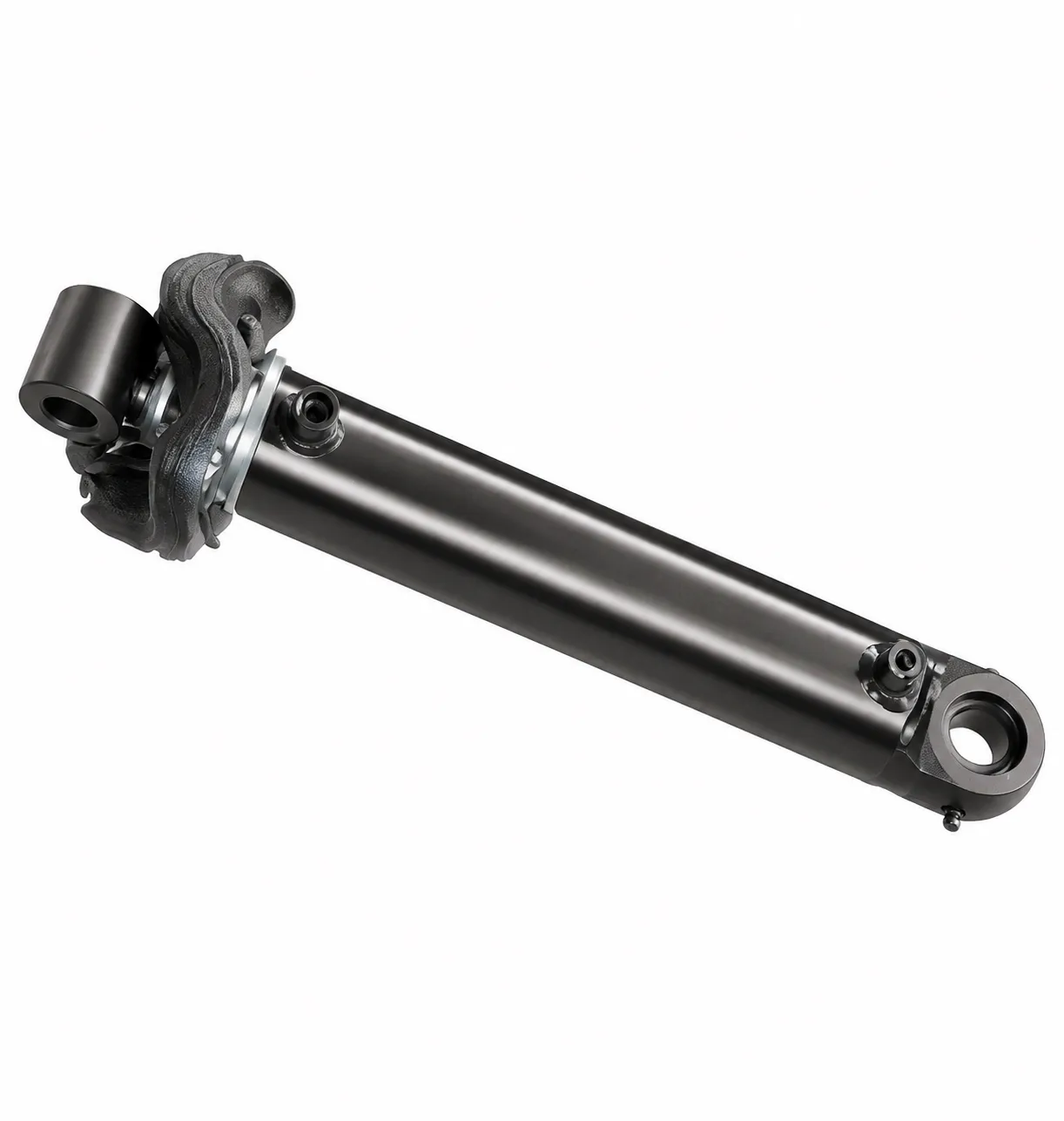
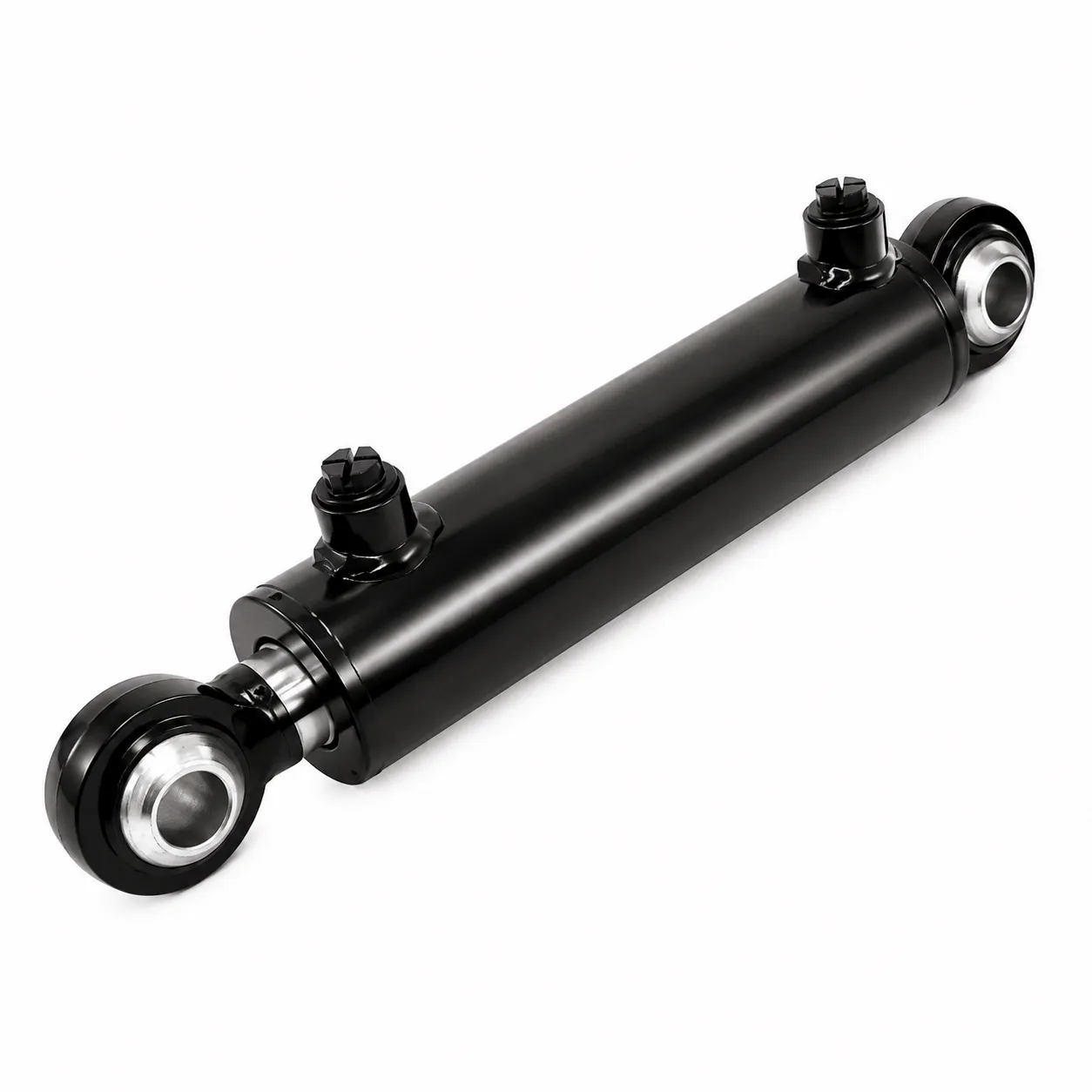
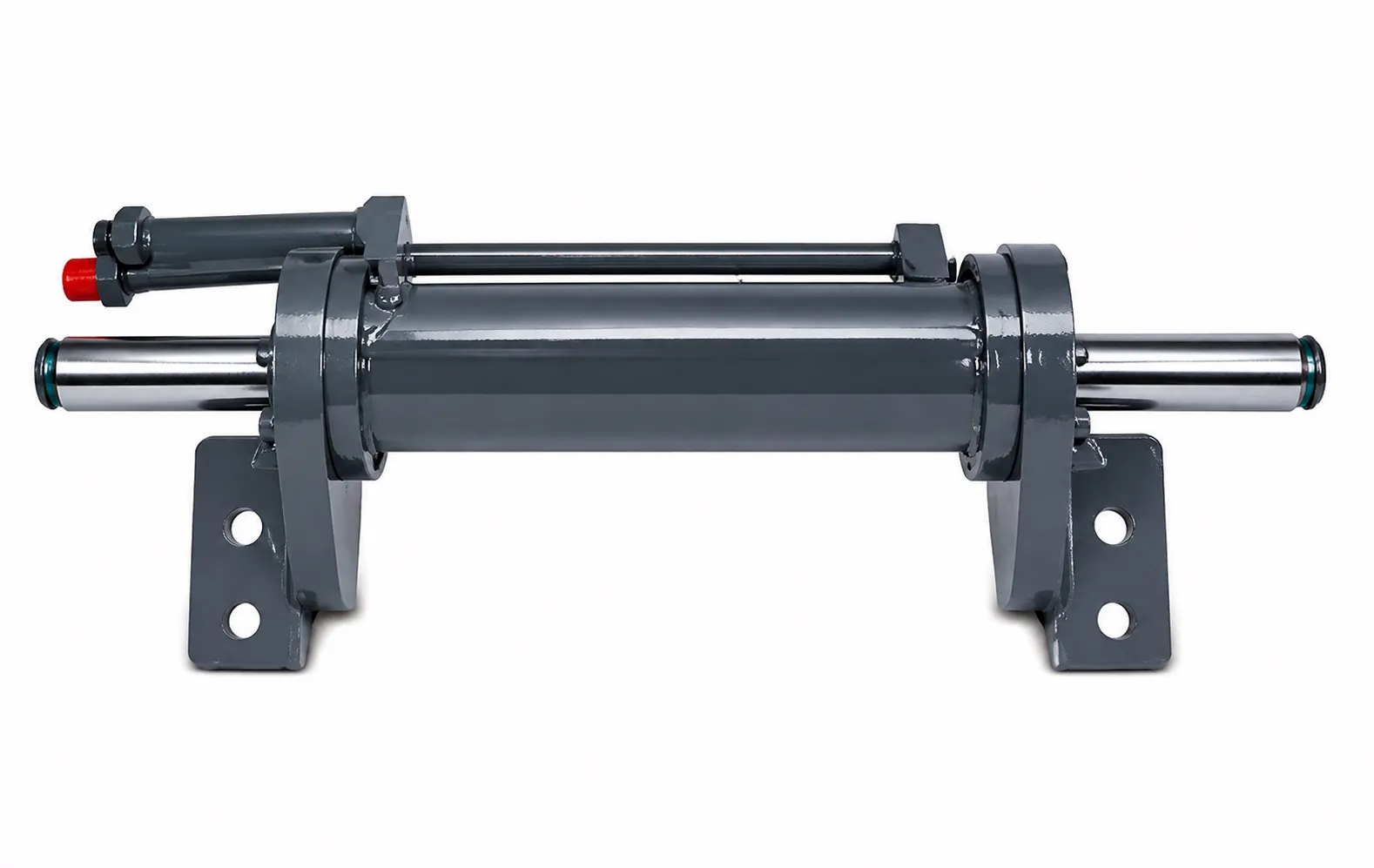
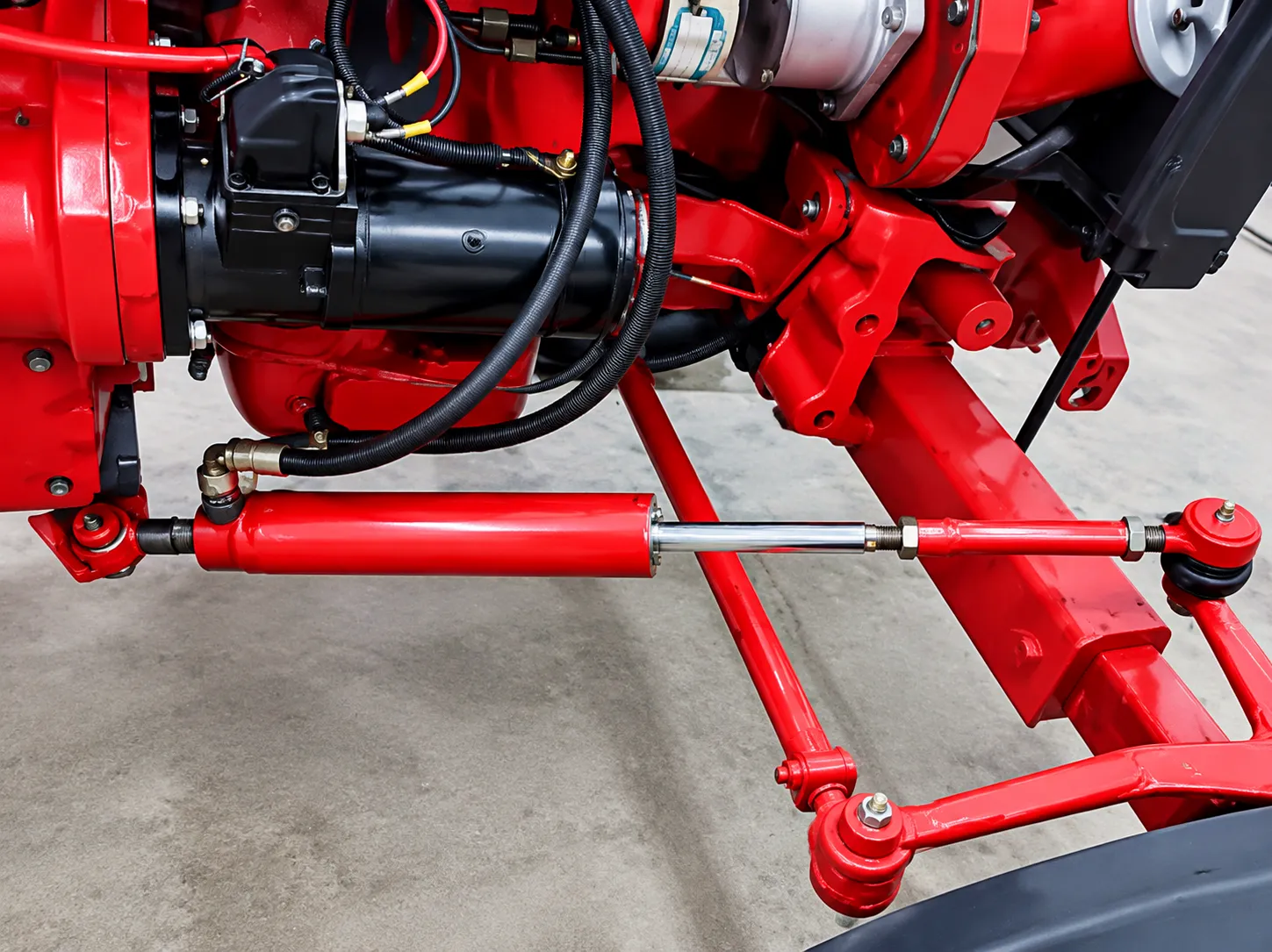 Steering cylinder piston rod technology applies across a range of specialised hydraulic cylinder types. Two products particularly relevant to UK materials handling and logistics operations are described below — each sharing the same precision rod engineering principles discussed in this article but adapted for their specific application geometry and loading requirements.
Industrial Application Scenarios Across the UK
Agricultural Machinery — East Midlands Arable Farming
Combine harvesters, self-propelled sprayers, and large-capacity trailers operating across Lincolnshire, Nottinghamshire, and Cambridgeshire represent one of the highest-volume applications for hydraulic steering cylinders in the UK. In this environment, the piston rod must tolerate high lateral loads generated when navigating furrows at speed, combined with constant vibration from the powertrain. Rod diameters in the 50–80 mm range with 42CrMo4 construction and a chrome-plated finish are the dominant specification. Seasonal serviceability is critical: UK farming contractors need cylinders that can be inspected, resealed, and returned to service during winter workshop periods without specialist tooling.
Construction Plant — Birmingham and West Midlands
The Birmingham metropolitan area and surrounding West Midlands region hosts a concentration of civil engineering contractors, groundworks firms, and plant hire companies operating wheeled loaders, motor graders, and articulated dump trucks. Steering cylinders in these machines are subject to particularly aggressive loading: hard-packed ground, kerb impacts when moving between sites on public roads, and continuous operation in contaminated environments where grit enters the seal zone. The rod’s hardened surface layer and chrome plating thickness must be sized to resist abrasive wear from particle ingression. Ever Power’s cylinders for this application category are specified with enhanced wiper seals and hard chrome at 30 µm minimum to address exactly these conditions.
Steel Manufacturing and Heavy Industry — Sheffield
Sheffield’s steel and special alloys sector operates large manipulators, transfer cars, and ingot-handling vehicles where hydraulic steering cylinders control positioning with extreme precision under very high static loads. The thermal environment in forge shops and rolling mill bays demands rod seals and rod surface coatings that perform reliably at continuous fluid temperatures of 70–90 °C. In these applications, PTFE-based sealing systems paired with nitrided or HVOF-coated rods provide service intervals that are two to three times longer than standard chrome-plated designs. The rod’s ability to maintain its dimensional integrity under sustained thermal loading directly determines the positional accuracy of the handling system — critical when misalignment by even a few millimetres can compromise a £100,000 steel billet.
Port and Logistics Equipment — Liverpool and Southampton Docks
Reach stackers, straddle carriers, and terminal tractors operating in UK port environments at Liverpool’s Seaforth Terminal and Southampton’s container handling operations are among the most demanding applications for steering cylinder piston rods. Salt-laden air, constant high-intensity operation across three shifts, and the enormous loads generated when manoeuvring fully laden 40-foot containers all bear on the steering cylinder simultaneously. In this context, the rod’s corrosion resistance, fatigue life, and seal interface quality must all operate at maximum performance simultaneously. Ever Power supplies steering cylinders to port equipment operators across the UK with bespoke rod specifications including enhanced chrome thickness and Nilos-type scrapers to maintain seal integrity in the salt-spray-rich quayside environment.
Customer Success: Tyne Engineering Services, Newcastle upon Tyne
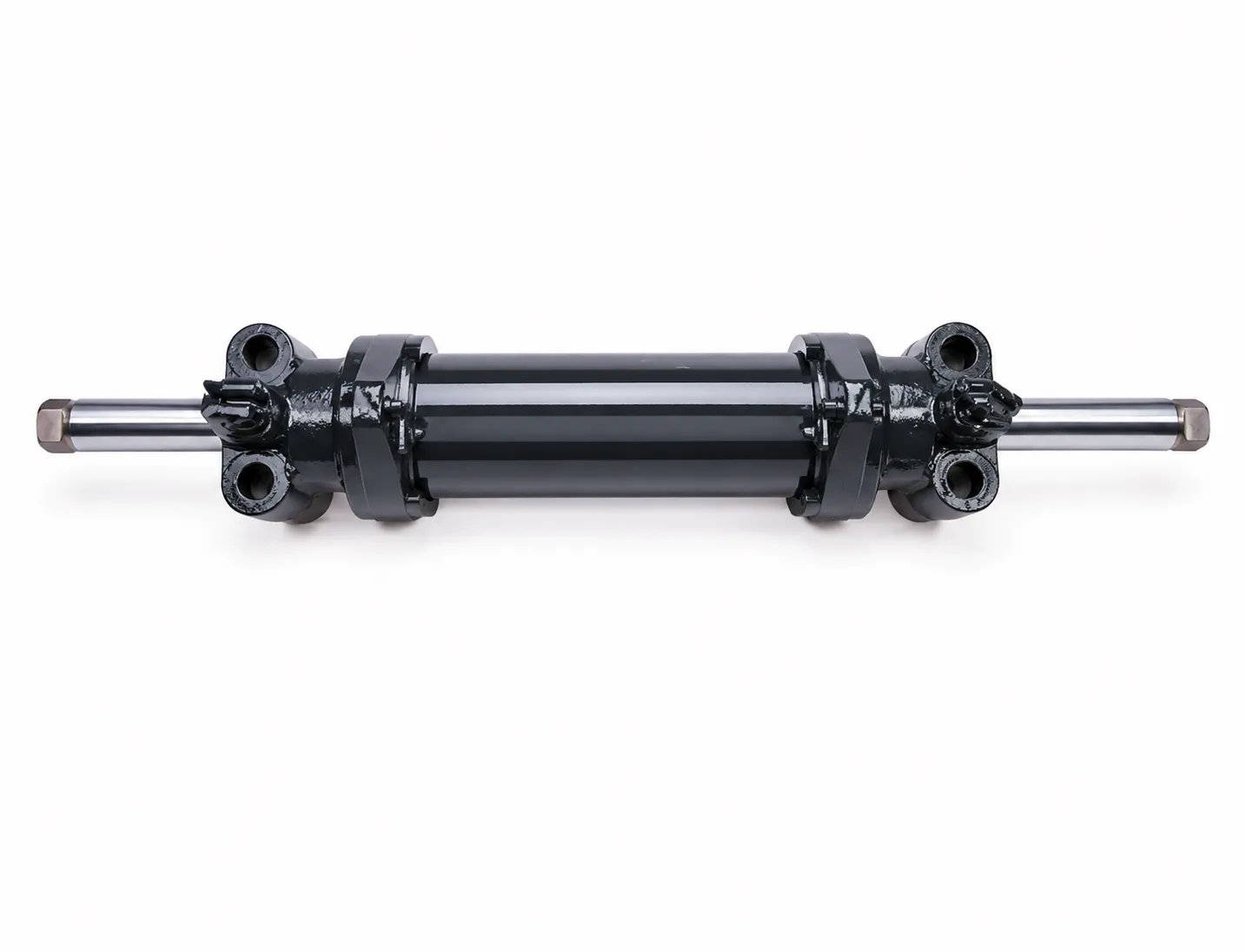 Tyne Engineering Services operates a fleet of 38 articulated wheel loaders across a cluster of quarry sites in County Durham and Northumberland, handling between 4,000 and 7,000 tonnes of crushed aggregate per operational day. The company’s maintenance team had been dealing with a persistent pattern of steering cylinder rod seal failures on their previous supplier’s units — typically occurring between 1,800 and 2,400 operating hours, requiring complete cylinder removal and off-site rebuild at significant cost and with lead times that disrupted production scheduling.
The root cause diagnosis identified that the original steering cylinders had piston rods with chrome plating of only 18 µm average thickness and a surface roughness closer to Ra 0.5 µm — both values outside the optimal range for the abrasive, contamination-rich conditions at quarry sites. The combination of thin chrome and rough surface was accelerating seal lip wear at a rate that made the original 4,000-hour service interval target structurally unachievable.
After engaging Ever Power’s technical team, a replacement specification was developed: 42CrMo4 rods with 30 µm hard chrome, Ra 0.2 µm post-plating surface finish, induction hardening to 60 HRC at 2.5 mm depth, and a scraper seal upgrade to a double-lip polyurethane design to address particle ingression. The first batch of 16 replacement cylinders was manufactured and delivered to the Newcastle depot within 18 working days of order confirmation — aligned with the company’s planned winter maintenance window.
At the 3,600-hour inspection point — already 50% beyond the previous failure threshold — all 16 units showed no measurable seal deterioration and zero hydraulic fluid seepage. The Tyne Engineering maintenance team have since rolled the Ever Power specification across their entire fleet, and the site supervisor reports that unplanned steering-related downtime has been eliminated for two consecutive operational seasons. The return on investment, accounting for reduced rebuild costs, eliminated production disruption, and lower hydraulic fluid consumption, was calculated at approximately 4.2 times the incremental cost of the upgraded cylinder specification.
★★★★★
“We’d been rebuilding cylinders every winter without question — it was just part of the budget. After switching to Ever Power’s spec, we went two full seasons without touching a single steering cylinder. The piston rod surface quality is visibly different; even our apprentices noticed it during the first inspection. Real engineering, not catalogue parts.”
— Site Maintenance Manager, Tyne Engineering Services, Newcastle
★★★★★
“The technical dialogue before the order was refreshing. Ever Power’s engineers asked the right questions about our operating temperatures, hydraulic fluid type, and contamination exposure — questions that told us they understood the application rather than just selling a standard product. The lead time commitment was met exactly, which matters enormously when you’re planning around a maintenance window.”
— Fleet Engineering Director, Heavy Plant Hire Operator, County Durham
★★★★★
“We specified Ever Power steering cylinders for a new batch of container handling tractors at our port facility. The chrome plating spec and the double-lip wiper seal have proven themselves in a very harsh salt environment. Eighteen months in and the rods look as clean as the day they were installed. We’re converting our existing fleet over the next refurbishment cycle.”
— Procurement Manager, Port Logistics Operator, Humber Estuary
Frequently Asked Questions — Steering Cylinder Piston Rod Design
How does piston rod surface roughness affect the service life of a hydraulic steering cylinder used in UK agricultural machinery?
Surface roughness is one of the most direct determinants of seal life in any hydraulic cylinder, and agricultural steering cylinders are particularly sensitive to this parameter because they operate in abrasive, contaminated environments with limited filtration. A rod surface in the Ra 0.2–0.4 µm range supports the lubricating film needed to prevent seal dry-running while not being so rough that it accelerates seal lip wear through micro-asperity contact. Agricultural operators in the UK can expect service intervals to roughly double when moving from substandard rods at Ra 0.6 µm to properly finished rods at Ra 0.2 µm, all other factors being equal.
What is the typical price difference between a standard chrome-plated steering cylinder rod and a bespoke HVOF-coated rod for heavy industrial applications in the UK, and where can I get a competitive quote?
HVOF tungsten carbide coatings typically add 25–45% to the rod manufacturing cost compared with hard chrome plating, reflecting the higher material cost and longer coating cycle time. For most UK industrial buyers, this premium is justified only in applications with exceptionally aggressive contamination, high fluid temperatures, or environments where chrome’s micro-cracking behaviour under impact could compromise performance. To get a cost comparison and assess which specification suits your application, contact Ever Power directly at [email protected] — the technical team will provide a specification recommendation alongside pricing without obligation.
Which steel grade is most commonly specified for steering cylinder piston rods in the construction plant sector in Birmingham and the West Midlands, and why?
42CrMo4 (equivalent to AISI 4140) is the dominant choice across the West Midlands plant sector for exactly the reasons that make it the global standard: its hardenability allows consistent through-hardening at the section sizes used for steering cylinder rods, its molybdenum content improves resistance to temper brittleness at operating temperatures, and it remains available from UK steel stockholders without the supply chain complexity of exotic alloys. For applications where corrosion is a secondary concern alongside strength, 42CrMo4 with chrome plating provides an optimised cost-performance balance.
How long does it take to receive a custom-specified steering cylinder piston rod assembly from Ever Power when I need it for an urgent plant repair in Sheffield?
Standard catalogue-dimension cylinders held in buffer stock can be despatched within 3–5 working days with standard UK freight, typically arriving at a Sheffield address within 1–2 days of despatch. Custom-engineered configurations with non-standard rod diameters, special coatings, or bespoke end fittings are manufactured to a committed lead time confirmed at order placement — typically 15–25 working days depending on configuration complexity. For urgent critical breakdowns, Ever Power’s sales team at [email protected] can assess stock availability and expedited manufacturing options within the same working day of enquiry.
Who should I contact to get a supplier quotation for steering cylinders with upgraded piston rod specifications for a fleet of articulated vehicles operating in a UK coastal environment?
For coastal UK applications — ports, offshore support bases, estuarine industrial sites — the ideal contact point is Ever Power’s export sales team at [email protected]. Please include in your initial enquiry: the rod diameter, stroke length, working pressure, and a brief description of the operating environment (including proximity to salt water and any chemical exposure). This information allows the technical team to provide a specific coating and seal recommendation alongside the initial quotation, avoiding the back-and-forth that delays project timelines.
When should a UK maintenance engineer consider upgrading the piston rod specification of an existing steering cylinder rather than replacing the whole cylinder assembly?
A rod-specification upgrade makes economic sense when the cylinder barrel and end caps are in good condition but seal failures or rod surface deterioration are the recurring failure mode. If the bore honing shows no measurable wear and the cylinder body welds or tube ends are sound, replacing only the rod — at the improved specification — combined with a full reseal using OEM-quality seal kits, can restore the cylinder to full performance at typically 40–60% of the cost of a new complete assembly. Ever Power can supply replacement rods to OEM or upgraded specifications with material certificates for maintenance record documentation.
Expert Hydraulic Cylinder Solutions for UK Industry
Ready to Specify the Right Steering Cylinder?
Contact Ever Power’s technical team for application-specific cylinder specification, competitive pricing, and confirmed UK delivery timelines.
Get a Quote — [email protected]
edit by gzl