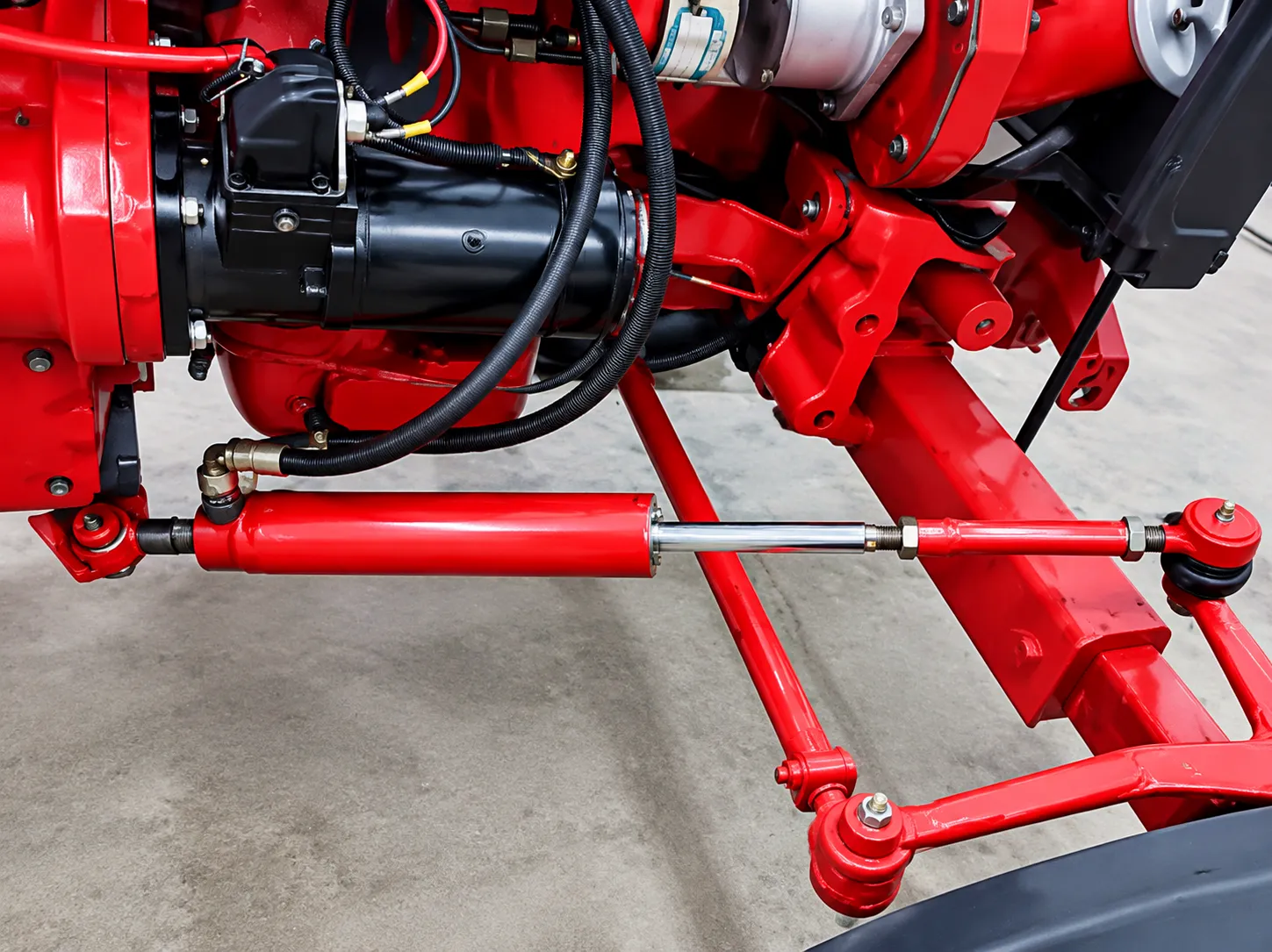
 Cavitation is one of those failure mechanisms that hides in plain sight. Inside a hydraulic steering cylinder operating under fluctuating load — whether it’s a heavy-goods articulated lorry navigating the roundabouts of Birmingham’s ring road network, an agricultural tractor working the clay-heavy fields of East Anglia, or a marine deck crane on a port vessel out of Southampton — the conditions that breed cavitation are almost always present. The pressure transitions are rapid. The oil temperature cycles widely. The working fluid degrades over time. And yet the early signs rarely announce themselves loudly enough for a routine inspection to catch them without knowing precisely where and how to look.
This guide is built for the engineer who already understands the fundamentals of hydraulic cylinder operation and wants to move one level deeper — into the specific visual markers, measurement tolerances, material evidence, and operational symptom profiles that reliably distinguish genuine cavitation erosion from other wear patterns inside a steering cylinder. Understanding what you are looking at, and why it formed, is the difference between a targeted repair and a recurring failure.
What Cavitation Actually Does Inside a Steering Cylinder
Phase Collapse Mechanism
When a steering cylinder’s piston rod retracts rapidly — particularly under high back-pressure or when the pump struggles to keep the return line filled — localised zones of the fluid drop below the vapour pressure of the hydraulic oil. At that threshold, dissolved gases and oil vapour nucleate into microscopic bubbles. These bubbles are not stable. They travel with the fluid flow and, within milliseconds, they encounter a higher-pressure region. The collapse is violent and asymmetric. The surrounding liquid accelerates inward and creates a microjet with impact pressures that routinely exceed 1,000 MPa — enough to plastically deform hardened steel alloys and carve out the characteristic cratered surface that engineers call cavitation pitting.
Why Steering Cylinders Are Vulnerable
Steering cylinders are doubly exposed compared to most hydraulic actuators. They operate with frequent, short-stroke direction reversals — exactly the duty cycle that generates the most aggressive pressure transients. The pump output often lags slightly behind the commanded steering demand, which creates the momentary inlet starvation that seeds vapour bubbles. At the same time, many steering circuit designs permit aeration through degraded reservoir seals or poorly routed return lines. Entrained air is chemically different from vapour cavitation but produces physically similar erosion when the bubbles implode. The bore surface, the piston face, and the entry geometry around port connections are the three zones where energy concentration during collapse is highest, making them the primary locations to inspect for damage.
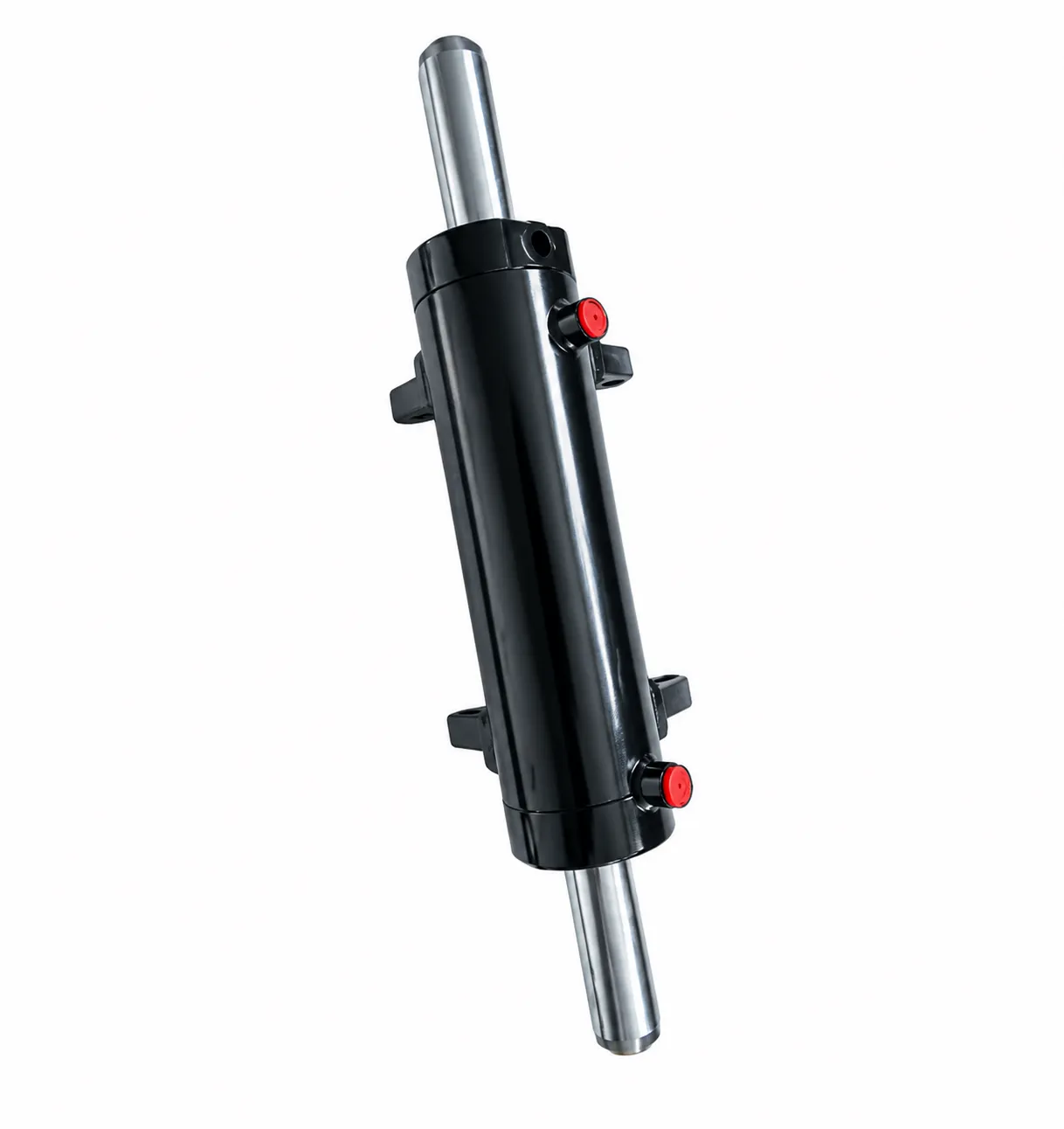
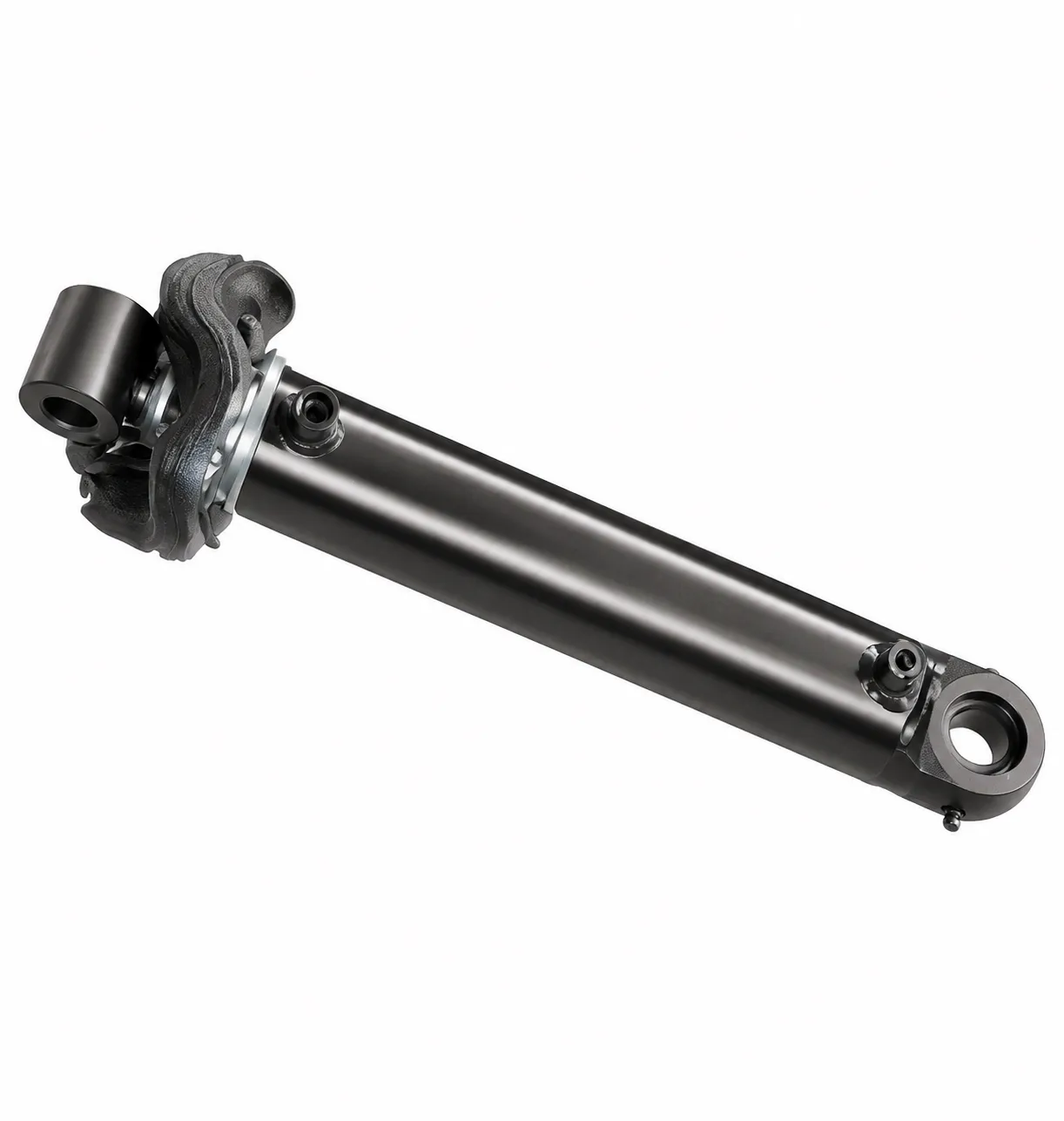
How to Identify Cavitation Damage: Visual and Dimensional Indicators
Surface Texture Examination
Remove the piston and rod assembly. Under adequate lighting — ideally a borescope for cylinders with bore diameters below 80 mm — look for a matte, orange-peel texture on polished surfaces. Genuine cavitation erosion produces dense clusters of hemispherical craters between 0.1 mm and 3 mm in diameter. The craters have sharp, work-hardened rims. Unlike corrosion pitting, which tends to have rounded edges and may show red or brown discolouration from iron oxide, cavitation craters retain a metallic, clean-edged appearance. The distribution pattern matters: cavitation concentrates at port entry zones and at the piston face perimeter, not uniformly across the bore. Abrasion from contamination, by contrast, produces directional scratch marks aligned with the stroke direction.
Dimensional Deviation Measurement
Use a bore gauge or coordinate measuring arm at the port-adjacent zones — the first 40 mm beyond each port opening is the highest-risk area. Measure bore diameter at eight evenly spaced angular positions and compare against the original honed tolerance, which for most steering cylinders sits between H7 and H8 (typically ±0.025 mm for an 80 mm bore). Cavitation that has progressed beyond early-stage pitting will produce measurable out-of-round conditions. A bore that has expanded by more than 0.08 mm in its worst quadrant while remaining within tolerance elsewhere is a signature cavitation pattern — the collapse events are directional and aligned with the fluid jet entering the port. This asymmetric wear cannot be corrected by standard honing alone once the depth exceeds 0.3 mm.
Fluid Analysis Cross-Reference
Send a 100 ml sample of the working fluid to a hydraulic oil analysis laboratory — a service readily available through specialist providers in Sheffield, Coventry, and Manchester. Request particle count (ISO 4406), water content, ferrous particle concentration, and spectroscopic wear metal analysis. Cavitation produces a distinctive fluid contamination signature: elevated silicon content is often absent (distinguishing it from external ingestion), but ferrous wear metal counts are disproportionately high relative to total particle count. The particles are spherical or sub-spherical under magnification — characteristic of high-energy impact fragmentation rather than sliding wear. A ferrous concentration above 80 ppm in a circuit with less than 3,000 operating hours, combined with a visual inspection showing localised pitting, constitutes a reliable dual-confirmation of cavitation as the dominant failure mechanism.
Seal and Rod End Inspection
Examine the piston seals for micro-extrusion or nibbling at the seal lips. When cavitation is active, the pressure spikes — both the positive impact waves and the negative suction transients — exceed the fatigue limit of standard polyurethane seals within a remarkably short period. Seals that show lip tearing, hardening with cracking, or extrusion into the clearance gap despite being within their rated temperature range are strongly indicative of hydraulic shock loading consistent with cavitation collapse. The rod seal gland area is a secondary inspection point: ingested air from a leaking rod seal is a common aeration source that amplifies the cavitation intensity, so physical evidence of air bubbling at the rod during slow-cycle operation should be noted and cross-referenced with the internal bore findings.
Material Failure Modes: What Cavitation Attacks and Why
Cylinder Barrel — Honed Bore Steel
The barrel is typically manufactured from EN10025-grade S355 seamless tube or equivalent CK45 cold-drawn steel, honed to a surface roughness of Ra 0.2 to Ra 0.4 microns. The hardness of the base material, around 170-210 HB in standard specification, is insufficient to resist the repeated micro-forging action of cavitation collapse jets. Premium steering cylinder barrels use induction-hardened bore surfaces reaching 55-60 HRC, which provides measurably better cavitation resistance — roughly 3 to 4 times the crater depth threshold before loss of seal function. When inspecting a failed barrel, examine whether the cavitation craters have penetrated the hardened layer into the softer substrate, as this determines whether relining is viable.
Piston Rod — Chrome or HVOF Coated
Chrome-plated piston rods (standard hard chrome, 25-50 microns thick) are particularly susceptible to cavitation at the transition zones between the chrome layer and the base steel at each end of the plated region. The chrome is harder than the substrate but brittle. Cavitation collapse events create subsurface shear stresses that can delaminate the chrome coating from the inside, producing blistering visible as raised, silvery bubbles on the rod surface. High-Velocity Oxygen-Fuel (HVOF) sprayed coatings of tungsten carbide-cobalt or chromium carbide-nickel chromium are significantly more resistant, owing to their graded microstructure and much lower porosity. If a steering cylinder’s rod shows chrome blistering clustered at the rod entry seal zone, the root cause is almost certainly cavitation-induced shock pulses rather than external mechanical damage.
Steering Cylinder Technical and Performance Parameters
Application Scenarios Where Cavitation in Steering Cylinders Is a Known Risk
Understanding which environments accelerate cavitation damage helps engineers specify the right cylinder grade before failure occurs — not after.
HGV and Articulated Lorry Steering — M6 and A14 Corridors
Large goods vehicles operating on the UK motorway network — particularly heavily laden combinations navigating roundabouts and junction slip roads at speed — subject their steering cylinders to the most demanding pressure reversal sequences in any on-road application. Vehicles managed from distribution hubs around Coventry, Rugby, and Northampton, which are at the heart of the UK’s logistics triangle, typically accumulate high annual steering actuation counts. The combination of heavy axle loads, frequent tight-radius manoeuvring, and the tendency of ageing power steering pumps to cavitate as internal clearances grow makes this one of the highest-prevalence sectors for steering cylinder cavitation damage in the British transport fleet.
Agricultural Machinery Steering — UK Arable and Livestock Farms
High-horsepower tractors used across UK arable regions — from the Lincolnshire Fens to the chalk downlands of Wiltshire — operate their steering systems in demanding low-speed, high-torque conditions during field work. Headland turns at full hydraulic demand, combined with the low fluid temperatures common during early morning winter planting operations, create exactly the fluid viscosity and pump inlet restriction conditions that promote aeration-driven cavitation. The seasonal nature of the duty cycle also means cylinders may sit partially retracted for months, allowing moisture ingress and fluid degradation that further lowers the cavitation inception threshold when the machine returns to service.
Crane and Lifting Equipment — Port Operations, Bristol and Felixstowe
Mobile harbour cranes and ship-mounted deck cranes use steering cylinders in their slewing and positioning mechanisms. At UK deepwater container ports — Bristol, Felixstowe, Southampton — these machines operate year-round in saline, humid environments with wide temperature swings. The demand for precise, repeatable positioning under varying boom angles creates rapid pressure cycling in the steering circuit. Salt contamination accelerates seal degradation, which in turn introduces air into the circuit and sets up the aeration pathway for cavitation. Maintenance schedules that prioritise boom and hook systems sometimes underinvest in hydraulic fluid conditioning, leaving steering circuits running on degraded oil well beyond the recommended change interval. Products like the Truck Crane Main Boom Luffing Cylinder — Φ280×3507mm, 31.5MPa demonstrate the engineering demands of these high-cycle port crane applications.
Warehouse Handling and Forklift Steering — Distribution Centres
Counterbalance forklifts and reach trucks in large-scale UK distribution and logistics warehouses — particularly the massive facilities around Milton Keynes, Daventry, and the East Midlands logistics corridor — operate their steering cylinders for thousands of lock-to-lock cycles per working day. This intensity creates chronic low-level cavitation that is rarely severe enough to generate dramatic symptoms but accumulates damage steadily over a 3 to 5 year service period. The Compact Forklift Attachment Hydraulic Cylinder addresses this challenge with reinforced bore geometry designed specifically for multi-shift distribution centre operation, where steering duty cycles far exceed the assumptions baked into standard catalogue products.
Operational Symptoms That Point to Cavitation Before Disassembly
Not every cavitation event can wait for a scheduled overhaul. These in-service indicators allow a trained operator or maintenance engineer to build a case for targeted inspection without taking the machine out of service prematurely or — more importantly — leaving it in service too long.
Rattling or Gravel-Like Noise
A distinctive high-frequency rattling or gravel-in-a-drum sound during steering actuation — particularly at cold start — indicates bubble collapse events inside the cylinder or pump. This differs from the soft hiss of a seal leak and the grinding of metallic contact. The noise typically intensifies at maximum lock position where port restriction is highest.
Abnormal Fluid Temperature Rise
Cavitation converts hydraulic energy into heat rather than useful mechanical output. A steering circuit running 15°C or more above the comparable baseline at the same ambient temperature and duty, without an obvious external heat source, is indicative of significant cavitation energy dissipation. Track reservoir temperature over a full working shift and compare against logged historical data if available.
Sluggish or Jerky Steering Response
When cavitation erosion has progressed to the point where the bore diameter has opened beyond acceptable tolerance, the piston seals begin to bypass. The initial manifestation is not a full leak but an inconsistent, jerky extension response — the cylinder moves smoothly until it reaches the damaged bore zone, then stutters. Drivers and operators often report that steering “feels different” or requires more wheel effort before any external fluid loss is visible.
Foamy or Discoloured Fluid
Check the reservoir sight glass during operation. Aeration-type cavitation produces persistent foam at the surface and a milky or frothy appearance in returned fluid. True vapour cavitation leaves the fluid clearer but may produce a slightly darker tan hue from thermal oxidation products. Both conditions warrant immediate fluid sampling and internal inspection of the steering cylinder rather than simply topping up and continuing operation.
Ever Power: Precision Manufacturing and Customisation for Cavitation-Resistant Steering Cylinders
Ever Power operates dedicated steering cylinder manufacturing lines with a specific engineering focus on the conditions that allow cavitation to develop — and the design interventions that prevent it from doing so. The manufacturing process begins at the tube selection stage: Ever Power sources CK45 and 27SiMn seamless tube to DIN EN 10305-4 specification, with third-party certifications available on request for UK clients requiring BS EN traceability. Every barrel destined for a high-cycle or high-pressure steering application undergoes induction hardening of the bore surface to a depth of 1.5 to 3 mm, with the hardened layer independently tested by Vickers hardness mapping at five axial positions before proceeding to the plateau-honing stage. This process produces a bore surface that is not only dimensionally precise but structurally optimised to resist the repeated impact energy of bubble collapse events.
The customisation capability at Ever Power covers port geometry — a frequently overlooked cavitation influencer. Standard catalogue cylinders are machined with ports sized and angled for average-case flow rates. When a specific machine’s hydraulic system is characterised by higher-than-average flow velocity at the port entry, Ever Power’s engineers rework the port geometry to reduce the turbulence and pressure differential that nucleates cavitation bubbles. This is a zero-cost modification for orders above minimum quantities and requires only the customer’s hydraulic system flow data and operating pressure range, which the Ever Power UK-facing technical team can review and assess within 48 hours of a quotation request.
Rod coating selection is another area where Ever Power’s depth of manufacturing experience becomes commercially meaningful. Rather than defaulting to standard hard chrome, Ever Power offers HVOF tungsten carbide-cobalt as a standard upgrade on steering cylinder rods for demanding applications — available in 150 to 300 micron thickness depending on the client’s abrasion and cavitation resistance requirements. All coatings are applied in-house on dedicated HVOF lines and are inspected for porosity and adhesion prior to despatch. UK procurement teams managing fleets across Birmingham, Leeds, Sheffield, and Teesside regularly specify Ever Power steering cylinders as direct-fit replacements for OEM parts, citing the superior coating longevity as the primary decision factor in total-cost-of-ownership calculations.
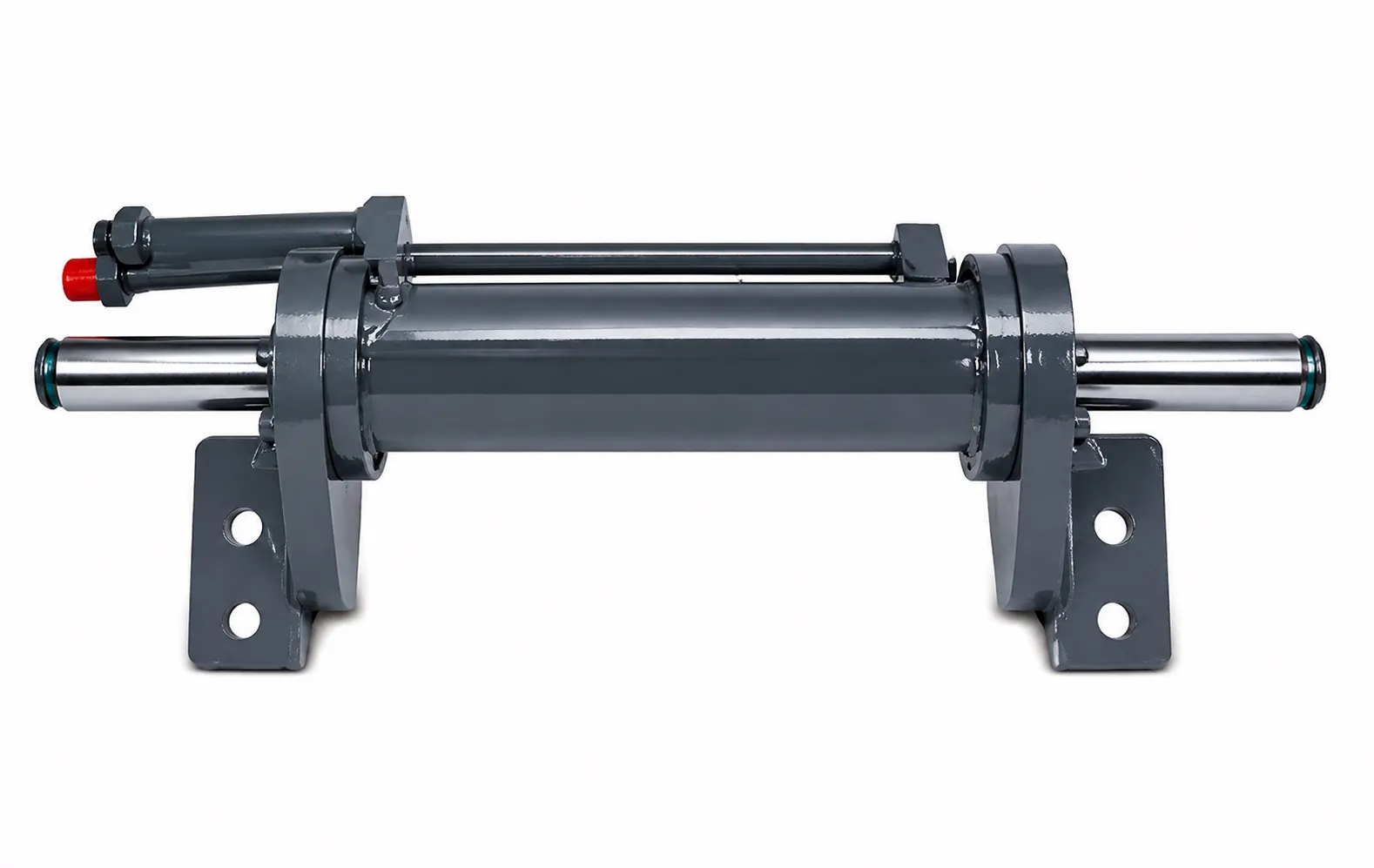
Manufacturing Capabilities
Ready to specify a steering cylinder built to resist cavitation from the first operating hour? Send your bore diameter, working pressure, and operating duty cycle to the Ever Power engineering team for a no-obligation technical assessment and competitive quotation.
Customer Success: Sheffield Steel Products Group — Heavy Plant Fleet Restoration
Application
Wheeled Loading Shovels — Steel Scrap Yard and Coil Handling, Sheffield, South Yorkshire
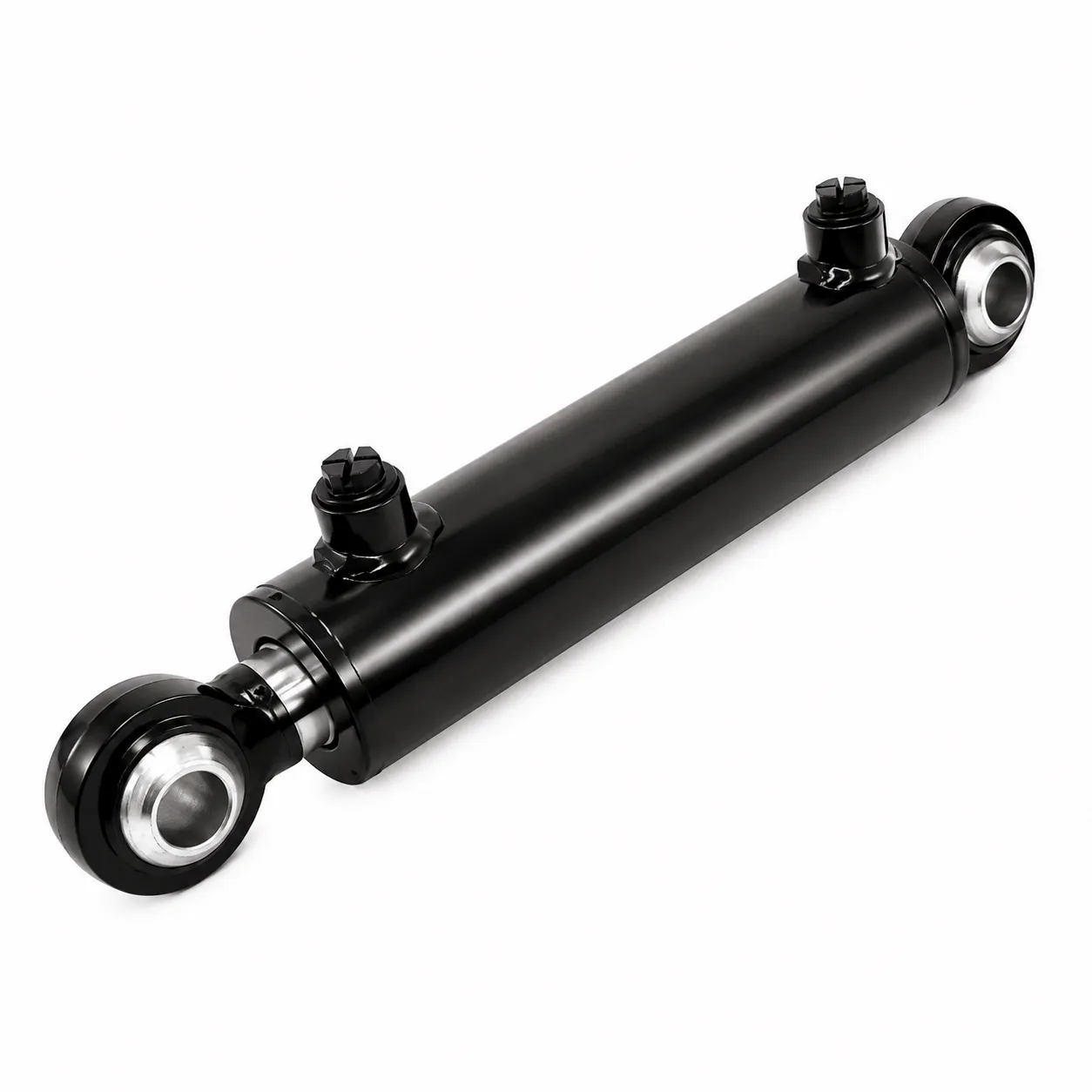 Sheffield Steel Products Group operates a fleet of seven heavy wheeled loading shovels across two sites in the Don Valley area of Sheffield, handling scrap steel, coil stock, and feedstock for a downstream rolling mill. The machines work multi-shift patterns in an environment characterised by steel dust contamination, wide temperature swings between heated buildings and open yard areas, and extremely high steering actuation rates — the shovels perform up to 300 full lock-to-lock steering cycles per hour during peak coil-sorting operations. Over a 36-month period, the fleet’s maintenance team found themselves replacing steering cylinder assemblies on three machines due to progressive internal leakage, at a unit cost that was straining the annual maintenance budget.
Following disassembly and inspection of the failed cylinders — an inspection conducted using the bore gauge protocol described in the identification section above — the maintenance engineering lead confirmed cavitation erosion as the primary failure mechanism in all three units. The damage pattern was consistent: dense crater clusters at the port entry zone on the bore inner surface, measurable out-of-round in the port-adjacent quadrant, and chrome blistering on two of the three piston rods. The fluid samples from all machines showed ferrous particle counts in the 90 to 130 ppm range at the point of failure, consistent with progressive cavitation-driven metal removal.
The group’s procurement manager contacted Ever Power, specifying the original bore diameter (120 mm), stroke length (560 mm), working pressure (22 MPa), and providing the hydraulic system flow data that the Ever Power team used to re-engineer the port geometry to reduce inlet turbulence. The replacement cylinders were supplied with induction-hardened bores, HVOF-coated rods, and PTFE-backed HNBR composite piston seals. Eighteen months after installation across all seven machines, no replacement has been required. Fluid analysis at the 12-month interval showed ferrous particle counts below 30 ppm — a reduction of over 70% compared to the pre-failure baseline — confirming that the root cause had been addressed at the design level rather than simply deferred.
What UK Engineers Say About Ever Power Steering Cylinders
“We had three steering cylinder failures in under two years on our loading shovels — all down to internal cavitation. Ever Power’s team actually looked at our flow data before sizing the replacement, which nobody else offered to do. Twelve months in, we’ve had zero failures and our oil analysis looks completely different. The bore quality is noticeably better than the OEM parts we came off.”
D. Hartley, Fleet Engineering Manager — Sheffield Steel Products Group, South Yorkshire
“I specified Ever Power steering cylinders for our dock crane refurbishment at the port of Bristol — induction-hardened bore, HVOF rod coating, the full package. We’re now past 18 months of continuous operation in a salt-laden environment and the cylinders are performing as new. The technical response time was exceptional for an overseas supplier — I had a full port geometry analysis back within 24 hours of sending over our hydraulic circuit data.”
R. Pembridge, Hydraulic Systems Engineer — Port Plant Services Ltd, Bristol
“We manage a 40-vehicle HGV fleet running out of Coventry and the steering cylinder wear rate was costing us significant unplanned downtime. Ever Power supplied a custom-spec cylinder with upgraded seals and a redesigned port entry — the lead time was competitive and the technical documentation was thorough enough to satisfy our internal engineering sign-off requirements. Steering response on the rebuilt vehicles is actually sharper than factory spec.”
T. Ashworth, Head of Vehicle Maintenance — Midlands Freight Co., Coventry, West Midlands
Frequently Asked Questions
Questions from UK hydraulic engineers, fleet maintenance managers, and procurement specialists.
Ever Power Engineering
Engineering Out Cavitation — One Cylinder at a Time
Custom steering cylinder manufacturing with induction-hardened bores, HVOF rod coatings, and precision port geometry — specified for UK industrial and heavy equipment applications. Contact us for a technical assessment and quotation.
📧 Get a Quote: [email protected]
edit by gzl