
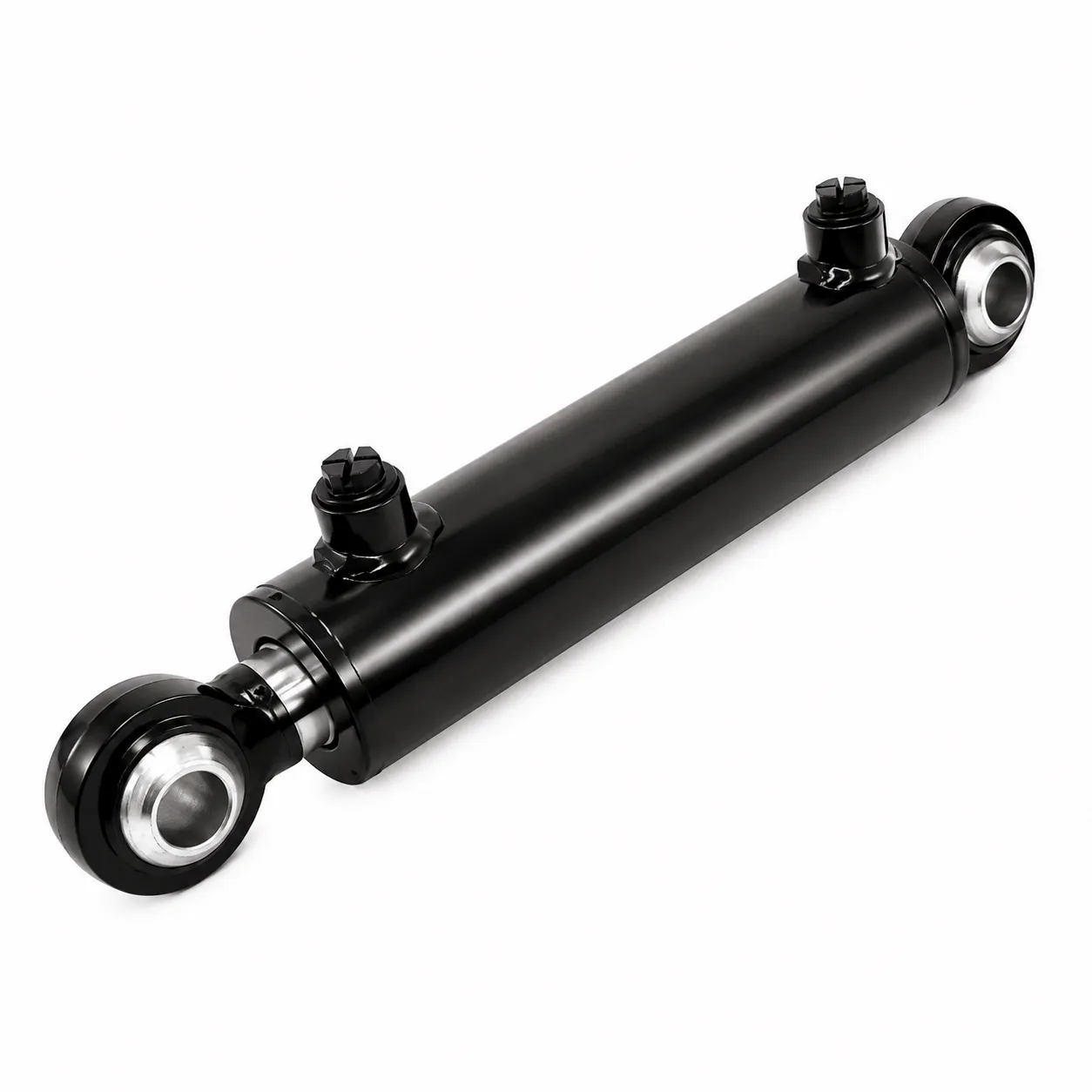
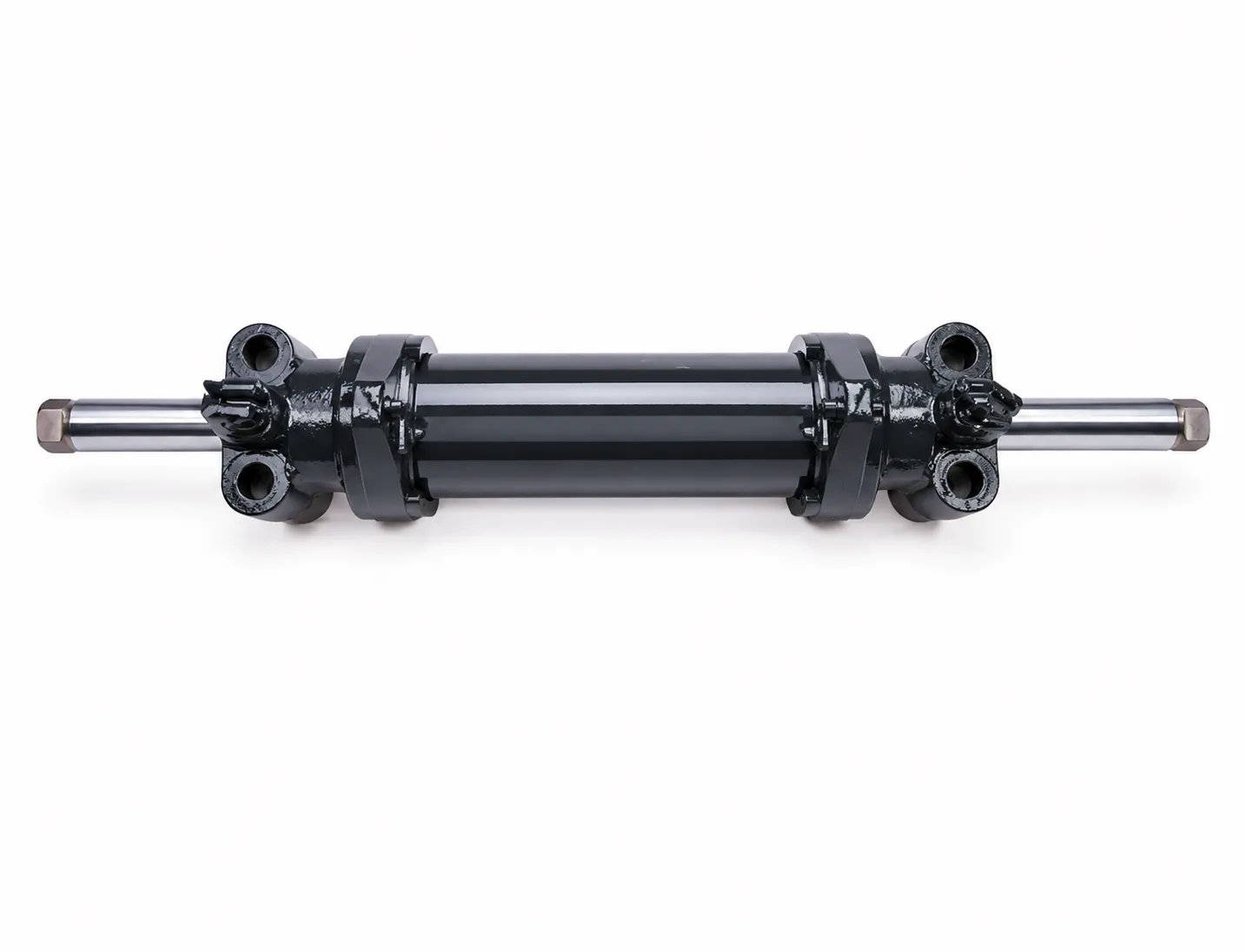
 The engineering gap between a conventional hydraulic steering cylinder and an electro-hydraulic unit is not merely a matter of added electronics. It is a fundamental rethinking of how force generation, directional control, and positional feedback coexist within a single actuator system. Conventional cylinders rely entirely on an external hydraulic circuit — pumps, directional control valves, and manual or mechanically actuated pilot signals — to produce motion. The cylinder itself is passive: it converts pressure into linear displacement without any awareness of where it is, how fast it is moving, or whether it has reached its commanded position. In contrast, an electro-hydraulic steering cylinder integrates electronic control directly into the actuation architecture, transforming the cylinder from a passive force element into an intelligent, self-correcting actuator capable of closed-loop positioning.
Specify the right steering cylinder for your application — our engineers are ready.
Working Principle: Closed-Loop Electro-Hydraulic Actuation
How intelligence and force combine in a single actuator
Signal Input & Control Electronics
The electro-hydraulic steering cylinder begins its operating cycle when it receives a command signal — typically a CAN bus message, a 4–20 mA analogue current loop, or a PWM signal from a vehicle’s electronic control unit (ECU) or industrial PLC. A dedicated onboard electronics module, often referred to as an integrated valve-electronics assembly (IVEA), interprets this command and converts it into a proportional solenoid valve actuation signal. The proportional valve modulates flow and pressure with a resolution typically between 0.1% and 0.5% of full scale, enabling extremely fine control over the rate and magnitude of piston displacement. This granularity is simply not achievable with manually operated directional valves or mechanically piloted systems, which are inherently step-change in nature.
Hydraulic Actuation & Force Generation
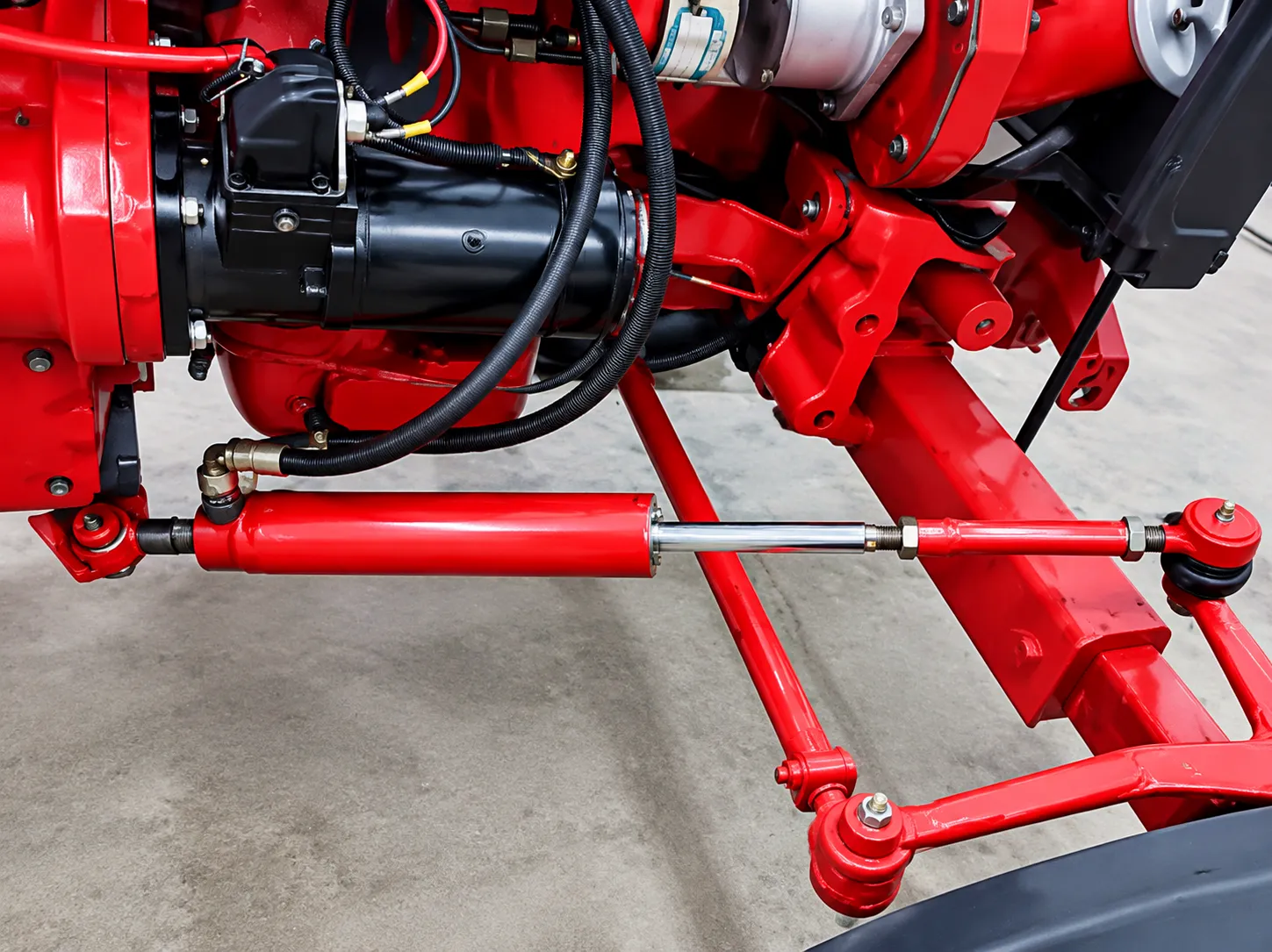
Downstream of the proportional valve, the hydraulic actuation sequence proceeds conventionally: regulated fluid enters the appropriate cylinder port, acts on the piston face, and generates the required linear force and stroke. What distinguishes the electro-hydraulic cylinder here is that the internal geometry — bore diameter, rod diameter, and port sizing — has been optimised to work in tandem with the electronic control range of the valve. Operating pressures typically run from 21 MPa to 35 MPa in steering applications, and bore diameters from 80 mm to 280 mm span the range from compact agricultural steering rams to heavy crane slewing cylinders. The cylinder body must accommodate both the hydraulic loads and the wiring harness routing for the sensor and electronics packages, which informs the manufacturing tolerances applied to the end cap and barrel bores — typically H7/f7 or tighter.
Position Feedback & Closed-Loop Correction
The defining feature that separates electro-hydraulic steering cylinders from all conventional designs is the embedded position sensor — typically a magnetostrictive linear transducer (MLT), a draw-wire encoder, or a Hall-effect inductive sensor installed along the cylinder axis. This sensor continuously reports actual piston position to the IVEA at update rates of 500 Hz to 2000 Hz. The controller then computes the positional error (difference between commanded and actual position) and issues corrective valve commands in real time. The result is a closed-loop servo system capable of achieving positional repeatability of ±0.1 mm to ±0.5 mm across the full operating stroke — a performance level that conventional open-loop hydraulic cylinders cannot approach, regardless of how precisely they are manufactured.
Core Materials: Engineering for Longevity Under Load
Material science choices that define cylinder service life
Cylinder Barrel — Cold-Drawn Seamless Steel Tube
The barrel is machined from cold-drawn seamless steel tube (CDST) to grade E355 or equivalent — a material that combines a minimum yield strength of 355 MPa with excellent dimensional consistency and low residual stress. The internal bore is honed to Ra 0.4 µm or better using a multi-pass diamond-tool honing process that generates a cross-hatch surface pattern. This pattern retains lubricating oil film between the piston seal and bore wall, reducing stick-slip friction that would otherwise compromise the positional resolution of the closed-loop control system. Unlike cast iron barrels still found in some conventional designs, the CDST barrel tolerates the shock loading inherent in off-highway steering applications without propagating fatigue cracks from grain boundaries.
Piston Rod — Hard Chrome or HVOF Tungsten Carbide
The piston rod in an electro-hydraulic steering cylinder faces a compound challenge: it must maintain precise dimensional tolerance across its entire stroke length — often 200 mm to 1500 mm — while resisting abrasion, corrosion, and impact from environmental debris. Rods are forged from 42CrMo4 (AISI 4140) alloy steel, induction hardened to 55–62 HRC, then coated with either hard chrome plate (HCP) to a depth of 0.025–0.040 mm or high-velocity oxygen-fuel (HVOF) tungsten carbide, which delivers superior resistance to pitting corrosion. In coastal UK deployments — marine cranes in Teesside, offshore support vessels — HVOF coating is standard because its bond strength and porosity resistance surpass hard chrome’s by significant margins, preventing the chloride-induced underfilm corrosion that shortens rod life in saline environments.
Seal Materials — Polyurethane, PTFE & Nitrile Composite
Seal selection in electro-hydraulic steering cylinders deserves more engineering attention than in conventional units because seal-induced friction is a direct source of positional error and hysteresis — effects that the closed-loop controller must continuously compensate for. High-performance sealing systems combine a polyurethane rod wiper with a PTFE-backed lip seal and a nitrile rubber O-ring static seal at each port boss. This three-element approach achieves leakage rates below 0.1 cm3/h at 35 MPa working pressure while reducing breakout friction to below 2% of the cylinder’s rated load capacity. Temperature range is critical in UK applications where equipment must operate reliably from -25°C on winter Scottish Highlands sites to +80°C under sustained hydraulic cycling — a range that polyurethane and PTFE seals accommodate comfortably, unlike older NBR-only seal stacks.
End Caps & Mounting Lugs — Ductile Iron & Forged Steel
End caps must carry the full hydraulic end-load — which at 35 MPa and a 200 mm bore reaches approximately 1,100 kN — in addition to the bending moments generated by off-axis loading in steering applications. Ductile iron (GGG-70) provides the combination of tensile strength (700 MPa), elongation (2%), and machinability required for complex port geometries, but is replaced by forged carbon steel (C45E or 42CrMo4) when mounting lug geometry involves thin walls or when fatigue life must exceed 2 million cycles. Mounting interfaces — clevis, trunnion, spherical-joint flange — are manufactured with positional tolerance of ±0.05 mm to ensure that the cylinder’s geometric axis aligns with the machine frame’s design axis, preserving the accuracy of the closed-loop steering system.
Product Advantages: What Electro-Hydraulic Architecture Actually Delivers
Six capabilities that change what is possible in precision steering
Precision Positioning Unavailable to Conventional Designs
The closed-loop feedback architecture of electro-hydraulic steering cylinders enables positional repeatability in the range of ±0.1 mm to ±0.5 mm — performance that cannot be replicated by conventional open-loop cylinders regardless of their manufacturing quality. In precision agricultural steering (GPS-guided ploughing, for example) or in industrial cranes requiring exact boom positioning, this level of accuracy translates directly into reduced material waste, improved safety margins, and qualification for automated control architectures that manual hydraulic systems simply cannot support.
Energy Efficiency Through Flow-On-Demand Control
Conventional hydraulic circuits continuously deliver full pump flow regardless of whether the cylinder is in motion, dissipating energy as heat through the relief valve. Electro-hydraulic steering systems use load-sensing or variable-displacement pump control integrated with the cylinder’s electronic demand signal: hydraulic flow is generated only when the actuator requires it, and at only the pressure and flow rate needed to maintain position. Field measurements on UK agricultural machinery fitted with electro-hydraulic steering cylinders have shown fuel savings of 8–14% compared with fixed-displacement open-centre circuits, a meaningful figure across an entire harvest season or a large construction fleet.
Automated Diagnostic & Predictive Maintenance Capability
Because the IVEA continuously monitors valve command versus actual piston response, it accumulates a rich dataset of the cylinder’s dynamic behaviour over time. Drifting response time, increasing hysteresis, or rising static friction are all detectable before they cause operational failure. Modern electro-hydraulic steering cylinders can export this data via CAN bus or ISOBUS to fleet management platforms, generating predictive maintenance alerts that allow planned replacement of seals or sensor elements during scheduled service windows — rather than unplanned breakdowns mid-operation. For large UK construction contractors with fleets dispersed across sites from the Scottish Highlands to the Somerset Levels, this capability has measurable impact on total cost of ownership.
Safety Architecture: Fail-Safe & Redundant Position Monitoring
Electro-hydraulic steering cylinders designed to PLd/SIL2 safety standards (as required for self-propelled machinery under the UK Machinery Directive retained post-Brexit) incorporate redundant sensor channels: if the primary position sensor diverges from the secondary channel by more than a defined threshold, the system transitions to a safe state — typically a controlled return to a defined position followed by a diagnostic alert. Conventional hydraulic cylinders have no such self-monitoring capability: they remain in their last commanded position or drift freely under load, with no automatic protective response. This difference in safety architecture is increasingly the deciding factor for UK H&S procurement decisions.
Software-Configurable Operating Profiles
A single physical electro-hydraulic steering cylinder can serve multiple operating modes — aggressive steering for rough terrain, precision mode for GPS guidance lines, travel speed limiting for road transport — simply by uploading different controller parameter sets. This eliminates the need for physically different cylinders across operating modes, reducing spare parts inventory and allowing OEMs to offer differentiating software-defined features on standard hardware platforms. For Birmingham-based agricultural machinery OEMs exporting globally, this software configurability is a significant design advantage that conventional hydraulic cylinders cannot offer without physical component changes.
Integration with Electrification & Hybrid Powertrains
As the UK construction and agricultural sectors transition toward electrified and hybrid powertrain architectures — driven by Net Zero commitments and ULEZ-type clean air zones expanding beyond London into Sheffield, Leeds, and Birmingham — the absence of a continuously running diesel-driven hydraulic pump creates a fundamental challenge for conventional steering systems. Electro-hydraulic steering cylinders solve this by coupling with electric motor-driven pump units that operate only when the actuator demands flow. The electronic interface between the steering cylinder and the electric powertrain is already in place within the cylinder’s own electronics module, making integration with 48V or 400V electric drivetrain architectures straightforward by comparison with conventional hydraulic circuits that require full hydraulic system redesign.
Technical Performance Parameters
Electro-hydraulic steering cylinder specification summary
| Parameter | Electro-Hydraulic | Conventional Hydraulic | Unit |
|---|---|---|---|
| Bore Diameter Range | 80 – 280 | 40 – 400 | mm |
| Operating Pressure | 21 – 35 | 7 – 35 | MPa |
| Positional Repeatability | ±0.1 – ±0.5 | ±2 – ±10 (open loop) | mm |
| Stroke Length | 100 – 2000 | 50 – 3000+ | mm |
| Control Signal Interface | CAN / PWM / 4–20 mA / ISOBUS | Mechanical / Pilot Pressure | — |
| Operating Temperature | -30 – +85 | -20 – +80 | °C |
| Sensor Update Rate | 500 – 2000 | N/A | Hz |
| Bore Honing Tolerance (Ra) | 0.2 – 0.4 | 0.4 – 0.8 | µm |
| Safety Rating | PLd / SIL2 (configurable) | PLb (typical) | — |
| Surface Coating (Rod) | HCP 25–40 µm / HVOF WC | HCP 15–30 µm typical | — |
Related Hydraulic Cylinder Products
Explore our precision hydraulic actuator range
Application Scenarios: Where Electro-Hydraulic Steering Cylinders Deploy
Industry-specific use cases with UK context
GPS-Guided Agricultural Tractors & Combines
In precision agriculture across the East Midlands and Yorkshire, GPS-guided tractors require steering cylinder positioning accuracy better than ±5 cm at the tyre contact patch — which translates to ±1 mm or less at the steering cylinder rod. Electro-hydraulic steering cylinders working in concert with RTK-GPS receivers and ISOBUS-connected auto-steer controllers achieve this precision routinely. Farms operating in the Vale of York and the Lincolnshire Wolds have reported yield-improvement benefits through tighter tramline spacing that is simply not achievable with manually operated hydraulic steering systems and visual driver guidance.
Mobile & All-Terrain Cranes — UK Construction Sector
All-terrain crane manufacturers supplying the UK market — with significant concentrations of lifting contractors around Greater Manchester, West Yorkshire, and the London infrastructure build programme — require electro-hydraulic steering cylinders for multi-axle pendular steering systems. These systems must coordinate eight or more axles simultaneously, with each axle’s steering cylinder tracking its commanded angle to within ±0.2 degrees. Achieving this with conventional hydraulic systems requires complex mechanical linkages prone to wear and adjustment drift; the electro-hydraulic approach replaces mechanical complexity with electronic position control, reducing maintenance intervals from weekly checks to annual inspection on leading crane platforms.
Marine Vessels & Offshore Support Ships — Humber & Clyde
Marine steering systems on offshore support vessels, wind farm servicing ships, and inland waterway tugs operating from ports including Hull, Aberdeen, and Greenock require electro-hydraulic steering cylinders qualified to DNV or Lloyd’s Register standards. The HVOF-coated rod surface and stainless steel end cap hardware standard on marine-grade units address the aggressive salt-water environment; the redundant sensor architecture satisfies SOLAS and MCA requirements for steering gear reliability. Fleet operators based at the Humber ports have adopted electro-hydraulic steering cylinder packages that integrate directly with the vessel’s integrated bridge system, enabling dynamic positioning assist without separate control hardware.
Heavy Haulage & Abnormal Load Vehicles
Abnormal load transport specialists operating across the UK’s motorway and A-road network — moving power transformers, modular building sections, wind turbine components and process vessels — rely on electro-hydraulic steering cylinders for their self-propelled modular transporters (SPMTs) and platform trailers. The ability to program steering profiles that conform to specific route permit requirements, hold exact crab-steer angles across roundabouts, and log position data for post-move compliance reporting makes electro-hydraulic cylinders the only practical choice at the precision and traceability level that UK STGO (Special Types General Order) enforcement increasingly demands.
Rail Maintenance Vehicles & On-Track Machines
Network Rail’s fleet of on-track machines — ballast regulators, tamping machines, and rail-mounted cranes operating from depots in Derby, York, and Doncaster — use electro-hydraulic steering cylinders in their road-rail vehicle conversion assemblies and in the working head alignment mechanisms. Railway authority procurement specifications now routinely require closed-loop position feedback and diagnostic data output as baseline requirements, driven by the need for predictive maintenance scheduling that minimises possession window usage. Electro-hydraulic designs satisfy these requirements with margin; conventional cylinders require supplementary position sensing equipment that adds cost and complexity.
Steel Mill & Process Industry Heavy Vehicles — Sheffield
Sheffield’s surviving steel and special alloys sector, alongside chemical process plants in Teesside, operates large-capacity internal transport vehicles — ladle carriers, coil transfer cars, torpedo vessels — that navigate restricted factory floor geometries with payloads exceeding 300 tonnes. Electro-hydraulic steering cylinders in these applications must deliver reliable operation through radiated heat, electromagnetic interference from induction furnaces, and aggressive floor contamination. The combination of robust CDST barrel construction, sealed and filtered electronics enclosures to IP67 or IP69K, and EMC-hardened electronics modules makes electro-hydraulic cylinders the only actuator technology capable of meeting these combined environmental demands reliably over multi-year service intervals.
Ready to Specify?
Tell our engineers your bore, stroke, pressure, and control interface requirements.
Customer Success Story: Precision Steering for Heavy Lift in Sheffield
From engineering challenge to validated solution
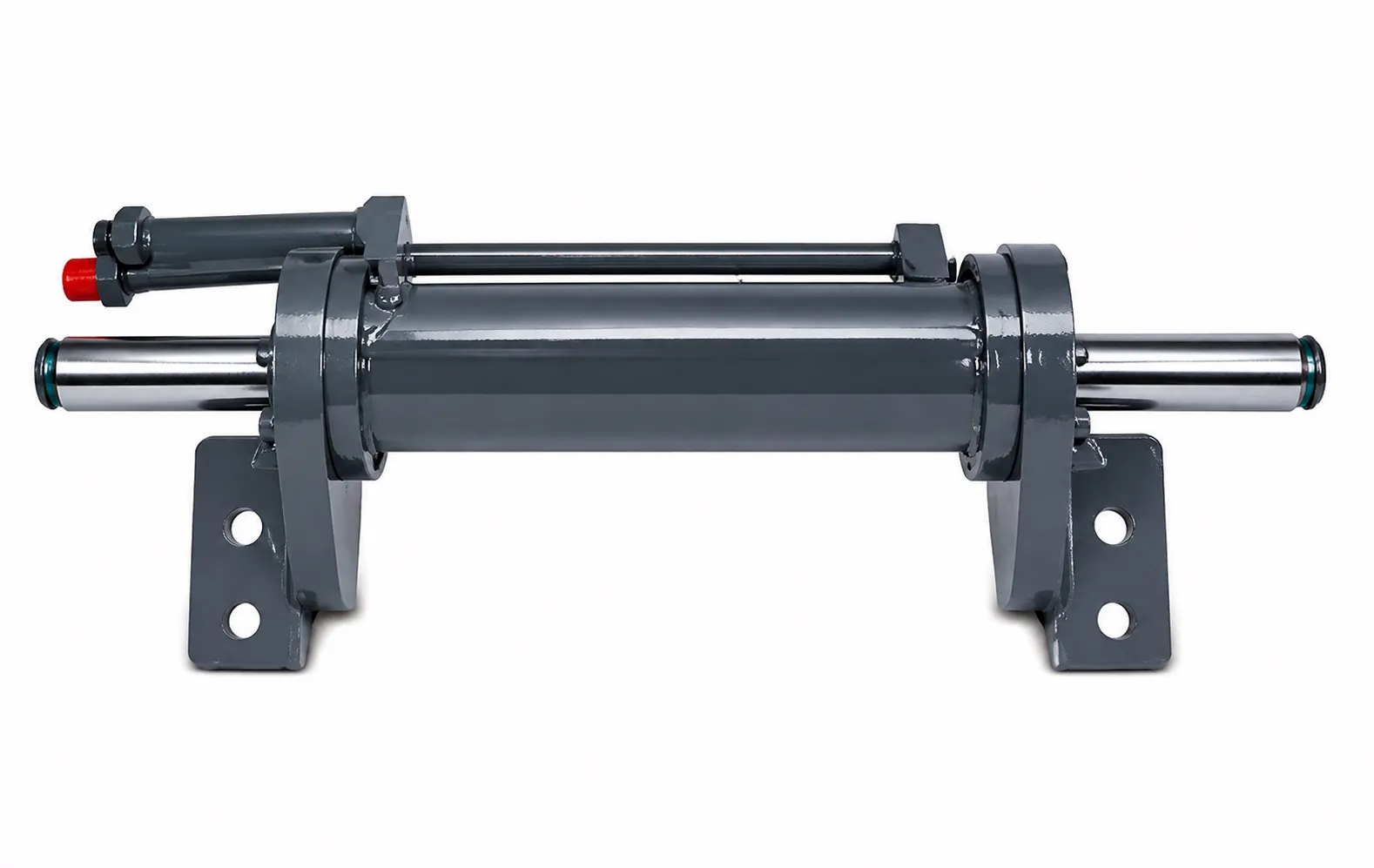 Bradgate Crane Solutions, a Sheffield-based heavy lift contractor with twelve five-axle all-terrain cranes serving the UK’s process plant and energy sector, faced an escalating maintenance problem with the pendular steering systems on their older fleet units. The conventional hydraulically-piloted steering cylinders required fortnightly manual adjustment of mechanical linkage geometry to maintain axle steering synchronisation within the ±0.5 degree tolerance specified by their working at height risk assessments. Each adjustment required the crane to be taken off-hire for half a day, costing approximately £4,200 per event in lost revenue and technician time — a cumulative annual cost across the fleet of over £290,000. The linkage adjustment tolerance itself was drifting: by the end of a two-week hire, several units were consistently operating outside specification, creating safety documentation gaps that their LEEA-audited quality system could not accommodate.
What Our UK Customers Say
“The closed-loop positioning accuracy we’re getting from the Ever Power cylinders is genuinely transformative — our five-axle crane now holds axle synchronisation to within 0.2 degrees for entire hire periods without a single manual adjustment. That consistency is something we were told wasn’t achievable without replacing the whole steering system electronics.”
James Thornton
Fleet Engineering Manager, Bradgate Crane Solutions, Sheffield
“We’d had two quotes from European suppliers at three times the price for customised electro-hydraulic steering cylinders with a 20-week lead time. Ever Power came back with a detailed technical proposal within 48 hours, a competitive price, and a six-week prototype delivery. The cylinders passed our acceptance tests first time and the commissioning support was genuinely excellent — responsive, technical, and practical.”
Sarah Brennan
Head of Procurement, Mersey Heavy Lift Contractors, Liverpool
“We specified Ever Power’s electro-hydraulic steering cylinders for our GPS auto-steer retrofit programme across fifteen combine harvesters operating in Lincolnshire. The integration with our ISOBUS auto-steer system was plug-and-play once the controller parameters were loaded. Steering accuracy on GPS guidance lines is now better than 2 cm at the tyre — a performance level we didn’t think was achievable at this price point.”
David Okafor
Technical Director, Fenland Precision Agriculture Solutions, Wisbech
Frequently Asked Questions
Real answers to the questions UK engineers and buyers ask most
Specify the Right Electro-Hydraulic Steering Cylinder
Whether you need a standard unit from buffer stock or a fully custom electro-hydraulic cylinder engineered to your precise application requirements, Ever Power’s team is ready to respond.
Get a Quote → [email protected]
edit by gzl