How Hydraulic Fluid Moves Through a Steering Cylinder
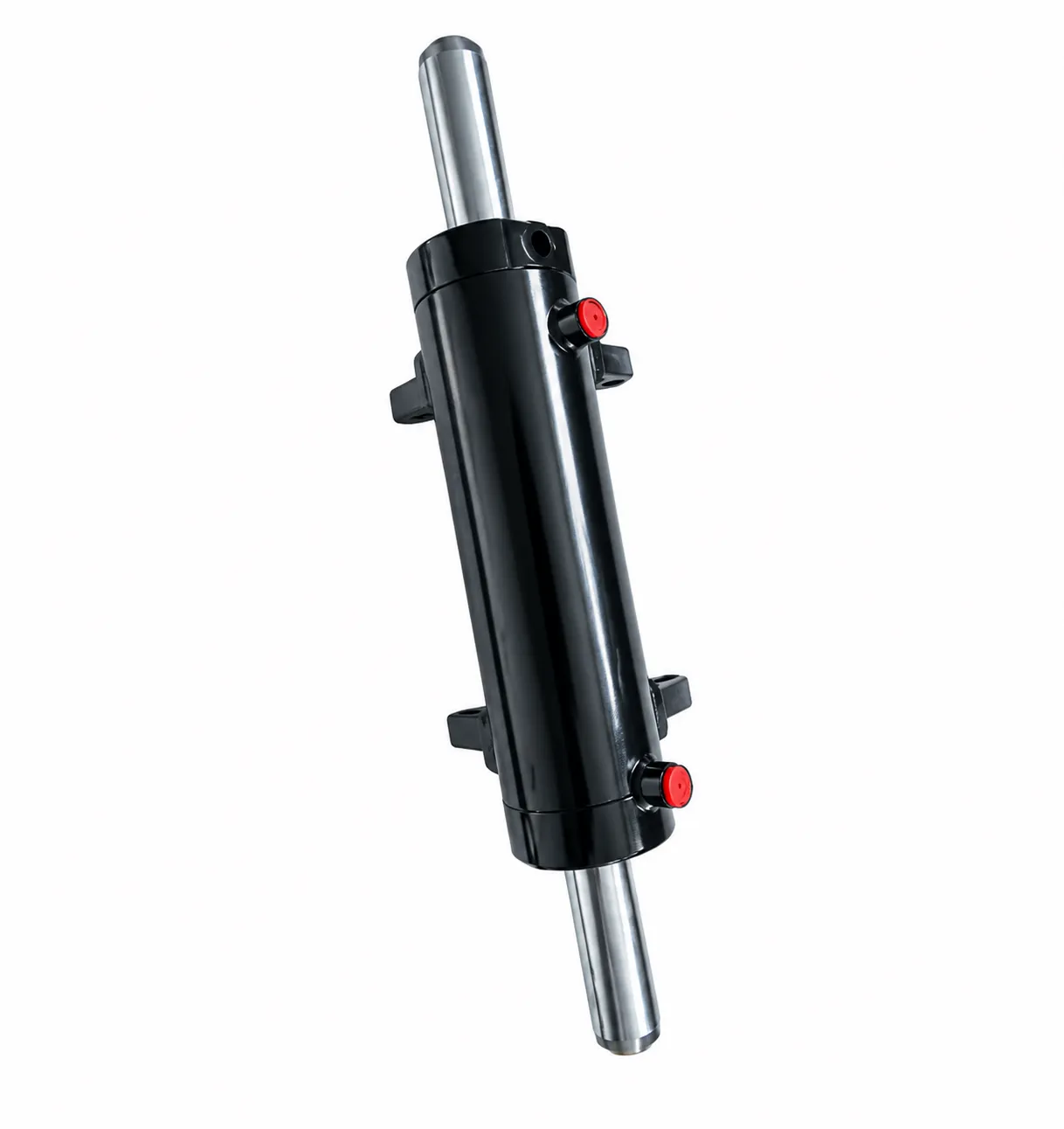
The operating principle of every hydraulic steering cylinder begins with Pascal’s Law: pressure applied to an enclosed, incompressible fluid transmits equally in all directions throughout that fluid. When a driver moves the steering wheel or an electronic control valve shifts position, the hydraulic pump generates pressure — typically between 100 and 250 bar in agricultural and industrial machines — and that pressure is directed to one of two ports on the steering cylinder body. Fluid enters the active chamber, builds force against the piston face, and drives the piston rod outward (or inward, depending on which port receives pressure). The opposite chamber simultaneously vents through the return line at low pressure back to the reservoir.
What makes this process more nuanced in steering cylinders than in simple linear actuators is the demand for differential-area management. In a double-acting cylinder — the dominant configuration in heavy steering systems — the rod-side chamber has a smaller effective area than the cap-side chamber because the rod itself occupies volume. Fluid volume flow rates must compensate for this asymmetry to maintain equal piston speeds in both directions. In well-engineered systems, this is handled through carefully calculated port sizing and metering valves upstream. Poorly balanced systems show the imbalance as sluggish or jerky response in one direction, which is a symptom often misattributed to the steering valve rather than the cylinder specification.
Pressure, Flow Rate, and Force: The Engineering Triangle
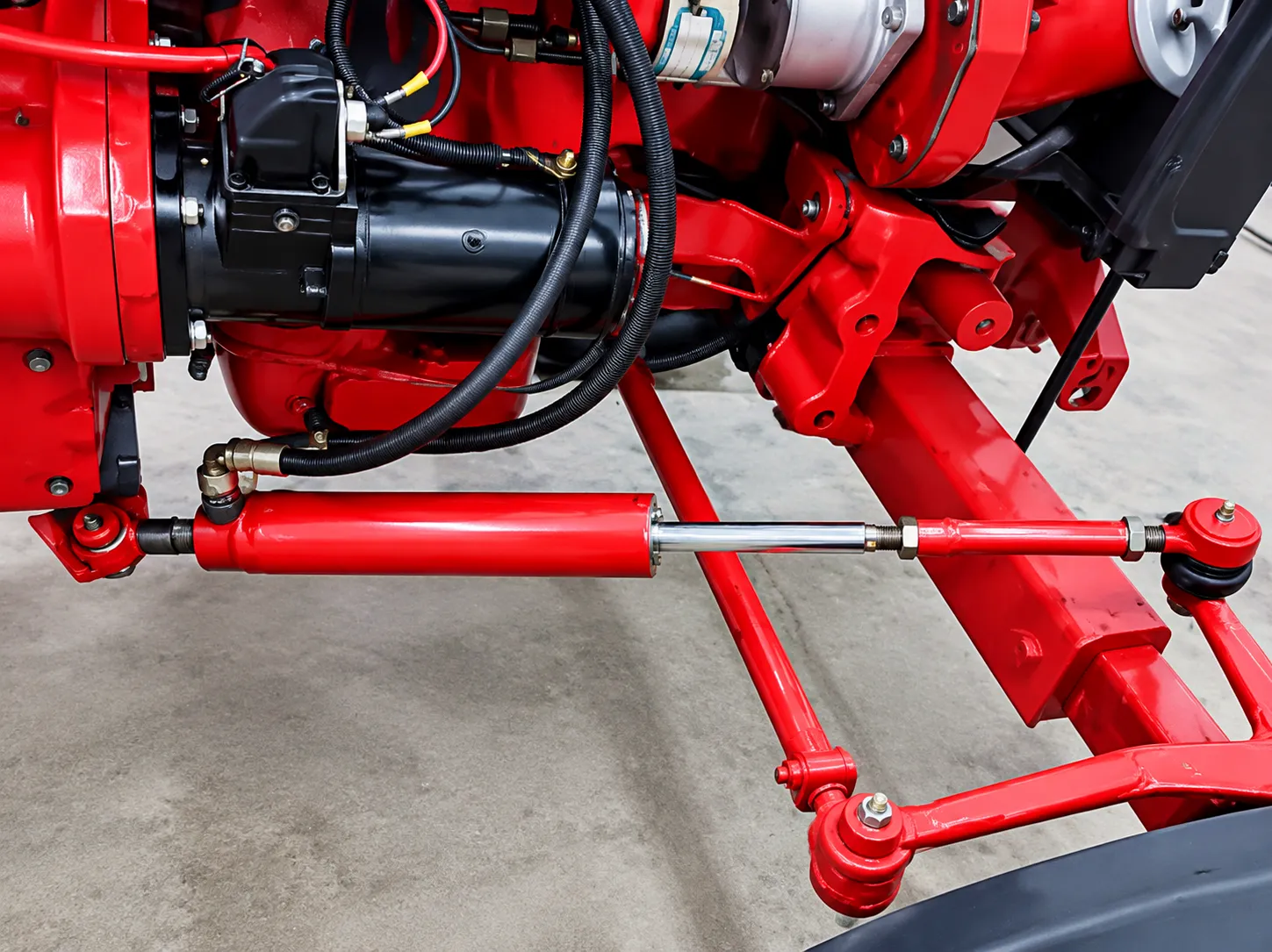
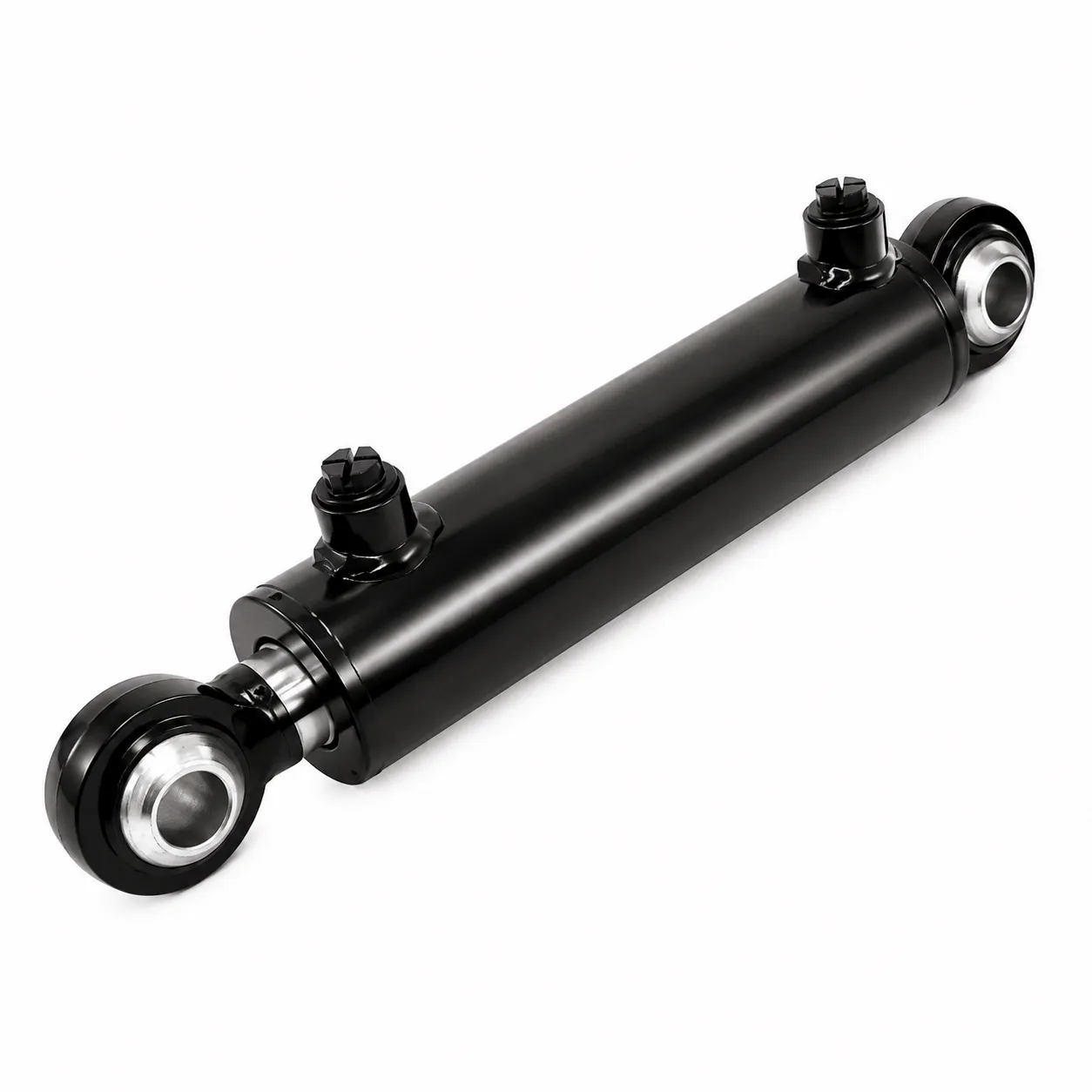 The mechanical output of a steering cylinder is always a product of three interacting variables: operating pressure (in bar or PSI), effective piston area (in cm²), and volumetric flow rate (in litres per minute). Force output is the product of pressure and area — so a cylinder with a 60 mm bore operating at 200 bar produces approximately 56.5 kN of push force from the cap side. That number matters enormously to vehicle designers, because it determines how much resistance the cylinder can overcome when pivoting a heavy axle assembly or pushing a loader boom through compacted soil.
Extension and retraction speed is set by the ratio of flow rate to swept volume per unit of stroke. A cylinder with a 100 mm bore and a 500 mm stroke has a cap-side swept volume of approximately 3.93 litres. At a pump flow rate of 20 litres per minute, extension takes roughly 11.8 seconds — a figure that can be recalculated precisely once bore, rod diameter, and stroke are known. Plant engineers in Sheffield’s materials-handling sector often use this relationship to identify whether slow steering response is a pump-output problem or a cylinder-sizing mismatch, avoiding unnecessary component replacements.
Velocity of fluid inside the ports and hose connections is the variable most often ignored in system design, yet it drives heat generation, erosion wear, and noise. Hydraulic best practice recommends keeping port velocities below 4 m/s in pressure lines and below 2 m/s in return lines. Oversizing ports adds cost; undersizing them turns fluid into heat and turns a quiet steering system into one that groans and cavitates on cold mornings — a complaint that service engineers across the Midlands know well from older agricultural equipment retrofitted with undersized aftermarket cylinders.
Core Materials That Define Steering Cylinder Performance
Cold-drawn seamless steel tube (typically ST52 or E355 grade) with a honed internal bore surface. The bore finish is critical — Ra values below 0.4 µm extend seal life by reducing frictional heat and abrasion. UK-sourced steel meeting EN10305-1 standards ensures consistent hardness across the tube wall, which matters when cylinders operate in the temperature cycles seen on outdoor construction sites in Scotland or the exposed dockyards of Liverpool.
Hard chrome-plated 45# or 40Cr alloy steel rod with a chrome layer of 20–30 µm depth. The chrome layer must be crack-free and micropore-free to prevent corrosion initiation in the sealing zone. For marine and coastal applications — common in the offshore support vessels operating from Aberdeen or the coastal aggregate barges in the Bristol Channel — nickel-chrome or electroless nickel alternatives provide superior chloride resistance without sacrificing surface hardness above 850 HV.
Polyurethane (PU) rod seals combined with PTFE-backed guide rings represent the current benchmark for steering cylinder sealing. PU offers excellent abrasion resistance and low compression set, maintaining effective sealing across the temperature range of -30°C to +100°C. For high-temperature applications such as steering systems in industrial furnace-transfer vehicles or within steel mill environments around Sheffield and Rotherham, HNBR or FKM (Viton) compounds maintain their elastic properties where standard NBR seals would harden and leak.
End caps are forged or machined from GGG40 ductile iron or carbon steel, with threaded connections designed to withstand the cyclic bending loads inherent in steer-axle applications. Clevis pins are typically case-hardened steel operating within bronze or self-lubricating sintered bushings. The bushing clearance specification — usually 0.03 to 0.08 mm on steering cylinder pins — controls side-loading behaviour and defines how much positional play the steering linkage absorbs over its service life.
Fluid Dynamics in Forklift Steering and Tilt Applications
Within the forklift and materials-handling sector — a major component of the logistics and warehousing infrastructure that stretches from the East Midlands to the Port of Felixstowe — hydraulic steering cylinders operate under a distinct set of dynamic demands compared to mobile agricultural equipment. The steering cycle frequency is much higher, the stroke lengths are often shorter, and the system must respond within milliseconds to operator input on a vehicle that may be reversing with a 3,000 kg load. Understanding fluid behaviour in this context is essential to selecting the right cylinder configuration.
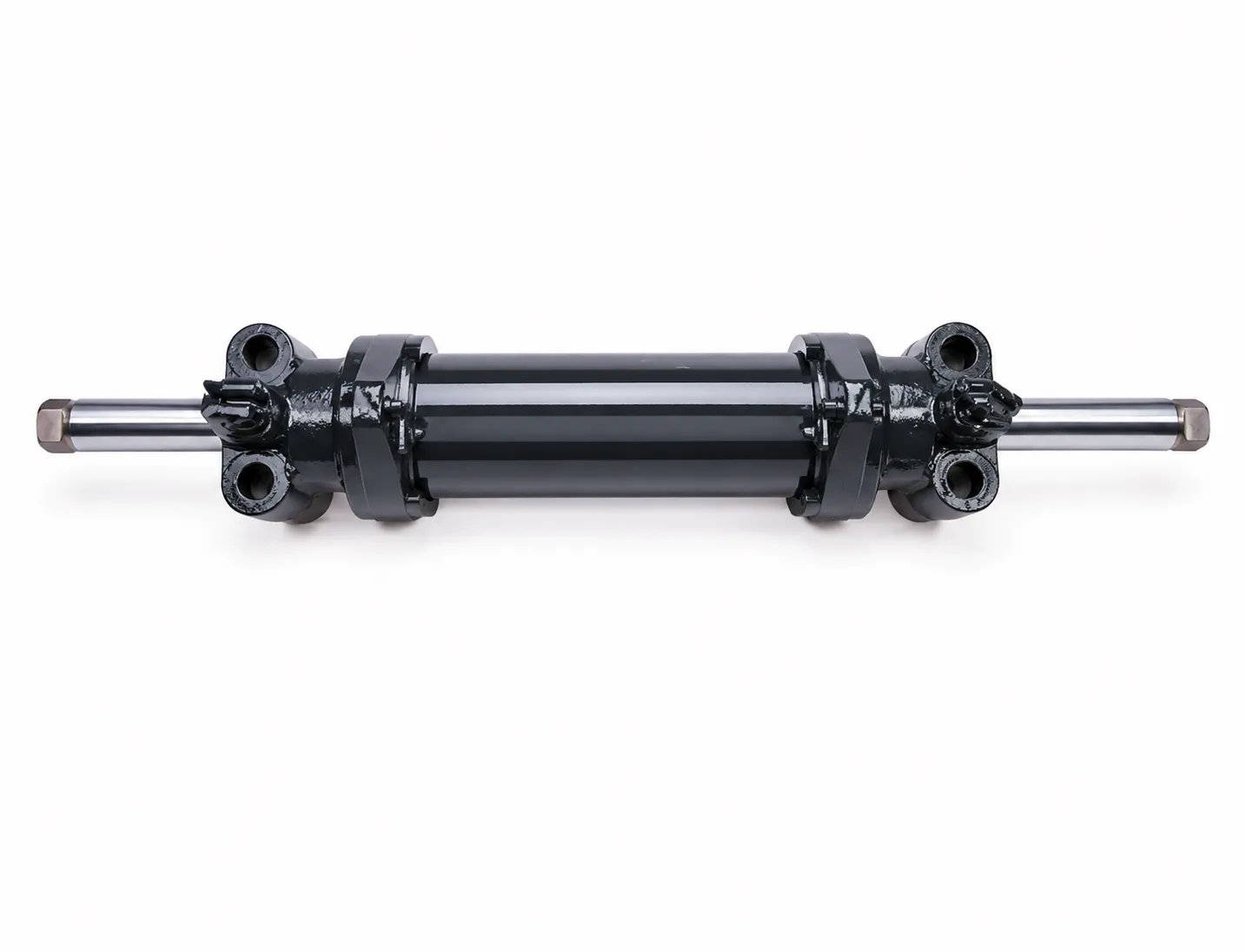
Steering Cylinder Technical & Performance Parameters
| Parameter | Typical Range | Units | Notes |
|---|---|---|---|
| Bore Diameter | 40 – 200 | mm | Determines force output; honed to Ra ≤ 0.4 µm |
| Rod Diameter | 25 – 140 | mm | Hard chrome plated; typically 50–70% of bore diameter |
| Stroke Length | 50 – 1,000 | mm | Custom stroke to exact machine geometry on request |
| Operating Pressure | 100 – 300 | bar | Tested to 1.5× working pressure before despatch |
| Test Pressure | 150 – 450 | bar | All cylinders factory pressure-tested before shipment |
| Max Force Output (cap side) | 12 – 940 | kN | Calculated at rated pressure; depends on bore and pressure |
| Operating Temperature | -30 to +120 | °C | FKM seals extend range; standard PU to +100°C |
| Mounting Style | Clevis-clevis, trunnion, flange, cross-tube, eye-end — all configurable | ||
| Surface Treatment | Hard chrome, nickel-chrome, electroless nickel, zinc-phosphate + primer | ||
| Cylinder Type | Double-acting (standard); single-acting on request | ||
| Seal Material | PU / NBR / FKM / HNBR — matched to operating fluid and temperature | ||
| Hydraulic Fluid Compatibility | ISO VG 32–68 mineral oil, HFA, HFB, HFC, biodegradable ester | ||
Core Technical Advantages of a Precision Steering Cylinder
Mirror-finish bore honing to Ra 0.2–0.4 µm eliminates localised seal loading. Seals run cooler, last longer, and maintain zero-leak performance through extended duty cycles — a tangible reduction in total maintenance cost per machine hour that plant managers in Coventry’s automotive supply chain have measured directly in their maintenance records.
Port threads are sealed with removable plugs during manufacture and transit, preventing particulate ingress before installation. Port geometry is designed to avoid fluid dead zones where sediment can accumulate, keeping the cylinder’s internal cleanliness at ISO 4406 Class 16/14/11 or better throughout its service life.
Port sizing and internal flow paths are calculated at design stage to compensate for differential area between cap and rod sides. The result is directionally equal steering speed and force in both extension and retraction — a subtlety that matters enormously in tight-manoeuvring applications like reach trucks and telehandlers navigating confined construction sites in Manchester city-centre developments.
Wall thickness and material grade are selected so that thermal expansion under sustained load remains within the design clearance envelope for seals and guide rings. This prevents the micro-seizure events that cause piston stick-slip — characterised by the jerky, non-linear steering response that operators immediately notice but which is difficult to diagnose without understanding the underlying thermal dynamics.
Welded-body steering cylinders offer maximum structural rigidity for high-load applications, while threaded-end designs allow field-serviceable seal replacement without special tooling. For UK customers operating fleets with in-house maintenance teams — common in the large logistics operators based around the M6 and M42 corridors — threaded-end cylinders significantly reduce both downtime and third-party service costs per machine over a five-year horizon.
Industrial Application Scenarios: Where Steering Cylinders Operate
Combine harvesters, articulated tractors, and self-propelled sprayers all rely on hydraulic steering cylinders to maintain directional accuracy at working speeds across undulating terrain. In the Lincolnshire fens and the Yorkshire Wolds, cylinders must tolerate continuous vibration, frequent direction reversals, and the abrasive dust conditions of harvest season. Steer angle requirements of 30–45 degrees drive stroke selection, while wet-season mud infiltration demands double-lip wiper seals and protected port configurations.
Wheeled excavators, motor graders, and articulated dump trucks operate on active construction sites across the Birmingham ring road expansion and Greater Manchester’s ongoing infrastructure programme. Steering cylinders in this context face combined axial and radial loading from uneven ground, as well as the shock loads transmitted when a grader blade strikes unexpected sub-surface obstructions. Cushioned end-of-stroke dampening — built into the cylinder’s end cap geometry — absorbs these impact events without transmitting them to the chassis structure or steering valve.
Straddle carriers, terminal tractors, and reach stackers operating at the Port of Tilbury and the Humber ports demand steering cylinders built for salt-air environments. Nickel-chrome rod plating and epoxy-primer exterior coatings protect against accelerated corrosion, while the cylinder specification accounts for the very heavy pivot loads generated when a fully loaded straddle carrier turns at low speed with a 40-tonne container. High static force, low cycle frequency, and harsh environment define the requirements in port applications distinctly from other sectors.
Ladle transfer cars, coil-handling vehicles, and slab-transport bogies in the surviving special-steel plants around Sheffield operate steering cylinders in ambient temperatures that regularly exceed 60°C at floor level. FKM (Viton) seals, high-temperature hydraulic fluid specification, and extended-area heat-shield mounting brackets are frequently required. The load cycles are low in frequency but enormous in magnitude, demanding cylinder wall thicknesses and rod diameters sized well beyond what the nominal working pressure alone would suggest.
The dense concentration of large distribution centres along the M1 and A1(M) corridor between Nottingham and Milton Keynes generates enormous demand for counterbalance forklift, reach truck, and very-narrow-aisle (VNA) truck steering cylinders. In VNA applications, the steering system operates within millimetres of available clearance, and positional repeatability requirements for the cylinder — the ability to reach exactly the same steering angle on successive cycles — approach the precision engineering standards normally associated with machine tools rather than rough-terrain vehicles.
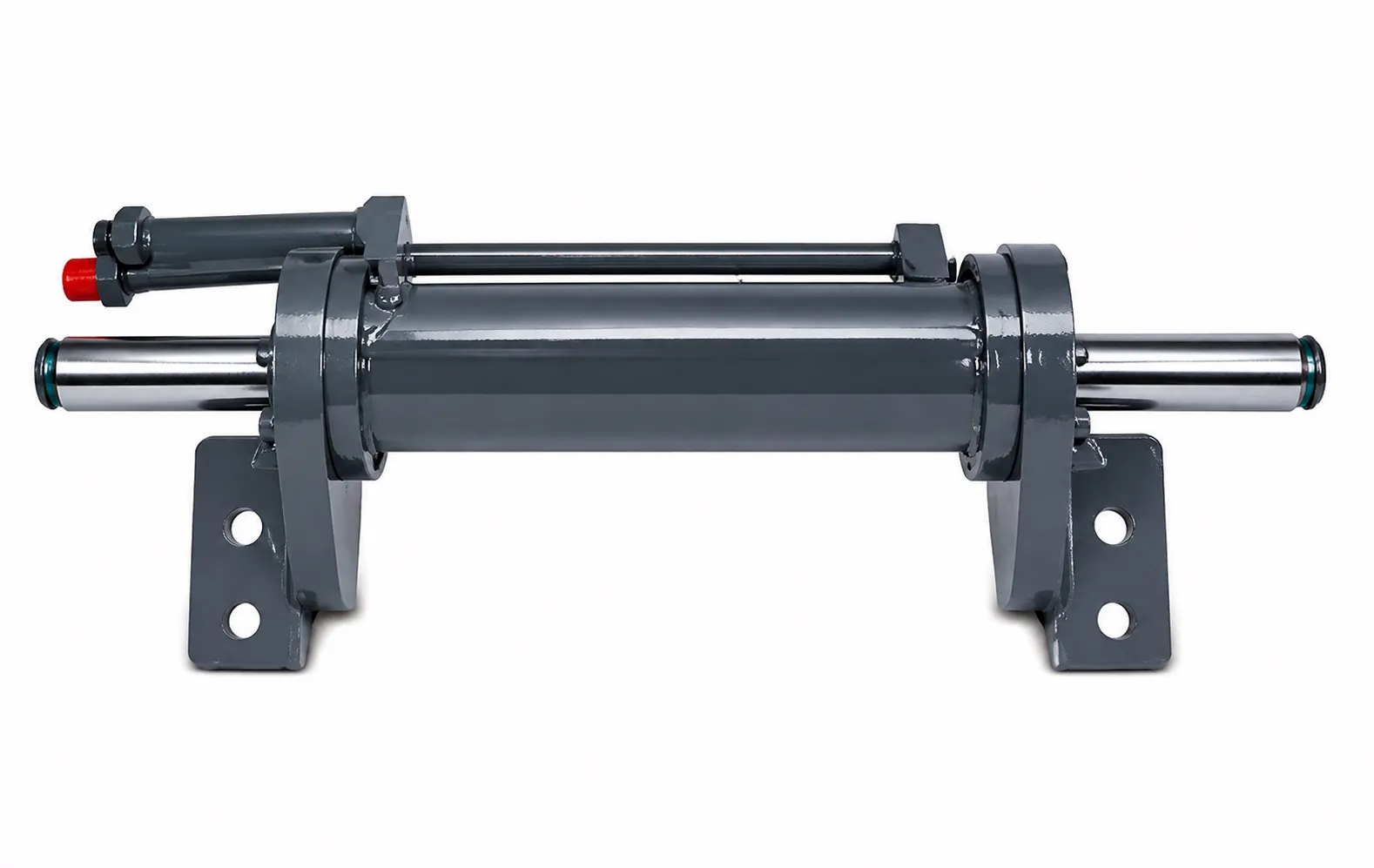
Ever Power: Precision Manufacturing & Custom Steering Cylinder Solutions
Ever Power’s engineering team designs and manufactures steering cylinders to exact customer specifications from first principles. Bore diameter, rod diameter, stroke, port size, port orientation, mounting style, clevis geometry, seal compound, surface treatment, and pressure rating are all independently configurable. UK clients receive DXF and STEP drawing review at no charge, ensuring dimensional compatibility with existing linkage geometry before manufacture begins. This level of customisation removes the performance compromise inherent in fitting a standard catalogue item to a non-standard machine.
Production at Ever Power’s factory proceeds through a controlled sequence: CNC deep-hole boring, precision honing to Ra tolerance, robotic welding for end-cap joints, automated chrome plating with continuous bath chemistry monitoring, clean-room seal assembly, hydrostatic pressure testing at 1.5× working pressure, and cleanliness verification to ISO 4406. Dimensional inspection data is retained per cylinder and is available to customers on request — a practice that meets the documentation expectations of ISO 9001-certified procurement teams in the UK’s aerospace and defence supply chains.
Ever Power maintains a stocked buffer of common bore-and-stroke combinations for rapid despatch to UK customers. Standard airfreight lead times run 7–14 days from order confirmation, with expedited options available for urgent replacement requirements. All shipments are DDP (Delivered Duty Paid) to UK addresses, eliminating import clearance complexity for purchasing teams. For ongoing fleet maintenance contracts with UK logistics operators, quarterly or bi-annual blanket orders with scheduled call-off can be arranged to align cylinder availability with fleet maintenance windows.
Customer Success Story: Sheffield Steel Handling, South Yorkshire
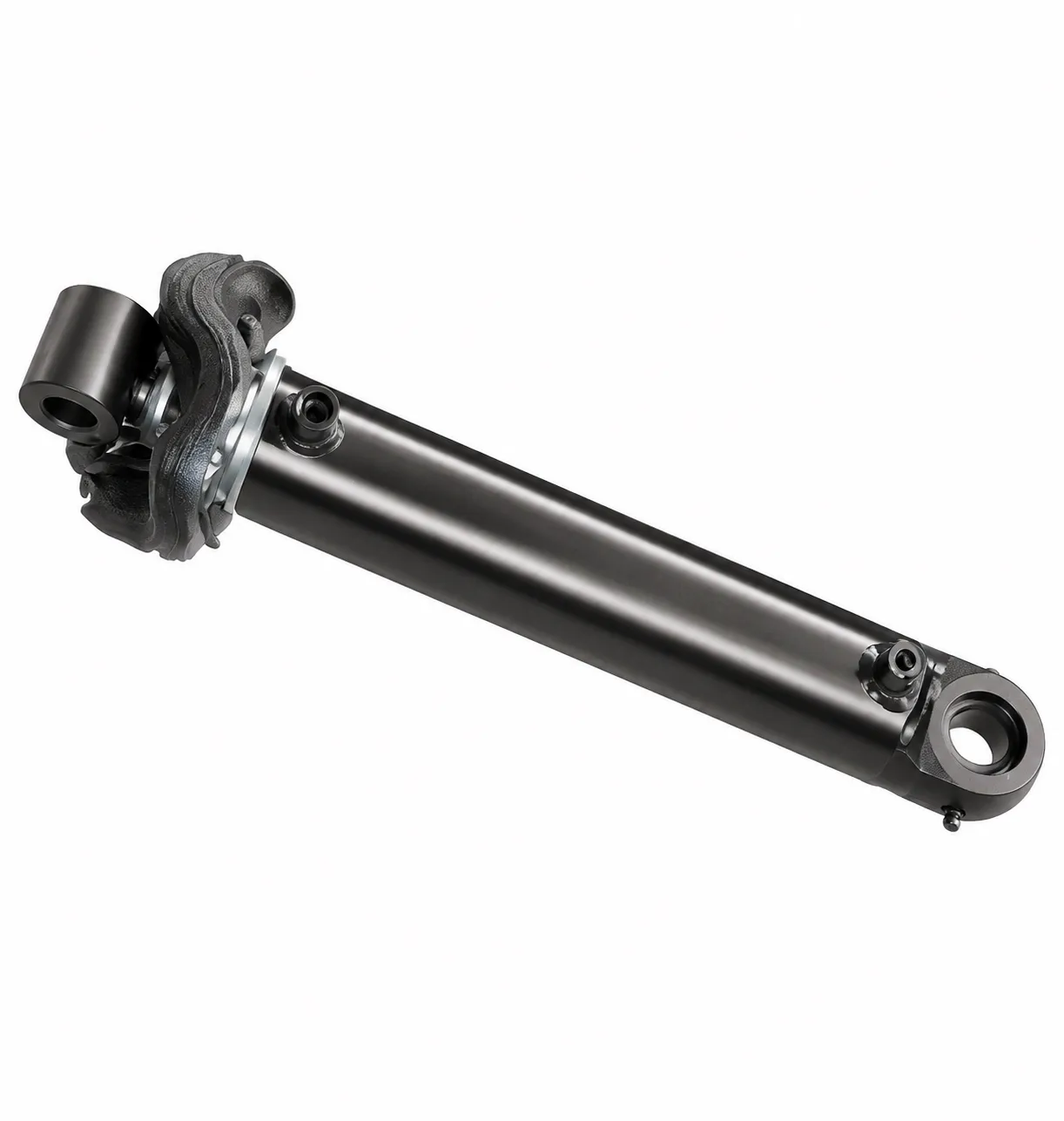 A specialist steel coil and plate handling operation based in Rotherham — supplying processed steel products to the Sheffield automotive and engineering manufacturing sector — was experiencing an average replacement interval of just 14 months on the steering cylinders fitted to their custom coil-transfer vehicles. The vehicles operated indoors in a melt-shop adjacent environment where radiant heat from ladles and quench-cooling water mist created temperature cycles between 15°C and 75°C throughout each shift. Standard mineral-oil-compatible NBR seals were hardening and losing their sealing lip compliance within the first year, resulting in internal bypass leakage that caused the vehicles to drift off their programmed track paths during loaded runs. The cost in unplanned maintenance and production disruption was estimated at over £35,000 per year across the three-vehicle fleet.
The company’s maintenance manager contacted Ever Power following a referral from a fellow procurement professional at a West Midlands casting plant. After reviewing the operating environment data — including the thermal cycling log from their SCADA system and the hydraulic fluid specification sheets — Ever Power’s technical team proposed a custom steering cylinder specification using FKM (Viton) seals, HNBR backup rings, nickel-chrome rod plating for the mist-corrosion environment, and an upgraded guide ring material tolerant of the thermal expansion values at 75°C operating temperature. Port size was recalculated to reduce internal fluid velocity by 18%, cutting steady-state heat generation from the cylinder assembly itself.
The first set of Ever Power custom steering cylinders was installed in February. By the following December, with no seal failures and no positional drift events recorded, the operation extended its maintenance inspection interval from quarterly to semi-annual for these components. The revised total cost of ownership calculation — factoring in the higher initial unit price against zero unplanned replacements and zero production losses — showed a net saving of approximately £28,000 over a 24-month period compared with their previous supplier’s standard product. The operation has since converted the remaining two vehicles to the Ever Power specification and added these cylinders to their approved parts list for future replacement orders.
What Our Customers Say
“The FKM seal specification that Ever Power recommended made an immediate difference. We went from replacing cylinders every 14 months to having the same units running cleanly after 26 months with no intervention required. Their technical team understood our thermal cycling problem immediately, which no other supplier had bothered to investigate.”
“We needed exact dimensional matching to an obsolete OEM cylinder for our terminal tractors at Tilbury. Ever Power reverse-engineered from our worn sample, produced dimensional drawings for approval, and delivered DDP within 11 days. The fit and finish were flawless — port threads, clevis geometry, and stroke all matched to drawing. This is exactly the level of customisation we need from an overseas supplier.”
“We run a mixed fleet of telescopic handlers and wheeled loaders across three construction sites in Manchester. Ever Power provided a single consolidated order covering four different cylinder variants in one shipment, all correctly labelled and documented. The pressure-test certificates and dimensional records they included made our ISO 9001 incoming inspection process straightforward. Communication throughout was prompt and technically accurate.”
Frequently Asked Questions
Ready to Specify a Steering Cylinder for Your Application?
Ever Power’s technical team works directly with UK procurement, maintenance, and engineering teams to specify, manufacture, and deliver precision hydraulic steering cylinders to exact application requirements. DDP delivery, pressure-test certificates, and full dimensional records included.
📩 Get a Quote — [email protected]
edit by gzl