
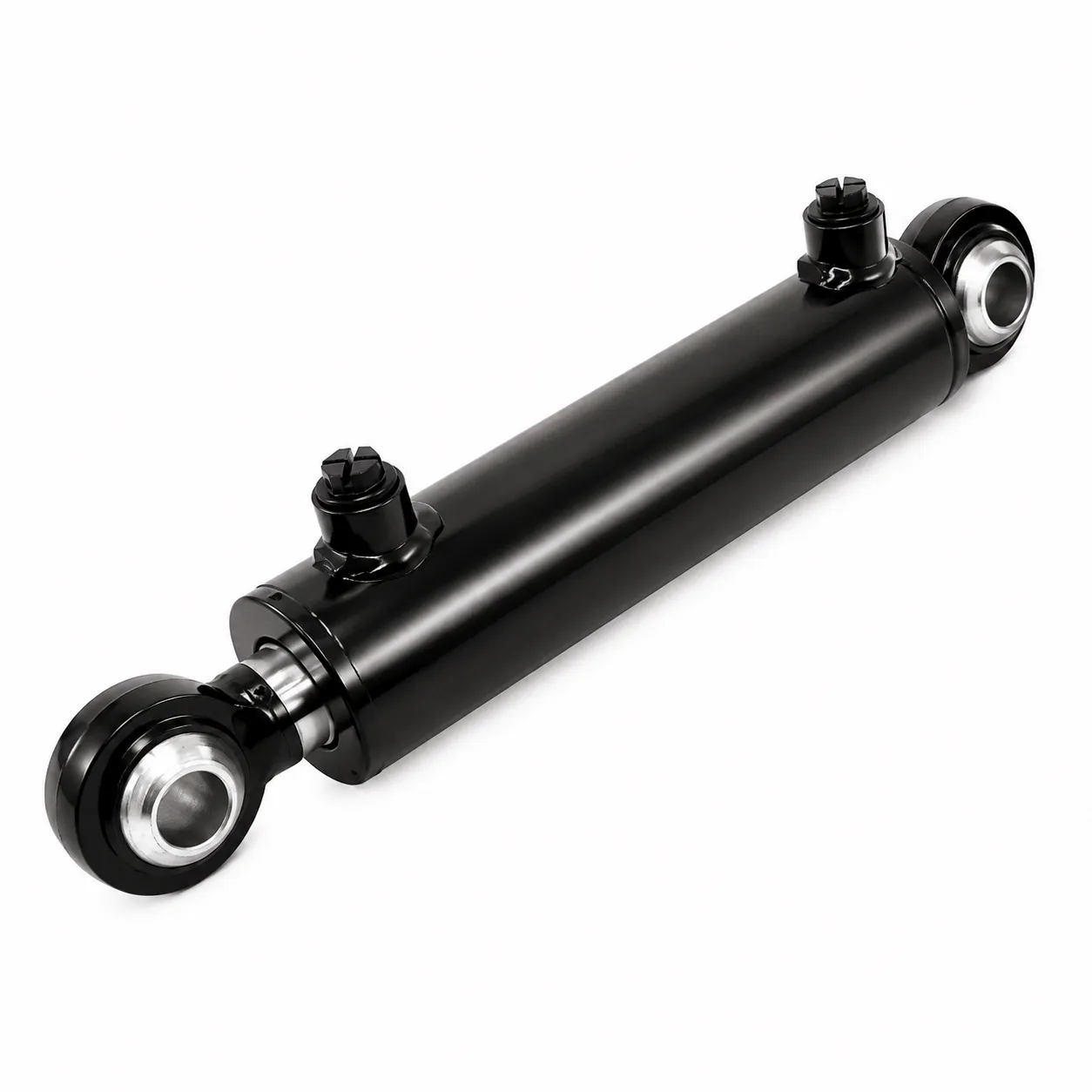
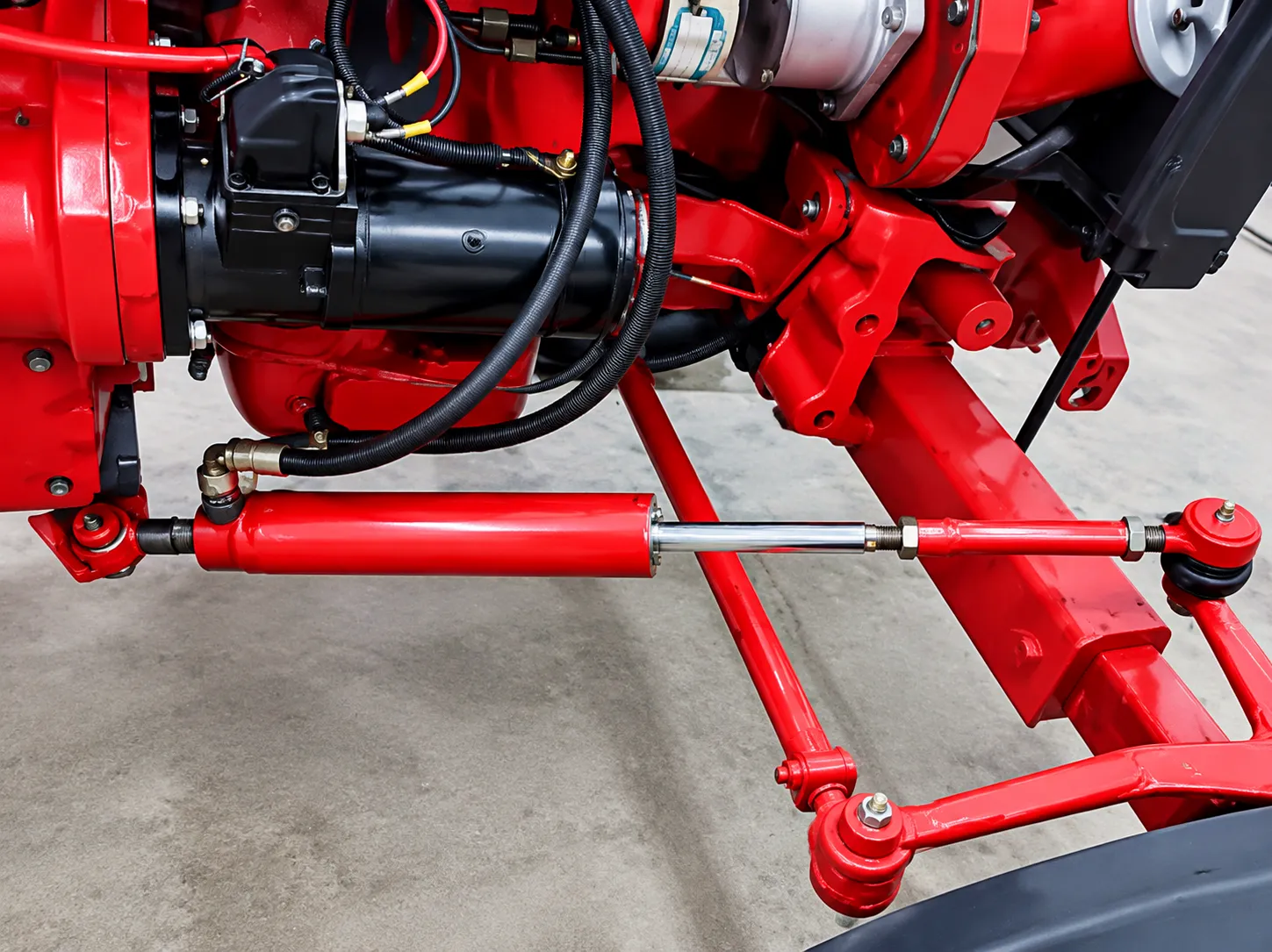
 The steering cylinder sits at the hydraulic heart of virtually every piece of heavy plant — from articulated lorries rumbling through Birmingham’s logistics corridors to combine harvesters working across Lincolnshire’s broad arable plains. When it functions correctly, the steering cylinder converts hydraulic pressure into precise, repeatable directional force, allowing an operator to manoeuvre dozens of tonnes with a light touch. When it begins to fail, the consequences ripple outward quickly: wasted fluid, erratic steering response, unplanned downtime, and — in extreme cases — catastrophic loss of directional control at speed. Understanding why seal failure is so closely linked to fluid contamination is the single most important piece of knowledge a maintenance engineer can carry into any hydraulic service bay.
Working Principle: What the Steering Cylinder Does Under Pressure
A double-acting steering cylinder operates on the same fundamental principle as any linear hydraulic actuator: pressurised fluid entering one port pushes a piston through a precision-bored barrel, extending or retracting the piston rod and converting hydraulic energy into mechanical linear force. What distinguishes the steering cylinder from a general-purpose cylinder is the precision of its geometry tolerances, the quality of its sealing arrangement, and the extreme duty cycle it must sustain — in a steering application, the cylinder may complete hundreds of extend-retract cycles per operating hour, each stroke placing mechanical and thermal stress on the seal assembly.
The seal stack in a typical steering cylinder consists of multiple elements working in concert: the rod seal (the primary barrier against external leakage), the piston seal (responsible for separating the two pressure chambers within the barrel), wiper seals (which strip particulate from the rod surface on each retraction), and guide rings (which maintain concentricity and prevent metal-to-metal contact). Each of these elements is manufactured from a specific elastomeric or thermoplastic material chosen for its compatibility with hydraulic fluid, its resistance to temperature extremes, and its ability to maintain dimensional integrity under continuous dynamic loading.
The clearance between the rod surface and the rod seal lip is typically held to within single-digit micron tolerances at Ever Power’s manufacturing facility. That clearance is the reason the system can generate and hold pressure — and it is also the reason that any contaminating particle of comparable size can cause disproportionate damage. Understanding the geometry helps engineers grasp why ISO cleanliness standards are not bureaucratic box-ticking but a direct engineering requirement for seal longevity.
How Contamination Enters a Hydraulic Steering System
Built-in Contamination
Manufacturing residue — metal swarf, casting sand, pipe scale, and weld spatter — remains inside hydraulic components unless meticulous flushing procedures are followed during assembly. Even new hoses and cylinders can introduce contamination levels that exceed ISO 16/14/11 before the machine has completed its first working shift. Sheffield’s heavy fabrication sector has long recognised this as a root cause of early seal failures in newly commissioned plant, making pre-delivery hydraulic flushing a standard procurement specification for quality-conscious operators.
Ingression from the Environment
The UK’s wet climate and the prevalence of clay-heavy soils across regions like the Vale of York and the Cheshire Plain create uniquely aggressive ingression conditions for mobile plant. Wiper seals that are in good condition exclude the great majority of particles on each rod retraction, but a damaged, aged, or incorrectly specified wiper allows fine abrasive particles to ride inward on the rod film. Reservoir breather elements that are infrequently serviced represent a second major ingression point: as fluid level drops and rises with thermal cycling, unfiltered air drawn through a clogged breather carries moisture and particulate directly into the reservoir.
Generated Contamination
Hydraulic systems generate their own wear debris continuously. Every time a metal surface in a pump, valve, or cylinder moves against another metal surface, microscopic particles are released into the fluid stream. As the particle count rises, the probability of three-body abrasion — where a loose particle is trapped between two moving surfaces and accelerates wear on both — increases dramatically. This self-amplifying mechanism, sometimes called the wear-particle cascade, means that a system operating above its target cleanliness class is not merely in a static state of mild degradation; it is actively generating an accelerating deterioration that will reach a critical threshold in a timeframe that often surprises operators.
Water Ingress and Emulsification
Water contamination is frequently overlooked because hydraulic fluid can hold a percentage of dissolved water in suspension before visible cloudiness appears. Even at concentrations as low as 0.1%, dissolved water dramatically reduces the lubricating film strength between seal and rod, promotes oxidative degradation of the fluid’s additive package, and — in cold UK winters — risks ice crystal formation at exposed extremities. Water also accelerates the growth of microbial colonies in vegetable-oil-based and biodegradable hydraulic fluids increasingly used across Midlands manufacturing sites, and the resulting bio-contamination produces acids and sludges that are chemically aggressive toward nitrile and polyurethane seal materials.
The Four Stages of Contamination-Induced Seal Failure
Core Materials in Precision Steering Cylinder Construction
Barrel: Honed St52 / E355 Steel
The cylinder barrel is cold-drawn and precision-honed to a surface finish of Ra 0.2–0.4 µm (micrometres). This surface quality is not merely cosmetic: it is the bed against which the piston seal creates its pressure-holding contact, and any deviation from specification increases bypass leakage and accelerates piston seal wear. St52 steel provides a tensile strength of approximately 520–680 MPa, giving adequate safety margins at operating pressures up to 35 MPa while remaining machinable to the tolerances required for a proper seal-to-bore fit.
Piston Rod: 45 Steel with Hard Chrome or HPC Coating
The piston rod is the component most exposed to the external environment and the component with which the rod seal is in continuous sliding contact. Precision-ground 45 steel forms the substrate, and a hard chrome plating of 20–25 µm (or a High-velocity Oxy-fuel ceramic/tungsten carbide coating for extreme-duty applications) provides the hardness — typically 850–950 HV — required to resist abrasive wear. The rod’s surface roughness after grinding is held to Ra 0.1–0.2 µm. When contamination is present, this is the surface that reveals it first: under magnification, contamination scoring on a chrome rod surface is unmistakeable as fine circumferential or helical scratching.
Seals: NBR, PTFE, PU and FKM Compounds
Seal material selection is the most contamination-sensitive decision in the entire cylinder design process. Nitrile Butadiene Rubber (NBR) offers excellent compatibility with mineral-based hydraulic oils up to 100°C. Polyurethane (PU) seals provide superior abrasion resistance and are the preferred choice where particulate ingestion risk is elevated. PTFE-energised seals offer the lowest friction coefficient and are used where stick-slip response would affect steering precision. Fluorocarbon (FKM/Viton) seals resist temperatures up to 200°C and show outstanding resistance to biodegradable and fire-resistant hydraulic fluids increasingly specified on UK construction sites under environmental regulations.
End Caps and Clevises: Forged or Cast Steel
End closures and mounting components are forged or precision-cast from steel alloys with yield strengths matched to the operating pressure and load application. Forged end caps eliminate the porosity risk associated with casting, particularly important in steering applications where hydraulic impulse loads — sudden peak pressures generated when the cylinder reaches end of stroke or the steered axle hits an obstacle — can multiply the nominal working pressure by a factor of two or more in milliseconds. Thread engagement depths and weld preparation are calculated to maintain structural integrity over ten-year service lives in UK temperature cycling from below zero to summer working temperatures.
Steering Cylinder Technical Performance Parameters
| Parameter | Specification / Range | Standard / Note |
|---|---|---|
| Bore Diameter | 40 mm – 320 mm | Custom bores available on request |
| Rod Diameter | 25 mm – 220 mm | Hardened chrome plated, Ra ≤ 0.2 µm |
| Operating Pressure | Up to 35 MPa (350 bar) | Test pressure: 1.5× nominal |
| Stroke Length | 50 mm – 4500 mm | Custom stroke per application |
| Steering Angle | ±15° to ±55° (application dependent) | Full-lock angle per OEM geometry |
| Output Force | Up to 2800 kN | Dependent on bore and pressure |
| Temperature Range | -40°C to +120°C (standard NBR seals) | FKM seals available to +200°C |
| Barrel Material | St52 / E355 cold-drawn steel | Honed bore, Ra 0.2–0.4 µm |
| Chrome Plating Hardness | 850–950 HV (Vickers) | Thickness: 20–25 µm standard |
| Recommended Fluid Cleanliness | ISO 4406 Class 16/14/11 or better | Class 15/13/10 for precision steering |
| Seal Material Options | NBR, PU, PTFE, FKM (Viton) | Specified per fluid and temperature |
| Mounting Configurations | Clevis, trunnion, flange, foot, spherical | Custom weld-on and bolt-on flanges |
Industrial Application Scenarios Across UK Heavy Sectors
HGV and Heavy Transport Fleet Steering — Birmingham and West Midlands
The West Midlands freight corridor — anchored by Birmingham’s National Exhibition Centre logistics hub and extending to Coventry and Wolverhampton — operates one of the highest concentrations of heavy goods vehicles in the UK outside of the M25 orbital. Articulated lorries in this environment use double-acting steering cylinders as the primary force actuator in their hydraulic power-steering systems. Contamination is particularly challenging in fleet applications because fluid cross-contamination between vehicles during shared servicing is common when cleanliness disciplines are not rigorously enforced. A single contaminated fill of hydraulic fluid in a service bay can seed seal-damaging particles across an entire vehicle batch before the problem is detected.
Agricultural Machinery Steering — Lincolnshire and Yorkshire Arable Operations
Large-scale arable farms across Lincolnshire, the East Riding of Yorkshire, and the Cambridgeshire Fens operate tractors and self-propelled machinery at fieldwork speeds that generate continuous, high-frequency steering inputs. In these environments, steering cylinders are exposed to clay-heavy soil particles driven by tyre splash and wind drift directly toward the rod end. A wiper seal that is even slightly worn allows these fine abrasive particles — which can be harder than chrome plating — to work into the rod seal interface on every retraction. Harvest season, when cylinder duty cycles are highest and service intervals are most compressed, is when contamination-related seal failures peak across the UK agricultural sector.
Construction Plant Steering — Sheffield and South Yorkshire Civil Works
Sheffield’s continued investment in urban regeneration, combined with ongoing major infrastructure projects in South Yorkshire, keeps a substantial fleet of wheeled loaders, motor graders, and articulated dump trucks in continuous service on brownfield and greenfield sites. Construction environments are among the most contamination-hostile for hydraulic systems: abrasive silica and limestone dust settles on exposed rod surfaces, couplings are frequently connected and disconnected with inadequate dust caps, and reservoir breathers are often overwhelmed by dusty site atmospheres. Steering cylinders on construction plant also endure sustained lateral loading when the machine traverses slopes, placing the rod seal under eccentric loading that further increases contamination ingress risk.
Marine and Port Handling Equipment — Humber Estuary Operations
The Port of Humber, encompassing Hull and Immingham, handles approximately 60 million tonnes of cargo annually and relies on large fleets of reach stackers, roll-on/roll-off tractors, and heavy terminal tractors — all of which use steering cylinders in demanding duty cycles. The marine environment adds salt spray and condensation to the contamination equation: moisture ingress rates in port equipment are significantly higher than in inland applications, and the chloride ions in salt water dramatically accelerate corrosion of any breached chrome plating. Steering cylinders specified for port use require stainless steel or nickel-plated end fittings, upgraded wiper seal specifications, and a minimum IP54 environmental protection rating.
When working with crane or lifting applications that demand extreme hydraulic output, the Truck Crane Main Boom Luffing Cylinder — Φ280×3507mm, 31.5MPa represents the upper tier of precision cylinder engineering — operating at the same contamination-sensitive seal interface principles discussed throughout this article, but at pressures and forces that demand correspondingly superior fluid cleanliness management.
For material handling and warehouse environments where compact cylinder geometries matter, the Compact Forklift Attachment Hydraulic Cylinder applies the same contamination-resistant seal architecture in a package optimised for high-cycle forklift attachment duty.
Core Technical Advantages of Contamination-Resistant Steering Cylinder Design
Triple-Stage Wiper Architecture
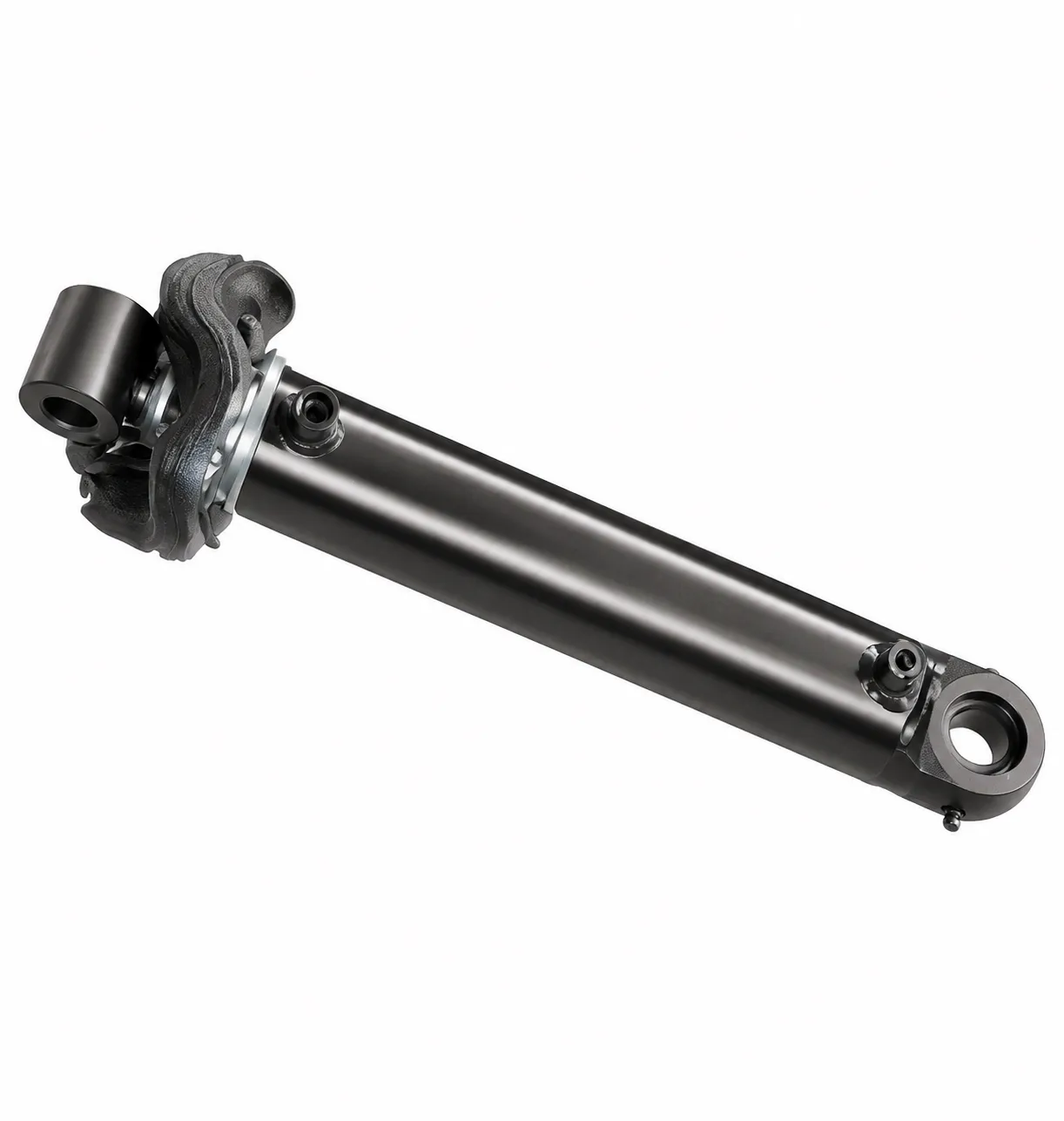
A sequential wiper and exclusion seal arrangement at the rod end provides three progressive barriers against particle ingress: the outer wiper strips gross contamination from the rod surface; the exclusion seal traps fine particles in a defined zone; and the rod seal, now seeing dramatically cleaner rod surface conditions, retains fluid without the abrasive loading that shortens its service life. This architecture can reduce particle ingress by over 90% compared with single-wiper designs, directly translating to longer mean time between reseals.
Precision Bore Honing to H8 Tolerance
The piston-to-bore clearance is controlled to H8/f7 fit standards throughout the barrel length. This precision fit minimises piston side-loading, which occurs when steering geometry places the cylinder rod under combined bending and axial forces. Reduced side-loading means more uniform contact pressure around the rod seal circumference, which in turn produces more uniform wear and a longer functional seal life — particularly important when contamination has already introduced some abrasive loading into the system.
Impulse Pressure Tested to 1.5× Rated Pressure
Every steering cylinder passes a factory impulse pressure test in which pressure is cycled rapidly to 1.5 times the rated working pressure, replicating the most demanding peak loads encountered during real steering operation. This test validates the integrity of weld joints, threaded closures, and seal gland geometry simultaneously. Cylinders that show any indication of extrusion or distortion at the seal gland during impulse testing are rejected and remanufactured — a zero-tolerance quality gate that protects downstream seal longevity under the real-world pressure spikes of UK road and off-highway operation.
Fluid-Specific Seal Compound Matching
Different hydraulic fluids — mineral oil, HFC water-glycol, HFDU polyol ester, vegetable-based biodegradable fluids — have markedly different chemical interactions with seal elastomers. An NBR seal running in polyol ester fluid will swell and lose mechanical properties within weeks; a FKM seal in a mineral-oil system on a budget where it is not needed wastes money unnecessarily. Ever Power’s engineering team specifies seal compounds from a validated materials matrix that accounts for both the fluid chemistry and the thermal range of the specific application, ensuring that the seal material itself does not become a secondary contamination source through degradation.
Ever Power: Precision Manufacturing and Customisation for Contamination-Critical Applications
Ever Power operates a fully integrated hydraulic cylinder manufacturing facility equipped with computer-controlled CNC honing lines, chromium plating and heat-treatment bays, and a dedicated quality laboratory for dimensional, surface-finish, and pressure testing. The facility’s manufacturing flow is designed around the principle that contamination introduced during manufacture is the enemy of seal life — and that no amount of filtration in the field will undo the damage that swarf or scale left in a cylinder barrel during assembly can cause.
Every barrel bore is ultrasonically cleaned and verified for residual particle count before seal installation. Rod surfaces are inspected under 10× magnification after grinding and chrome plating, and any rod showing scoring, pitting, or chrome delamination is rejected before entering the assembly bay. This manufacturing discipline is not a marketing claim — it is the reason Ever Power’s cylinders achieve mean reseal intervals two to three times longer than commodity alternatives when operating in the same contamination conditions.
Customisation Capabilities
- Bespoke bore, stroke, and rod diameter combinations to OEM drawings or field measurements
- Customised seal stack specification per fluid type, temperature range, and contamination risk level
- Non-standard port locations and sizes for direct-fit retrofit applications
- Bespoke mounting configurations: clevis pins, flange mounts, welded brackets, and spherical bearings
- Anti-corrosion surface treatments for marine and coastal UK applications
- Accelerated delivery programmes for UK fleet and OEM customers requiring fast turnaround
- Full traceability documentation — material certificates, test records, dimensional inspection sheets
Supply Chain Assurance for UK Operators
- Stocked standard-range steering cylinders available for same-week despatch to UK ports
- Air freight capability for urgent replacement requirements in critical fleet applications
- Framework agreement pricing for fleet operators and OEM assembly programmes
- Technical application engineering support in English, with familiarity of UK safety and operating regulations
- Comprehensive spares programmes: seal kits, replacement rods, and gland components
Customer Success Story: Quarry Fleet Steering Reliability — County Durham
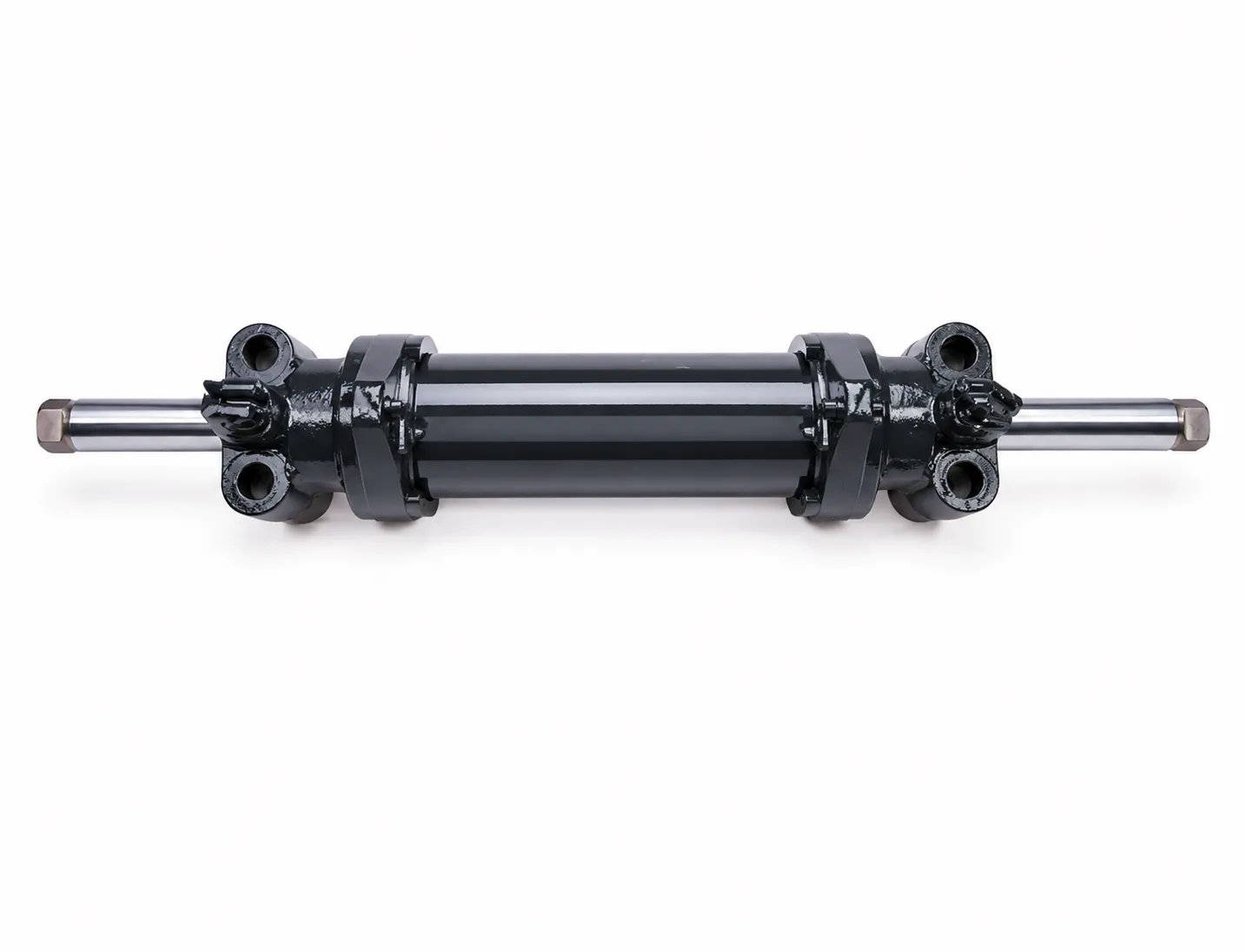
A large aggregate extraction and processing operation based in the Teesdale area of County Durham — serving construction supply chains across the North East of England — was experiencing an unacceptable rate of steering cylinder failures across its fleet of twelve articulated dump trucks. The trucks operated on a hard-limestone and shale extraction face, with haul roads laden with abrasive dust. Seal failures were occurring at intervals of eight to fourteen weeks, generating emergency downtime costs of approximately £4,200 per incident including lost production, labour, and parts. The fleet manager had trialled cylinders from two different commodity suppliers over an eighteen-month period without meaningful improvement.
Working with Ever Power’s application engineering team, the root cause was identified as a combination of undersized wiper seals relative to the dust loading in the quarry environment, and a seal compound that was incompatible with the water-soluble additive package being used in the vehicles’ hydraulic fluid top-up supply. Ever Power designed a replacement cylinder specification incorporating a triple-stage wiper assembly, an upgraded PU rod seal rated for high-abrasion duty, and FKM backup rings to tolerate the fluid additive chemistry. All twelve truck cylinders were replaced on a rolling schedule over a four-week period to minimise fleet impact.
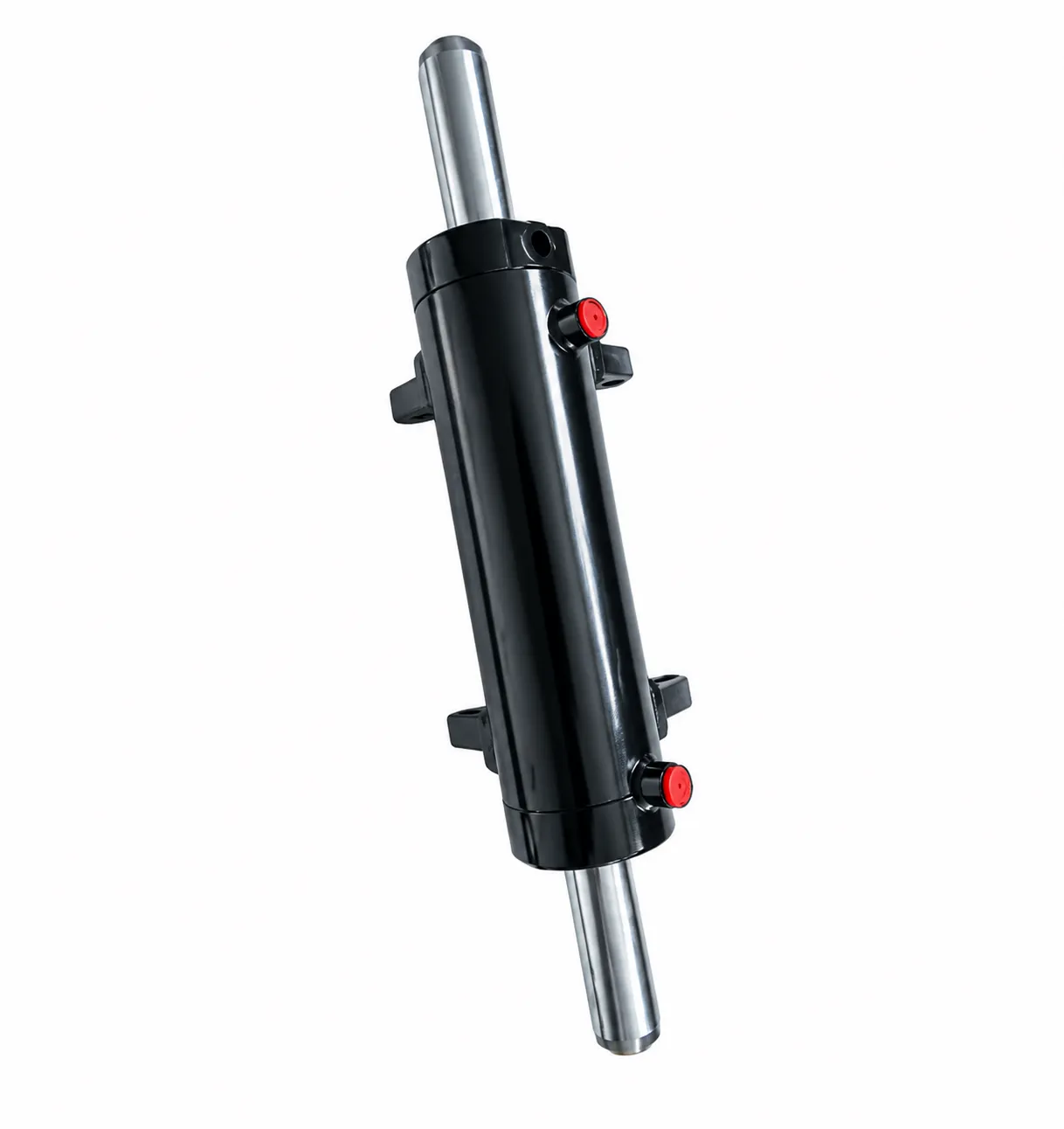 Over the subsequent twelve months of operation — through a full annual cycle including winter freeze-thaw and summer peak-production periods — not a single steering cylinder failure occurred across the fleet. The operation’s hydraulic fluid sampling programme, implemented concurrently with the cylinder change, confirmed that fluid cleanliness in the steering circuits had improved from an average of ISO 19/17/14 to ISO 15/13/10 as a direct consequence of the improved wiper performance. The annual saving in unplanned downtime and parts costs exceeded £38,000, delivering full payback on the cylinder replacement investment within seven months.
What UK Operators Say About Ever Power Steering Cylinders
“We had tried two other cylinder suppliers and were getting reseal failures every few months on our quarry trucks. Ever Power’s engineering team understood immediately that the problem was the wiper specification, not just the rod seal. Fourteen months later and we haven’t touched a steering cylinder on any of the twelve trucks. That kind of reliability changes how you plan maintenance.”
— Fleet Maintenance Manager, Aggregate & Quarrying Operation, County Durham
“The custom bore and stroke combination we needed for our Birmingham-built articulated lorry body wasn’t available from the standard range, but Ever Power turned around a fully dimensioned, pressure-tested custom unit in three weeks. The quality documentation — material certificates, hardness test results, pressure test records — was exactly what our QA department required. Very professional operation.”
— Procurement Director, Heavy Commercial Vehicle Assembly, West Midlands
“Our port terminal tractors work in a corrosive salt environment at Immingham, which destroys standard cylinders quickly. Ever Power specified stainless fittings and an upgraded wiper assembly for us without any extra back-and-forth — they clearly understood port environments. We’ve been running their cylinders for two seasons now with zero seal failures. The price was competitive and the lead time was a week shorter than we expected.”
— Engineering Supervisor, Port Terminal Operations, Humber Estuary
Hydraulic Fluid Contamination Management: Field Best Practices for UK Operators
Establish a Fluid Sampling Programme
ISO 4406 particle count analysis performed on fluid samples drawn from the steering circuit at regular service intervals — typically every 250 operating hours in high-contamination environments — provides the earliest possible warning of a deteriorating seal condition. A rising particle count in the 4–6 µm and 6–14 µm size ranges indicates active abrasion well before visible leakage develops. UK hydraulic fluid analysis laboratories can turn results around within 48 hours, and many offer online reporting that allows maintenance engineers to track trending across a fleet from a single dashboard.
Service Breathers and Return Line Filters Proactively
In UK construction and agricultural environments, breather filters can become 80% blocked within a single seasonal work period. A blocked breather causes reservoir vacuum on fluid draw-down, which accelerates aeration and promotes cavitation in the pump — both of which generate high-energy particle cascades that immediately raise the system’s contamination level. Return-line filters are the system’s primary particle-capture barrier; an element that is loaded to near-capacity is bypassing a proportion of return flow, allowing particles that would otherwise be caught to recirculate to the steering cylinder. Combining breather and return-filter servicing as a paired task ensures neither is inadvertently missed.
Maintain Wiper Seal Condition — Do Not Wait for Weeping
Wiper seals — the outermost seal element in any rod seal assembly — are inexpensive components with a disproportionate impact on seal system longevity. Inspection of the rod surface for visible dust accumulation rings or a sticky residue film (indicative of a wiper that is no longer clearing the rod cleanly) should be part of every pre-shift walkaround inspection on high-contamination applications. Replacing a wiper seal as a preventive measure at a scheduled service costs a fraction of the total reseal cost and avoids the cycle of particle ingress that shortens rod seal life. Never wait for visible fluid weeping to trigger wiper seal replacement — by that point the rod seal is already compromised.
Use Properly Rated Dust Caps on All Hydraulic Connections
A proportion of contamination-related steering cylinder failures in UK plant hire and construction fleets trace back to the straightforward failure to cap open hydraulic connections during maintenance or cylinder exchange. An uncapped port on a replacement cylinder sitting in a site workshop for 30 minutes in a dusty environment can accumulate a contamination level that exceeds the system’s target ISO code before installation. Colour-coded, rated plastic caps that seal against both end-port faces should be supplied with every cylinder and treated as a mandatory part of any hydraulic connection procedure — a small supply of which can be requested with any cylinder order from Ever Power’s despatch team.
Frequently Asked Questions — Steering Cylinder Seal Failure and Contamination
Specify the Right Steering Cylinder for Your Application
Ever Power’s engineering team works directly with UK fleet operators, OEMs, and maintenance workshops to specify, manufacture, and deliver precision steering cylinders that stand up to real-world contamination conditions. Contact us with your technical requirements.
Get a Technical Quote — [email protected]
edit by gzl