เลือกหน้า

Hydraulic Engineering · UK Industrial Guide

How to Align a Steering Cylinder to Prevent Side-Load Damage

A precision field guide for UK hydraulic engineers, fleet maintenance teams, and OEM procurement specialists — covering alignment theory, common failure modes, and long-term protection strategies.

Ever Power Steering Cylinder precision engineeringMisalignment is one of the most underdiagnosed causes of premature hydraulic cylinder failure across the UK’s heavy manufacturing and agricultural sectors. A steering cylinder operating even a few degrees out of true axis generates lateral forces — commonly called side loads — that were never part of the original design envelope. These forces attack the rod seal, accelerate rod-bushing wear, score the cylinder bore, and ultimately bend the rod itself. The damage compounds silently until a catastrophic seal failure or structural fracture forces a costly, unplanned shutdown.

For maintenance engineers at fabrication plants in Birmingham, farm machinery dealers across Yorkshire, or vehicle conversion specialists near Coventry, understanding the root mechanics of side-load damage — and the precise steps required to eliminate it — is not optional knowledge. It is the foundation of every reliable hydraulic steering system. Proper alignment of a steering cylinder directly determines seal longevity, rod life, and the overall duty cycle of the entire hydraulic circuit.

✉ Get a Free Quote — [email protected]
Response within 24 hours · UK-friendly timezone

Why Steering Cylinder Alignment Defines System Longevity

Radial Seal Destruction
Every steering cylinder rod seal is engineered to withstand axial pressure only. When the rod approaches the seal at an angle — even two or three degrees — one side of the lip seal receives disproportionate contact stress. Nitrile and polyurethane seals rated for 20 MPa of axial load may fail within weeks when subjected to sustained radial loading. The result is hydraulic fluid weeping, contamination ingress, and a sudden loss of steering authority. Across manufacturing sites in Sheffield and Stoke-on-Trent, this specific failure pattern accounts for a significant proportion of unplanned hydraulic maintenance callouts.
📈
Rod Bending and Bore Scoring
A steering cylinder rod is typically manufactured from 45# or 40Cr steel with a hard-chrome surface finish and a surface roughness of Ra 0.2–0.4 µm. Under normal axial loading, this surface slides cleanly against the rod bushing. Introduce a side load, and the rod deflects slightly against the inner bore wall. The chrome surface contacts the honed bore directly, generating metallic debris that circulates through the hydraulic fluid and accelerates pump and valve wear throughout the entire circuit. Alignment correction is not just about protecting one cylinder — it safeguards the whole system investment.
Structural Mount Fatigue
Mounting brackets, clevis pins, and trunnion blocks absorb the dynamic force reversals of a working steering cylinder. When the cylinder is properly aligned, these components see pure shear and tension — forces they are designed for. Misalignment adds bending moments to the mounting structure that cycle with every steering correction. Over thousands of operating hours, this cyclical bending induces fatigue cracks in weld zones and bracket plates. Fleet operators at logistics hubs in Northampton and Daventry are particularly familiar with this failure mode in reach trucks and container handlers, where steering duty cycles are extremely high.

How a Steering Cylinder Works: The Alignment-Critical Principle
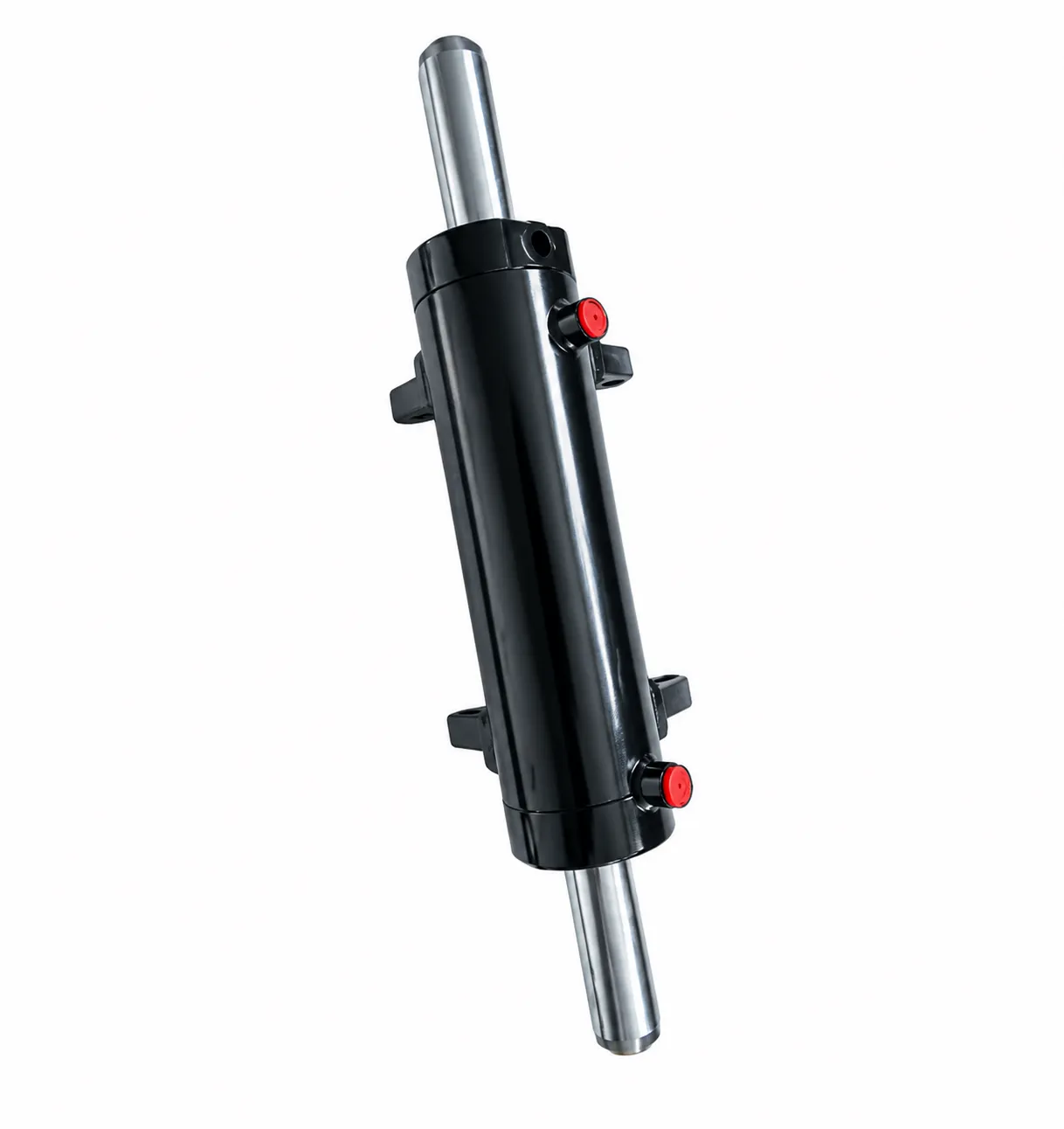
Steering cylinder internal working principleA hydraulic steering cylinder operates on the differential-area principle of a double-acting linear actuator. Pressurised hydraulic fluid — typically at 14 to 25 MPa in industrial applications — enters either the cap-end or rod-end port. The pressure differential across the piston face converts fluid energy directly into linear mechanical force. The rod then extends or retracts, translating this linear motion into angular rotation of the steered axle, wheel hub, or track frame through a connected linkage.

The mechanical efficiency of this conversion — and the longevity of every internal component — depends on one geometric condition: the centreline of the cylinder rod must remain colinear with the direction of applied load throughout the entire stroke. Any deviation from this collinearity introduces a bending moment at the rod-to-piston joint and lateral contact at the rod-bushing interface. The cylinder was built to push and pull in a straight line. Everything beyond that straight line is damage in progress.

Modern steering cylinders used in agricultural equipment, municipal vehicles, and industrial reach trucks are built with mounting configurations — clevis end, trunnion, flange, or rear-flange — that are each specifically designed to accommodate defined angular envelope. Understanding which mounting type is present, and what angular tolerance that type permits, is the starting point for every alignment procedure.

Material Engineering: Why Construction Choices Matter for Alignment Tolerance

The materials used in a steering cylinder’s construction directly determine how much misalignment it can absorb before damage occurs — and how rapidly it degrades once that threshold is crossed.

🔳 Cylinder Barrel
Cold-drawn seamless steel tube (ST52 or 27SiMn) with a honed bore surface finish of Ra 0.4 µm. The high yield strength of ST52 (355 MPa minimum) gives the barrel its resistance to ovality under eccentric side loading — but excessive misalignment can still permanently deform the bore mouth over time.
🔳 Piston Rod
45# or 40Cr steel with induction hardening (HRC 50–60) and hard chrome plating (thickness: 20–25 µm). Chrome provides both corrosion resistance and the low-friction surface needed for seal integrity. Under side load, chrome can spall at the contact point, creating abrasive particles in the oil circuit.
🔳 Seals
Polyurethane rod seals and PTFE-coated piston rings. Polyurethane offers superior abrasion resistance compared to NBR in normal axial conditions, but its lip geometry is engineered for radial contact with a perfectly concentric rod. Angular misalignment creates localised pressure hotspots that shorten service life from tens of thousands of hours to a few hundred.
🔳 End Caps & Gland
Ductile iron (GGG40/50) or forged carbon steel end caps provide the structural housing for gland seals and rod bushings. The rod bushing is typically a bronze or composite sintered bearing. Misalignment concentrates the rod’s lateral force on one arc of this bushing, producing accelerated wear on that side — a clear diagnostic indicator of alignment problems during inspection.

Step-by-Step: How to Align a Steering Cylinder Correctly in the Field

This procedure applies to any double-acting steering cylinder installed on agricultural machinery, material handling equipment, or municipal vehicles. It assumes the system has been depressurised and locked out before work commences — a mandatory requirement under UK PSSR 2000 regulations.
1
Establish the True Load Line
Before touching any mounting hardware, identify the geometric load line — the straight path that the cylinder rod must travel to transmit force without generating bending. On a steered axle, this is the axis connecting the front and rear pivot points of the cylinder linkage when the steered wheel is in the dead-ahead position. Snap a chalk line or use a laser alignment tool. This reference line governs every adjustment that follows.
2
Check Mounting Pin Perpendicularity
The clevis or trunnion mounting pin must be perfectly perpendicular to the load line in the horizontal plane. Use a precision square or digital angle gauge referenced against your chalk/laser line. Any angular error here transfers directly into the cylinder body as a constant side load. Tolerances tighter than 0.5 degrees are required for high-cycle applications. Shimming is the preferred correction method — never force-torque a bracket into position, as this introduces residual stress in the mounting structure.
3
Verify Rod-End Alignment at Full Stroke
A cylinder may appear aligned at mid-stroke but develop an angular offset at full extension. This is caused by linkage geometry — when the connecting arm rotates through its arc, the effective attachment point moves relative to the cylinder’s fixed axis. Measure alignment at three positions: fully retracted, mid-stroke, and fully extended. If the angular error varies by more than 1.5 degrees across the stroke, the linkage geometry must be corrected, not just the cylinder mounting position.
4
Check Vertical Plane Alignment
Alignment errors in the vertical plane are often overlooked because they are harder to observe during normal operation. A cylinder mounted with its rear end higher or lower than the rod-end attachment point applies a gravitational side load that is constant regardless of operating pressure. This low-level constant load is particularly damaging to rod seals because it creates an asymmetric contact pattern that generates fine metallic wear at one specific position on the seal lip. Use a digital inclinometer to confirm the cylinder barrel axis is horizontal — or matches the intended installation angle specified in the OEM documentation.
5
Torque All Fasteners in Sequence
Once alignment is confirmed in all planes, torque fasteners in the correct sequence. Tighten opposing bolts progressively in three stages — 30%, 70%, and 100% of the specified torque value. Random tightening of brackets introduces distortion in the mounting plate that can shift the cylinder centreline by up to 0.3 mm — enough to matter in precision steering applications. After full torque is applied, recheck alignment with the measuring tools before re-pressurising the system.
6
Dynamic Check Under Operating Pressure
The final and most important step: run the cylinder through five full stroke cycles at normal operating pressure while an assistant observes the rod surface near the gland. Any lateral movement of the rod relative to the gland face — visible as an elliptical polishing pattern forming on the chrome — confirms residual misalignment that the static checks did not capture. This dynamic observation is the only way to detect compliance misalignment caused by bracket flex or linkage slop that only manifests under load. Document the result and set a re-inspection interval of 500 working hours for newly aligned installations.

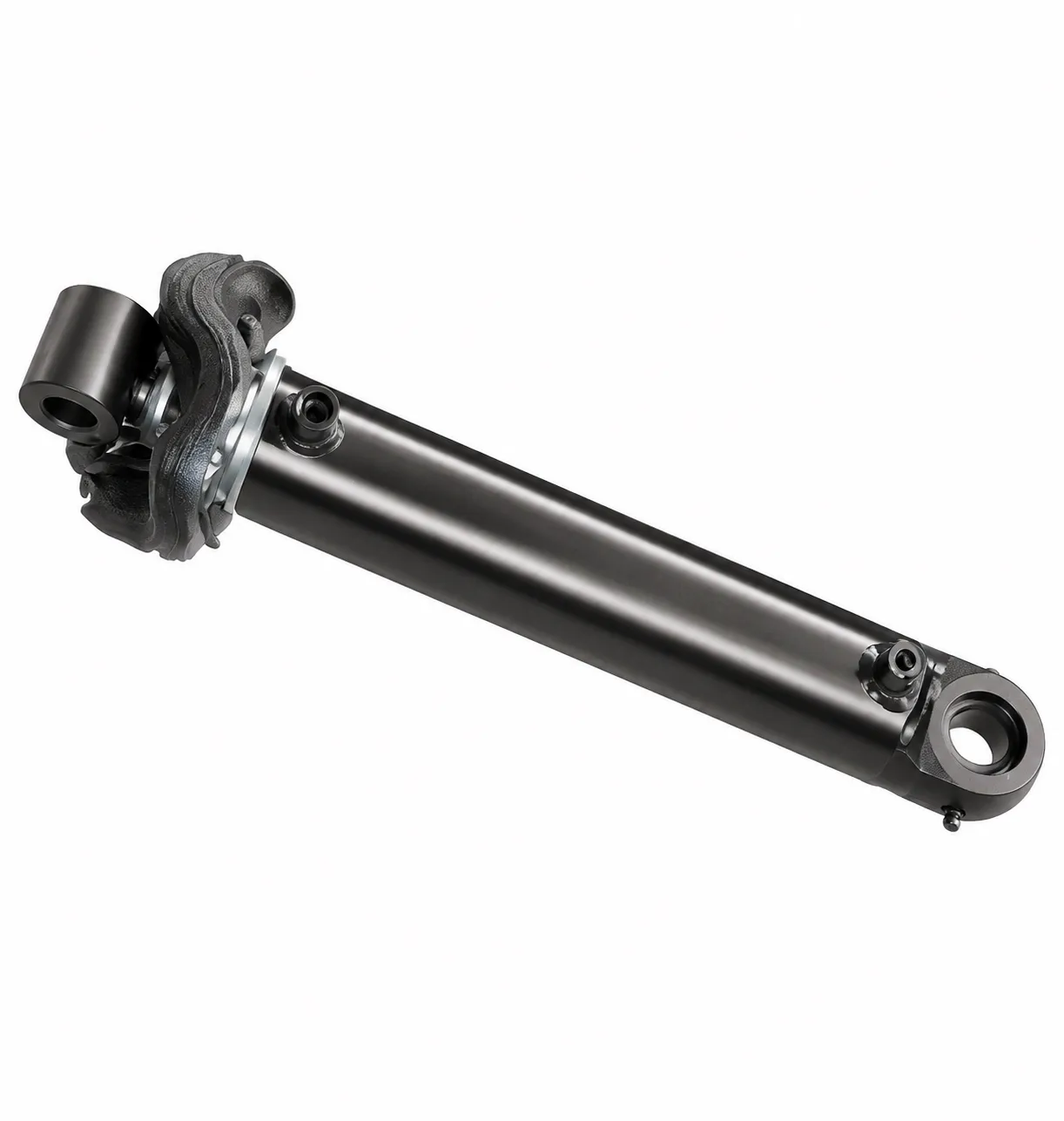
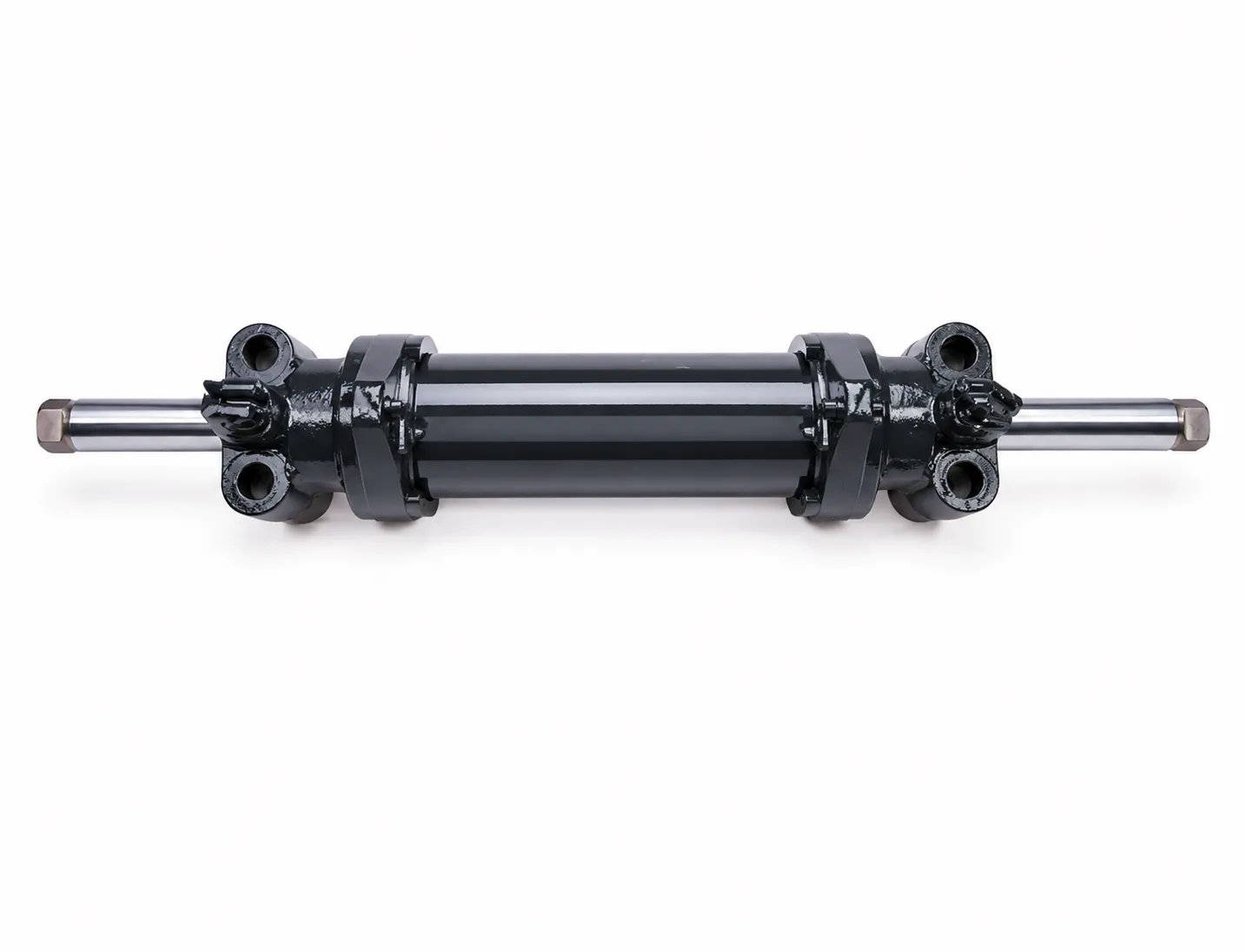
Steering cylinder high-pressure assembly

Hydraulic steering cylinder rod alignment

Technical & Performance Parameter Reference Table

The following parameters represent the standard performance envelope for Ever Power steering cylinders. Custom specifications are available for OEM and fleet orders — consult our engineering team via [email protected].

ParameterSpecificationNotes
Bore Diameter40 – 250 mmCustom bores available on request
Rod Diameter25 – 180 mmHard chrome plated, Ra ≤ 0.4 µm
Operating PressureUp to 35 MPa (350 bar)Proof tested to 1.5× working pressure
Stroke Length100 – 3000 mmLonger strokes on engineered-to-order basis
Operating Temperature-30°C to +120°CFKM seal upgrade for high-temp environments
Barrel MaterialST52 / 27SiMn Seamless SteelHoned bore, surface finish Ra ≤ 0.4 µm
Rod HardnessHRC 50–60 (induction hardened)40Cr or 45# base material
Mounting TypesClevis, Trunnion, Flange, Rear FlangeCustom brackets designed to order
CushioningAdjustable at both ends (optional)Reduces end-of-stroke shock loading
Port StandardBSP / NPT / SAE (BSPP standard for UK)Matching UK hydraulic system standards
Maximum Side Load< 5% of axial working loadDesign limit — alignment must be maintained
Surface ProtectionZinc-nickel, epoxy primer, or PVD coatingSalt spray resistance > 500 hrs

Core Technical Advantages of Ever Power Steering Cylinders

Engineered to perform under the demanding conditions of UK industrial environments — from coastal agricultural machinery exposed to salt spray to high-cycle urban fleet vehicles.

Zero-Ovality Honing
Multi-pass CBN honing achieves bore roundness within 0.005 mm. This geometrical precision is the foundation of seal life — even slight bore ovality causes differential seal compression that initiates leakage under side loading conditions.
Self-Aligning Rod-End Options
Spherical rod-end bearings with angular compensation up to ±5 degrees are available as a standard option. These bearings absorb small residual misalignment errors without transmitting the side load into the cylinder body — a critical feature for mobile applications where linkage wear creates progressive misalignment over time.
Composite Rod Bushing
Sintered bronze or PTFE-lined composite bushings replace traditional plain bronze in high-cycle designs. The composite material’s lower coefficient of friction and higher PV rating reduces the heat generated when a momentary side load does occur, preventing localised seizure of the rod at the gland.
BSP Port Compatibility
All UK-targeted steering cylinder units are supplied with BSPP-standard hydraulic ports as default. This eliminates the need for conversion adaptors — which are a common source of system leakage and a hidden misalignment contributor when adaptors are torqued unevenly against the port face.
100% Pressure Tested
Every cylinder leaves the factory only after a full-pressure test at 1.5× the rated working pressure with a 30-minute hold period. Test certificates are included in the shipment documentation — an increasingly important requirement for UK procurement teams operating under BS EN ISO 4413 hydraulic safety standards.
FEA-Validated Mounting Design
Custom mounting brackets and clevis assemblies are designed using finite element analysis to verify that the bracket stress distribution remains within safe limits under the specified dynamic load case. This FEA validation prevents the common engineering error of designing brackets that appear structurally adequate statically but fail in fatigue under real operating cycles.

Industrial Application Scenarios Across the UK

Application 01
Agricultural Combine Harvesters — Lincolnshire & East Yorkshire

Combine harvesters and self-propelled forage harvesters operating in the flat arable landscapes of Lincolnshire and the East Riding of Yorkshire place their steering cylinders under particularly challenging alignment conditions. As the machine traverses headland turns at the ends of long runs, the steering cylinder reaches full stroke extension repeatedly throughout the day. The ground irregularities of UK farmland — compacted tramlines, field drainage channels, and uneven headlands — introduce vertical displacement into the steering linkage that compounds the angular misalignment at the cylinder mounts. Ever Power steering cylinders for this application are equipped with oversized self-aligning rod-end bearings and extended gland bushings that provide additional lateral support at the rod-seal interface, significantly extending service intervals beyond the typical 1,000-hour season.

Application 02
Reach Trucks and Warehouse Logistics — Northampton Distribution Parks

The logistics facilities concentrated around Northampton and the M1 corridor operate some of the highest-cycle reach truck fleets in the UK. A reach truck steering cylinder in a busy fulfilment centre may complete 400 to 600 steering cycles per hour across three shifts daily. At this duty cycle, the alignment tolerance for the steering cylinder is tighter than in any other industrial application — even 0.3 degrees of constant side load applied at this frequency generates enough cumulative wear to destroy a rod seal within four to six months. Ever Power supplies compact, high-cycle steering cylinders for this application with full-length guide sleeves and double-wiper rod seals that provide secondary protection against contamination ingress during the brief intervals when side load is momentarily generated during tight turning manoeuvres. Explore our Mini Forklift Attachment Hydraulic Cylinder designed for space-constrained forklift steering systems.

Application 03
Road Maintenance and Municipal Vehicles — Greater Manchester

Road sweepers, gritting lorries, and refuse collection vehicles operating in Greater Manchester and across the wider North West face extreme dynamic steering demands. Stop-start urban routing, frequent full-lock manoeuvres around parked vehicles, and the shock loads transmitted through steering systems when a vehicle wheel drops into a pothole — all of these forces combine to create an exceptionally demanding environment for steering cylinder alignment. The cylinder must not only resist side loads from deliberate steering actions but also from the inertial forces of the body structure flexing over road surface irregularities. Ever Power’s municipal vehicle range uses thicker rod diameters relative to bore size (maintaining a rod-to-bore ratio of 0.7 or higher) to increase lateral stiffness and reduce the rod deflection that amplifies side-load-induced seal wear.

Application 04
Heavy-Haul Trailers and Specialist Transport — West Midlands

Specialist haulage companies operating out of Birmingham and the broader West Midlands use multi-axle steerable trailers to move abnormal loads — transformer tanks, wind turbine sections, bridge beams, and heavy process equipment — through the road network. The steering cylinders on steerable trailer axles must accommodate large angular corrections at very low speeds, which means they extend and retract very slowly under very high sustained loads. In this regime, a misaligned cylinder generates a constant side load that is present for minutes at a time rather than fractions of a second. Our Medium-Duty Forklift Attachment Hydraulic Cylinder engineering principles are directly applied to heavy-haul configurations, with welded-construction barrels and large-diameter trunnion pins providing exceptional rigidity against sustained eccentric loading.

Ever Power: Precision Manufacturing and Customisation Capability

Ever Power operates a fully integrated hydraulic cylinder manufacturing facility equipped with CNC turning centres, internal honing lines, and automated inspection stations. Every dimension in the manufacturing process — bore diameter, rod straightness, chrome plating thickness, weld geometry, and seal groove profile — is controlled to tolerances that exceed the minimum requirements of ISO 6020-1 and ISO 6022. This manufacturing discipline directly benefits the end user by eliminating the dimensional variations that create micro-misalignment at the point of installation before the cylinder has even been connected to a hydraulic circuit.

The customisation capability at Ever Power spans the full range of engineering parameters that matter for UK applications. UK distributors and OEM customers in sectors from agricultural machinery to specialist vehicle conversion regularly commission cylinders with non-standard bore-stroke combinations, bespoke clevis geometry to interface with existing vehicle chassis, specific external corrosion protection systems for coastal environments, and dual-wiper seal configurations for high-contamination environments. All custom designs undergo FEA structural validation before prototyping, and first-article inspection reports are provided as standard to support the customer’s own quality acceptance process.

Supply chain reliability is a core part of the Ever Power offer for UK procurement teams. Standard cylinder configurations are held in finished or semi-finished stock, allowing lead times of 7 to 15 working days for typical orders. Custom-engineered cylinders are produced to a confirmed 4 to 8 week schedule with a dedicated project engineer assigned to each new part development. All shipments to UK customers are documented to UKCA and CE requirements with full material traceability certificates, making the procurement and incoming inspection process straightforward for quality-managed customers.
✉ Request Custom Quote — [email protected]

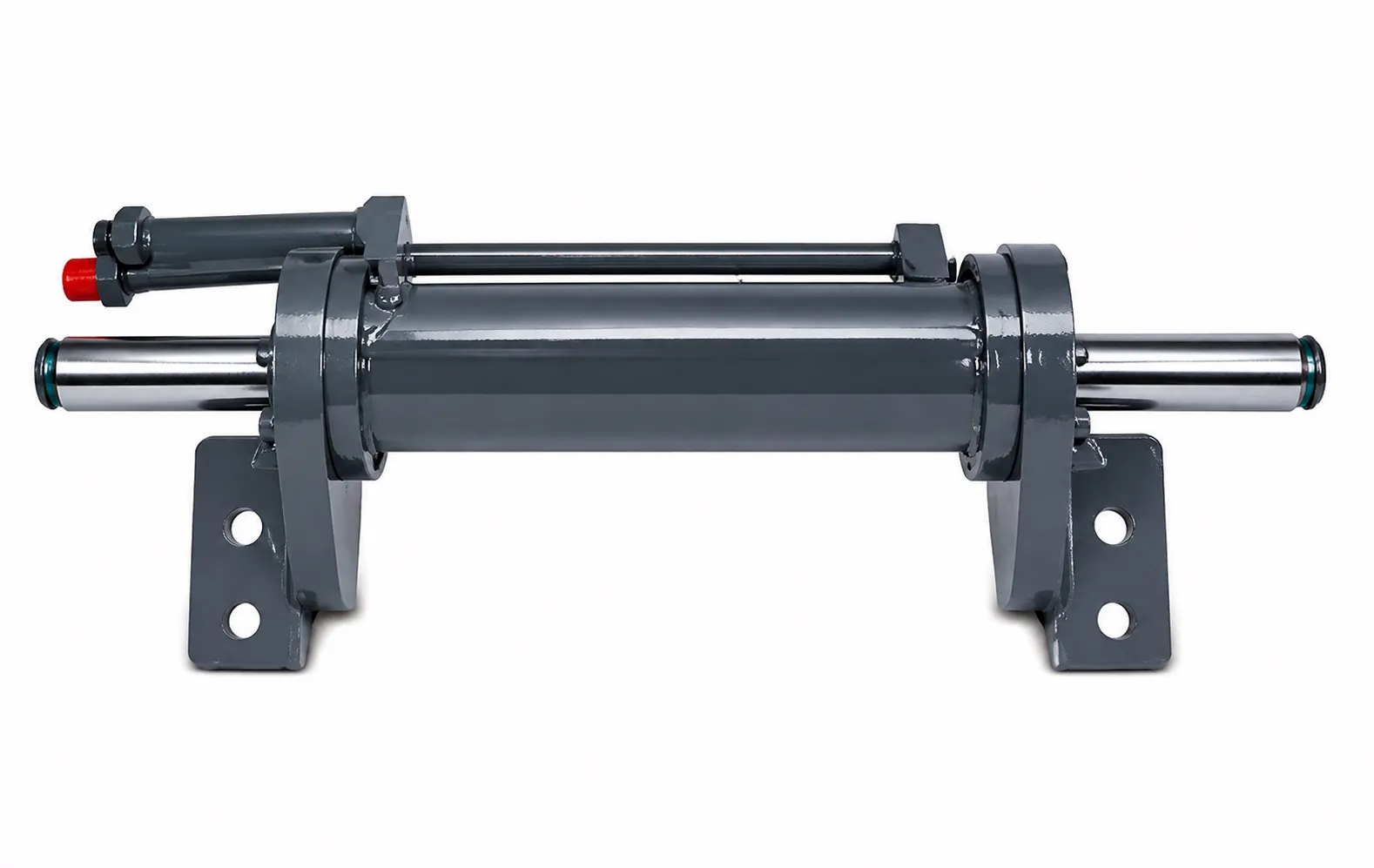
Ever Power factory precision manufacturing

Manufacturing Capabilities
CNC precision honing to Ra 0.2 µm
Automated hard chrome plating lines
100% pressure test before despatch
FEA-backed bracket & mount design
Full material traceability certificates
BSPP port standard for UK market
Custom seal compounds for UK climate

Customer Success Story: Sheffield Agricultural Machinery Manufacturer
Challenge: Persistent Seal Failure on Self-Propelled Sprayers in South Yorkshire

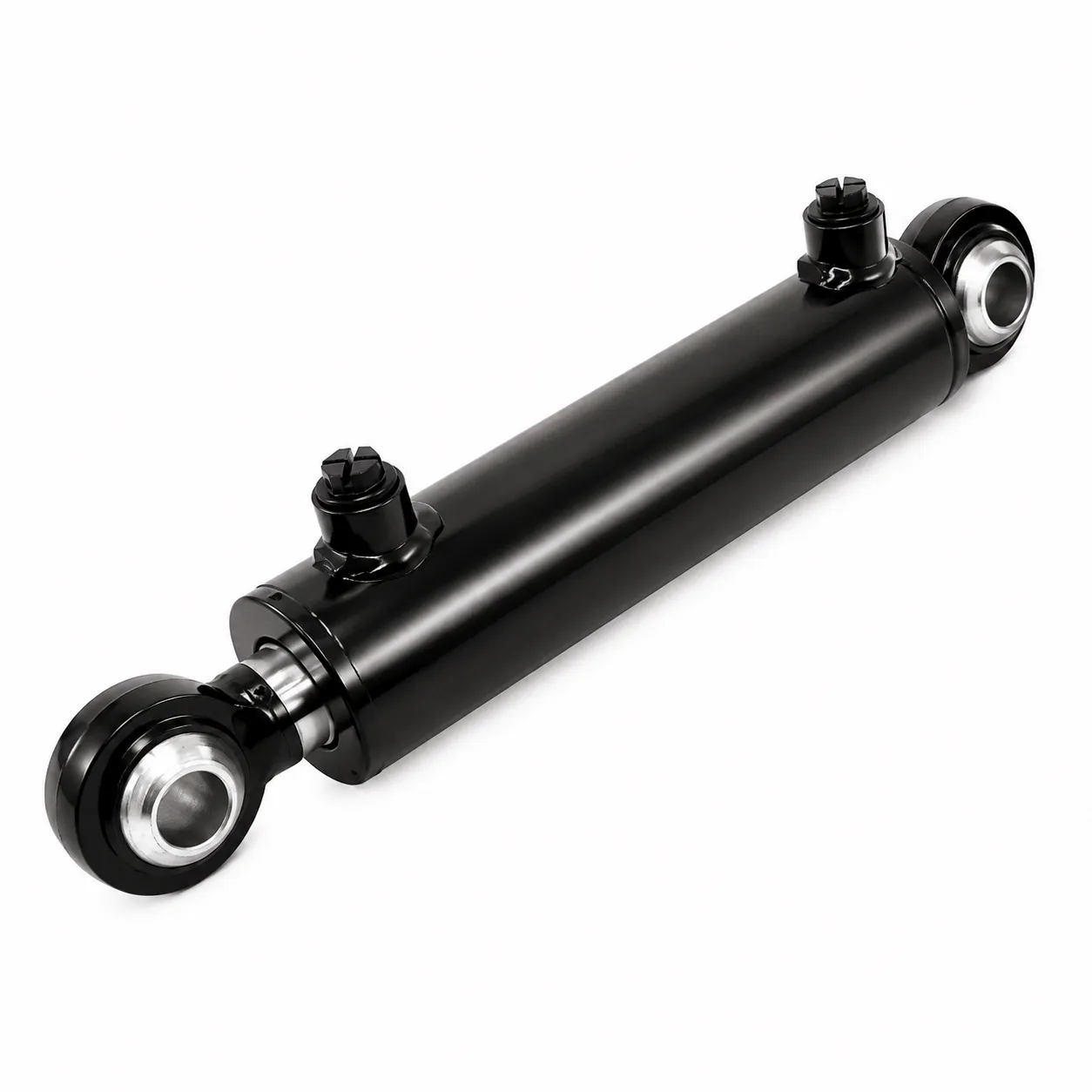
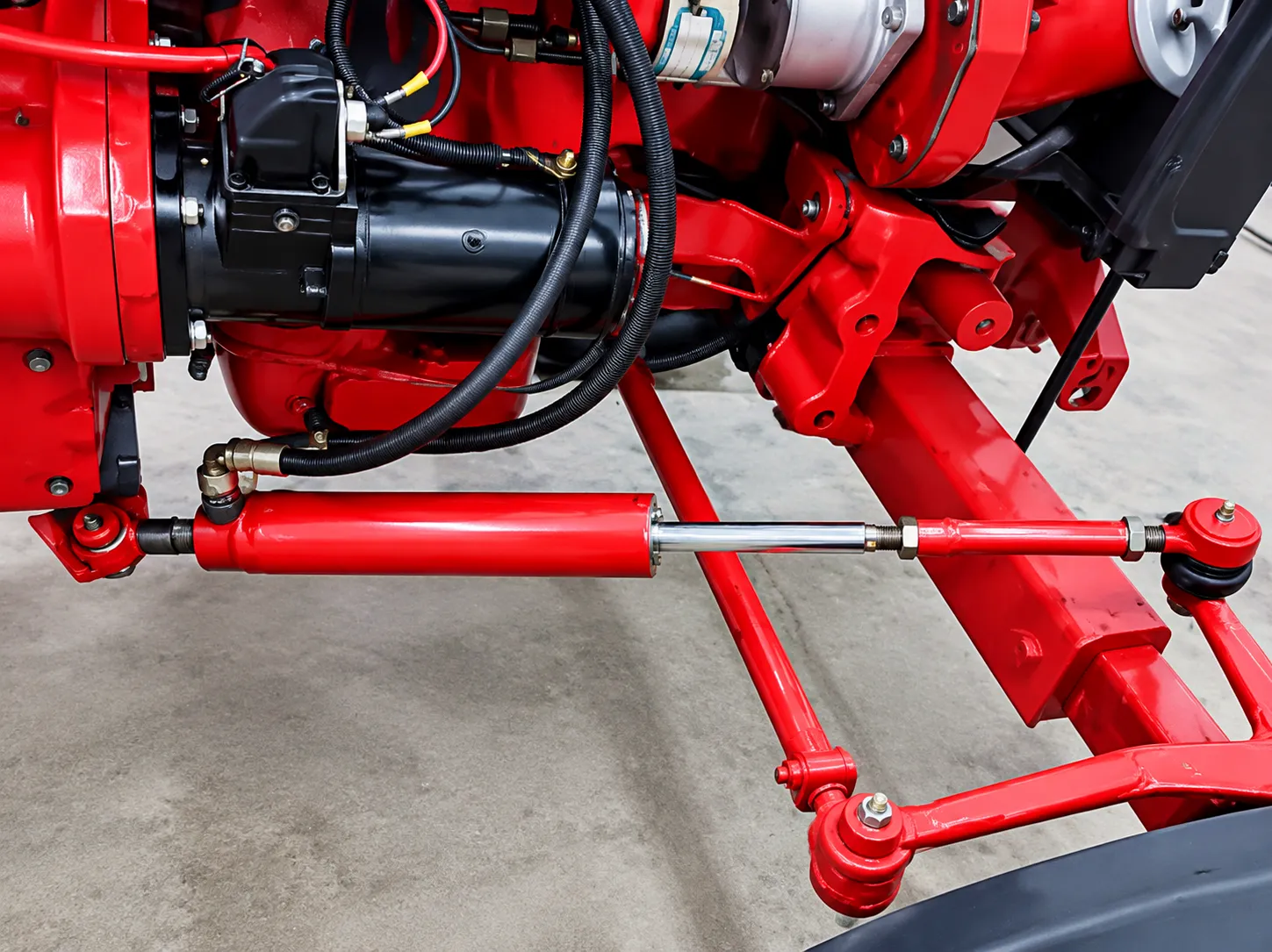
Ever Power steering cylinder for industrial useA Sheffield-based agricultural machinery manufacturer producing self-propelled crop sprayers for the UK arable market had been experiencing a recurring rod-seal failure pattern in their steering cylinder assemblies. The cylinders — sourced from a previous supplier — were failing on average at 800 to 1,200 operating hours, well below the 3,000-hour design target. The failure pattern showed classic side-load damage: asymmetric seal lip wear on one side of the rod, with corresponding score marks on the chrome plating at the seven o’clock position relative to the rod centreline.

The manufacturer’s engineering team had already identified that the problem was alignment-related, but their bracket geometry was fixed by the sprayer’s boom frame structure. They needed a steering cylinder supplier capable of engineering a custom mounting interface that would accommodate the specific geometric constraints of their frame while still eliminating the misalignment-induced side load. Their warranty costs were running at approximately £85,000 per year across their UK dealership network, and the seasonal nature of sprayer use meant that a seal failure during spring application was highly visible and commercially damaging.

Ever Power Solution

Ever Power’s engineering team reviewed the sprayer’s CAD geometry and proposed a revised cylinder with an integrated spherical rod-end bearing featuring a ±6-degree angular compensation envelope — 2 degrees larger than any off-the-shelf unit available to the manufacturer at the time. The cylinder bore was increased by 10 mm relative to the original to maintain the same force output whilst achieving a more favourable rod-to-bore ratio that improved lateral stiffness. An extended gland nose design was developed to provide 40 mm of additional rod guiding length, reducing the bending moment arm at the seal from the misalignment forces that remained even after fitting the spherical end.

3,600+
Hours to First Seal Replacement
£82K
Annual Warranty Cost Saving
8 Weeks
From Brief to First Production Units
Zero
In-Season Failures Post-Transition

★★★★★

“We had been chasing this seal failure for three seasons. Ever Power’s engineering team understood the root cause immediately and proposed a custom solution that our own suppliers had never been able to offer. The spherical rod-end and extended gland design eliminated the problem entirely. Our service engineers in the field have had no seal callouts since switching.”

— Head of Hydraulic Engineering
Agricultural Machinery OEM, Sheffield, South Yorkshire
★★★★★

“The pressure test certificates and material traceability documentation that come with every Ever Power cylinder make our incoming inspection procedure genuinely straightforward. For a manufacturer supplying into the UK agricultural equipment market, having a cylinder supplier that understands quality documentation requirements is as important as the product itself. The lead times have also been consistently reliable — that matters enormously when you’re building to a production schedule.”

— Senior Procurement Manager
Vehicle Conversion Specialist, Coventry, West Midlands
★★★★★

“We sourced custom-bore steering cylinders from Ever Power for our reach truck fleet upgrade programme across our Northampton site. The cylinders arrived correctly specified with BSPP ports — no adaptor fittings needed — and the installation documentation was clear enough that our in-house hydraulic technicians could complete the alignment procedure without calling in a specialist. After 14 months of operation, the rod seals show no sign of wear. The investment paid back within the first quarter through avoided maintenance costs alone.”

— Fleet Maintenance Director
Logistics & Fulfilment Operator, Northampton

Frequently Asked Questions

How do I know if my steering cylinder is suffering side-load damage on a UK agricultural machine?

The most reliable early indicator is oil weeping around the rod gland that is more visible on one side of the rod than the other. When you wipe the rod clean and cycle the cylinder once, a correctly aligned cylinder will show uniform hydraulic film across the full circumference of the rod. A side-loaded cylinder will show heavier oil film on one side. You may also notice that the chrome surface of the rod has a bright polished band on one side running parallel to the rod axis — that polish is caused by the rod wearing against the gland bushing under lateral load.

What is the typical cost of a custom-specified steering cylinder from a UK-export supplier like Ever Power, and how do I get a quote?

Pricing for custom steering cylinders depends on bore size, stroke length, material specification, quantity, and the complexity of mounting arrangements. Standard-range cylinders with BSPP ports for UK applications are competitively priced against European alternatives. For a project-specific quote, send your dimensional drawing or key parameters (bore, stroke, working pressure, mounting type, and annual volume) to [email protected]. Ever Power responds to UK quote requests within one working day.

Which mounting style — clevis or trunnion — is better for preventing side-load damage in heavy-duty steering applications in Birmingham factories?

Trunnion mounting is generally superior for heavy-duty steering applications where significant angular correction occurs across the steering arc. A trunnion mount allows the entire cylinder body to rotate around its mid-point, tracking the changing linkage geometry without imposing the same misalignment forces on the rod seal that a fixed rear-flange or clevis would create. Clevis mounting with a spherical rod end is acceptable for lower-force applications with small angular correction ranges. For Birmingham-based automotive tooling and press-line conveyance applications, the trunnion configuration is usually preferred by Ever Power’s engineering team.

How often should steering cylinder alignment be checked on a fleet of reach trucks operating three shifts per day at a Northampton distribution centre?

At the duty cycle typical of a three-shift distribution centre operation, an initial alignment check at 500 hours is strongly recommended for any newly installed or rebuilt steering cylinder. Thereafter, alignment should be verified at every 1,000-hour planned maintenance service. The high steering cycle frequency in these environments means that clevis pin wear and bracket compliance can cause measurable alignment drift between services. Installing calibrated wear indicators on the clevis pins provides a visual maintenance prompt between formal service intervals.

Where can I find a reliable UK-compatible hydraulic steering cylinder supplier that offers custom bore sizes and short lead times for a specialist vehicle project?

Ever Power supplies custom hydraulic steering cylinders to UK OEM customers and distributors with standard lead times of 7 to 15 working days for catalogue-range products and 4 to 8 weeks for custom-engineered units. All cylinders for UK applications are supplied with BSPP-standard ports, full pressure test certificates, and material traceability documentation. Contact the team directly at [email protected] with your application details for a fast technical assessment and competitive price.

What happens to a steering cylinder seal when alignment is even slightly off — is a small angular error really significant in a Sheffield-based heavy manufacturing environment?

Yes — even 1 to 2 degrees of angular misalignment in a heavy manufacturing context is genuinely significant. At a working pressure of 20 MPa with a 100 mm bore cylinder, the axial load on the piston is approximately 157 kN. A 2-degree angular error generates a lateral force component of around 5.5 kN at the rod seal — a load equivalent to hanging 560 kg from the side of the rod. Polyurethane seals in Sheffield-standard manufacturing environments see temperatures cycling between ambient winter conditions and operational warming. That thermal cycling, combined with the constant lateral preload from misalignment, causes micro-cracking on the compressed side of the seal lip that progresses to full failure within weeks rather than years.

Ever Power · Precision Hydraulic Solutions for UK Industry
Ready to Solve Your Steering Cylinder Alignment Challenge?

Share your bore size, stroke, operating pressure, and mounting requirements. Our engineering team will respond within one UK working day with a technical assessment and competitive quote.

✉ Get a Quote: [email protected]

Custom specifications · BSPP ports · UK-compatible documentation · Fast lead times

edit by gzl