The Physics Behind Pressure-to-Motion Conversion
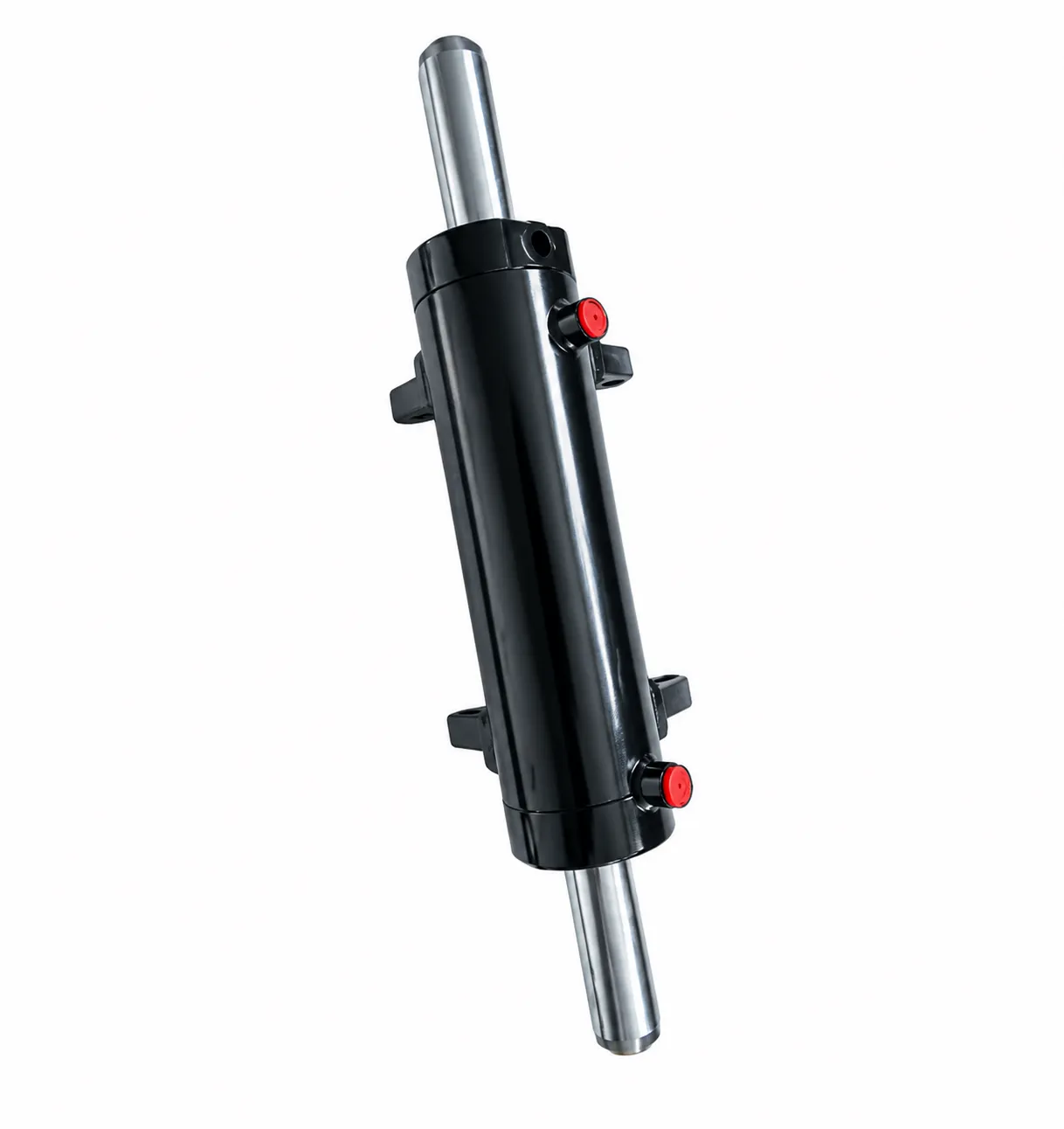
 A steering cylinder is a double-acting hydraulic actuator — meaning it can produce force in both directions of piston travel, not just one. Pressurised hydraulic fluid, typically mineral oil or a biodegradable equivalent, is delivered by a gear pump through the vehicle’s power steering circuit. When the operator turns the steering wheel or triggers a joystick input, a rotary control valve — commonly called an orbitrol or steering control unit — meters fluid into either the cap-end or the rod-end port of the cylinder. The working principle rests on Pascal’s Law: pressure applied to an enclosed fluid is transmitted equally in all directions. Inside the cylinder bore, that pressure acts against the face of the piston. Force equals pressure multiplied by effective piston area (F = P × A). For a cylinder with a 70 mm bore operating at 160 bar, the cap-end thrust is roughly 6,158 N — enough to pivot a heavy steer axle with millimetre-level control.
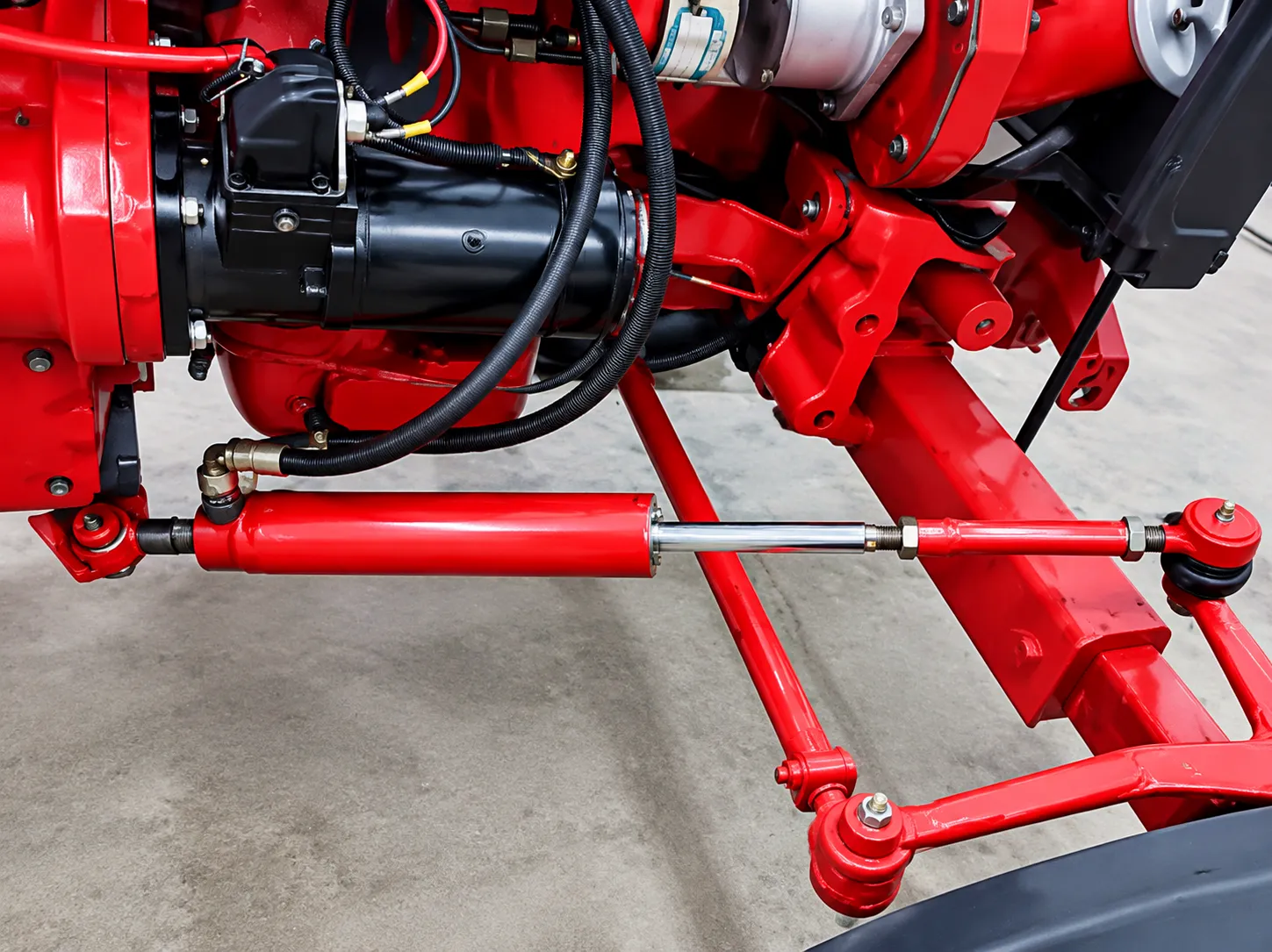
The rod extends or retracts, pushing against a tie rod, pitman arm, or steering knuckle, and that linear displacement is converted — through the geometric relationship of the steering linkage — into angular wheel movement. The key engineering challenge is not simply generating force; it is controlling the relationship between input pressure, piston area, oil flow rate, and cylinder stroke length to deliver predictable, consistent steering response across the full range of loads and temperatures a British working machine encounters — from a wet autumn harvest in Yorkshire to a dust-laden quarry outside Stoke-on-Trent.
Core Materials That Define Cylinder Longevity
Cold-drawn seamless steel tube (ST52 / DIN 2393) is the universal baseline. Its honed internal bore achieves a surface roughness of Ra 0.2–0.4 µm, which is critical for seal life and smooth piston travel. In corrosive marine or coastal environments — relevant for port equipment operating out of Liverpool or Southampton — stainless steel grades 304 and 316L are specified to prevent bore pitting and fluid contamination.
The rod is typically 45# medium carbon steel, induction-hardened to 55–62 HRC and then hard chrome plated to a thickness of 25–35 µm. This creates an extremely wear-resistant surface that repels moisture, resists corrosion from road salt — a very real concern for UK winter operations — and maintains dimensional stability under the lateral bending loads that steering geometry imposes. Alternatives include nickel-chrome plating and ceramic thermal spray coatings for the most demanding offshore applications.
The seal pack — comprising piston seals, rod seals, guide rings, and wiper seals — is the component most affected by temperature cycling and fluid contamination. Polyurethane (PU) compounds dominate in standard applications due to their high abrasion resistance. Fluorocarbon (FKM/Viton) seals are selected for high-temperature environments above 100 °C, and PTFE-based composite rings are used where near-zero stick-slip is required for precise steering feedback. Every seal material chosen directly impacts the maintenance interval and total cost of ownership of the steering system.
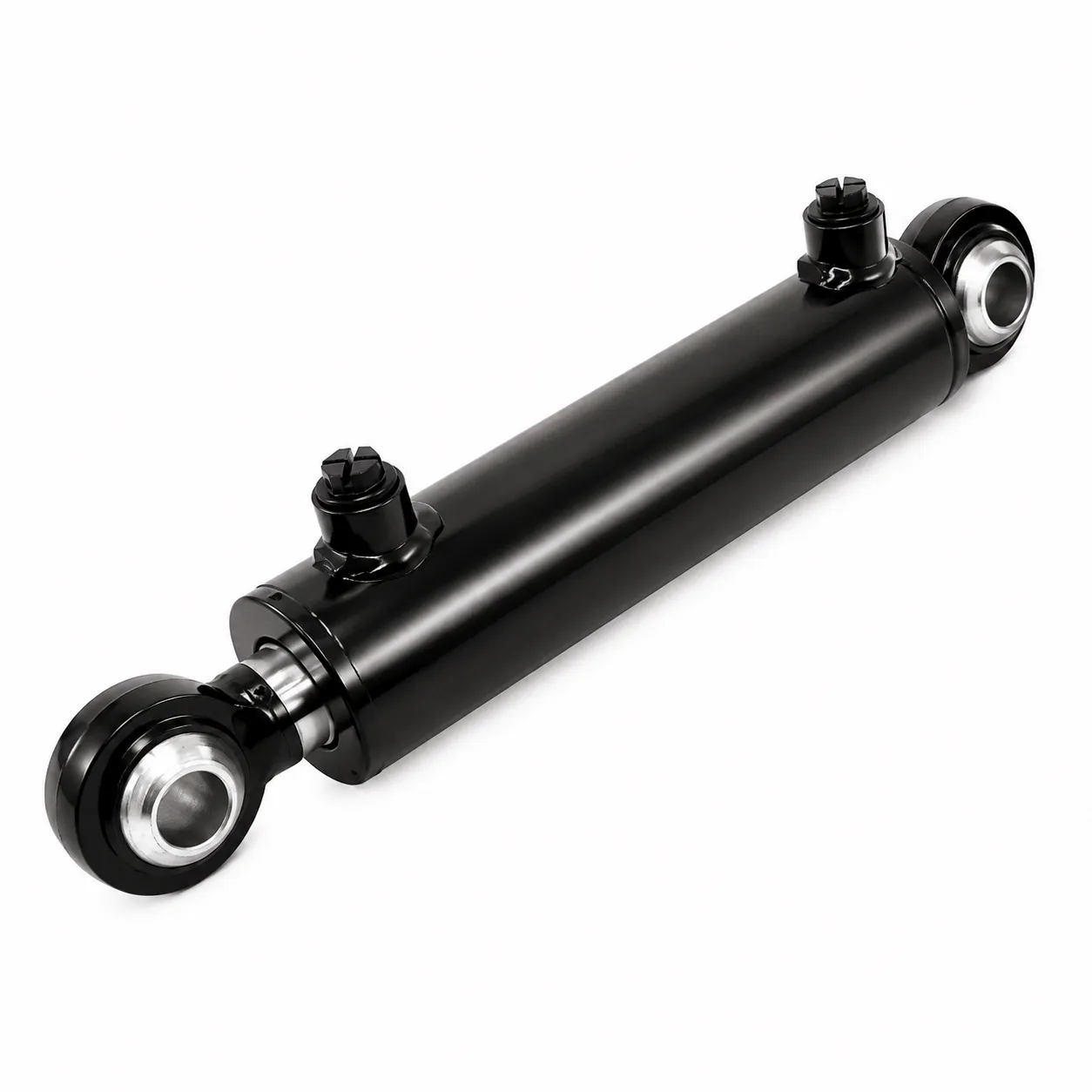
Cylinder end caps and flanges are machined from ductile iron (GGG40 or GGG50) or structural steel, selected based on the mounting geometry and shock load profile. Trunnion mounts, clevis ends, and spherical rod eyes are manufactured to ISO and SAE tolerance standards. Fasteners are typically class 10.9 high-tensile bolts, with locking features built in to survive the vibration environment of road haulage or off-highway use common to quarrying operations in Wales and the Peak District.
Product Advantages That Set Precision Steering Cylinders Apart
Not all hydraulic cylinders deliver the same steering experience. A cylinder engineered specifically for steering duty — rather than a repurposed tipping or lifting actuator — incorporates design features that translate directly into vehicle safety, operator comfort, and long service intervals. The following advantages define what separates a precision steering cylinder from a commodity alternative.
Precision-honed bores and matched piston seal packages keep internal bypassing below 1 cc/min at rated pressure. This matters enormously for steering feel: any internal leakage causes the steering cylinder to drift under load, which is not only uncomfortable but potentially hazardous on a laden HGV or forklift. Rigorous seal pre-compression specification during manufacture eliminates this drift without causing excessive stick-slip in the steering linkage.
Steering cylinders must perform reliably whether the oil temperature is -25 °C at a pre-dawn start on a Scottish estate or 90 °C after prolonged use in a busy distribution centre. High-quality PU and FKM seal combinations maintain elasticity across this range, and the cylinder body’s thermal expansion is matched to the bore geometry to prevent binding. This broad operating window is particularly valued by operators running mixed fleets through the UK’s varied seasonal conditions.
Optional hydraulic end cushions — small metered bypass passages near the end of the stroke — progressively decelerate the piston before it contacts the cylinder cap. This eliminates the sharp metal-to-metal impact that accelerates fatigue in the cylinder body, the mountings, and the steering linkage. Cushioning is particularly valuable in high-cycle applications like reach stackers at container ports and side-loader forklifts in automated warehousing, where the steering cylinder might complete thousands of full-stroke cycles per shift.
Steering geometry rarely allows for long cylinder installation lengths. High-quality steering cylinders are engineered for efficient stroke-to-overall-length ratios, delivering the required lock-to-lock wheel travel within the space envelope dictated by the chassis designer. Compact cylinders using reduced-wall-thickness barrel technology — only achievable with premium steel grades — allow engineers to specify higher bore diameters for increased force capacity without exceeding packaging constraints. This is a common design challenge in the compact telecrawler and mini-excavator segment, a growing market segment across UK construction sites.
Technical & Performance Parameters
The table below reflects the parameter range for Ever Power’s standard catalogue of steering cylinders, which covers the majority of industrial and agricultural applications across the UK market. Custom specifications are available beyond these ranges — contact our engineering team for a detailed assessment.
| Parameter | Standard Range | Unit | Notes |
|---|---|---|---|
| Bore Diameter | 40 – 160 | mm | Custom bores on request |
| Rod Diameter | 25 – 100 | mm | Hard chrome plated, Ra ≤0.2 µm |
| Stroke Length | 80 – 650 | mm | Extended strokes available |
| Rated Working Pressure | 140 – 210 | bar | Test pressure: rated × 1.5 |
| Peak Pressure (Surge) | Up to 350 | bar | Design safety margin ≥2:1 |
| Operating Temperature | -25 to +120 | °C | FKM seals for high-temp duty |
| Output Force (cap-end, 80mm bore, 180 bar) | ~90,480 | N | F = P × π × (D/2)² |
| Barrel Material | ST52 / SS304 / SS316L | — | Grade by application |
| Seal Material Options | PU / FKM / PTFE | — | Per operating conditions |
| Mounting Types | Clevis / Trunnion / Flange / Eye | — | ISO / SAE / custom |
| Surface Treatment | Chrome plate / Paint / Zinc-nickel | — | Salt spray ≥480 hrs standard |
Industrial Application Scenarios
The range of machinery that depends on a precisely engineered steering cylinder is wider than many buyers appreciate. Each application places distinct demands on cylinder geometry, pressure rating, mounting configuration, and seal specification.
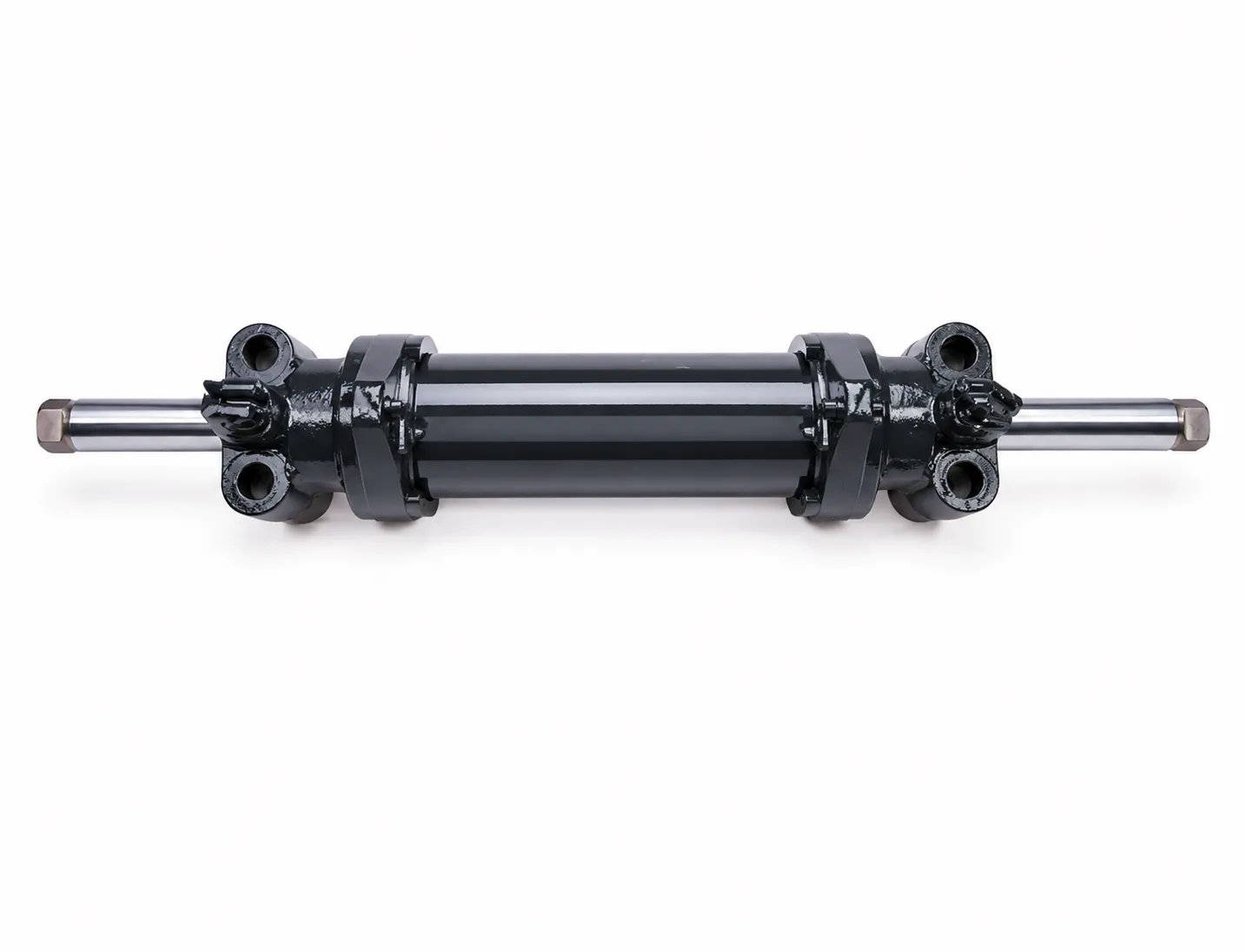
Ever Power: Manufacturing Precision, Delivered to the UK
Ever Power is a specialist manufacturer of hydraulic cylinders, with dedicated production lines for steering cylinder applications across agricultural, industrial, and on-highway sectors. Our engineering capability stretches from standard catalogue products to fully engineered bespoke solutions, and it is that customisation depth that differentiates us as a supplier to the UK market.
Every dimension of a steering cylinder — bore, rod diameter, stroke, port size and position, mounting geometry, seal compound, surface treatment, and cushion specification — can be engineered to the customer’s drawing. We routinely produce replacement cylinders from worn or damaged samples where no original drawing survives, reverse-engineering the part to exacting tolerances. This service is particularly valued by UK machinery importers and independent repair workshops maintaining fleets of discontinued equipment.
Our production facility operates CNC horizontal boring machines, deep-hole drilling centres, and hydraulic honing machines capable of achieving bore tolerances of H7 (±0.012 mm on a 50 mm bore) as standard. Rod grinding and chrome plating are performed in-house, giving us direct control over the rod diameter tolerance and chrome layer thickness — two variables that critically affect seal longevity. All finished cylinders are pressure-tested to 1.5× rated working pressure and function-tested for smooth piston travel before shipment.
Ever Power maintains a dedicated UK logistics programme, with DDP (Delivered Duty Paid) shipment options eliminating import processing complexity for British buyers. Standard lead times for catalogue products run to 15–25 working days from order confirmation, with priority manufacturing available for urgent breakdown replacements — a critical option for fleet operators who cannot afford extended equipment downtime during harvest season or peak construction periods. Documentation packages including EN 10204 3.1 material certificates, pressure test records, and dimensional inspection reports are supplied as standard.
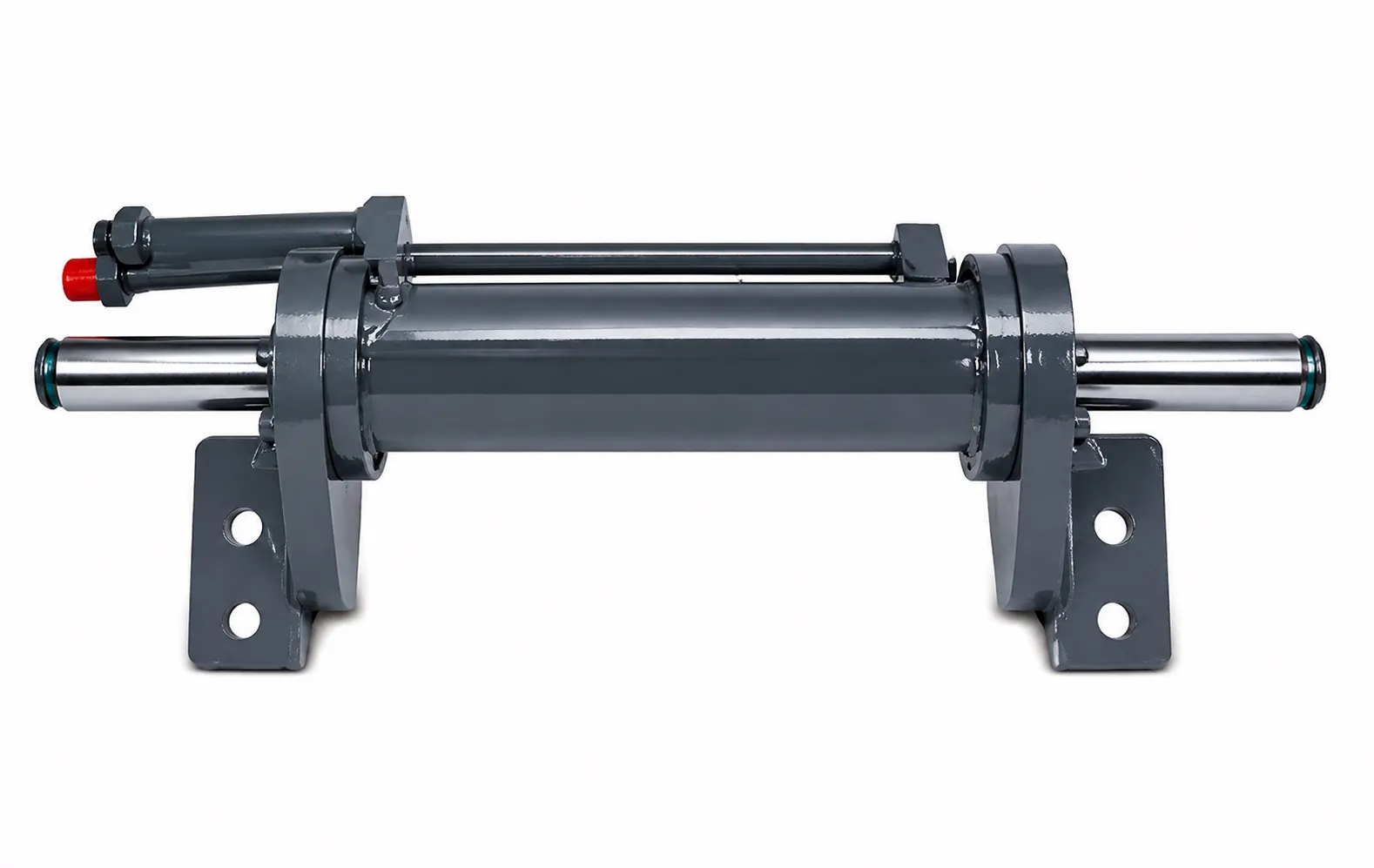
Customer Success: Sheffield Steel & Heavy Haulage
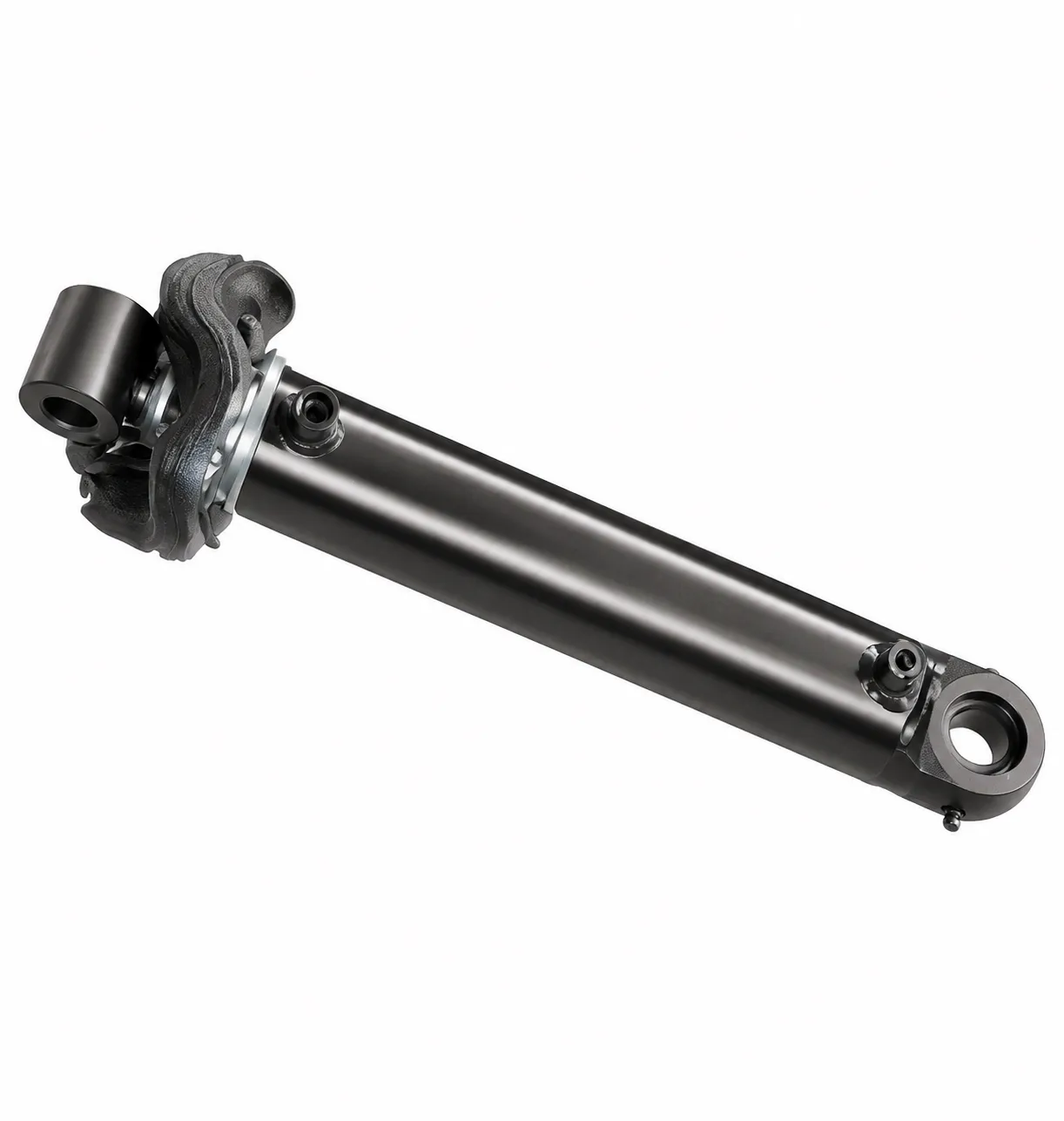 Hallam Industrial Transport, a heavy haulage contractor operating out of Sheffield in South Yorkshire, runs a fleet of sixteen multi-axle low-loaders and Goldhofer modular trailers used to transport oversized steel sections from the city’s rolling mills to fabrication facilities across the UK. Three years ago, the company began experiencing persistent hydraulic oil weepage from the steering cylinders on their oldest trailers — units that had accumulated over 8,000 operating hours — and the replacement cylinders sourced locally were failing to match the original dimensional specification, resulting in tight turning geometry and driver complaints.
Hallam’s engineering manager contacted Ever Power after finding our technical specifications during an online search for precision hydraulic steering cylinder suppliers. We requested measurements from three worn original cylinders, produced a complete dimensional reverse-engineering assessment within 48 hours, and proposed a matched replacement specification using ST52 barrel steel, 45# induction-hardened rods, and FKM seal packs rated to 150 °C — an upgrade over the original PU seals chosen to improve performance during summer haulage seasons when oil temperatures in the sealed trailer hydraulic system can spike significantly.
The first batch of sixteen replacement steering cylinders was manufactured, tested, and despatched from our facility within 22 working days. All units were supplied with full EN 10204 3.1 material certification and pressure test records, satisfying Hallam’s internal engineering audit requirements. Eighteen months post-installation, zero warranty claims have been submitted. The engineering manager reports that the trailers are demonstrably easier to steer in cold conditions — a direct consequence of the FKM seal compound’s superior low-temperature flexibility compared to the original equipment specification.
What Our UK Customers Say
“The dimensional accuracy of Ever Power’s steering cylinders exceeded what we had from the original OEM supplier. Rod surface finish was excellent and the FKM seal pack has handled our high-temperature summer operations without a single drop of seepage. Exactly what we needed for our heavy haulage fleet in Sheffield.”
“We run a fleet of twenty telehandlers across three agricultural sites in Lincolnshire. Ever Power supplied custom steering cylinders with a modified clevis mount to fit our non-standard axle geometry. The lead time was 18 days — genuinely impressive for a bespoke part — and the pressure test certificates made our equipment compliance checks straightforward. Very competitively priced compared to the OEM quote.”
“Our workshop in Birmingham handles repairs and refits for a wide range of construction plant. We’ve been ordering steering cylinders from Ever Power for two years now, and the consistency is outstanding — each batch matches the last to within stated tolerances. The stainless rod option for our coastal plant hire customers has been a real selling point. Response time from the sales team is excellent even with the time difference.”