The Mechanical Relationship Between Stroke and Steering Angle
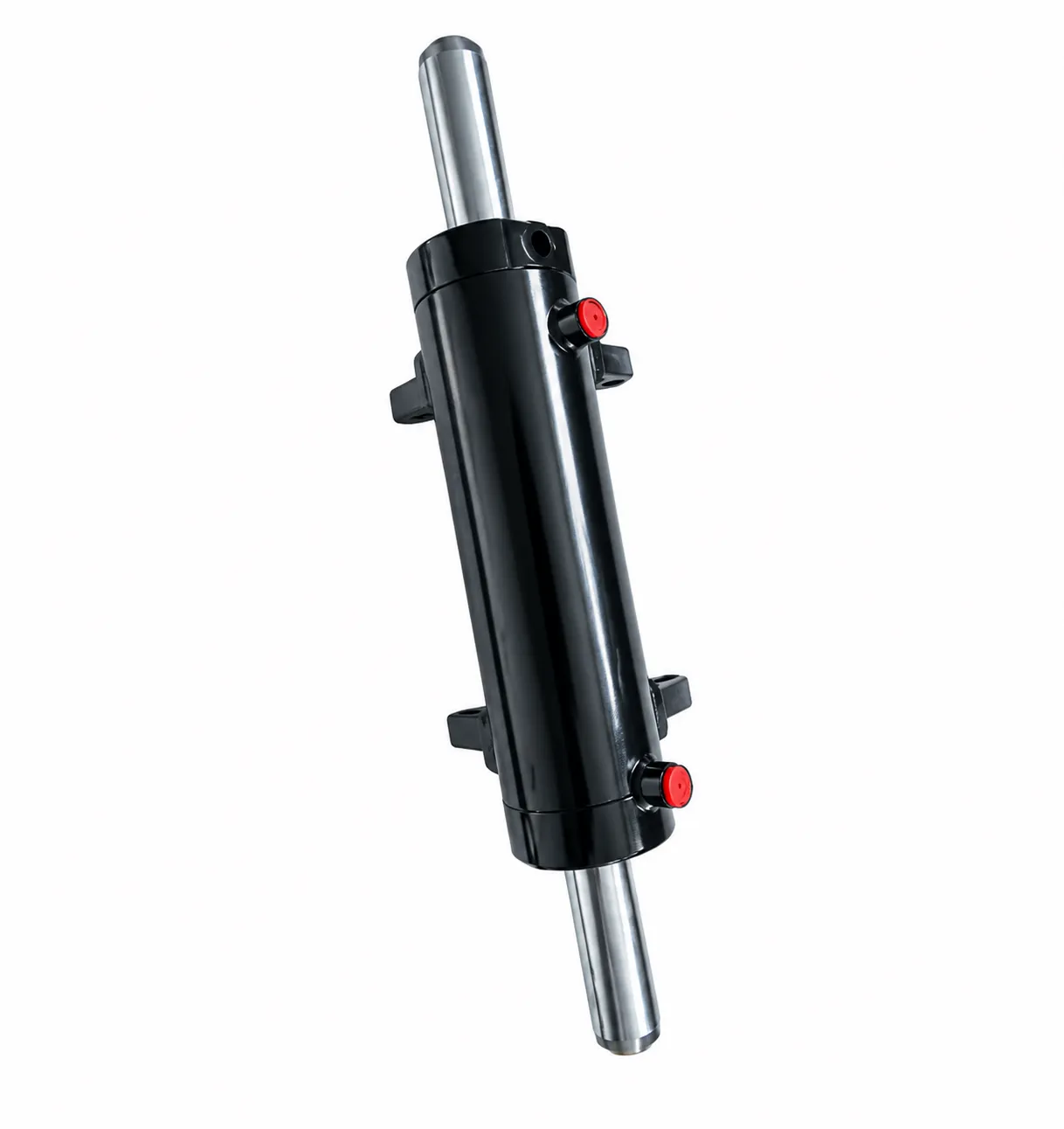
The geometry linking cylinder stroke to wheel angle is governed by the geometry of the steering linkage — the arrangement of tie rods, drag links, and knuckle arms that connect the cylinder rod to the steered axle. When the cylinder rod extends or retracts, the tie rod pushes or pulls the steering knuckle arm through an arc. The angular change at the wheel is therefore a function of both the stroke length and the effective arm length of the knuckle. Longer stroke produces a greater arc of travel, resulting in a wider steering angle and a tighter minimum turning radius. Shorter stroke limits the angle, producing larger turning circles that may be unsuitable for confined spaces.
This relationship is not perfectly linear because the knuckle arm traces a circular arc rather than a straight line. As the wheel approaches its maximum steering angle, the rate of angular change per unit of cylinder travel slows down. This is an inherent geometric property known as the Ackermann effect, and it is something hydraulic engineers must account for when specifying stroke length for extreme-angle applications such as articulated loaders or compact terminal tractors used at UK logistics hubs like the Port of Felixstowe or inland distribution centres in Coventry.
Key Formula
Steering Angle (deg) = arcsin ( Stroke / (2 x Arm Length) ) x (180 / pi)
Minimum Turning Radius = Wheelbase / tan(Steering Angle)
Note: Both figures assume ideal rigid linkage. Real-world deflection under load adds 3–8% to effective turning circle in heavy plant scenarios.
Working Principle of the Hydraulic Steering Cylinder
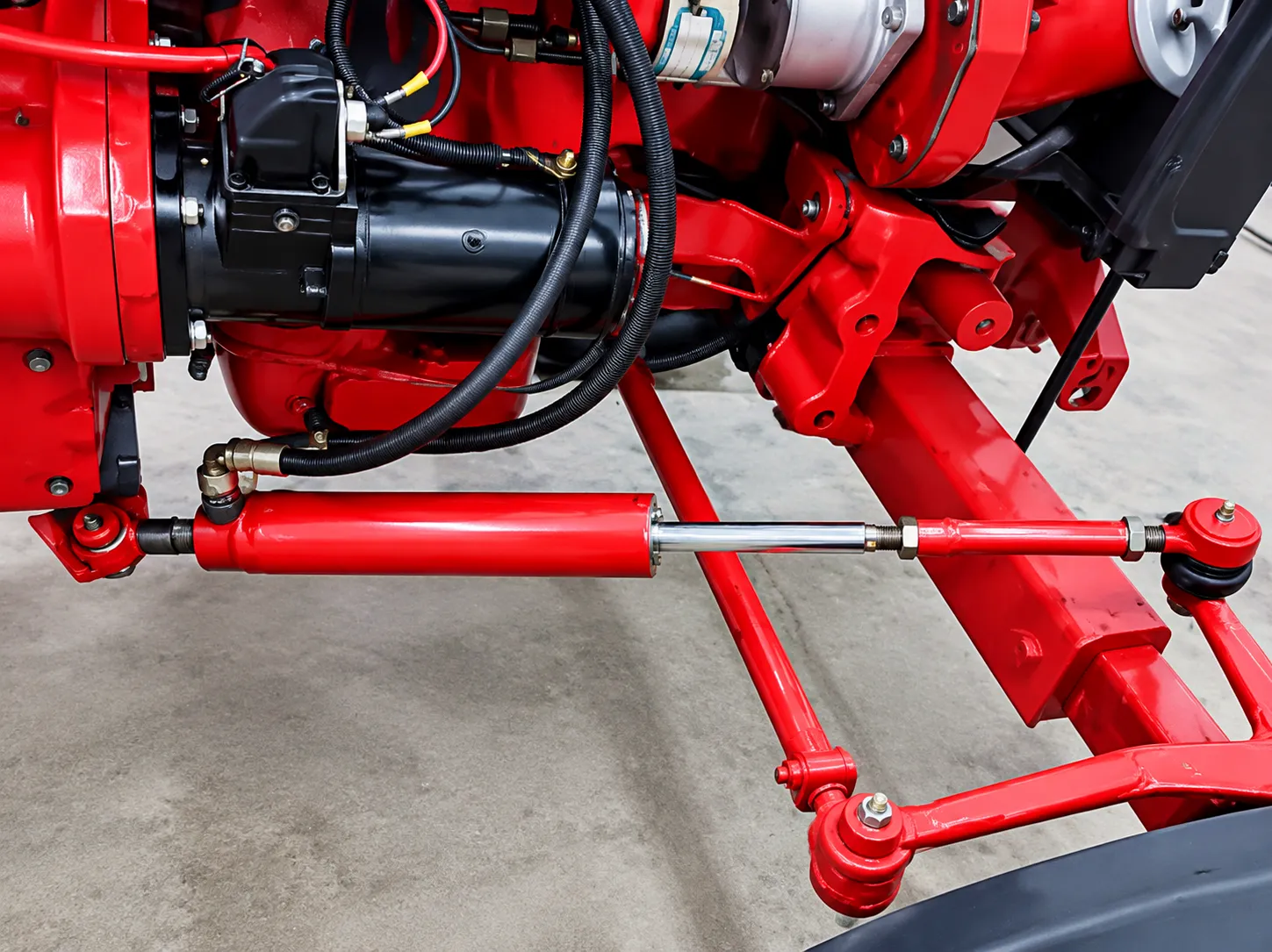
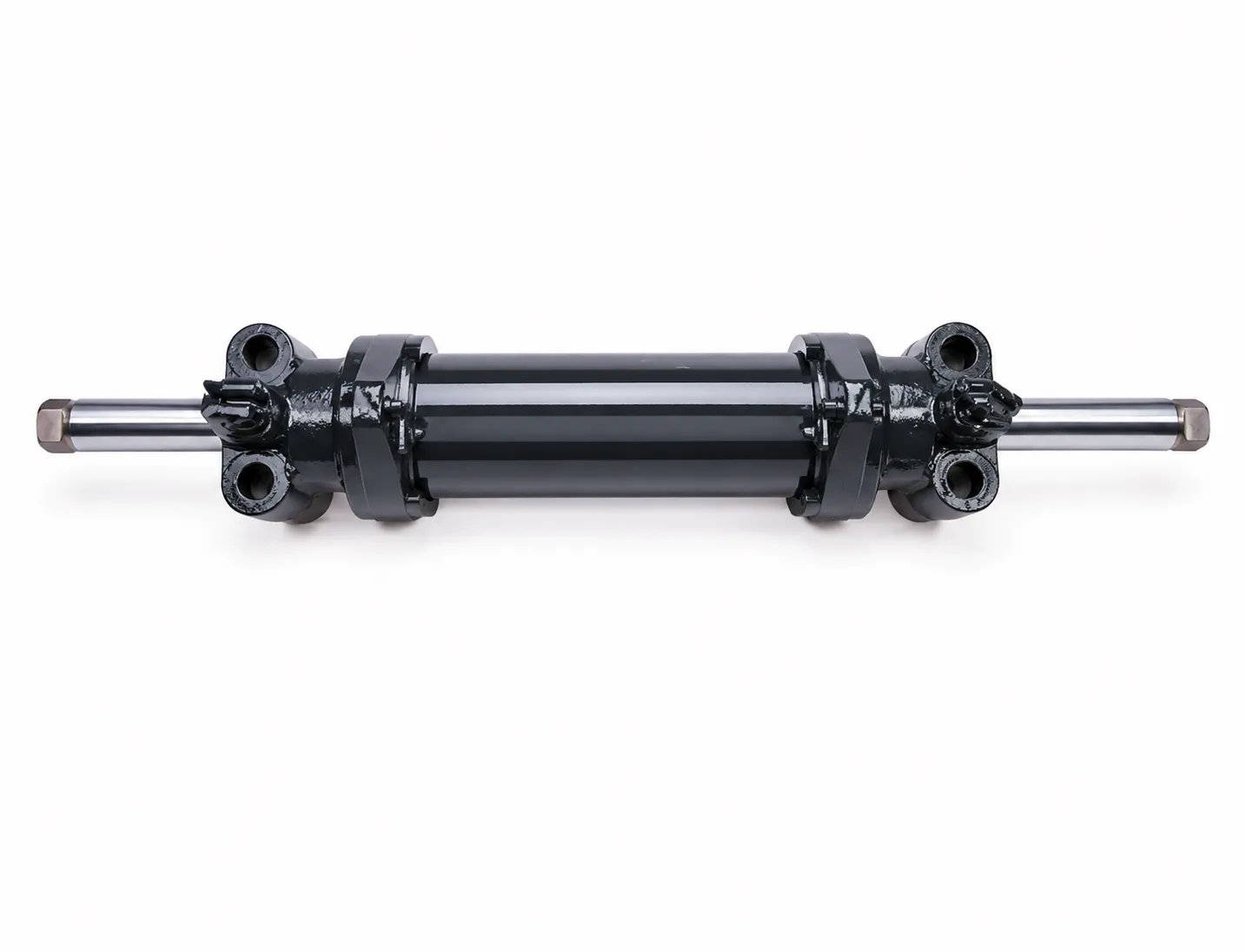
A hydraulic steering cylinder is a double-acting linear actuator. Oil is supplied under pressure by the power steering pump — typically driven mechanically or electrically — through a priority flow control valve to either side of the piston inside the cylinder barrel. When high-pressure oil enters the cap-end chamber, it forces the piston and attached rod towards the rod-end, extending the stroke. When pressure is directed to the rod-end, the piston retracts. The spool valve inside the steering gear or orbitrol unit controls exactly which port receives pressurised fluid and which port connects to the return line, allowing the driver to modulate the steering angle with precision.
The total stroke length is the mechanical boundary of this motion. Internal cushioning sleeves or adjustable mechanical stops can be incorporated to limit the effective stroke to less than the physical maximum, which gives engineers a way to fine-tune the maximum steering angle on the assembly line without changing the cylinder itself. This is particularly useful in situations where a machine undergoes a minor configuration change — fitting wider tyres or a different front axle geometry — that alters the safe maximum steering angle without requiring a whole new steering cylinder specification.
Pressure Range
140 – 280 bar
Typical working pressure in UK heavy plant applications
Stroke Range
80 – 600 mm
From compact forklifts to mining dump trucks
Core Materials in Precision Steering Cylinder Manufacturing
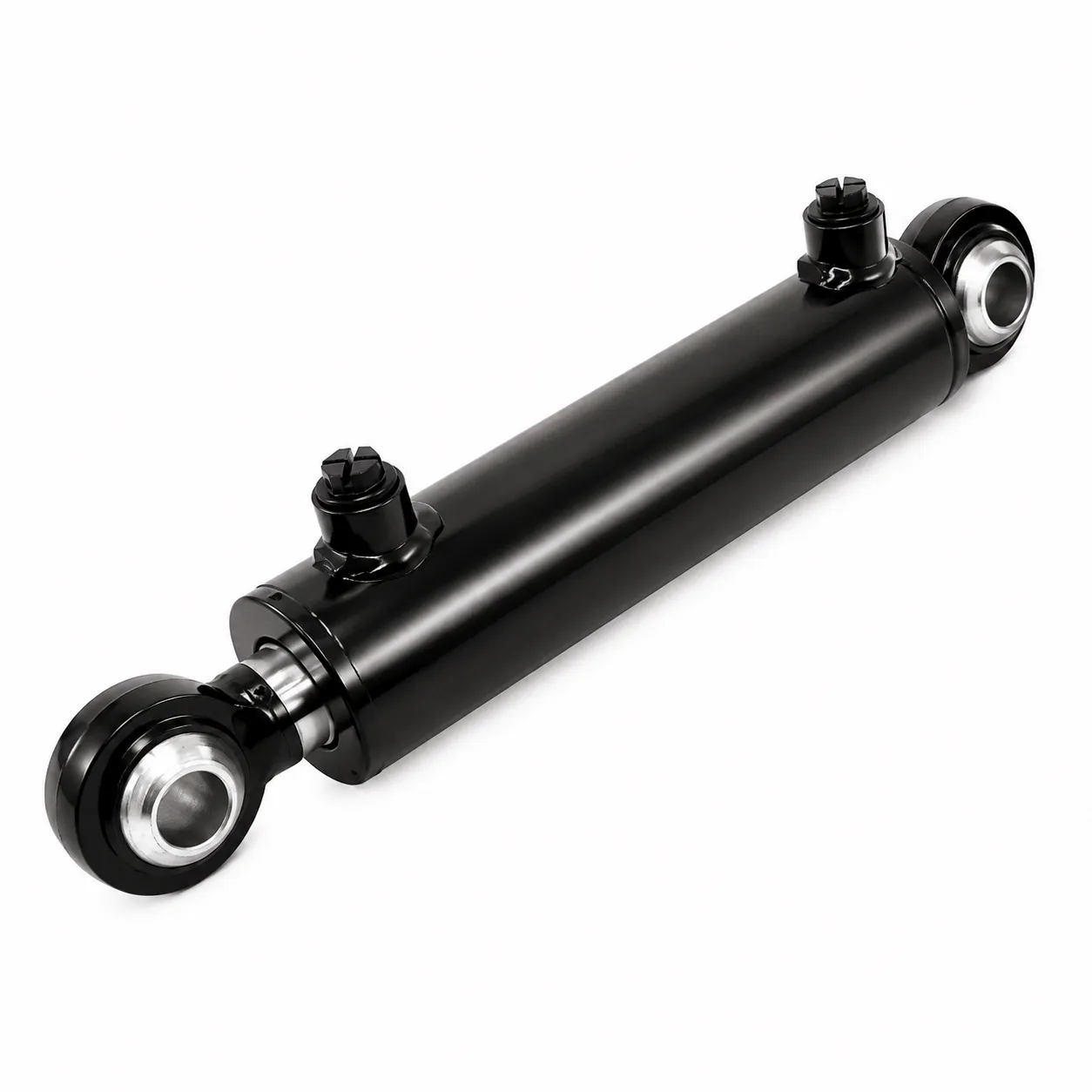
Material selection for steering cylinders used in vehicles operating across demanding UK environments — from the salt-laden coastal winds along the Humber estuary to the heavy industrial grime of West Midlands manufacturing plants — must balance strength, corrosion resistance, and dimensional stability across temperature extremes. The wrong material choice accelerates internal leakage, degrades sealing surfaces, and shortens component life dramatically. Ever Power applies a materials engineering discipline that goes considerably beyond the minimum standards required by many budget suppliers.
Cylinder Barrel
Honed Cold-Drawn Seamless Steel Tube
Ra 0.4 µm internal finish; tolerances to H7/h6 class
Piston Rod
45# Steel / 42CrMo4 Chrome-Plated
Hard chrome 20–30 µm; HRC 55–60 surface hardness
Piston
Nodular Cast Iron / Ductile Iron QT500
Wear-resistant guide rings and PTFE seal sets
End Caps
Forged or Cast Steel with O-ring grooves
Pressure-rated to 1.5x working pressure (proof test)
Seals
Hallite / Parker or Equivalent
Operating range -40°C to +120°C; compatible with HLP46
Product Technical and Performance Parameters
The table below summarises the key engineering parameters that govern steering cylinder selection and performance. These figures represent the standard production range at Ever Power; bespoke specifications beyond these ranges are routinely accommodated through our engineering consultation service. UK fleet buyers and OEM procurement teams can use this data as a starting framework when raising a technical enquiry.
| Parameter | Standard Range | Custom Range | Notes |
|---|---|---|---|
| Bore Diameter | 40 – 150 mm | Up to 200 mm | Larger bore = higher force output |
| Rod Diameter | 25 – 110 mm | Up to 140 mm | Hard chrome plated as standard |
| Stroke Length | 80 – 600 mm | Up to 1,200 mm | Core variable for turning radius control |
| Max Working Pressure | 250 bar | 320 bar | Proof-tested to 1.5x rating |
| Max Steering Angle | up to 70° | Design-specific | Dependent on linkage geometry |
| Operating Temperature | -30°C to +100°C | -40°C to +120°C | Special seal compounds for extremes |
| Surface Treatment | Electrophoretic Paint | Hot-Dip Galvanising / Nickel | Marine-grade options available |
| Mounting Style | Clevis / Trunnion / Flange | Any combination | Custom weld-on brackets on request |
Core Technical Advantages of High-Precision Steering Cylinders
A well-engineered steering cylinder is far more than a simple hydraulic ram. It is a safety-critical component that carries the entire steering force of a vehicle — sometimes in excess of 50 kN in heavy haulage applications. The advantages listed below reflect the engineering principles that separate a precision-manufactured unit from a lower-cost alternative, and they matter most in high-cycle applications common in UK construction, agriculture, and materials handling.
Stroke Precision
Manufactured stroke-to-stroke repeatability within ±0.3 mm ensures consistent steering angle performance across all units in a fleet, reducing setup time after replacement.
Zero Internal Leakage
Multi-layer piston seal packs eliminate cross-port leakage, maintaining full lock-in steering holding force when the vehicle is stationary on uneven terrain — essential for loader applications on UK construction sites.
Corrosion Resistance
The hard chrome rod surface combined with an electrophoretic-coated barrel delivers salt-spray resistance exceeding 500 hours to ISO 9227 — critical for agricultural machinery working near UK coastal farmland in East Anglia and the Scottish lowlands.
Cushioning Performance
Adjustable end-of-stroke cushioning absorbs momentum at full steering lock, protecting linkage joints from shock loading. This extends knuckle pin and tie rod end life by an average of 30–40% in high-frequency steering applications.
Compact-to-Stroke Ratio
Advanced barrel wall thickness optimisation allows longer effective strokes within the same envelope length, enabling tighter turning radii without increasing the physical footprint of the cylinder — valuable in compact urban delivery vehicles increasingly common in UK city logistics.
Custom Stroke Adjustment
Mechanical stop collars allow effective stroke reduction in the field without cylinder removal. This makes it possible to adjust the turning radius of a machine to comply with site-specific operating rules — a feature valued by UK plant hire companies managing diverse fleet requirements across multiple job sites.
Industrial Application Scenarios Across UK Sectors
Steering cylinders serve an enormous breadth of vehicle types across UK industry, and the stroke length requirements differ substantially between each. Understanding which stroke range best suits a given application helps procurement teams request the right product from the outset, avoiding costly modifications and delays. The following scenarios are drawn from real-world applications across the United Kingdom’s diverse industrial landscape.
Application: Counterbalance Forklifts in UK Warehouse Operations
Standard counterbalance forklifts operating in the dense storage facilities common in logistics hubs like Daventry, Lutterworth, and Milton Keynes demand short-to-medium stroke steering cylinders in the 90–160 mm range. These units must generate substantial steering force relative to their compact dimensions, because the rear-wheel-steer arrangement places the entire steering effort at the counterweight end of the vehicle while maintaining a tight turning circle for narrow aisle navigation. The forklift steering cylinder in this class typically operates at pressures between 140 and 180 bar and must deliver smooth, responsive steering feel through the full stroke range without detectable mid-stroke friction or stick-slip behaviour.
The forklift tilt cylinder works in concert with the steering system to manage overall machine stability, particularly when loads are being carried at elevated mast heights. Engineers specifying replacement or OEM steering cylinders for UK warehouse fleets should pay particular attention to the thread specification and port orientation, as many European-origin forklift chassis use metric port threads that differ from JIS or NPTF standards common on older units.
Application: Agricultural Tractors and Combine Harvesters
Large-frame agricultural tractors working the arable fields of Lincolnshire, Yorkshire, and the Scottish Borders face a unique combination of demands: high lateral loading from deep tillage implements, the need for rapid end-of-row headland turns, and exposure to abrasive soil contamination. Steering cylinders for this application typically feature strokes in the 200–380 mm range, larger bore diameters to provide adequate force at lower system pressures, and reinforced wiper seal designs to exclude fine soil particles from the sealing surfaces. Stroke accuracy is especially important on front-wheel-assist tractors where the differential lock strategy depends on the steering cylinder reaching a consistent angle trigger point.
Application: Articulated Dump Trucks and Wheeled Loaders on UK Construction Sites
Articulated dump trucks and wheeled loaders operating on road construction projects across the M25 corridor, the HS2 construction zones, and major civil engineering projects in Manchester and Leeds use hydraulic steering cylinders that must withstand extreme side loading and continuous duty cycles. Stroke lengths in this sector often reach 300–500 mm, and the cylinder must maintain full rated force output at both temperature extremes — cold winter starts in the Scottish Highlands and sustained operation during summer ground-breaking work in the South East. The turning radius of a 30-tonne articulated hauler is almost entirely determined by the cylinder stroke, and even a 10% shortfall in effective stroke due to seal wear or mechanical stops being set too conservatively can increase the turning circle enough to create operational bottlenecks on confined sites.
Application: Multi-Axle Heavy Haulage Trailers for UK Abnormal Loads
Specialised low-loader and Goldhofer-style trailers used by UK abnormal load hauliers — the companies moving wind turbine nacelles to the Humber estuary or reactor vessels to nuclear sites in Somerset — use hydraulic steering cylinder banks to co-ordinate multi-axle steering across lengths that can exceed 50 metres. Each individual cylinder must operate synchronously with others to produce the enormous turning radius reduction needed to manoeuvre through roundabouts and narrow A-road bends. Stroke calibration across cylinder banks is critical: a mismatch of even 5 mm between units on adjacent axles creates a scissoring effect that causes tyre scuffing and unacceptable lateral drag on highway surfaces.
Practical Guide: Calculating How Stroke Length Changes Your Turning Radius
The following worked example illustrates how adjusting stroke length affects the turning radius of a typical 3-tonne counterbalance forklift with a 1,250 mm wheelbase and a knuckle arm effective length of 95 mm. These figures are representative of units widely used across UK distribution centres and manufacturing plants, including the automotive supply chain facilities in the West Midlands and Sunderland.
| Stroke (mm) | Max Steering Angle | Turning Radius (approx.) | Practical Impact |
|---|---|---|---|
| 80 mm | 25° | ~2.9 m | Requires wide aisles; suitable for yard use only |
| 110 mm | 35° | ~1.9 m | Standard warehouse aisle width compatible |
| 140 mm | 47° | ~1.35 m | Excellent for narrow aisle or VNA pre-sorting areas |
| 160 mm | 57° | ~0.95 m | Near-pivot turning; used in confined indoor spaces |
These figures assume a rigid, zero-compliance linkage system. Real-world measurements will vary slightly depending on tyre sidewall flex, linkage bushing clearance, and hydraulic fluid compressibility under load. Engineering validation on the actual vehicle chassis is always recommended before finalising stroke specification in safety-critical applications.
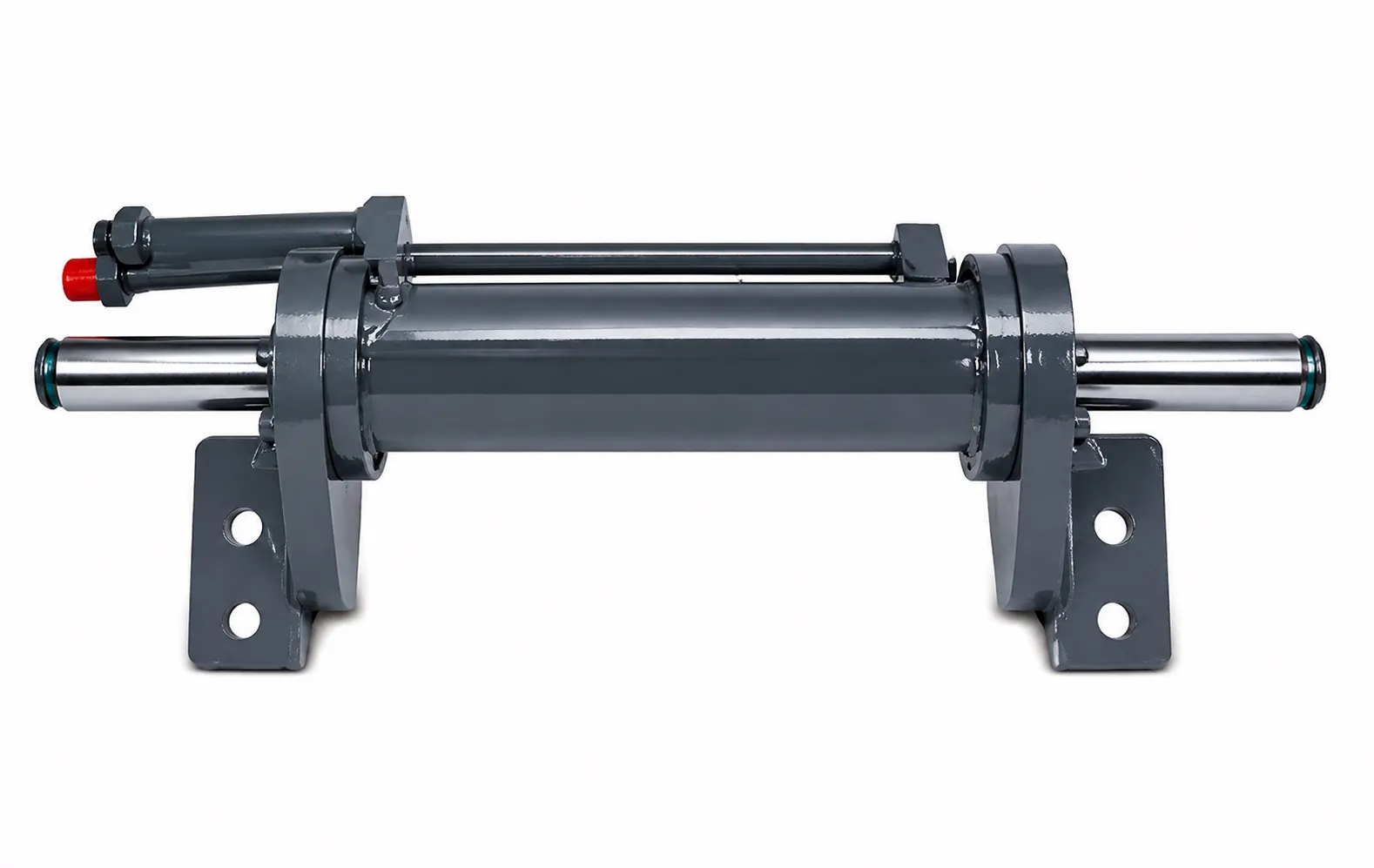 Ever Power operates a fully integrated hydraulic cylinder manufacturing facility with engineering capability that goes well beyond the standard product range. For UK buyers who require cylinders built to bespoke stroke specifications — whether driven by an unusual vehicle geometry, a retrofit scenario on legacy plant, or a new OEM platform in development — our engineering team works directly from customer-supplied drawings, 3D CAD data, or sample units. Reverse engineering of discontinued legacy steering cylinders is a routine part of our service, allowing UK fleet managers to source reliable replacements for machines where the original equipment manufacturer no longer supplies components.
Customer Success Story
Sheffield Steel Processing Plant: Solving a Turning Radius Problem on AGV Shuttle Carriers
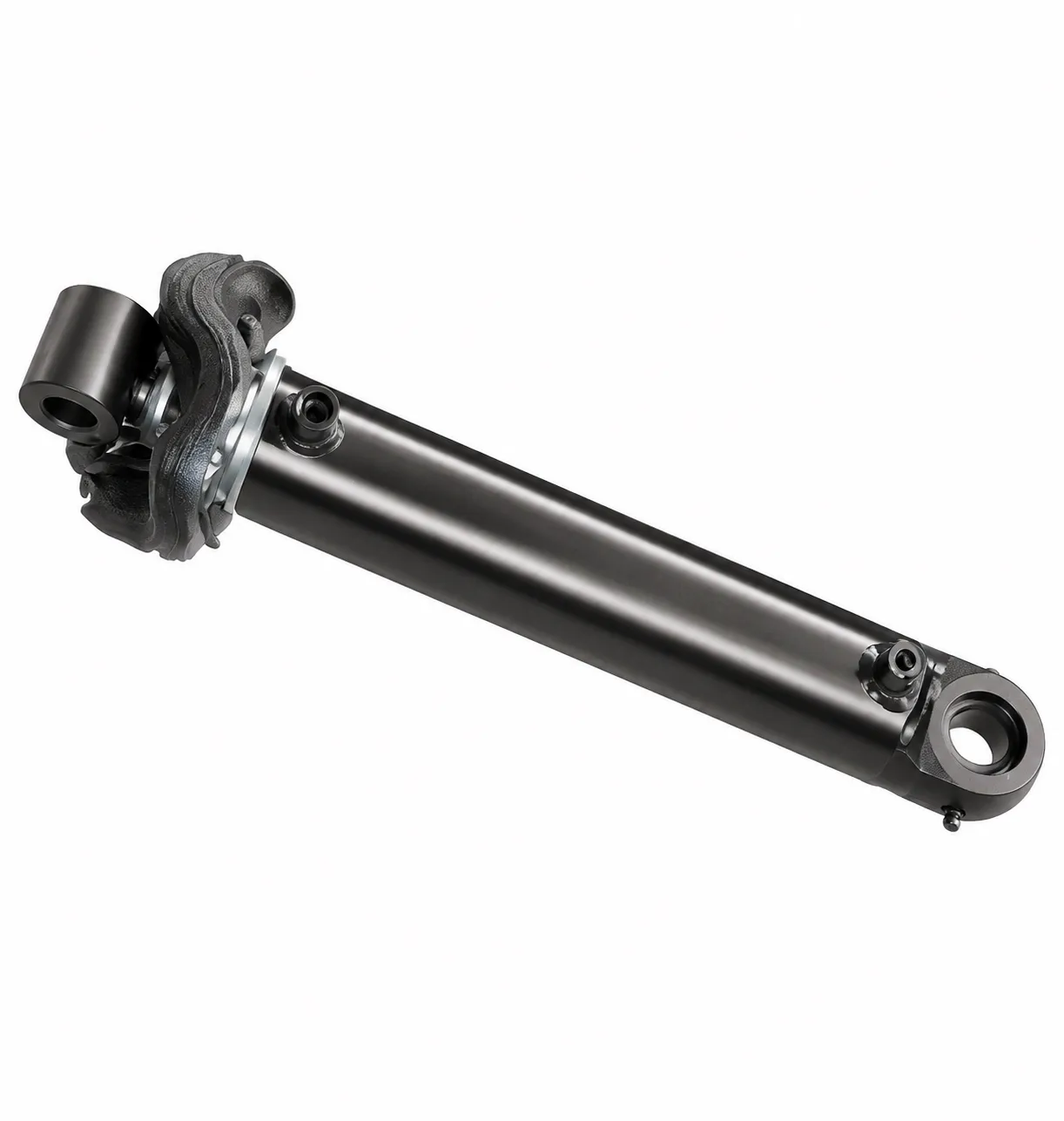 A major steel coil processing and distribution business based on the Sheffield to Rotherham corridor — the heart of the UK’s remaining structural steel industry — approached Ever Power in early 2025 with a specific operational problem. Their fleet of eight hydraulic shuttle carriers, used to move 12-tonne coil stacks between slitting lines and dispatch bays, had been plagued by a chronic turning radius issue. The original OEM steering cylinders, sourced from a European supplier that had since discontinued the model line, provided a stroke of 185 mm. However, after multiple rebuild cycles using generic replacements from a local hydraulic shop, effective stroke had crept down to 168–172 mm. The result was a measurable 0.4 metre increase in turning circle, which meant the carriers could no longer complete the designated routing circuit without a three-point turn at one particularly tight junction — adding an average of 4.2 minutes per cycle across all shifts.
The plant’s maintenance engineering manager contacted Ever Power after finding our technical content through an online search for precision steering cylinder suppliers with UK stock and custom capability. We reverse-engineered the original unit from a worn example the customer couriered to us, confirmed the correct stroke at 185 mm with a modified clevis geometry to correct a known wear point in the original design, and produced a trial batch of four units in 18 working days. The replacement cylinders restored full turning circle performance on installation without any linkage adjustment. The plant has since ordered a further twelve units for full fleet standardisation and ongoing spares stock.
Outcomes
Full turning radius restored · 4.2 min/cycle time saving recovered · Fleet standardised on single specification · Spares provisioned for 36-month maintenance horizon
Customer Reviews
★★★★★
“The stroke accuracy on these cylinders is genuinely impressive. We fitted four of them and every machine came out with identical turning circle measurements on the first setup attempt. With generic parts, we’d always needed to adjust cushioning stops on at least two or three units per batch.”
— Maintenance Engineering Manager, Steel Processing, Sheffield
★★★★★
“Ever Power’s technical team understood the problem immediately. They asked the right questions about linkage geometry and system pressure before quoting, which gave us confidence they weren’t just sending a generic part. The modified clevis was a thoughtful improvement we hadn’t even asked for.”
— Fleet Engineering Supervisor, Logistics & Distribution, West Midlands
★★★★★
“We needed documentation for our CE plant re-registration and Ever Power provided full material certificates and pressure test records for every unit without being asked. That level of supply chain transparency is rare at this price point and it saved us several days of administrative chasing with our compliance team.”
— Procurement Engineer, Agricultural Machinery OEM, Lincolnshire
Frequently Asked Questions
How does the stroke length of a hydraulic steering cylinder directly affect the minimum turning radius of a heavy forklift operating in a UK warehouse?
The stroke length determines the maximum angular displacement of the rear steer axle wheels. A longer stroke pushes the tie rod through a greater arc, increasing the steering angle. Higher steering angle reduces the turning radius. For a typical 3-tonne counterbalance forklift, increasing stroke from 110 mm to 140 mm can reduce the turning circle by approximately 0.5 metres — a significant gain in narrow UK distribution warehouse aisles where aisle widths are often dictated by racking system layout.
What is the typical price range and lead time for a custom-stroke hydraulic steering cylinder from a UK-focused supplier like Ever Power?
Custom steering cylinders with non-standard stroke specifications vary considerably in price depending on bore diameter, pressure rating, surface treatment, and quantity. For prototype engineering enquiries, contacting Ever Power at [email protected] with the bore, rod diameter, stroke, and mounting style details will allow us to provide a specific quotation rapidly. Lead times for first-article prototypes are typically 15–25 working days from drawing approval, with volume production timescales discussed case by case.
Which type of steering cylinder is best suited for agricultural tractors working in the heavy clay soils of Lincolnshire and Yorkshire, and how should I size the stroke?
For large-frame tractors on heavy soils, a larger bore double-acting cylinder with reinforced wiper seals and a stroke in the 250–380 mm range is usually the correct starting point. The stroke needs to be sized to produce sufficient steering angle for comfortable headland turns — typically 50–60 degrees of wheel articulation — while ensuring the cylinder does not over-extend the steering linkage beyond its structural limit. Material selection should also specify triple-lip wiper seals to exclude soil contamination.
Where can I find a reliable supplier of hydraulic steering cylinders with bespoke stroke capability for construction plant in the Birmingham and West Midlands area?
Ever Power serves UK construction plant operators and fleet managers nationwide, including the Midlands manufacturing and construction corridor. All orders are managed through our export logistics team with standard shipping to UK mainland addresses. For urgent plant-down situations, expedited production and air freight options are available on request. Contact [email protected] with your cylinder specification and required delivery window for a rapid response.
When should I consider replacing rather than rebuilding a worn steering cylinder, and what signs indicate that stroke loss is causing turning radius degradation in my fleet?
Replacement is generally more cost-effective than rebuilding when the barrel bore has worn beyond H8 tolerance, when the rod has lost more than 15 µm of chrome plating across its working length, or when the end cap threads show measurable fatigue damage. Stroke loss symptoms include a visibly wider turning circle on full-lock manoeuvres, the machine requiring a reverse-and-reapply to complete tight turns it previously managed in one motion, uneven tyre wear on the steer axle, and steering response that feels slow or requires higher pump pressure to achieve the same wheel angle.
How do I get a quote for a batch of custom-stroke steering cylinders for a multi-axle trailer fleet operating on UK abnormal load movements, and what technical information do I need to provide?
To obtain an accurate quotation for multi-axle trailer steering cylinders, Ever Power needs the following information as a minimum: bore diameter, rod diameter, stroke (both physical and effective if using stops), mounting style and dimensions at both ends, working pressure rating, hydraulic fluid specification, and operating temperature range. If you have an existing unit or drawings, sharing these speeds the process considerably. Send your enquiry and any supporting files to [email protected] and our applications engineering team will respond within one business day.
Precision Engineering · Custom Stroke Specifications · UK Delivery
Need a Steering Cylinder Built to Your Exact Stroke Specification?
Send us your requirements and Ever Power’s engineering team will respond within one working day with a technical proposal and quotation.
Ever Power — Precision Hydraulic Cylinder Manufacturer | Steering Cylinder Specialists | UK B2B Supply & Custom Engineering
edit by gzl