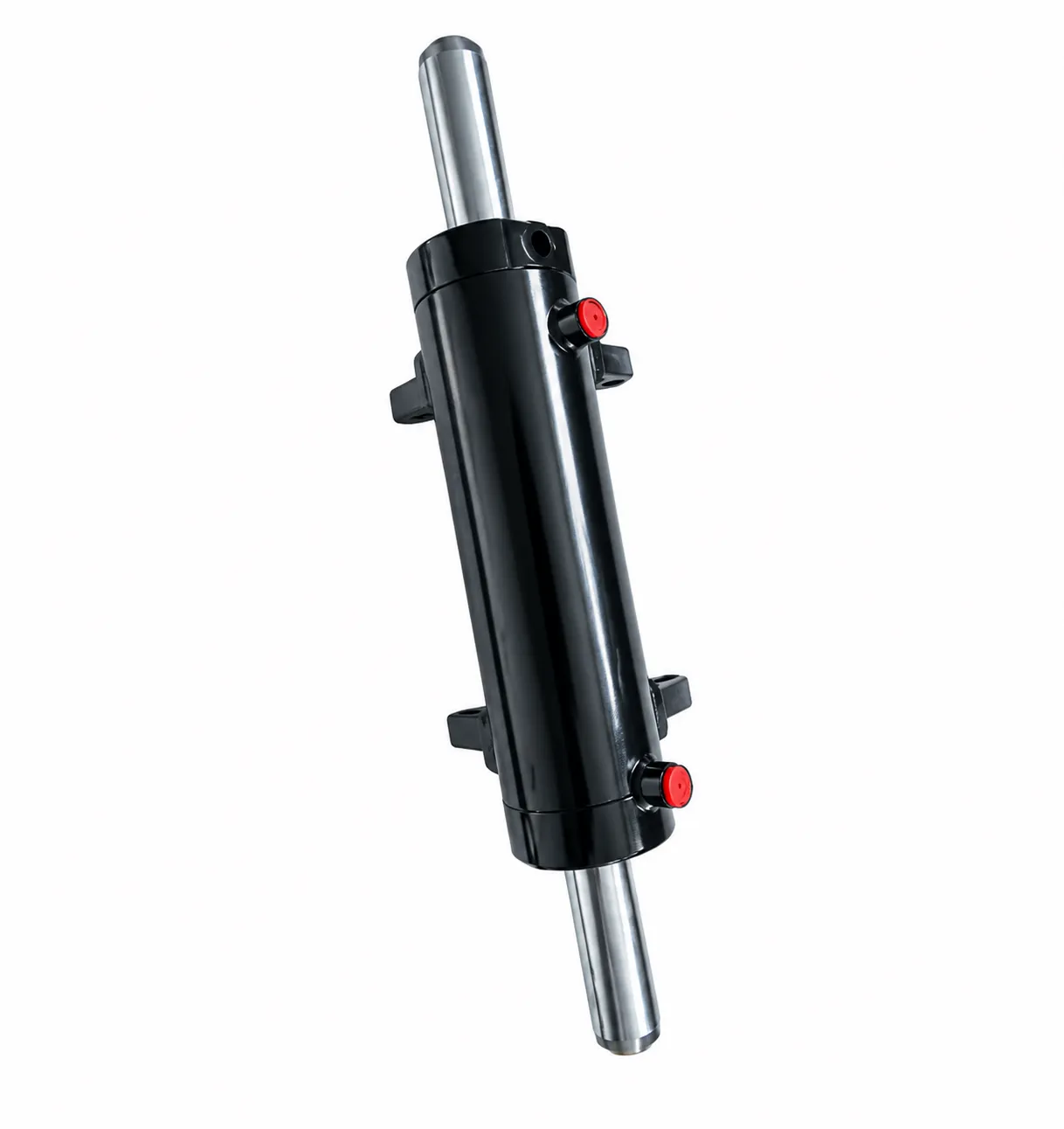
 Every hydraulic steering cylinder begins its service life bolted, pinned, or flanged to a machine frame — and that connection point decides more about long-term performance than most engineers initially realise. The mounting style is not a secondary specification. It governs how side loads are distributed across the barrel, how thermal expansion is absorbed during extended duty cycles, and whether the cylinder can articulate freely when the vehicle or machine traverses uneven terrain. In the UK’s heavy industrial and agricultural sectors — from the steel fabrication yards of Sheffield to the open-cast mining operations of South Wales — maintenance engineers routinely attribute premature seal failure and barrel scoring to a mismatch between the mounting type chosen and the actual motion envelope the application demands. Selecting the correct mounting method from the outset is therefore a fundamental engineering decision rather than a procurement convenience.
How a Steering Cylinder Actually Works — and Why Mounting Matters
A steering cylinder converts hydraulic pressure into linear mechanical force. Pressurised fluid enters one port, acts on the piston face, and drives the rod outward — the rod force being the product of working pressure and piston area. In a steering system, this rod extension or retraction pivots a knuckle, axle, or linkage to change the vehicle’s direction. The cylinder must accept both the primary axial force and the bending moments that arise when the load path is not perfectly coaxial — which, in nearly every real installation, it never is. The mounting arrangement is the only mechanism that can manage these parasitic loads and prevent them from reaching the seals and the rod surface.
The mounting interface transmits every Newton of force between the cylinder and the machine structure. A rigid, fixed mount works perfectly when the load axis never deviates — but the moment misalignment occurs, the mount becomes a lever that multiplies stress at the barrel bore and at the rod wiper seal. A pivoting mount — clevis or trunnion — absorbs angular displacement and lets the cylinder float within its mechanical constraints, preventing the bending moment from ever reaching the sealing surfaces. Flange mounts sacrifice that flexibility deliberately in exchange for compactness, high axial capacity, and the ability to pre-tension the joint. Matching mount geometry to the motion envelope is therefore the governing design criterion.
The UK’s manufacturing base spans precision engineering in the West Midlands, heavy plant production in Yorkshire, and agricultural machinery assembly across Lincolnshire and East Anglia. Each sector imposes different duty cycles, different contamination environments, and different maintenance access constraints. A trunnion-mounted steering cylinder on a quarry dumper in Derbyshire faces fundamentally different service conditions from a flange-mounted unit on a narrow-gauge forestry vehicle in the Scottish Highlands. The correct mounting selection must account for the local application environment, not simply the cylinder’s rated operating pressure. This guide addresses each mounting style on its own terms and provides a practical decision framework for UK-based engineers and procurement specialists.
Clevis Mounting: The Articulating Workhorse of Off-Highway Steering
Application Scenarios — Agricultural Machinery · Construction Plant · Forestry Equipment
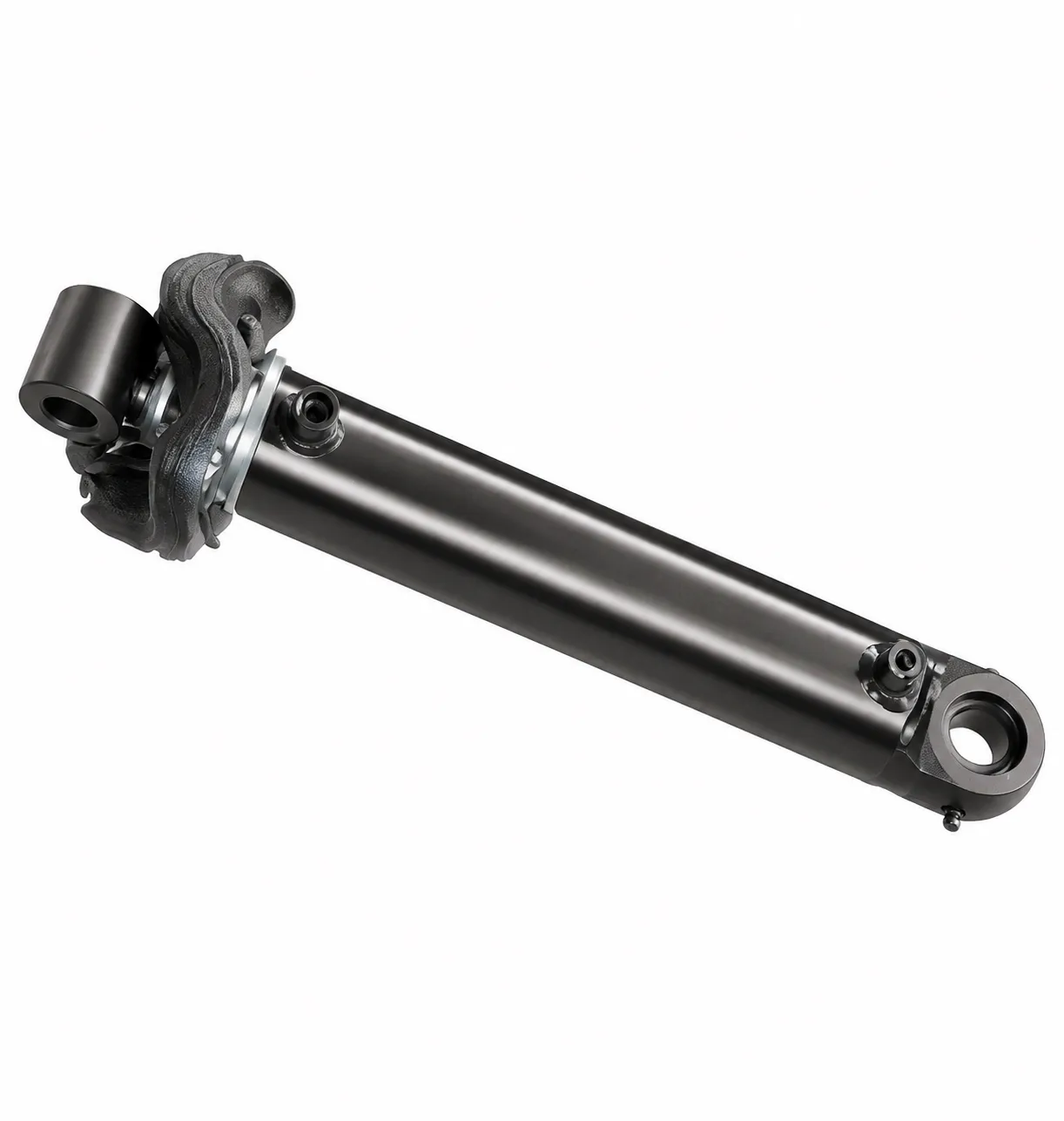 The clevis mount is defined by a forked bracket at the cap end of the cylinder and a corresponding pin that passes through the fork and a lug on the machine frame. This single-pin pivot allows the cylinder to swing freely in the plane perpendicular to the pin axis, accommodating the angular displacement that occurs whenever the steered axle articulates relative to the chassis. For agricultural tractors operating on the rolling terrain of the Yorkshire Wolds, or combine harvesters working the undulating fields of the Fens, this freedom of movement is not a convenience — it is a structural necessity. Without it, each pass over an uneven headland would impose a bending moment directly at the cylinder’s cap, fatiguing the barrel weld and compressing the rod-seal asymmetrically.
Clevis mounts carry load through the pin in shear, which means the bearing surface between the pin and the clevis bore is the critical wear interface. High-strength steel pins — typically grade 8.8 or higher — are standard in agricultural and construction applications, while stainless steel pins are specified where corrosion resistance takes priority, such as in coastal handling equipment along the UK’s ports and dockyards. Bronze or self-lubricating composite bushings in the clevis bore reduce fretting and extend service intervals significantly, reducing the maintenance burden on small fleets that cannot afford frequent downtime. Grease nipples on the clevis pin boss are a best-practice feature that Ever Power includes as standard on all agricultural series steering cylinders.
Clevis Mounting — When It Excels
Trunnion Mounting: Precision Load Distribution for Heavy Industrial Steering
Application Scenarios — Mining Equipment · Port Handling Cranes · Steel Mill Vehicles · Heavy Road Haulage
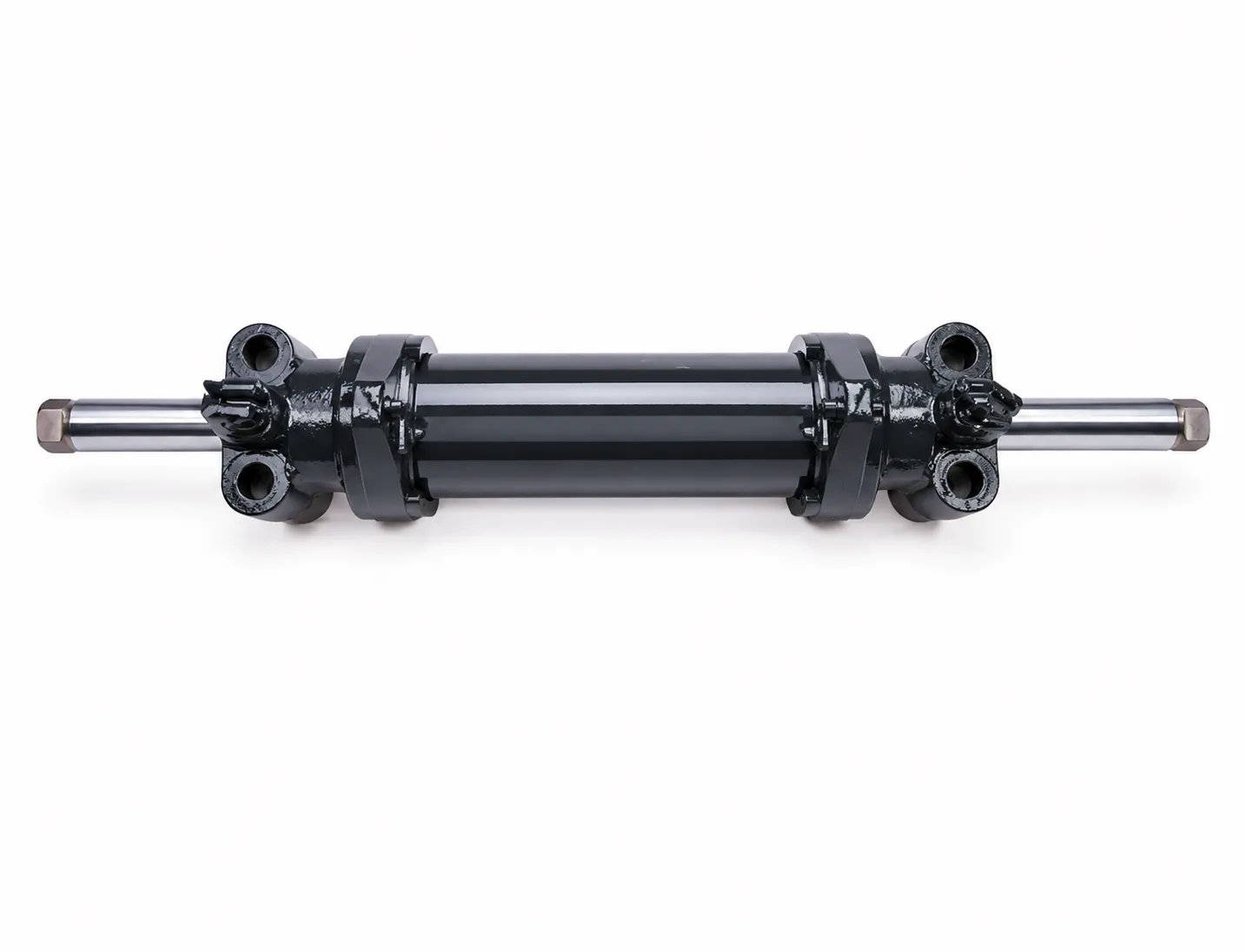
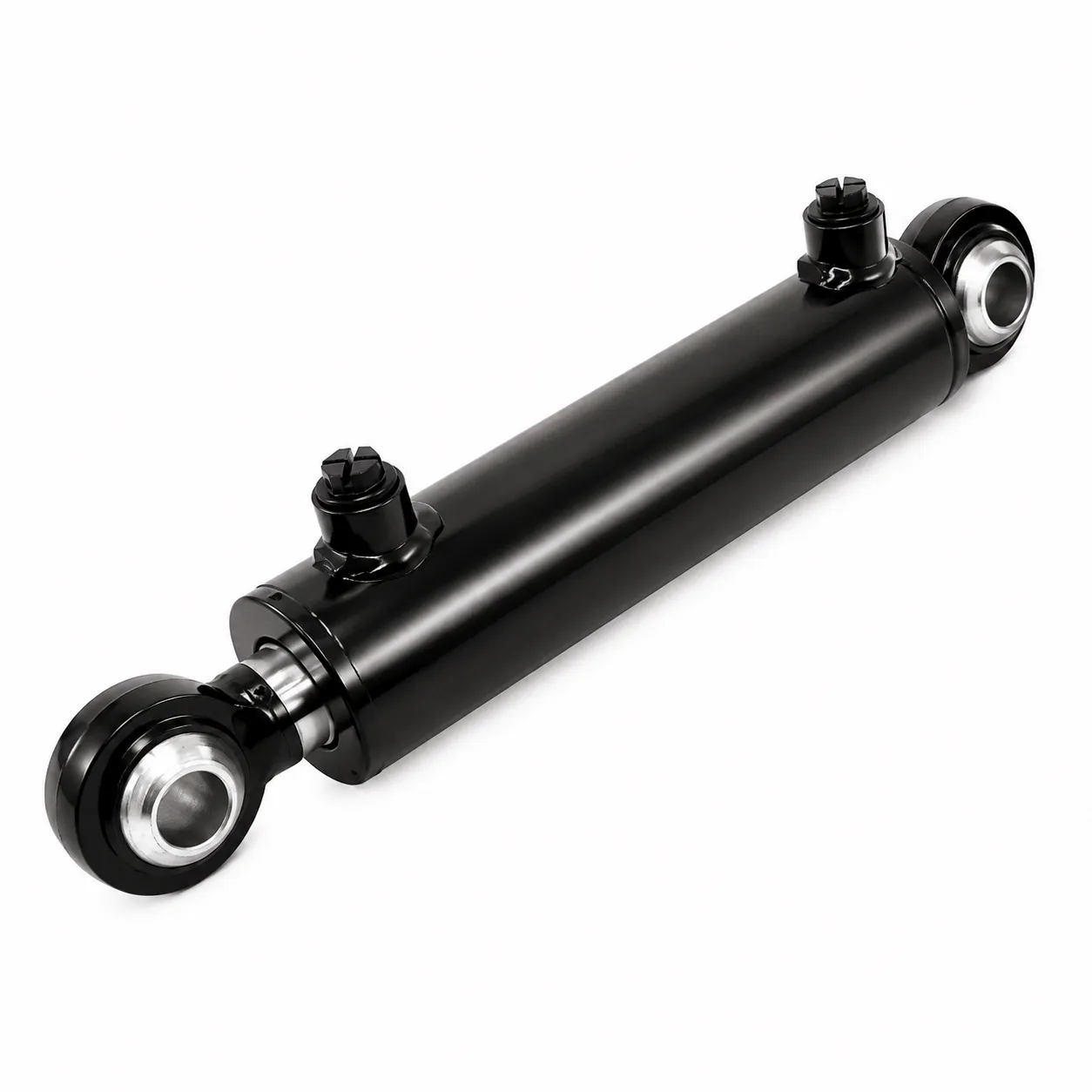 Trunnion mounting departs from the single pivot-point logic of the clevis and instead supports the cylinder at two symmetrically positioned pins located on the cylinder barrel, typically at the mid-length or rear-third position. These pins — or trunnions — engage with matched bearings or bushings in the machine frame, allowing the entire cylinder to rotate about this mid-body axis. The load path is therefore distributed across two bearing points rather than concentrated at a single end, which dramatically reduces the bending stress within the barrel wall and makes the trunnion mount the preferred solution wherever cylinder loads are high and service life expectations are demanding.
In the UK’s heavy port handling sector — think the container terminal operations at Felixstowe or the bulk cargo yards at Immingham — trunnion-mounted steering cylinders are the de facto standard for reach-stackers and terminal tractors. These machines turn repeatedly at near-maximum hydraulic pressure, and the trunnion geometry ensures that rotational loads on the steering axle do not translate into cantilever forces at the barrel ends. The trunnion position along the barrel can be engineered to act as a moment-balancing pivot, effectively cancelling the overturning moment at design operating pressure — a degree of structural refinement that no other mounting style can match. Ever Power’s trunnion series features machined trunnion bores held to H7 tolerance for direct bearing press-fit, ensuring zero play at assembly and consistent load sharing from the first operating cycle.
Dual Bearing Load Path
Two symmetrical trunnion pins distribute lateral and bending loads across both bearing points, reducing barrel-wall stress concentration by up to 60% compared to a single-end clevis arrangement at equivalent operating pressure.
High Cycle Endurance
The rotating barrel geometry self-compensates for minor frame deflection under dynamic load, making trunnion mounts inherently fatigue-resistant in high-cycle steering applications such as mining haul trucks and articulated dump vehicles.
Customisable Pin Position
Trunnion position along the barrel length is a key design variable. Ever Power’s engineering team calculates the optimum position for each application, balancing rod-side and cap-side forces to minimise the net bending moment at the mount interface throughout the stroke.
Flange Mounting: Compact, Rigid, and Built for Precision Alignment
Application Scenarios — Industrial Vehicles · Mobile Plant Platforms · Automated Guided Vehicles · Rail Maintenance Equipment
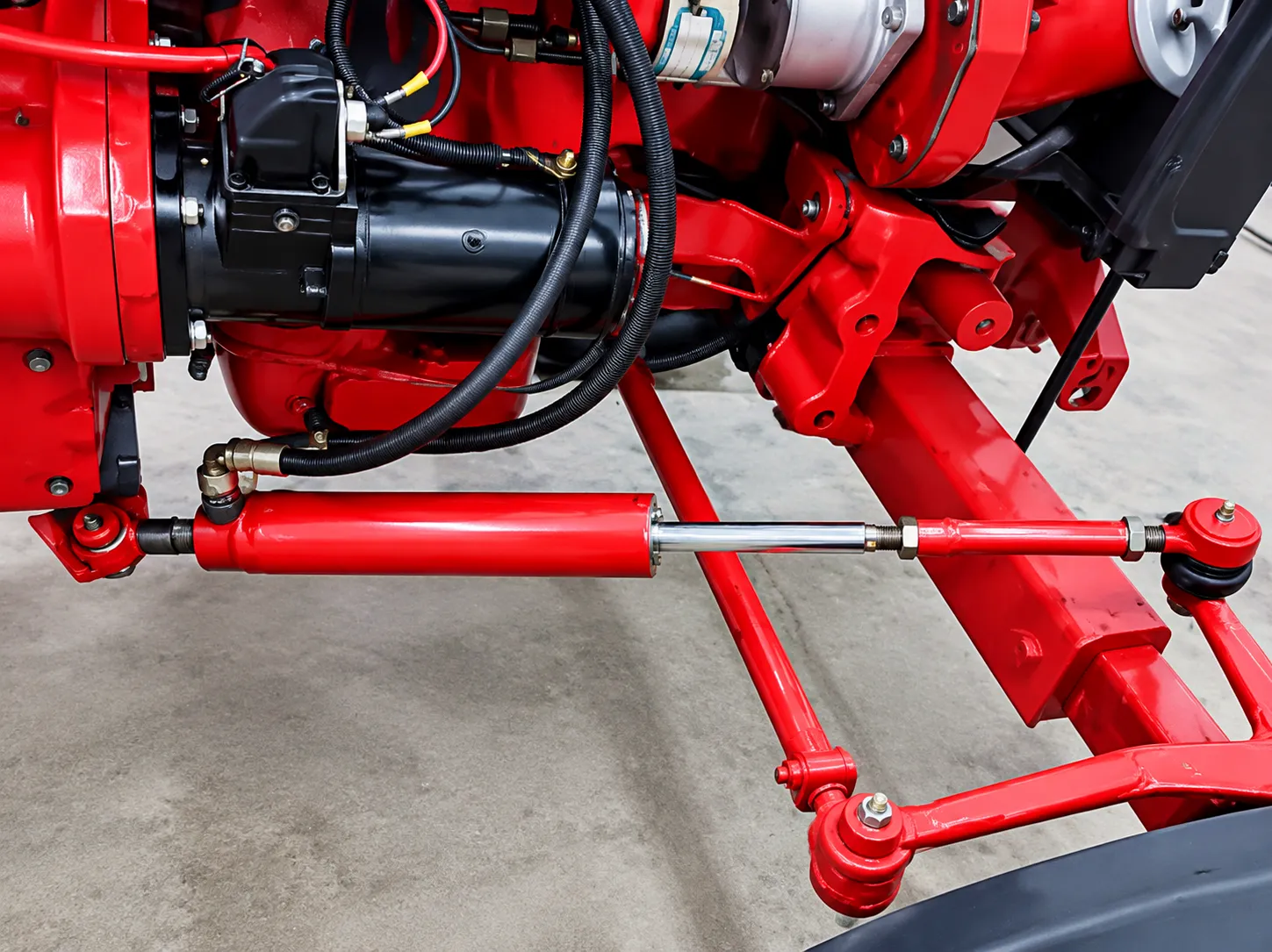
Where clevis and trunnion mounts accommodate angular movement, flange mounting eliminates it entirely. A circular or rectangular bolt-pattern flange — machined integrally with the cylinder cap or added as a welded plate — bolts directly to a matching face on the machine structure, fixing the cylinder axis with permanent rigidity. This approach demands that the designer align the cylinder’s axis of action precisely with the load axis, but when that alignment is achievable, the flange mount delivers the highest axial load capacity in the most compact installation envelope. For automated guided vehicles (AGVs) operating in the logistics parks of the East Midlands, where installation space is a binding constraint and the steering geometry is fixed by the vehicle’s programmatic route, flange mounting is the rational default.
Flange-mounted steering cylinders can be specified with front-flange or rear-flange configurations. Front-flange arrangements bolt at the cap end, which positions the bolt pattern at the deepest point within the machine frame and keeps the rod protruding forward — ideal for space-critical mobile platforms. Rear-flange configurations are less common in steering applications but appear in specialised rail maintenance vehicles and self-propelled modular transporters used on the UK’s major infrastructure projects, where the cylinder must be extractable axially without disturbing the surrounding frame. The bolt-hole pattern and pilot diameter are manufactured to ISO 6020 or ISO 6022 standards in Ever Power’s facility, ensuring dimensional interchangeability with OEM mounting surfaces without secondary machining.
Core Materials in Steering Cylinder Manufacturing
Barrel — ST52 / E355
Cold-drawn seamless steel tube to DIN 2391. Honed internal bore achieves Ra 0.2–0.4 µm roughness for optimum seal contact. Yield strength ≥ 355 MPa, hardness HB 163–190, providing the barrel rigidity needed to resist radial load when mounting pins exert lateral force during articulation.
Piston Rod — 42CrMo4
Induction-hardened to 58–62 HRC surface hardness and hard-chrome plated to 20–25 µm. The chrome layer provides corrosion resistance to salt-spray (ASTM B117 ≥ 240 h) and abrasion resistance against the wiper seal. Optional nickel-chrome duplex plating extends service life in coastal or chemical environments such as those found in petrochemical plant at Teesside.
Clevis / Trunnion Pins — 40Cr / Grade 8.8
Alloy steel pins heat-treated to 35–45 HRC. Precision-ground to h6 tolerance for clearance fit with H7 bores. Surface zinc-nickel plated on agricultural grades for 720-hour salt-spray endurance. Stainless steel (316L) pins are available on request for corrosive marine or food-processing environments.
Seals — Polyurethane / PTFE
Parker or NOK seal kits as standard. Polyurethane rod seals rated −40°C to +110°C maintain elastic contact through the full temperature range of UK outdoor operation. PTFE guide rings reduce stick-slip at slow steering speeds. Viton seal upgrades are available for operation above 120°C or in the presence of bio-oil or water-glycol hydraulic fluid.
End Caps & Flanges — Forged Steel
Cap ends are CNC-turned from closed-die forgings rather than castings, eliminating porosity defects and delivering consistent tensile strength ≥ 600 MPa. Flange bolt-hole patterns are drilled and reamed on a machining centre for positional accuracy within ±0.05 mm, ensuring bolt pre-tension is uniform around the flange perimeter during assembly.
Technical Performance Parameters — Mounting Style Comparison
Core Technical Advantages of Ever Power Mounting-Specific Steering Cylinders
Mount-Optimised Bore Tolerance
Clevis and trunnion bore diameters are held to H7 tolerance — tighter than industry default H8 — ensuring bearing fits with zero initial play and predictable wear progression over the cylinder’s full service life.
Finite Element Analysis Validation
Every new mounting configuration is validated by FEA simulation before physical prototyping. Von Mises stress distribution at the mount interface, barrel weld toe, and rod-seal contact zone are assessed at 150% of rated working pressure, confirming safety factors ≥ 4 throughout the structure.
Weld-Root Ultrasonic Testing
End-cap-to-barrel welds — the highest-stress joint in the assembly — are ultrasonically tested to EN ISO 17640 Level B as standard. Trunnion boss welds on heavy-duty units receive magnetic particle inspection in addition. Test certificates are issued with every cylinder supplied to UK customers.
Parallelism Control on Flange Faces
Flange mounting faces are ground to flatness within 0.02 mm per 100 mm span. This eliminates micro-movement under cyclic bolt pre-tension, preventing the fretting fatigue that progressively loosens bolted flange connections on machines with high-frequency steering cycles.
Thermal Expansion Management
Clevis and trunnion mounting geometries are specifically calculated to avoid constraining the cylinder’s axial thermal expansion. A 500 mm steel barrel operating across a 60°C temperature swing expands by approximately 0.35 mm — a dimension that, if constrained by an incorrectly specified rigid mount, generates significant tensile pre-stress in the barrel weld.
Cycle Life Test Data
All standard steering cylinder models are endurance-tested to 2,000,000 full-stroke pressure cycles at rated working pressure before release to production. Third-party test reports are available to UK customers on request, providing documented evidence of product longevity for CE and PSSR 2000 compliance purposes.
Ever Power — Precision Manufacturing and Custom Mounting Solutions
Factory Strength · Customisation Capability · Supply Chain Reliability
Customisation Capabilities
Ever Power’s engineering team designs fully bespoke mounting arrangements for clients across Birmingham’s precision machining clusters, Sheffield’s special steels fabricators, and the offshore equipment suppliers concentrated around Aberdeen. Custom clevis pin diameters, non-standard trunnion pitch-circle positions, and non-ISO flange bolt patterns are all accommodated with a typical drawing approval cycle of five to seven working days. 3D models in STEP or IGES format are provided with every custom design, ready for direct integration into the customer’s CAD assembly. Prototype units for fitment trials can be dispatched within four weeks of drawing approval, supporting agile development programmes for OEM customers.
Manufacturing Precision
The Ever Power facility operates 47 CNC turning and machining centres, four deep-hole honing lines, and a dedicated cylinder assembly area with class-controlled cleanliness. Bore honing is performed to achieve Ra 0.2–0.4 µm surface finish regardless of cylinder bore size, and 100% of finished cylinders undergo hydrostatic pressure test at 1.5 times rated working pressure before despatch. Dimensional inspection is performed on calibrated CMM equipment traceable to national measurement standards, and all measurement data is archived against the cylinder serial number for full traceability. UK customers receive a factory test certificate, material certificates, and an inspection report as part of the standard documentation package.
Supply Chain & Logistics
Standard catalogue steering cylinders are held in finished-goods stock with a lead time of two to five working days to UK mainland addresses via DPD or pallet carrier, with expedited next-day available on request. Custom steering cylinders for UK OEM accounts are scheduled against a rolling production plan, with confirmed delivery dates issued at order acknowledgement. Ever Power maintains a UK technical support contact who can assist with mounting geometry calculations, seal selection, and hydraulic circuit compatibility assessments — removing the engineering burden from the customer’s procurement process and ensuring the first unit supplied is correct for the application.
Customer Success Story: Articulated Dump Truck Rebuild, Staffordshire
A quarrying contractor based near Stafford had been running a fleet of six articulated dump trucks under severe-duty conditions for three years. The vehicles operated at a working quarry extracting limestone, traversing gradients of up to 18% on haul roads that were frequently waterlogged during the UK’s winter months. The original equipment steering cylinders — fitted with front clevis mounting — had been experiencing repeated wiper-seal failures at intervals of approximately eight months, caused by progressive pin-bore wear that allowed the clevis to rattle under shock loads and imposed asymmetric side force on the rod at full-articulation extremes.
The fleet manager contacted Ever Power’s technical team through the company’s online enquiry system. Following a detailed discussion of the operating cycle — including articulation frequency, haul-road gradient profile, and hydraulic system working pressure — Ever Power’s engineers recommended replacing the original single-pin clevis mounting with a custom trunnion arrangement mounted at 40% of the barrel length from the cap end. This position was calculated to minimise the bending moment acting on the barrel under the combination of steering force and chassis twist that characterised the Staffordshire quarry’s operating environment. The trunnion bores were machined to H7 tolerance and fitted with bronze bushings carrying a 150-hour greasing interval, compared with 40 hours on the original self-lubricating polymer bushings that had proven inadequate for the abrasive ingress conditions.
Six units were manufactured and despatched to the Staffordshire depot within 28 days of drawing approval. The customer’s in-house fitters completed the installation — assisted by Ever Power’s installation drawings and a technical support call — in a single shift per vehicle. Twelve months into service, not one of the six replacement steering cylinders had required a seal replacement. The contractor’s maintenance manager confirmed that the annual cost of steering cylinder maintenance across the six-vehicle fleet had fallen by approximately 73% compared with the previous year, and that unplanned downtime attributable to steering system failures had been completely eliminated.
Customer Reviews
“We replaced four units last spring and the difference in service life is night and day. The trunnion geometry that Ever Power specified for our ADTs has completely removed the side-loading problem we had on the original cylinders. Fourteen months in and not one seal change — that’s exceptional performance for this application.”
— Fleet Engineer, Quarrying Contractor, Staffordshire
“The custom flange bore pattern Ever Power produced for our narrow-aisle AGVs was dimensionally perfect — no rework required at assembly. The 5-day drawing turnaround is genuinely impressive for a non-standard specification, and the documentation package with material certs and test reports meets our quality system requirements without any chasing.”
— Procurement Manager, Automated Logistics Systems, West Midlands
“Our agricultural steering cylinders have been through two full harvest seasons on heavy clay land in Lincolnshire without a single issue. The grease nipple on the clevis boss is something our fitters particularly appreciate — it takes 30 seconds to service and saves a lot of money compared with replacing worn-out pin sets every season.”
— Operations Director, Arable Farming Business, Lincolnshire
Frequently Asked Questions
Ready to Specify the Right Mounting for Your Steering Cylinder?
Send your application details, existing cylinder drawing, or simply a description of the problem — Ever Power’s engineering team will respond with a mounting recommendation and a quotation within one business day.
edit by gzl