 When a heavy vehicle or piece of industrial machinery begins pulling to one side, operators often assume it is a tyre or alignment issue. In reality, one of the most under-diagnosed root causes is single-side cylinder weakness — a condition in which one steering cylinder in a dual-cylinder hydraulic steering system delivers noticeably less force or travel than its counterpart. The result is asymmetric steering response, premature wear on mechanical linkages, and in severe cases, a genuine safety risk for the operator and those around the machine. Across UK worksites — from the logistics yards of the West Midlands to the agricultural holdings of Lincolnshire — this fault pattern appears regularly in wheeled loaders, heavy-duty articulated trucks, agricultural tractors, and mobile cranes.
What Is a Steering Cylinder and How Does It Work?
Hydraulic Principle
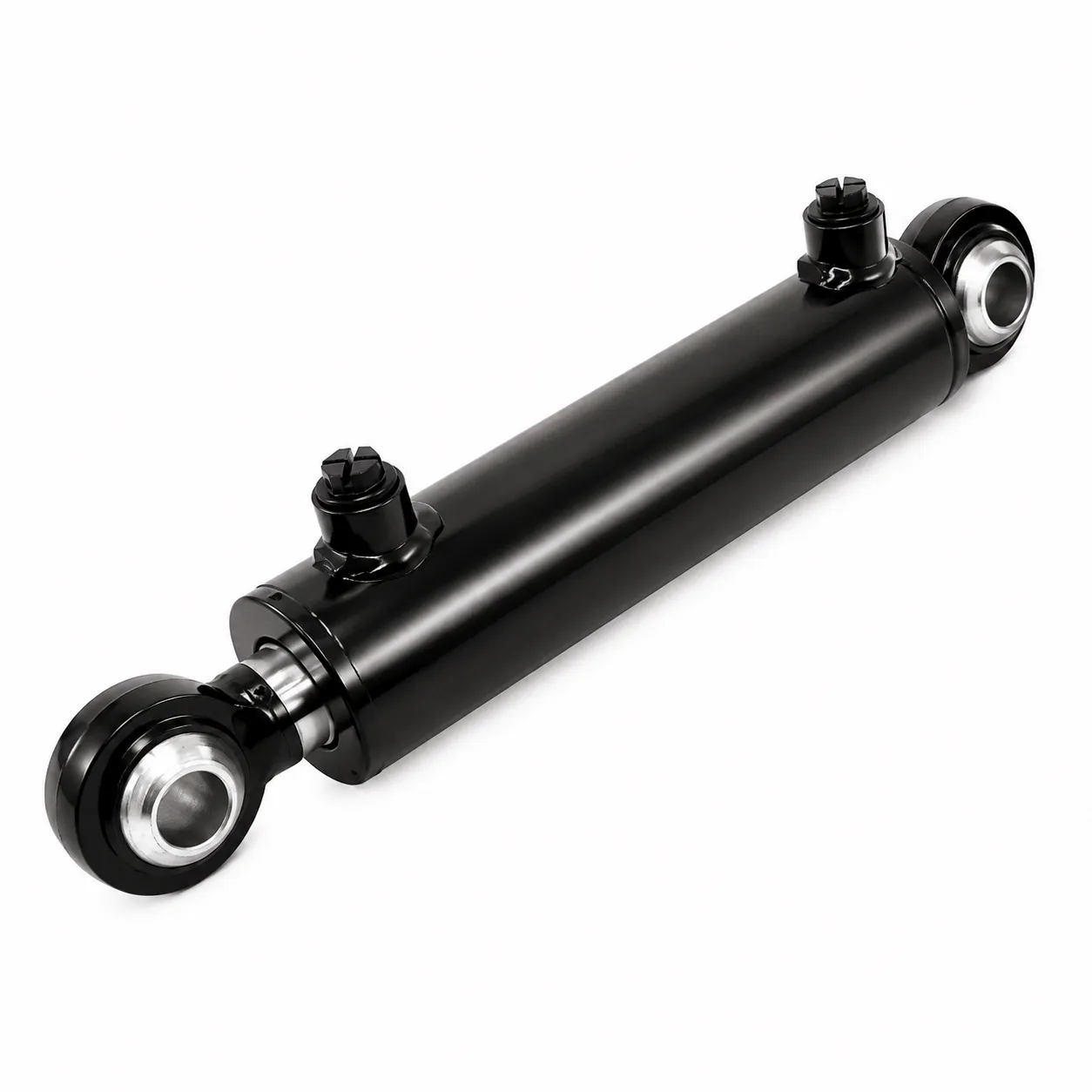
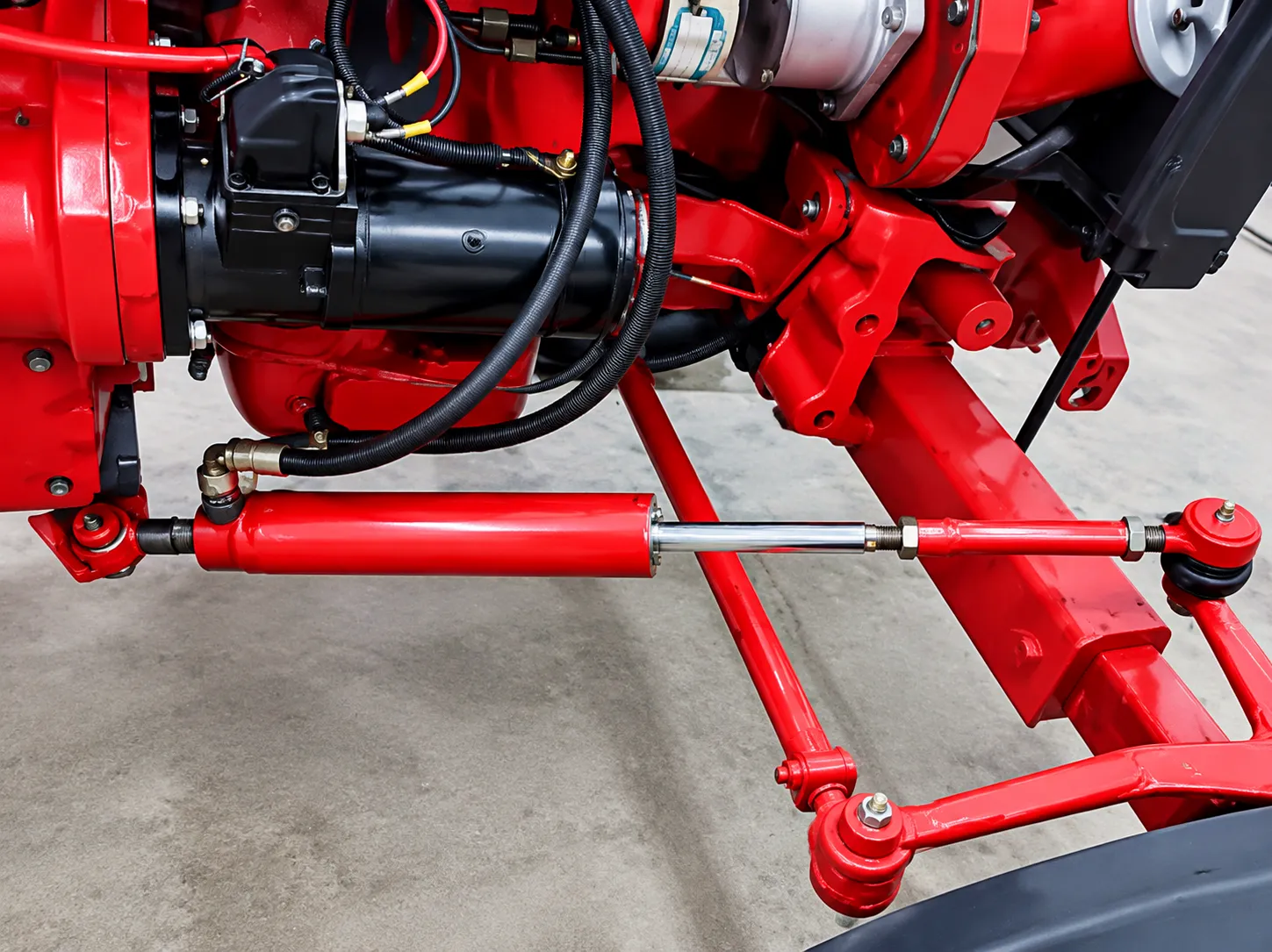
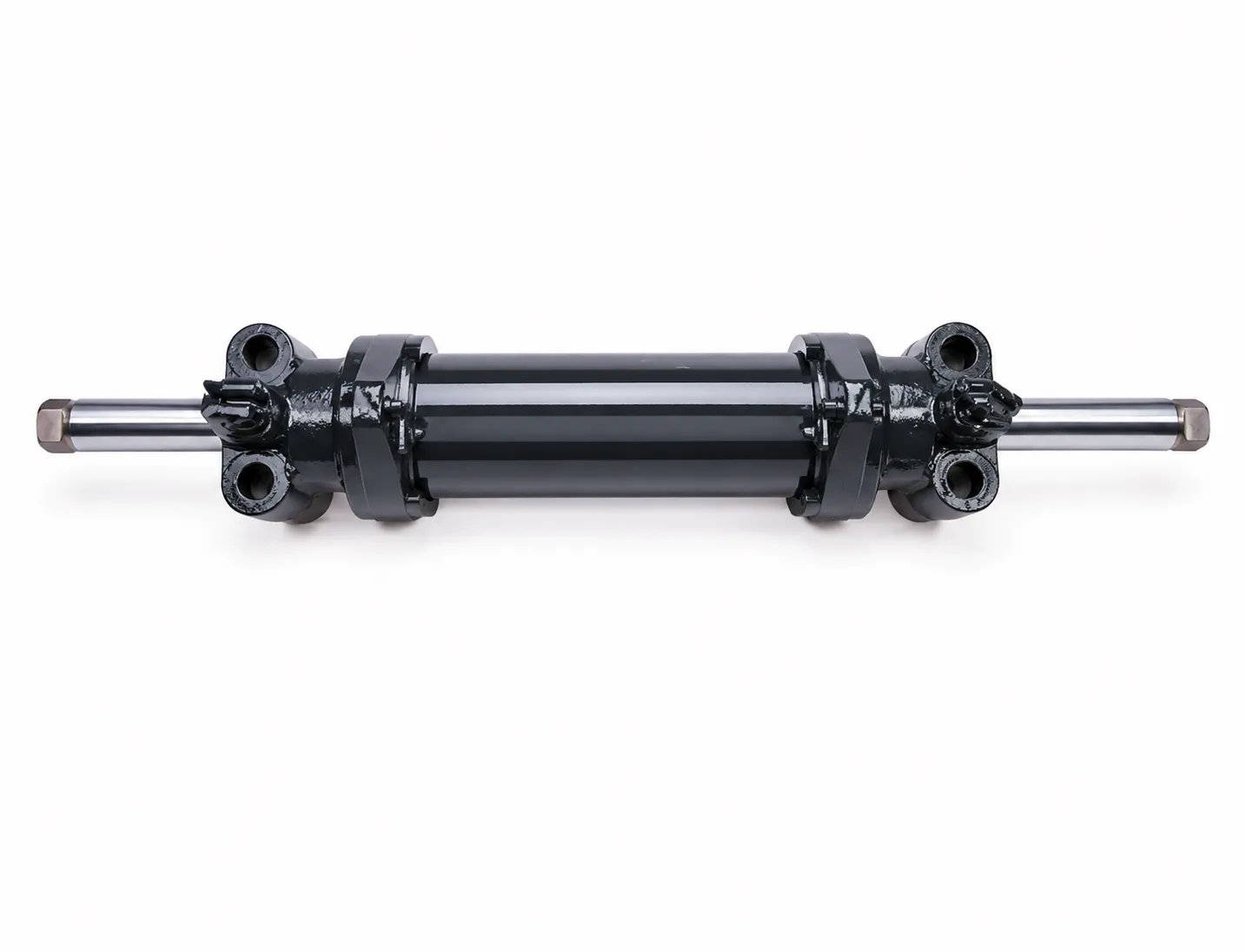
A steering cylinder is a double-acting linear actuator. Pressurised hydraulic fluid enters one port, drives the piston along the cylinder bore, and displaces fluid from the opposing port back to tank. When the orbitrol valve or power steering unit directs flow to the left port, the rod extends and turns the axle left; reversing the flow retracts the rod and swings the axle right. The cylinder converts fluid pressure — typically 140 to 220 bar in UK construction machinery — into a precise linear force transmitted through the rod end to the steering linkage. In dual-cylinder configurations, both units operate simultaneously, sharing the load. If one cylinder delivers less than its rated force, the entire steering axis skews under load.
Core Materials
The cylinder barrel is typically produced from honed cold-drawn seamless steel tube, often specified in ST52 or E355 grade steel for its combination of tensile strength (minimum 520 MPa) and machinability. The piston rod is machined from 42CrMo4 chromium-molybdenum alloy steel, then hard-chrome plated to a minimum depth of 25 microns to resist abrasion and corrosion — a particular necessity in the damp operating environments common across northern England and Scotland. Rod seals are polyurethane or PTFE composite for broad temperature compatibility, while O-ring materials are selected for compatibility with mineral hydraulic oil, biodegradable ester fluid, or phosphate ester fluid depending on the application’s environmental requirements.
Identifying Single-Side Cylinder Weakness: Symptoms and First Checks
Recognising this condition early prevents expensive downstream damage. The following symptom pattern typically develops progressively over weeks or months rather than as a sudden failure event. Engineers at Birmingham-based plant hire companies and Coventry logistics operators have consistently reported this progression in their maintenance records.
Symptom 1 — Drift Under Load
The machine tracks straight when unladen but progressively pulls toward the weaker cylinder side when a load is applied. This is because the functioning cylinder compensates at low force demands but cannot fully counter the pressure differential once total system load increases. Many operators initially attribute this to tyre pressure variation, delaying diagnosis by weeks.
Symptom 2 — Unequal Steering Effort
Turning the wheel toward the weak cylinder side requires noticeably more effort than turning in the opposite direction. The steering orbitrol compensates by increasing flow to the underperforming side, raising the pressure differential and causing the operator to perceive a resistance difference. In vehicles with a torque sensor on the steering column, this imbalance may trigger fault codes that are logged as generic steering pressure alarms rather than identifying the faulty cylinder.
Symptom 3 — Visible Rod Seepage
A fine film of hydraulic oil on the rod exterior near the gland is among the earliest physical indicators of seal deterioration. In the UK climate, this seepage often combines with road dust and grit to form a dark, gummy residue along the rod. Left unaddressed, the abrasive mixture accelerates chrome plating wear and eventually scores the barrel bore, at which point a seal replacement alone will not restore rated performance — a new rod or complete cylinder unit becomes unavoidable.
Symptom 4 — Lag in Full-Lock Position
When the operator steers to full lock on the affected side, the axle reaches the mechanical stop fractionally later than on the healthy side, or does not reach it at all during field operation. This is a direct consequence of internal bypass — hydraulic fluid migrating past worn piston seals or rings from the high-pressure to low-pressure side of the piston, reducing net output force. Measuring travel time to full lock with a stopwatch under controlled conditions is a straightforward workshop diagnostic step that does not require specialist equipment.
Step-by-Step Workshop Diagnosis for Steering Cylinder Imbalance
A systematic approach replaces guesswork. The sequence below moves from non-invasive checks through to bench testing, ensuring that each stage’s findings inform the next decision. It is applicable whether the machine in question is a wheeled excavator at a Leeds demolition site or an agricultural sprayer operating across the Yorkshire Wolds.
Stage 1 · Fluid and Pressure Audit
Attach calibrated pressure gauges to the service ports of both cylinders simultaneously. With the engine at rated RPM and the steering held at a consistent input, compare working pressures side by side. A pressure differential exceeding 15 bar between left and right at the same input force confirms a hydraulic circuit or cylinder-level imbalance rather than a purely mechanical cause. Also check hydraulic fluid condition — degraded oil with a milky appearance indicates water contamination from condensation, a common wintertime problem on UK outdoor fleets.
Stage 2 · External Visual Inspection
With the cylinder extended to mid-stroke, examine the rod surface under adequate lighting. Scoring lines running longitudinally along the chrome surface indicate that abrasive contamination has entered the gland — likely through a damaged wiper seal. Pitting or rust spotting indicates chrome breakdown, particularly prevalent on machines operated in coastal areas of the UK such as the North East ports. Any deformation of the barrel end caps, mounting lugs, or clevis eyes suggests overload shock, which may have induced internal barrel ovality that prevents the piston from sealing correctly across its full travel.
Stage 3 · Internal Bypass Test
With the suspect cylinder removed from the machine, plug one port and pressurise the other to the system rated pressure using a hand pump. After two minutes of sustained pressure, crack open the plugged port momentarily and measure any fluid that escapes. In a cylinder with intact piston seals, flow from the plugged port should be less than 5 cm³ per minute at rated pressure. Anything higher confirms piston seal bypass, meaning internal leakage is absorbing applied pressure before it can develop into output force. This test distinguishes true cylinder failure from a flow control or valve issue upstream.
Stage 4 · Rod and Bore Measurement
Using a precision bore gauge, measure the barrel internal diameter at three positions along its length: at each end cap and at mid-stroke. Ovality exceeding 0.05 mm in any cross-section indicates barrel deformation. Similarly, measure chrome plating thickness on the rod using a magnetic induction gauge — a reading below 15 microns suggests that the hard chrome layer has eroded and that the mild steel substrate is now exposed to both fluid and seal contact, which accelerates further wear exponentially. These measurements also inform whether the barrel is salvageable through re-honing or whether a full cylinder replacement represents the more economical outcome.
Steering Cylinder Technical and Performance Parameters
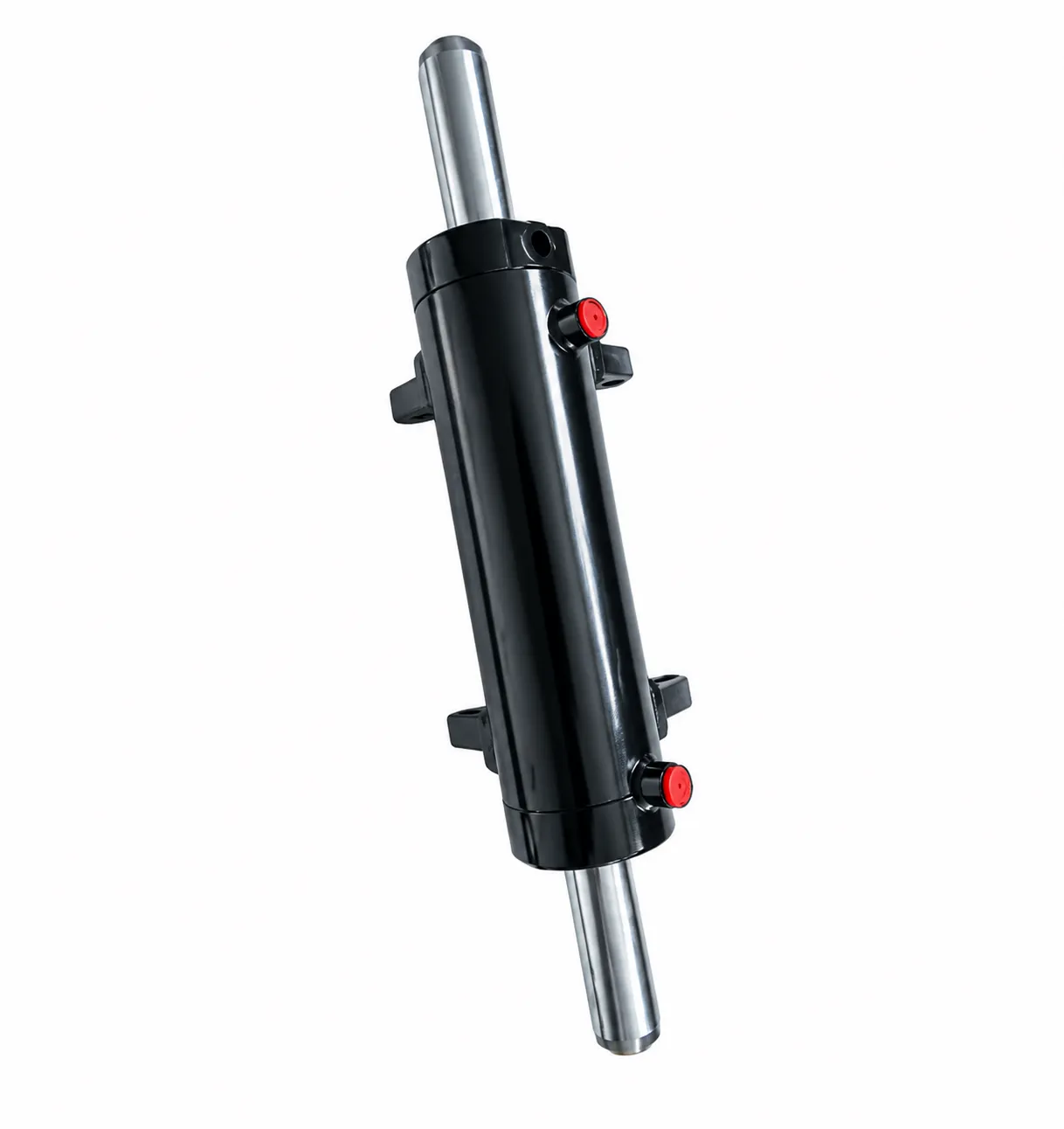
The table below presents standard and indicative specifications for industrial steering cylinders as supplied by Ever Power. Custom bore sizes, stroke lengths, and seal packages are available upon request — contact our engineering team to discuss your exact requirements. Parameters reflect ISO 6020-2 and ISO 6022 applicable standards.
| Parameter | Standard Range | Custom Range | Unit |
|---|---|---|---|
| Bore Diameter | 63 – 160 | 40 – 280 | mm |
| Rod Diameter | 40 – 110 | 25 – 200 | mm |
| Stroke | 100 – 800 | 50 – 2000 | mm |
| Working Pressure | 160 – 200 | Up to 350 | bar |
| Test Pressure | 280 – 320 | Up to 525 | bar |
| Operating Temperature | -20 to +80 | -40 to +120 | °C |
| Barrel Material | E355 seamless honed steel | ST52 / 27SiMn / stainless | — |
| Rod Material & Coating | 42CrMo4 + hard chrome 25 µm | + nickel-chrome / Cr-free coating | — |
| Seal Material | PU / PTFE composite | FKM / HNBR on request | — |
| Internal Bypass (max, rated P) | < 5 cm³/min | Verified per unit on test rig | — |
| Mounting Style | Clevis, flange, foot bracket | Custom per drawing | — |
| Port Thread | BSP / NPT / SAE O-ring | Metric / JIC on request | — |
Application Scenarios: Where Steering Cylinder Imbalance Causes the Most Damage
Application: Construction Wheeled Loaders — Sheffield and South Yorkshire Region
In wheeled loaders operating across the construction sites and brownfield regeneration projects common throughout South Yorkshire, the steering cylinder pair operates under sustained, high-cycle demand. A loader turning at a face pile or manoeuvring in a confined yard may complete 200 to 400 full-lock cycles per shift. Any progressive bypass in one cylinder translates directly into asymmetric axle loading, accelerating rear axle bearing wear and causing uneven tyre consumption — a significant direct cost given the price of construction-spec tyres in the UK market. Early identification of single-side weakness in this application avoids scheduled downtime overlapping with critical project milestones.
Application: Agricultural Tractors in East Anglia
Large articulated or four-wheel-drive tractors working across the intensive arable farming regions of Norfolk and Suffolk routinely steer under substantial lateral soil forces during primary tillage. A weakened steering cylinder on the downhill side during cross-slope cultivation creates a persistent tendency for the implement to migrate downslope, degrading field geometry and potentially damaging headland tramlines. In these machines, symptoms often go undetected until the spring drilling season reveals consistent row deviation — at which point the tractor must be removed from its critical window of soil opportunity for repair.
Application: Mobile Cranes and Lifting Equipment — Birmingham and the West Midlands
Mobile cranes deployed on infrastructure and industrial projects across the Birmingham conurbation present perhaps the highest-stakes scenario for steering cylinder failure. When a crane travels on public roads to access a site, the steering system must function reliably under the combined weight of the superstructure and counterweight. A cylinder delivering reduced force on one side creates yaw instability at speed, with consequences that extend beyond equipment damage to serious road safety implications. Regular bypass testing of both steering cylinders should be incorporated into the mandatory pre-transport inspection checklist maintained by crane hire operators complying with UK LOLER and PUWER regulations.
Application: Forestry Harvesters in Scotland and Wales
Articulated forestry harvesters working the softwood plantations of the Scottish Borders, Galloway, or mid-Wales operate on steep, irregular terrain where chassis articulation under hydraulic control is the primary steering mechanism. In these machines, the two articulation cylinders are functionally equivalent to the steering cylinder pair on a wheeled vehicle. A bypass condition on one articulation cylinder causes the machine to crab under load, placing torsional stress on the chassis pivot pin and its bearings. At sustained operating temperatures typical of high-duty forestry cycles, this side load accelerates pivot bearing failure to a fraction of its design service life.
Related Product
Truck Crane Main Boom Luffing Cylinder — Φ280×3507mm, 31.5MPa — engineered for severe-duty luffing cycles on mobile cranes operating across UK infrastructure projects. Available for direct technical enquiry.
Why Cylinder Construction Quality Determines Diagnostic Outcomes
The fault modes described in this guide are more likely to develop in cylinders built to inadequate tolerances. Understanding the construction attributes that prevent premature failure also clarifies why replacement selection matters as much as correct diagnosis.
Honed Bore Tolerance Ra 0.4 µm
A bore surface finish of Ra 0.4 µm or better provides the optimal balance between seal contact area and hydrodynamic lubrication. Coarser bores accelerate seal wear; over-polished bores reduce the oil film that prevents seal dry-running at startup — a common cause of early bypass development in poorly specified cylinders.
Matched Piston Ring Sets
Each piston carries a set of PTFE guide rings and a dynamic sealing element. Correctly matched ring sets are dimensioned to the actual measured bore — not to a nominal specification — ensuring consistent radial contact pressure around the full circumference even in barrels with minor out-of-roundness within tolerance. This matching process reduces bypass rate by up to 40% compared with nominal-dimension assembly.
Dual-Layer Rod Sealing
A wiper seal removes external contamination as the rod retracts; a primary lip seal carries system pressure. The gap between the two forms a mini oil reservoir that lubricates the primary seal on every stroke. This dual-layer configuration extends seal service life from a typical 3,000 hours to over 8,000 hours in most UK outdoor operating environments, directly reducing the frequency of the cylinder removal and bench testing cycles described in this guide.
100% Hydraulic Proof Test Before Dispatch
Every cylinder manufactured by Ever Power undergoes a full hydraulic proof test at 1.5× the rated working pressure on an automated test rig. Bypass measurement at both piston and rod seal is recorded and stored with the unit’s serial number. This test data accompanies the cylinder to the end user, providing a baseline measurement for future in-service comparison — a feature particularly valued by UK plant hire companies managing large fleets with structured maintenance programmes.
Ever Power: Precision Manufacturing and Custom Steering Cylinder Solutions
Ever Power operates a vertically integrated hydraulic cylinder manufacturing facility equipped with CNC deep-hole drilling lines, multi-axis hard-chrome plating capacity, and automated honing centres capable of achieving bore diameters from 40 mm to 320 mm at tolerances to H7 grade. Our engineering team works directly with OEM design departments, aftermarket distributors, and end-user maintenance teams across UK, Europe, and beyond to design steering cylinders that meet machine-specific dimensional envelopes, port configurations, and seal compatibility requirements.
Customisation at Ever Power is not limited to dimensional changes. Our metallurgical team specifies barrel and rod material grades to match the operating environment — selecting higher-alloy steels and corrosion-resistant coatings for applications in coastal UK environments, and specifying FKM seal compounds for machines running phosphate-ester or fire-resistant hydraulic fluids in underground mining or tunnelling applications. Each custom project begins with a detailed application questionnaire covering operating pressure, duty cycle, ambient temperature range, and fluid specification, followed by a formal design review before tooling proceeds.
Supply chain reliability is structured around buffer stock held for high-runner bore sizes, with a lead time of 15 to 25 working days for standard custom configurations and 35 to 50 working days for complex multi-stage cylinders. Air freight delivery to UK ports is available for urgent replacement requirements. Our quality documentation package — including material certificates, dimensional inspection reports, and hydraulic test certificates — is provided as standard with every shipment, satisfying the documentation requirements of UK construction and offshore operators.
Ready to specify a replacement or custom steering cylinder for your UK fleet?
Forklift Application Cylinder
Compact Forklift Attachment Hydraulic Cylinder — a precision-engineered solution for tight-clearance forklift steering and attachment control. Suitable for warehouse operations and distribution centre fleets across the UK logistics sector.
Customer Success: Resolving Fleet Steering Imbalance for a Stoke-on-Trent Earthworks Contractor
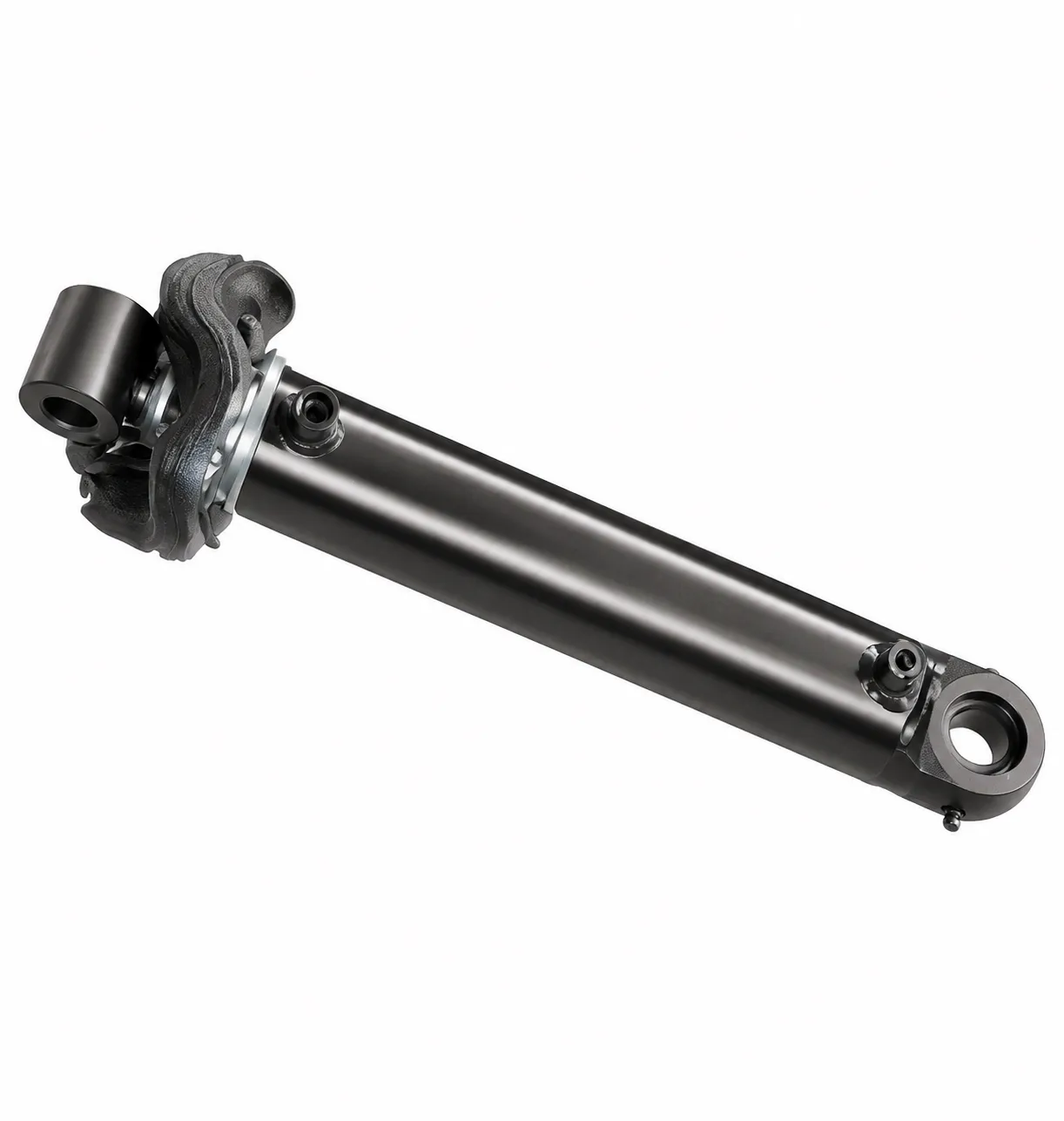 Midlands Groundworks Solutions Ltd, based in Stoke-on-Trent, operates a fleet of twelve wheeled loaders engaged in ongoing brownfield remediation contracts across North Staffordshire and the Cheshire plain. In late autumn, their maintenance supervisor began receiving reports from machine operators that three loaders were pulling consistently to the right during loaded travel — a pattern initially attributed to a batch of unevenly worn tyres.
Following the diagnostic protocol outlined in this article, the maintenance team carried out pressure differential tests on all suspect machines. Two loaders showed a right-side cylinder working pressure 22 to 28 bar below the left-side reading under identical steering input. Internal bypass testing confirmed piston seal failure, with bypass rates of 18 cm³/min and 23 cm³/min respectively — well above the 5 cm³/min maximum that indicates intact sealing. Rod inspection revealed scoring consistent with contaminated fluid having entered the gland, traced to a shared hydraulic oil top-up container that had been inadvertently stored uncovered on site.
Midlands Groundworks contacted Ever Power with the bore and stroke dimensions of the failed cylinders and requested matched replacement pairs with upgraded FKM rod seals to better resist contamination. Ever Power supplied four replacement units — two matched pairs — with full hydraulic test certificates, delivered via air freight to Birmingham Airport within seven working days of order confirmation. The units were fitted and brought into service on both machines before the week’s end, returning the fleet to full operational capacity ahead of a contract milestone deadline. The client subsequently placed a standing order for Ever Power steering cylinder units as the approved replacement specification across their entire wheeled loader fleet.
What UK Clients Say About Ever Power Steering Cylinders
★★★★★
“We had the bypass test result in writing before the cylinder left the factory. That kind of traceability is exactly what our LOLER documentation process requires. The matched replacement pair performed identically from day one — no bedding-in drift whatsoever.”
— Plant Manager, Civils Contractor, Leeds
★★★★★
“We specified FKM seals for our forestry harvesters running Houghton Hardmaster fluid. Ever Power’s engineering team understood the compatibility requirement immediately and provided the correct compound without us needing to specify it by part number. Delivery to Inverness in under two weeks.”
— Fleet Engineer, Forestry Operations, Scottish Highlands
★★★★★
“The bore measurement data and chrome plating thickness report that came with each cylinder let us set our in-service inspection intervals properly. Three years on, bypass is still under 4 cm³/min on the first pair we ordered — well within the original specification. Remarkable consistency for a replacement part.”
— Maintenance Director, Agricultural Machinery Dealership, Norfolk
Frequently Asked Questions — Steering Cylinder Troubleshooting in the UK
Specify. Source. Solve.
Ever Power engineers a matched replacement or fully custom steering cylinder to your exact specification — with hydraulic test certification included as standard. Serving UK construction, agriculture, forestry, and lifting equipment operators.
Get a Quote — [email protected]
edit by gzl