How Forklift Steering Cylinders Differ from Heavy Truck Systems
A precision-engineered guide for procurement engineers, fleet managers, and OEM designers across the UK — covering core mechanics, material science, application boundaries, and supplier selection for industrial hydraulic steering.
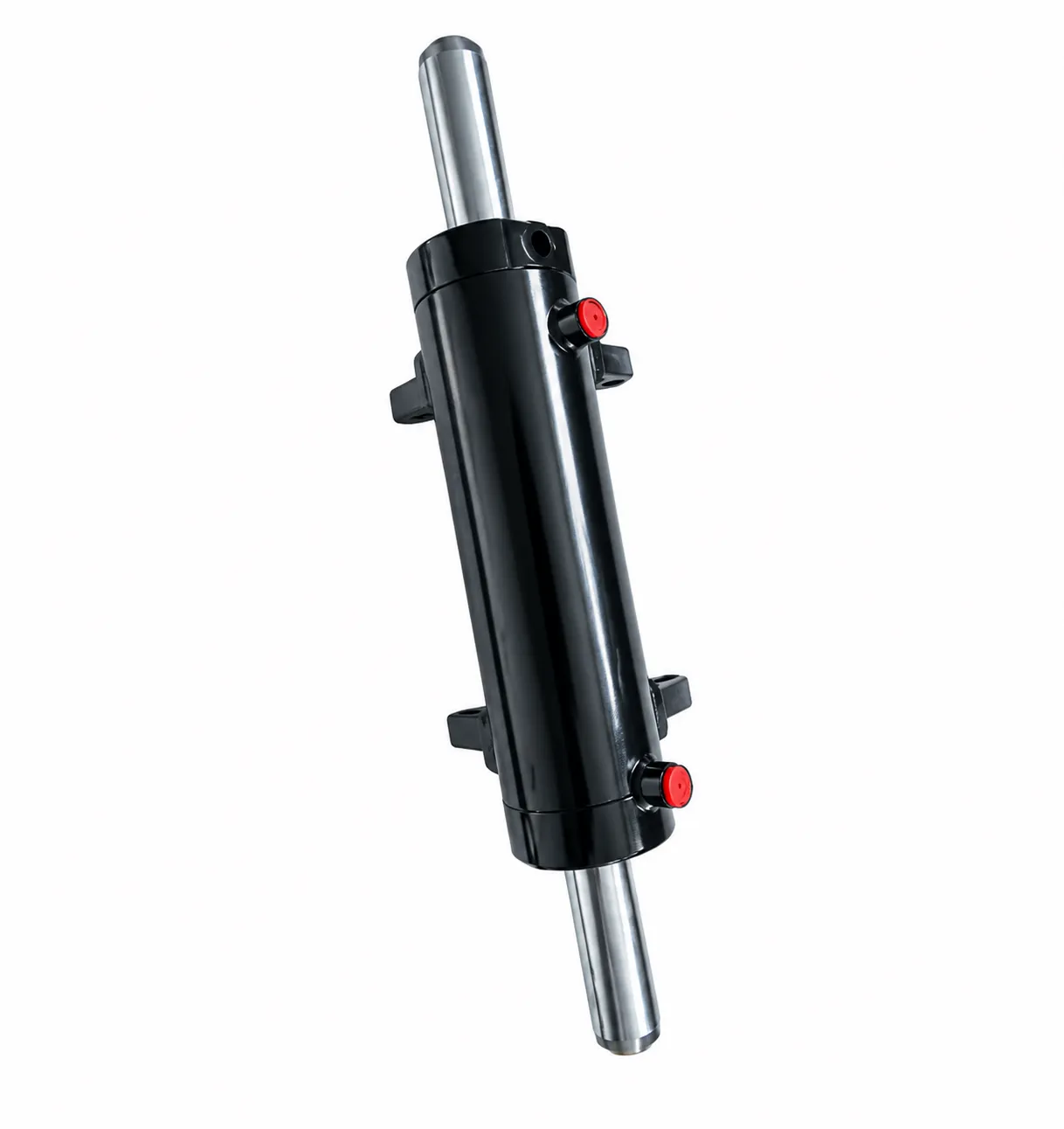 Walk into any warehouse in Birmingham or Sheffield and you will see two very different machines sharing the same floor: a compact counterbalance forklift weaving through racking aisles and a heavy haulage truck idling at the loading bay. Both rely on hydraulic steering cylinders to change direction, yet the engineering behind each system is separated by decades of specialisation, vastly different load envelopes, and operating environments that demand entirely distinct design priorities. The confusion between these two cylinder families costs procurement teams real money — mis-specified components lead to premature seal failure, inadequate turning radius, and costly downtime on shifts where every minute matters.
Working Principle: Two Systems, One Name, Radically Different DNA
Hydraulic Steering Cylinder · Operating Mechanics
In a forklift, the steering cylinder operates within an electrohydraulic power steering circuit where a demand-responsive pump feeds pressure only on active steering input. The cylinder bore is typically compact — ranging from 35 mm to 80 mm in warehouse counterbalance models — and the stroke is short, often 80 mm to 200 mm, because articulation is achieved through a tight Ackermann geometry. The piston rod is exposed to lateral bending loads as the rear axle swings, making rod material selection and guide bearing geometry critical design variables. Pressures in these systems commonly operate between 80 and 160 bar, with peak transient loads during kerb-strike events reaching 200 bar in some rough-terrain variants. The entire steering event — lock to lock — may complete in under 2.5 seconds, placing extreme demands on seal response and fluid viscosity stability across a working temperature range of −10 °C to +70 °C as found in cold-store or outdoor dock environments common across the UK Midlands logistics belt.
Heavy truck steering cylinders operate on fundamentally different load physics. Mounted across the steering axle of vehicles weighing 18 to 44 tonnes, these cylinders must resist enormous axial forces — often exceeding 25 kN during high-speed motorway manoeuvres on the M1 or M6 — while also absorbing road-induced vibration at frequencies that would rapidly fatigue any standard seal. Bore diameters in truck applications commonly span 50 mm to 120 mm, but the defining parameter is not bore — it is the cylinder’s ability to maintain precise neutral position under sustained load. A drift of even 0.5° in steering angle at 80 km/h translates to significant directional deviation. Power steering circuits in Class 8 trucks run at pressures between 120 and 180 bar with large-displacement, engine-driven vane or gear pumps that provide far greater flow rates than any forklift circuit. The duty cycle is also dramatically different: a long-haul lorry may accumulate 200,000 km of steering cycles before a service interval, compared to a forklift cylinder that is replaced or overhauled based on operating hours rather than distance.
Core Materials: What Separates a Long-Life Cylinder from a Warranty Claim
Material Science · Hydraulic Cylinder Manufacturing
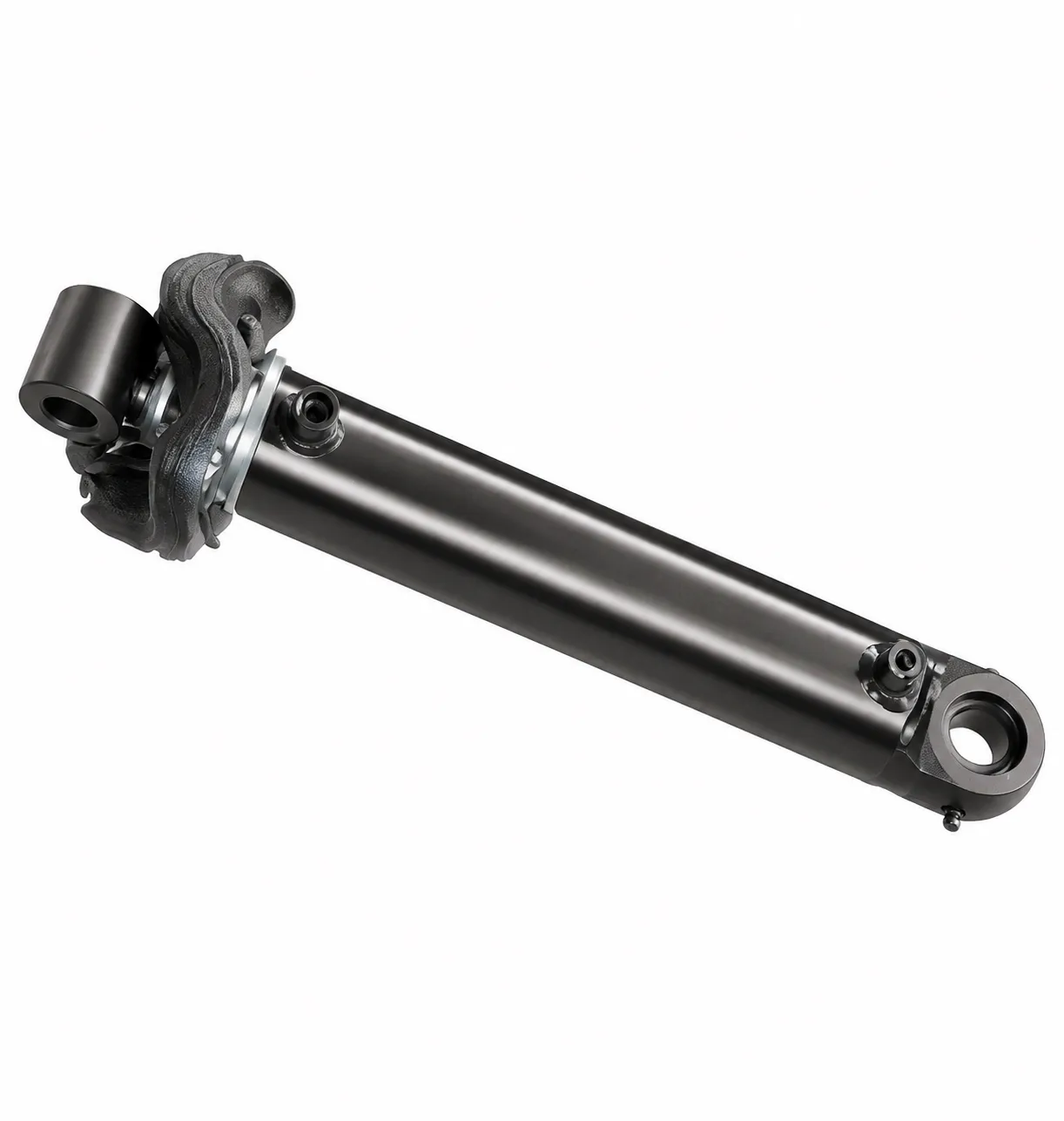
Cold-drawn seamless steel tube — EN 10305-1 specification in European supply chains — is the universal barrel material for both cylinder families. However, forklift cylinders more often accept honed precision tubes to Ra 0.4 µm internal finish, enabling direct piston seal contact without additional machining. Truck cylinders, subjected to greater shock loading, increasingly adopt thick-wall DOM (Drawn Over Mandrel) tube in S45C-equivalent grades, providing 20–30% better fatigue resistance at stress concentrations near port locations.
45# carbon steel with hard chrome plating (minimum 25 µm thickness, Vickers hardness HV 850–1000) is standard in both markets. Ever Power upgrades forklift steering cylinder rods to induction-hardened, electroless nickel intermediate layer followed by hard chrome — a three-layer construction that reduces corrosion penetration by 60% in salt-laden environments such as coastal distribution centres in cities like Hull or Portsmouth. For truck applications, rod diameters of 40–70 mm are common, with CLA straightness tolerances of 0.05 mm per 300 mm to prevent eccentric loading on rod seals.
Forklift steering cylinders typically deploy compact polyurethane or NBR seal kits operating up to 160 bar, with a wiper seal at the gland to exclude fine abrasive particles from warehouse floor environments. Truck cylinder seals must handle higher sustained pressures and wider thermal swings: PTFE-backed filled-PTFE guide rings combined with HNBR lip seals rated to +120 °C are standard for heavy HGV applications where the system fluid may reach elevated temperatures during extended motorway hauls across the UK’s summer heatwaves.
Forklift steering cylinders connect via clevis or trunnion mounts machined from ductile iron GG-25 or S235JR steel, with spherical bearings (DIN ISO 12240) to accommodate small misalignment caused by chassis flex. Truck tie-rod style cylinders use threaded ends with castle nuts and split pins meeting ASTM A574 specifications. In both cases, surface treatment — zinc phosphate plus EP coating for forklifts, hot-dip galvanising for truck outdoor exposure — determines long-term corrosion resistance critical for UK weather conditions.
Why Precision-Built Steering Cylinders Outperform Generic Alternatives
Product Advantages · Hydraulic Steering Performance
CNC-honed bores to Ra 0.4 µm surface finish guarantee consistent seal contact and eliminate micro-leakage paths that cause steering response variability. Forklift applications particularly benefit because any internal bypass fluid creates unpredictable steering feel, directly impacting operator safety in fast-moving pick-and-pack operations typical of fulfilment centres near Coventry and Daventry.
Compound groove geometry on piston and rod gland positions primary and secondary seals to share pressure drop progressively, reducing peak differential pressure at any single sealing lip. This design principle extends seal service life by 35–50% compared to single-seal configurations, reducing planned maintenance intervals that disrupt warehouse operations across multi-shift facilities.
End-cushion passages machined into the cylinder head progressively restrict flow in the final 15–20 mm of stroke, decelerating the piston without pressure spike. This protects steering linkage joints, reduces noise in operator environments, and prevents hydraulic shock damage to proportional valves — a failure mode that accounts for approximately 18% of unplanned hydraulic maintenance costs in UK logistics operations.
All external surfaces receive a minimum 12 µm zinc-nickel alloy plate followed by a clear passivate, achieving 720-hour salt spray resistance per ISO 9227. This matters especially for trucks operating on UK winter roads treated with rock salt and forklift trucks working outdoor yard environments in coastal logistics parks from Southampton to the Humber estuary ports.
When replacing a steering cylinder on a live fleet, dimensional interchangeability is paramount. Ever Power’s manufacturing programme holds port thread positions, mounting flange bolt patterns, and overall assembled length to ±0.3 mm tolerance across production batches, ensuring drop-in replacement without re-rigging steering geometry — a significant time saving for fleet maintenance teams managing 50+ unit fleets at major distribution hubs in the East Midlands.
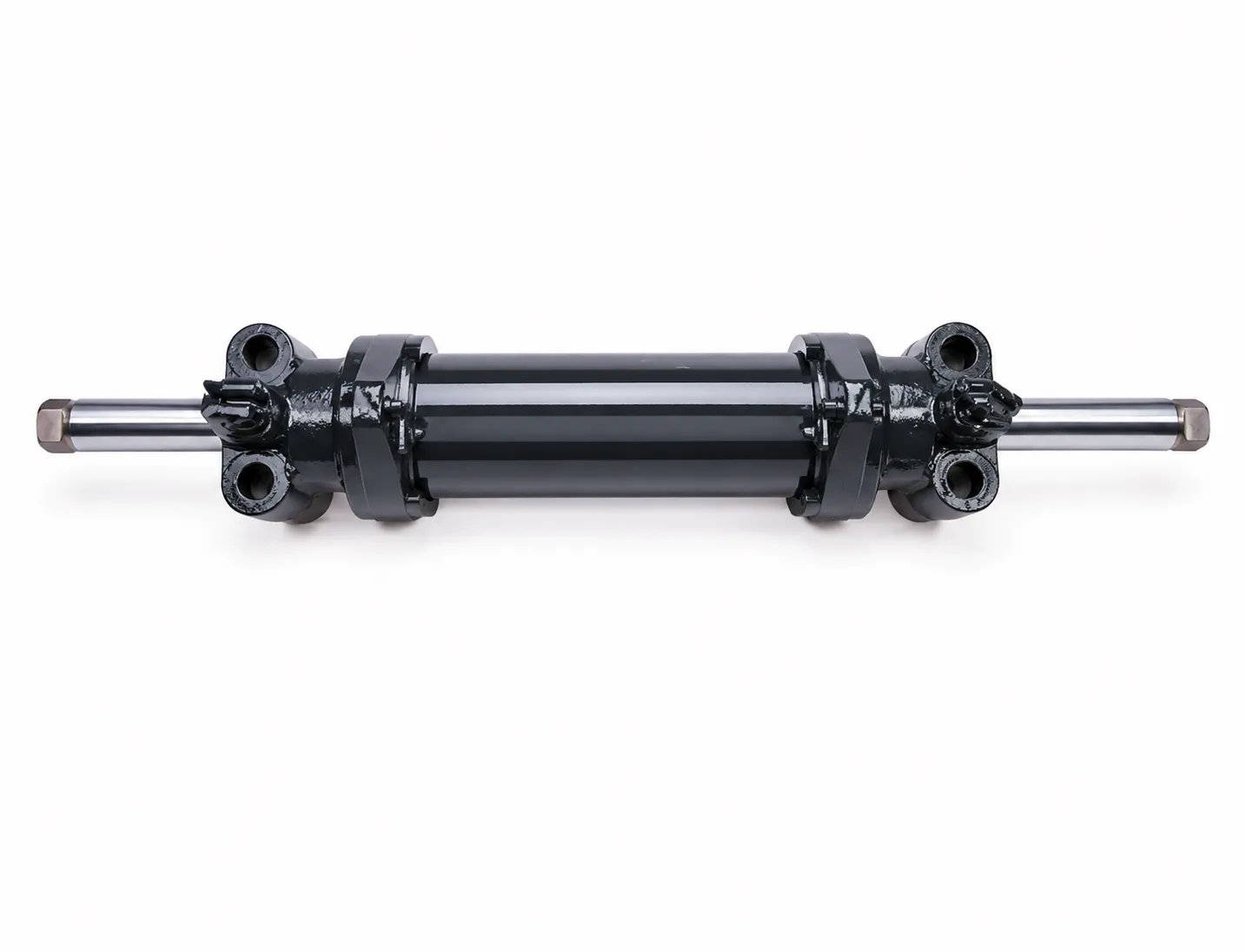
Technical Performance Parameters: Forklift vs Heavy Truck Steering Cylinders
Specification Table · Hydraulic Steering Cylinder Data
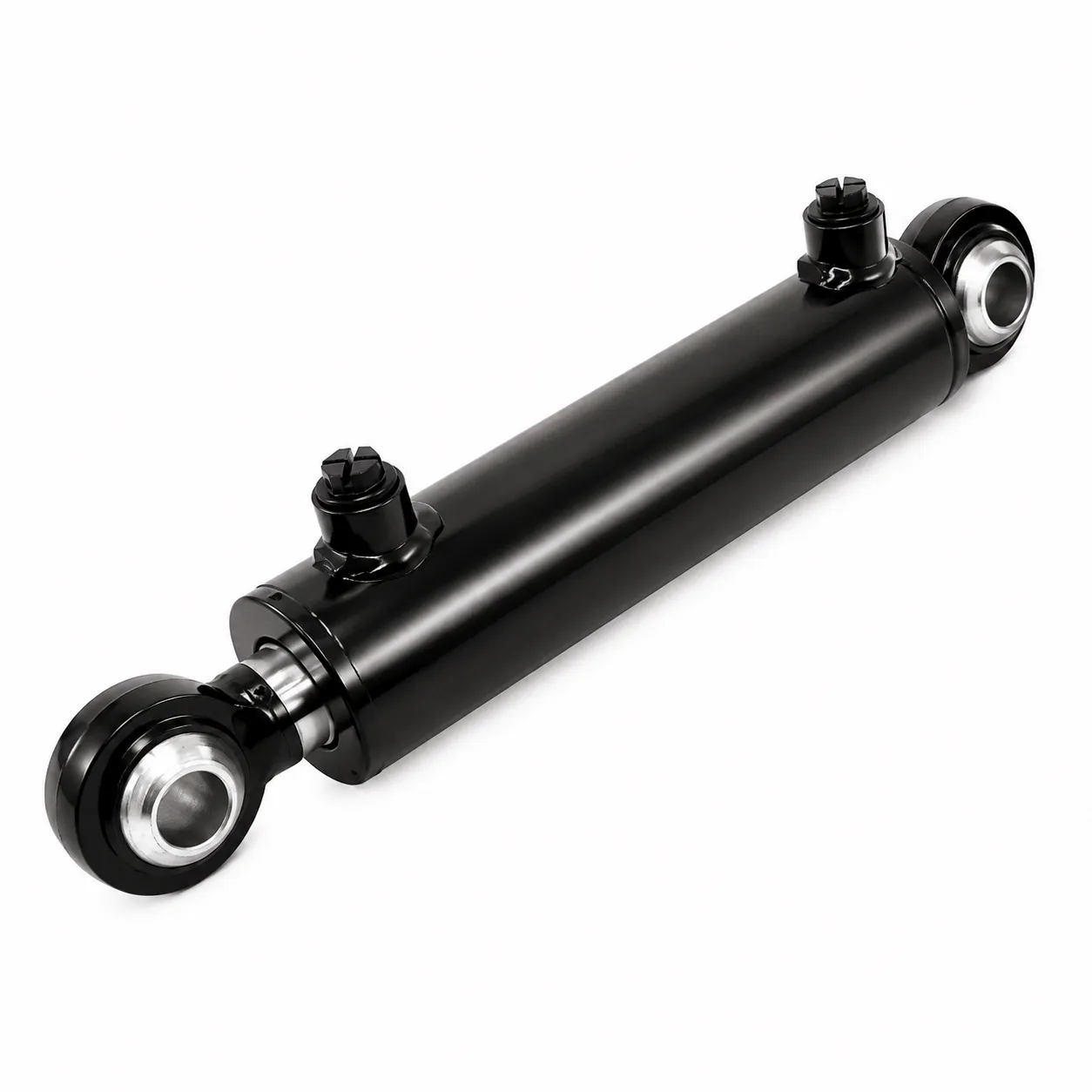
| Parameter | Forklift Steering Cylinder | Heavy Truck Steering Cylinder |
|---|---|---|
| Bore Diameter | 35 – 80 mm | 50 – 120 mm |
| Rod Diameter | 22 – 50 mm | 40 – 70 mm |
| Stroke Range | 80 – 200 mm | 100 – 350 mm |
| Working Pressure | 80 – 160 bar | 120 – 180 bar |
| Test Pressure | 1.5 × Working Pressure | 1.5 × Working Pressure |
| Barrel Material | Cold-drawn seamless, EN 10305-1 | DOM thick-wall, S45C-grade |
| Rod Surface | 45# + hard chrome, 25 µm min | 45# induction-hardened + chrome |
| Seal Material | PU / NBR, up to 160 bar | HNBR / PTFE-backed, +120 °C |
| Operating Temperature | −10 °C to +70 °C | −20 °C to +120 °C |
| Bore Surface Finish | Ra 0.4 µm | Ra 0.4 – 0.8 µm |
| Mounting Style | Clevis / trunnion with spherical | Tie-rod / threaded end |
| Salt Spray Resistance | 720 h (ISO 9227) | 500 – 720 h |
| Design Life Target | 8,000 – 12,000 operating hours | 200,000 km / 5-year TBO |
Industrial Application Scenarios: Where Each Cylinder Type Belongs
Application Scenarios · Industrial Hydraulic Steering
Ever Power Manufacturing: Custom Steering Cylinders, Built to Your Exact Requirements
Custom Manufacturing · Ever Power Hydraulic Cylinders
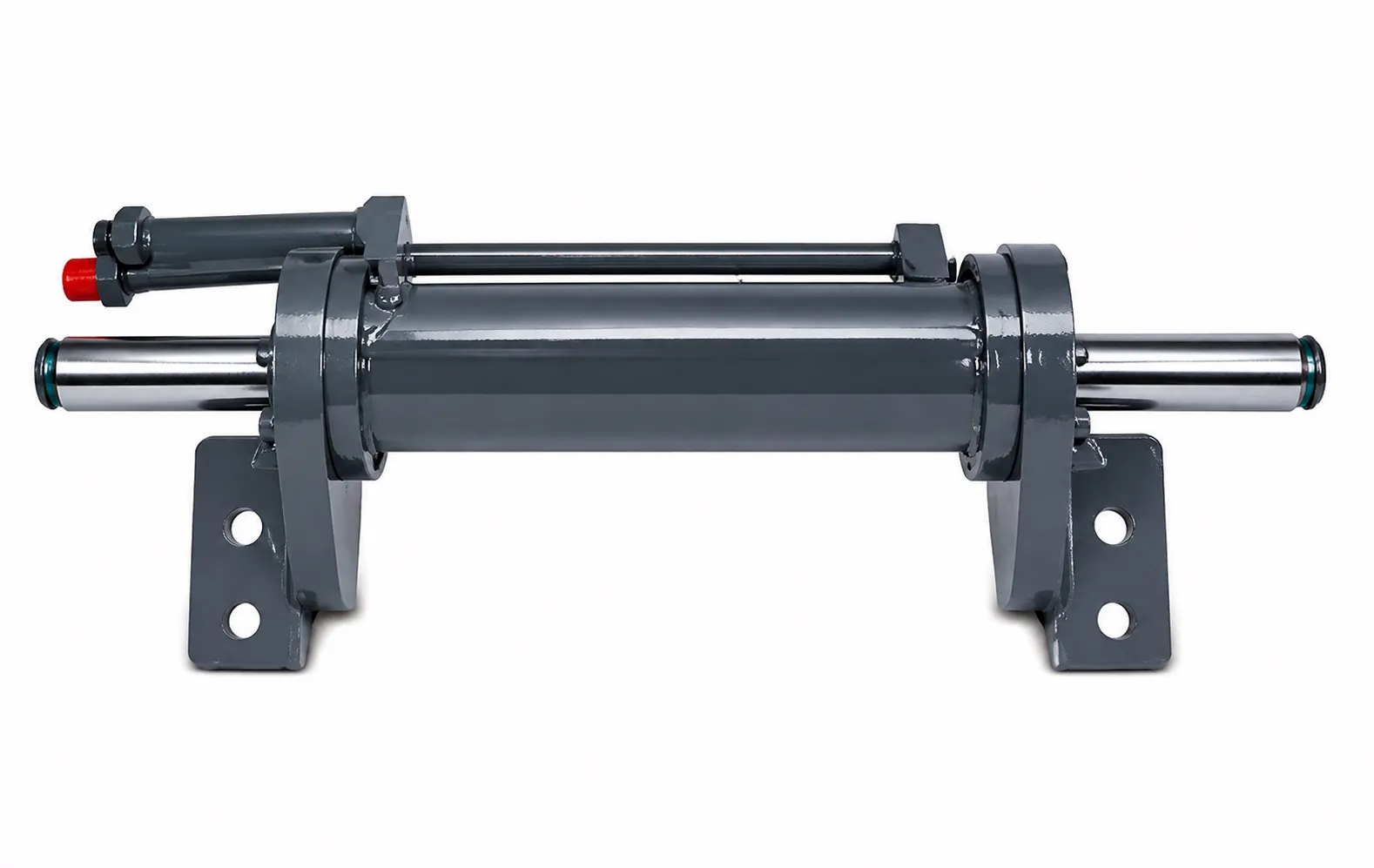
Ever Power operates a purpose-built hydraulic cylinder manufacturing facility with a production capacity that allows us to support both high-volume OEM programmes and low-volume bespoke orders for specialist machinery builders. Our engineering team works directly with clients from the initial specification stage — reviewing your application brief, identifying critical operating parameters, and proposing a cylinder design that balances performance, lead time, and total cost of ownership. We do not retrofit generic catalogue cylinders to non-standard applications; every custom steering cylinder is engineered from scratch using verified dimensional models and application-matched material selection.
Our CNC machining centres hold bore diameter tolerances to H7/h6 fit, and our in-house hard chrome plating line produces rod surface finishes certified by third-party metrology reports. Seal kits are assembled in a controlled clean-room environment to prevent particle contamination, and each finished steering cylinder undergoes hydraulic testing at 1.5 times rated working pressure before despatch. Documentation supplied with every export shipment includes material certificates, dimensional inspection reports, and test pressure records — a standard requirement for UK plant buyers integrating into CE-marked machinery.
✔
Bore range 25 mm – 400 mm, any stroke from 50 mm to 3,000 mm
✔
Working pressures to 350 bar for high-force compact designs
✔
Stainless steel rod option for marine and corrosive environments
✔
Custom port positions and thread standards (BSP, NPT, SAE, Metric)
✔
Integrated position feedback sensors and LVDT mounting provisions
✔
DXF / STEP drawing acceptance for direct-to-manufacture orders
✔
Sample order from 1 piece with full production documentation
✔
UK-compliant export documentation, CE declaration support
Ready to discuss your steering cylinder specification? Our engineering team responds within one working day.
Customer Success Story: Birmingham Steel Distribution Centre Reduces Cylinder Downtime by 64%
Case Study · UK Industrial · Forklift Steering Cylinder
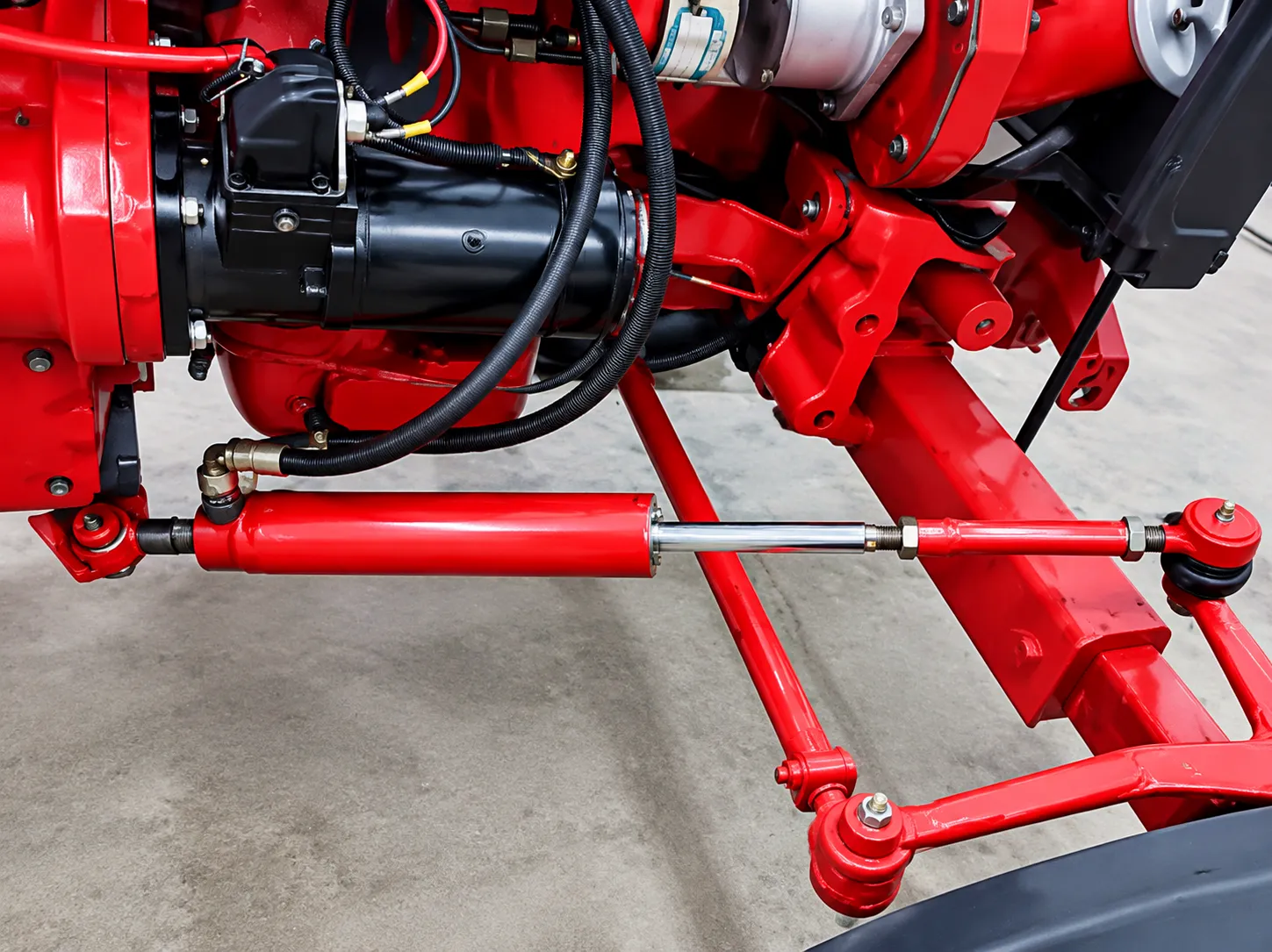 A structural steel stockholder operating a 22-unit counterbalance forklift fleet from a large distribution warehouse in the Tyseley area of Birmingham was experiencing an unacceptable rate of steering cylinder failure — averaging 1.8 cylinder replacements per vehicle per year. The cylinders in use were sourced from a generic European distributor and, while nominally rated for the application, were assembled with NBR seals that degraded rapidly in the presence of the anti-wear hydraulic fluid specified by the vehicle manufacturer. Internal leakage caused steering drift that forced operators to over-correct, placing additional cyclic stress on rod seals and accelerating failure progression. The total cost — including cylinder purchase, labour, and lost operational time — was approaching £31,000 per year across the fleet.
The maintenance manager contacted Ever Power after a trade colleague’s recommendation, providing the OEM cylinder drawing package and a sample of the hydraulic fluid in use. Ever Power’s engineering team confirmed the seal material incompatibility and proposed a replacement cylinder with HNBR piston and rod seals, an upgraded wiper design to exclude metal debris, and a slightly enlarged gland bore to accommodate the compound groove seal stack. The replacement cylinders were dimensionally identical to the OEM components, enabling direct swap-out without any modification to the truck steering circuit or geometry.
After twelve months of operation, the fleet failure rate had dropped from 1.8 replacements per vehicle per year to 0.65. The reduction in unplanned downtime events — each of which had previously cost approximately £800 in lost shift productivity — delivered a net annual saving of £18,400 against a cylinder unit price increase of only £23 per piece over the previous supplier. The site maintenance team now holds a pre-agreed buffer stock of six Ever Power steering cylinders at all times, replenished quarterly under a blanket purchase order that guarantees same-day despatch from our UK freight partner’s Midlands distribution point.
“The seal material upgrade Ever Power recommended was exactly what our fleet needed. We have not had a steering cylinder failure on any of the 22 trucks since switching, and the lock-to-lock response is noticeably more precise. The documentation package — material certs, test records — meets our ISO 9001 site audit requirements without any additional paperwork from us.”
“We specified a non-standard port position and a shorter overall length than the catalogue item for a bespoke reach truck attachment. Ever Power turned around a sample within three weeks and held every critical dimension to the tolerances in our drawing. The cylinder has been running on a container port terminal at Felixstowe for eight months with no issues — impressive given the salt environment.”
“Our HGV truck repair workshop in Sheffield handles steering cylinder rebuilds and replacements for a regional fleet of 65 heavy articulated lorries. We switched to Ever Power replacement cylinders for the common Volvo FH and DAF XF steering axle applications eighteen months ago. The bore finish quality is measurably better than the parts we were using previously — our in-house metrology shows consistent Ra 0.4 µm across every unit — and the seal kits are available separately for in-situ rebuilds, which has made a big difference to workshop throughput.”
Frequently Asked Questions: Forklift and Truck Steering Cylinders in the UK
FAQ · Hydraulic Steering Cylinder · UK B2B