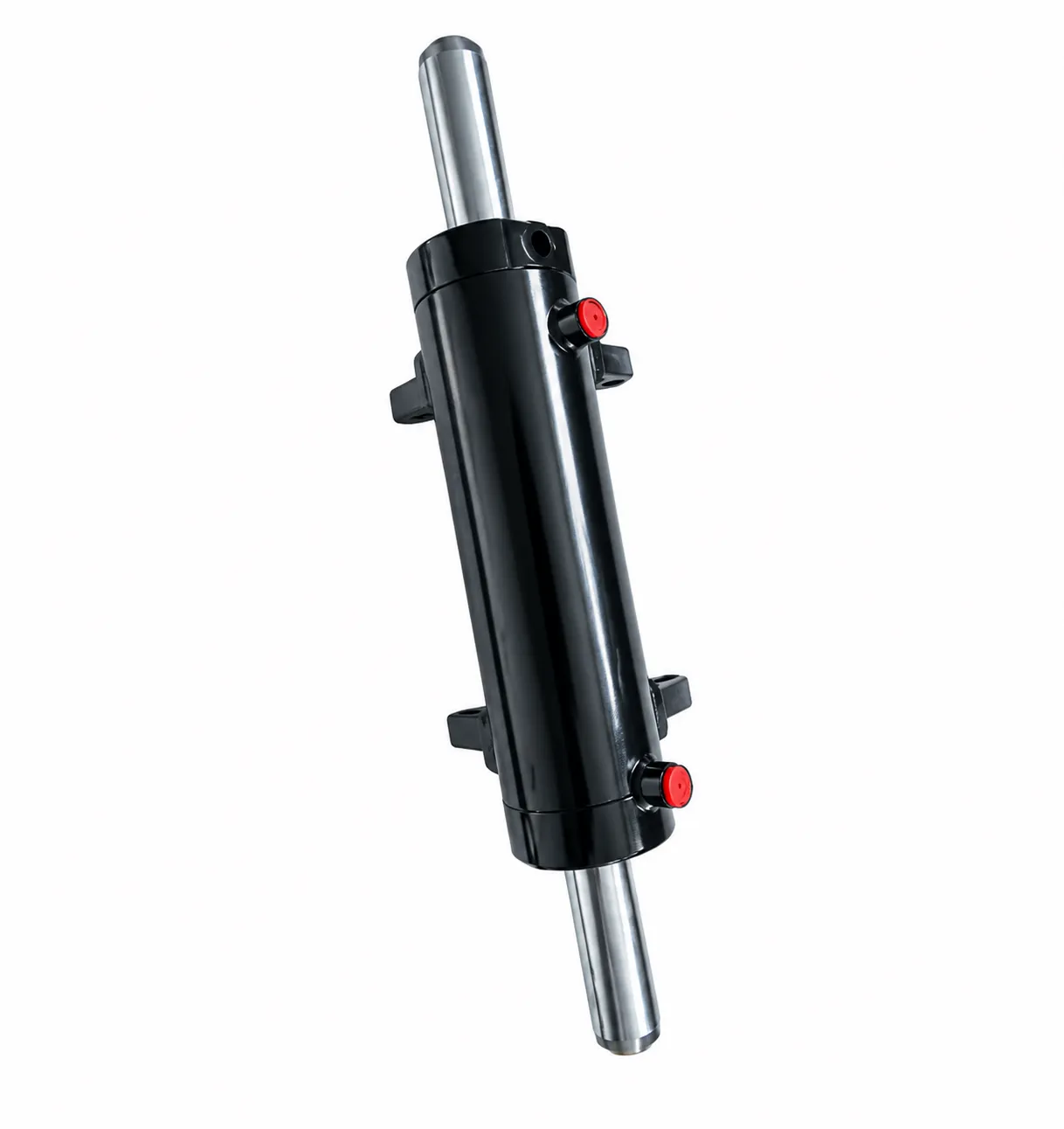
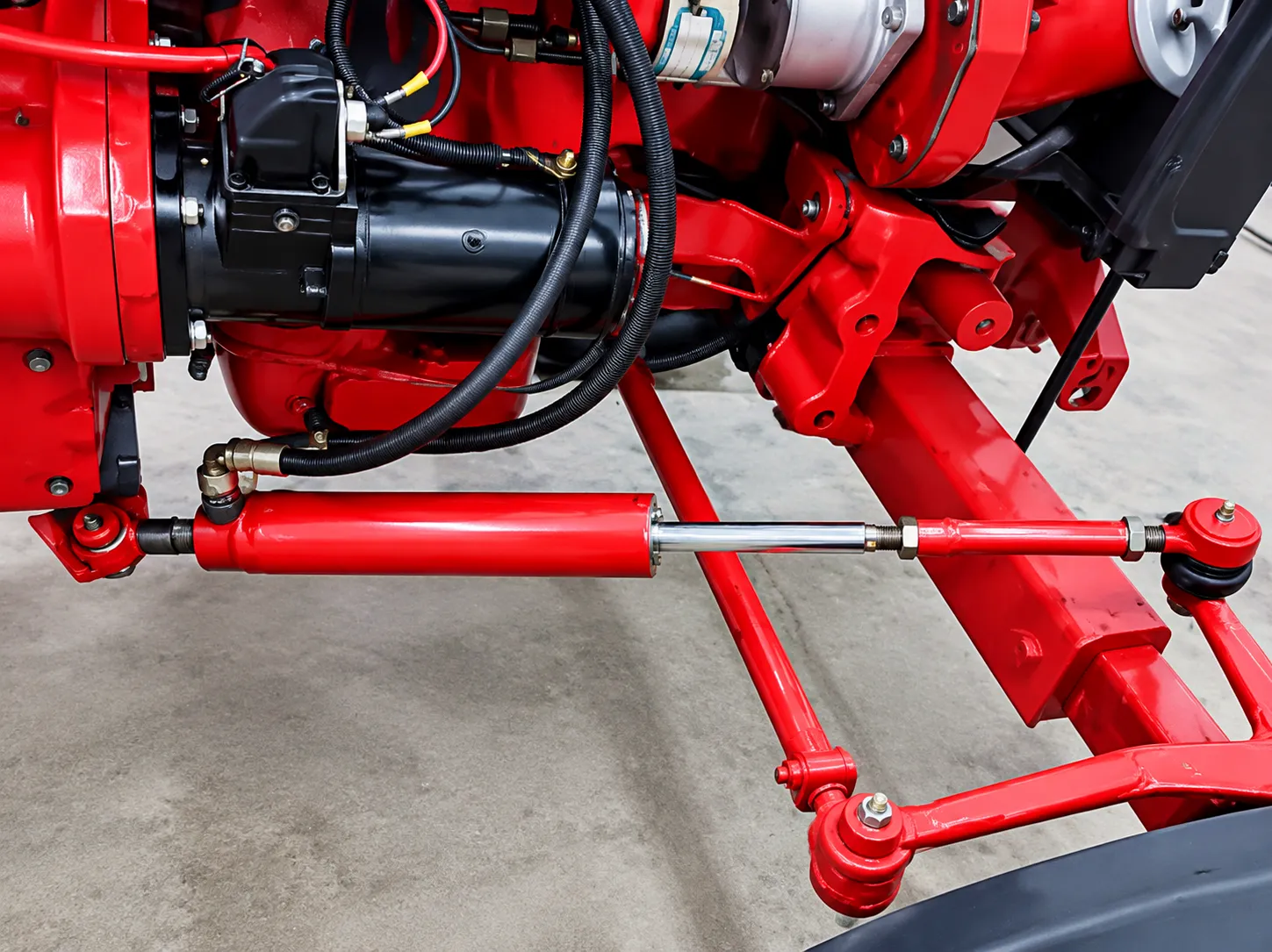
 The hydraulic steering cylinder is one of the most stress-tested components in any mobile machine. Whether it is guiding a 45-tonne articulated dump truck across a quarry in the Peak District or steering a compact loader through a warehouse in Coventry, the cylinder must translate hydraulic pressure into precise mechanical movement — repeatedly, under load, across all weather conditions. Every element of its construction matters, but nothing is more critical than the seals that separate chambers, contain fluid under high pressure, and protect the piston rod from contamination and corrosion.
Specify the right seal system for your application — talk to our engineers today.
How Seal Systems Work Inside a Hydraulic Steering Cylinder
Pressure Containment Architecture
A double-acting steering cylinder has two pressurised chambers on either side of the piston. When the hydraulic pump directs fluid to the rod-side or cap-side chamber, the piston moves and the rod extends or retracts, pivoting the steering geometry. The piston seal — typically a multi-component assembly — must hold differential pressures that in heavy-duty applications routinely reach 200 to 350 bar. It must do this while the piston is in motion, meaning the seal surface is constantly sliding against a honed bore. This dynamic sealing condition demands materials that combine low friction with exceptional wear resistance and the ability to maintain dimensional stability under thermal cycling.
Rod Seal and Wiper Function
At the cylinder gland end, the rod seal prevents fluid from escaping along the piston rod as it strokes in and out of the barrel. Working alongside it, and often overlooked in basic specifications, is the wiper seal — or scraper seal. The wiper’s job is to clear the rod surface of mud, grit, crop debris, road salt, and any other contamination before it is drawn back past the rod seal. In UK agricultural and civil engineering environments, where machinery works through wet clay soils and winter grit-treated surfaces, wiper seal quality is a decisive factor in overall seal service life. A wiper that degrades quickly allows abrasive particles to reach the rod seal, dramatically accelerating wear on both components.
Backup Rings and Anti-Extrusion Devices
At very high operating pressures, softer elastomeric seals can deform and extrude into the clearance gap between the piston and cylinder bore — a failure mode known as extrusion damage. Backup rings, usually machined from PTFE or nylon, sit on the low-pressure side of the primary seal and physically close off this gap. Their presence allows the system to operate at significantly higher peak pressures without premature seal failure. In hydraulic steering cylinders designed for heavy plant — such as those used in Birmingham’s large-scale infrastructure projects or Sheffield’s forging and casting industries — backup rings are a standard part of the seal stack rather than an optional extra, reflecting the sustained high-pressure duty cycles these machines endure.
Core Materials in Hydraulic Steering Cylinder Seals
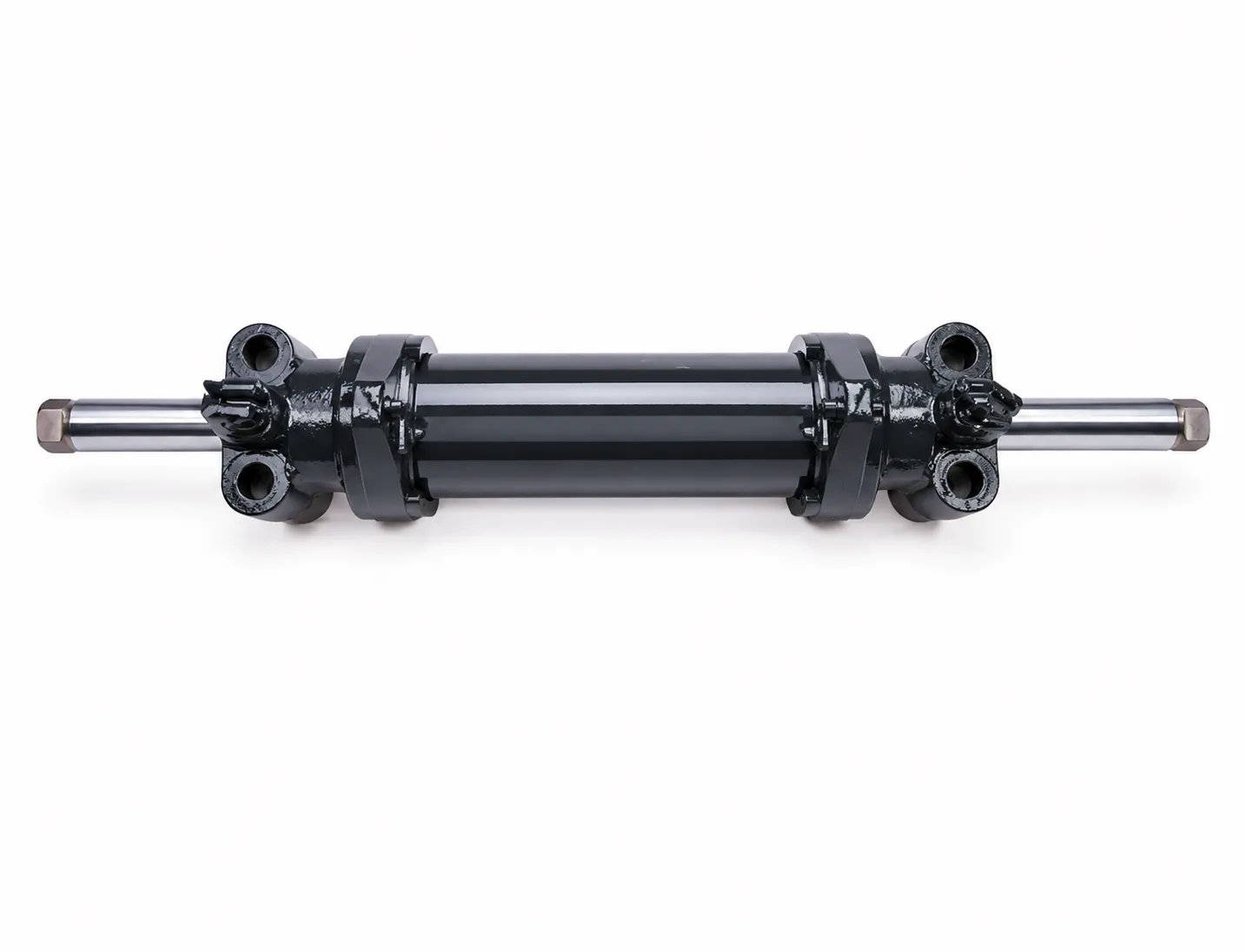
The engineering properties of seal materials — their hardness, elasticity, thermal stability, chemical compatibility with hydraulic fluids, and resistance to compression set — determine the ultimate performance of any seal system. No single material is optimal for every condition, which is why professional cylinder manufacturers use carefully matched combinations.
Material 01
NBR (Nitrile Rubber)
Nitrile butadiene rubber remains the workhorse of hydraulic seal technology. It exhibits excellent resistance to mineral oil and most petroleum-based hydraulic fluids, with a working temperature range of -40°C to +120°C. Its mechanical strength makes it well suited for static and low-speed dynamic sealing applications. In UK construction machinery operating through cold British winters, NBR’s low-temperature flexibility is a genuine advantage over stiffer engineering polymers.
Material 02
PTFE (Polytetrafluoroethylene)
PTFE’s near-zero coefficient of friction makes it indispensable for sliding applications — piston seals, guide rings, and backup rings all commonly incorporate PTFE. It is chemically inert against virtually every hydraulic fluid, including fire-resistant fluids used in mining and foundry environments. Filled grades — reinforced with carbon fibre, glass fibre, or bronze — offer enhanced load-bearing capacity and dimensional stability for high-pressure duty. For steering cylinders on mining vehicles around the Midlands coalfield legacy equipment, carbon-filled PTFE guide rings substantially reduce stick-slip and breakout friction.
Material 03
FKM (Viton / Fluorocarbon)
Where operating temperatures exceed the reliable range of NBR, fluorocarbon elastomers deliver performance that is hard to match. FKM seals can sustain continuous service up to 200°C and offer outstanding resistance to aggressive fluids including synthetic esters, biodegradable hydraulic oils, and phosphate ester fire-resistant hydraulic fluids. For steering cylinders on forestry machinery operating in the Scottish Highlands during summer — where hydraulic fluid temperatures can spike during intensive work — FKM rod seals represent the most reliable long-term solution available.
Material 04
PU (Polyurethane)
Polyurethane is frequently selected for rod seals and wiper seals where outstanding abrasion resistance is needed. It outperforms NBR in wear life under dynamic conditions by a considerable margin and maintains good elasticity at low temperatures. In agricultural steering cylinders on ploughing and drilling equipment operating on abrasive sandy loam soils in East Anglia, PU wipers dramatically outlast standard rubber alternatives, protecting the rod seal from the ingested particles that otherwise shorten its life in a single season.
Product Advantages: Why Seal Engineering Quality Defines Cylinder Value
Extended Service Intervals
A correctly matched seal stack on a hydraulic steering cylinder routinely delivers service lives of 8,000 to 15,000 operating hours in standard industrial duty. This is achieved through precise groove geometry, correct compression rates, and the use of matched seal sets where the piston seal, guide ring, rod seal, and wiper are engineered to work together. Machine operators across UK logistics and warehousing who switch from generic replacement seals to application-specific matched sets consistently report reductions in annual seal replacement events of 50% or more — with commensurate savings on parts, labour, and downtime costs.
Zero Fluid Contamination of Work Environments
For operators working under the UK’s environmental regulations — including COSHH requirements that govern fluid release into soil and watercourses — a seal system that genuinely contains hydraulic fluid is not just an operational preference but a legal compliance matter. A high-integrity seal system using double-lip rod seals prevents micro-leakage that can accumulate to reportable spill quantities over a season of operation. Properly sealed steering cylinders also protect bearings, pivot pins, and other nearby components from hydraulic fluid saturation, which has its own secondary maintenance implications.
Precise and Responsive Steering Feel
A worn or poorly fitted seal introduces a lag between operator input and cylinder response — a phenomenon known as deadband — caused by fluid bypassing the piston seal before sufficient pressure builds to move the piston. This is not just uncomfortable; it is a safety issue on high-speed applications. Premium low-friction seal configurations using PTFE-loaded piston seals and energised lip seals on the rod eliminate this bypass and give operators crisp, linear steering response that they can predict and rely upon. Drivers of articulated loaders and telehandlers across UK logistics parks particularly notice and value this quality improvement when transitioning to precision-sealed cylinders.
Temperature and Chemical Resistance Across Seasons
The UK’s climate presents a wide thermal range for outdoor machinery — from sub-zero starts in January to sustained high-temperature operation during summer harvest work in July and August. A seal system that performs at both extremes must combine low-temperature flexibility (preventing cracking and loss of sealing force on cold starts) with high-temperature stability (maintaining dimensional integrity and compression set resistance during prolonged duty). Multi-material seal stacks, pairing NBR or PU for cold-weather flexibility with FKM for high-temperature stability, achieve this balance across the seasonal range that British working machinery must endure.
Steering Cylinder Seal System — Technical Performance Parameters
Standard specifications for Ever Power industrial hydraulic steering cylinders with precision seal configurations.
| Parameter | Specification / Range | Notes |
|---|---|---|
| Bore Diameter Range | 40 mm – 320 mm | Custom bore sizes available on request |
| Rod Diameter Range | 22 mm – 200 mm | Chrome-plated, Ra 0.2 – 0.4 µm finish |
| Maximum Operating Pressure | Up to 350 bar | With PTFE backup ring fitted |
| Operating Temperature Range | -40°C to +200°C | Dependent on seal material selected |
| Piston Seal Type | NBR / PTFE composite, PU, FKM options | Matched to fluid type and duty cycle |
| Rod Seal Configuration | Single-lip or double-lip energised rod seal | Double-lip standard on heavy-duty variants |
| Wiper Seal Material | PU (standard), NBR, FKM (high-temp) | Heavy-duty metal-cased wipers available |
| Guide Ring / Wear Ring Material | PTFE/resin composite, carbon-PTFE, nylon | Lateral load and side-force rated |
| Bore Surface Finish (Honing) | Ra 0.2 – 0.4 µm | Cross-hatch honed for oil film retention |
| Stroke Length | 50 mm – 2,500 mm | Custom stroke on all models |
| Compatible Fluid Types | Mineral oil, bio-oil, fire-resistant fluid | Seal selection adjusted per fluid type |
| Service Life (Standard Grade) | 8,000 – 12,000 operating hours | In typical B2B industrial service |
| Service Life (Heavy-Duty Grade) | 15,000+ operating hours | FKM + carbon PTFE + metal-cased wiper |
Industrial Application Scenarios in the UK Market
Steering cylinders with precision seal systems serve a remarkably wide range of British industries. Understanding the demands of each sector is essential to matching the correct seal specification to the job.
Construction Plant and Earthmoving — Birmingham and Midlands Infrastructure Projects
Articulated dump trucks, graders, scrapers, and compactors rely on steering cylinders capable of withstanding both high shock loads and continuous duty across uneven terrain. In and around Birmingham — where major road and rail infrastructure projects have been continuous for over a decade — steering cylinders are expected to operate for extended periods without seal intervention. The combination of vibration, lateral loading on tight turning circles, and contamination from clay-heavy Midlands subsoils makes material selection for both the rod seal and wiper seal especially critical. High-pressure piston seals with anti-extrusion backup rings are standard for machines above 20 tonnes. Additionally, products like the forklift tilt cylinder share common seal engineering principles that translate directly to construction machinery cylinder design.
Agricultural Machinery — East Anglia and Yorkshire Farming Operations
Large-scale arable farms across East Anglia and the Vale of York operate tractors, self-propelled sprayers, and combine harvesters in conditions that cycle rapidly from spring mud through to dusty summer harvest and autumn ploughing. Steering cylinders on these machines must cope with fine abrasive dust in summer, saturated clay contamination in autumn, and cold-temperature starts in early spring. Polyurethane wipers are the standard choice for arable machinery because of their ability to clean the rod surface without scratching the chrome surface finish that the rod seal depends on. Sealed-for-life configurations with grease-free bushings are growing in preference as labour costs for routine servicing increase across British agricultural contractors.
Port and Logistics Equipment — Felixstowe, Bristol and Southampton Dockside Operations
Reach stackers, straddle carriers, and terminal tractors at UK container ports depend on steering cylinders that operate in salt-air environments with intensive duty cycles — machines at the Port of Felixstowe or Southampton’s Eastern Docks can execute thousands of steering movements per shift. The combination of marine salt corrosion risk and high-frequency dynamic loading makes rod surface quality and wiper seal performance especially important. Double-acting forklift steering cylinders used in port warehouse operations share the same saltwater resistance requirements, where FKM-based seal kits and hard-chrome rod plating work together to resist the aggressive environment.
Steel and Foundry Handling — Sheffield’s Special Steel Sector
Sheffield’s special steels industry — still one of the UK’s most technically demanding manufacturing environments — uses coil handling cranes, ladle transfer cars, and heavy slab transporters that require steering or positioning cylinders rated for extreme temperature environments. Near furnace areas, ambient temperatures can regularly exceed the safe operating limit of standard NBR seals. In these applications, FKM or PTFE-energised metal seal configurations are non-negotiable. The hydraulic fluid itself may need to be a fire-resistant type, further restricting seal material options and requiring specialist chemical compatibility verification before any seal system is specified and installed.
Forestry Machinery — Scotland and Wales Timber Harvesting
Forwarders and harvesters working in Scottish and Welsh state forests operate on steep, boggy ground where steering cylinders experience constant lateral loads, frequent hydraulic shock from tipping and recovery events, and exposure to biodegradable hydraulic oils mandated in many environmentally sensitive UK forestry areas. Biodegradable fluids — including synthetic esters and vegetable-oil based fluids — attack some rubber compounds more aggressively than mineral oil. Cylinders destined for these machines must be specified with seal materials — typically FKM or specially formulated HNBR — that are verified compatible with the specific biodegradable fluid in use, since switching fluid type without re-specifying seals is a common and costly maintenance error.
Ever Power — Precision Manufacturing and Full Customisation Capability
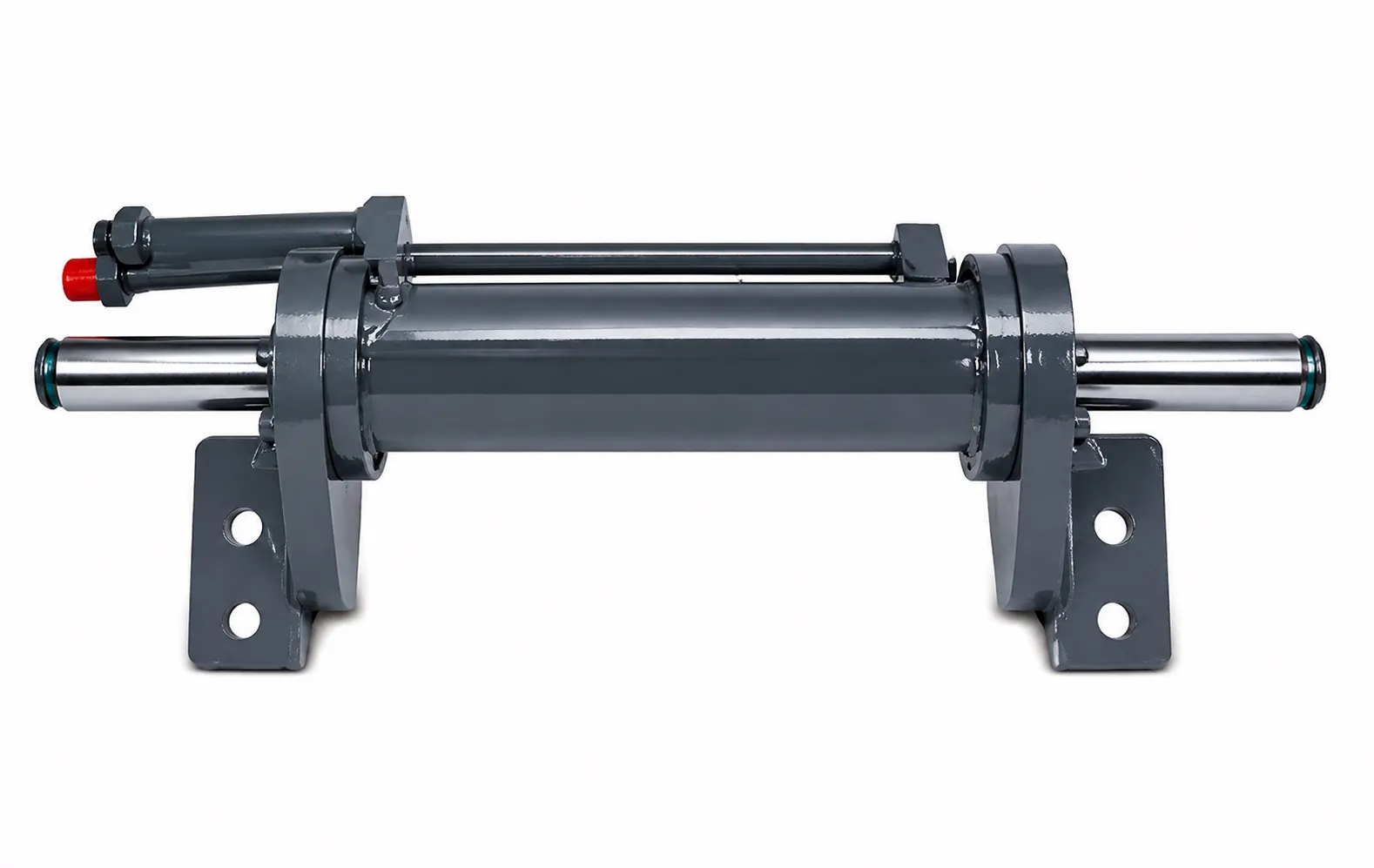
At Ever Power, we operate on the understanding that no two industrial applications are identical. Off-the-shelf cylinder specifications rarely match the precise duty, pressure, temperature, and contamination profile of a specific machine in a specific working environment. Our manufacturing facility is equipped to engineer, produce, and test custom hydraulic steering cylinders with fully tailored seal systems — from prototype through to high-volume production runs.
Seal Material Selection Service
Our engineering team works through a detailed application review with each B2B customer — establishing operating pressure, temperature range, hydraulic fluid type, duty cycle, and contamination exposure before recommending a seal material matrix. For UK customers sourcing for construction, agricultural, or industrial plant, we account for local environmental conditions including winter operating temperatures and, where relevant, biodegradable fluid requirements in sensitive sites. This systematic approach eliminates the guesswork that leads to premature seal failure in the field.
Precision CNC Honing and Surface Finishing
The seal is only as good as the bore and rod surfaces it runs against. Ever Power’s honing operations produce bores to Ra 0.2 to 0.4 µm with controlled cross-hatch angles, ensuring the oil film that lubricates piston seals is properly retained. Our hard chrome rod plating lines produce rod surfaces to Ra 0.1 to 0.25 µm — smooth enough to protect rod seals from premature abrasive wear while retaining sufficient micro-texture to support the hydrodynamic film that prevents dry contact. Every cylinder undergoes surface finish verification before assembly, with inspection records available on request for quality-assurance-critical B2B supply chains.
Supply Chain and Lead Time Reliability for UK B2B Buyers
Ever Power maintains extensive raw material stock — including high-specification seal groove blanks, chrome-plated rod bar stock, and premium seal material inventories — specifically to support reliable lead times for B2B customers with scheduled production or replacement programmes. For UK machinery dealers and OEMs managing their own service intervals, we offer consolidated shipment programmes and comprehensive documentation packages including material certificates, dimensional inspection reports, and pressure test records. Air freight for urgent seal kit replacement orders is available to UK ports, and our export logistics team is experienced in navigating UK import requirements post-2021.
Ready to specify your steering cylinder with the right seal system?
Share your application details and our engineers will deliver a tailored specification and commercial offer.
Customer Success Story: Reducing Cylinder Downtime at a Sheffield Steel Handling Facility
47%
Reduction in
annual seal events
Client: Midlands Special Metals Ltd, Sheffield — Coil and Slab Handling Fleet
Midlands Special Metals Ltd operates a fleet of twelve heavy coil transfer vehicles and four wide-gauge slab transporters within its Sheffield facility — a site producing specialty alloy steels for aerospace and defence customers. Each transfer vehicle uses two steering cylinders rated to 280 bar, operating through tight radii in elevated ambient temperatures near the walking beam furnaces. The facility’s maintenance team had been experiencing an average of three seal failures per vehicle per year — a combination of piston seal blow-out at high pressure transients and wiper seal degradation from the mill scale and metallic grit present in the operating environment.
After consulting Ever Power’s engineering team and sharing detailed duty cycle data and fluid analysis reports, the specification was revised from the generic off-the-shelf seal kits previously used to a matched seal system using FKM rod seals, carbon-PTFE backed piston seals with anti-extrusion backup rings, and metal-cased double-lip wipers. The bore honing specification was tightened from the original Ra 0.6 µm standard to Ra 0.3 µm, and rod plating thickness was increased to 30 µm. At the first annual review, seal-related downtime events had fallen by 47%, representing a saving of approximately £38,000 in parts, labour, and lost production time — against an additional cylinder specification cost of under £4,000 across the fleet. The maintenance manager noted that the cylinders also delivered noticeably tighter steering response, which operators appreciated in the confined slab handling areas.
What Our B2B Customers Say
“We switched to Ever Power’s custom seal specification for our fleet of reach stackers at our Felixstowe depot and the difference was immediately clear. Wiper seals that used to show degradation signs after six months are still in excellent condition at twelve. The FKM rod seal recommendation was spot on for the salt air conditions we work in.”
— Fleet Engineering Manager, Container Logistics Operator, Suffolk
“Ever Power’s application engineering process is genuinely more thorough than anything we have encountered with other cylinder suppliers. They identified that our biodegradable fluid specification was incompatible with the standard NBR seals we had been using — a problem we had been treating as an operator error for two years. The replacement specification they supplied resolved the issue completely and has held up through a full Scottish forestry season.”
— Procurement Director, Forestry Machinery Distributor, Perth, Scotland
“We specified steering cylinders for a new line of agricultural sprayers going into production targeting UK and northern European markets. Ever Power not only supplied cylinders with the correct cold-start seal performance for the -20°C minimum temperature requirement, but also provided full material test certificates and dimensional inspection records that our quality team needed for type approval. Delivery was on schedule for our production run and pricing was competitive for the specification quality.”
— Head of Engineering, Agricultural Machinery OEM, Lincolnshire
Frequently Asked Questions
Questions from industrial buyers, fleet engineers, and machinery distributors across the UK.
Specify the Right Steering Cylinder Seal System for Your Application
Ever Power’s engineering team is ready to support UK B2B buyers with technical consultation, custom specifications, and competitive pricing.
edit by gzl