Bleeding Air from a Steering Cylinder: Why It Matters and How to Do It
A practical, engineer-verified guide for hydraulic maintenance professionals across the UK manufacturing and heavy plant sectors.
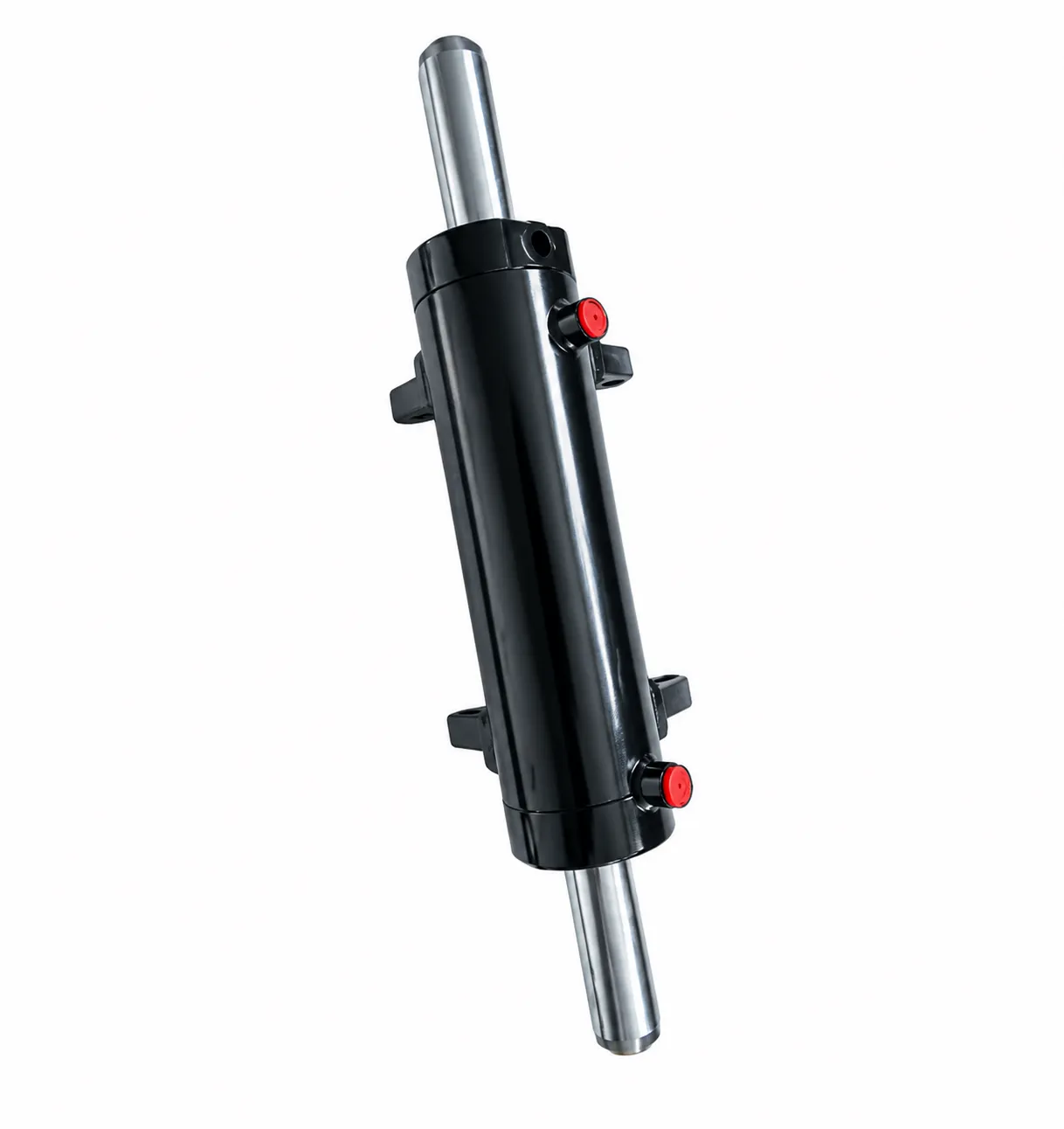 Walk into any heavy plant workshop in Birmingham, Sheffield, or Cardiff and ask a seasoned hydraulic technician what kills steering systems prematurely, and the answer is almost always the same: trapped air. It sounds deceptively simple — a bit of gas in a fluid circuit — yet the downstream effects can range from frustratingly spongy steering response all the way to accelerated seal damage, piston scoring, and catastrophic cylinder failure. The steering cylinder sits at the heart of directional control on everything from articulated dump trucks to agricultural tractors and marine steering gear. When its hydraulic circuit carries air alongside oil, that air compresses and rebounds on every stroke, creating micro-shocks that erode precision tolerances over time. For UK operators and fleet managers working to BS EN ISO hydraulic standards, understanding the bleeding process is not a maintenance nicety — it is a fundamental requirement for safe operation and long component life.
How Air Enters a Steering Cylinder Circuit
Air finds its way into hydraulic steering circuits through several distinct pathways, and identifying the source is as important as performing the bleed itself. The most common entry point is a worn or damaged rod seal. As the piston rod extends and retracts thousands of times across the working life of a machine, the dynamic seal that rides against the rod surface experiences both friction and side-load stress. Once that seal loses its lip interference, it draws atmospheric air inward on the return stroke — a phenomenon that intensifies in cold weather, which is a genuinely relevant concern for plant operators across Scotland and the north of England during winter campaigns. Low reservoir level is another culprit: when the hydraulic tank runs low, the pump begins to cavitate, pulling vapour and dissolved gas into the working circuit rather than clean oil.
Cylinder replacement or any service work that breaks the hydraulic circuit inevitably introduces air into the lines and the cylinder bore itself. Improper fill procedures after major work — say, replacing a cylinder on a reach stacker at a Midlands logistics depot — leave air pockets that manifest as sluggish, uneven steering response from the very first cycle. Finally, micro-porosity in cast fittings or hairline cracks in hose assemblies create leakage paths that admit air under the cyclic pressure swings of active steering. Understanding which pathway is responsible shapes both the bleeding technique and any corrective repairs that should accompany it.
The Real Damage That Trapped Air Causes
Aeration Shock & Cavitation
Compressed air pockets release explosive energy when cylinder pressure peaks, creating micro-cavitation bursts that pit the internal bore surface and damage piston land geometry. On a 160-bar system, these shocks generate instantaneous local pressures that can strip chrome plating from the rod in weeks rather than years.
Overheating & Oil Degradation
Air is a far poorer heat conductor than hydraulic oil. When air-contaminated fluid circulates through a working steering cylinder, thermal build-up accelerates dramatically. Oil temperatures that would normally sit at 55–60°C can spike past 85°C, triggering oxidation and viscosity breakdown. The result is accelerated varnish formation on valve spools and scoring on the cylinder bore — all traced back to a bleed that was skipped.
Loss of Positional Accuracy
In precision industrial applications — CNC-guided excavation rigs, automated guided vehicles (AGVs), and precision agricultural steering — air in the cylinder makes closed-loop position control unreliable. The compressible air volume acts as an uncontrolled spring, introducing lag and overshoot into steering commands. For operators using GPS-guided implement guidance on UK arable farms in Lincolnshire or East Anglia, even 0.5° of steering inaccuracy translates directly into wasted seed and overlapping passes.
Seal & Wiper Failure Cascade
The pressure spikes associated with aerated oil are notoriously hard on polyurethane and nitrile seals. Normal working pressure cycles condition seals gradually; air-driven pressure spikes fatigue the seal lip unevenly, creating micro-cracks that propagate into full leakage failures. When one seal goes in a steering cylinder, contaminated oil bypasses the piston, further degrading control — and the repair bill escalates accordingly. Preventing this cascade through proper bleeding is a fraction of the replacement cost.
How a Steering Cylinder Actually Works
A hydraulic steering cylinder converts fluid pressure into linear mechanical force, which is then translated — through tie rods, drag links, or rack-and-pinion geometry — into rotational movement at the steered axle. The core operating principle relies on Pascal’s Law: pressure applied to an enclosed incompressible fluid transmits equally in all directions. Oil under pressure from the steering pump enters the cylinder’s port on one side of the piston, pushes the piston along the bore, and returns from the opposite side through the return port back to the reservoir.
In a double-acting steering cylinder — by far the most common configuration in heavy plant, marine helm systems, and agricultural steering — the pump can direct pressurised oil to either port, enabling both left and right steering authority. The piston rod, hard-chrome plated to a mirror finish and protected by a polyurethane wiper seal at the gland, reciprocates within a precision-honed barrel. The seal stack — typically a U-cup or V-packing arrangement — maintains the fluid partition between the two chambers. The entire system depends on the working fluid being essentially incompressible. When air replaces any fraction of that oil volume, the cylinder’s force transmission becomes elastic and unpredictable.
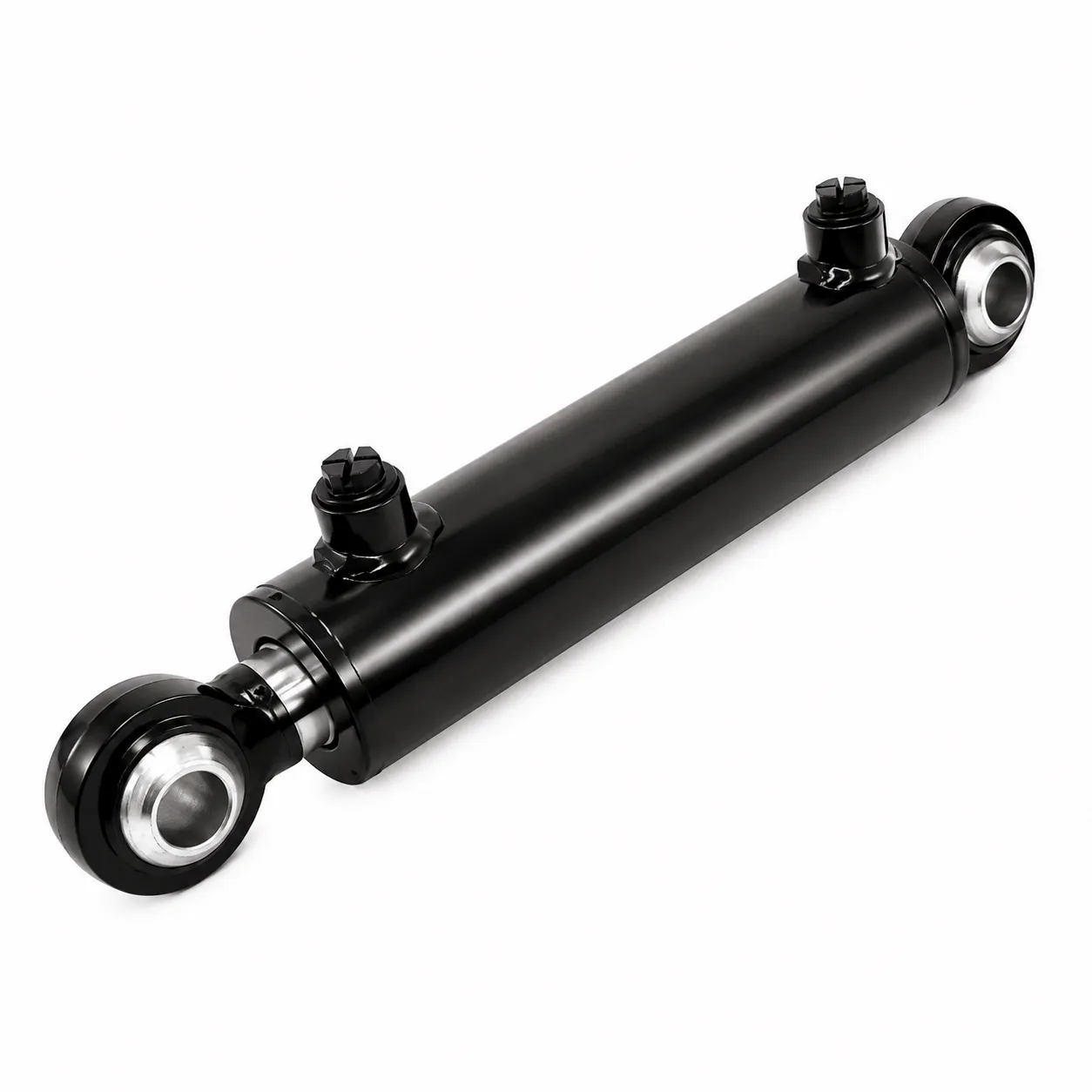
The theoretical force output of a cylinder = Working Pressure (bar) × Bore Area (cm²) × 10. For a 100mm bore cylinder at 200 bar: F = 200 × 78.5 × 10 = 157 kN. Air contamination reduces effective output by reducing available oil column volume.
Material Science Behind High-Performance Steering Cylinders
The material specification of a steering cylinder determines both its working life and its behaviour during maintenance procedures like air bleeding. Ever Power engineers select materials through a combination of operational loading analysis and environmental exposure assessment — not generic catalogue selection. Understanding what your cylinder is made of helps maintenance teams apply the correct torque values during bleed nipple procedures and avoid damaging precision surfaces.
Cylinder Barrel — Cold-Drawn Seamless Tube
The barrel is manufactured from cold-drawn seamless steel tube (EN 10305-4 grade in the European standard framework), honed internally to a surface roughness of Ra 0.2–0.4 μm. This near-optical finish is not cosmetic — it is the sealing surface that the piston seals ride against. Any deviation beyond Ra 0.8 μm causes accelerated seal wear and worsens the micro-leakage that enables air ingestion during low-pressure return strokes.
Piston Rod — Hard Chrome or HVOF Coating
Piston rods at Ever Power are machined from high-tensile alloy steel (42CrMo4 or equivalent 4140 chromoly) and then surface-treated with either hard chrome plating (minimum 25 μm depth, hardness Hv 900+) or High Velocity Oxy-Fuel (HVOF) tungsten carbide coating for the most corrosive marine or offshore environments. The hardness differential between rod and seal material is carefully managed — too hard a rod finish with too soft a seal compound accelerates seal wear; too soft a rod with aggressive particulate contamination causes grooving.
End Caps & Gland — Forged Steel or Ductile Iron
End caps and gland assemblies are machined from forged steel blanks, avoiding the micro-porosity risk inherent in casting. The gland incorporates the wiper seal, rod seal, and in many Ever Power designs a secondary backup seal, all retained in precision-machined grooves. Port thread forms follow BSP or UNF standards to align with standard UK hydraulic fittings — an important compatibility consideration when connecting to existing plant in Sheffield’s steel-processing facilities or London’s Thames-side port machinery.
Seal Pack — PU, NBR & PTFE Composites
The seal stack is the component most directly affected by air contamination damage. Standard configurations use a polyurethane (PU) primary rod seal, a nitrile rubber (NBR) static O-ring for the end cap, and a PTFE-backed piston seal ring for low friction and chemical resistance. For high-temperature applications — like steering cylinders on continuous casting equipment in Teesside’s steel mills — VITON (FKM) seals rated to 200°C replace the standard NBR O-rings, maintaining elasticity and sealing integrity under sustained thermal load.
Step-by-Step: How to Bleed Air from a Steering Cylinder
The procedure described here is suitable for double-acting hydraulic steering cylinders fitted to mobile plant, agricultural machinery, and industrial vehicles. Always consult the machine’s original equipment manufacturer service manual before beginning, and ensure hydraulic pressure is fully relieved before breaking any connections. In the UK, work of this nature on commercial vehicles and plant machinery must comply with the Provision and Use of Work Equipment Regulations 1998 (PUWER) and associated guidance.
Verify Safe Conditions & Gather Materials
Park the machine on level ground, apply the parking brake, and allow the hydraulic system to depressurise fully — this typically means leaving the engine off for at least five minutes after the final steering lock. You will need: a suitable hydraulic oil top-up supply (matching existing system spec), a clean collection container, safety glasses, nitrile gloves, and the correct open-ended spanner for the bleed nipple or port plug fitting. Confirm oil level in the reservoir and top up if below minimum — attempting to bleed with a low reservoir guarantees re-introducing air immediately.
Locate the Highest Bleed Point
Air is buoyant in hydraulic oil — it rises to the highest point in the circuit. On most steering cylinders installed on agricultural tractors and wheeled loaders, the uppermost port when the cylinder is in its mounted orientation is the correct bleed starting point. Some cylinder designs include a dedicated bleed nipple (a Schrader-type or cone-seated nipple similar to a radiator bleed valve); others require the port plug itself to be slightly loosened. Identify the correct fitting before starting. On Ever Power cylinders, this information is marked on the schematic label affixed to the cylinder barrel.
Cycle the Cylinder with Nipple Open
Crack the bleed nipple or port plug approximately 3/4 of a turn — enough to allow fluid to weep but not so much that the fitting loses its thread engagement. With an assistant at the helm or steering wheel, gently cycle the steering from full lock to full lock at idle engine speed. Watch the fluid emerging from the bleed point: initially it will be frothy, milky, or contain visible bubbles. As cycling continues, the fluid should become clear, bubble-free oil. Keep the reservoir topped up during this process, as bleeding purges fluid volume from the circuit. Close the nipple when solid, clear oil flows — do not overtighten; BSP bleed nipples typically require 8–12 Nm maximum.
Repeat on the Opposing Chamber
A double-acting cylinder has two chambers separated by the piston. After completing the bleed on the first port, repeat the procedure on the opposite end of the cylinder. Move to full lock in the opposite direction — this causes the previously sealed chamber to become the active, pressurised side, pushing any residual air to its own high point and out through the second bleed location. In some articulated steering arrangements (common on rigid-frame dump trucks used in quarrying operations across Wales and the Peak District), you may also need to bleed the steering damper and hose runs independently.
Verify, Top Up & Functional Test
After bleeding both chambers, top the reservoir to the correct operating level, start the machine, and carry out a controlled functional test in a safe, open area. Steer slowly from lock to lock several times at low ground speed, feeling for any sponginess, hesitation, or lag in steering response. A correctly bled steering cylinder delivers immediate, linear force transmission with no dead zone at centre. Note the reservoir level again after five minutes of operation — a small further drop is normal as residual micro-bubbles dissolve into the oil or escape through the reservoir breather. Log the bleed date and conditions in the machine’s service record for future reference and warranty compliance.
Steering Cylinder Technical & Performance Specifications
The table below represents typical performance parameters for Ever Power’s core steering cylinder range. Custom specifications are available across all parameters — bore diameter, stroke length, mounting style, and pressure rating can be engineered to your exact machine interface requirements. UK-standard BSP port threads and metric mounting dimensions are standard; SAE and UNF configurations are available on request.
| Parameter | Standard Range | Custom / Max | Notes |
|---|---|---|---|
| Bore Diameter | 40 – 200 mm | Up to 400 mm | Cold-drawn seamless tube, honed Ra 0.2–0.4 μm |
| Rod Diameter | 25 – 160 mm | Custom | 42CrMo4, hard chrome Hv900+, HVOF option |
| Working Pressure | Up to 250 bar | Up to 350 bar | Test pressure 1.5× working pressure standard |
| Stroke Length | 50 – 2,000 mm | Custom | Longer strokes require intermediate support evaluation |
| Operating Temperature | -20°C to +80°C | -40°C to +200°C (FKM seals) | Low-temp option critical for Scottish highland operations |
| Mounting Style | Clevis, Flange, Trunnion, Eye | Custom | ISO 6020/6022 standard footprints available |
| Port Thread Standard | BSP (G-thread) | SAE, UNF, Metric | BSP standard for UK market compatibility |
| Seal Material Options | PU, NBR, PTFE | FKM, HNBR, EPDM | Seal selection per fluid type and temperature |
| Surface Finish (Rod) | Ra 0.05–0.1 μm | Mirror-ground option | Directly affects seal longevity and ingress resistance |
| Corrosion Protection | Painted / Zinc Phosphate | Hot-dip galvanised, Nickel plate | Marine grade for harbour / tidal zone applications |
Industrial Application Scenarios for Steering Cylinders in the UK
The scope of steering cylinder deployment across British industry is broader than many procurement teams realise. From the quarrying operations of the Pennines to the automotive press lines of the West Midlands and the port handling equipment on the Humber Estuary, steering cylinders enable directional authority across an enormous range of machine types and working environments. Proper air bleeding practice is relevant — and critical — across all of them.
Core Technical Advantages of Ever Power Steering Cylinders
Precision Honing Tolerance ±0.01mm
Bore geometry maintained to within ±0.01 mm through multi-pass diamond honing. This precision reduces piston seal floating and eliminates the slight side-load instability that causes micro-bubbling at low pressure. It also means that when you do bleed a cylinder, the system purges completely rather than retaining pockets in bore irregularities.
Dual Seal Redundancy Architecture
The primary rod seal is backed by a secondary containment seal in all Ever Power steering cylinder gland designs above 63mm bore. This redundancy arrangement means that even if the primary seal begins to degrade — and begins admitting micro-quantities of air — the secondary seal holds the circuit integrity until the next scheduled service, preventing uncontrolled air ingestion mid-operation.
Factory-Fitted Accessible Bleed Points
Every Ever Power steering cylinder is designed with serviceable bleed nipples or easily accessible port plugs positioned at the geometrically optimal bleed location for the cylinder’s specified mounting orientation. Maintenance documentation supplied with each cylinder includes a bleed procedure specific to the actual mounting angle, eliminating guesswork in the field and reducing service time at plant depots.
Full Pressure Cycle Testing Pre-Despatch
Each cylinder is pressure-tested at 1.5× its rated working pressure before despatch, with the bleed procedure performed at the factory under controlled conditions. Cylinders arrive at the customer’s site pre-bled, pre-filled with clean hydraulic oil, and with all ports sealed. This dramatically reduces on-site commissioning time and eliminates the risk of assembly air contaminating a new installation from the outset.
Ever Power: Precision Manufacturing & Custom Steering Cylinder Supply
Ever Power operates a dedicated hydraulic cylinder manufacturing facility equipped with CNC turning centres, deep-hole boring machines, multi-pass honing lines, and a fully instrumented pressure test bay. The production environment is temperature-controlled to maintain dimensional stability during machining, a critical factor for the sub-millimetre tolerances demanded by high-pressure steering cylinder manufacture. The facility holds ISO 9001 quality management certification, and all production data — including bore geometry measurements, rod hardness verification, and pressure test records — are retained in a traceable documentation system accessible to UK clients through a secure portal.
For UK-based buyers, Ever Power offers a fully managed customisation pathway: from drawing review and material certification through to first-article inspection and delivery. Lead times for standard configurations typically run to 3–5 weeks ex-works, with expedited production available for urgent replacement requirements. All cylinders are despatched with BSP-thread ports as standard, and can be supplied with UK-standard hydraulic fittings pre-installed to reduce on-site assembly time. Freight is coordinated through established logistics partners serving major UK ports including Felixstowe, Tilbury, and Bristol, with DDP (Delivered Duty Paid) options available.
✅ ISO 9001 Certified Facility
✅ CNC-Machined Bore ±0.01mm
✅ Factory Pressure-Tested Pre-Despatch
✅ BSP Ports Standard for UK Market
✅ DDP Delivery to UK Ports Available
CUSTOMER SUCCESS STORY
Sheffield Steel Processing Plant Eliminates Steering System Downtime
Location: Sheffield, South Yorkshire
Sector: Heavy Steel Processing & Coil Handling
Brinsworth Steel Processing, a mid-scale steel coil slit-and-recoil operation in Sheffield’s lower Don Valley, was experiencing recurring steering failures on three of its overhead crane carrier vehicles — specialist machines that transport coil bundles weighing up to 28 tonnes across the production floor. The steering cylinders on these carriers had been sourced from a low-cost supplier and were showing a pattern of air-induced spongy steering response within 90 days of each cylinder change. Downtime was running at an average of two carrier vehicles out of service per month, costing an estimated £4,800 per incident in production delay and emergency hire of alternative material-moving equipment.
The plant’s maintenance manager contacted Ever Power after a recommendation from a Sheffield-based hydraulic service contractor. Following a technical review of the application — duty cycle, oil specification, ambient temperature range, and existing mounting arrangement — Ever Power proposed a redesigned steering cylinder with a dual-seal gland architecture, HVOF-coated rod to handle the light abrasive particulate from the steel slitting process, and factory-fitted accessible bleed nipples designed to match the carriers’ as-installed cylinder orientation. The cylinders were supplied with full pressure test certificates, pre-filled, and accompanied by a machine-specific bleed procedure document.
Over the following 14 months, Brinsworth Steel Processing recorded zero steering-related downtime incidents across all three carrier vehicles. The plant extended its steering cylinder service intervals from 90 days to 180 days, reducing overall maintenance labour costs by approximately £6,200 annually. The application also moved to a scheduled pre-season bleed protocol, performed by in-house maintenance staff using the Ever Power procedure documentation, eliminating contractor call-out costs for what had previously been an emergency repair scenario.
What UK Customers Say About Ever Power Steering Cylinders
“We’ve tried three different cylinder suppliers over the past five years, and the Ever Power units are the first that have come pre-bled and ready to bolt straight on. The bleed procedure document they supplied was specific to our carrier’s mounting angle — that level of detail is rare and saved us hours on first installation.”
David R., Maintenance Manager
Steel Processing, Sheffield
“We operate twelve telehandlers across three farms in Lincolnshire. After fitting Ever Power steering cylinders and adopting the pre-season bleed protocol they recommended, we haven’t had a single steering-related breakdown during the last two harvest campaigns. The HVOF rod option they specified for our muddy conditions was exactly the right call.”
James T., Agricultural Contractor
Arable Farming Operations, Lincolnshire
“Sourcing steering cylinders for specialist port equipment is always a challenge — the dimensions never match off-the-shelf products. Ever Power’s customisation turnaround was faster than we expected, the DDP delivery to Tilbury was seamless, and the cylinders arrived factory-bled with the correct BSP port fittings already installed. The price was competitive against our previous European supplier and the technical support before the order was outstanding.”
Simon P., Engineering Procurement Manager
Port Handling Equipment, Essex
Frequently Asked Questions
Need a Precision Steering Cylinder for Your UK Application?
Ever Power engineers are ready to review your specification, advise on materials and seal selection, and provide a competitive price. All enquiries receive a response within one working day.
📧 Get a Quote: [email protected]
edit by gzl