
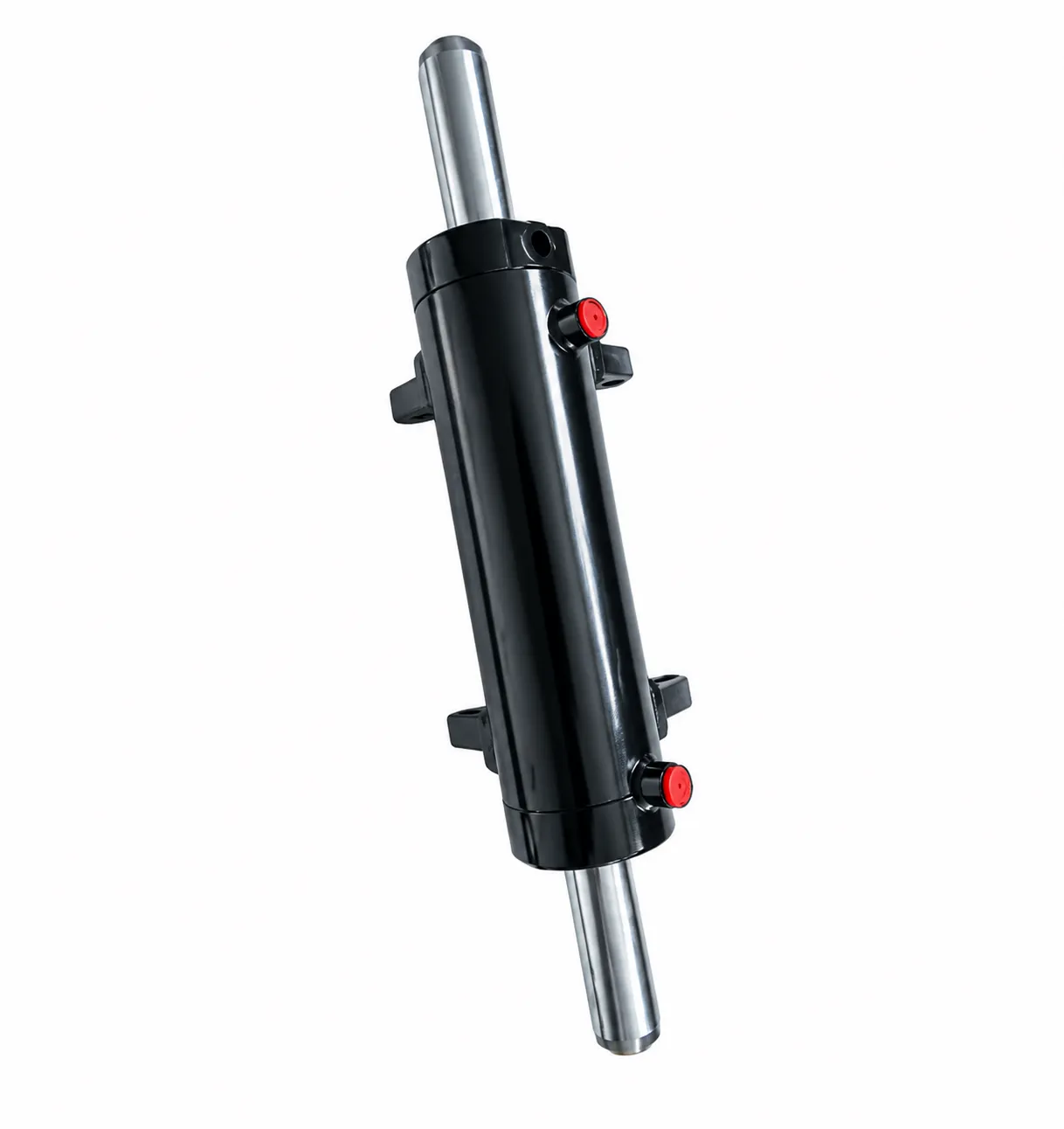
What a Steering Cylinder Actually Does Inside Your Machine
🔌
Hydraulic-to-Linear Conversion
A steering cylinder is a double-acting hydraulic actuator that receives pressurised fluid — typically from an orbital steering valve or electro-hydraulic control unit — and converts that pressure into a controlled push-pull force across its piston rod. In an articulated tractor, extending one side of the cylinder while retracting the other pivots the front and rear chassis sections relative to each other. In a conventional front-axle machine, the cylinder pushes a track-rod or tie-rod end, which in turn moves the wheel spindle through the required steering angle. The force involved can be several tonnes on large self-propelled machinery, demanding cylinder designs with thick-walled barrels, hardened rods, and high-integrity sealing systems that hold their geometry under continuous dynamic loading across tens of thousands of steering cycles each season.
⚙️
System Integration Context
A steering cylinder does not operate in isolation. It forms the mechanical output stage of a complete hydraulic steering circuit that includes a priority valve, a load-sensing steering control unit, return line filtration, and an accumulator in systems requiring emergency steering hold. The cylinder’s bore area and stroke length directly determine the system’s volumetric demand per degree of steering angle, which affects how quickly the steering valve must flow fluid to meet the operator’s input. An undersized cylinder may respond sharply but lack force under heavy draught loads; an oversized unit may feel sluggish or demand more pump flow than the system can sustain at low engine speeds. Matching cylinder geometry to system pressure, pump flow rating, and required lock-to-lock time is fundamental engineering discipline that separates a well-specified machine from one that generates constant maintenance calls during harvest.
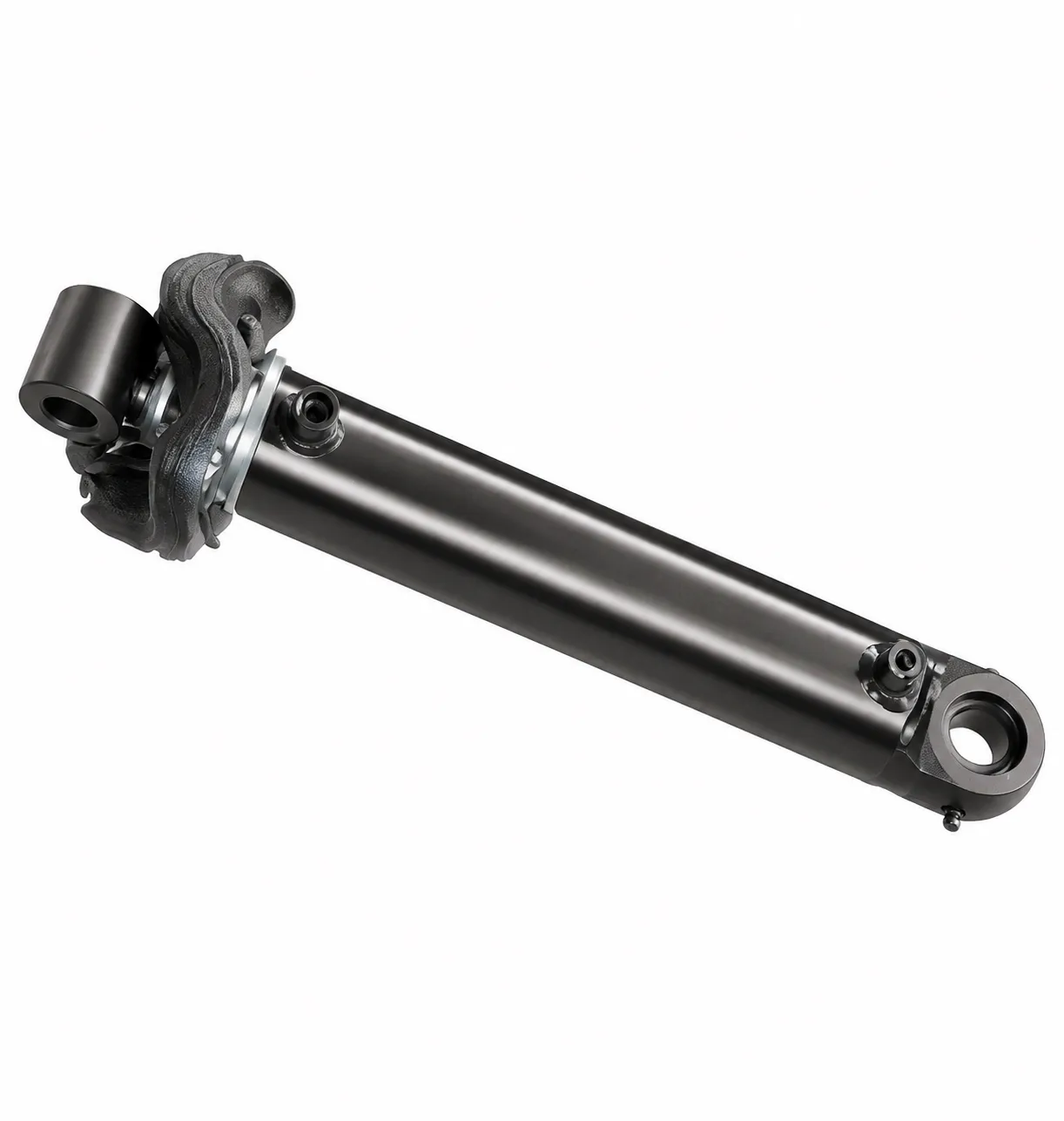
Ever Power Steering Cylinder — internal precision engineering for agricultural OEM applications
Working Principle: How Hydraulic Force Becomes Precise Directional Control
📈
Pressure Differential Actuation
When the operator turns the steering wheel, the steering control unit meters high-pressure fluid from the priority circuit into one port of the cylinder while simultaneously allowing low-pressure return from the opposite port to drain back to tank. The pressure differential acting across the effective piston area generates a net force in the required direction. On a 70 mm bore cylinder operating at 210 bar (3,045 psi), the theoretical thrust force on the full-bore side reaches approximately 8,080 N — sufficient to pivot a laden front axle without detectable lag. The rod side, with its reduced effective area due to the rod cross-section, produces a proportionally lower retraction force, a factor that must be considered when specifying cylinders for asymmetric load applications such as side-slope operation on hillside farms in the Yorkshire Dales or Welsh Borders.
🔄
Seal Dynamics Under Load Cycling
Every steering input puts the rod seal into dynamic sliding contact with the chrome-plated rod surface. A quality steering cylinder seal set — typically comprising a polyurethane rod wiper, a PTFE-loaded lip seal, and a quad-ring piston seal — must maintain near-zero leakage across tens of millions of reciprocation cycles while tolerating fluid contamination, thermal excursions from minus 20°C in winter fieldwork to 90°C in summer hydraulic circuits, and radial side-loads generated by off-axis bracket geometry. The wiper lip performs an equally critical function, scraping soil particles, crop debris, and moisture film from the rod surface on every retraction stroke. Without a high-quality wiper seal, abrasive contamination migrates past the lip seal, scores the rod, and causes accelerating internal leakage that progressively degrades steering precision until the cylinder requires complete rebuild or replacement.
🎯
End-Cushion Deceleration
Most agricultural steering cylinders incorporate end-cushion geometry — a tapered spear on the piston that enters a metered orifice near the end cap during the final portion of the stroke. This arrangement progressively throttles return flow as the piston approaches its mechanical limit, decelerating the assembly smoothly and eliminating metal-to-metal impact that would otherwise fatigue the piston-rod joint, crack end-cap welds, and shock-load the king-pin or articulation pivot it is driving. In high-cycle applications such as GPS-guided precision farming where the steering system corrects continuously at small amplitudes, well-designed cushioning extends cylinder service life by preventing the micro-impact fatigue that accumulates rapidly in uncushioned designs across a full cultivation season spanning hundreds of operating hours.
Core Materials: Why Metallurgy Determines Long-Term Field Reliability
A steering cylinder that fails prematurely on a 500-hectare arable farm in Cambridgeshire during harvest can cost the operator many thousands of pounds in downtime and lost throughput — far exceeding the original cost of the component. Material selection is the single biggest driver of in-service longevity, and understanding what separates a robust agricultural cylinder from a commodity item helps procurement engineers make decisions that hold up season after season across the challenging UK operating environment.
⚌ Cylinder Barrel
Cold-drawn seamless steel tube, typically 20# or 45# carbon steel, honed to Ra 0.4 µm surface finish. The seamless construction eliminates weld-seam stress concentrations that could initiate fatigue cracks under cyclic pressure loading. Hard chrome plating on the bore inner surface is standard in premium agricultural grades, providing both corrosion resistance and the smooth sliding interface that the piston seal requires for consistent low-friction movement across the full operational temperature range encountered in British field conditions.
🔧 Piston Rod
Alloy steel bar (40Cr or 42CrMo) induction-hardened to 55–62 HRC surface hardness, then hard chrome plated to a depth of 20–30 µm and ground to tight dimensional tolerances. The chrome plating serves a dual purpose: it protects the steel substrate from moisture and chemical corrosion from fertiliser and crop-protection product residues common in UK arable environments, and it provides the ultra-smooth surface finish on which the rod wiper and lip seal glide throughout millions of operating cycles without generating the stick-slip friction that manifests as steering judder or pull in precision guidance systems.
👨🔧 End Caps & Gland
Ductile iron (GGG50 or QT600) or high-tensile steel forgings, fully machined to tolerance and fitted with O-ring face-seal (ORFS) or BSP/NPT port connections depending on UK machine circuit requirements. Ductile iron end caps offer an excellent combination of strength, machinability, and resistance to the fatigue cracking that can propagate from port threads under pressure cycling. The gland nut, through which the rod exits the cylinder, is designed with sufficient thread engagement to resist separation under peak side-load events without creep or thread galling.
🔥 Seal Compounds
Agricultural-grade seal kits combine polyurethane (PU) rod wipers for their outstanding abrasion resistance against crop debris, NBR (Nitrile) piston seals for compatibility with mineral hydraulic oils, and PTFE-filled guide rings to prevent metal-to-metal contact between the piston and bore wall. Where machines use bio-hydraulic fluid — increasingly common on UK estates with environmentally sensitive operated areas near watercourses — EPDM-compatible seal sets are specified, ensuring that swelling and hardening are kept within acceptable limits across the full -20°C to +100°C service temperature range.
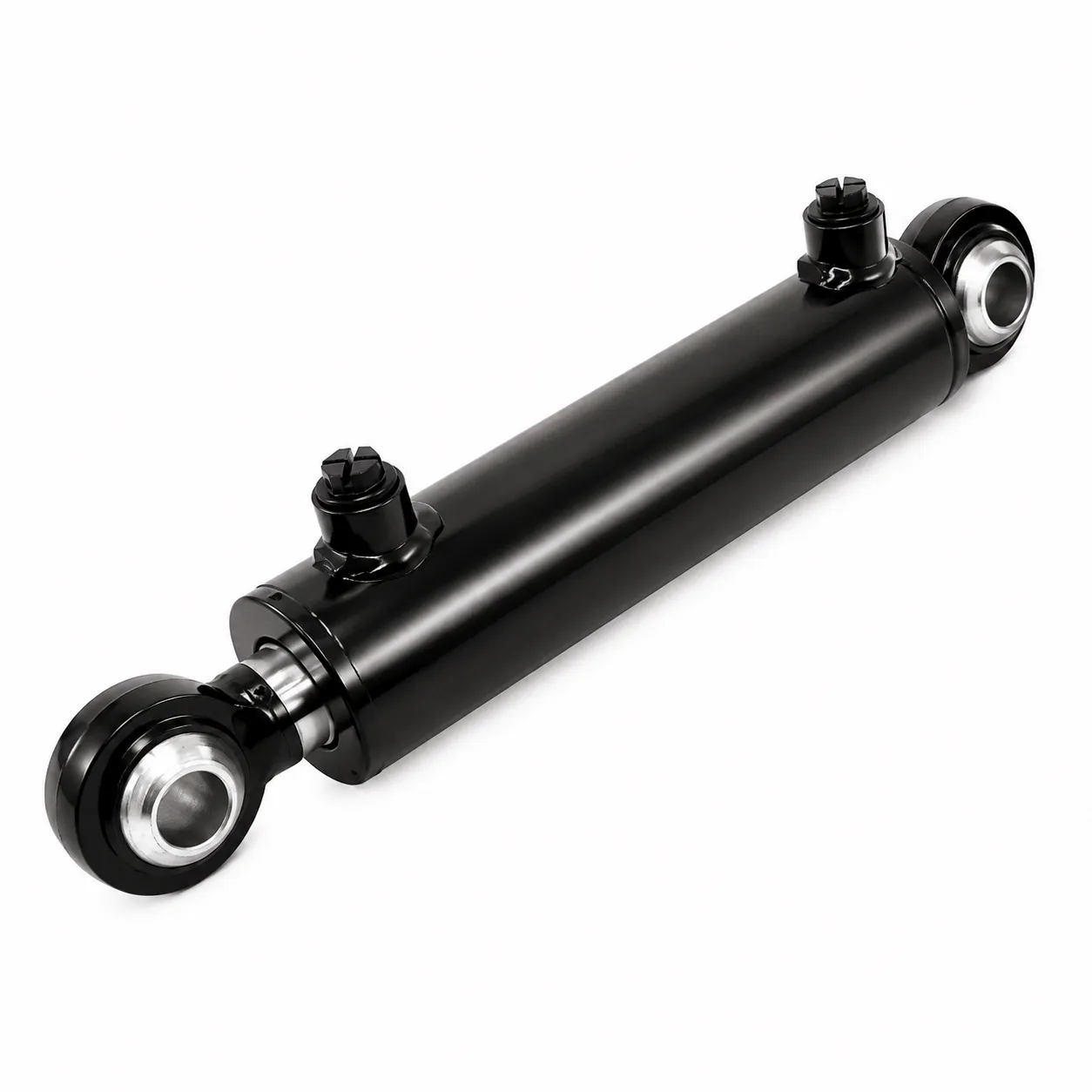
Ever Power precision manufacturing — agricultural steering cylinder in final quality inspection
Six Core Technical Advantages That Separate a Professional Steering Cylinder
01 — Zero-Drift Holding Under Load
Premium agricultural steering cylinders achieve internal leakage rates below 0.5 cc/min at maximum rated pressure, ensuring that a machine parked on a slope holds its steering geometry without the gradual angular drift that forces operators to constantly correct heading. This characteristic is especially important in UK hillside farming regions such as the Cotswolds, Lake District fringe, and the hilly terrain of the Welsh Marches, where machines routinely operate on gradients exceeding 10 degrees and manual corrections to compensate for steering drift increase operator fatigue substantially over a long shift.
02 — Wide Bore and Stroke Range
A comprehensive range of bore diameters from 40 mm through to 160 mm, with strokes from 100 mm to 1,200 mm, means that a single specification family can address applications from compact vineyard tractors to 450 hp flagship combine harvesters. This breadth also supports multi-platform OEM supply contracts — a significant advantage for UK manufacturers of specialist agricultural equipment who need a single, trusted cylinder supplier capable of covering their entire product portfolio without compromising on technical performance at either the light or heavy end of their range.
03 — High-Pressure Rating
Rated operating pressures to 350 bar (5,075 psi) with proof-test at 1.5x allow the cylinder to absorb transient pressure spikes generated by load-sensing pump systems without permanent deformation or seal extrusion. As agricultural machinery continues its trend toward higher system pressures to reduce cylinder size and weight while maintaining force output, having a cylinder designed and validated for elevated pressure from the outset avoids the costly field failures that occur when lower-rated cylinders are pushed beyond their nominal limits during demanding cultivation or loading operations.
04 — Precision GNSS Compatibility
GPS and RTK-guided precision farming systems demand steering cylinders with very low static friction (breakout force), a short null band, and exceptional linearity of response through the mid-stroke range. Cylinders engineered for precision guidance are typically fitted with low-friction PTFE-composite seal sets and tested for hydraulic hysteresis to confirm that bidirectional actuation produces symmetric positional repeatability within ±0.5 mm. This performance characteristic allows guidance controllers to achieve the sub-centimetre cross-track error that modern UK arable farmers rely upon for accurate tramline management and input optimisation.
05 — Corrosion & Chemical Resistance
Exterior surfaces receive zinc-phosphate pre-treatment followed by two-coat epoxy primer plus polyurethane topcoat, achieving 500-hour salt-spray resistance to ISO 9227. This is critical for UK agricultural machinery that operates through autumn and winter months when fields are dressed with ammonium nitrate, slurry, or road-spread de-icing salt contamination leaches into hedgerow working areas. Optional stainless steel rod variants are available for highly corrosive environments such as coastal farmland on the Lincolnshire Fens or North Norfolk coast where saline ground conditions accelerate external degradation of standard chrome-plated components.
06 — Drop-In OEM Compatibility
Mounting interfaces — clevis eyes, trunnion brackets, spherical rod-end bearings — are machined to OEM dimensional tolerances so that replacement cylinders fit existing pin bores, bracket faces, and port connections without modification. This is a practical necessity for UK agricultural machinery dealers and main dealers who stock service parts for multiple brands: a cylinder that slots directly into a John Deere, AGCO, or CNH bracket geometry with no adaptor or rework slashes workshop labour cost, reduces downtime during busy seasonal service periods, and eliminates the liability risk associated with field-modified hydraulic connections.
Product Technical & Performance Parameter Table
The following specifications represent Ever Power’s standard agricultural steering cylinder range. Custom configurations — including non-standard bore/stroke combinations, alternative port standards, and special coating systems — are available on application. All parameters comply with ISO 6020/1 and ISO 6022 hydraulic cylinder standards.
Application Scenarios: Where the Right Steering Cylinder Makes All the Difference
Agricultural machinery operates across an extraordinary range of terrains, machine configurations, and duty cycles. The following application scenarios illustrate how steering cylinder selection criteria shift depending on the machine type and operating environment — with particular relevance for the UK agricultural sector.
Application Scenario: Row-Crop & Arable Tractors in the East Midlands and Lincolnshire
Row-crop tractors working the intensively farmed arable belt stretching from Nottinghamshire through Lincolnshire and into East Yorkshire represent one of the most demanding applications for steering cylinders in the UK. Soil conditions vary from heavy boulder clay to light sandy loam, and cultivating or spraying operations demand continuous steering correction across fields that may stretch 500 metres or more without turning. The steering cylinder must maintain low breakout force and consistent mid-stroke response to support precision GPS guidance accuracy, while simultaneously resisting the heavy side-loads generated when articulated tractors are pulling deep-tillage implements through compacted headlands. A bore diameter in the 60–80 mm range with BSP ports, a 400–600 mm stroke, and PTFE-composite seals for low-friction guidance response represents the typical specification for this demanding application environment.
Application Scenario: Forklift Steering Cylinder Applications in UK Distribution Centres
Industrial forklifts and agricultural-logistics handling equipment used in large grain stores, potato packing operations, and vegetable distribution facilities across the UK Midlands — including the substantial logistics hubs around Coventry, Rugby, and Leicester — place very specific demands on steering cylinders. These machines operate on smooth concrete floors rather than unprepared ground, but the duty cycle is relentless: hundreds of steering inputs per shift, often at near-lock-stop positions that maximise side-loading on the cylinder rod and bushes. The cylinder must have an exceptional rod wiper seal to exclude the fine dust generated in dry grain stores, and the rod surface finish must meet the tightest tolerances to prevent wiper lip damage from micro-scale contamination. Compact stroke lengths of 100–250 mm with small bore diameters of 40–60 mm and high cycle life ratings are the primary selection criteria for this logistics-sector application.
Application Scenario: Forklift Tilt Cylinder Integration on Agricultural Handlers
Telescopic handlers and rough-terrain forklifts used on UK farms for silage clamp management, bale handling, and building material movement frequently integrate tilt cylinder systems alongside the main steering cylinder. In these machines — particularly the heavy-duty units operated on large livestock farms across Yorkshire, Cumbria, and Cheshire — the cylinder must resist substantial off-axis loading generated as the boom extends at full height with a payload off-centre. Specifying a cylinder with an integrated spherical rod end bearing rather than a plain pin eye is essential in this application to absorb angular misalignment without creating bending moments in the rod that would accelerate seal wear and reduce overall structural life. Bore sizes typically range from 80–120 mm with working pressures of 200–250 bar for the heavier handler categories.
Application Scenario: Self-Propelled Sprayers in the Fens and Vale of York
High-clearance self-propelled crop-protection sprayers working the intensive vegetable and cereal production areas of the Fens and the wide open fieldscapes of the Vale of York are among the most demanding platforms for steering cylinder performance in UK agriculture. Operating at road speeds of up to 30 km/h between fields, these 30-plus metre boom machines rely on four-wheel steering or rear-axle crab-steering systems that use dedicated cylinders for each wheel group. The steering cylinders on these machines must respond rapidly to load-sensing pressure commands from the CAN-bus-controlled electro-hydraulic valve block, maintaining symmetrical extension and retraction velocity within tight tolerances to prevent the machine from crabbing. Agricultural-grade cylinders validated for load-sensing compatibility, with matched pair testing for hydraulic symmetry, are essential rather than optional in this precision-critical, high-value crop environment.
Application Scenario: Combine Harvesters and Headers in Yorkshire Grain Country
The large combine harvesters that cut through the wheat and barley fields of East Yorkshire and the North Lincolnshire Wolds every August carry steering cylinders that must combine raw force with exceptional reliability during the compressed harvest window. These machines cannot afford hydraulic failures during peak throughput, and the steering cylinder operates continuously through long 16-hour shifts in dust-laden, high-vibration conditions. The cylinder specification for this application typically demands an extended-life seal kit with enhanced wiper lip geometry, a hard chrome rod plated to the upper end of the standard thickness range for maximum wear allowance, and positive rod-end locking to prevent the hydraulic shock transmitted through the front axle during header rock events from loosening end-cap connections. Bore diameters of 90–110 mm with 500–700 mm strokes at 210–250 bar characterise this demanding seasonal application, and long-term supply agreements with guaranteed delivery schedules before harvest are a priority for UK machinery dealers servicing this market.
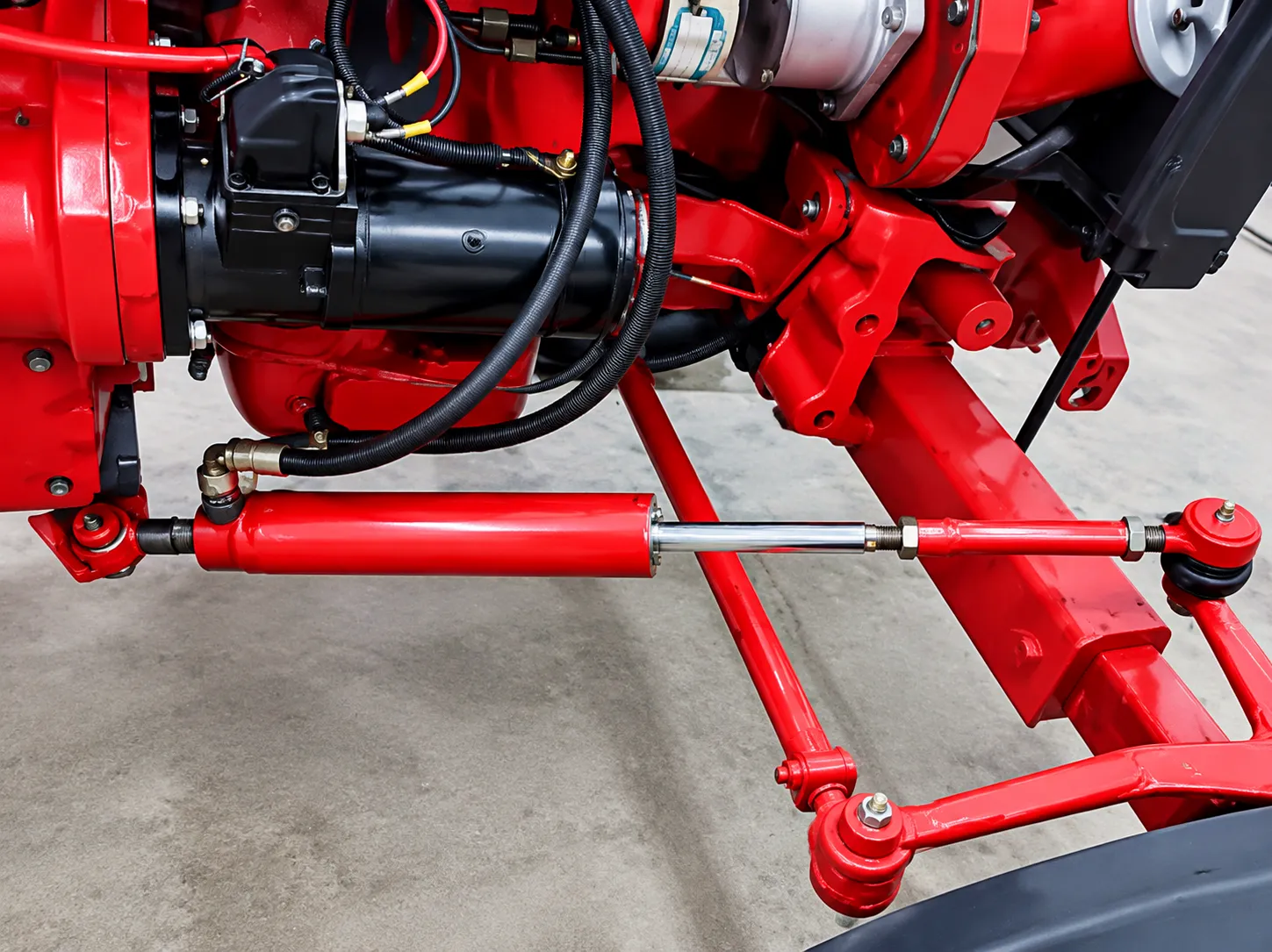
Ever Power agricultural steering cylinders — built for the full spectrum of UK farm machinery applications
Ever Power: Precision Manufacturing & Deep Customisation for UK Agricultural OEMs
Ever Power operates a vertically integrated hydraulic cylinder manufacturing facility equipped with CNC deep-hole boring centres, automated honing lines, robotic welding stations, and a dedicated testing bay that subjects every steering cylinder to full-rated pressure test cycles before despatch. Our manufacturing footprint spans over 28,000 m² of production and quality-control space, with an annual output capacity exceeding 600,000 hydraulic cylinders across all product families. For UK agricultural OEM customers and system integrators, this scale translates directly into the supply chain certainty that tight seasonal delivery schedules demand.
⚙ Custom Engineering
Ever Power’s engineering team works directly from customer CAD drawings or field measurements to develop steering cylinder designs that match OEM bracket geometry, port locations, and performance targets exactly. Non-standard bore/stroke combinations, multi-stage telescopic configurations, and integrated displacement transducer (LVDT) housings for closed-loop electrohydraulic control are all within our standard engineering capability. Lead time for fully custom prototype cylinders is typically 15–20 working days from drawing approval.
📊 Quality Assurance
Every production batch undergoes dimensional verification using coordinate measuring machines (CMM), rod surface roughness testing with profilometry, chrome layer adhesion testing to ISO 1519, and burst-pressure testing at 2x rated working pressure with full test certificates available for ISO 9001-audited supply chains. Ever Power holds ISO 9001:2015 certification, and our documentation package for UK OEM customers includes full material traceability certificates, third-party seal compound test reports, and coatings adhesion data sheets — everything needed to support CE marking and UKCA compliance documentation.
🚚 UK Supply Chain
Ever Power ships to UK ports via sea freight through Felixstowe and Southampton with pre-cleared customs documentation as standard, or via air freight through East Midlands Airport for urgent orders. UK-based account management with dedicated technical support, stocking agreements for high-volume lines, and consignment stock arrangements for large OEM partners mean that Ever Power functions as a seamlessly integrated supply chain partner rather than a distant commodity supplier. Our export compliance team handles all UKCA and customs tariff classification, minimising administrative burden for UK procurement teams.
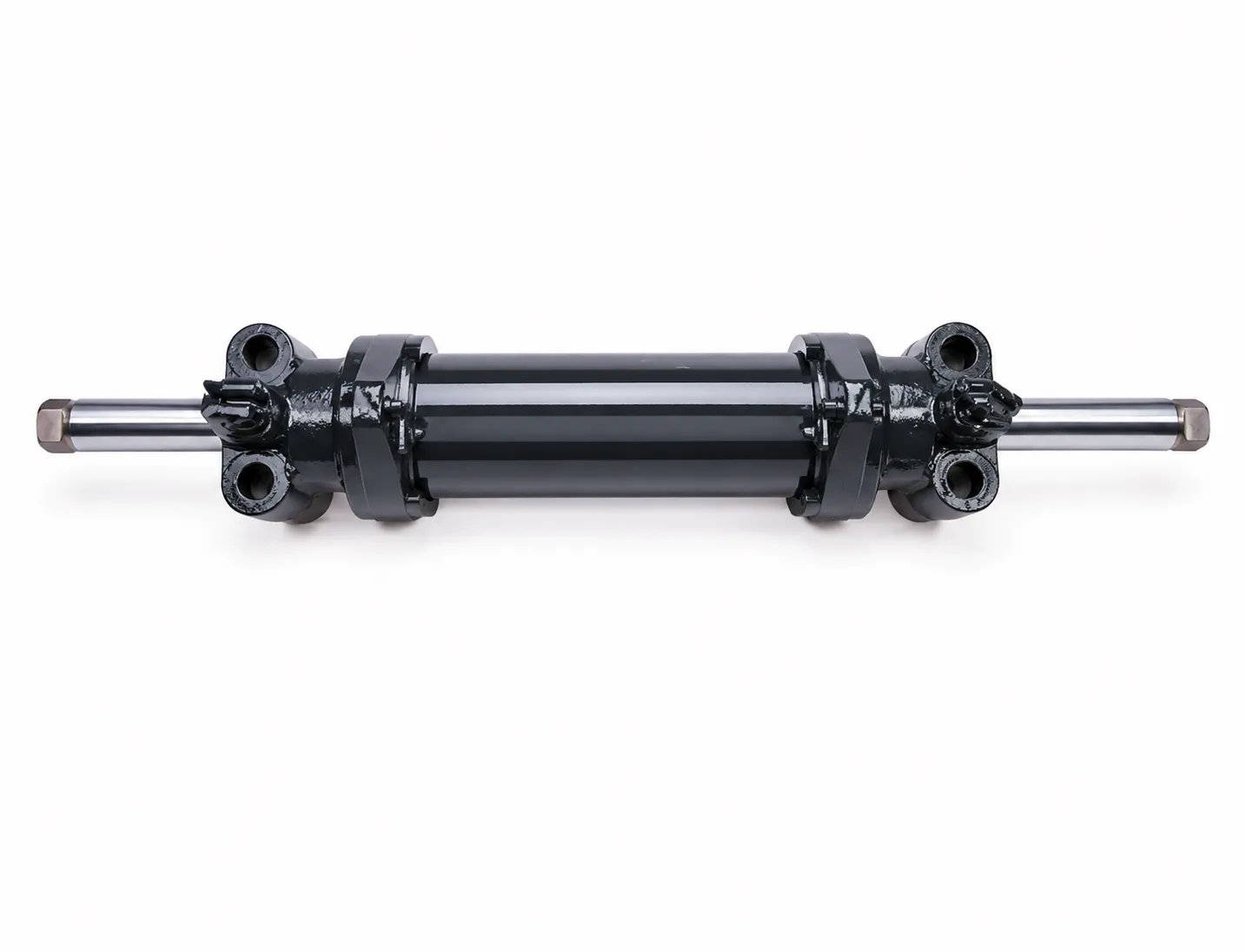
Ever Power ISO 9001:2015 certified manufacturing — full-pressure test cycle on every agricultural steering cylinder
Customer Success: Sheffield Agricultural Machinery Specialist Transforms Warranty Performance
🏔 Thornfield Agri-Machinery, Sheffield, South Yorkshire
Thornfield Agri-Machinery is a specialist agricultural equipment manufacturer based in the Lower Don Valley industrial corridor of Sheffield, producing a range of purpose-built slurry tankers, rear-discharge spreaders, and multi-axle trail units for the intensive livestock farming sector across the Peak District fringe, Derbyshire Dales, and North Nottinghamshire. When Thornfield introduced a new generation of GPS-guided trailing slurry applicators in early 2023, they faced an immediate challenge: the steering cylinders sourced from their then-current European supplier were generating warranty claims at a rate of approximately 12% within the first 500 operating hours, primarily from rod seal failure attributed to inadequate wiper seal performance in the high-organic-matter slurry environment. The field failures were damaging Thornfield’s reputation with their dealer network across Yorkshire and the East Midlands, and the warranty cost was directly eroding margin on the new product line.
Thornfield’s engineering director contacted Ever Power through a referral from a Coventry-based hydraulic distributor. After a detailed technical review involving site visits to operating machines and analysis of the failed seal kits, Ever Power’s engineering team identified that the slurry environment was introducing a combination of abrasive silica particles and organic acid compounds that were causing accelerated degradation of the standard polyurethane wiper. Ever Power proposed a dual-wiper gland design with an outer PTFE-bronze composite lip for abrasion resistance and an inner FKM (Viton) sealing lip for chemical resistance to the organic acids in processed slurry, combined with a longer rod chrome layer of 35 µm to provide additional wear allowance before the substrate was exposed.
A batch of 40 prototype cylinders was delivered to Thornfield via air freight through East Midlands Airport within 18 working days of drawing sign-off. Following 800 hours of field trials across two full spreading seasons in conditions ranging from dry summer fieldwork to waterlogged November applications, the dual-wiper design recorded zero seal failures. Thornfield subsequently transferred the entire steering cylinder supply for the slurry applicator range to Ever Power, with a stocking agreement covering 200 units per year across three bore sizes. The warranty return rate on the GPS-guided applicator dropped to under 0.8%, and Thornfield’s dealer network across Yorkshire, Derbyshire, and Lincolnshire reported a marked improvement in customer satisfaction with the product’s long-term steering accuracy.
What UK Customers Say About Ever Power Steering Cylinders
★★★★★
“We’ve fitted Ever Power steering cylinders across our full applicator range now and the difference in seal longevity is night and day compared with what we were using before. The dual-wiper design handles our slurry environment better than anything else we’ve tested. When we needed a modified port arrangement for our latest model, their engineering team had revised drawings back to us within 48 hours. That’s the kind of responsive technical support that actually matters at production time.”
— James Thornton, Engineering Director, Thornfield Agri-Machinery, Sheffield
★★★★★
“We stock Ever Power cylinders for three different tractor brands in our dealership and the dimensional accuracy is consistent enough that we can cross-reference bore sizes without separate SKUs for every model. That simplification alone has meaningfully reduced our parts inventory cost. The technical data sheets are detailed enough to give our workshop team confidence when they’re speccing a replacement — we don’t have to call the factory to get the port thread standard or the rod diameter on an older unit.”
— Mark Grantham, Parts & Service Manager, Grantham Agricultural, Lincoln
★★★★★
“We specified Ever Power cylinders for the four-wheel steering system on our new precision sprayer prototype — the low-friction PTFE seal option gives us the breakout force characteristics that our control algorithm needs to maintain cross-track accuracy below 2.5 cm at field speeds. The matched-pair flow testing was a genuine differentiator; no other supplier we approached offered that as standard. The cylinders have now accumulated over 1,200 hours across our test fleet without a single seal replacement.”
— Rachel Birch, Lead Hydraulics Engineer, Horizon Precision Agriculture, Cambridge
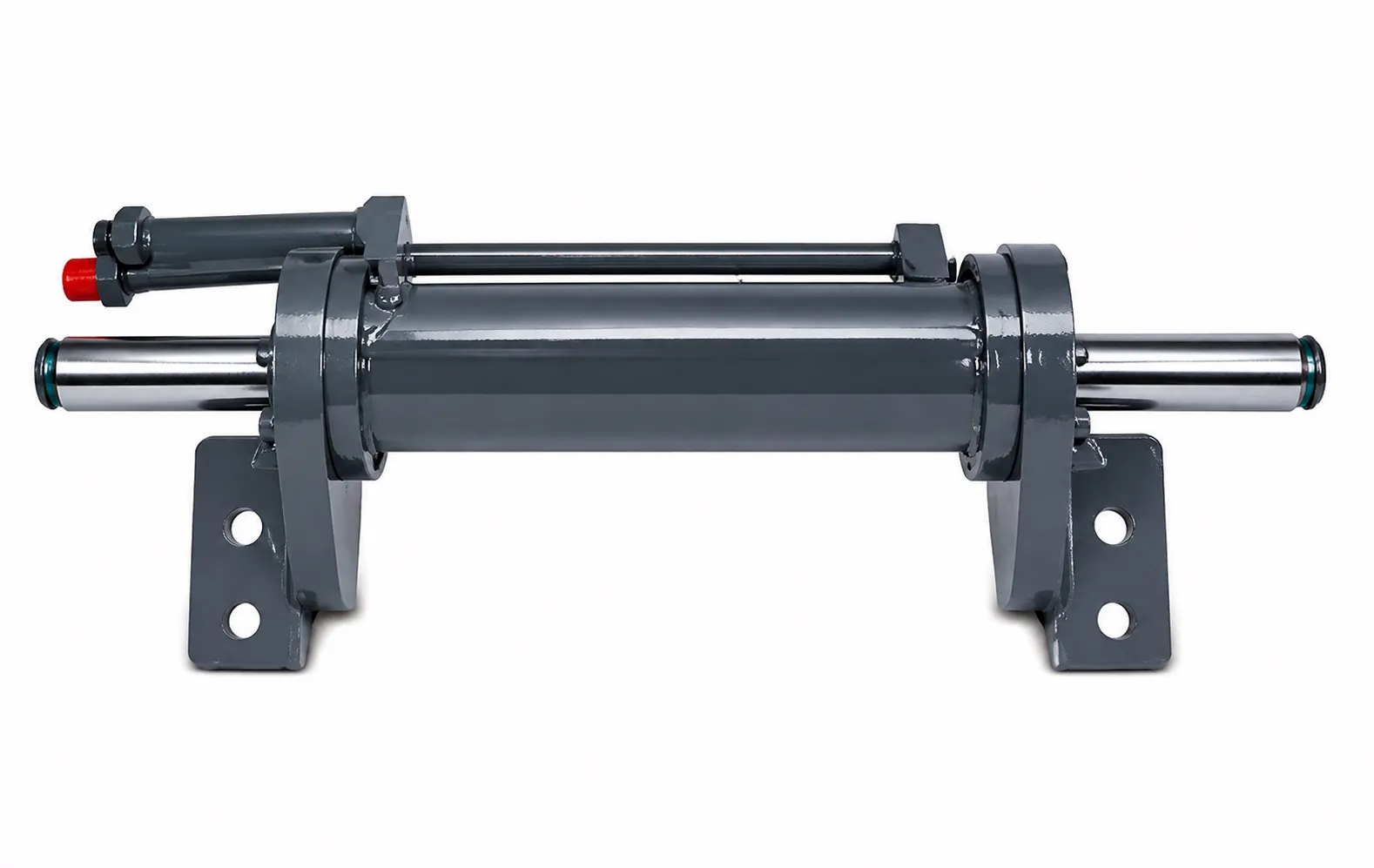
Ever Power full agricultural steering cylinder product range — standard and custom specifications available
Practical Selection Checklist: Eight Questions to Ask Before You Specify
When approaching a steering cylinder specification — whether as a replacement purchase or a new OEM design — working through these eight questions in sequence ensures that the selected cylinder matches the application demands precisely and avoids the costly mismatches that generate field failures.
Q1. What is the maximum operating pressure of the hydraulic circuit?
Cylinder working pressure must equal or exceed the relief valve setting in the steering circuit, with sufficient margin to absorb transient spikes generated during pump start-up and shock-load events. Never specify a cylinder whose nominal rating sits within 10% of the circuit relief valve setting — the relief valve is a safety device, not a design limit, and transient exceedances are a routine feature of mobile hydraulic systems in agricultural fieldwork.
Q2. What is the required steering force at the output linkage?
Calculate the worst-case steering force from the axle geometry — king-pin offset, trail, and steering arm length — multiplied by a dynamic load factor of 1.5 to 2.0 for rough terrain operation. Divide this by the available system pressure to determine minimum bore area. Add 15–20% engineering margin to the calculated bore to accommodate friction losses and ensure adequate force reserve under the most demanding operating conditions the machine will realistically encounter.
Q3. What is the required lock-to-lock steering time?
Lock-to-lock time determines the required flow rate at the steering valve output port, which in turn determines whether the existing priority valve and pump capacity can meet the demand. A shorter required steering time — common in high-speed precision farming or headland-management applications — demands either a smaller cylinder bore (reducing displacement per degree of steering) or a higher pump flow allocation to the steering circuit, with implications for the machine’s overall hydraulic system layout.
Q4. What contamination and chemical exposure will the cylinder face?
Match seal compound to the operating chemistry: mineral oil circuits use standard NBR/PU seals; bio-hydraulic fluids require EPDM or FKM compatibility; slurry, fertiliser, or crop-protection environments mandate enhanced wiper seal specification with PTFE-composite or dual-wiper gland designs. Always specify this before final order placement — retrofitting seal chemistry after cylinder manufacture is possible but adds lead time and cost that is entirely avoidable at specification stage.
Frequently Asked Questions
How do I know what size steering cylinder I need for my agricultural tractor operating in the UK? +
Sizing starts with the maximum steering force required at the front axle king-pin — typically calculated from your axle manufacturer’s data sheet or measured dynamically on a loaded machine. Divide the required force by your system’s available pressure (in N/mm²) to find the minimum piston area, then select the nearest standard bore size above that figure with a minimum 15% safety margin. For UK machines, also confirm that your port threads match BSP standards and that your stroke gives the required lock angle from your axle geometry. If you are uncertain, Ever Power’s technical team can assist with the calculation from your machine’s steering arm length and maximum turning radius data.
Where can I find a reliable steering cylinder supplier in the UK who can deliver quickly for harvest season repairs? +
Ever Power maintains a pre-season stock programme that allows UK dealers and fleet operators to pre-order common bore/stroke combinations before the harvest window. Air freight delivery from our manufacturing facility can deliver replacement cylinders to UK addresses within 4–7 working days for urgent requirements. For planned maintenance, sea freight orders placed with 6–8 weeks lead time arrive pre-cleared at Felixstowe or Southampton. Contact [email protected] with your machine make, model, and bore/stroke dimensions for a fast quote.
What is the typical price range and lead time for a custom-specified agricultural steering cylinder from a UK OEM supplier? +
Standard-range cylinders (40–100 mm bore, up to 600 mm stroke) are quoted per unit in volume brackets from 10 upwards, with pricing dependent on bore, material specification, and surface treatment. Custom-engineered cylinders with non-standard geometry or dual-wiper gland designs carry a tooling and engineering charge on the first order, amortised across the batch. Lead time for custom prototypes is typically 15–20 working days. Reach out to [email protected] with your technical requirements and annual volume forecast for a detailed quotation.
How long should a quality agricultural steering cylinder last on a high-use UK combine harvester before it needs replacing? +
With correct specification, clean hydraulic fluid maintained to ISO 4406 cleanliness class 16/14/11, and no mechanical damage to the rod surface, a premium agricultural steering cylinder should reach 5,000–10,000 operating hours before first seal replacement is required. On combine harvesters typically accumulating 300–600 hours per season, this equates to 10–20 seasons of service. Premature failure — within 500–2,000 hours — is almost always attributable to contamination ingress past a damaged or inadequate wiper seal, rod surface damage from crop debris impact, or hydraulic fluid cleanliness significantly below the recommended level.
Which steering cylinder type is best suited for GPS precision guidance systems on UK arable farms in Lincolnshire and Yorkshire? +
Precision guidance applications demand cylinders with PTFE-composite low-friction seal sets that minimise static breakout force to below 50 N, ensuring the electrohydraulic steering valve can make small corrective movements without triggering stick-slip behaviour that corrupts the guidance signal. Hydraulic hysteresis testing (bi-directional positional repeatability under identical pressure input) should be requested as a factory acceptance test for guidance-critical applications. Matched pair testing — where two cylinders destined for a four-wheel steering system are tested together for flow symmetry — is strongly recommended for self-propelled sprayer and precision planting applications where crabbing due to unmatched cylinder response is a known field problem.
What should I check when comparing steering cylinder quotes from different suppliers for my UK agricultural machinery fleet? +
Beyond unit price, compare: rod chrome layer thickness and hardness specifications (thicker is more durable); seal compound compatibility with your hydraulic fluid and operating environment; wiper seal design (single wiper vs dual wiper for contaminating environments); proof-test pressure and whether test certificates are provided; port thread standard (BSP for UK circuits); delivery terms including freight mode and customs documentation responsibility; and warranty period and territory coverage. A cylinder that costs 15% more per unit but includes dual-wiper seals, thicker chrome, and full test documentation will consistently deliver lower whole-life cost on a UK agricultural fleet than a nominally cheaper commodity alternative without these features.
Ready to Specify the Right Steering Cylinder for Your Machine?
Send your bore/stroke requirements, machine type, and annual volume to our technical sales team. Ever Power will respond with a detailed specification recommendation and competitive quotation within one working day.
edit by gzl | Ever Power Hydraulic Technology | [email protected]