Airport Ground Support Equipment
How Airport Ground Support Equipment Relies on Compact Steering Cylinders
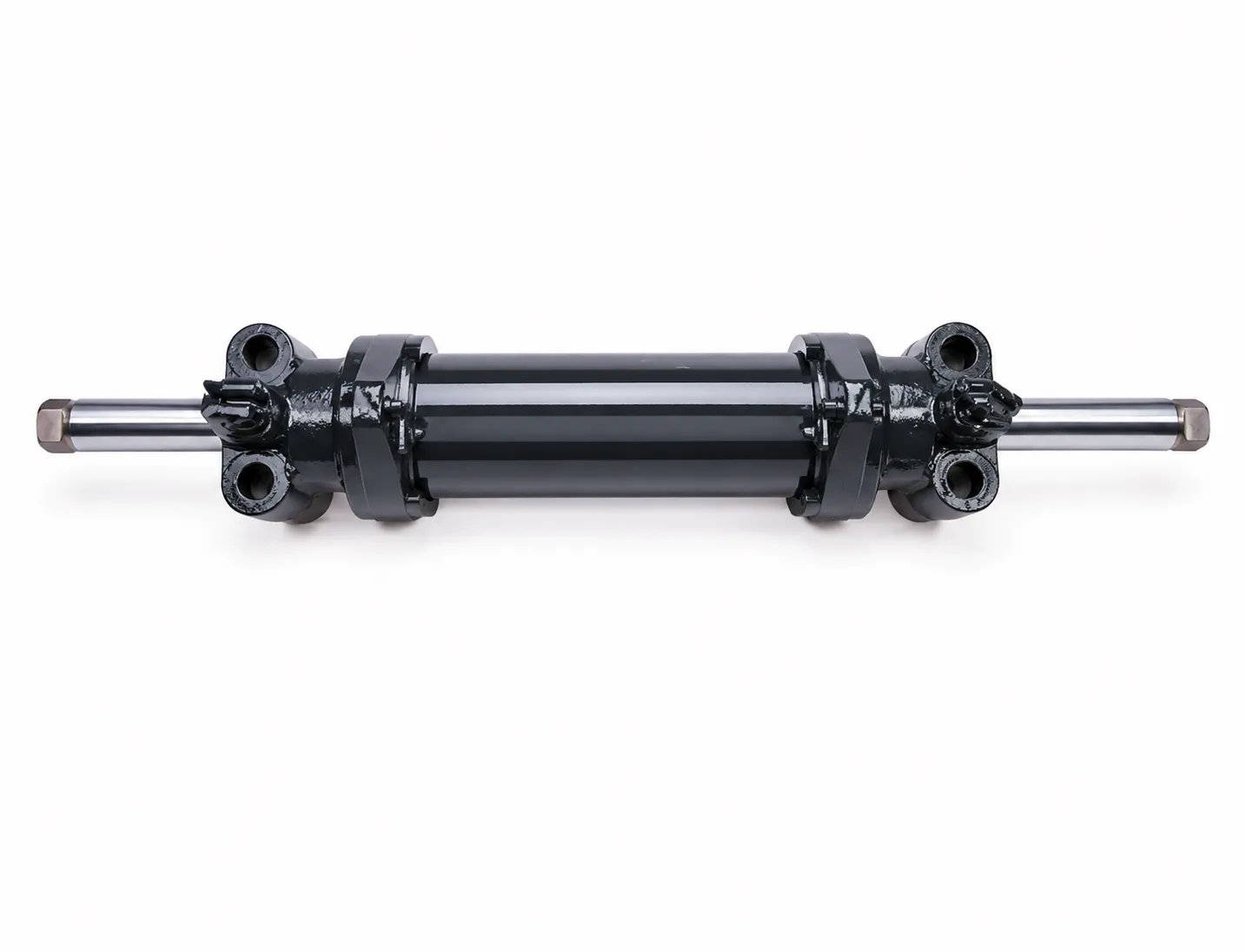
Behind every seamless aircraft turnaround at Heathrow, Manchester, or Gatwick lies a network of precision hydraulic components working under extreme load and time pressure. The compact steering cylinder is one of the least visible — and most mission-critical — of those components.
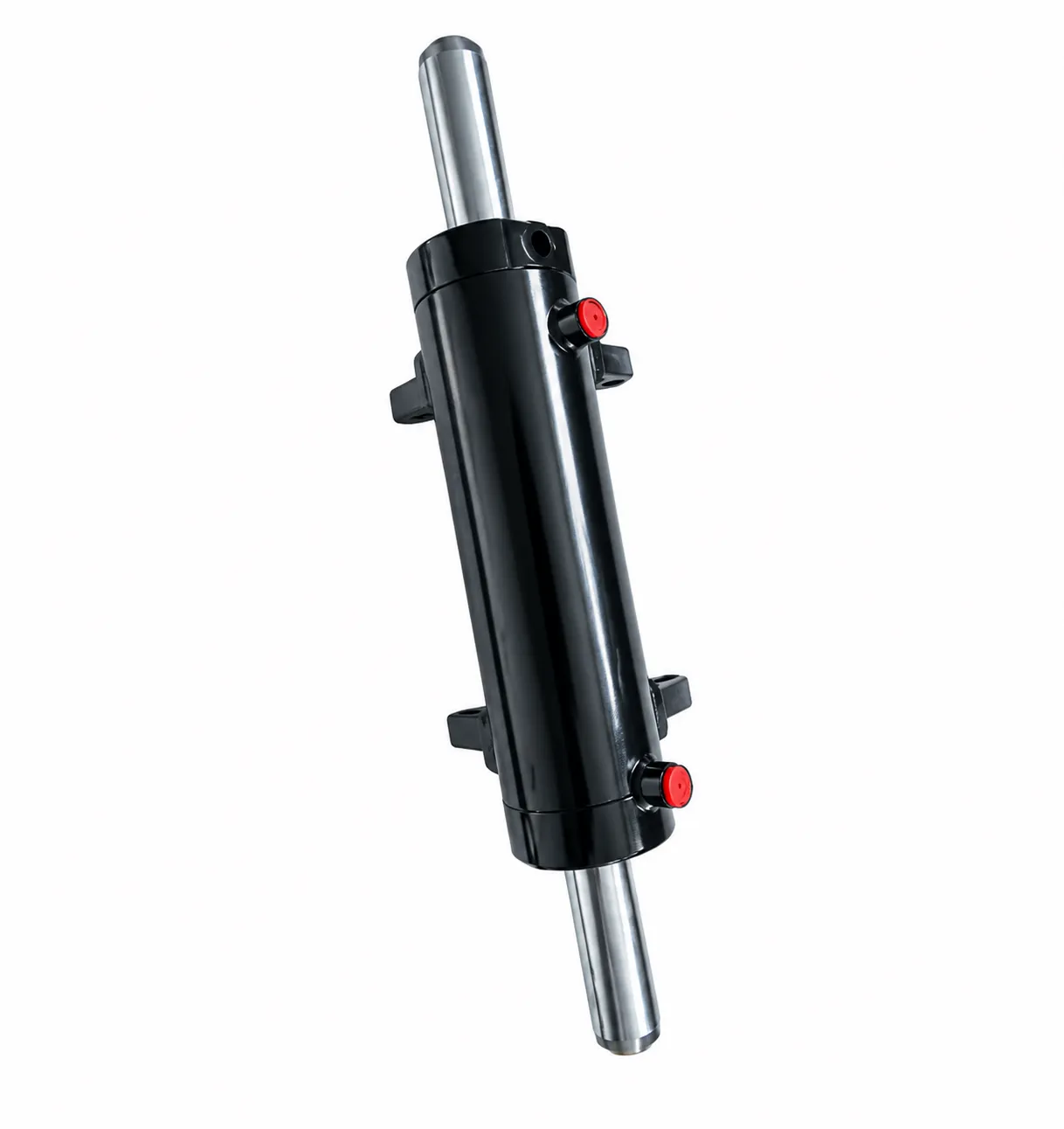
Ground support equipment — from aircraft tow tractors and baggage tugs to pushback vehicles and aircraft loaders — demands hydraulic steering systems that operate reliably in rain, jet-wash spray, and sub-zero winter conditions common across UK airports. A steering cylinder in this environment is not a commodity component. It is an engineered assembly precision-built to deliver repeatable directional force, absorb lateral shock, and survive tens of thousands of articulation cycles without seal degradation or rod corrosion. When a pushback tractor loses steering authority on an active apron, the consequences extend well beyond a delayed departure — they affect aircraft safety, fuel economics, and terminal operations simultaneously. The engineering decisions that go into a compact steering cylinder directly determine whether an airline’s ground fleet stays productive through a full winter rotation.
How a Compact Steering Cylinder Actually Works Inside GSE
⚙️
Double-Acting Hydraulic Circuit
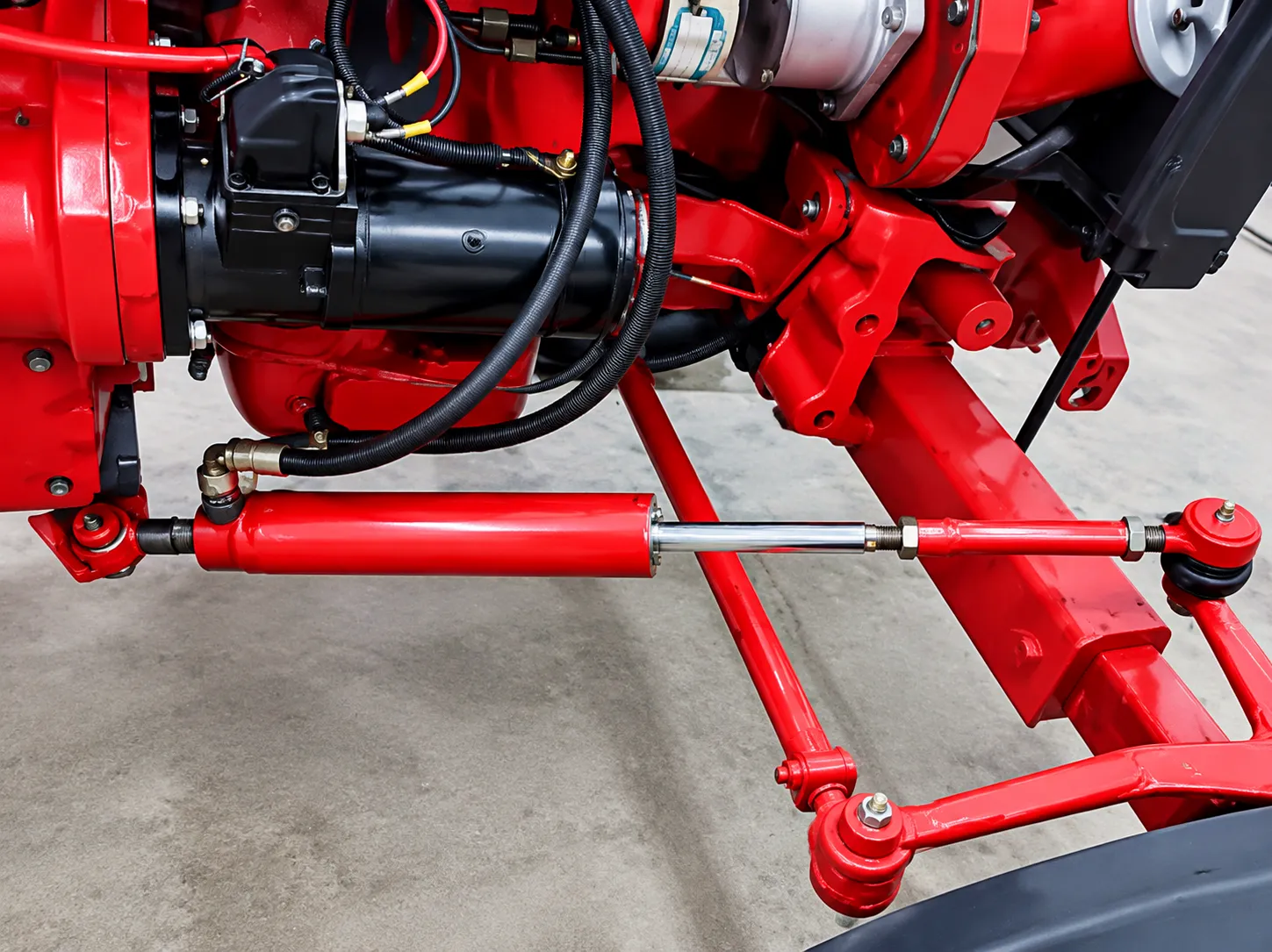
A compact steering cylinder used in aircraft tow tractors operates on the double-acting principle. Pressurised hydraulic fluid is directed into either the cap-end or rod-end chamber by a proportional directional control valve. The pressure differential across the piston generates a controlled linear force that pushes or pulls the steering arm. In GSE applications, this force is translated through a pitman arm or tie-rod assembly into angular movement of the drive axle, achieving precise steering angles — typically between 35° and 90° depending on the vehicle class. The key engineering advantage of the double-acting configuration is that the cylinder provides positive hydraulic pressure in both directions of travel, eliminating the unpredictable mechanical drift that occurs in spring-return systems when a tug is manoeuvring in tight apron spaces. Flow rate and valve overlap characteristics determine how smoothly the steering responds to driver input, and this is where precision bore tolerancing becomes commercially significant.
🔩
Seal System and Pressure Retention
The internal seal stack is the component that determines long-term field reliability. In a high-cycle GSE steering cylinder, the rod seal, wiper seal, and piston seal must collectively maintain pressure integrity across thousands of articulation cycles, temperature swings from -15°C during UK winter night shifts to +45°C during summer tarmac operations, and contamination exposure from de-icing fluid, jet fuel residue, and hydraulic oil degradation products. Multi-lip PTFE-composite rod seals are the industry standard for airport GSE because they combine low break-out friction — which ensures smooth steering feel at low hydraulic pressure — with excellent chemical resistance to Skydrol and mineral-oil hydraulic fluids used interchangeably across European airport fleets. The wiper seal removes surface contamination from the rod before it can migrate inward, protecting the primary rod seal from accelerated wear caused by grit or saline residue left over from winter runway treatment chemicals common at airports like Leeds Bradford and Edinburgh.
Core Materials That Define Service Life in Demanding Airport Environments
🔵
Chrome-Plated Steel Rod
45# or 40Cr steel base, hard-chromed to 0.02–0.06 mm depth, Ra ≤ 0.2 µm surface finish. Resists corrosion in saline de-icing atmospheres and maintains dimensional accuracy under bending loads.
🟠
Precision-Honed Cylinder Barrel
ST52-3 seamless cold-drawn steel tube, honed to Ra ≤ 0.4 µm. The consistent bore geometry is critical for even piston seal contact pressure, which prevents internal bypass leakage that would cause steering drift under sustained load.
⚪
Forged Alloy End Caps
Forged from 35CrMo or equivalent high-tensile alloy steel. Forging rather than casting eliminates micro-porosity that could propagate into cracks under the cyclic loading generated by rough apron surfaces and vehicle vibration.
🟣
PTFE Composite Seals
Hallite or equivalent PTFE-glass fibre composite piston seal rings with polyurethane backup rings. Effective from -40°C to +120°C, compatible with mineral oil and phosphate ester hydraulic fluids, providing zero-leak static and dynamic sealing across the cylinder’s rated pressure envelope.
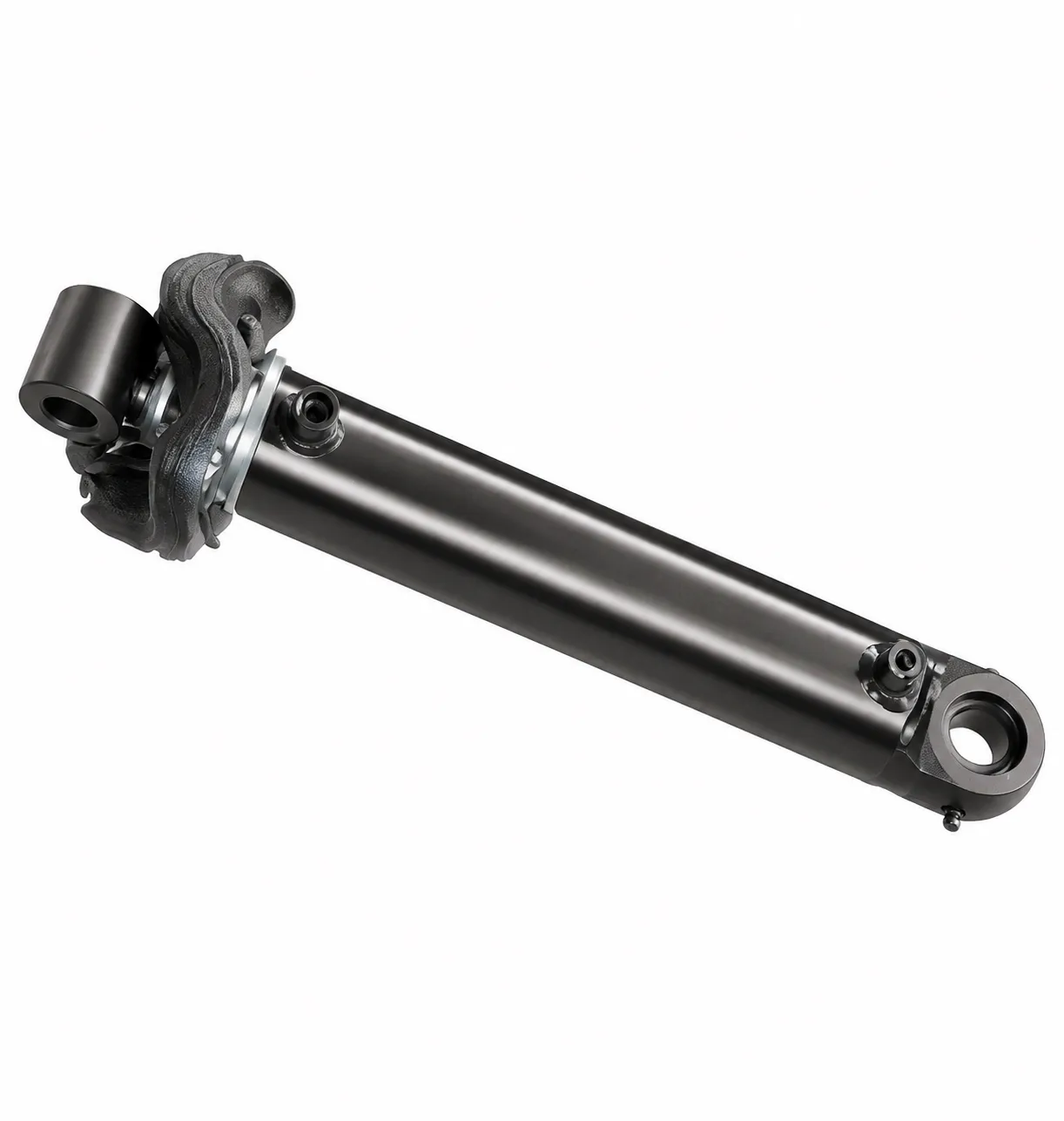
Surface treatment choices downstream of raw material selection are equally consequential. Zinc-nickel electroplating on cylinder bodies outperforms conventional zinc plating in salt-spray resistance — a requirement that appears explicitly in procurement specifications used by UK ground handling contractors like those operating at Birmingham Airport (BHX) and Manchester Airport (MAN). The growing preference for zinc-nickel on external cylinder surfaces has been driven partly by the corrosive nature of airport de-icing runoff, which concentrates in drainage channels near apron areas where GSE parks between shifts. A cylinder body that oxidises superficially within 18 months of deployment creates maintenance overhead that ground crews — who are already managing tight aircraft rotation schedules — cannot absorb efficiently. Proper material and coating selection is therefore a total-cost-of-ownership question, not merely a specification checkbox.
Product Advantages: Why Compact Steering Cylinders Outperform Alternatives in GSE
Compact steering cylinders deliver output forces in the 8 kN to 45 kN range from body diameters as small as 50 mm. This matters enormously in aircraft tow tractor designs where the axle steering envelope is confined by chassis frame rails and the wheel-cut geometry demanded by apron turning radii. Replacing an older rack-and-pinion mechanical steering arrangement with a direct-acting hydraulic cylinder reduces the component count, removes the source of steering lash that develops in worn pinion bearings, and allows engineers to increase steering force without enlarging the installation footprint. UK GSE OEMs supplying into Heathrow’s contracted vehicle refresh programme have adopted this configuration to meet current-generation turning circle requirements.
Self-Contained Cushioning
End-of-stroke cushioning valves built directly into the cylinder cap eliminate the hydraulic shock that occurs when a steering cylinder reaches full extension during a sharp-turn manoeuvre. Without integrated cushioning, that pressure spike propagates through the vehicle’s hydraulic circuit and can cause valve spool wear, hose ferrule fatigue, and uncomfortable jolting for the operator. The integrated cushion bore geometry — typically a tapered needle valve that progressively throttles oil return flow in the last 8–20 mm of stroke — slows piston deceleration smoothly without requiring external flow control valves in the circuit. This reduces total circuit component count and eliminates potential external leak points at fittings.
Rapid-Connect Port Configuration
Hydraulic port placement on compact steering cylinders for GSE is designed around serviceability under time pressure. Side-ported configurations with BSP or SAE straight-thread O-ring ports allow hose connections that route cleanly away from suspension components, reducing the risk of abrasion damage during vehicle operation. The BSP thread form — the standard for UK industrial hydraulics — ensures direct compatibility with existing hydraulic hose assemblies used by UK GSE maintenance teams, avoiding the need for adapter fittings that introduce additional potential leak paths. Port plugs are specified to the same thread standard, simplifying field replacement procedures when cylinders are swapped during scheduled maintenance windows.
Low-Temperature Operability
Standard steering cylinders specified for temperate markets often use polyurethane rod seals that harden significantly below -10°C, leading to elevated break-out force that makes steering sluggish immediately after cold start. Cylinders designed explicitly for northern European airport operations use low-temperature polyurethane or PTFE composite seals rated to -40°C, ensuring seal elasticity and pressure retention are maintained throughout winter night-shift operations at airports like Aberdeen International, where overnight ground temperatures can fall well below -15°C. This cold-start sealing performance is not a premium optional feature for the UK market — it is a baseline operational requirement that should be confirmed in writing before any procurement decision is made.
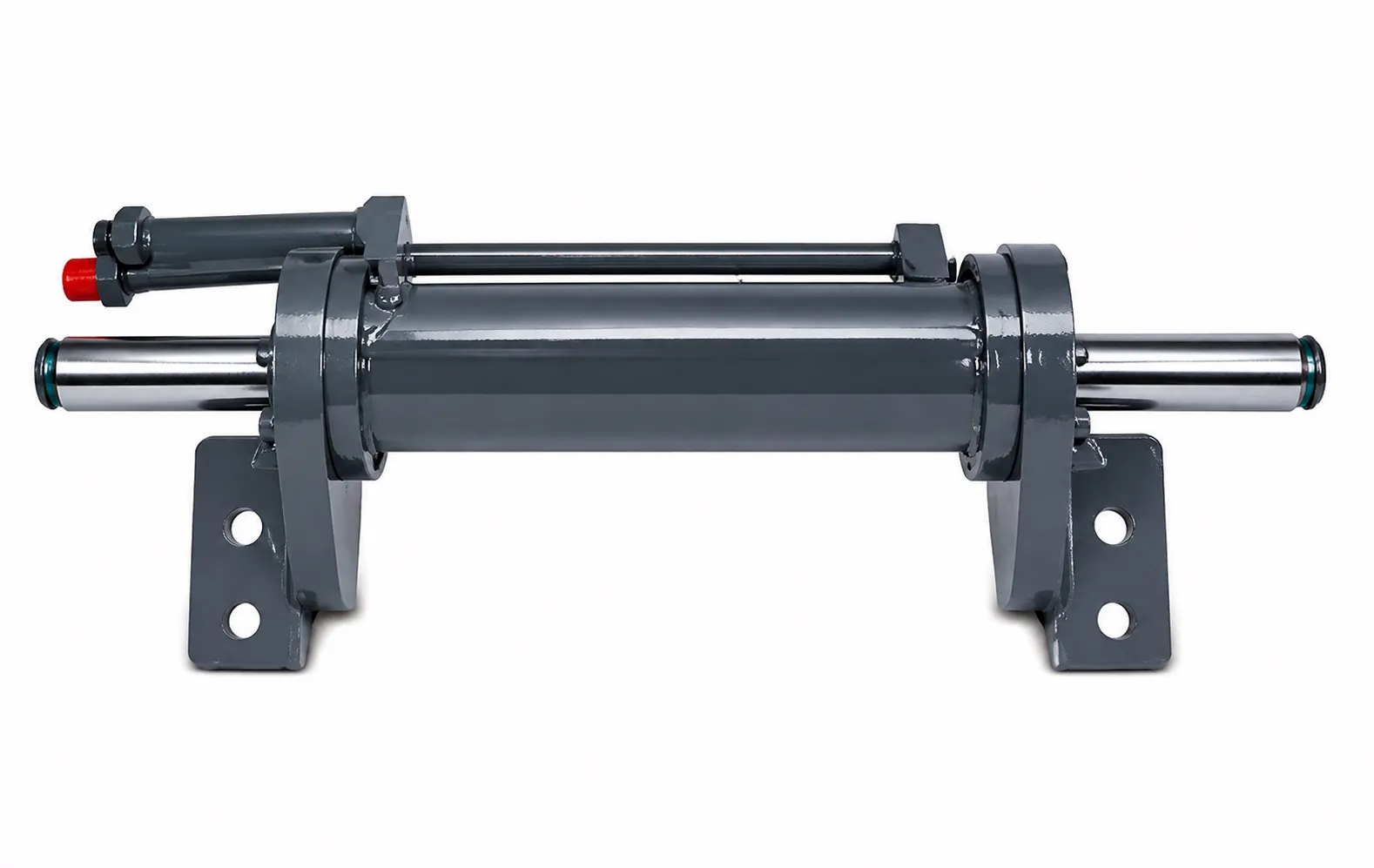
Technical Performance Parameters for GSE Compact Steering Cylinders
| Parameter | Standard GSE Range | Heavy-Duty GSE Range | Unit / Note |
|---|
| Bore Diameter | 50 – 80 mm | 80 – 140 mm | Custom to OEM spec |
| Rod Diameter | 30 – 50 mm | 50 – 90 mm | Hard-chromed, Ra ≤ 0.2 µm |
| Operating Pressure | 160 – 200 bar | 200 – 280 bar | Test pressure 1.5x rated |
| Output Force (extend) | 8 – 25 kN | 25 – 45 kN | At max rated pressure |
| Stroke Length | 80 – 200 mm | 150 – 400 mm | Customisable to chassis geometry |
| Steering Angle Achieved | 35° – 55° | 55° – 90° | Dependent on arm geometry |
| Operating Temperature | -20°C to +80°C | -40°C to +120°C | Seal grade dependent |
| Seal Material | PU / NBR | PTFE composite / HNBR | Skydrol-compatible on request |
| Mounting Style | Clevis both ends | Flange / trunnion / clevis | To drawing |
| Surface Coating | Zinc phosphate + epoxy | Zinc-nickel alloy plate | Salt-spray tested to 500h+ |
Industrial Application Scenarios: Where Compact Steering Cylinders Operate in UK Aviation
✈ Aircraft Pushback Tractors
Towbarless and conventional towbar pushback tractors at UK airports including Heathrow (LHR) and Gatwick (LGW) use compact steering cylinders in their front-axle steering systems. The cylinder must deliver precise control during the low-speed, high-torque phase of pushback — when an A380 or B777 is on the towhead and the tractor operator must maintain exact heading control to keep the nose gear aligned. Steering cylinder stroke and arm geometry are calculated from the vehicle’s required steering angle and the mounting clearance between the engine block and chassis frame rail. Replacement cycles in this application are typically tied to airline ground handling contracts, making standardised mounting interfaces across cylinder generations a commercial priority.
🚛 Baggage Tow Tractors
Baggage tow tractors operating on the airside of Manchester Airport and Birmingham Airport carry trailer trains of up to eight baggage dollies through tight inter-gate taxiways. The steering cylinder in a baggage tractor must cope with the lateral pull forces generated by a laden trailer string on a curved taxiway surface — a side-loading scenario that demands high radial load capacity from the cylinder’s rod bearing (guide ring), not just axial force output. Cylinders with extended guide length and a dual-guide-ring configuration significantly reduce rod deflection under transverse load, extending seal life by keeping the rod parallel to the bore centre line throughout the stroke. Operating cycles in this application routinely exceed 15,000 cycles per year, making seal kit change intervals the dominant maintenance cost to minimise through correct initial cylinder selection.
🚌 Passenger Boarding Buses
Apron buses transporting passengers between remote stands and terminal buildings at airports like Edinburgh, Glasgow, and Stansted operate full-air or electro-hydraulic power-assisted steering systems in which the compact steering cylinder is the primary force-generating component. In articulated bus variants, a secondary steering cylinder manages the rear-axle steer angle to reduce tyre scrub on tight turns — a configuration that requires matched cylinder characteristics between the front and rear steering actuators. The quality of hydraulic fluid filtration and port flushing procedures during maintenance turnaround is critical in this application, because particulate contamination from brake dust and runway surface debris finds its way into hydraulic circuits through reservoir breathers in high-traffic apron environments. Cylinder port plug specifications and flushing port provisions are therefore included in the supply specification by experienced UK GSE maintenance contractors.
🏗 Aircraft Loading Equipment
Upper-deck loaders, cargo loaders, and catering truck chassis all incorporate compact steering cylinders in their drive systems. Catering trucks used at Heathrow’s cargo and catering facilities present a particularly demanding duty cycle: the vehicle must position precisely under an aircraft galley door sill — clearance tolerances are measured in centimetres — and repeat this manoeuvre dozens of times across a single shift. The steering system must provide enough sensitivity and resolution for centimetre-level positioning accuracy at walking pace, while still delivering adequate force to steer a laden 20-tonne vehicle. Flow-sharing proportional valve circuits with compact steering cylinders matched by precisely calibrated piston area ratios achieve this combination of sensitivity and force output in a way that conventional gear-type steering boxes cannot.
Related Hydraulic Cylinder Solutions for Industrial Applications
🔧
Mini Forklift Attachment Hydraulic Cylinder
Compact, high-force hydraulic cylinders designed for forklift attachment applications — including side-shifters, rotators, and clamp units — where the cylinder envelope must fit within tight mast and carriage geometries while delivering reliable performance across high daily cycle counts in warehouse and logistics environments.
View Product Details →
⚡
Medium-Duty Forklift Attachment Hydraulic Cylinder
Engineered for medium-duty forklift attachments requiring higher output force without a proportional increase in cylinder body size. The rod and barrel combination is optimised for the combined axial and side-loading conditions typical of rotator and multi-purpose clamp attachments used in recycling, paper-roll, and general cargo handling operations at distribution centres across the UK Midlands.
View Product Details →
Ever Power — Precision Manufacturing and Custom Steering Cylinder Supply
Customisation Capability · Precision Manufacturing · Verified Supply Chain
Bore: 25 – 500 mm
Full custom bore range for standard and non-standard GSE applications, including prototype runs from a single unit
2,000+ Annual Output
Dedicated GSE cylinder production line with capacity to support OEM volume forecasts and MRO spares pipeline requirements simultaneously
7-Day DDP UK Delivery
DDP shipping to UK warehouse or end-user site with customs clearance handled — zero administrative burden on the UK buyer
ISO 9001 Certified
Full quality management system with documented inspection reports, hydrostatic test certificates, and material traceability records supplied with every order
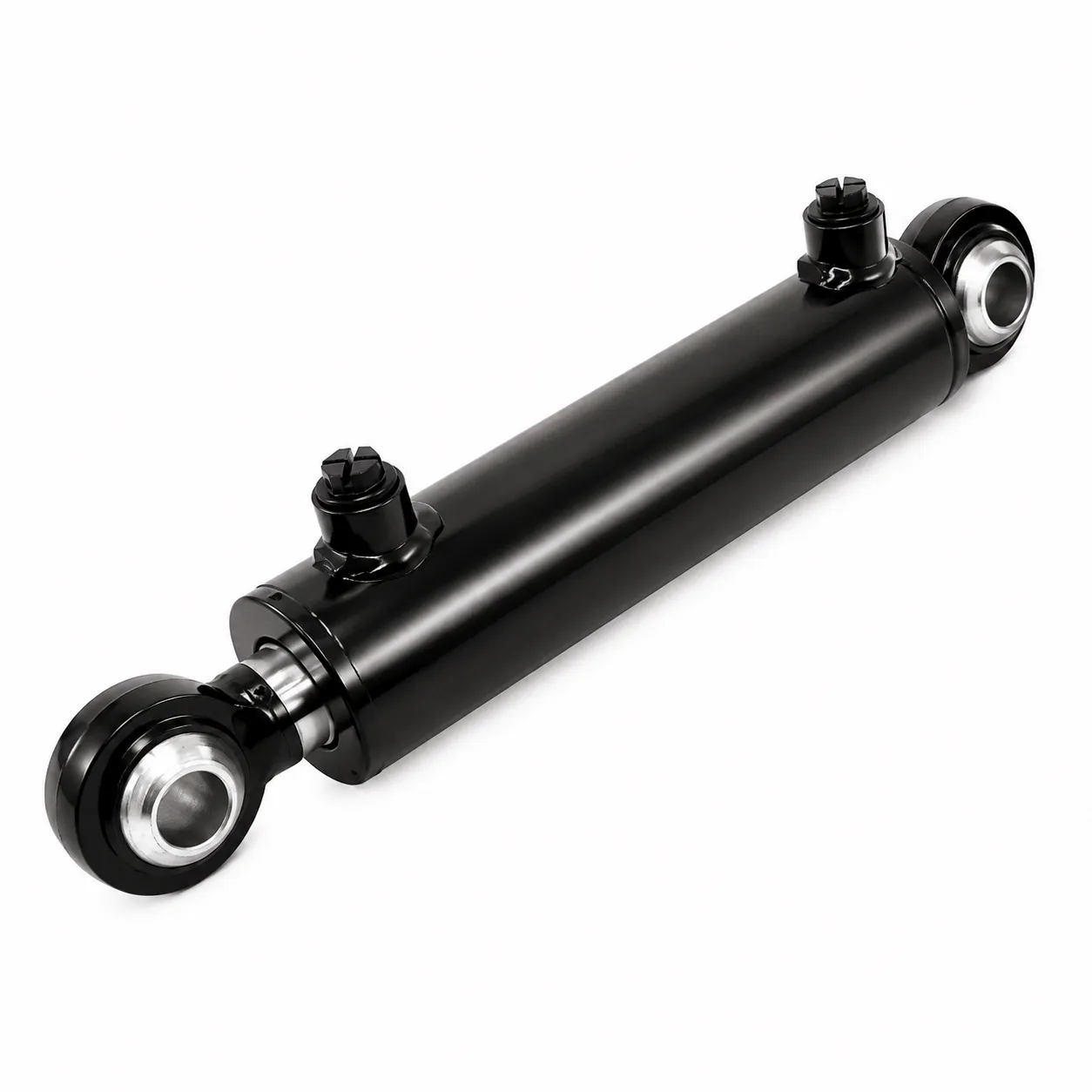 Ever Power’s engineering team works directly with UK GSE OEMs and MRO contractors to reverse-engineer or improve-on-drawing compact steering cylinders that are no longer available through OEM parts channels. The customisation process starts with a mounting interface survey — either from the customer’s CAD data or from physical measurements taken on-site at the customer’s workshop in Sheffield, Derby, or wherever their vehicle maintenance base is located. Our application engineers cross-reference the installation envelope, required steering force, operating pressure, hydraulic fluid specification, and temperature range to select or design the optimal cylinder configuration. Samples with full dimensional inspection reports are dispatched within 15 working days of design sign-off, and production lead times for series orders are typically 30–45 days from purchase order. Tooling cost for custom clevis eyes, rod-end threads, and port configurations is included in the unit pricing for orders above 20 pieces.
Customer Success Story: Birmingham-Based GSE Fleet Operator Cuts Steering Maintenance Costs by 38%
📍 Birmingham, West Midlands
✈ Airport Ground Support
🔧 Fleet MRO Contract
A ground handling contractor operating a fleet of 34 baggage tractors and 8 pushback units at Birmingham Airport (BHX) approached Ever Power in late 2023 after recurring steering cylinder seal failures had pushed their unscheduled maintenance spend to unacceptable levels. Their existing cylinders — sourced through a German distributor at a significant per-unit premium — were showing rod seal degradation within 8–10 months in the BHX operating environment, which combines the usual apron contamination with an unusually high frequency of de-icing operations due to Birmingham’s frost exposure patterns from November through March.
Ever Power’s application engineers conducted an on-site assessment at the contractor’s vehicle maintenance facility in the Bordesley Green industrial area of Birmingham. The investigation identified that the original cylinder specification used a standard polyurethane rod seal that was chemically incompatible with the de-icing fluid residue being dragged back along the rod during cold-weather operations. The wiper seal was also inadequate for the particulate load, allowing fine abrasive particles to bypass it and score the rod surface — accelerating primary seal wear significantly.
Ever Power redesigned the seal stack with a dual-lip PTFE composite rod seal and a heavy-duty polyurethane wiper with a spring-energised lip to maintain positive contact at low temperatures. Rod surface finish specification was tightened from Ra 0.4 µm to Ra 0.2 µm, and the chrome plating depth was increased by 30% compared to the original part. A batch of 48 replacement units was delivered DDP to Birmingham within 35 working days of order. After 14 months of service, the contractor reported zero in-service seal failures against a historical average of 11 per year, and a total maintenance cost reduction of 38% on steering system upkeep across the fleet — a saving that exceeded the engineering and tooling cost investment within the first operating season.
38%
Maintenance cost reduction
0
In-service seal failures (14 months)
48
Units delivered DDP Birmingham
What UK Customers Say About Ever Power Steering Cylinders
★★★★★
“The seal redesign Ever Power carried out for our BHX fleet has genuinely transformed our maintenance planning. We went from fire-fighting steering failures mid-shift to scheduling cylinder inspections at 18-month intervals just like any other planned component. The difference in operating confidence is substantial — I only wish we had made the switch two years earlier.”
— Fleet Maintenance Manager, Birmingham Airport GSE Contractor
★★★★★
“Our procurement team initially had reservations about sourcing steering cylinders outside our existing OEM channel, but Ever Power’s engineering documentation — the inspection reports, test certificates, and material traceability records — were more thorough than anything we had received from our previous supplier. The DDP delivery to our Sheffield engineering depot removed every administrative concern we had about import paperwork.”
— Procurement Director, UK GSE Manufacturer, Sheffield
★★★★★
“The low-temperature seal specification Ever Power recommended for our Scottish operations has held up flawlessly through two full winters at Edinburgh and Aberdeen. Before the switch, we were replacing rod seals on our tow tractors every November without fail. This season we did not replace a single one. For a fleet of our size, that is a meaningful operational improvement and a demonstrable cost saving that I can present to the board.”
— Operations Director, Ground Handling Operator, Edinburgh
Frequently Asked Questions About Compact Steering Cylinders for UK Airport GSE
How much does a custom compact steering cylinder for UK airport ground support equipment typically cost? +
Unit price for a custom compact steering cylinder designed for GSE applications depends on bore diameter, stroke length, seal specification, surface treatment, and order volume. Standard bore sizes (50–80 mm) in batches of 20 to 50 units typically fall in the range of £180 to £420 per unit when supplied DDP to a UK delivery address. Tooling for custom clevis eyes or non-standard port configurations is usually included in unit pricing above 20-piece order thresholds. To receive an accurate quotation for your specific application, contact Ever Power at
[email protected] with your cylinder’s dimensional drawing or the OEM part number you are replacing.
Which type of seal material is best for steering cylinders used in cold-weather UK airport operations below minus ten degrees? +
PTFE composite rod seals combined with spring-energised polyurethane wiper seals are the most effective combination for UK airport environments where overnight temperatures regularly fall below -10°C, particularly at airports in Scotland and northern England. Standard polyurethane seals retain adequate flexibility to approximately -15°C but lose elasticity at lower temperatures, increasing break-out force significantly and risking micro-leakage on the first full-pressure cycle of the working day. PTFE composite seals remain flexible to -40°C and maintain consistent sealing contact pressure across the full UK winter temperature range. These are the seals Ever Power specifies as standard for all steering cylinder orders destined for northern UK airport operations.
Where can I find a reliable UK supplier who can reverse-engineer a compact steering cylinder for discontinued GSE equipment at Heathrow or Manchester Airport? +
Ever Power specialises in exactly this type of custom engineering work for UK GSE operators. The process requires either a dimensional drawing of the original cylinder or a physical sample unit from which measurements can be taken. From those inputs, Ever Power’s engineers produce a full manufacturing drawing, confirm the specification with the customer, and dispatch samples within 15 working days of drawing approval. DDP delivery to any UK location — including delivery to maintenance facilities at Heathrow, Manchester, or Gatwick — is included in the quotation. Enquiries for reverse-engineering work should be sent directly to
[email protected] with a description of the vehicle type and the original OEM part number if available.
What is the typical lead time when ordering replacement compact steering cylinders from a manufacturer for a UK airport baggage tractor fleet? +
For standard bore sizes held in semi-finished inventory, Ever Power’s typical production and delivery lead time to a UK address is 25–35 working days from purchase order for batches up to 50 units. Urgent requirements for proven standard configurations can sometimes be met in 15 working days. For fully custom designs requiring new tooling, lead time is 40–55 working days from confirmed drawing approval. UK GSE operators managing a multi-year aircraft handling contract should consider establishing a consignment stock arrangement, whereby Ever Power holds an agreed quantity of finished cylinders ready for next-day dispatch on call-off against a framework purchase order — eliminating lead time risk during peak operational periods such as summer schedule build-up or winter de-icing season.
How do I get a price quote for compact steering cylinders suitable for pushback tractors operating at Birmingham or Gatwick Airport? +
To request a quote, email Ever Power at
[email protected] with the following information: the make and model of the pushback tractor or other GSE vehicle, the original cylinder part number or a dimensional sketch showing bore, rod, stroke, overall closed length, and port and mounting configurations. If you have the operating pressure and hydraulic fluid type (mineral oil, Skydrol, or other), include those as well. A detailed technical and commercial quotation is typically returned within 24 hours. Customers who cannot provide drawings are welcome to send a physical cylinder sample, and Ever Power will measure and quote from it at no charge.
Which hydraulic fluid types are the compact steering cylinders compatible with when used in UK airport ground support vehicles? +
Ever Power steering cylinders can be specified for compatibility with standard mineral hydraulic oil (ISO VG 46 or ISO VG 68), phosphate ester fire-resistant fluids (such as Skydrol LD4 or Skydrol 500B-4), and water-glycol fire-resistant fluids. The key variable is seal material selection: NBR and polyurethane seals are standard for mineral oil, while PTFE composite or HNBR seals are required for phosphate ester compatibility. The choice should be confirmed before order placement, as it cannot be changed without a full seal kit replacement. If your GSE fleet uses a mix of fluid types — as is common in mixed-age fleets at large UK airports — Ever Power can supply cylinders with the highest-compatibility PTFE composite seal package as a universal solution.
Ready to Source Compact Steering Cylinders for Your GSE Fleet?
Ever Power engineers are available to review your application, confirm the specification, and provide a DDP price for delivery to any UK location. Response guaranteed within 24 hours.
✉ Get Your Quote Now
edit by gzl