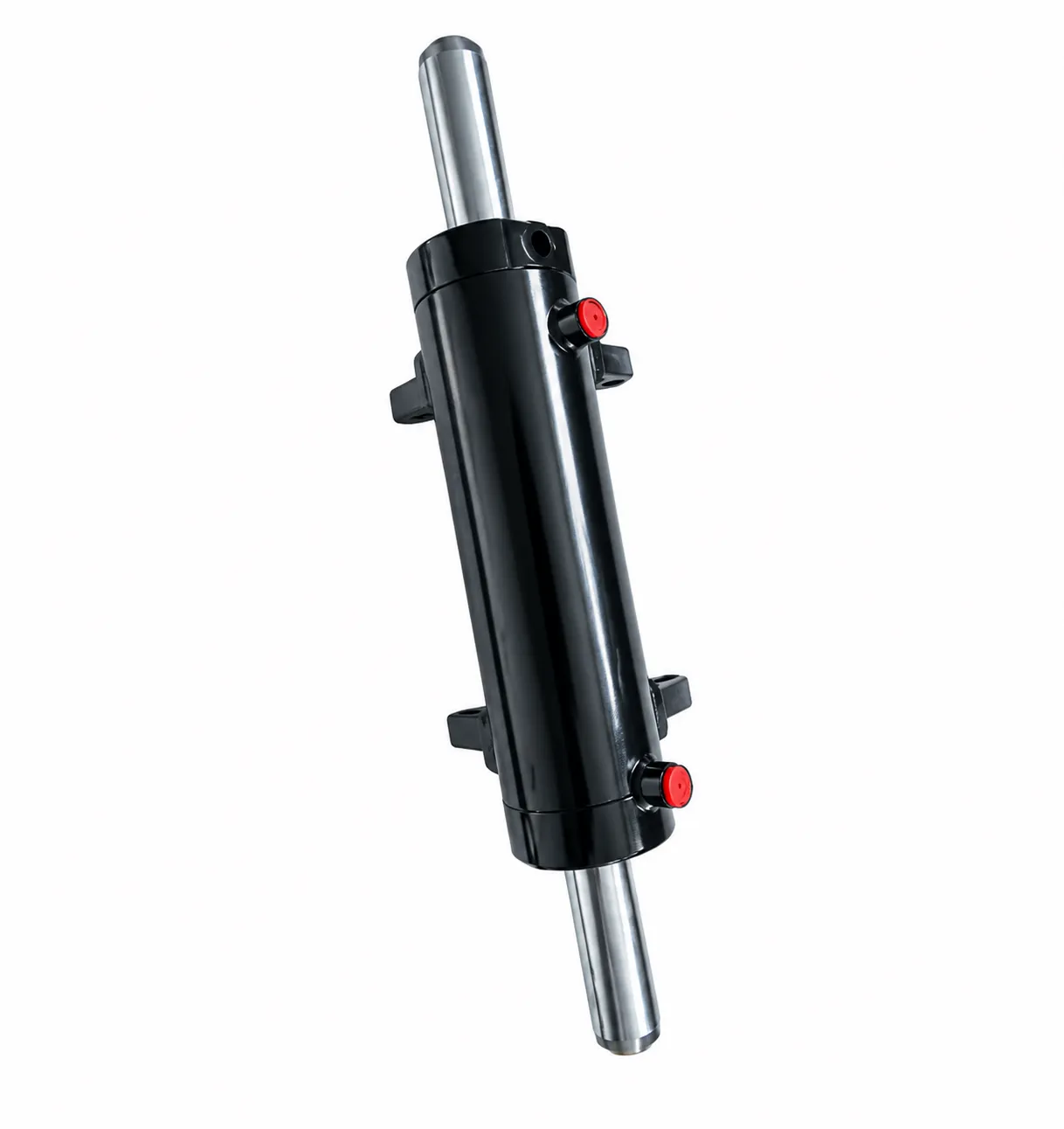
 Getting the torque right on steering cylinder end fittings and port connections is one of those details that separates reliable hydraulic systems from problem-prone ones. Whether you are specifying components for a new piece of mobile plant, commissioning a material-handling line in a Birmingham warehouse, or overhauling the steering assembly of agricultural machinery in the Yorkshire Dales, the tightening torque applied to every threaded fitting determines whether the system holds pressure cleanly for years or starts weeping fluid within weeks. The steering cylinder is the mechanical heart of directional control across an enormous range of industries, and its integrity begins at the connection points — the end fittings, port adapters, and cylinder body threads that translate hydraulic energy into precise, repeatable movement.
How a Steering Cylinder Converts Hydraulic Pressure Into Directional Control
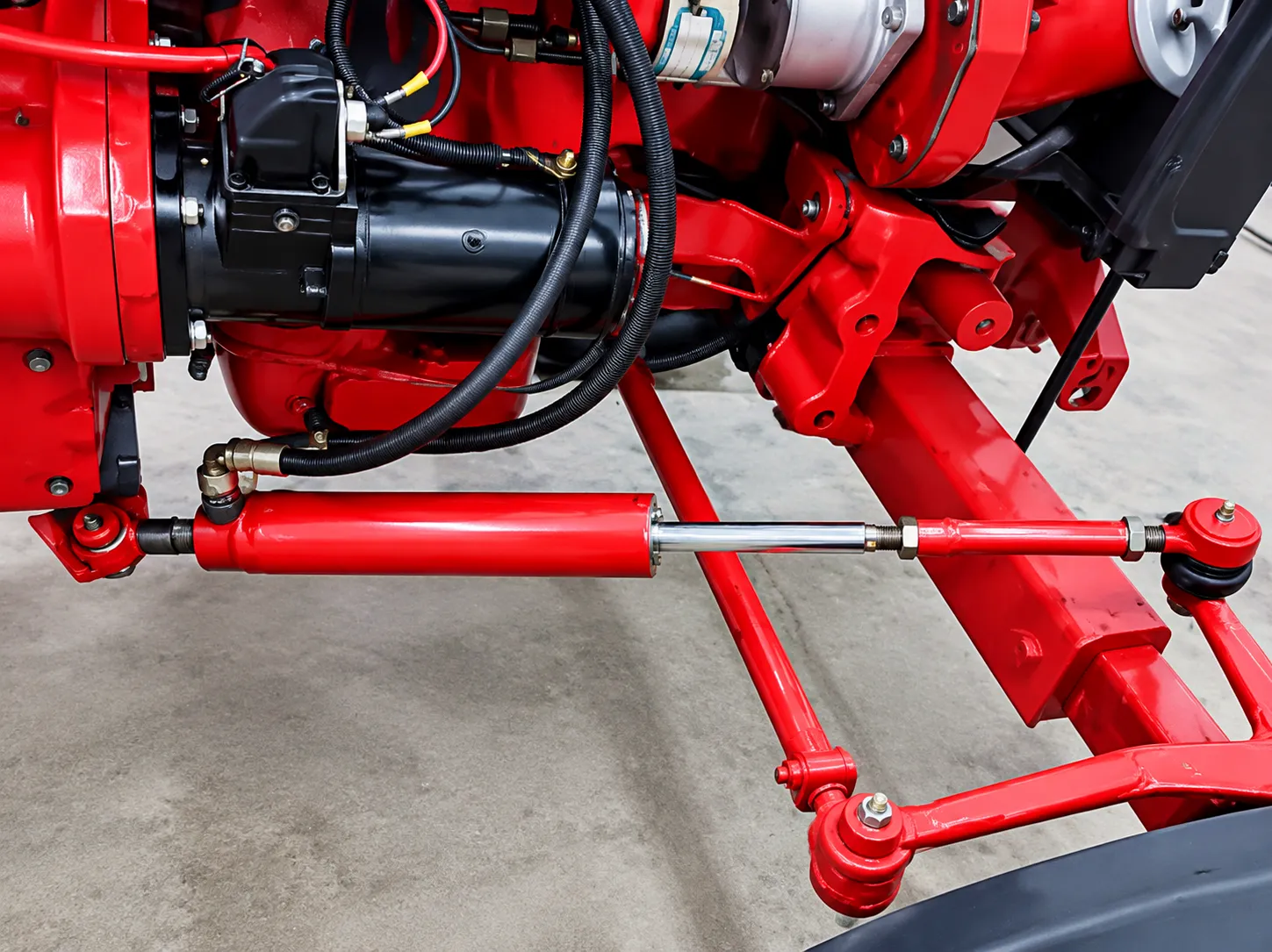
A steering cylinder operates on the fundamental principle of differential hydraulic pressure acting across a piston surface. Pressurised fluid, typically mineral-based hydraulic oil or fire-resistant HF-type fluid in certain UK foundry and steel applications, enters through the port connection on one side of the cylinder body and drives the piston rod in the corresponding direction. The opposing chamber simultaneously vents through its port back to tank, creating the net force that rotates or pivots a steering linkage. The connection hardware at each of these ports — the port adapters, O-ring face seal (ORFS) fittings, BSP male stud fittings, or JIC flare connections — must withstand both the static working pressure and the transient pressure spikes that occur during rapid directional changes or when the system encounters an end-of-stroke condition.
At the end fittings — the clevis, trunnion, ball-joint, or rod-eye connections that attach the cylinder to the vehicle chassis or machine frame — the story is different but equally demanding. These connections carry the full mechanical load of the steering force, which in a heavy-duty agricultural tractor or a road-construction machine can exceed several tonnes. The threads, lock nuts, and swaged or machined interfaces at these points must be torqued to values that guarantee no movement under dynamic load without generating thread-stripping forces. Engineers working in Sheffield steel fabrication shops and Coventry automotive suppliers understand this distinction intimately — the port side is a pressure-sealing problem, and the end-fitting side is a structural joint problem, and both require precise torque management.
Core Materials Used in Steering Cylinder End Fittings and Port Hardware
⚙ Port Fittings & Adapters
Port connections on steering cylinders operating in UK industrial and agricultural environments are predominantly manufactured from high-strength carbon steel (typically EN 10277-2 bright bar, equivalent to AISI 1045) with surface treatment to resist corrosion in outdoor or high-humidity settings. Zinc-nickel electroplating to BS EN ISO 4042 is a common finish specified by UK OEM customers, offering a minimum 240-hour salt-spray resistance. Where the application demands resistance to more aggressive media — such as on offshore equipment serviced through Aberdeen supply chain hubs — stainless steel grade 316L or duplex 2205 port fittings are specified. The ferrule and compression ring elements within BSP or ORFS connectors are often produced from 35CrMo alloy steel to maintain dimensional stability under the cyclic stress of pressure fluctuations, which in steering applications can range from 0 bar at neutral to well above 200 bar during full lock manoeuvres.
🔧 End Fittings & Structural Hardware
The clevis, eye-end, and trunnion fittings that connect the steering cylinder body and rod to the machine frame are structural members and are treated as such in material selection. Forged or machined from high-tensile steel — most commonly GS-52.3, DIN 1.0552, or the UK-familiar grade EN 10025 S355J2+N — these components must carry bending and shear loads simultaneously with the thread engagement forces created by correct torquing of the connecting pin retainer bolts or lock nuts. In specialist applications such as construction plant manufactured or refurbished in the Midlands, ductile iron (EN-GJS-400-15 to BS EN 1563) is sometimes used for clevis bodies where weight reduction is prioritised alongside corrosion resistance. Regardless of material, all structural end fittings require magnetic particle inspection (MPI) or dye penetrant testing before assembly in safety-critical steering systems, a requirement reinforced by UK Machinery Directive compliance processes.
🚧 Sealing Elements and Thread Surfaces
The sealing performance of a steering cylinder’s port connections depends as much on the O-ring or bonded seal material as it does on torque precision. For standard mineral oil systems, 70-Shore NBR (nitrile) O-rings to BS EN ISO 3601-1 are the industry baseline. Higher-temperature environments — such as those found near engine bay mounted steering units in heavy agricultural machinery — demand FKM (Viton) seals rated to 200°C continuous service. The thread form itself plays a critical role: BSP parallel (BSPP) threads require a bonded seal or O-ring face seal for leak-free connection since parallel threads do not self-seal, while BSPT (tapered) threads rely on thread engagement and PTFE tape or anaerobic sealant to achieve pressure-tight joints. SAE straight thread O-ring boss (ORB) ports, increasingly common on imported equipment in UK fleets, use a captive O-ring and require the most precise torque control because over-tightening deforms the O-ring seal groove and under-tightening allows the seal to extrude under pressure.
Why Precision Torque Management Defines Steering Cylinder Performance
Zero-Leak Port Integrity
Correctly torqued port connections, with values matched to the specific fitting standard (BSP, SAE, JIC), eliminate micro-movement between the fitting and port face, preventing the fretting wear that leads to progressive seal failure. Systems maintained to these standards routinely achieve 5,000-hour service intervals between fluid top-ups in UK agricultural fleets.
Predictable Fatigue Life
Thread pre-load generated by accurate torque application keeps the joint in compression throughout its service life, dramatically reducing the cyclic tensile stress that causes thread fatigue. This is critical in mobile applications where vibration — a constant factor on UK road surfaces and construction sites — would otherwise progressively loosen finger-tight or undertorqued connections.
Consistent Response Under Peak Load
A properly torqued clevis or rod-end fitting maintains its positional relationship to the machine linkage under the shock loads that occur during kerb strikes, rut crossings, or sudden lock changes. Any joint slack introduced by undertorqued end fittings translates directly into steering play — a safety concern flagged in UK HSE guidance on mobile plant operations and a recurring cause of MoT failures on road-registered plant.
Simplified Compliance and Audit Trail
Recording torque values to a documented specification — a practice standard in ISO 9001-certified UK manufacturing facilities from Sunderland to Gloucester — creates an auditable assembly record. This simplifies CE marking dossiers for Machinery Directive compliance and provides clear evidence during insurance investigations or product liability proceedings if a system subsequently fails.
Extended Component Service Life
Overtightening fitting threads causes galling, particularly in stainless-to-stainless interfaces, and permanently deforms sealing surfaces, making future maintenance more costly. Undertightening permits micro-movement that scores port faces over time. Staying within the published torque window preserves thread and sealing surface integrity across multiple assembly and disassembly cycles — a significant factor in total cost of ownership calculations for UK fleet operators maintaining mixed-age equipment portfolios.
Steering Cylinder End Fitting and Port Connection — Technical Performance Parameter Table
| Connection Type | Thread Standard | Nominal Size | Torque Min (Nm) | Torque Max (Nm) | Max Working Pressure (bar) | Seal Type | Typical Material |
|---|---|---|---|---|---|---|---|
| BSPP Port Adapter | ISO 228 / BS 2779 | G1/4″ | 14 | 18 | 350 | Bonded Seal / NBR | EN1A / EN3B Steel |
| BSPP Port Adapter | ISO 228 / BS 2779 | G3/8″ | 25 | 32 | 350 | Bonded Seal / NBR | EN1A / EN3B Steel |
| BSPP Port Adapter | ISO 228 / BS 2779 | G1/2″ | 40 | 50 | 350 | Bonded Seal / NBR | EN1A / EN3B Steel |
| BSPP Port Adapter | ISO 228 / BS 2779 | G3/4″ | 65 | 80 | 315 | Bonded Seal / NBR | EN1A / EN3B Steel |
| SAE ORFS (O-ring Face Seal) | SAE J1453 | -6 (9/16-18 UNF) | 22 | 28 | 420 | Captive O-ring / NBR | Carbon Steel, Zn-Ni |
| SAE ORFS (O-ring Face Seal) | SAE J1453 | -8 (3/4-16 UNF) | 40 | 52 | 420 | Captive O-ring / NBR | Carbon Steel, Zn-Ni |
| SAE ORFS (O-ring Face Seal) | SAE J1453 | -12 (1-1/16-12 UN) | 100 | 125 | 420 | Captive O-ring / FKM | Carbon Steel, Zn-Ni |
| JIC 37° Flare | SAE J514 | -6 (9/16-18 UNF) | 16 | 20 | 275 | Metal-to-metal 37° seat | Carbon Steel |
| JIC 37° Flare | SAE J514 | -10 (7/8-14 UNF) | 55 | 68 | 275 | Metal-to-metal 37° seat | Carbon Steel |
| Rod-Eye / Clevis Lock Nut (M20) | ISO 965 / DIN 934 | M20 x 1.5 | 240 | 280 | N/A (structural) | Thread locking compound | Grade 10 Steel |
| Rod-Eye / Clevis Lock Nut (M30) | ISO 965 / DIN 934 | M30 x 2.0 | 680 | 780 | N/A (structural) | Thread locking compound | Grade 10 Steel |
| Cylinder Tie-Rod Nut (M16 x 4-rod) | ISO 4014 | M16 x 1.5 per nut | 130 | 155 | N/A (structural) | Nyloc or castle nut | Grade 8.8 / 10.9 Steel |
* Values shown are for zinc-plated steel fittings with lubricated threads. Dry threads require a 15–20% increase. Stainless steel fittings require a 10–15% reduction to prevent galling. Always verify against the cylinder manufacturer’s assembly documentation.
Related Products: Hydraulic Cylinders for Material Handling Applications
Steering cylinder torque specifications extend directly to the port and end fitting hardware on hydraulic cylinders used in forklift attachments and material handling equipment — two of the most demanding applications in UK warehousing and logistics centres. The following Ever Power products ship with full torque documentation and are widely deployed in Birmingham distribution hubs and Midlands manufacturing facilities:
Industrial Application Scenarios: Where Torque Precision Makes the Difference
🍇 Application: Agricultural Machinery Steering Systems in East Anglia
Large-scale arable farming operations across Lincolnshire and Cambridgeshire run GPS-guided tractors and trailed implements that place exceptional demands on the hydraulic steering cylinder connecting the front axle to the valve block. Port connections on these cylinders — typically G1/2″ or G3/4″ BSP — see continuous duty cycles during planting and harvesting seasons, with the system switching between full left and full right lock hundreds of times per working day. The cumulative effect on an undertorqued bonded seal is progressive extrusion of the seal lip past the face of the fitting, leading first to a slight weep of fluid and, if unchecked, to a full-flow leak that contaminates soil and triggers Environment Agency reporting requirements. Correct assembly torque, verified with a calibrated torque wrench before the machine leaves the depot each season, eliminates this failure mode entirely. End fittings on these cylinders are equally critical: the ball-joint or rod-eye at the cylinder-to-axle connection must be torqued to the lock-nut specification and checked for freedom of articulation, as over-tightening the ball joint preload can restrict steering travel and trigger ISOBUS steering angle error codes on modern precision-farming systems.
🏭 Application: Steel Handling and Coil Transfer Equipment in Sheffield and Rotherham
Sheffield’s remaining steel processing facilities and the wire rod mills around Rotherham operate coil transfer cars, melt shop cranes, and slab transfer vehicles that all rely on steering cylinders to navigate tight shop floor layouts. The port connections on these cylinders experience not just high working pressures — typically 250 to 350 bar — but also elevated ambient temperatures from the radiant heat of steel at rolling or casting temperature. Standard NBR O-ring bonded seals begin to harden and lose elasticity above 100°C, making FKM seals the correct specification for any cylinder mounted within three metres of a furnace or rolling stand. Beyond the seal material choice, the torque applied to the G1/2″ or M20 × 1.5 port adapters must account for the thermal expansion of both the adapter and the port boss during heat-up cycles: a fitting torqued correctly at ambient temperature effectively pre-loads the joint for the expanded state at operating temperature, preventing the micro-relaxation that allows vibration to progressively loosen the connection. UK steel plant maintenance teams increasingly use electronic torque-angle multipliers to achieve the 60-to-90-degree angle-of-turn verification step that replaces simple torque values in high-temperature structural joint standards.
🏗 Application: Road Construction and Earthmoving Plant Operating Across UK Infrastructure Projects
The HS2 construction corridor and National Highways’ smart motorway refurbishment contracts have put tens of thousands of hours on UK-based earthmoving fleets from the Thames Estuary to Crewe. Motor graders, soil compactors, and large articulated dump trucks all use steering cylinders with end fittings that are central to the articulated joint where the front and rear chassis sections pivot. These cylinders carry lateral side loads in addition to the hydraulic thrust load, meaning the clevis pin retainer bolt torque and the spherical bearing preload are safety-critical joint parameters reviewed during plant hire inspections and CPCS plant operator certifications. SAE J1453 ORFS connections are dominant in American-manufactured plant brands common on UK infrastructure sites, and the torque values for these fittings — 40 to 52 Nm for a -8 ORFS — are non-negotiable: ORFS connections that are hand-tight and not properly torqued will leak at the O-ring face within the first 50 working hours. Remote job sites from the Scottish Borders to the Chilterns make mid-project fluid loss extremely disruptive, making pre-commissioning torque verification a contractual requirement under most UK civil engineering supply agreements.
🚗 Application: Forklift and Materials Handling Equipment in UK Distribution Centres
The warehouse and logistics boom across the East Midlands — fuelled by major distribution centre construction near Daventry and Northampton — has placed enormous demand on reach trucks, counterbalanced forklifts, and narrow-aisle order pickers equipped with hydraulic steering cylinders. Unlike mobile plant used outdoors, warehouse equipment operates in controlled temperature environments but with very high steering cycle counts — a forklift operating in a multi-shift environment may complete over 500 full lock-to-lock steering cycles per shift. This duty cycle loads the port connections with fatigue cycles at a rate far exceeding outdoor applications. For the G1/4″ and G3/8″ BSP port connections common on mini and medium-duty steering cylinders, the torque specification of 14–18 Nm and 25–32 Nm respectively must be verified after the first 250 hours of operation as well as at each scheduled service interval, because new connections can bed-in slightly as the bonded seal takes its final seated position against the port face. The end fitting ball joint or clevis pin must equally be checked for evidence of wear or fretting, as the high cycle count accelerates the wear that incorrect torque preload on the pin retainer bolt accelerates further.
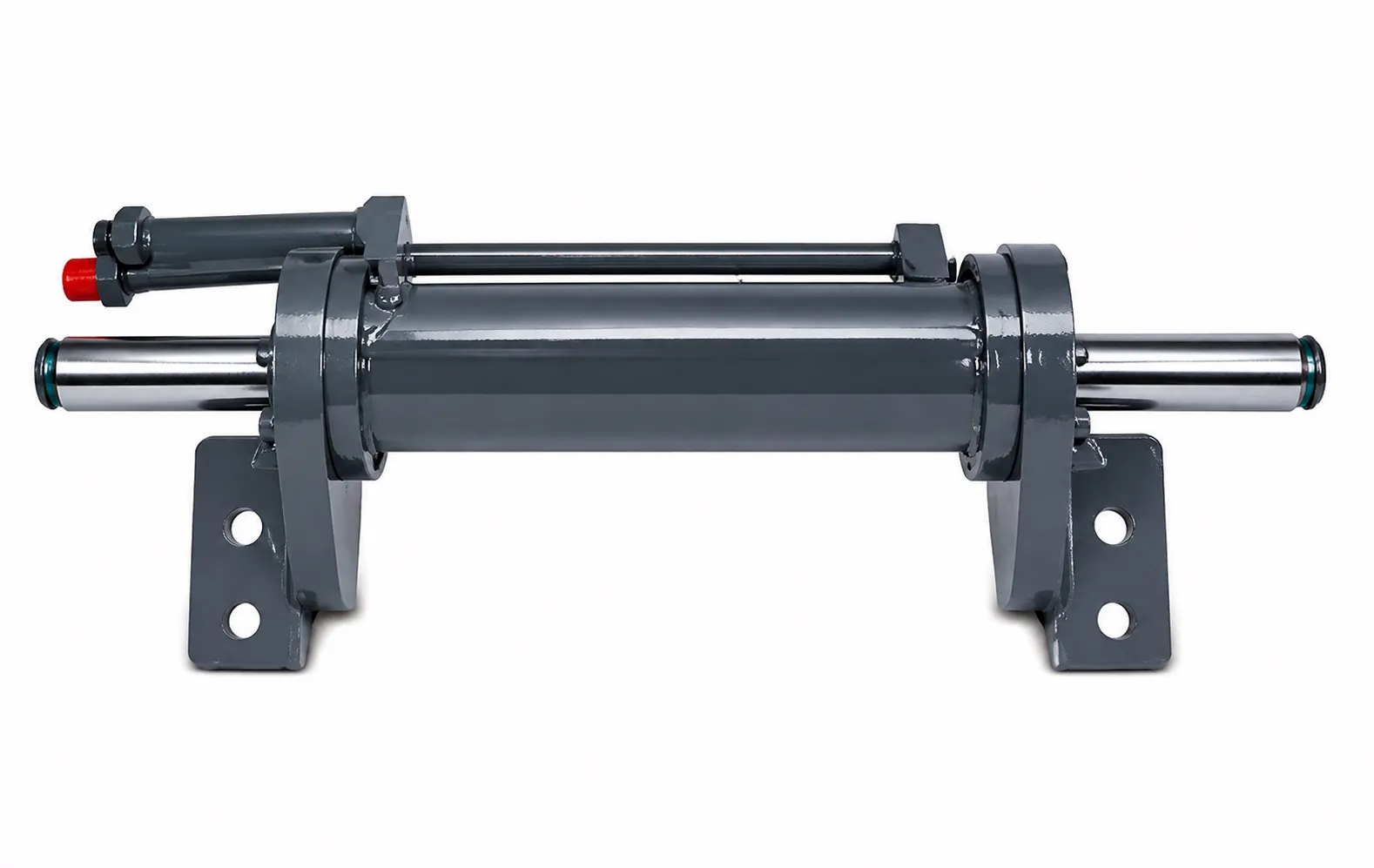
Ever Power — Precision Manufacturing and Custom Steering Cylinder Solutions
Ever Power brings together decades of precision hydraulic cylinder manufacturing experience with a supply chain infrastructure built around the exacting requirements of UK and European B2B customers. The company’s manufacturing operations are equipped with CNC machining centres capable of achieving port thread tolerances to within 0.01 mm of the nominal ISO 228 or SAE J1453 specification, ensuring that every port boss accepts the correct fitting torque without thread damage or seal distortion. Tie-rod and end fitting threads are cut to 6g/6H tolerance as standard, with tighter 4h/4H fits available for high-cycle or high-temperature applications on request.
Ever Power’s customisation capability extends to every element of the steering cylinder assembly that affects torque and connection performance. End fitting styles — clevis, eye-end, trunnion, flange-mount — are manufactured to customer engineering drawings with delivery of first-article inspection reports including thread gauge records and surface finish measurements. Port configurations can be adapted to BSP, SAE, or metric DIN specifications within a single cylinder design, a service particularly valued by UK system integrators managing mixed fleets where standardising port hardware across American, European, and Asian machines simplifies maintenance and reduces spare parts inventory. Seal material selection — NBR, FKM, EPDM, or PTFE-encapsulated options — is confirmed against the customer’s fluid specification and operating temperature range before production release.
Every steering cylinder dispatched from Ever Power facilities is hydrostatically tested to 1.5 times the rated working pressure with all port connections and end fittings torqued to the production specification. A test certificate documenting the maximum test pressure, duration, and observed leakage (zero tolerance for any fluid seepage) accompanies each shipment. UK customers benefit from DDP (Delivered Duty Paid) shipping options with transit times of 7 to 14 working days from order confirmation to UK delivery address, and Ever Power’s technical sales team provides pre-shipment support on port torque specifications and installation procedure questions.
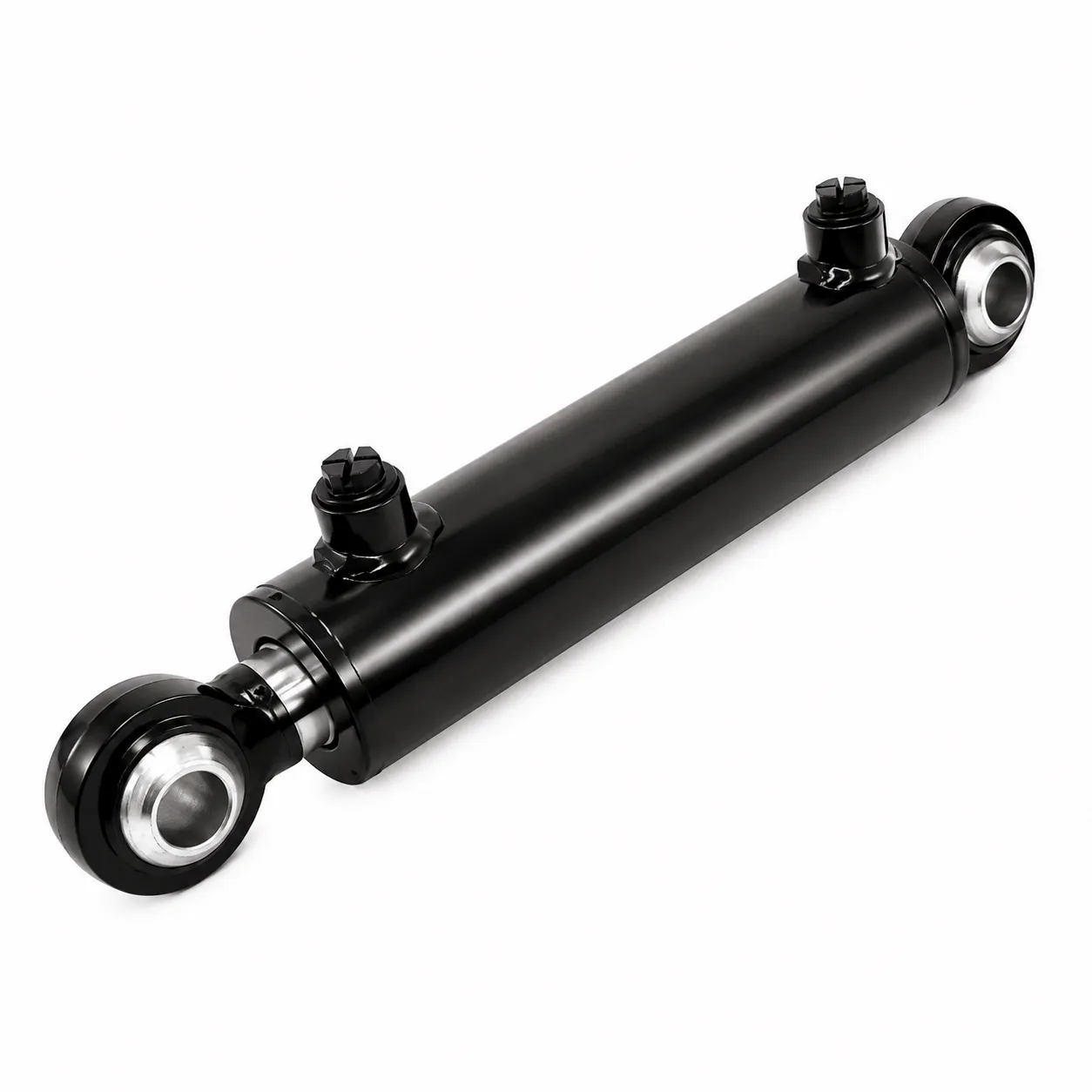
Customer Success: Heavy Plant Refurbishment Specialist, Wolverhampton
West Midlands Construction Equipment Sector — Hydraulic Steering Cylinder Overhaul Programme
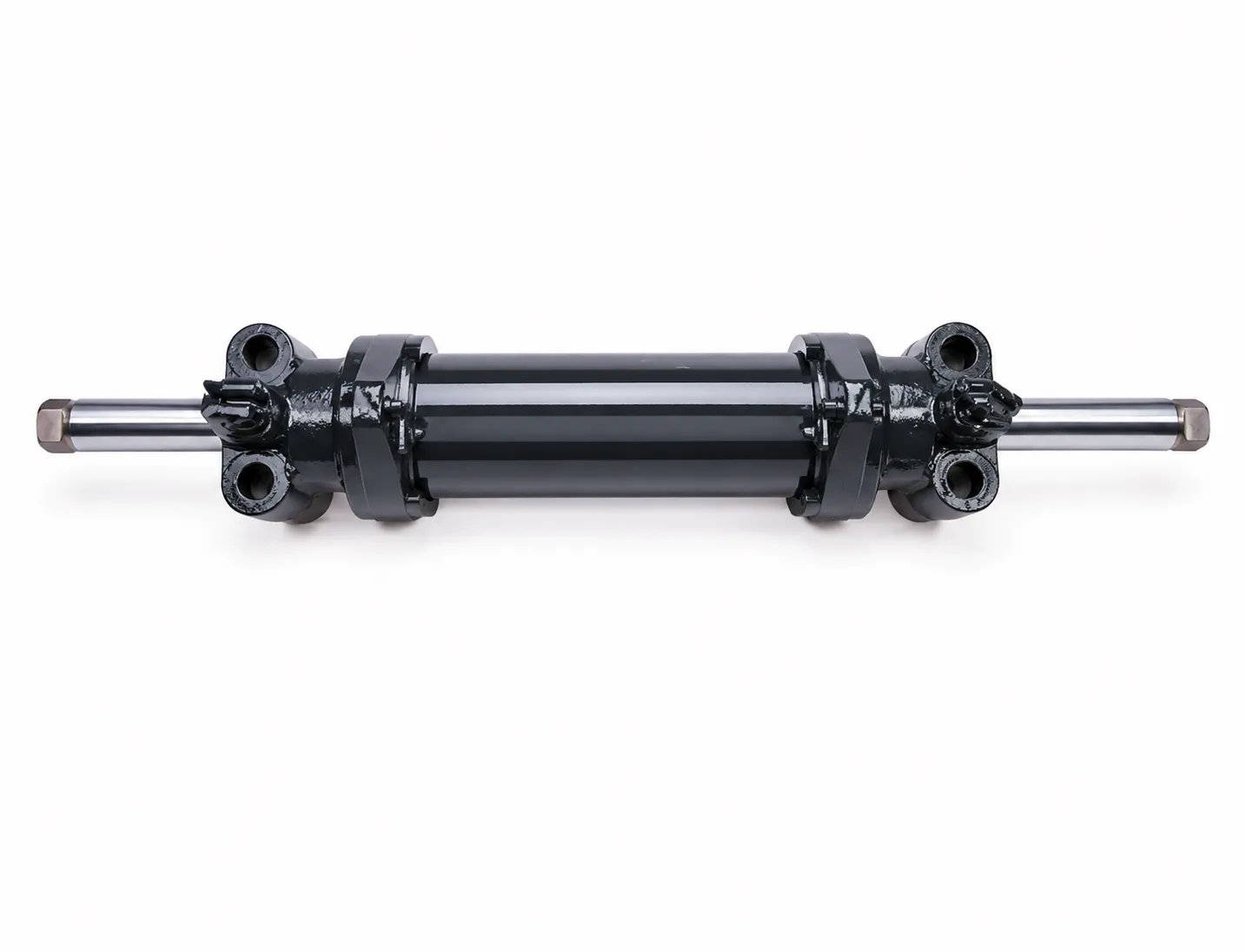
A Wolverhampton-based heavy plant refurbishment contractor had been sourcing steering cylinders from multiple suppliers for its mixed fleet of road rollers, motor graders, and soil stabilisers. The company’s workshop manager identified a recurring problem: hydraulic oil seeping at port connections within 500 hours of cylinder overhaul, despite the team following manufacturers’ general guidance. The root cause, identified after Ever Power’s technical team reviewed the workshop’s assembly records, was twofold — the supplier had shipped cylinders with G1/2″ BSP ports instead of the specified G1/2″ BSPP and bonded seals were being hand-tightened rather than torqued to the 40–50 Nm specification for that fitting size. The thread form confusion (BSPT vs BSPP) meant sealing relied on thread interference rather than face sealing, which predictably failed under cyclic pressure loading.
Ever Power supplied a batch of twelve custom steering cylinders with clearly labelled BSPP ports, supplied alongside a laminated torque specification card for workshop wall mounting and pre-torqued port blanking plugs for transit that the workshop could use as a torque reference standard. The same G1/2″ BSPP adapters that had been causing leaks were re-torqued to 45 Nm using a 3/8″ drive torque wrench verified against a calibrated reference — a straightforward correction that cost nothing beyond twenty minutes of technician time per cylinder. Twelve months after the new cylinders were put into service across the Wolverhampton fleet, zero port leaks had been reported, and the contractor extended its supply agreement with Ever Power to cover the steering cylinders for a further forty units spread across its Birmingham and Coventry satellite workshops.
“The torque documentation Ever Power provides with each cylinder is something none of our previous suppliers bothered with. Our technicians can see exactly what the port fitting needs and why — it has genuinely changed how our workshop approaches hydraulic assembly, not just on these cylinders but across the board.”
“We specified FKM seals and M30 end fitting lock nuts for a high-temperature application near a forging press in our Sheffield facility. Ever Power’s team confirmed the torque values specific to our operating conditions and provided material certificates for both the cylinder body and the fittings. That level of technical support at the pricing they offered is hard to beat.”
“We run a mixed fleet of American and European articulated dump trucks on our HS2 sub-contract work. Getting consistent ORFS and BSP port specs from one supplier, with the torque data matching the OEM service manuals, has simplified our site maintenance enormously. Ever Power understood the requirement immediately and delivered correctly the first time.”
Frequently Asked Questions — Steering Cylinder Torque Specifications
Ready to Source Precisely Manufactured Steering Cylinders?
Send your technical requirements — bore, stroke, pressure, port standard, and end fitting style — to the Ever Power technical sales team. UK-delivered quotations are returned within one working day.
edit by gzl