 When engineers begin specifying a hydraulic steering cylinder, the operating pressure rating is rarely treated as a starting point — yet it defines virtually every other parameter that follows. Bore diameter, rod sizing, seal selection, port configuration, and even material grade all trace back to the working pressure the system must sustain. In high-demand environments such as the heavy-plant fleets of the West Midlands or the marine vessel workshops along the Humber Estuary, getting that pressure figure wrong by even ten per cent can cascade into premature seal failure, rod scoring, or catastrophic cylinder blow-out mid-shift.
A steering cylinder’s operating pressure rating is the maximum continuous hydraulic pressure the unit is engineered to sustain during normal directional control cycles. It is distinct from the proof pressure — typically 1.5× working pressure — and from the burst pressure, which may be three times or more the rated figure. Understanding where your application actually sits within those thresholds, and matching a cylinder specification accordingly, separates a ten-year service life from a six-month warranty claim. This article walks through that selection logic in full, with technical data, application context, and guidance shaped for UK procurement and engineering teams.
How a Steering Cylinder Converts Pressure into Directional Force
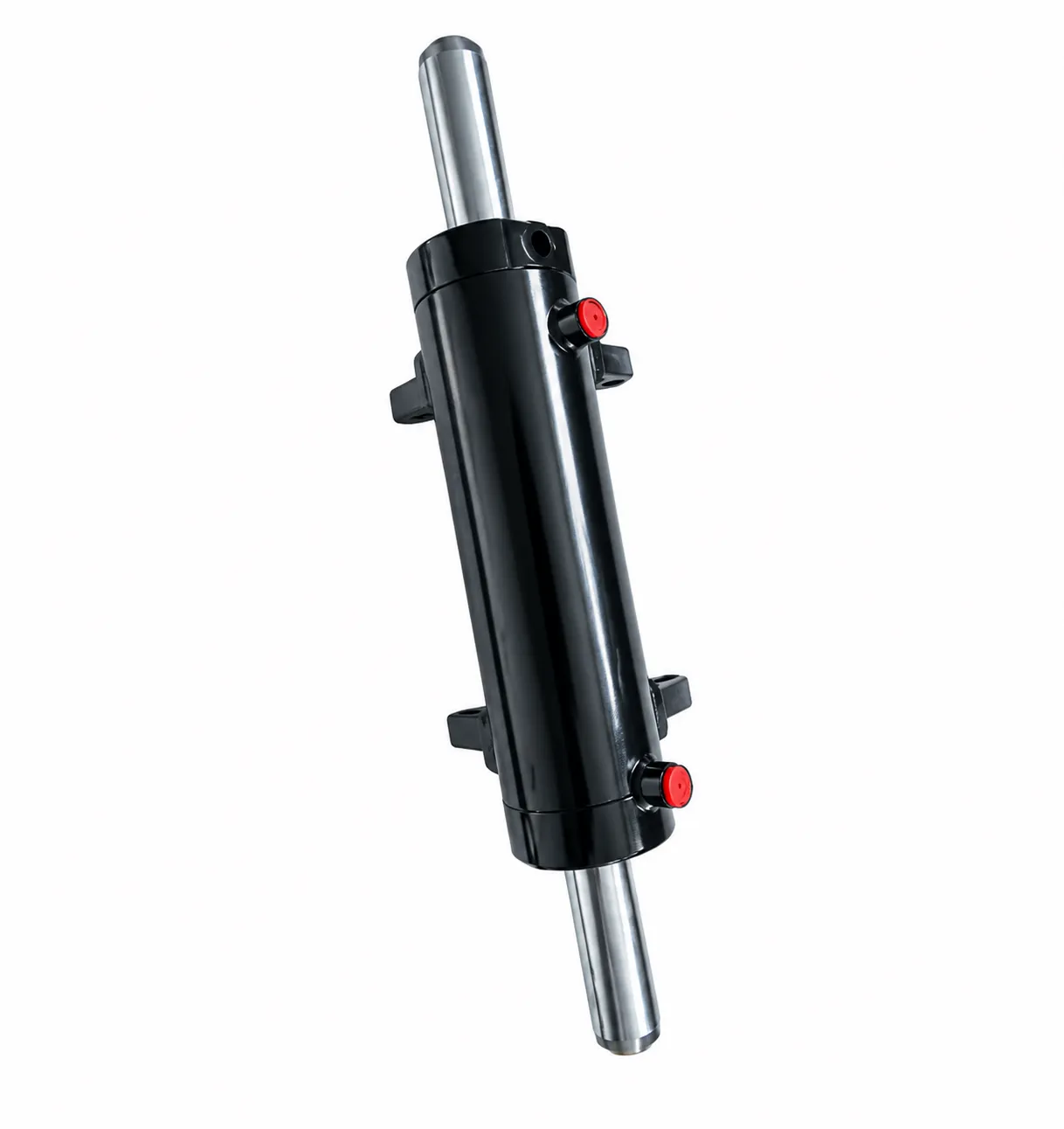
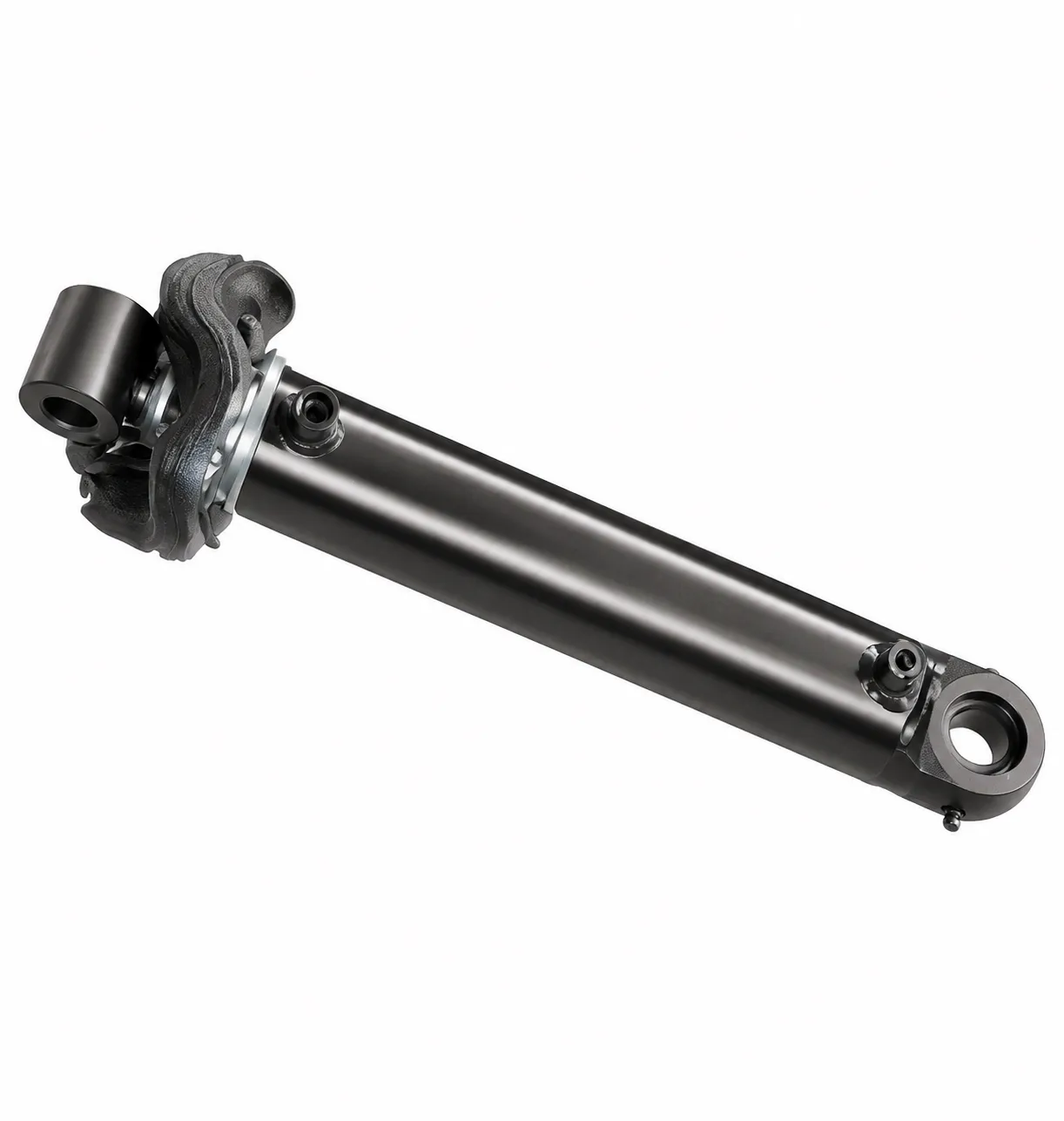
A hydraulic steering cylinder is a double-acting linear actuator. Pressurised fluid enters through one port, acts on one face of the piston, and drives the rod in the corresponding direction; fluid on the opposite side returns to tank through the opposing port. When the operator turns a steering wheel or triggers a joystick signal, the hydraulic control valve directs fluid to the appropriate side of the cylinder. The ratio of fluid pressure to piston area — defined as Force = Pressure × Area — is the fundamental relationship governing how much directional torque the cylinder can deliver. At 210 bar working pressure with a 63 mm bore, for instance, the extend force approaches 65 kN, which is adequate for most mid-weight articulated loaders. Scale the pressure to 350 bar with a 100 mm bore and you are approaching 275 kN — the territory of offshore crane pedestals and heavy-haul mining trucks.
What distinguishes a steering cylinder from a standard hydraulic ram is the design emphasis on directional accuracy and response consistency rather than raw lift capacity. The internal geometry, including the piston land width, rod-to-bore ratio, and seal stack design, is calibrated to minimise internal leakage at the rated pressure. This matters because even a 5% volumetric efficiency loss at the piston seal translates into steering lag at the chassis — perceptible to an operator as vague or delayed response. In a quarrying operation near Sheffield or a port-handling facility in Felixstowe, that lag is not just uncomfortable; it is a safety hazard during precision manoeuvres under load. Proper pressure-rating alignment eliminates that risk at the component selection stage.
Pressure Band Classification and What Each Range Demands of the Cylinder
The hydraulic industry broadly segments operating pressure into three tiers. Understanding where your machine’s hydraulic circuit sits within these tiers is the first practical decision in steering cylinder selection. Each band imposes distinct engineering requirements on the cylinder’s geometry, material grade, and seal technology. Mismatching a low-pressure cylinder to a medium- or high-pressure circuit will not always result in immediate failure; in some cases the unit will operate for months before progressive seal extrusion, bore wear, or rod deflection begins to appear. By that point, the root cause is frequently misidentified, and replacement hardware is procured to the same incorrect specification.
Low Pressure · up to 100 bar
Common in agricultural trailers, light utility vehicles, and conveyor diverters. Standard ductile iron or mild steel tube is sufficient. Nitrile (NBR) seals with a simple twin-lip configuration handle the pressure differential without extrusion risk. Wall thickness can follow conservative hydraulic design ratios because hoop stress is low. Weld-preparation tolerances and bore finish requirements (Ra 0.4 µm) are achievable on standard CNC honing equipment. UK agricultural machinery manufacturers in Lincolnshire and Yorkshire frequently specify this band for row-crop implement steering frames.
Medium Pressure · 100–250 bar
The most prevalent band in construction plant, forklift mast tilt systems, and road-maintenance machinery. Cylinder tube upgrades to seamless cold-drawn steel (EN 10305-4 equivalent). Polyurethane or PTFE-composite seal sets are preferred because they tolerate pressure spikes — the brief, high-amplitude pressure pulses generated when a machine hits a kerb or sudden stop — without setting or extrusion. Rod chrome plating thickness increases to 25–35 µm with a minimum hardness of 850 HV to resist abrasion from road grit. This is the specification range for most forklift steering cylinders operating across UK logistics hubs, including the large distribution centres around Milton Keynes and Coventry.
High Pressure · 250–400 bar
Reserved for mining machinery, heavy-duty marine steering gear, large articulated dump trucks, and offshore hydraulic systems. Tube material elevates to high-tensile alloy steel (42CrMo4 or equivalent), with wall thickness governed by Barlow’s formula accounting for a safety factor of no less than four. Seal geometry shifts to compact supported configurations — back-up rings and anti-extrusion rings become mandatory. Rod diameter to bore ratios are increased to manage column loading under combined axial and lateral forces. Bore finish must achieve Ra 0.2 µm or better. UK offshore and subsea contractors operating out of Aberdeen’s North Sea supply chain regularly tender to these specifications.
Core Materials That Define Pressure Capability
Cylinder Tube
Seamless cold-drawn precision steel tube, EN 10305-4 or ASTM A519. For high-pressure ratings, 42CrMo4 alloy steel is specified, offering a minimum tensile strength of 900 N/mm². The inner bore is precision honed to tolerances within H8/H9 and finished to Ra 0.2–0.4 µm to minimise seal friction and leakage.
Piston Rod
Case-hardened carbon steel or CK45 hard chrome plated to 25–50 µm (minimum 800 HV hardness) for medium-duty applications. High-pressure steering cylinders may use induction-hardened rods from 42CrMo4 with HRC 56–60 surface hardness, or nickel-chrome composite plating for enhanced corrosion resistance in marine environments.
Seal Package
NBR for standard temperature/pressure conditions. Polyurethane (PU) or PTFE composite seals are preferred at 150–350 bar, offering superior abrasion resistance and an extended service life of 2,000+ operating hours. High-temperature variants (FKM/Viton) are specified when hydraulic fluid temperatures exceed 80°C during continuous cycling.
End Caps & Ports
Nodular cast iron or forged steel end caps, threaded and O-ring face-sealed. Port threads conform to BSP (G-thread) for UK market compatibility or SAE O-ring boss as specified. High-pressure end caps are proof-tested to 1.5× rated pressure before assembly. Stainless steel variants available for marine or wash-down environments.
Product Advantages: What a Properly Rated Steering Cylinder Delivers
Precision Directional Response
Operating at the correct pressure rating means the internal seal clearances are optimised, resulting in near-zero internal bypass. Operators experience crisp, proportional steering response with minimal dead-band. In tight-aisle warehouse environments or when precision grading on a road surface is required, this translates directly into productivity and safety.
Extended Service Life
Matched pressure rating reduces cyclic stress on the tube wall, piston, and seal interfaces. Field data from plant-hire fleets in the East Midlands consistently shows that pressure-matched steering cylinders achieve 40–60% longer mean time between overhauls compared with units re-deployed from dissimilar pressure circuits.
Reduced Whole-Life Cost
Fewer unscheduled downtime events and longer service intervals drive a measurable reduction in maintenance expenditure. When a steering cylinder is engineered to its operating pressure band, seal replacement intervals extend, chrome rod wear rates drop, and the risk of collateral damage to control valves and hose assemblies through pressure spikes diminishes substantially.
Compact High-Force Output
Higher working pressure ratings enable a smaller bore diameter to deliver equivalent force, which is particularly valuable in space-constrained chassis designs. A steering cylinder rated to 300 bar with a 63 mm bore can produce the same output as a 160 bar unit with a 90 mm bore — a packaging advantage that simplifies routing, reduces overall weight, and lowers the procurement cost of ancillary hose and fittings.
Technical & Performance Parameter Reference Table
The following table consolidates the principal design parameters across Ever Power’s standard steering cylinder pressure ranges. Custom configurations — including non-standard bore/stroke combinations, specialist seal materials, and bespoke mounting interfaces — are available on request and represent a significant proportion of our annual supply to UK OEM and aftermarket clients.
| Parameter | Low Pressure Series | Medium Pressure Series | High Pressure Series |
|---|---|---|---|
| Working Pressure Rating | up to 100 bar | 100 – 250 bar | 250 – 400 bar |
| Bore Diameter Range | 25 – 80 mm | 40 – 160 mm | 63 – 250 mm |
| Rod Diameter Range | 18 – 50 mm | 28 – 100 mm | 45 – 180 mm |
| Tube Material | Ductile iron / mild steel | Seamless cold-drawn steel (EN 10305-4) | Alloy steel 42CrMo4 |
| Rod Surface Treatment | Standard chrome (15–20 µm) | Hard chrome (25–35 µm, min. 850 HV) | Induction hardened + hard chrome (35–50 µm, min. 900 HV) |
| Seal Material | NBR | PU / PTFE composite | FKM / PTFE with anti-extrusion rings |
| Bore Finish (Ra) | 0.4 µm | 0.3 µm | 0.2 µm or better |
| Proof Test Pressure | 1.5 × rated pressure | 1.5 × rated pressure | 1.5 × rated pressure (mandatory) |
| Operating Temperature | -20°C to +80°C | -30°C to +100°C | -40°C to +120°C |
| Port Standard | BSP / SAE | BSP / SAE / Metric | BSP / SAE / Metric / Custom |
| Typical Service Interval | 1,000 – 1,500 hrs | 1,500 – 3,000 hrs | 3,000 – 6,000+ hrs |
Industrial Application Scenarios and Pressure Rating Criteria
Warehouse Forklifts and Order-Picking Equipment — 140–180 bar
Electric counterbalance forklifts operating within the large regional distribution centres of Birmingham and Coventry rely on steering cylinders running at 140–180 bar to achieve the precise articulation needed in narrow aisles. The forklift steering cylinder in these applications must manage millions of partial-stroke cycles per year without internal bypass growth, because even a modest increase in leakage translates into measurable steering drift during extended shifts. Polyurethane seals at this pressure band resist the cyclic fatigue that destroys NBR seals within months. Combine that with a hard-chrome rod surface and you have a specification that survives the dusty, vibration-heavy environment of a busy goods-in bay without requiring mid-year overhaul.
Related systems such as the forklift tilt cylinder, which controls mast inclination, operate in the same pressure band but experience sustained end-of-stroke load-holding rather than continuous cycling, reinforcing the case for matched pressure selection across an entire machine’s hydraulic system rather than individual component review.
Wheeled Excavators and Articulated Loaders on UK Infrastructure Projects — 200–280 bar
Road-widening projects along the M6 corridor and urban regeneration schemes across Greater Manchester regularly deploy wheeled excavators whose steering circuits are rated to 200–280 bar. At these pressures, the steering cylinder must handle not only directional loads but significant lateral shock loading when the machine turns on uneven ground with a loaded bucket. Rod diameter to bore ratios in the 0.55–0.65 range are mandatory to prevent rod deflection under combined axial and bending forces. External surface finish of the cylinder barrel is also important in these settings — 2K epoxy coating or zinc phosphate treatment provides adequate protection against the corrosive environment created by road salting, which is particularly aggressive at construction sites in northern England and Scotland during winter operations.
Marine and Offshore Steering Systems in UK North Sea Operations — 250–350 bar
Supply vessels and platform support craft operating out of Aberdeen harbour face some of the most demanding steering cylinder environments in British industry. North Sea conditions combine sub-zero seawater temperatures with salt spray, vibration from irregular wave action, and the continuous high-cycle demands of dynamic positioning systems. Steering cylinders for these applications are rated to 250–350 bar with nickel-chrome composite rod plating, FKM seal packages, and stainless steel port inserts. End-cap and mounting thread coatings follow Norsok M-501 specification. The cylinder’s external finish must pass a 1,000-hour salt-spray test to ISO 9227, reflecting the harsh operational environment that characterises North Sea support logistics.
Large Agricultural Tractors and Self-Propelled Harvest Machinery — 175–220 bar
High-horsepower tractors working the arable farmland of East Anglia and Lincolnshire require steering cylinders capable of handling 175–220 bar to provide adequate turning force even with large front axle loads during cultivation. The seasonal pressure spikes encountered when turning at field boundaries — where drawbar loads are highest and steering inputs most aggressive — mean that the cylinder must be specified with a proof pressure at least 1.5× the nominal working pressure, with seal geometry designed to handle brief transient excursions above rated pressure without permanent deformation. Agricultural applications also place significant emphasis on contamination tolerance, because field hydraulic fluid cleanliness routinely drops below ISO 4406:2021 Class 18/16/13 during harvest, placing additional abrasion demands on rod seals and wiper rings.
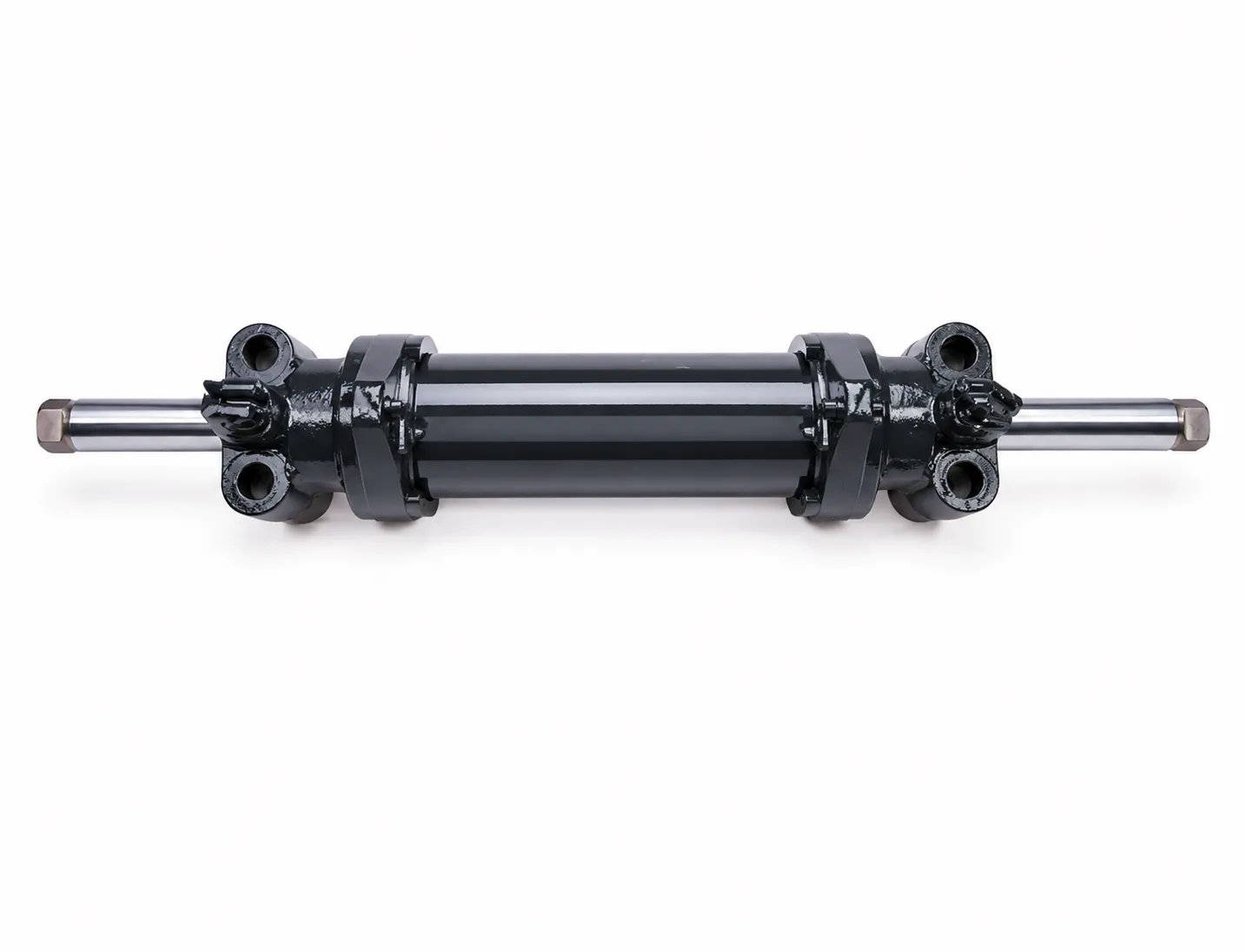
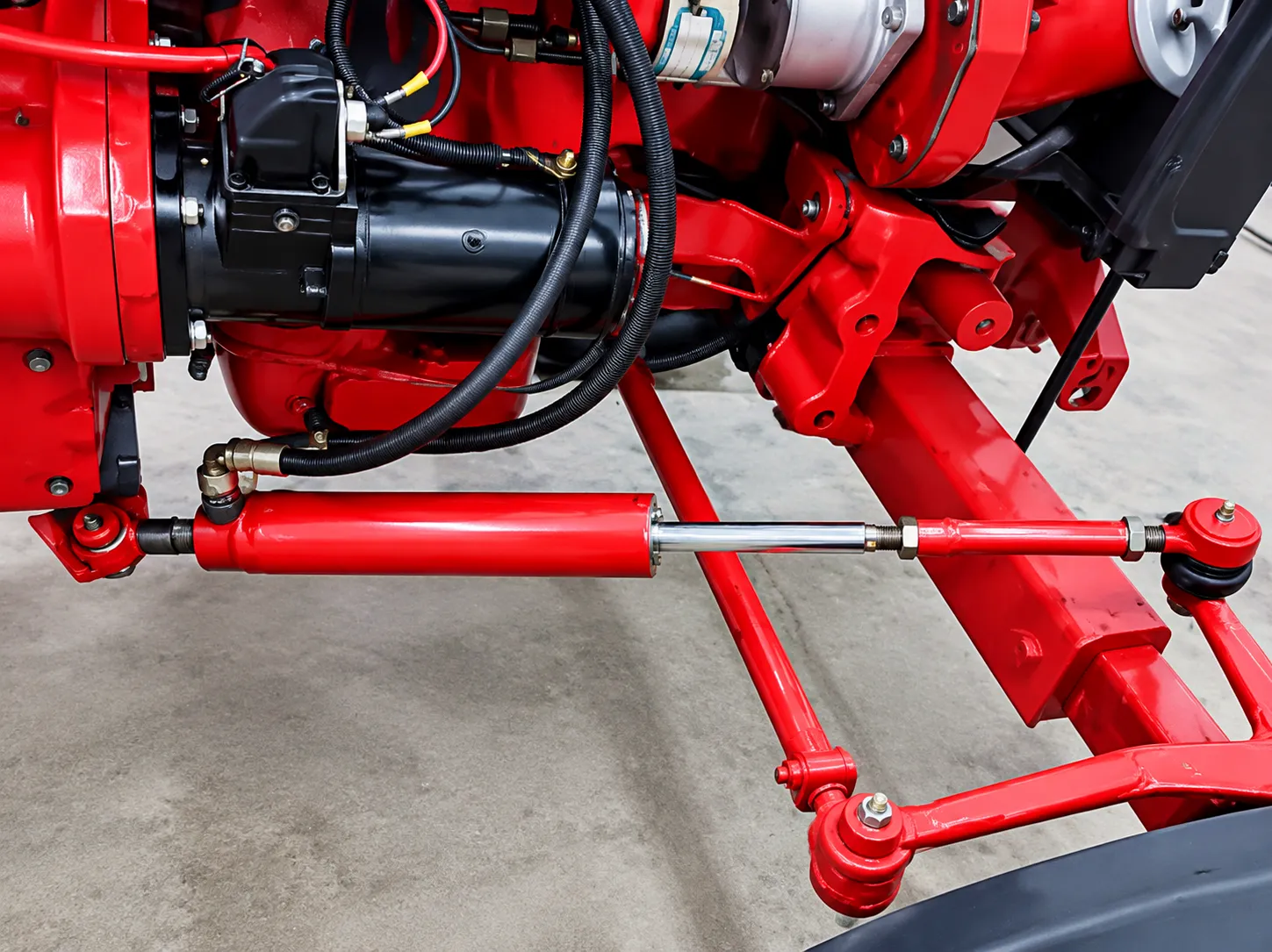 Ever Power operates a vertically integrated manufacturing facility with full in-house capability across tube processing, CNC rod turning, honing, seal assembly, and hydrostatic testing. The production floor covers over 12,000 square metres and is equipped with CNC deep-hole boring machines capable of achieving bore tolerances to H7 and surface finishes to Ra 0.2 µm across bore diameters from 20 mm to 320 mm. Every steering cylinder regardless of pressure rating undergoes a 100% hydrostatic proof test at 1.5× working pressure before despatch, with test records supplied as standard documentation — a requirement that several of our UK clients incorporate directly into their own goods-inward inspection procedures.
Customer Success Story: Sheffield Hydraulics Fleet Overhaul
🏫 Sheffield, South Yorkshire · Heavy Plant Maintenance Contractor
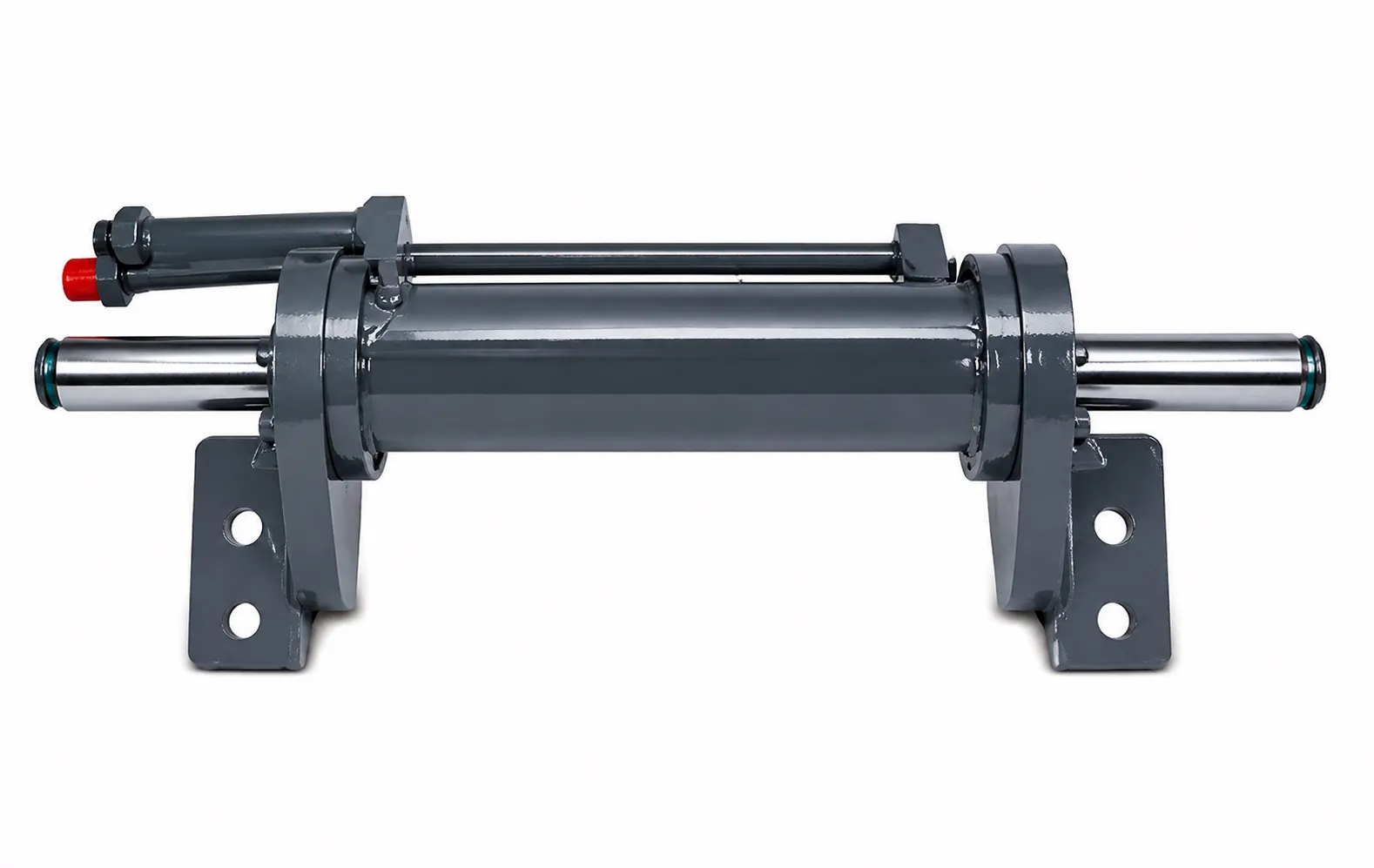 A mid-sized plant maintenance contractor based in Sheffield had been experiencing persistent steering reliability issues across a fleet of twenty-three wheeled excavators and six articulated dump trucks working on regeneration projects throughout South Yorkshire. The machines were running a mixed population of hydraulic steering cylinders sourced piecemeal over several years, with working pressure ratings ranging from 160 bar to 210 bar across a circuit operating at a steady 240 bar nominal. Predictably, the lower-rated units were failing at an average of fourteen months into service — consistently exhibiting seal extrusion, progressive rod scoring, and in two cases, catastrophic end-cap thread failure.
The contractor’s hydraulic systems engineer contacted Ever Power with full circuit schematics and a detailed failure log from the past three years. Ever Power’s application team conducted a pressure envelope analysis, identifying that the circuit experienced transient peaks reaching 285 bar during aggressive steering at full axle load — a figure that no 160-bar or 210-bar unit could sustain without accelerated degradation. Ever Power specified a custom medium-to-high-pressure steering cylinder rated to 300 bar, with a 90 mm bore, 56 mm rod, 42CrMo4 tube, PTFE-composite piston seals, and an FKM rod seal and wiper stack. External finish was 2K epoxy to survive the salt and grit environment of South Yorkshire winter groundwork.
Prototype delivery was achieved in four weeks. Following a six-month field evaluation across the three highest-duty machines in the fleet, zero seal failures were recorded and rod surface condition remained within tolerance at the 2,000-hour inspection. The contractor proceeded with a full fleet rollout of 29 cylinders, achieved in two production batches to align with their machine service schedule. Twelve months post-installation, the maintenance engineering log shows an 83% reduction in steering system downtime hours compared with the equivalent period prior to the Ever Power conversion.
★★★★★
“The pressure rating analysis Ever Power carried out before the order saved us from repeating the same mistake. They sized the cylinder to our actual peak transient pressure, not just the nominal circuit rating. That is the difference between a supplier and a partner.”
— Senior Hydraulic Systems Engineer, Sheffield Plant Contractor
★★★★★
“We had spec’d four different brands of cylinder on these machines over four years and kept having the same problems. The Ever Power 300-bar custom unit has now passed its 2,000-hour inspection on our three trial machines without a single seal change. The quality is immediately obvious when you strip one down — bore finish, rod hardness, seal stack quality. It’s a different category of product.”
— Fleet Maintenance Manager, South Yorkshire Infrastructure Group
★★★★★
“Ever Power’s delivery and documentation package is genuinely impressive. We received the proof-test certificates, material mill certificates, and dimensional inspection reports with the shipment — which goes straight into our goods-inward quality file. For a company our size operating under Tier 1 contractor requirements, that level of traceability matters enormously and it’s not something every hydraulic cylinder supplier can offer.”
— Procurement Director, West Midlands Heavy Plant Group
Frequently Asked Questions
Ready to Specify?
Talk to Ever Power’s Application Engineers
Send your circuit schematic, pressure data, and bore/stroke requirements. We will confirm the correct pressure rating, material specification, and seal package — and provide a quote within one working day.
edit by gzl