How a Hydraulic Steering Cylinder Actually Works
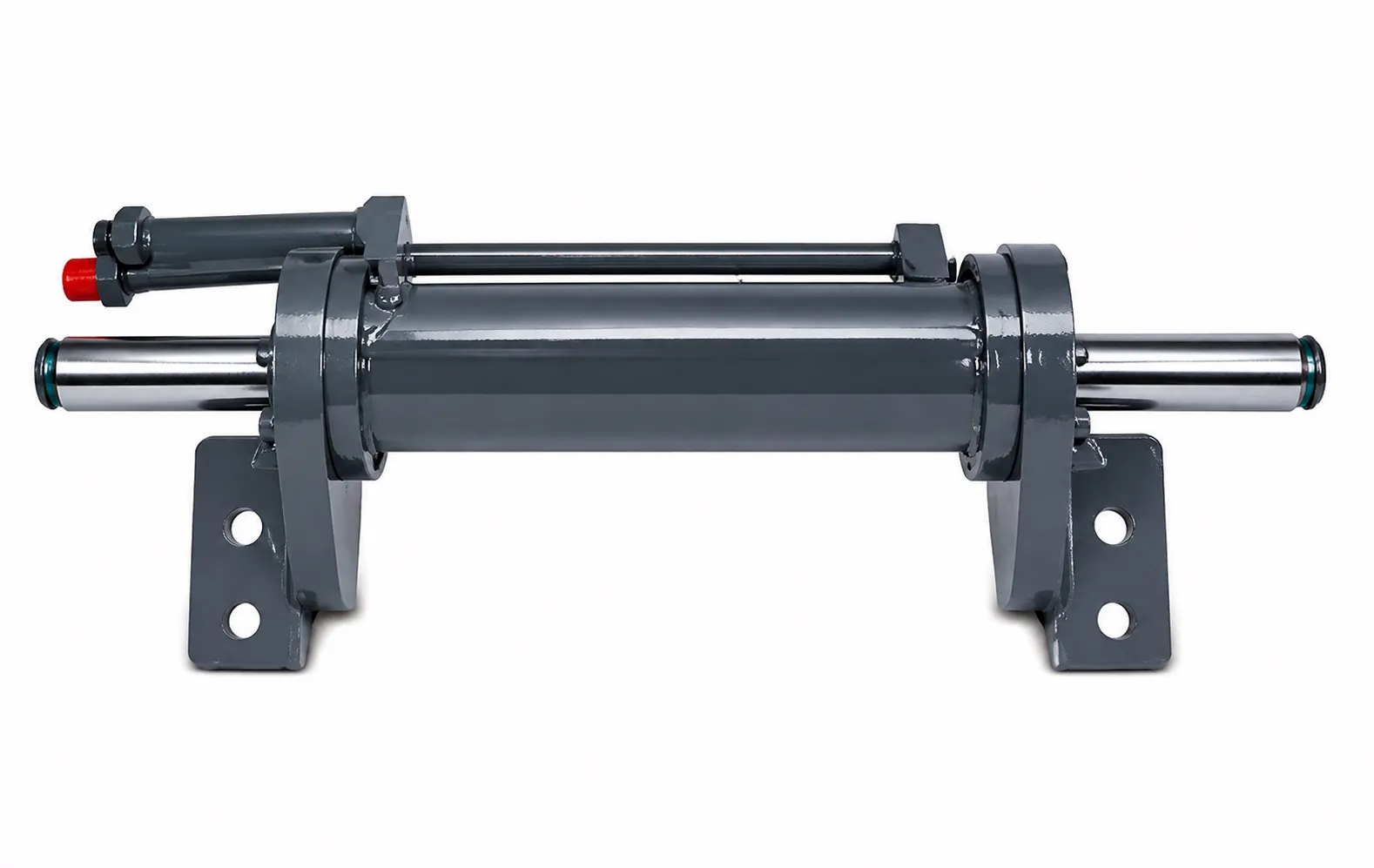
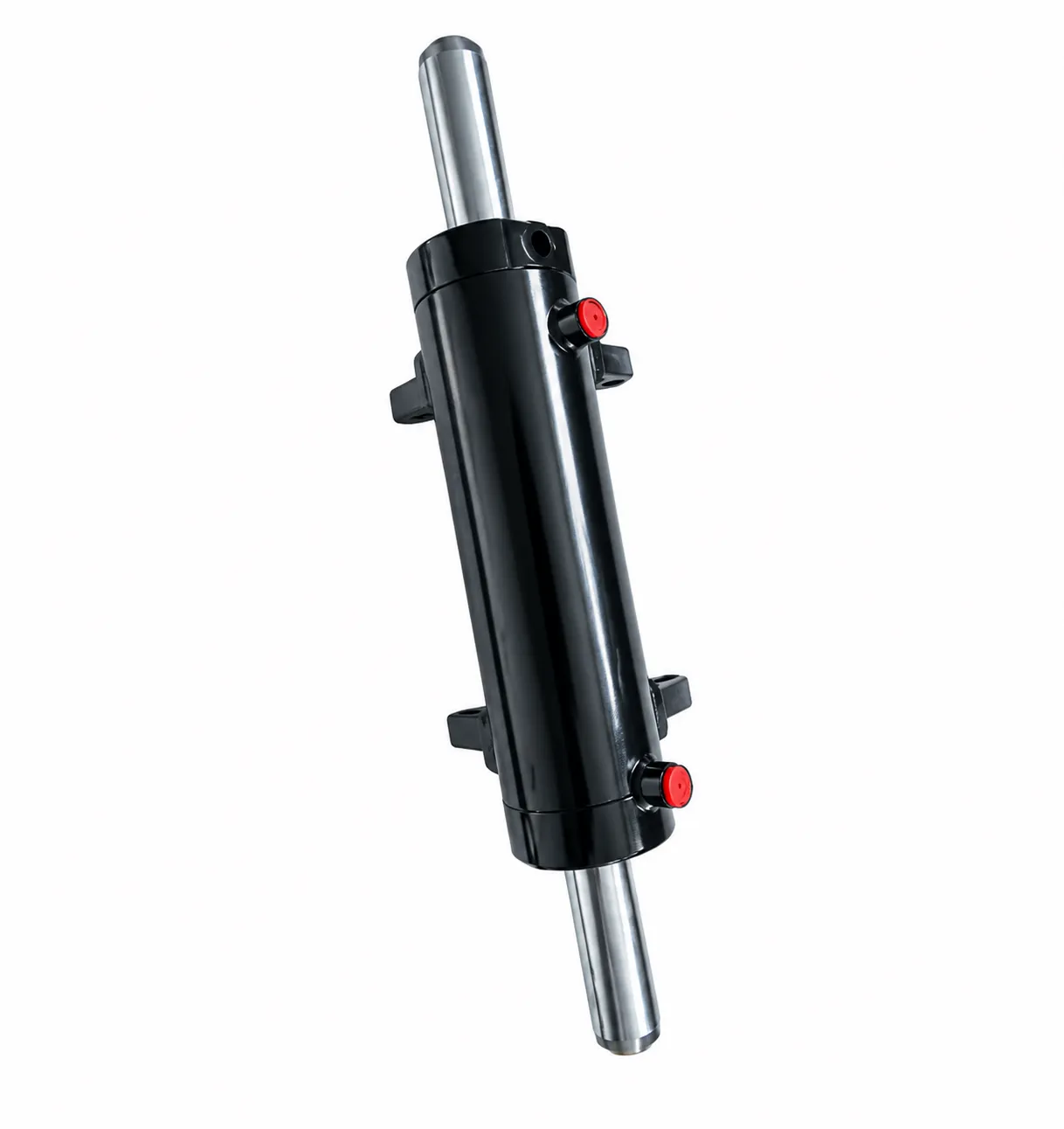
The hydraulic steering cylinder is a double-acting linear actuator: hydraulic fluid enters one chamber under pressure from the power steering pump, pushing the piston rod outward, while simultaneously the fluid in the opposing chamber is forced back to the reservoir through the return line. Reverse the flow — which happens the moment the driver turns the wheel in the opposite direction — and the rod retracts, pulling the steering linkage back across its arc. This bidirectional, pressure-driven motion delivers the precise, predictable response that distinguishes a properly specified cylinder from a generic hydraulic ram pressed into steering duty. The speed of actuation is governed by the pump flow rate and the cylinder bore, while the maximum force output is a product of the working pressure multiplied by the effective piston area. In most agricultural and construction applications operating across Sheffield’s steelworks logistics fleets or the port machinery at Felixstowe, bore sizes between 50 mm and 100 mm are standard, with rod diameters typically running at 55–70% of bore size to balance tensile strength against column stability during extension.
Sealing is the most mechanically critical sub-system within the assembly. Modern cylinders use a layered seal stack — typically a primary polyurethane lip seal backed by a nitrile wiper ring and a secondary PTFE buffer seal — to handle the combination of dynamic rod movement, fluid pressure, and the small amounts of angular misalignment that steering linkages inevitably introduce. When a hydraulic steering cylinder is installed with incorrect alignment or insufficient torque on the mounting pins, it is the seal stack that degrades first, because every fractional degree of angular error translates directly into uneven contact pressure on the sealing lips. Understanding this connection between installation quality and seal life is the single most valuable insight a workshop engineer can carry into the job.
Core Materials and Why They Matter for Long-Term Performance
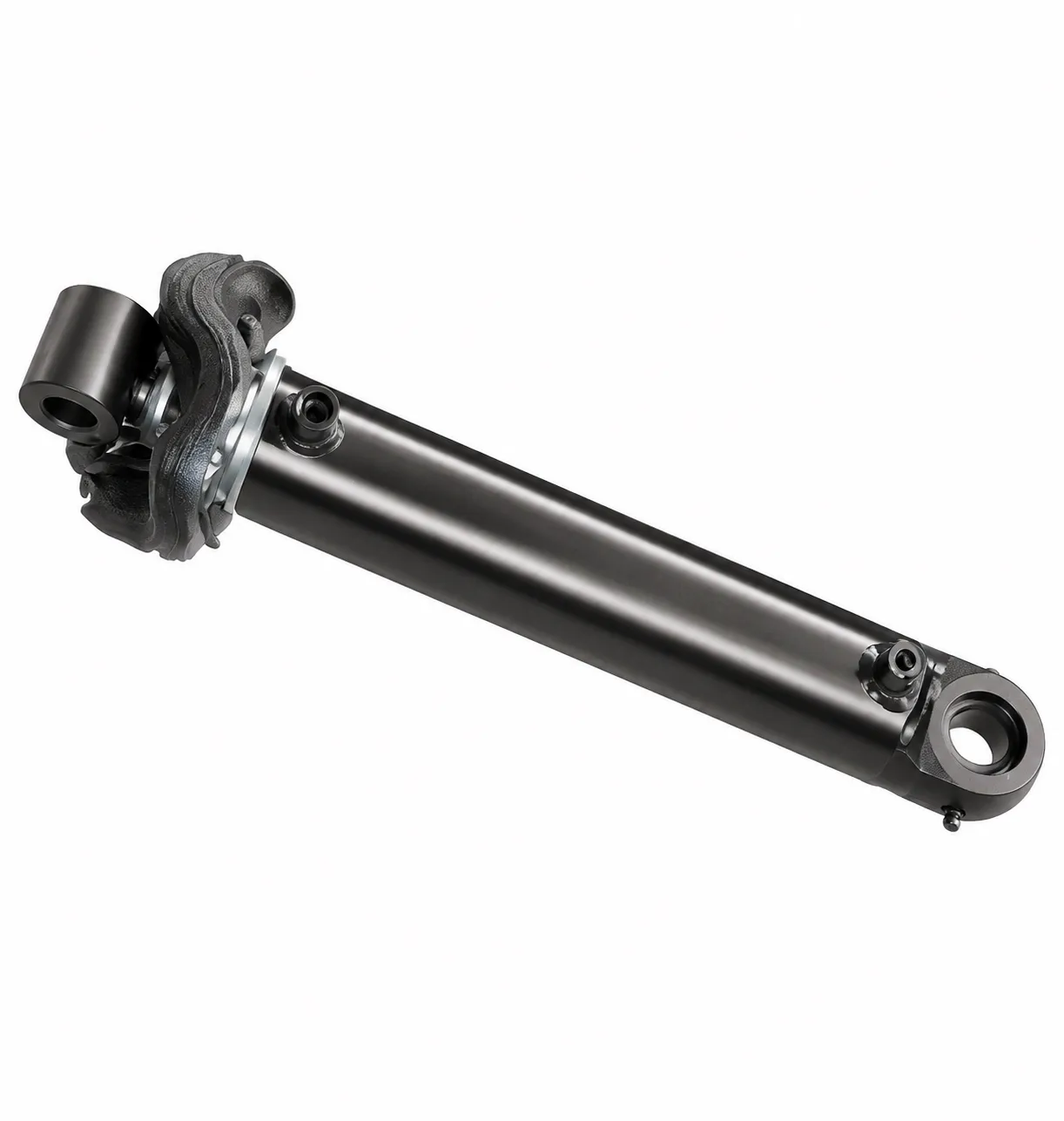
The barrel of a steering cylinder is almost universally manufactured from seamless cold-drawn steel tube, honed internally to a surface roughness of Ra 0.2–0.4 µm. That seemingly minor surface specification is not academic: it is the finish that allows the dynamic piston seal to maintain consistent contact without excessive friction or accelerated wear, and it directly determines whether a cylinder achieves its rated 15,000-hour service life or starts weeping fluid at 4,000 hours. For applications in corrosive coastal environments — from the Humber Estuary’s chemical processing plants to the offshore support yards of Aberdeen — barrels are specified with electroless nickel plating or hard chrome internal lining to resist chloride ingress, moisture contamination, and the micro-pitting that eventually destroys an unprotected bore surface. The piston rod demands an even harder surface treatment: 25–45 µm of hard chrome plate over a pre-ground high-tensile steel core (typically 40Cr or 42CrMo) delivers a hardness of 850–1000 HV, sufficient to resist the galling and scoring that occurs when the rod inevitably contacts the wiper seal under extreme side-load conditions. The end caps and mounting clevises are generally forged or machined from EN8 or EN24T steel, with spherical rod-end bearings in sintered bronze or maintenance-free PTFE-lined steel that allow the 2–3° of angular articulation necessary to accommodate linkage geometry changes during full-lock steering.
Technical Advantages That Define a Quality Steering Cylinder
Precision Bore Honing
Multi-stage honing achieves Ra ≤ 0.4 µm, ensuring the piston seal runs true across the full stroke without channelling. The practical benefit — measured in service intervals — is that cylinders honed to this standard consistently outlast budget alternatives by a factor of two to three in continuous-duty plant applications.
Composite Seal Architecture
The layered seal kit — polyurethane primary, PTFE buffer, NBR wiper — handles temperature excursions from -30 °C to +100 °C without degradation, making these cylinders equally suited to a Highland Scotland winter and a summer heat cycle in a Birmingham automotive pressing plant’s hydraulic press circuit.
Spherical Bearing End Mounts
Maintenance-free PTFE-lined rod-end bearings absorb the angular articulation inherent in all four-bar steering linkages, preventing the bending stress that would otherwise concentrate at the rod/gland interface. This single design decision eliminates the most common failure mode seen on cylinders fitted with solid bushed ends.
Full-Stroke Cushioning Option
Adjustable end-of-stroke cushioning valves decelerate the piston smoothly in the final 20–30 mm of travel, eliminating the hydraulic shock that accelerates fatigue cracking in weld seams and causes pressure spikes that can blow downstream circuit components. For full-lock applications — articulated dumpers, reach stackers, and road sweepers — this feature is effectively non-optional.
300 bar Pressure Rating
A 300 bar working pressure rating — with 450 bar proof test — gives procurement engineers the confidence that surge pressure events will not distort the barrel or set the seals. At 250 bar nominal system pressure, this 1.2× working safety margin is the standard minimum demanded by UK plant hire associations and most fleet insurers.
Product Technical and Performance Parameters
Complete Installation Procedure — Seven Stages in Detail
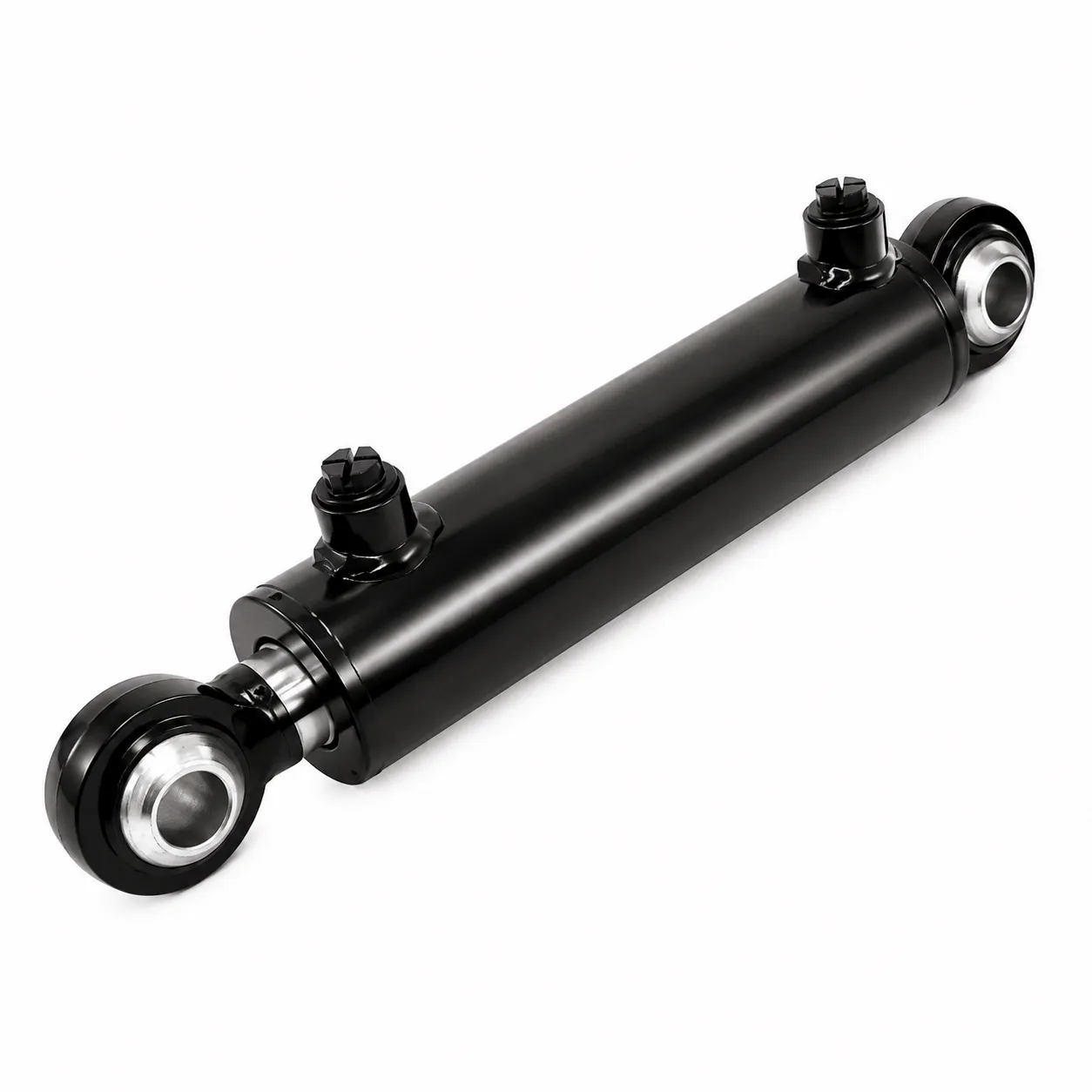
Stage 1 — Pre-Installation Inspection and Part Verification
Before a single bolt is touched, the replacement hydraulic steering cylinder must be matched precisely to the original specification. Pull the machine’s hydraulic schematic — not just the parts list — and confirm bore, stroke, port positions, thread standard (BSP for the vast majority of UK-registered plant), clevis dimensions, and mounting pin diameter. A cylinder that is 5 mm short on stroke will cause the vehicle to run out of hydraulic travel before reaching full mechanical lock, leading operators to apply excessive force to the steering wheel that transmits directly into linkage joints and the pump shaft. Visually inspect the new cylinder for transit damage: check the chrome rod surface for scratches or dings (anything deeper than 5 µm is a rejection criterion), verify that port plugs are intact and tight, and confirm that the seal lips visible through the gland are undamaged. Check that the mounting pin bore is round and to the specified tolerance — oval bores from inadequate machining allow the pin to rock and wear the clevis within the first few hundred operating hours. Document all findings with photographs against the machine’s work order before proceeding, as required under UK plant maintenance governance frameworks.
Stage 2 — Safe Machine Preparation and System Depressurisation
Position the machine on firm, level ground — a detail that matters far more than it sounds, because any list in the chassis changes the load distribution on the steering linkage and can cause the cylinder to spring sideways when the mounting pins are removed. Engage the parking brake, chock all wheels not being worked on, and place the steering wheel in the straight-ahead position. Many workshop accidents in Sheffield and Wolverhampton’s busy plant repair centres have resulted from residual pressure in steering circuits that were assumed to be dead. The correct procedure is to switch off the engine, then cycle the steering wheel fully left and right several times to exhaust any pressure stored in the circuit accumulators. Fit pressure gauges to both ports and verify zero reading before loosening any fittings. Use drip trays beneath the cylinder: hydraulic mineral oil is classified as a water pollutant under UK Environment Agency regulations, and a single litre spilled into an unlined drainage channel can constitute a reportable environmental incident. Drain the cylinder slowly into a clean, labelled container — used hydraulic fluid from multiple machines must not be mixed if you intend to analyse it for contamination indicators.
Stage 3 — Removal of the Failed Cylinder
Support the weight of the cylinder with a jack stand or sling before removing the mounting pins. A typical 80 mm bore × 400 mm stroke steering cylinder weighs between 18 and 35 kg — heavy enough to cause a dropped-component injury if unsupported. Remove the pin from the rod-end clevis at the steering arm connection point, then move to the barrel-end pivot. If the pins are corroded in position — a routine occurrence on outdoor plant that has not been greased regularly — apply penetrating fluid, wait 20 minutes, and use a pin punch and copper-faced hammer rather than direct steel-on-steel impact that risks mushrooming the pin head into the bore. Never use a gas torch to free a seized pin near a hydraulic fitting: hydraulic hoses and seals do not tolerate even brief radiated heat. Once the cylinder is free, examine the old mounting pins and bores immediately. Oval bores, cracked clevises, or pins worn more than 0.5 mm undersize must be repaired or replaced before the new cylinder goes in — otherwise the very failure mode you are correcting will recur within months.
Stage 4 — Cleaning the Mounting Points and Hose Connections
Hydraulic system contamination is the leading cause of premature cylinder failure globally, and this stage is where most of it is introduced. Clean the mounting bores with lint-free cloth and brake cleaner, then measure them with a pin gauge or telescoping gauge to confirm they are within the specified tolerance (typically H8 or H9 fit for the pin). Clean the hydraulic port faces on the machine — the flat machined surfaces that mate with the hose fittings — and inspect the thread condition. BSP threads that are crossed or galled must be chased with a tap before fitting new hose adaptors; a fitting that seals on distorted threads will eventually weep, and on a steering circuit, any external leak demands immediate machine withdrawal from service. Flush both hose ends with clean hydraulic fluid of the correct viscosity grade — do not use shop air, which introduces moisture and particulates — before capping them temporarily with clean plastic caps. If the hydraulic fluid in the machine is due for a change by hours or condition, this is the optimum moment to do so, rather than contaminating a new cylinder with degraded fluid that may already contain moisture, oxidation products, or metal wear particles from the failed component.
Stage 5 — Fitting the New Hydraulic Steering Cylinder
Lubricate the mounting pins with the machine manufacturer’s specified grease — typically a lithium-complex EP2 grade for outdoor plant applications — and slide the barrel-end pin into position. The pin must slide smoothly by hand for the final 20 mm of travel; if it requires driving in at this stage, the bore is either out of tolerance or misaligned, and both conditions must be resolved before the rod end is attached. Align the cylinder in the dead-straight position before fitting the rod-end pin, because the linkage geometry will determine the cylinder’s neutral position and any angular offset introduced here will persist as a constant side-load on the rod seal. Fit all locking devices — circlips, grease nipple-threaded retaining screws, lock tabs, or split pins as specified — and torque them to the machine manufacturer’s values. Then connect the hydraulic hoses: the cap-end hose (full-bore end) always carries higher pressure during extension, so inspect its condition with particular care before making the final connection. Hand-tighten the BSP fittings until the sealing face contacts, then tighten to the standard torque figure (for a 1/2″ BSP adaptor, typically 54–61 N·m in line with BFPA guidance) using a calibrated torque wrench. Never rely on feel alone for hydraulic fittings — both over-tightening and under-tightening are leak pathways.
Stage 6 — Air Bleeding and Initial Pressurisation
Air trapped in a newly installed steering cylinder causes three distinct problems: spongy, inconsistent steering response at the beginning of a turn (as air compresses before fluid pressure builds); cavitation damage to the barrel bore as fluid flashes across the vapour bubble boundary; and oxidation of the hydraulic fluid from entrained oxygen. The bleeding procedure begins with the engine running at idle and the system pressure relief valve set below normal working pressure. Slowly cycle the steering from lock to lock five or six times, pausing at each extreme to allow air to migrate toward the highest point in the circuit — which in most installations is at the hose connections on the cylinder. Crack the high-side port fitting very slightly while the cylinder is under extension pressure: a small amount of air-contaminated fluid will escape, followed by a clean, bubble-free stream. Re-tighten the fitting, cycle the steering again, and repeat until all strokes produce smooth, consistent resistance. Check the reservoir level after each cycle — it will drop as the cylinder fills — and top up with clean fluid of the correct grade. Never allow the reservoir to run low during this process, as sucking air through the pump inlet will extend the bleeding procedure significantly and risks pump cavitation damage.
Stage 7 — Pressure Test, Geometry Check, and Sign-Off
Raise system pressure to normal working level and hold the cylinder at full extension under load for two minutes. During this soak period, physically inspect every port connection, the gland seal area around the rod, and the barrel-end closure weld for any sign of weeping. A torchlight and a piece of clean white paper held against the rod travel area will reveal even the smallest external leak as a fine stain. If the cylinder passes the static pressure test, move to the functional steering geometry check: with the front wheels on turntable plates (if available) or measured against chalk marks on the workshop floor, verify that the left-lock and right-lock angles match the manufacturer’s specification to within ±0.5°. Any deviation indicates that the cylinder stroke is incorrect for the machine, or that a linkage component has shifted during reassembly. Record the final torque values, fluid top-up quantity, and geometry measurements on the machine’s maintenance card as required under UK LOLER and PSSR 2000 inspection records, and sign off the job. The machine is now cleared for return to service.
Recommended Hydraulic Cylinder Products for Steering and Forklift Applications
For operations requiring matched replacement cylinders or upgraded hydraulic actuation in materials handling, Ever Power’s forklift attachment cylinder range offers a directly relevant solution set. The cylinders listed below share the precision honing, composite seal architecture, and BSP port threading that make them equally suitable for installation in UK plant and warehousing environments.
Mini Forklift Attachment Hydraulic Cylinder
Compact bore profile, lightweight alloy head construction, and full double-acting operation make this cylinder ideal for mini-forklift attachments in narrow-aisle UK warehousing and logistics operations where weight and clearance are tightly constrained. It uses the same honed barrel and layered seal stack architecture described throughout this guide, making the installation procedure directly transferable.
Medium-Duty Forklift Attachment Hydraulic Cylinder
Rated for higher thrust loads, this medium-duty variant covers the attachment requirements of counterbalanced and reach trucks carrying up to 5-tonne rated loads — the range that dominates UK distribution centre and dockside operations from Southampton to the Port of Liverpool. Hard chrome rod, 250 bar working pressure, and configurable port positions make it a versatile replacement across multiple machine brands without modification.
Industrial Application Scenarios Across UK Sectors
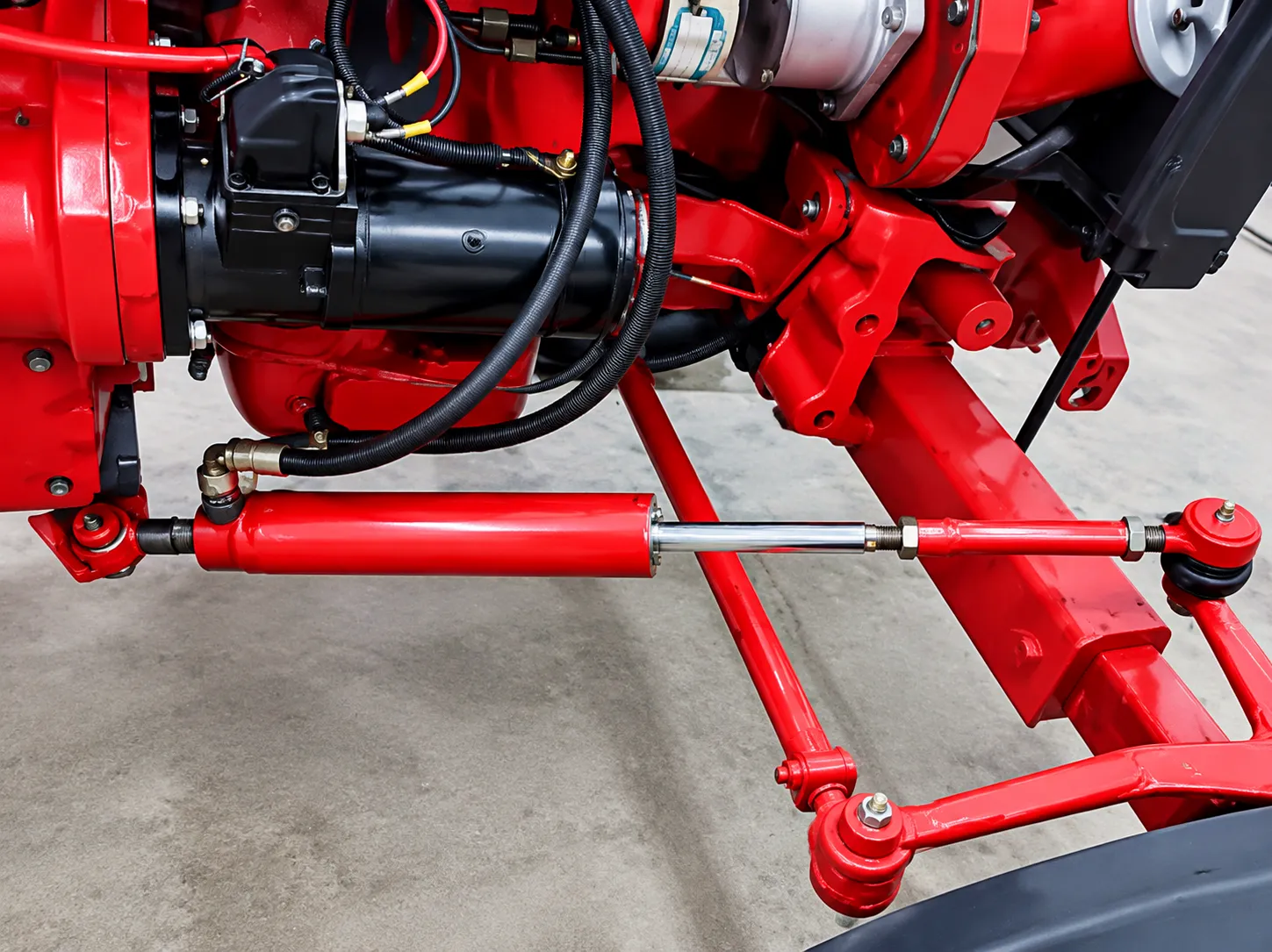
Agricultural Machinery — Lincolnshire and Yorkshire Arable Operations
Modern self-propelled sprayers, combine harvesters, and large tractors working the arable plains of Lincolnshire and the Yorkshire Wolds rely on hydraulic steering cylinders that can tolerate continuous dynamic loading across uneven ground, sometimes at travel speeds exceeding 30 km/h. The installation procedure described in this guide is directly applicable to these machines, with the additional requirement that all fittings be torqued against the machine’s vibration-loosening specification rather than standard static values — a distinction that matters when a tractor is crossing a ploughed field at rated speed. Seasonal demand peaks in these regions mean that correct initial installation is particularly important: a steering cylinder failure during harvest can cost an operator thousands of pounds per hour in lost throughput.
Construction Plant — Birmingham and Sheffield Infrastructure Projects
Articulated dump trucks, motor graders, and wheeled loaders working on civil engineering projects across the West Midlands and South Yorkshire demand steering cylinders capable of withstanding the severe shock loading that occurs when a machine negotiates a rocky spoil heap or crosses a kerbed site entrance at speed. The 300 bar proof-tested cylinders in Ever Power’s range are specified precisely for these conditions. Birmingham’s ongoing city centre infrastructure development, Midland Metro extensions, and major distribution centre construction sites have created sustained demand for plant maintenance services that can deliver same-week turnaround on hydraulic cylinder replacements — a requirement that Ever Power’s UK supply chain logistics is structured to meet.
Road Haulage — Steering on HGV Trailers and Specialist Vehicles
Tag-axle steering cylinders on multi-axle heavy goods trailers, and the hydraulic steering systems of specialist vehicles such as low-loaders, concrete pump trucks, and road sweepers, present installation challenges that differ from standard plant equipment — principally because these cylinders often operate in exposure to road salt, grit, and wash water throughout the winter months. Cylinder specifications for this application class emphasise enhanced corrosion protection on the rod surface and the use of BSPP fittings with captive-seal face connections rather than tapered threads, to maintain a reliable seal against the vibration and thermal cycling of road service. The step-by-step procedure outlined here applies equally well to HGV-class steering cylinders, with the additional requirement that any work on road-going vehicles must be carried out by a competent person under DVSA roadworthiness guidelines.
Marine and Port Handling — Reach Stackers and Port Cranes
Port equipment at UK facilities such as Felixstowe, Southampton, and Tilbury operates in one of the most corrosive environments any hydraulic cylinder can face — a combination of salt air, constant moisture, and the lubricant contamination typical of busy operational areas. Reach stackers and empty container handlers use large-bore steering cylinders (80–150 mm bore) that must maintain reliable function across double-shift operational schedules. The installation procedure for these cylinders follows the same seven stages described in this guide, but requires electroless nickel plated or stainless steel barrel options, high-capacity spherical bearings to handle the elevated side-loads from the long steering arms, and fluorocarbon seal kits where ambient temperatures can exceed 80 °C near engine exhaust routing. Ever Power supplies port equipment customers with documentation packages that support Lloyd’s Register and Bureau Veritas third-party inspection requirements.
Ever Power — Precision Manufacturing and Custom Engineering
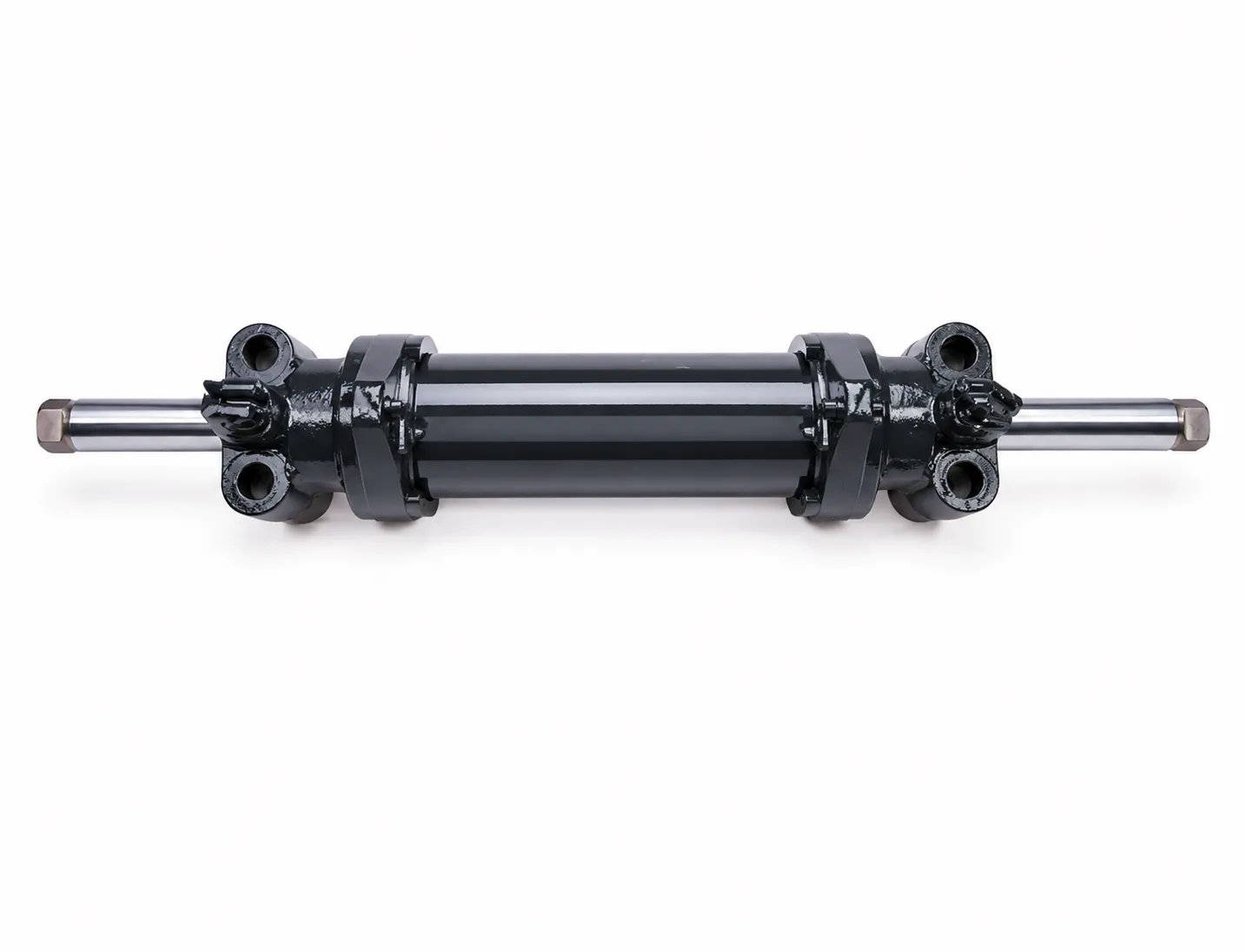
Ever Power operates a vertically integrated hydraulic cylinder manufacturing facility with deep tube-preparation capability, in-house hard chrome plating, precision CNC machining, and a dedicated seal assembly and pressure-testing line. The manufacturing footprint allows Ever Power to control every tolerance-critical stage of production — from the initial bore honing pass to the final 1.5× proof pressure test — without sub-contracting the steps where quality escapes most commonly occur at lower-cost manufacturers. For UK buyers, this translates into the confidence that every cylinder dispatched meets the declared specification and has been individually tested, not batch-sampled.
The customisation capability at Ever Power covers the full range of parameters that UK engineering buyers encounter when dealing with OEM-discontinued specifications or unusual machine configurations. Bore sizes from 32 mm to 320 mm, stroke lengths to 2,000 mm, non-standard port positions including side-porting and end-porting combinations, alternative seal materials (fluorocarbon, HNBR, or EPDM) for specific fluid compatibility requirements, and custom surface treatments including zinc-nickel alloy plating for coastal applications are all within the standard product engineering scope. Lead times for custom cylinders typically run at 15–25 working days for designs within the existing tooling envelope, and Ever Power’s engineering team can provide certified material test reports (MTC3.1 to EN 10204) and dimensional inspection reports for customers whose procurement processes require third-party documentation.
Customer Success Story — Heavy Plant Fleet, Sheffield, South Yorkshire
A plant hire company operating a mixed fleet of 24 wheeled loaders and articulated dump trucks from its depot on Sheffield’s Lower Don Valley — serving construction sites across South Yorkshire, Derbyshire, and Nottinghamshire — was experiencing an unusually high rate of hydraulic steering cylinder seal failures on its mid-size 12-tonne articulated dumpers. Field investigation traced the root cause to a combination of factors: the original equipment cylinders were specified with solid-bushed rod ends that lacked the angular articulation range needed for the site terrain the machines were working on, and the seals were NBR compounds that degraded rapidly when the machines were occasionally operated with a biodegradable hydraulic fluid that the customer had begun using for environmental compliance on sensitive sites.
The fleet maintenance manager contacted Ever Power and worked with the engineering team to develop a drop-in replacement specification: the same external envelope and pin geometry as the original cylinder, but with PTFE-lined spherical rod-end bearings to provide ±3° of angular accommodation, fluorocarbon (FKM) seals compatible with both mineral oil and biodegradable fluid, and a 300 bar working pressure rating with 450 bar proof test. The cylinders were manufactured to EN 10204 3.1 certificate standard, allowing them to be logged against the machines’ statutory LOLER inspection records without additional testing. Ever Power completed the first batch of 24 cylinders within 18 working days and delivered DDP to the Sheffield depot via a UK-based logistics partner, eliminating the import process that the maintenance manager had feared.
Within the first six months of operation, the seal failure rate on the upgraded cylinders dropped to zero across the fleet. The company calculated a saving of approximately £28,000 in unplanned downtime and emergency repair costs over the following twelve months compared to the previous year’s figures — a figure that included the full cost of the cylinder replacements and made the decision clearly cost-justified. The fleet manager subsequently placed a standing annual supply agreement with Ever Power for the full dumper fleet, along with a separate agreement covering the steering cylinders on five motor graders.
★★★★★
“We have tried three different suppliers for this particular cylinder specification and Ever Power is the only one that got the spherical bearing clearance right on the first batch. No shimming, no modification — they went straight on. Six months in and not a single seal event across the fleet.”
— Fleet Maintenance Manager, Heavy Plant Hire, Sheffield
★★★★★
“The EN 10204 3.1 certificates came with the delivery, which our LOLER inspection contractor accepted without question. That documentation alone saved us a day of site shutdown waiting for a certifier. The cylinders themselves are built to a noticeably higher standard than the OEM replacements we had been using.”
— Procurement Supervisor, Civil Engineering Contractor, West Yorkshire
★★★★★
“We operate on biodegradable hydraulic fluid across two of our depots for environmental site compliance, and finding a steering cylinder supplier who could specify FKM seals at a competitive price was difficult until we found Ever Power. The technical back-and-forth before the order was placed was genuinely helpful — they understood the application immediately.”
— Operations Director, Quarry and Bulk Handling Operator, Nottinghamshire
Frequently Asked Questions
How long does it typically take to install a replacement hydraulic steering cylinder on a UK-registered wheeled loader?
On a well-prepared machine with all tooling and the replacement cylinder on hand, a competent hydraulic engineer should complete the full seven-stage installation procedure — including system bleeding and pressure testing — in two to four hours. The variable is almost always the condition of the original mounting pins: seized or worn pins can add one to three hours to the job depending on the severity. Planning ahead with penetrating fluid applied the day before removal starts is the single most effective way to control installation time.
What is the typical price range for a custom hydraulic steering cylinder from a UK-focused supplier, and how long does delivery take?
Standard bore range cylinders (40–100 mm) with no unusual customisation requirements are typically priced between £280 and £850 per unit depending on specification. Heavy-duty or extended bore cylinders (100–200 mm) with custom seal materials or port configurations generally fall in the £900–£2,400 range. Lead times for in-stock or standard catalogue cylinders are typically 3–7 working days DDP to UK delivery address; custom-specified cylinders run 15–25 working days. Ever Power can provide a formal quotation with delivery confirmation within one working day of receiving your specification — contact [email protected] with your bore, stroke, pressure rating, and port thread requirement.
Which UK compliance standards apply when replacing a hydraulic steering cylinder on plant equipment, and who is qualified to carry out this work?
In the UK, hydraulic steering system work on lifting plant falls under the Lifting Operations and Lifting Equipment Regulations (LOLER) 1998 and the Pressure Systems Safety Regulations (PSSR) 2000. The work must be carried out by a competent person — typically someone with demonstrated hydraulic engineering training and familiarity with the specific machine type. After replacement, the cylinder and steering system should be inspected as part of the machine’s statutory periodic examination, and the inspection record updated. For road-going vehicles, any work affecting steering must comply with DVSA roadworthiness standards and may require a post-repair inspection by a qualified DVSA-approved tester.
Where in the UK can I source a hydraulic steering cylinder supplier who can provide same-week delivery and custom bore specifications for Birmingham-based plant?
Ever Power works with UK-based logistics partners to provide DDP delivery to any Birmingham, Sheffield, Manchester, or Leeds address within 3–7 working days for standard specifications, and can quote custom bore cylinders with a confirmed lead time on the same day as enquiry. For urgent requirements — a machine down on a live construction site — Ever Power’s sales team can expedite production scheduling and priority despatch for time-critical situations. The best starting point is an email to [email protected] with the machine make and model, the failed cylinder’s bore and stroke dimensions, and your required delivery postcode.
How do I know when my hydraulic steering cylinder needs replacing rather than a seal kit, and what are the cost implications of each option?
A seal kit replacement is cost-effective when the cylinder rod surface is free of scoring deeper than 5 µm, the barrel bore is within original honed dimensions, and the end caps and welds are undamaged. If the rod is visibly scored, the barrel has been distorted by over-pressure or physical impact, or the clevis bores are oval, a new cylinder is the more economical long-term solution because seal kits fitted to a worn bore or a scored rod will fail again within a fraction of the cylinder’s normal service life. As a rough guide, if a single seal kit failure has already occurred on a cylinder that has been in service for more than 6,000 hours, replace the complete assembly rather than reseal — the total cost of two reseal events plus downtime will typically exceed the cost of a new cylinder from a quality supplier like Ever Power.
What type of hydraulic fluid should be used after installing a new steering cylinder in agricultural machinery operating in the UK climate?
The machine manufacturer’s specified hydraulic fluid grade should always be used as the starting point. For most UK agricultural machinery operating in ambient temperatures between -5 °C and +30 °C, an ISO VG 46 or ISO VG 68 anti-wear hydraulic oil is typical. If the machine operates on environmentally sensitive sites — near watercourses, in Countryside Stewardship scheme areas, or on organic farms — a biodegradable ester-based fluid may be required, in which case the cylinder must be specified with FKM (fluorocarbon) seals rather than standard NBR. Ever Power can supply cylinders pre-specified for biodegradable fluid compatibility, which is increasingly relevant for UK farming operations under the current agricultural environmental compliance framework.
Ready to order or need technical advice?
Contact Ever Power’s Engineering Team Today
Get a Quote — [email protected]
edit by gzl