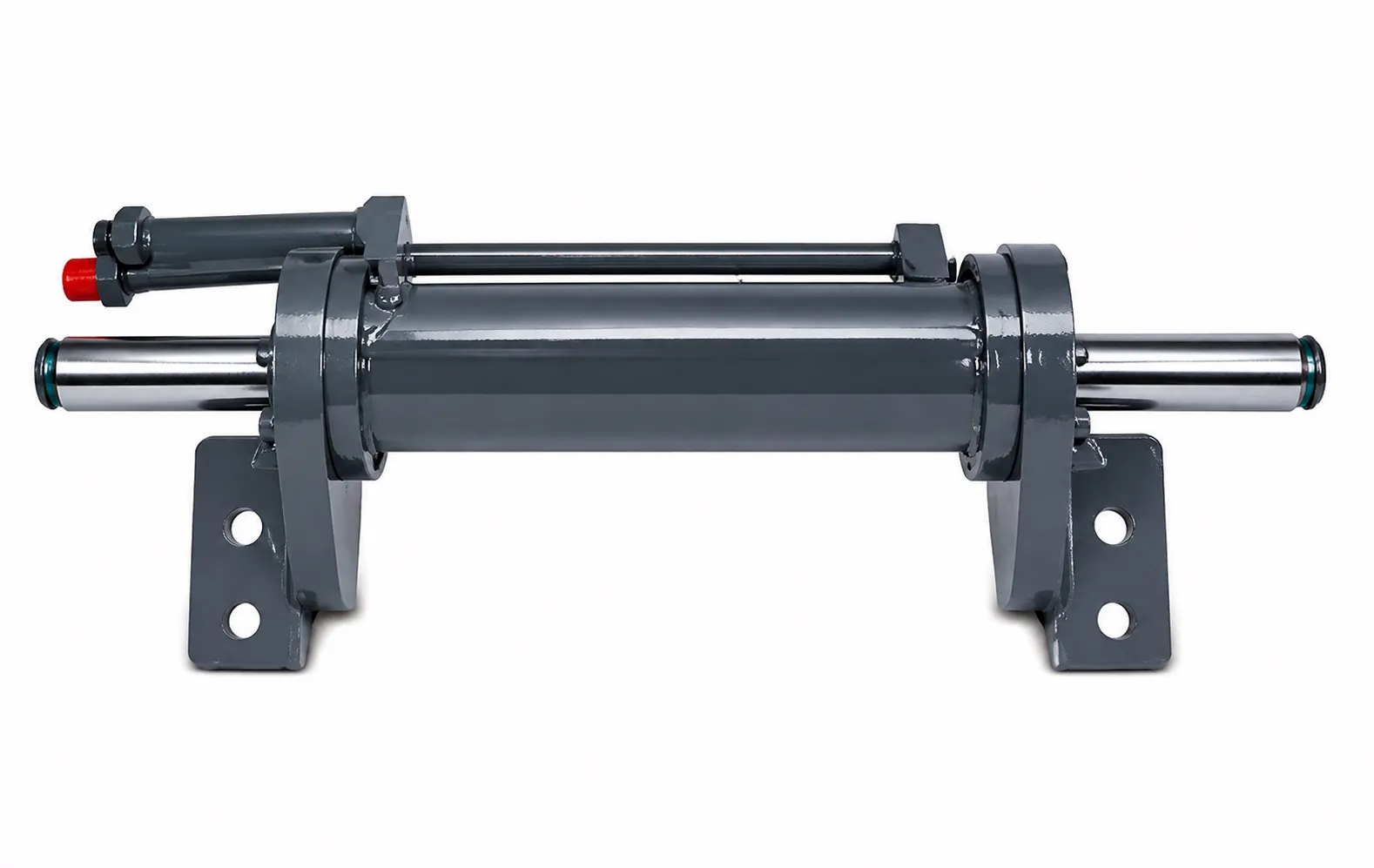
Deep underground in the coal seams of County Durham, or across the open-cast limestone quarries stretching through the Derbyshire Dales, the vehicles that keep Britain’s extractive industries moving are subjected to forces that most mechanical components simply cannot survive. These are environments defined by crushing loads, extreme thermal cycling, pervasive abrasive dust, and shock vibration that transmits through every joint and seal. Within such conditions, the steering cylinder is not merely a hydraulic actuator — it is the safety-critical component that decides whether a 120-tonne articulated dump truck holds its line on a rain-slicked haul road or slides into catastrophe. Understanding how heavy-duty steering cylinders function, what engineering choices determine their longevity, and why specification matters enormously is therefore not an academic exercise. It is a question of operational continuity, workforce safety, and total cost of ownership for every mine operator, quarry manager, and fleet procurement team across the United Kingdom.
Working Principle: How a Steering Cylinder Controls a Mining Machine
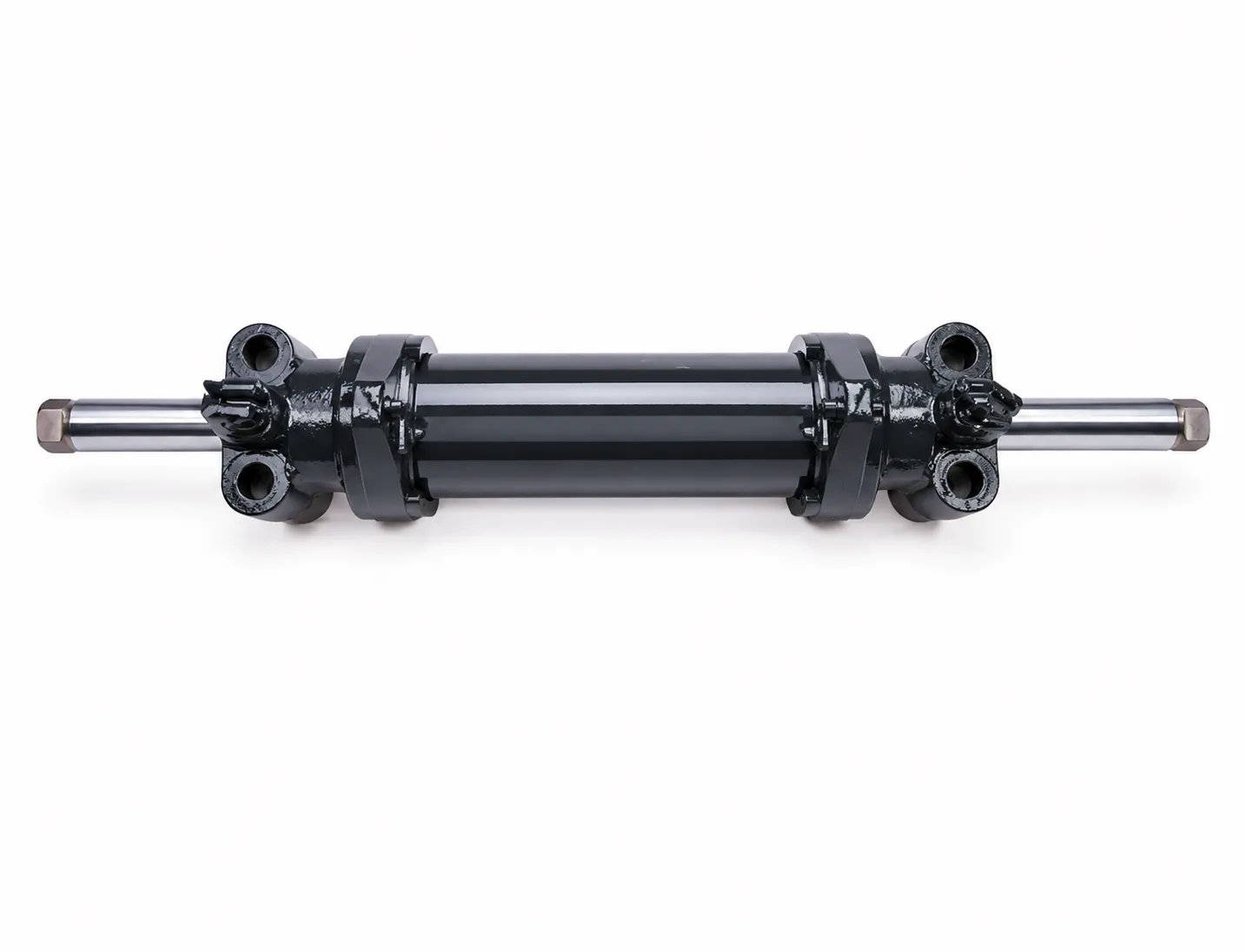
A steering cylinder operates as a double-acting linear hydraulic actuator positioned within a vehicle’s steering linkage. When the operator turns the wheel — whether in the cab of a Liebherr T 282C haul truck on a Welsh slate quarry or a Sandvik LH514E underground loader navigating a narrow drive — high-pressure hydraulic fluid, typically at operating pressures between 200 and 350 bar, is directed by the steering control valve into one side of the cylinder bore. This creates a pressure differential across the piston face, generating a force that moves the piston rod outward. The rod is connected via a clevis or trunnion mount to the steering linkage arm; as it extends or retracts, the front axle or articulation frame pivots, changing the direction of travel. The return stroke is equally important: fluid evacuated from the opposite chamber must flow freely back to the reservoir, controlled precisely so that steering response remains progressive rather than jerky. In mining vehicles, this entire cycle must repeat tens of thousands of times across a service life measured in years, under loads that make the steering cylinders of on-highway vehicles look trivial by comparison.
Core Materials: What Makes a Heavy-Duty Steering Cylinder Built to Last
Material selection for mining-grade steering cylinders is a discipline that sits at the intersection of metallurgy, tribology, and field-failure analysis. The barrel, which must withstand sustained internal pressures exceeding 300 bar without deforming, is typically honed from seamless cold-drawn steel tube in grades such as E355 or St 52. The internal bore finish — usually Ra 0.4 µm or better — is critical because surface roughness directly determines seal life and leakage rate under cyclic loading. The piston rod, which is exposed to abrasive dust, mud, and water ingress characteristic of UK quarrying environments from Cumbrian slate workings to the limestone quarries of the Mendip Hills, requires a base material of high-tensile chrome-molybdenum steel, typically 42CrMo4 or equivalent. Over this, a hard chrome plating of 20–30 µm thickness provides the corrosion and abrasion resistance needed to maintain dimensional integrity across extended exposure cycles. More advanced specifications now employ induction-hardened rods with ceramic thermal spray coatings for particularly aggressive applications.
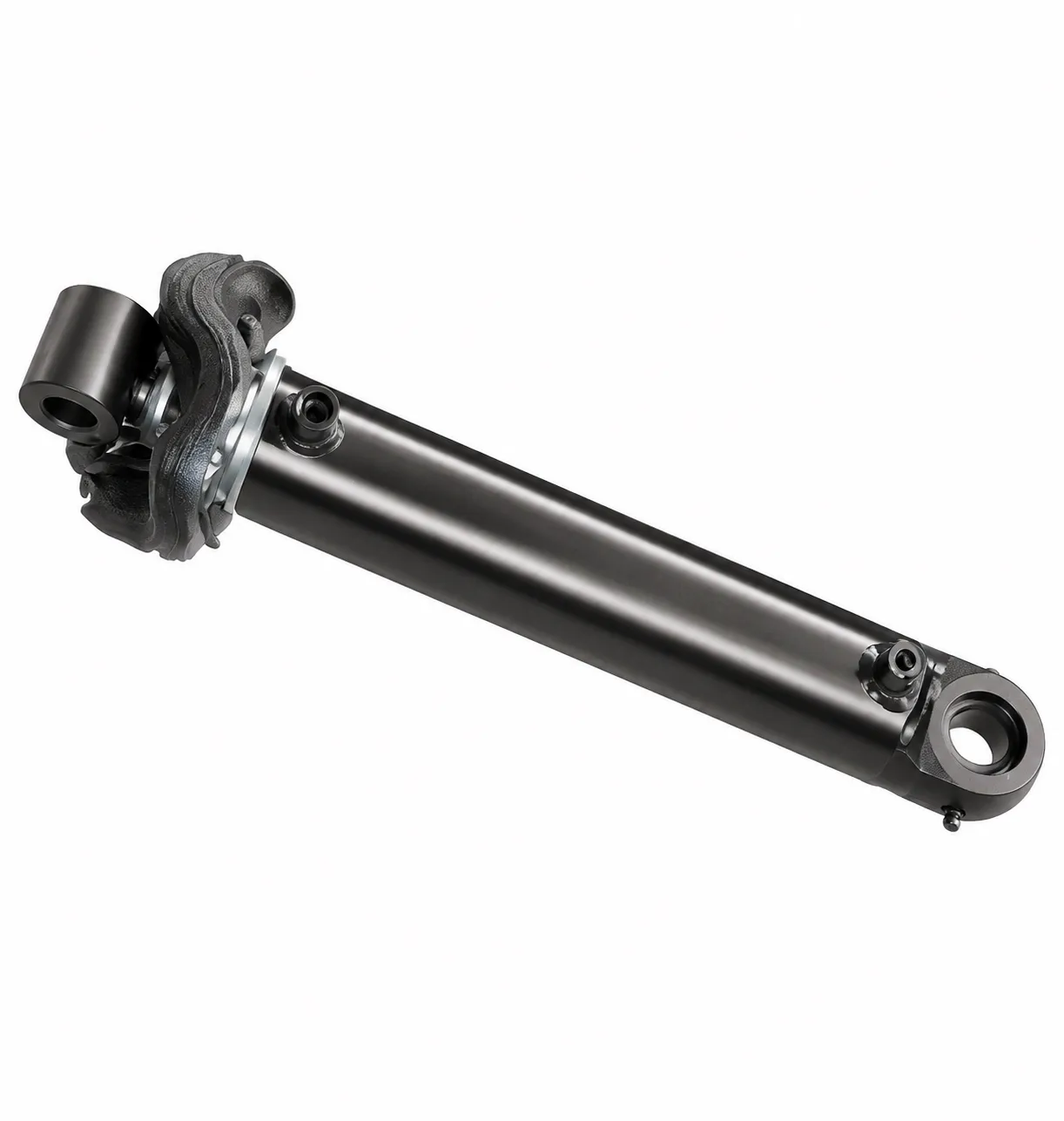
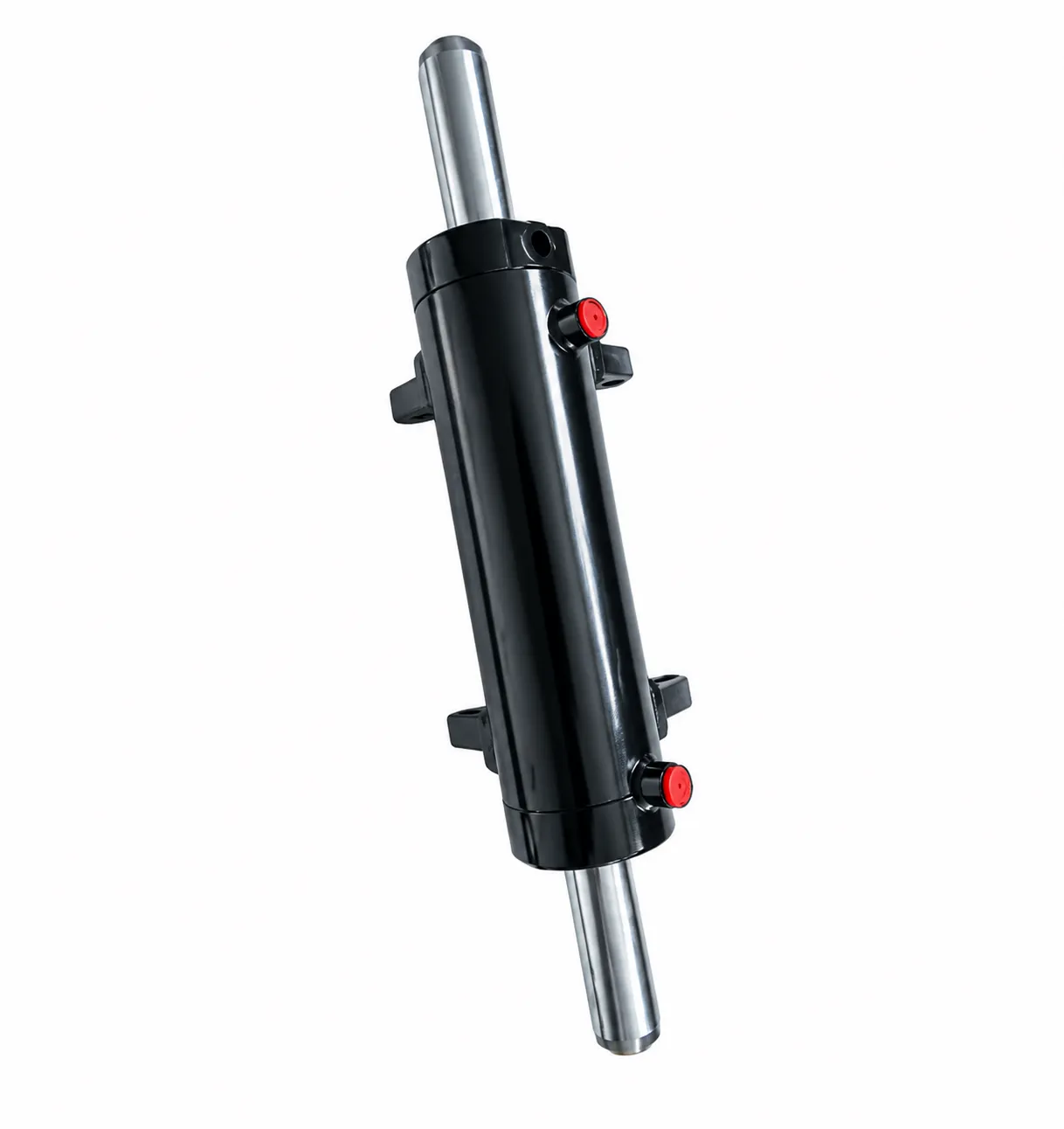
Product Advantages: Why Heavy-Duty Steering Cylinders Outperform Standard Alternatives
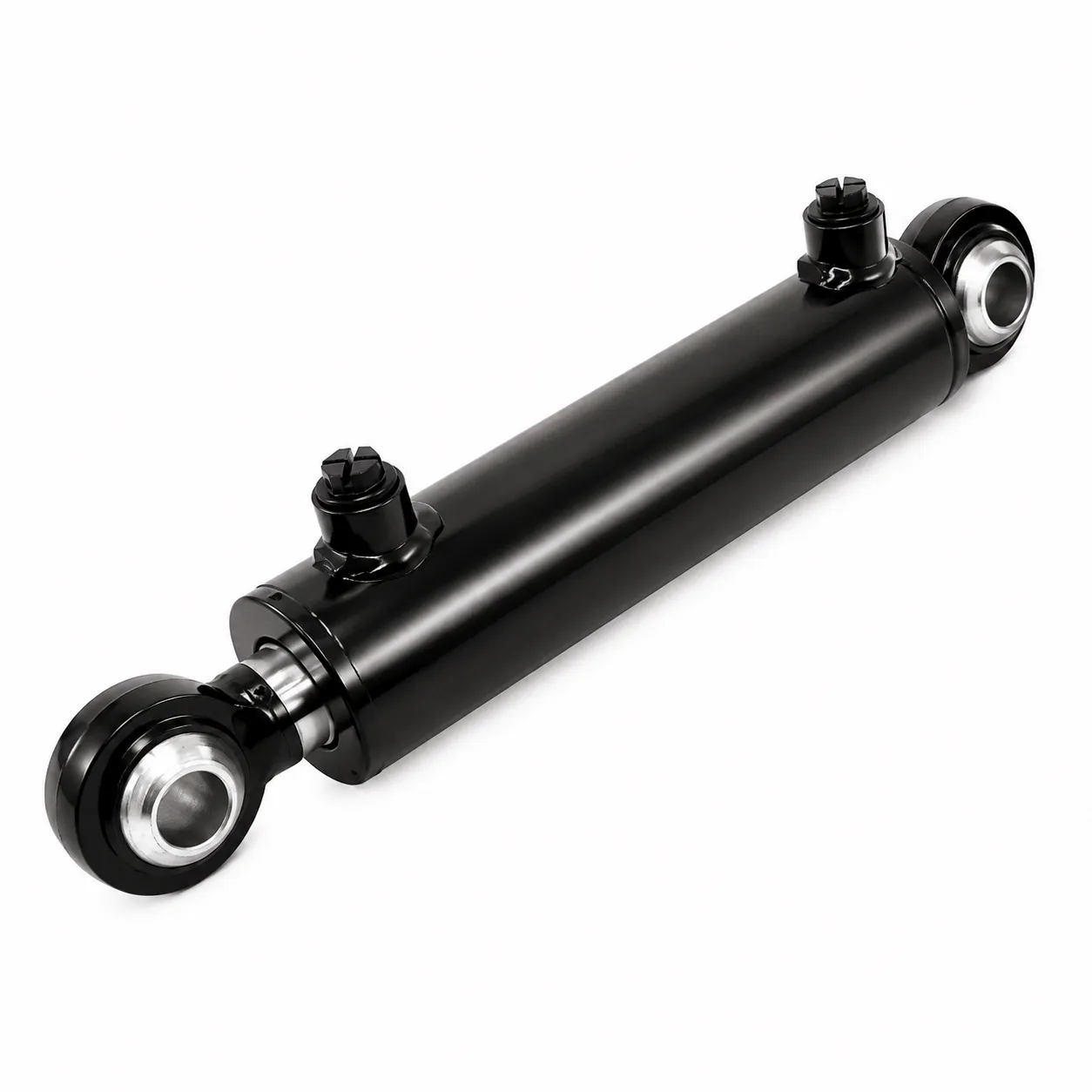
Mining steering cylinders designed for articulated haulers and underground LHD machines routinely operate within closed hydraulic circuits that generate far higher working pressures than the 200-250 bar commonplace in construction. An engineering-grade steering cylinder with a tested pressure rating of 350–420 bar provides genuine safety margins for peak demand events — such as a sudden terrain obstacle or emergency counter-steer — without yielding or fatigue cracking in the barrel wall or end cap threads. The burst pressure of a well-manufactured unit should be a minimum of 2.5× the rated working pressure, a threshold that Ever Power validates through hydrostatic pressure testing on every production batch.
Britain’s mining and quarrying operations span a wide thermal envelope: an open-cast site in the Scottish Highlands may see ambient temperatures well below –10°C in winter, while the hydraulic fluid in a high-cycle haul truck circuit can climb above 90°C during sustained operation on long grades. Seal compounds must maintain elasticity and dimensional stability across this entire range without extruding into clearances or becoming brittle. Mining-spec steering cylinders from Ever Power incorporate Viton fluoroelastomer seals for high-temperature zones and low-hardness polyurethane wipers where cold-start flexibility is prioritised. This dual-compound strategy, validated by thermal cycling tests running 2,000 hours before dispatch, is one of the clearest differentiators between genuine heavy-duty specification and industrial-grade standard product.
In an underground mine drive, a steering cylinder doesn’t just push — it absorbs lateral shock as a loader bucket impacts the tunnel face, or as a vehicle crosses a rail track at the surface. Standard industrial cylinders are rarely engineered for significant side loading; their guide bushings and piston geometry assume near-pure axial loading. Heavy-duty mining variants employ wider bronze or composite guide bushings at both the rod and piston, extending the effective bearing length to cope with bending moments without transferring destructive edge loads into the barrel bore. The geometry of the clevis or trunnion mounting is engineered with sufficient articulation angle to prevent binding, and all pin bores are reamed and fitted with greased needle roller bearings or PTFE-lined bushes that eliminate the need for in-service lubrication in the most inaccessible installations.
Hydraulic contamination — the ingress of particulates, water, or degraded fluid — is the single largest cause of premature cylinder failure in mining fleets. The wiper seal on a mining steering cylinder must act as the first line of defence, scraping abrasive particles from the rod surface before they can reach the primary lip seal and embed in the sealing lip or score the chrome plating. Ever Power engineers a triple-function rod seal stack: a polyurethane wiper with an integrated dust exclusion lip at the outer face, a pressure-rated primary seal, and a secondary containment ring that captures any weepage before it reaches the external environment. Each port is protected by a filtered inlet screen, and the end cap design eliminates dead-volume pockets where stagnant fluid and sludge can accumulate. The result is a cylinder that tolerates ISO 4406 cleanliness levels of 20/18/15 — typical of working mining circuits — without accelerated wear.
Technical Performance Parameters — Heavy-Duty Mining Steering Cylinder
| Parameter | Standard Range | Heavy-Duty Mining Spec | Notes |
|---|---|---|---|
| Bore Diameter | 50 – 120 mm | 80 – 200 mm | Customisable per OEM frame specification |
| Rod Diameter | 35 – 80 mm | 50 – 140 mm | Hard chrome or HVOF coated, ground & polished |
| Working Pressure | Up to 250 bar | Up to 420 bar | Hydrostatic test at 1.5× working pressure |
| Stroke Length | 100 – 600 mm | 150 – 1200 mm | Optimised per turning circle requirement |
| Steering Angle | ±30° | ±35° – ±45° | Extended for tight underground manoeuvring |
| Temperature Range | –20°C to +80°C | –40°C to +120°C | Viton + PU dual-compound seal system |
| Mounting Type | Clevis / Foot / Flange | Clevis / Trunnion / Cross-tube | Needle roller or PTFE-lined pin bores |
| Rod Surface Hardness | HRC 50 – 55 | HRC 55 – 62 | Induction hardening + chrome plating |
| Seal Life Cycle | >1,000,000 cycles | >3,000,000 cycles | Validated under 300 bar / 100°C conditions |
| Port Standard | BSP / NPT | BSP / SAE O-ring / Metric | UK BSP standard as default supply |
Application Scenarios: Where Heavy-Duty Steering Cylinders Prove Their Value
The articulated dump truck — models such as the Volvo A45G or Bell B40E are commonplace in UK quarrying — steers through a hydraulic cylinder that pivots the front and rear chassis sections against each other. The steering cylinder in this application endures lateral forces of tens of kilonewtons as the vehicle traverses camber-shaped haul roads, crosses ruts created by previous vehicle passes in wet Shropshire or Derbyshire clay, and turns under full payload — which may exceed 45 tonnes — within the confined turning circles of a quarry bench. Failure of the steering cylinder in this environment means total loss of directional control, an unacceptable safety outcome. For these reasons, procurement teams in Birmingham-based quarry fleet operations increasingly specify purpose-built steering cylinders with documented burst pressure ratings, full material traceability certificates, and factory acceptance test records, rather than sourcing generic industrial cylinder stock.
Load-haul-dump machines navigating the narrow drives of UK underground hard-rock mines — particularly those still active in South West England’s tin and copper legacy belt and in Scottish potash exploration projects — require a steering cylinder configuration that provides maximum articulation angle within a minimal installation envelope. The cylinder must be short enough to fit between the chassis frame members of a machine that may be no wider than 2.5 metres, yet provide sufficient force at the end of stroke to complete a full articulation turn under full bucket load on a gradient. This combination of compact geometry, extreme force output, and articulation angle up to ±45° is only achievable through close-tolerance machining of the bore and rod, with piston and guide bushing geometry calculated to eliminate rod deflection even at the shortest stroke position. Ever Power’s engineering team works from customer-supplied CAD data to configure the correct bore, rod, stroke, and mounting to match the specific machine frame envelope.
Track-mounted rotary blast-hole drills and large rotary-percussion surface rigs used in the North Yorkshire potash basin present an unusual steering cylinder challenge: the machine may be driven short distances across the site between drill patterns, but the cylinder spends extended periods in a fully extended or fully retracted position while the rig is set up and drilling. Static loading at end-of-stroke places unusual stress on the retaining ring, piston seal, and end-cap fasteners. If the cylinder has not been designed with adequate thread engagement in the barrel-to-end-cap connection and appropriately rated retaining hardware, static fatigue cracking can initiate at the bottom of the thread roots — a failure mode that is almost invisible until sudden separation occurs. Mining-grade steering cylinders from Ever Power are designed with thread engagement ratios and fastener preloads calculated to withstand the combined static load and vibration spectrum of drill-rig operation, with magnetic particle inspection conducted on all critical weld zones.
Beyond surface and underground mining, hydraulic cylinders play an equally critical role in materials handling and warehouse logistics — environments that are as demanding in their own way as a mine face. In Sheffield’s steel distribution warehouses and Birmingham’s automotive parts logistics centres, the hydraulic cylinder within a forklift attachment or mast assembly must provide precise, repeatable motion under continuous cycling without the luxury of warm-up periods common in mining. The selection of the correct cylinder — matched to the attachment’s rated capacity, the mast geometry, and the hydraulic circuit’s supply pressure — determines both the safety margin and the service interval of the whole machine.
Designed for compact forklift attachments where space constraints demand a shorter body and lighter weight without sacrificing pressure rating. Ideal for narrow-aisle warehouse applications across the UK, including distribution facilities in Manchester and Leeds. Bore ranges from 50 to 100 mm; working pressure to 250 bar; BSP ports as standard.
Built for the mid-range attachment sector — side-shifters, fork positioners, rotators — handling loads from 2.5 to 8 tonnes in busy UK dockside and steel service centre environments. 42CrMo4 piston rod with hard chrome plating, polyurethane wiper seal, and Viton primary seal for reliability in wet or chemically active environments. Stroke and mounting custom-matched to specific attachment OEM requirements.
Ever Power: Custom Precision Manufacturing for Mining-Grade Steering Cylinders
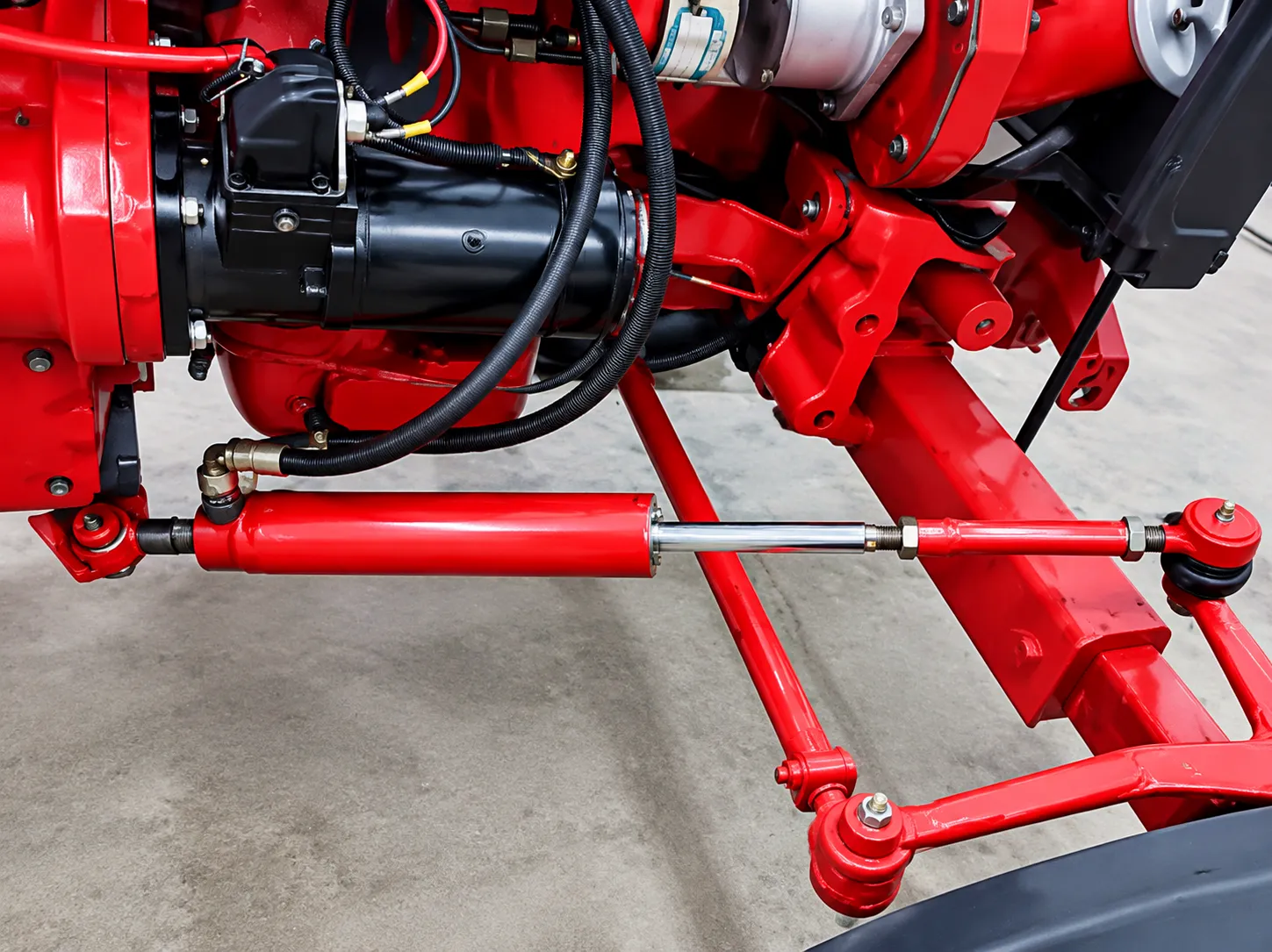
Ever Power operates a dedicated precision hydraulic cylinder manufacturing facility equipped with CNC deep-hole drilling and honing lines capable of producing cylinder bores from 40 mm to 500 mm diameter, with bore straightness held to less than 0.02 mm over 1000 mm length. Every batch of raw tube stock is subject to incoming chemical composition verification by spectroscopic analysis, and each finished cylinder barrel undergoes ultrasonic testing for subsurface defects before honing commences. The piston rod grinding and hard-chrome plating operations are conducted in a controlled environment cell, with chrome layer thickness measured at twelve points per rod using eddy-current gauging. Ever Power’s quality management system is certified to ISO 9001:2015, and our internal testing laboratory is equipped with servo-hydraulic fatigue rigs running at 200 cycles per minute continuously, simulating several years of mining fleet service in a matter of weeks.
The company’s customisation capability is central to its value proposition for UK mining and quarrying customers. Standard catalogue products exist for common vehicle platforms, but the reality of mining fleet procurement is that every project involves some degree of dimensional, mounting, or performance customisation. Ever Power’s application engineering team accepts customer-supplied drawings, 3D STEP models, or even physical samples of failed cylinders as the starting point for a replacement or upgraded specification. Lead times for custom-engineered units are typically 3–5 weeks from confirmed drawing approval, with options for air freight despatch to UK distribution hubs in Coventry, Doncaster, or Glasgow for urgent breakdown situations. Surface treatments including Dacromet, zinc-nickel, or epoxy paint are applied to all external surfaces to address the chloride-rich coastal environments of Scottish island mining or the high-humidity underground atmosphere of deep potash mines.
Send your drawings, samples, or technical requirements — our engineering team responds within one business day.
Customer Success Story: Reducing Steering Cylinder Downtime at a Yorkshire Potash Mine
The maintenance team at a North Yorkshire potash operation — part of a broader extractive complex serving UK and European fertiliser markets — was experiencing an unacceptable rate of steering cylinder seal failure on their underground LHD fleet. Original equipment cylinders were rated for the vehicle’s nominal working pressure of 280 bar, but the mine’s specific operating pattern involved frequent articulation at near-maximum system pressure, driven by the requirement to manoeuvre fully laden buckets in drives with limited clearance. The combination of high-frequency cycling and elevated thermal loading — the underground environment held a steady 28°C with high humidity — was degrading the OEM polyurethane seal compound within six to eight weeks of each replacement, causing progressive leakage that contaminated the drive floor and triggered HSE improvement notices.
The fleet engineering manager contacted Ever Power through a UK hydraulics distributor in Sheffield and submitted the original cylinder dimensions along with a detailed fault analysis report. Ever Power’s engineering team reviewed the operating data and identified two primary failure drivers: the OEM seal compound’s upper continuous temperature limit of 80°C was being regularly exceeded, and the rod surface roughness — measured from a removed failed unit — had degraded to Ra 0.8 µm, destroying the hydrodynamic film that lip seals depend on. The solution comprised a drop-in replacement cylinder with a Viton primary seal rated to 120°C continuous, a revised seal stack geometry providing better fluid film retention, and a chrome rod with a final surface finish of Ra 0.25 µm applied by diamond lapping after conventional grinding. The piston guide bushing width was also extended by 18 mm to reduce rod deflection under side loads in tight corners.
Following a six-month trial across four loaders, zero seal failures were recorded. The remaining eight loaders were retrofitted with Ever Power cylinders during the subsequent planned maintenance window. The operation’s maintenance manager estimated annualised cylinder-related downtime fell by 78%, representing a saving of approximately £180,000 per year across the fleet when replacement parts, labour, and production loss were accounted for. The full retrofit, including shipping via Ever Power’s UK distributor in Doncaster, was completed in eleven days without requiring any modification to the vehicles’ hydraulic circuits or control systems.
“We had tried two other suppliers before Ever Power. Their engineering team was the first that actually asked for our operating data before proposing a solution — rather than just offering a slightly upgraded OEM equivalent. Six months in and not a single seal replacement on any of the four trial loaders. The cylinder quality is clearly in a different league.”
“What impressed us most was the dimensional accuracy on delivery. The replacement cylinder dropped straight into the existing mounting bracket without any adjustment — a perfect fit. Given that we were replacing OEM parts, that level of reverse-engineering precision is remarkable. Shipping through the Doncaster depot was fast and well-coordinated. We will standardise on Ever Power for the whole fleet.”
“We put the cost of the full fleet retrofit against eighteen months of cylinder-related downtime costs. The payback period came out at under four months. Honestly, the only question now is why we didn’t contact Ever Power two years earlier. Their customisation service is exactly what the mining sector needs — someone who understands that no two mines have identical operating conditions and builds accordingly.”
Frequently Asked Questions — Heavy-Duty Steering Cylinders for UK Mining & Quarrying
Ever Power’s engineering team is ready to review your mining or quarrying application. Submit your technical requirements and receive a fully engineered proposal within one business day.