
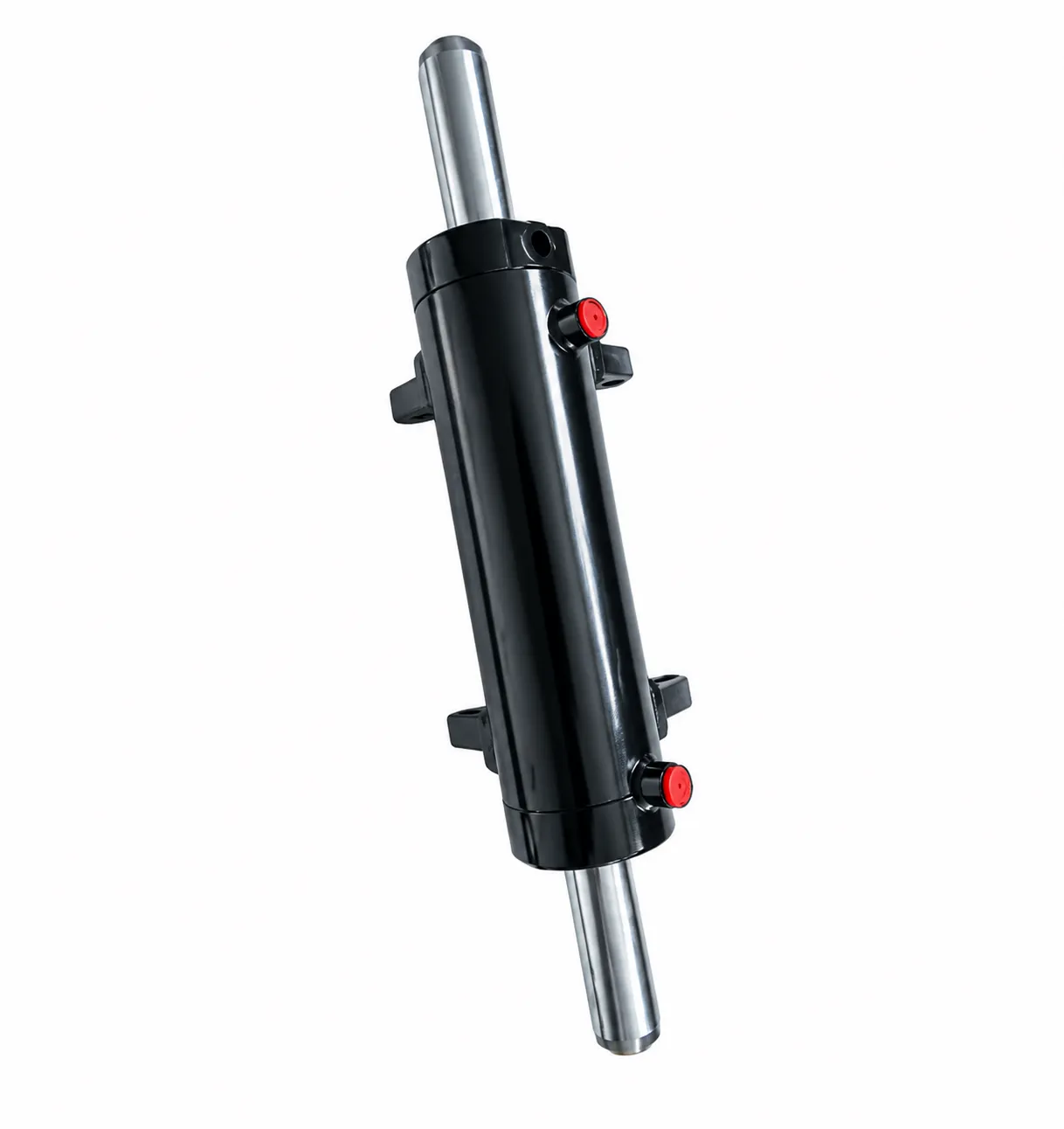
Combine harvesters are among the most mechanically demanding machines operating across British farmland today. From the wheat-heavy expanses of East Anglia to the barley fields stretching across Northumberland, these machines must maintain precise directional control under extreme load conditions, often in wet, heavily compacted soils where steering forces multiply rapidly. The steering cylinder sits at the centre of this challenge — a precision hydraulic component that translates operator input into controlled axle movement with repeatable accuracy, harvest after harvest.
Unlike standard construction equipment, combine harvesters impose a very specific set of demands on their steering cylinders. The machine moves continuously across irregular terrain while simultaneously driving heavy threshing mechanisms, grain elevators and unloading augers — all competing for hydraulic flow. The steering circuit must respond instantly without hunting or lag, maintain consistent pressure across a working day that can stretch to fourteen hours during harvest season, and withstand the vibration signature of a machine cutting through dense, tangled crop. A hydraulic steering cylinder that performs adequately in a warehouse environment can fail badly under these field conditions.
How a Combine Harvester Steering Cylinder Actually Works
Double-Acting Hydraulic Principle
Combine harvester steering cylinders operate as double-acting units, meaning pressurised oil can be directed to either side of the piston. When the operator turns the steering wheel, the hydraulic control valve shifts, routing high-pressure oil to the extend or retract chamber. The rod pushes or pulls the steering knuckle arm, pivoting the steered axle. The opposing chamber simultaneously exhausts oil back to tank. This two-directional action gives full steering authority in both directions without relying on springs or mechanical return mechanisms, which is essential when the machine is negotiating the tight headland turns at the edge of a field. Response speed is determined by cylinder bore, valve flow rating and working pressure — typically in the 180 to 250 bar range on modern combine platforms.
Load Sensing and Pressure Management
Modern combines integrate load-sensing hydraulic systems where the steering circuit signal pressure tells the variable-displacement pump exactly how much flow the steering cylinder demands at any given moment. When driving straight on firm ground, the cylinder requires minimal flow and the pump destroke accordingly. Turning on soft ground with a full grain tank can spike demand significantly. The steering cylinder must accept this variable flow without developing internal leakage or pressure spikes that translate into jerky or inconsistent steering feel. Maintaining tight sealing tolerances across the full working temperature range — from a cold early-morning start in a Scottish October to a sun-heated afternoon cab interior — is a fundamental design criterion that separates agricultural-grade cylinders from generic hydraulic components.
End-Stop Cushioning and Shock Absorption
When a combine reaches full steering lock, the cylinder hits its mechanical end-stop. Without cushioning, the resulting hydraulic pressure spike can damage seals, crack ports and stress the tie-rod bushings. Quality steering cylinders incorporate internal cushioning — either through tapered metering slots machined into the end caps or through external shock valves integrated into the cylinder ports. This cushioning decelerates the piston over the final few millimetres of travel, converting kinetic energy into a controlled pressure rise rather than a destructive spike. For UK harvesting conditions where drivers frequently make rapid full-lock turns on compressed headland tracks, this cushioning feature directly extends seal life and reduces the risk of sudden steering failure mid-field — a safety concern taken seriously by the Health and Safety Executive’s agricultural guidance.
Core Materials Behind Agricultural Steering Cylinder Durability
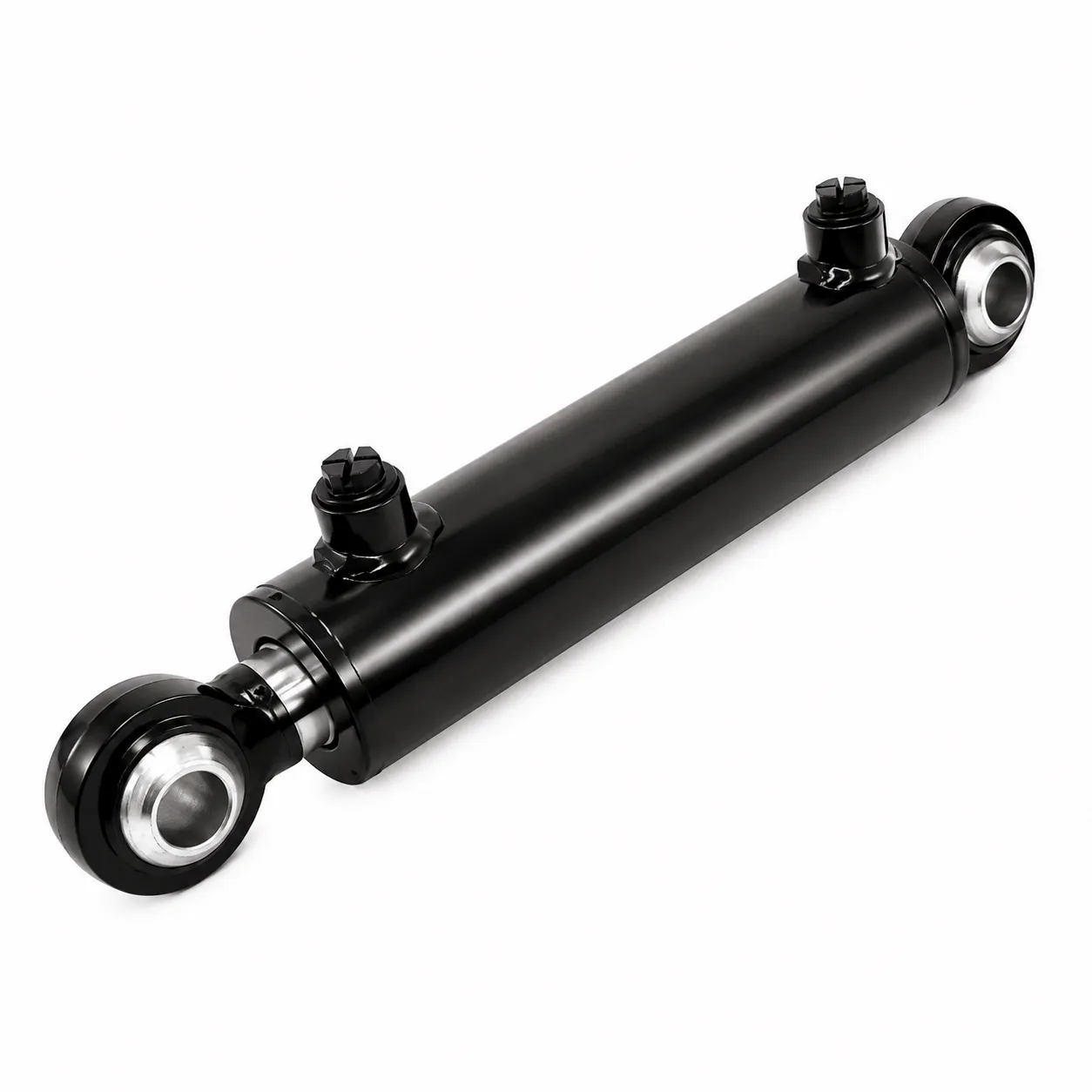
The material specification of a steering cylinder for combine harvester applications is non-trivial. Agricultural environments combine mechanical shock, chemical exposure from fertilisers and crop residues, wide temperature cycling and sustained vibration in ways that stress every component of the cylinder. Selecting the wrong alloy or seal compound can mean premature failure during the critical three-to-four-week UK harvest window — a failure with direct financial consequences for the farm operator.
Cylinder Barrel — Seamless Cold-Drawn Steel
The barrel is machined from seamless cold-drawn steel tube, typically 27SiMn or 45# grade, honed internally to Ra 0.4 micron. This surface finish is critical: it provides the smooth running surface that seal lips ride against, while the seamless construction eliminates the weld-line stress concentrations that could develop into cracks under harvester vibration. Wall thickness is calculated with a safety factor of at least 2.5 against burst pressure, ensuring no deformation even if the relief valve malfunctions momentarily.
Piston Rod — Hard Chrome or Ceramic Coating
Piston rods are forged from 45# or 40Cr alloy steel, induction hardened to 50–58 HRC, then ground to h8 tolerance and finished with hard chrome plating to a depth of 0.025–0.035 mm. The chrome layer provides surface hardness above 900 HV and excellent corrosion resistance against the salt-laden air common in coastal UK harvesting regions such as the Norfolk Broads and the Humber estuary. Where corrosion demands are even higher, nickel-chrome composite plating or ceramic coatings extend service life further. A rod that corrodes or pits during a wet British harvest will cut through the wiper seal within days, causing catastrophic fluid loss.
Sealing System — Polyurethane and PTFE Composites
The sealing pack typically comprises a polyurethane piston seal (operating range -40°C to +100°C), a PTFE-bronze guide ring that carries radial loads and prevents metal-to-metal contact, and a polyurethane or NBR rod seal plus a polyurethane wiper. For combine applications, a dust excluder wiper with a contamination lip is mandatory — chaff, fine grain dust and crop particles circulate intensively around the steering axle zone, and any particle that reaches the rod seal will score the seal lip and initiate leakage. The seal material choices directly determine whether the cylinder achieves the 3,000-to-5,000-hour service life expected in agricultural procurement specifications.
Key Technical Advantages of Purpose-Built Combine Steering Cylinders
High-Pressure Stability at 250 bar
Agricultural steering cylinders rated for sustained operation at 250 bar with 350 bar peak are engineered with thick-wall barrels and precision-machined piston grooves that prevent seal extrusion even during emergency pressure events. This margin matters in field conditions where sudden obstacles — drainage ruts, concealed stones, soil mounds — can generate instantaneous pressure spikes through the steering linkage that the cylinder must absorb without internal damage or momentary loss of directional control.
Zero Internal Leakage Under Static Load
When a combine holds a steady steering angle — such as when tracking along a tramline or maintaining a headland margin — the steering cylinder must hold position without drifting. Internal leakage past the piston seal causes creep, which requires constant micro-corrections from the operator and increases fatigue during long harvesting days. Quality steering cylinders achieve less than 0.5 ml/min internal leakage at rated pressure, ensuring the machine holds its course without continuous hydraulic correction input.
Corrosion-Resistant Exterior Finishing
External surfaces are treated with epoxy primer followed by polyurethane topcoat or, in premium variants, hot-dip galvanising on end caps and mounting brackets. This provides 480-hour salt spray resistance per ISO 9227, which is directly relevant to UK operating conditions where rain, dew, mud and crop juice — particularly from oilseed rape, which contains glucosinolates corrosive to mild steel — contact the cylinder throughout the working season. Without adequate external protection, mounting bosses corrode and seize, making cylinder replacement during the season far more time-consuming and costly.
Vibration-Resistant Mounting and Bushing Design
Clevis pins and eye-end bushings are manufactured from 40Cr alloy steel with hardened bronze or sintered iron bushings. The pin-to-bore clearance is tightly controlled at 0.02–0.06 mm to prevent fretting wear that develops when loose joints oscillate under vibration. On a combine running at 5–6 km/h over stubble, the axle steering geometry generates constant small-amplitude vibration inputs through the cylinder mounting points. Tight bushing tolerances prevent the progressive loosening that would otherwise translate into imprecise steering and accelerating wear at the cylinder pivot points.
Technical and Performance Parameter Table — Combine Harvester Steering Cylinders
| Parameter | Specification / Range | Notes |
|---|---|---|
| Bore Diameter | 50 mm – 100 mm | Custom bore available per OEM request |
| Rod Diameter | 30 mm – 70 mm | Hard chrome plated, Ra ≤ 0.4 µm |
| Stroke Length | 100 mm – 500 mm | Matched to axle geometry and steering angle |
| Operating Pressure | Up to 250 bar (rated) / 350 bar (peak) | Load-sensing systems typically 180–220 bar |
| Barrel Material | 27SiMn / 45# seamless steel | Honed bore, no weld lines |
| Rod Material | 45# / 40Cr alloy, HRC 50–58 | Induction hardened, chrome or NiCr coated |
| Seal Package | PU + PTFE-Bronze + NBR wiper | -40°C to +100°C operating range |
| Steering Angle Achievable | ±30° to ±40° (application dependent) | Determined by stroke length and linkage ratio |
| Service Life Target | 3,000 – 5,000 hours | With correct hydraulic oil cleanliness (ISO 4406: 17/15/12) |
| Internal Leakage | < 0.5 ml/min at rated pressure | Tested per ISO 10100 protocol |
| Exterior Corrosion Protection | 480 h salt spray (ISO 9227) | Epoxy primer + PU topcoat standard |
Industrial Application Scenarios for Steering Cylinders in Combine Harvesters
Large-Scale Cereal Harvesting on Flat East Anglian Farmland
On the arable plains of Cambridgeshire and Norfolk, combine harvesters operate in long, straight runs with infrequent but rapid headland turns. The steering cylinder in this environment must handle sustained static hold pressure during the long straight runs — where the machine simply needs to track a GPS tramline — and then execute clean, full-lock turns in minimum time at each headland. High internal seal integrity and consistent valve response are the dominant performance requirements here. Machines operating in these flatland conditions also tend to run at higher ground speeds where any steering lag becomes immediately perceptible, placing a premium on cylinder response time and hydraulic circuit efficiency.
Upland and Hillside Harvesting in Yorkshire and the Scottish Borders
Hillside harvesting in the Dales or the Border country introduces lateral slope forces that act continuously on the steered axle in addition to the normal steering loads. On a ten-degree side slope with a full grain tank, the steering cylinder on the downhill side bears a persistent static load that the cylinder must resist without drift. This is where cylinder mounting integrity and bushing design become critical safety factors — any looseness in the pivot pins allows the axle geometry to shift under lateral load, introducing unpredictable steering behaviour on slopes where machine stability is already marginal. Purpose-designed agricultural steering cylinders include reinforced clevis brackets and oversized pins to address exactly this load case.
Late-Season Wet-Field Oilseed Rape and Maize Harvest in the Midlands
Midland farms around Warwickshire and Leicestershire often harvest maize in October when ground conditions have deteriorated significantly. The combine operates in deep tyre ruts, and steering inputs become extreme as the driver constantly corrects against self-steer forces generated by the ruts themselves. In these conditions, the steering cylinder sees rapid, high-amplitude oscillation — sometimes exceeding fifty full-stroke cycles per minute on deeply rutted tracks. Seal life drops sharply in this environment if the seal compound lacks adequate fatigue resistance. The cylinder’s wiper seal is under particular stress as mud-laden water is continuously thrown over the rod, requiring the wiper to exclude a slurry of abrasive particles with every retraction stroke. Specifying cylinders with agricultural-grade mud exclusion wipers is non-negotiable for this application.
Autonomous and GPS-Guided Combine Platforms
The adoption of autonomous steering guidance — now widespread across larger farming operations in Lincolnshire and the Scottish lowlands — places new demands on the hydraulic steering cylinder. The precision farming system sends rapid, small-amplitude correction commands through the electro-hydraulic steering valve hundreds of times per minute, tracking GPS-defined tramlines to within 2.5 centimetres. This means the steering cylinder operates in continuous micro-motion rather than the larger, infrequent strokes of manual operation. Seal friction must be extremely consistent and low to prevent the hydraulic control algorithm from over-driving corrections, which would introduce oscillation into the steering path. Hysteresis in the cylinder — the difference between extend and retract force at the same pressure — must be minimised through precise bore honing and optimised seal geometry.
Related Hydraulic Cylinder Products
Manufacturing Partner of Choice
Ever Power — Precision Manufacturing for Agricultural Hydraulic Steering Cylinders
End-to-End Customisation Capability
Ever Power engineers work directly from customer drawings or field measurements to produce steering cylinders matched to the precise geometry of the harvester’s front axle and steering linkage. Bore diameter, stroke length, port positions, mounting eye geometry and seal compound can all be specified to the client’s exact requirements. This level of customisation matters to UK agricultural machinery importers and OEM rebuilders who need cylinders that fit without modification on machines where standard catalogue sizes simply do not align with the manufacturer’s original specifications. From a single prototype to a scheduled production run of several hundred units, Ever Power’s order management team provides direct technical liaison throughout the process.
Precision Machining and Quality Assurance
The Ever Power manufacturing facility operates CNC turning centres with real-time dimensional monitoring, ensuring that bore honing achieves the specified Ra 0.4 µm surface finish and that bore diameter tolerance is held within ±0.015 mm batch-to-batch. Every cylinder undergoes hydrostatic pressure testing to 1.5 times rated pressure before shipment, with test certificates provided as standard. Rod chrome plating thickness is verified by eddy-current gauge on every production unit, not sampled — a quality step that matters to customers procuring for critical-path agricultural applications where a single undersized chrome layer could mean a failed seal within one season. ISO 9001 certification underpins the documented quality management system across all production processes.
Supply Chain and Delivery to the UK
Ever Power maintains a rolling inventory of high-runner agricultural cylinder configurations, enabling consolidated shipment via sea freight to UK ports including Felixstowe, Southampton and Grimsby, with lead times of four to six weeks for standard configurations and eight to twelve weeks for fully bespoke units. For urgent pre-harvest replacement requirements, air freight dispatch from our facility can deliver to UK addresses within five to seven working days. Documentation packages — including material test certificates, pressure test records and dimensional inspection reports — are provided in English as standard and meet the requirements of UK customs clearance and customer incoming inspection procedures.
Ready to discuss your steering cylinder requirement? Contact our technical team for a detailed quotation.
Customer Success Story: Bridlington Agricultural Engineering, East Yorkshire
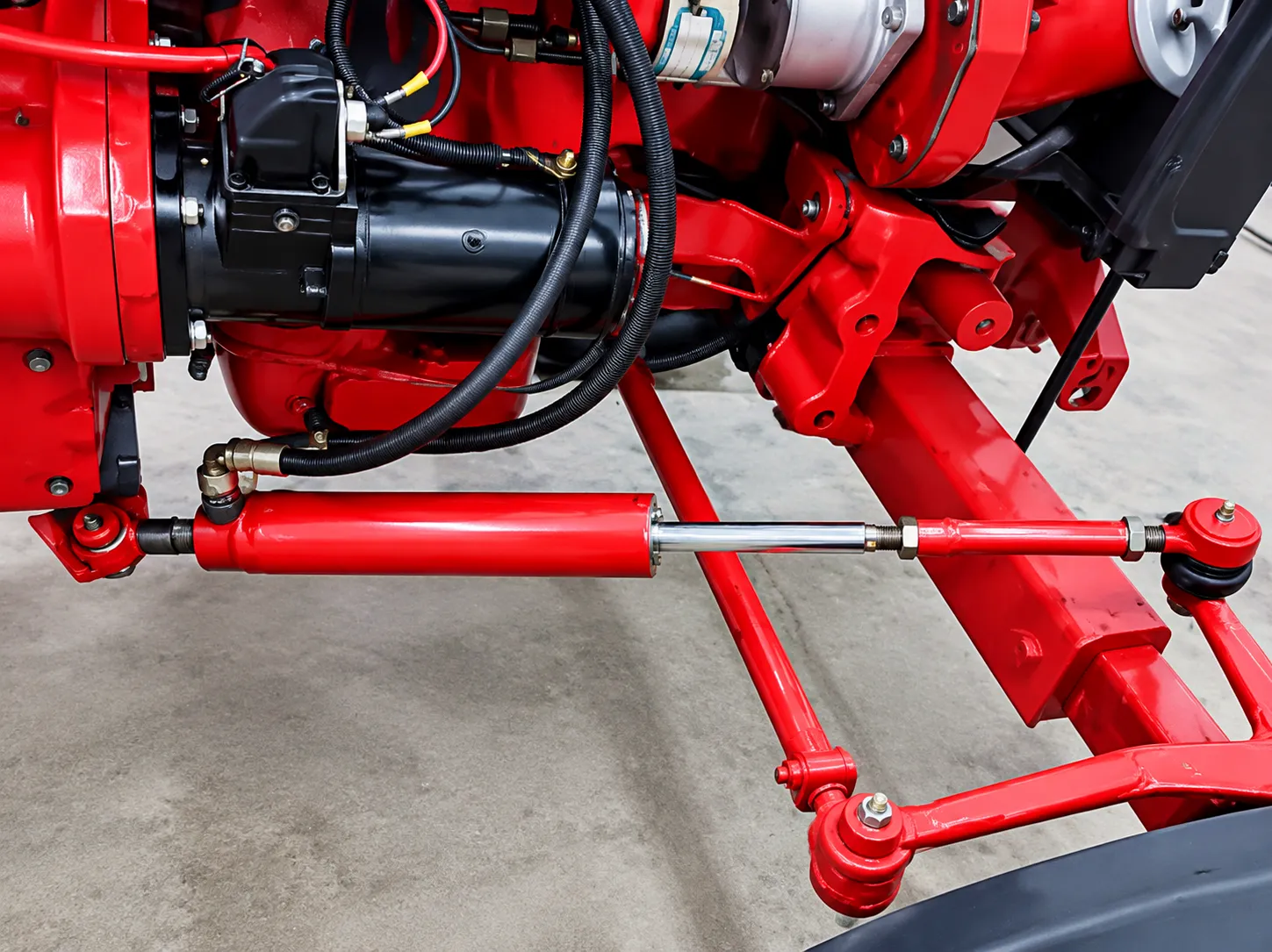 Bridlington Agricultural Engineering operates a combine harvester overhaul and parts reconditioning workshop on the edge of the Yorkshire Wolds, servicing approximately forty medium-to-large grain farms across the East Riding and the Holderness plain. Each spring, the workshop processes a substantial backlog of combine refurbishment work ahead of the July barley and August wheat harvests, with steering cylinder replacement forming a regular part of the pre-season inspection schedule.
The workshop’s owner, Richard Hargreaves, approached Ever Power in early 2024 seeking an alternative supply source for replacement steering cylinders after their existing European supplier increased minimum order quantities significantly and extended lead times to twelve weeks — incompatible with the workshop’s pre-season scheduling requirements. The Ever Power technical team provided detailed dimensional drawings for the two most common cylinder configurations in the workshop’s order book, confirmed material and seal specifications by telephone, and supplied a sample pair within four weeks for fitment testing on a John Deere S560 and a Claas Lexion 650 currently under refurbishment.
Both sample cylinders fitted without modification, passed the workshop’s internal pressure test at 300 bar, and were installed in time for the 2024 harvest season. Post-season follow-up confirmed that neither cylinder showed any external leakage, steering creep or seal deterioration after approximately 280 hours of field operation across Yorkshire’s mixed ground conditions. Bridlington Agricultural Engineering subsequently placed a scheduled supply agreement covering eight cylinder variants across an annual volume of approximately ninety units, with consolidated sea freight deliveries timed to arrive in March ahead of each season.
The commercial outcome for the workshop was a reduction in per-unit cylinder cost of around eighteen percent compared to the previous European supplier, combined with a significantly shorter and more predictable lead time that allowed Hargreaves to confirm customer booking slots earlier in the year — a meaningful competitive advantage in a regional market where pre-season slot availability directly drives customer retention.
What Our UK Customers Say
“The bore finish on these cylinders is noticeably better than the aftermarket units we had been using from a UK distributor. Not a drop of external leakage after a full season on the Wolds. The documentation pack made our ISO audit straightforward — material certs in English, pressure test records already formatted correctly. We will be ordering the same again next March.”
— Richard H., Workshop Owner, Bridlington Agricultural Engineering, East Yorkshire
“We had a last-minute steering cylinder failure on a Claas Lexion two weeks before harvest. Ever Power’s team quoted a custom-dimension replacement within twenty-four hours and offered air freight delivery to Lincoln — we had the part fitted in time. The cylinder’s steering response is clean, no hunting on the precision guidance, which was our main concern after the previous unit developed internal leakage. Genuinely impressed with the responsiveness.”
— David M., Farm Manager, Lincolnshire Arable Holdings Ltd, Boston
“We specified a non-standard clevis geometry for a Sampo harvester we were rebuilding — not a machine you can buy parts for easily in the UK. Ever Power produced a drawing within three days and shipped a matched pair in six weeks. Both cylinders are performing exactly as the original manufacturer’s units did when the machine was new. The rod chrome quality under our test microscope is as good as anything from the major European suppliers, and the price was substantially lower per unit on our volume.”
— Paul W., Technical Director, Lothian Harvesting Services, Edinburgh
Frequently Asked Questions
How do I know which steering cylinder bore size is correct for my combine harvester model operating in the UK?+
The correct bore size is determined by the machine’s hydraulic system pressure rating and the maximum steering force required at full lock on the heaviest expected soil type. For most combines in the 200–350 hp range operating on UK clay soils, bore diameters of 63 to 80 mm at 180 to 220 bar provide adequate force. Always cross-reference with the OEM service manual or contact Ever Power with the machine make, model and year for a direct recommendation.
What is the typical price and lead time for a custom combine harvester steering cylinder order delivered to Birmingham or Sheffield?+
Custom steering cylinder pricing depends on bore diameter, stroke, material grade and quantity. For typical agricultural replacement cylinders, small batch orders of five to twenty units start from £95 to £180 per unit depending on specification. Standard-configuration sea freight deliveries to UK ports reach Birmingham or Sheffield distribution points within five to six weeks of order. Contact Ever Power at [email protected] for a specific quote based on your drawings or measurements.
Which seal compound should I specify when ordering a replacement steering cylinder for harvesting oilseed rape in wet Lincolnshire conditions?+
For oilseed rape harvesting in wet conditions, specify a polyurethane piston seal rated to -40°C with a PTFE-bronze composite guide ring and a polyurethane wiper with an integrated contamination lip. The standard NBR wiper is acceptable for cleaner environments but degrades more quickly when exposed to the combination of glucosinolates in rape juice and abrasive soil particles that are typical of late Lincolnshire autumn harvests.
Where can I find a reliable UK supplier or importer who can source precision combine harvester steering cylinders at competitive wholesale prices?+
Ever Power supplies directly to UK agricultural machinery workshops, OEM rebuilders and farm equipment distributors without an intermediate distributor mark-up. Shipments are delivered DDP (Delivered Duty Paid) to your specified UK address, meaning all customs duties and import taxes are covered. Email [email protected] with your specification and required delivery location for a complete landed cost quotation.
How do I diagnose whether my combine harvester’s steering cylinder is causing the slow or spongy steering response we have noticed during harvest in Yorkshire?+
Spongy or slow steering on a combine almost always traces back to one of three causes: internal cylinder leakage past the piston seal (confirmed by a load-hold test at full lock with the engine off — if the machine slowly drifts off lock, the piston seal has failed), air in the hydraulic circuit (flush and bleed the steering circuit), or a worn orbitrol valve that is failing to direct full flow to the cylinder. Disconnect the cylinder and stroke it manually with the engine running to isolate the cylinder from valve-related causes before ordering a replacement.
When is the best time of year to place a bulk order for combine harvester steering cylinders so they arrive before the UK harvest season begins?+
For the UK grain harvest window of late July through September, orders placed with Ever Power by the end of February allow sea freight delivery to arrive at UK ports by the end of April, leaving adequate time for workshop inspection, fitment and pre-season testing. Urgent in-season replacements can be supplied via air freight with a five-to-seven working day transit from our facility. Contact us in January or February to lock in pricing and scheduling for the coming harvest season.
Ever Power — Precision Hydraulic Steering Cylinders for Agricultural and Industrial Applications
edit by gzl