
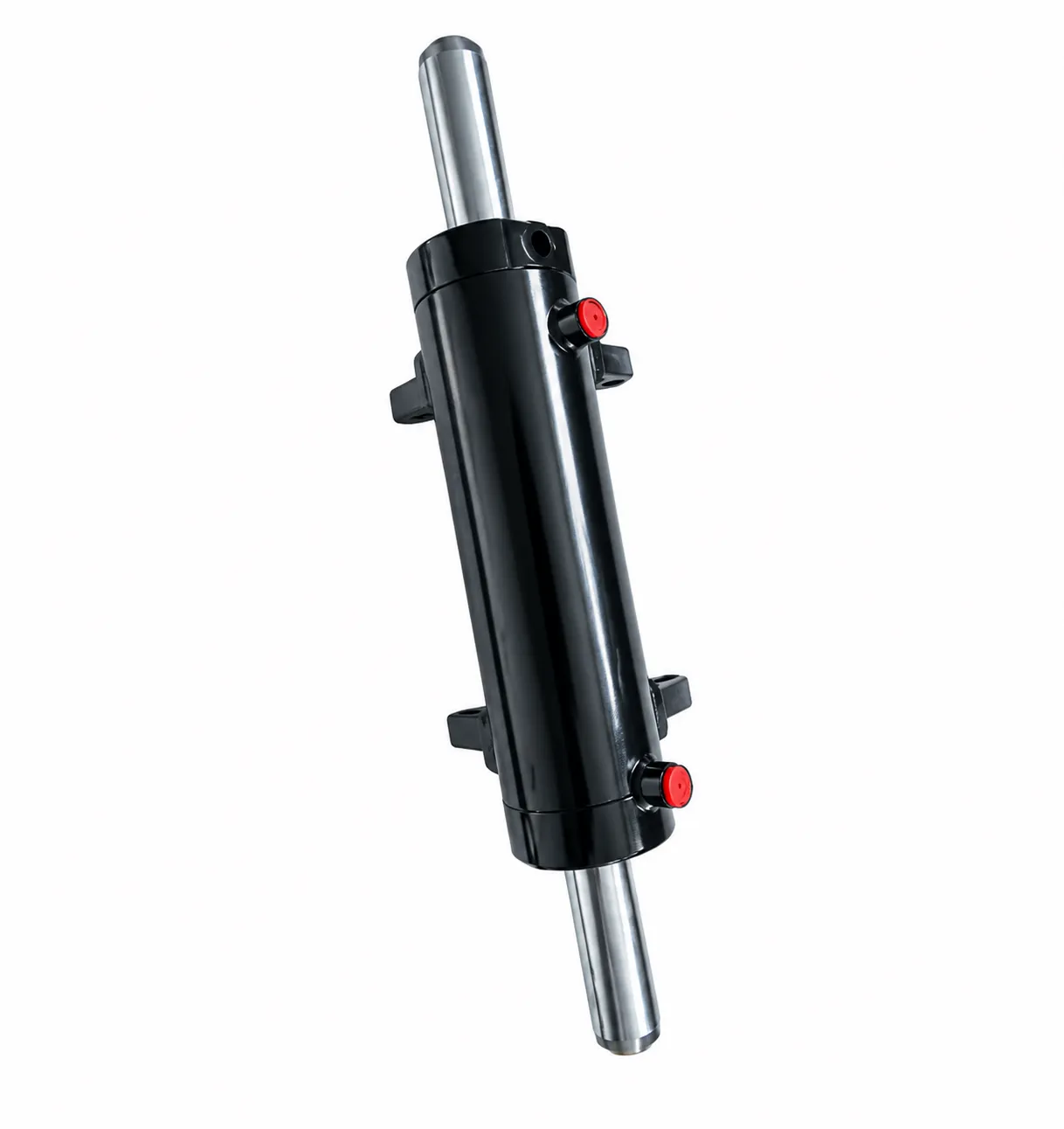
 Walk into any hydraulic systems specification meeting in Birmingham, Sheffield, or Leeds, and the question almost always surfaces: does this application need a double-acting steering cylinder, or will a single-acting unit do the job? It sounds deceptively simple, but the answer has far-reaching consequences — for pressure ratings, for oil consumption, for maintenance intervals, and ultimately for the total cost of ownership across a machine’s service life. Steering cylinders are not passive components. They are the mechanical heart of directional control in everything from articulated forestry machinery traversing Scottish highlands to heavy-duty port handling equipment working the docks of Felixstowe. Choosing the wrong actuation type does not just reduce performance; in certain load-bearing and safety-critical contexts, it can compromise the structural integrity of the entire steering system.
This guide cuts through the noise with clear engineering principles, material science context, and real-world application data. Whether you are sourcing a replacement unit for an agricultural tractor in Norfolk, specifying a custom steering cylinder for a bespoke industrial vehicle in the West Midlands, or benchmarking supplier capability for a large OEM contract, you will find the technical depth here to make a confident, informed decision.
What Is a Steering Cylinder and Why Does Actuation Type Matter?
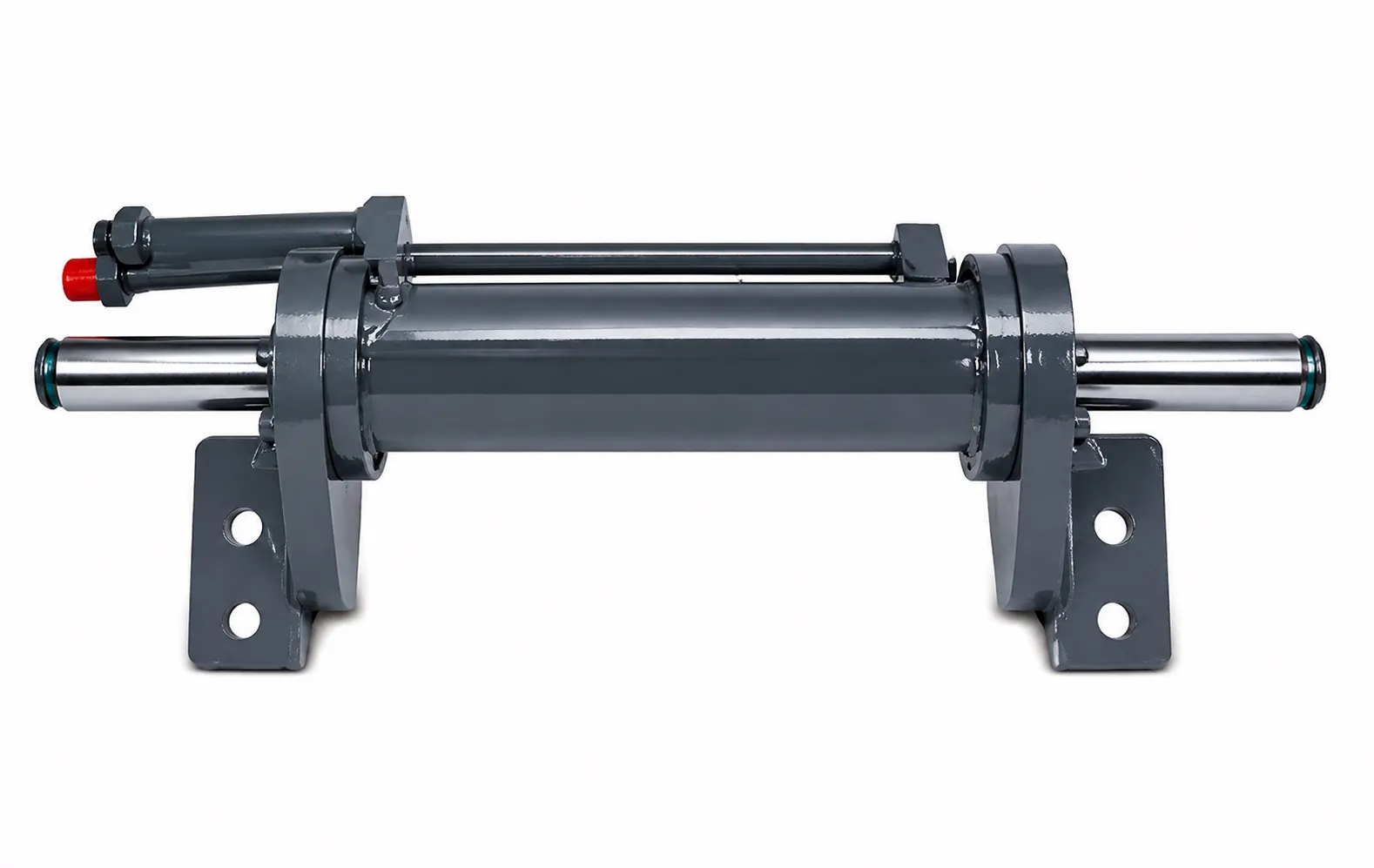
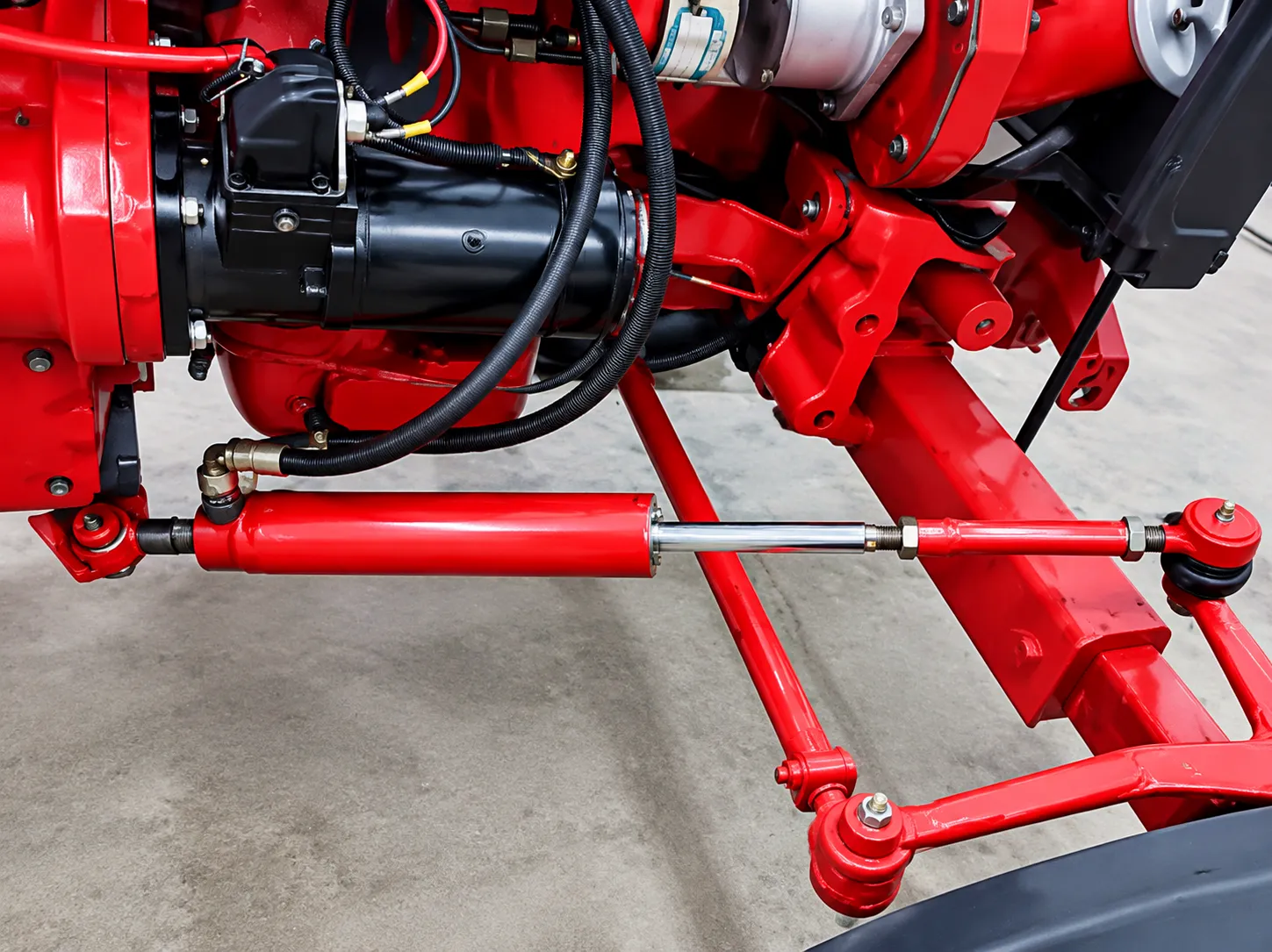
A steering cylinder is a linear hydraulic actuator that converts pressurised fluid energy into the mechanical force needed to pivot or steer the front axle, bogie, or articulation joint of a vehicle or industrial machine. Unlike general-purpose hydraulic cylinders, steering cylinders are specifically engineered to withstand combined lateral, axial, and bending loads simultaneously — a duty cycle that demands precision bore tolerances, high-grade seal packages, and robust end-cap geometry. In the UK’s heavy manufacturing sector, these units appear across earthmoving machinery, rough-terrain forklifts, combine harvesters, ship loaders, and specialised municipal vehicles. The actuation mechanism — whether fluid is supplied to one port or two — fundamentally determines how the cylinder generates and releases force throughout the steering arc, making the double-acting versus single-acting distinction one of the most consequential design choices in hydraulic systems engineering.
The choice between these two configurations influences not only the hydraulic circuit design but also the mechanical linkage geometry, the reservoir sizing, the pump duty cycle, and the heat rejection requirements of the entire system. Engineers specifying steering cylinders for UK-based OEM production lines — particularly those serving the agricultural equipment corridor between Lincolnshire and the East Midlands — frequently underestimate how much the actuation type affects long-term fluid cleanliness, contamination ingress, and the frequency of cylinder rod seal replacement. Getting this right at the design stage eliminates costly field retrofits and warranty claims down the line, which is why understanding the engineering principles behind each type is not optional — it is fundamental.
How a Single-Acting Steering Cylinder Works
A single-acting steering cylinder uses pressurised hydraulic fluid applied to one side of the piston only — typically the cap end — to generate the extension stroke. The retraction stroke is achieved not by hydraulic pressure but by an external mechanical force, most commonly a return spring housed inside the cylinder barrel, or alternatively by gravitational load, mechanical linkage tension, or the opposing force from a second cylinder in a tied-rod arrangement. In a standard spring-return configuration, the spring is pre-compressed to a defined preload, calibrated to overcome the friction of the rod seal and provide a consistent, predictable retraction velocity. This arrangement is mechanically elegant in its simplicity and is particularly well-suited to applications where the steering system must reliably return to a straight-ahead neutral position — a safety-critical requirement in many CE-marked agricultural machines sold throughout England, Scotland, and Wales.
The hydraulic circuit for a single-acting cylinder requires only one pressurised supply line, which dramatically simplifies valve manifold design and reduces the number of potential leak points. However, the force output on the retraction stroke is limited by the spring rate — it cannot be modulated under load — which constrains the application envelope to scenarios where retraction loads are well-characterised and relatively constant. For machines operating in Sheffield’s forging and pressing plants, where tooling loads can be unpredictable, this limitation often makes the double-acting type a safer engineering choice.
How a Double-Acting Steering Cylinder Works
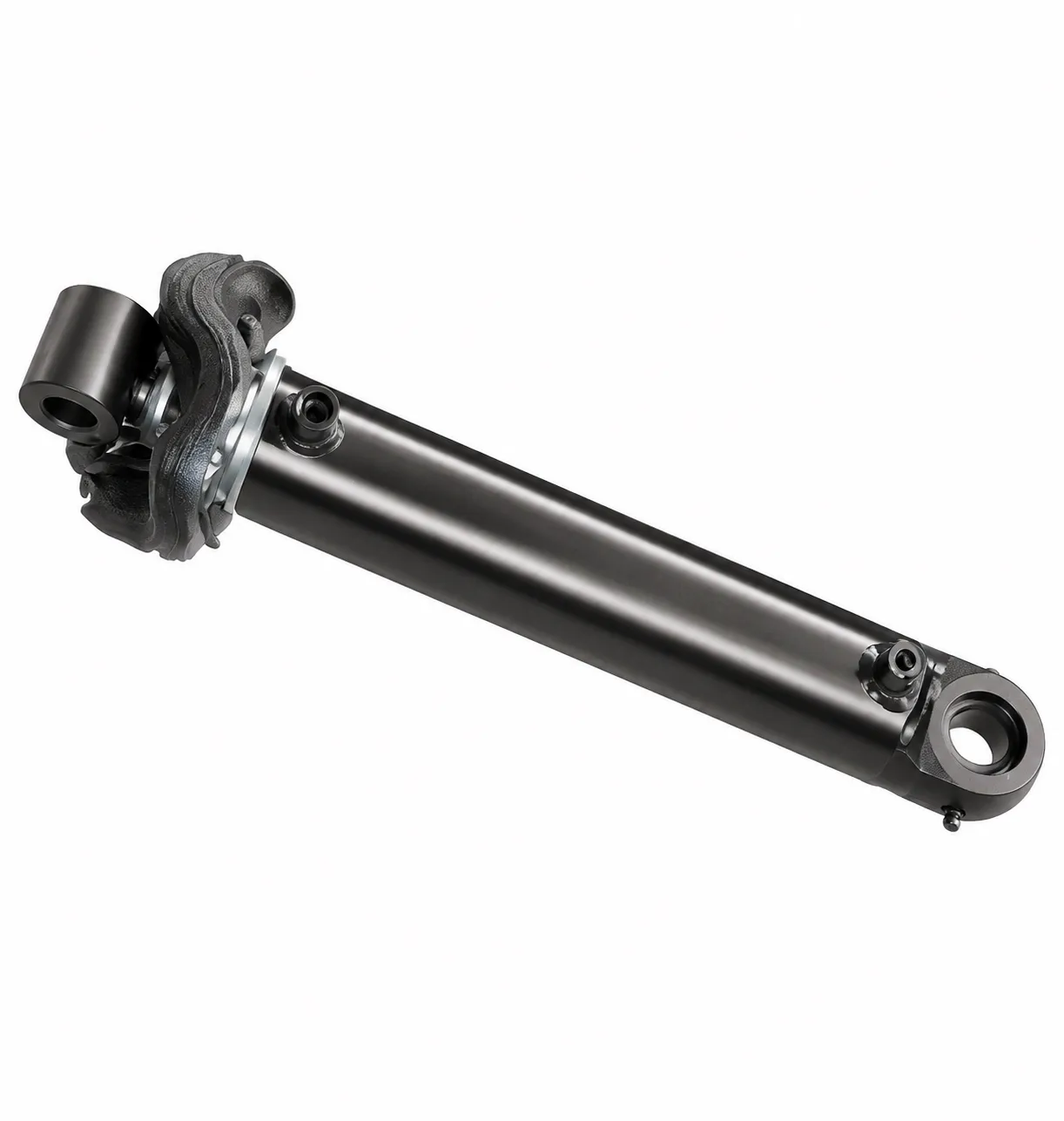
A double-acting steering cylinder uses pressurised hydraulic fluid on both sides of the piston: the cap end for the extension stroke and the rod end for the retraction stroke. A four-way directional control valve — typically a load-sensing proportional valve in modern mobile machine applications — directs oil alternately to each port while simultaneously returning the exhausting oil to tank. This bi-directional hydraulic actuation gives the operator full, metered control over both the speed and force of the steering motion in each direction, regardless of external load conditions. In articulated dump trucks navigating the steep gradients of quarry sites in the Peak District, or in reach stackers handling ISO containers at Southampton’s port terminals, this continuous power availability in both directions is not a convenience — it is a fundamental safety and productivity requirement.
The double-acting configuration also allows regenerative circuit modes, where exhaust oil from the rod side is fed back into the cap-side supply to increase extension speed at reduced pump flow demand — a technique commonly used in high-duty-cycle applications where thermal management is a concern. The rod seal and piston seal geometry must be considerably more robust than in single-acting units, as seals are exposed to full working pressure in both directions. At Ever Power, our double-acting steering cylinders are manufactured with multi-lip PTFE/NBR composite seal assemblies rated for continuous operation at pressures up to 350 bar, making them suitable for the most severe UK heavy industry environments.
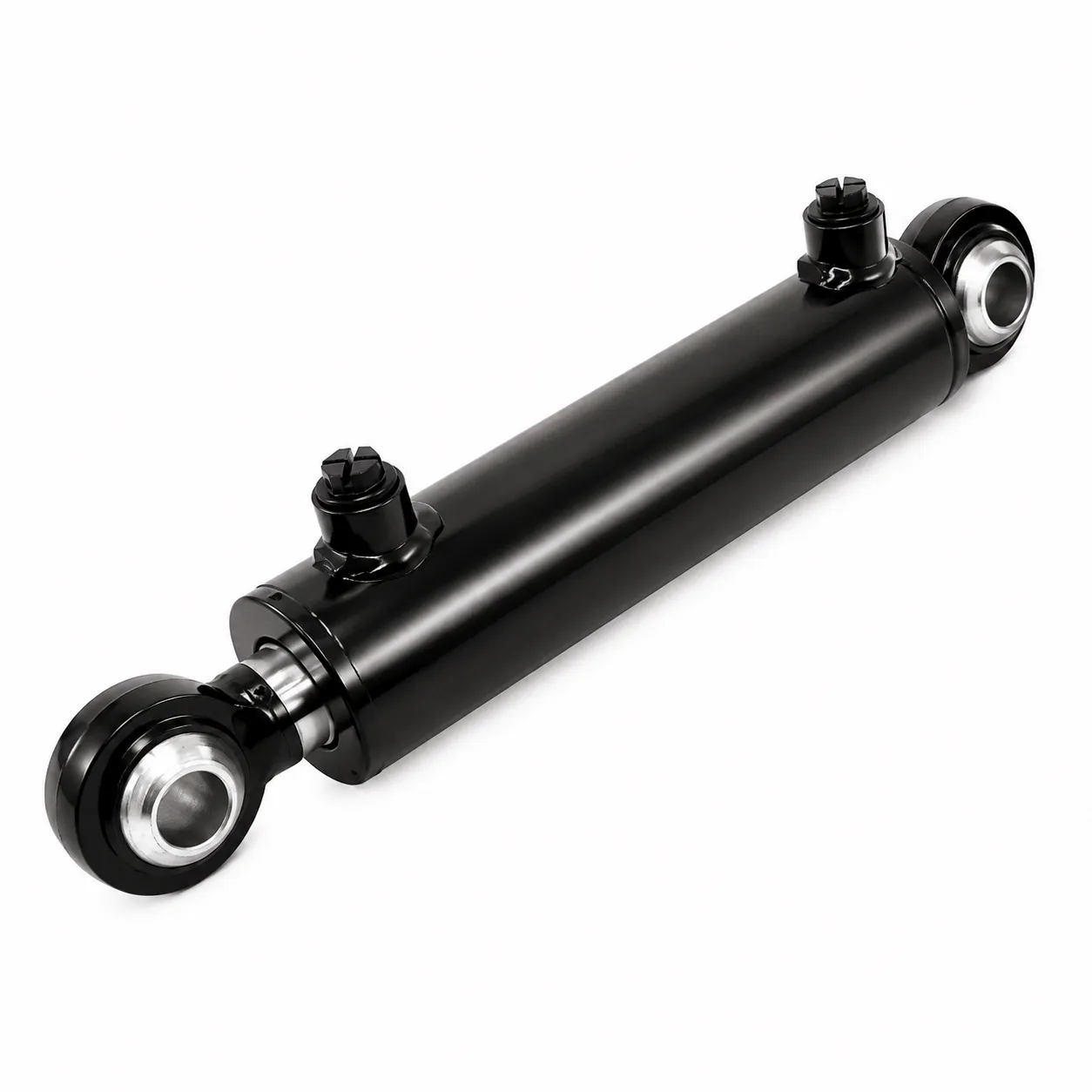
Looking for a precision-engineered hydraulic steering cylinder designed for forklift applications? Our forklift steering cylinder combines robust double-acting actuation with compact mounting geometry, purpose-built for high-cycle warehouse and distribution centre environments across the UK.
Core Materials Used in Manufacturing Steering Cylinders
Material selection is where steering cylinder engineering intersects with metallurgy, tribology, and polymer chemistry — three disciplines that collectively determine the longevity, pressure rating, and temperature tolerance of the finished component. Specifying the right materials is particularly important for UK-market procurement, where machines must frequently operate in wet, cold, or chemically contaminated environments ranging from Yorkshire’s agricultural lowlands to the North Sea offshore sector. A steering cylinder that performs perfectly in a factory test cell can fail prematurely if its barrel material is susceptible to pitting corrosion in salt-laden coastal air, or if its seal compound degrades in the presence of biodegradable hydraulic fluids increasingly mandated by UK environmental compliance standards.
Cold-drawn seamless steel tube, typically to EN 10305-1 specification. Internal bore honed to Ra ≤ 0.4 µm for optimal seal life and reduced friction. For corrosive environments, 316L stainless steel is available as a standard option across Ever Power’s custom range.
Precision-ground 1045 or 1060 carbon steel, induction-hardened to 55–62 HRC, then hard-chrome plated to a minimum 25 µm depth. For salt-spray resistance exceeding 500 hours (ISO 9227), Ever Power offers HVOF-sprayed tungsten carbide rod coating as a factory-fitted upgrade.
Multi-lip PTFE/NBR composite piston seals for the double-acting range; polyurethane rod seals with spring-loaded PTFE backup rings; bronze-filled PTFE guide rings to handle side-load forces. Seal packages are rated for operating temperatures from -40°C to +120°C, covering the full UK climate spectrum.
Ductile iron (GGG-40 or GGG-60) or forged steel end caps, CNC-machined to ±0.02 mm dimensional tolerance. Clevis and trunnion mounts are available in both standard DIN and custom geometry for OEM integration, all with zinc-phosphate anti-corrosion pre-treatment as standard.
Product Technical & Performance Parameters
The following table consolidates key engineering parameters for both double-acting and single-acting steering cylinders manufactured at Ever Power’s precision facility. These specifications represent our standard production range; all parameters are available in custom configurations upon request. UK procurement teams can use this data directly in system integration calculations, HCD (Hydraulic Circuit Design) documentation, and CE/UKCA marking technical files.
| Parameter | Double-Acting | Single-Acting |
|---|---|---|
| Bore Diameter | 40 – 320 mm | 32 – 200 mm |
| Rod Diameter | 28 – 200 mm | 22 – 140 mm |
| Max Working Pressure | 350 bar (5,076 psi) | 250 bar (3,626 psi) |
| Test Pressure | 525 bar (150% WP) | 375 bar (150% WP) |
| Stroke Range | 50 – 2,500 mm | 50 – 1,200 mm |
| Steering Angle (typical) | ±35° – ±55° (vehicle geometry dependent) | ±20° – ±40° |
| Rod Material | 1045/1060 steel, hard chrome or HVOF coated | 1045 steel, hard chrome coated |
| Barrel Material | EN 10305-1 seamless steel / 316L SS option | EN 10305-1 seamless steel |
| Seal Package | PTFE/NBR composite, multi-lip, -40°C to +120°C | NBR/PUR, spring-energised, -30°C to +100°C |
| Rod Surface Roughness | Ra ≤ 0.2 µm | Ra ≤ 0.4 µm |
| Port Thread Standard | BSPP, BSPT, SAE, Metric (custom) | BSPP, Metric |
| Mounting Options | Clevis, trunnion, flange, spherical eye, custom | Clevis, flange, foot mount |
| Hydraulic Fluid Compatibility | Mineral oil, HF-E, HEES (bio), water-glycol | Mineral oil, HF-E |
| Cycle Life (rated) | ≥ 1,000,000 cycles at rated pressure | ≥ 750,000 cycles at rated pressure |
| Quality Standard | ISO 6020/6022, CE / UKCA ready | ISO 6020, CE / UKCA ready |
Core Technical Advantages of Each Configuration
Why Engineers Choose Double-Acting
- ✓ Full hydraulic force available in both extension and retraction, enabling precise load control at any steering angle
- ✓ Velocity is fully controllable via the directional control valve, making smooth, proportional steering feel achievable
- ✓ Handles unpredictable or reversal loads without risk of uncontrolled rod motion — critical for articulated vehicle safety
- ✓ Supports regenerative circuit modes that reduce pump flow demand and system heat generation
- ✓ Compatible with electrohydraulic steering control systems (EHPS/ECS) for autonomous or assisted steering platforms
- ✓ Better power-to-weight ratio in compact installation envelopes, particularly in mobile applications
Where Single-Acting Excels
- ✓ Simpler hydraulic circuit with fewer valves, lower manifold cost, and reduced installation complexity
- ✓ Spring-return provides inherent fail-safe neutral return — essential for certain CE-category safety functions
- ✓ Single hydraulic hose connection reduces the number of potential external leak points by 50%
- ✓ Lower unit cost and shorter lead times for standard spring-return configurations
- ✓ Well-suited to gravity-return applications where the machine’s own weight reliably drives retraction
- ✓ Reduced seal count lowers the frequency of scheduled seal replacement in moderate-duty applications
Industrial Application Scenarios Across the UK
The selection of steering cylinder type is inseparable from the application context. Across the United Kingdom’s diverse industrial landscape — from the logistics corridors of the East Midlands to the offshore wind installation vessels operating from Aberdeen — different actuation types match different duty profiles. The applications below represent the most common and demanding use cases where our engineering team provides technical consultation to UK-based procurement and design teams.
Large-scale arable farms across Lincolnshire and Cambridgeshire rely on double-acting steering cylinders in their high-horsepower tractors and combine harvesters. These machines must execute precise headland turns at full field speed under load, and the operator demands consistent, progressive steering feel regardless of whether the front axle is loaded with ballast weights or fully unladen. Single-acting units find application in smaller rear-steer implement attachments — disc spreaders, trailing cultivators — where spring-return to the straight-ahead position provides a useful mechanical safety function if the operator loses control of the headstock.
Articulated dump trucks operating in Welsh slate quarries and Derbyshire limestone extraction sites subject their steering cylinders to continuous reversing loads as the machines navigate steep, uneven haul roads carrying 28–45 tonne payloads. Only double-acting steering cylinders provide the bi-directional hydraulic control authority needed to manage these conditions safely. The articulation joint cylinder in these vehicles must resist the tendency of a loaded trailer unit to jackknife on descending gradients — a function that relies entirely on the hydraulic stiffness provided by a properly specified double-acting cylinder and its dedicated counterbalance valve arrangement.
Container handling equipment at the UK’s major container ports — Southampton, Felixstowe, and London Gateway — operates in multi-shift, high-cycle environments where steering cylinder reliability directly impacts terminal throughput. Reach stackers use double-acting rear-axle steering cylinders to achieve the tight turning circles needed in congested stack lanes, while their front-axle load cell data feeds directly into the steering system to prevent tipping. With cycle counts exceeding 2,000 steering cycles per shift, the minimum-rated cycle life of 1,000,000 cycles at full working pressure is not conservative — it is a baseline commercial expectation from port procurement teams.
The Midlands and Greater Manchester’s dense construction activity drives significant demand for steering cylinders in telescopic handlers and aerial work platforms. These machines typically use double-acting rear steering with proportional electrohydraulic control to allow crab-steer and circle-steer modes — critical when positioning platforms in confined urban renovation sites. Cycle life and seal robustness matter greatly here, as machines may be hired through rental fleets that cannot guarantee regular preventive maintenance intervals, placing a premium on seal longevity and contamination tolerance.
Offshore service vessels and wind farm installation ships operating out of Aberdeen and Teesside’s ports require steering cylinders that meet the dual demands of marine-grade corrosion resistance and continuous duty cycle reliability. Double-acting units with 316L stainless steel barrels and HVOF tungsten carbide rod coatings are standard specification for deck crane slew drives and anchor-handling tugger winch steering mechanisms. The North Sea operating environment — with its combination of salt spray, sub-zero temperatures, and wave-induced dynamic loading — represents perhaps the most demanding test environment for steering cylinder seal packages anywhere in the UK industrial sector.
Counterbalance forklifts and reach trucks operating across the East Midlands’ vast logistics distribution centres — including the major hubs around Lutterworth and Northampton — rely on compact, high-cycle steering cylinders for rear-axle pivot steering. Single-acting units with spring return are common in smaller 1.5–3 tonne electric forklifts where circuit simplicity and energy efficiency are paramount. Larger diesel counterbalance trucks and rough-terrain forklifts typically employ double-acting cylinders to manage the higher steering forces generated by wider tyres and heavier front-axle loads. For more details on specific product geometry, our forklift tilt cylinder product page provides detailed dimensional data and mounting options relevant to common forklift platforms.
Sheffield Steel Processing Plant — Upgrading Coil Handling Vehicle Steering
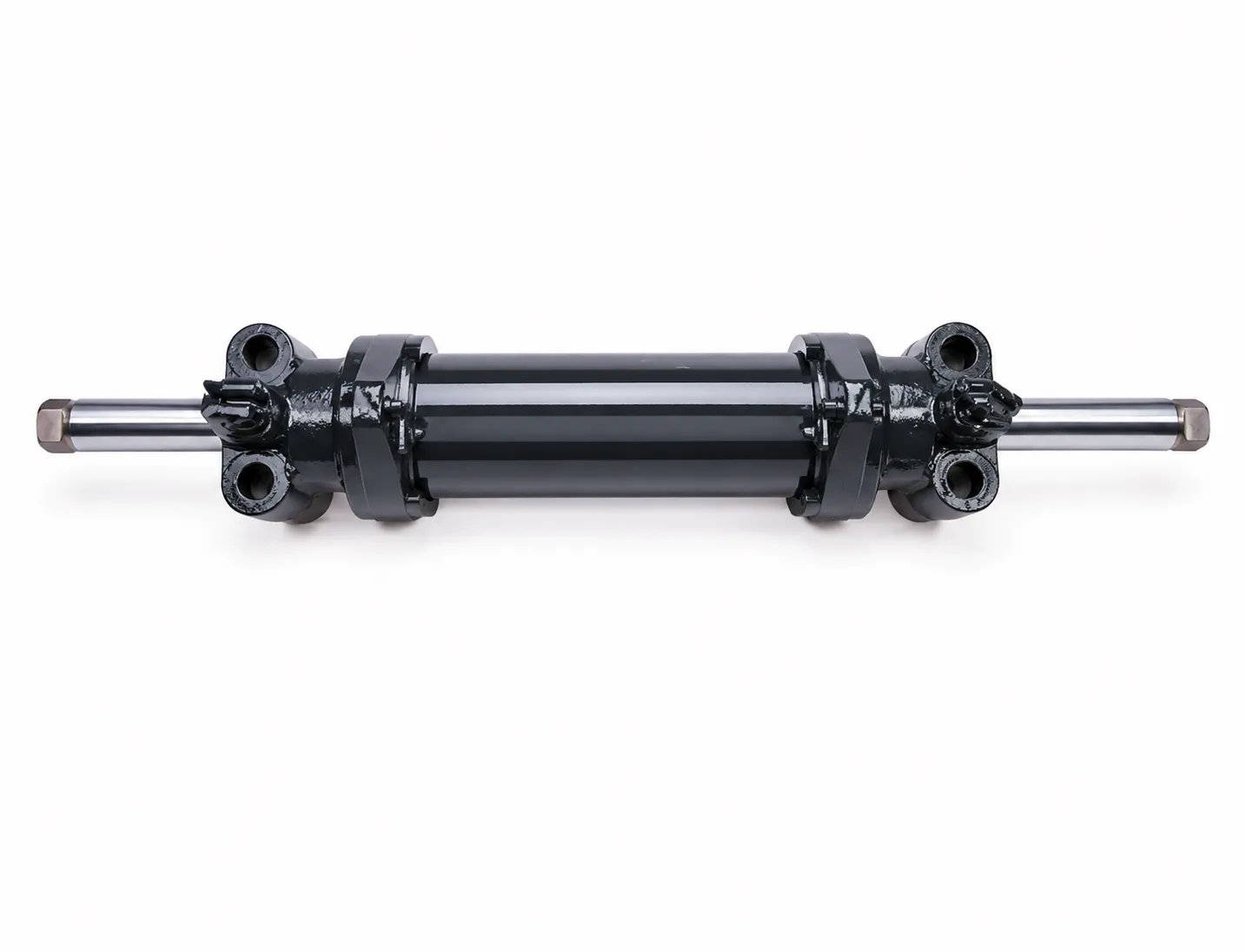
A mid-sized steel coil processing and distribution company based in Sheffield — operating a fleet of twelve specialised coil-transfer vehicles that shuttle between their pickling line, rolling mill, and dispatch yard — was experiencing repeated steering cylinder failures on six of their vehicles within twelve months of a previous supplier’s installation. The original single-acting spring-return cylinders, sourced from a European catalogue supplier, were failing at the rod seal within 90,000–120,000 cycles, well short of the 500,000-cycle target specified in the machine’s maintenance schedule. The root cause, identified during site investigation by Ever Power’s applications engineer, was that the spring preload was generating significant back-pressure in the hydraulic return line during retraction cycles under the lateral loads imposed by heavy coil weights acting through the steering linkage — a loading profile the original spring-return unit was never dimensioned to handle.
Ever Power’s engineering team proposed a direct-replacement double-acting steering cylinder in the same overall length envelope, using the existing clevis mount geometry but with a 10 mm larger bore to achieve an equivalent extension force at lower working pressure — thereby reducing seal loading and extending service intervals. The cylinder featured our heavy-duty PTFE-backed polyurethane rod seal package rated for the elevated ambient temperatures present near the pickling line, and an integrated counterbalance valve tapped directly into the cylinder cap-end port to prevent load-induced drift when the vehicle pauses mid-manoeuvre. Twelve replacement units were delivered to Sheffield within five weeks of order placement, complete with UKCA technical documentation for the machine’s CE file update.
Eighteen months after retrofit, all twelve vehicles remain in service with no cylinder-related downtime events. Seal inspection at the first scheduled 500,000-cycle service interval showed wear within acceptable limits, with the engineering team projecting seal life of 900,000–1,100,000 cycles under the actual site duty cycle — a more than eightfold improvement over the failed original specification.
“The Ever Power team identified the root cause of our steering failures in a single site visit — something two other suppliers had missed entirely. The replacement double-acting cylinders have now run through three complete scheduled service intervals without a single seal replacement. The total cost saving compared to our previous failure-and-replace cycle has been substantial.”
“We were sceptical about switching to a Chinese manufacturer for a safety-critical steering component, but Ever Power’s documentation package — pressure test certificates, material certifications, dimensional inspection reports — was the most thorough we have received from any supplier, domestic or international. The UKCA compliance file they provided saved our technical team significant time on the CE re-marking project.”
“Lead time and responsiveness were what impressed us most during the initial trial order. We placed an order for six custom-bore double-acting steering cylinders with non-standard port orientation on a Friday, received dimensioned approval drawings by Tuesday, and had confirmed production slot and shipping date by Thursday. The cylinders arrived at our East Midlands facility within 32 days — ahead of the six-week target we had been quoted.”
Which Type Should You Specify? A Practical Selection Guide
Rather than offering a generic rule of thumb, experienced hydraulic systems designers work through a structured set of application criteria before committing to either actuation type. The table below maps key decision parameters to recommended cylinder types, providing a quick-reference framework for UK engineers working to a specification or tender document. Where parameters fall in overlapping zones — for example, moderate load variability combined with a safety-return requirement — the double-acting type is generally preferred as the more conservative engineering choice, with a counterbalance valve fulfilling the neutral-return safety function.
| Decision Criterion | Choose Double-Acting | Choose Single-Acting |
|---|---|---|
| Load Direction | Reversal loads or unpredictable lateral forces | Predominantly one-directional, gravity-assisted return |
| Speed Control Requirement | Both stroke directions must be metered | Only extension speed is critical |
| Safety Return Function | Counterbalance valve provides hydraulic locking | Spring provides mechanical neutral return |
| Circuit Complexity Tolerance | High — full 4/3-way valve circuit acceptable | Low — simplified valve architecture preferred |
| Duty Cycle | High-frequency, continuous steering | Low-to-moderate, intermittent |
| Operating Pressure | Up to 350 bar — full range available | Up to 250 bar adequate |
| Budget / Unit Cost | Higher unit cost, lower lifecycle cost | Lower unit cost for standard configurations |
Frequently Asked Questions About Steering Cylinders
Ready to Specify Your Steering Cylinder?
Our engineering team responds to technical enquiries within one business day. Send your drawing, specification sheet, or application description to get a detailed proposal.