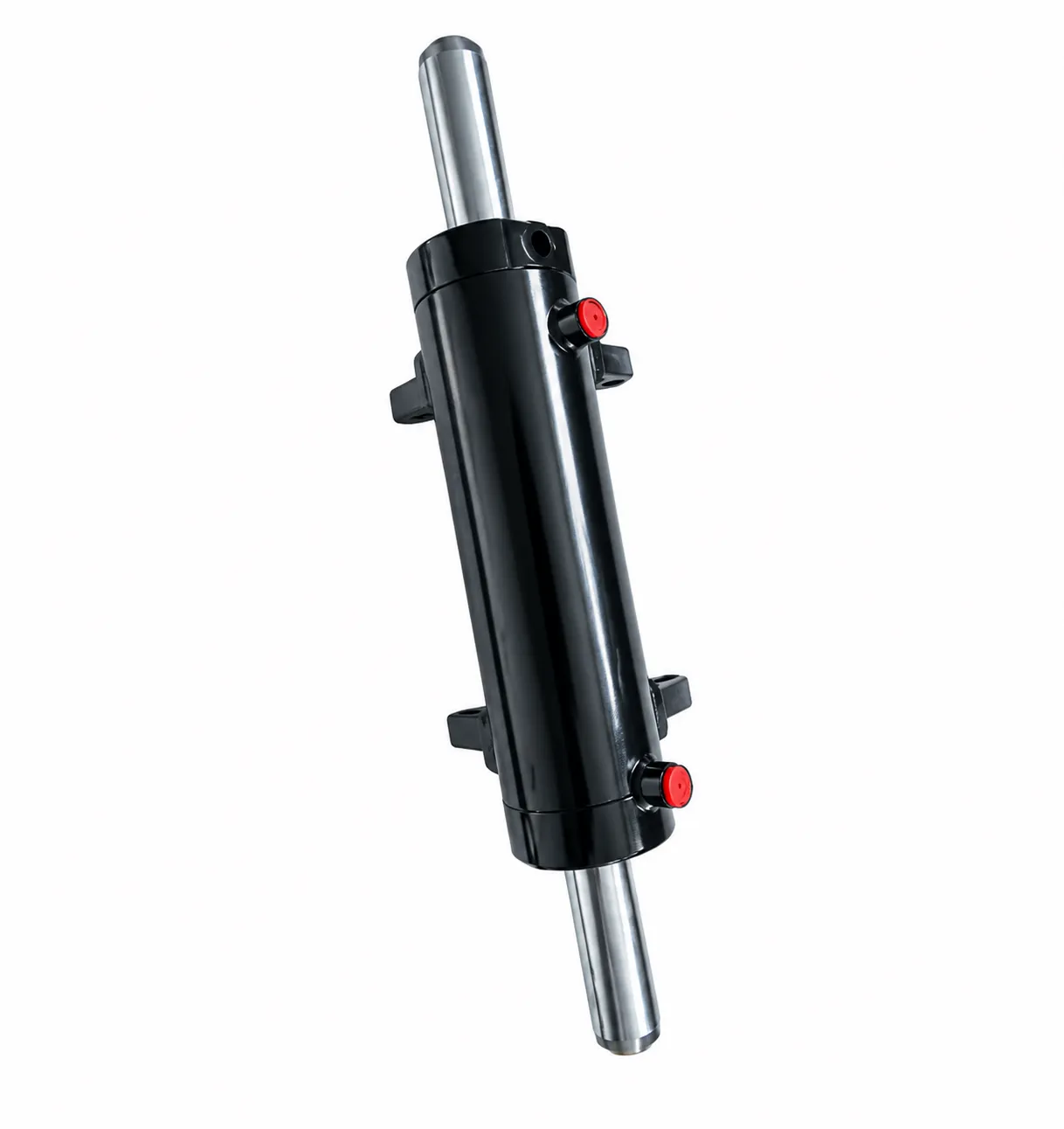
When a vessel turns away from a collision course or holds its heading through a Force 8 gale, a marine steering cylinder is doing the quiet, critical work that keeps everything safe. These hydraulic actuators translate pressurised fluid into precisely controlled rotary or linear motion at the rudder post, converting the helmsman’s input into the physical force required to swing a rudder that may weigh several tonnes. Unlike the steering cylinders found in terrestrial construction or agricultural equipment, marine variants operate inside an environment defined by saltwater ingress, aggressive chemical exposure from bilge fluids, wide thermal cycling as vessels move between latitudes, and vibration spectra that can fatigue lesser materials within a single season. The UK’s 7,700-mile coastline, its busy ferry routes from Portsmouth and Dover, and the North Sea’s offshore energy infrastructure all place exceptional and unforgiving demands on every hydraulic component in the steering circuit. Understanding what separates a genuinely seaworthy steering cylinder from an underspecified import is not a theoretical exercise — it directly governs the safety of crew, cargo, and capital assets.
How Marine Steering Cylinders Actually Work
Hydraulic Actuation
A marine steering cylinder sits at the intersection of the vessel’s hydraulic power unit and its rudder assembly. Pressurised hydraulic oil — typically operating between 150 and 250 bar in commercial applications — enters one port of the cylinder and pushes the piston or ram against the opposing fluid column. The resulting linear force at the rod end is transferred through a tiller arm or quadrant to the rudder stock, producing the angular displacement needed to steer the hull. In twin-cylinder configurations, which are standard on vessels where regulations or redundancy requirements demand it, the two cylinders work in opposition: as one extends, the other retracts, sharing the load symmetrically and keeping the rudder centred when pressure is equalised. The hydraulic circuit typically includes a lock valve that holds the rudder position under load if helm input is removed, preventing weather helm from pushing the rudder back to amidships during heavy swells.
Force Transmission
The geometry of force transmission in a marine steering arrangement demands that the cylinder’s bore, stroke, and mounting geometry are calculated with far greater precision than is necessary in most industrial contexts. The rudder torque — calculated from rudder area, vessel speed, and rudder angle — must be matched exactly to the cylinder’s available output force, factoring in the mechanical advantage of the tiller arm length. Classification societies including Lloyd’s Register and DNV GL publish specific formulae governing these calculations, and any compliant installation must demonstrate that design torque is met at the rated system pressure with a defined safety margin. Ever Power engineers work directly with these standards during the design phase, ensuring that every cylinder leaving our facility is not merely hydraulically capable but geometrically and structurally verified for the exact vessel installation it is intended to serve.
Core Materials: Why Metallurgy Defines Marine Longevity
Material selection for marine steering cylinders is not an area where cost-optimised substitutions are acceptable. The marine environment attacks every component through electrochemical corrosion, crevice attack, and stress corrosion cracking, and a material that performs adequately in a sheltered workshop can degrade to the point of failure within a single winter transit of the North Sea. Ever Power’s marine cylinder programme specifies materials at every layer of the assembly according to both their mechanical performance and their corrosion resistance rating in seawater environments, cross-referenced against NACE MR0175 and ISO 15156 guidance where applicable.
Cylinder Barrel
Seamless 316L stainless steel tube, cold-drawn and honed to Ra 0.4 µm internal finish. The low-carbon variant prevents sensitisation during welding and provides exceptional pitting resistance in chloride-rich environments. Wall thickness is calculated to ASME VIII or EN 13445 depending on the vessel’s flag state requirements.
Piston Rod
17-4PH precipitation-hardened stainless steel, ground to h6 tolerance and hard chrome plated to a minimum 25 µm depth. Where electroless nickel plating is specified for chemical resistance rather than hardness, the nickel-phosphorus deposit is applied at 10–12% phosphorus content to achieve a minimum 65 HRC equivalent surface hardness after heat treatment.
End Caps & Flanges
Naval brass (CW712R / C46400) or duplex stainless 2205 for end caps and port bosses, chosen for their near-immunity to dezincification and their ability to form a galvanic couple that does not accelerate the corrosion of adjacent steel structures. All threaded port connections are sealed with PTFE-backed O-rings rated for HLP46 mineral oil, bio-hydraulic fluid, and phosphate-ester fluids.
Seal Package
Marine-grade HNBR (hydrogenated nitrile butadiene rubber) piston seals and polyurethane rod wipers with a stainless steel scraper ring. The HNBR compound retains its elastic properties across a service temperature range of -40°C to +150°C and is compatible with both mineral and synthetic ester hydraulic fluids, making it suitable for vessels operating from Arctic survey routes to equatorial shipping lanes.
Product Advantages That Matter at Sea
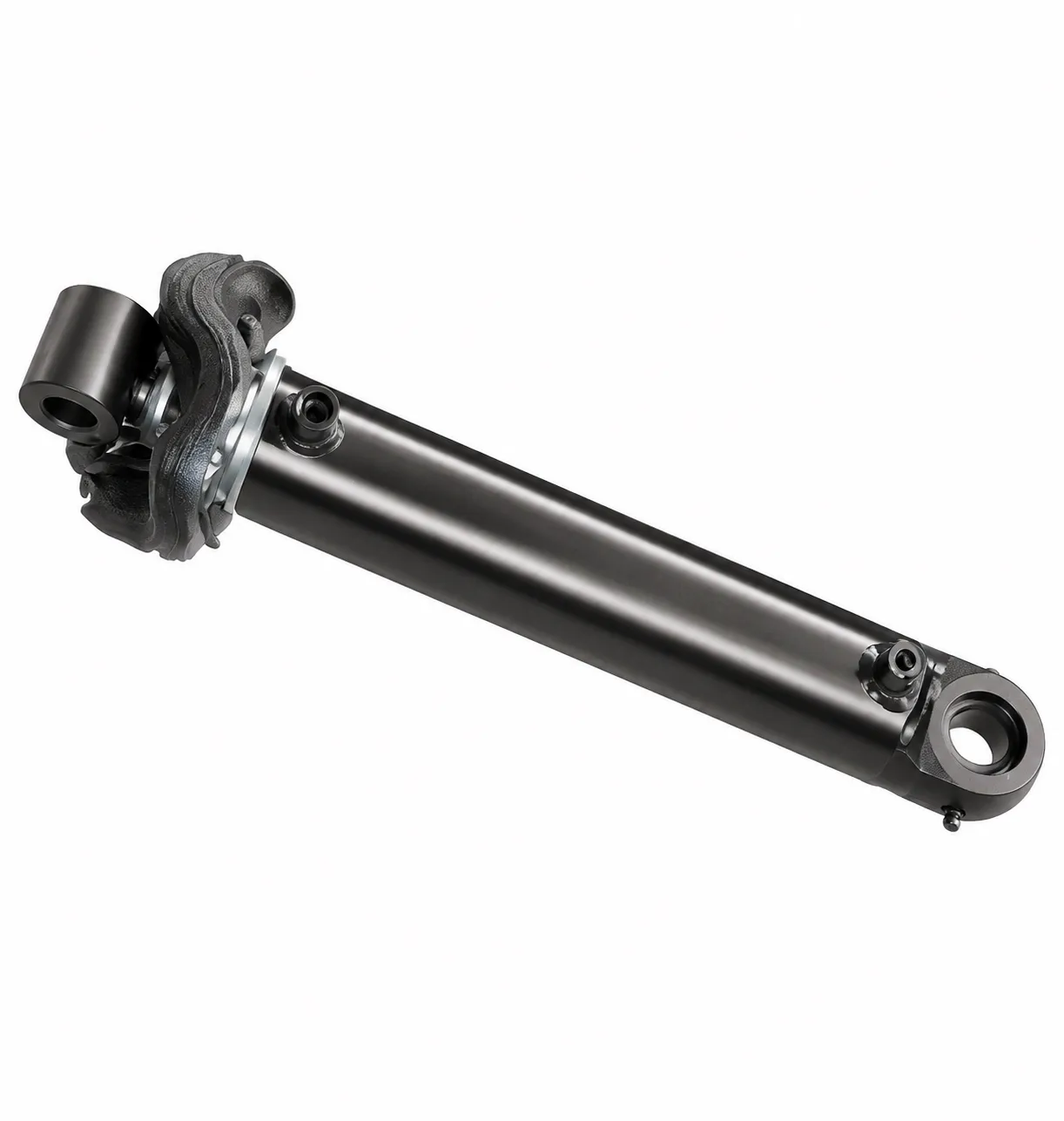
Specifying a marine steering cylinder purely on bore and stroke misses the engineering detail that separates a long-service component from a maintenance liability. The following performance characteristics are the ones that Ever Power’s marine engineering clients consistently cite as the deciding factors when replacing OEM cylinders or specifying new-build steering gear on UK-flagged vessels.
Zero-Ingress Sealing Architecture
Ever Power marine steering cylinders use a triple-lip rod seal arrangement with an intermediate drain groove vented to atmosphere. If the primary rod seal begins to weep, hydraulic oil escapes through the drain rather than contaminating the secondary seal, and the fault is visible to the crew before any functional degradation occurs. The scraper ring removes salt crust from the rod surface on each return stroke, preventing abrasive particles from being drawn into the seal cavity — a common failure mechanism on vessels running in sandy harbour approaches such as those found along the Thames Estuary or the Humber Estuary near Hull’s commercial port complex.
Cathodic Protection Compatibility
All external surfaces of Ever Power marine cylinders are blasted to Sa 2.5 and coated with a two-pack epoxy primer compatible with impressed current cathodic protection (ICCP) systems. The zinc anode mounting points are integrated into the cylinder mounting flange rather than added as afterthoughts, ensuring proper galvanic grounding. Vessels operating out of Aberdeen or Lerwick on North Sea support contracts particularly benefit from this approach, where the combination of cold seawater conductivity and the electrical fields generated by nearby subsea infrastructure can accelerate galvanic corrosion on lesser cylinders.
High Cycle Fatigue Life
Piston rod threads and end-cap joints are designed to ASME fatigue class D or better, with a minimum 10^7 cycle fatigue life at the design load amplitude. Finite element analysis (FEA) of the port boss geometry eliminates stress concentration points that are commonly found in castings produced without computational support. This matters acutely on short-sea ferries, river cruise vessels, and patrol craft that may perform hundreds of full-stroke steering cycles per day, accumulating the equivalent fatigue load of a decade of deep-sea passage in a single year of intense harbour and estuary manoeuvring.
Classification Society Readiness
Every marine steering cylinder in the Ever Power range is designed and documented to meet or exceed the construction rules of Lloyd’s Register, Bureau Veritas, and DNV GL. Material mill certificates, weld procedure qualifications, hydrostatic test records, and dimensional inspection reports are supplied as a standard delivery package rather than an optional extra. For UK-flagged commercial vessels under MCA jurisdiction, this documentation set satisfies the survey requirements without the additional cost of third-party witness inspection — though we routinely accommodate class surveyor attendance at our factory when clients require it.
Technical & Performance Parameter Table
The table below covers the standard parameter envelope for Ever Power’s marine steering cylinder product range. Custom specifications beyond these ranges — including bores up to 400 mm, operating pressures to 350 bar, and stroke lengths to 2,500 mm — are available on application via our technical sales team.
| Parameter | Standard Range | Unit / Notes |
|---|---|---|
| Bore Diameter | 50 – 250 | mm; custom to 400 mm on request |
| Rod Diameter | 35 – 180 | mm; h6 tolerance ground finish |
| Stroke Length | 100 – 1,800 | mm; custom to 2,500 mm |
| Rated Operating Pressure | 160 – 280 | bar; test pressure 1.5x rated |
| Rudder Torque Range | 2,000 – 800,000 | N·m; vessel class dependent |
| Rudder Angle (Total Arc) | ±35° – ±70° | IMO standard minimum ±35° |
| Barrel Material | 316L / 2205 Duplex SS | ASTM A312 / EN 10216-5 |
| Rod Surface Treatment | Hard Chrome or EN Plating | 25 µm min; Ra ≤ 0.2 µm |
| Seal Material | HNBR / PTFE / PU | -40°C to +150°C service range |
| Operating Temperature | -30°C to +120°C | Continuous; peak +150°C |
| External Coating | 2-pack epoxy + polyurethane top coat | ISO 12944 C5-M corrosivity class |
| Fatigue Life (min.) | 10^7 cycles @ 100% design load | ASME fatigue class D |
| Classification Approvals | LR, BV, DNV GL | Full documentation package supplied |
| Lead Time (Standard) | 4 – 8 weeks | Ex-works; expedited available |
Industrial Application Scenarios
Related Product
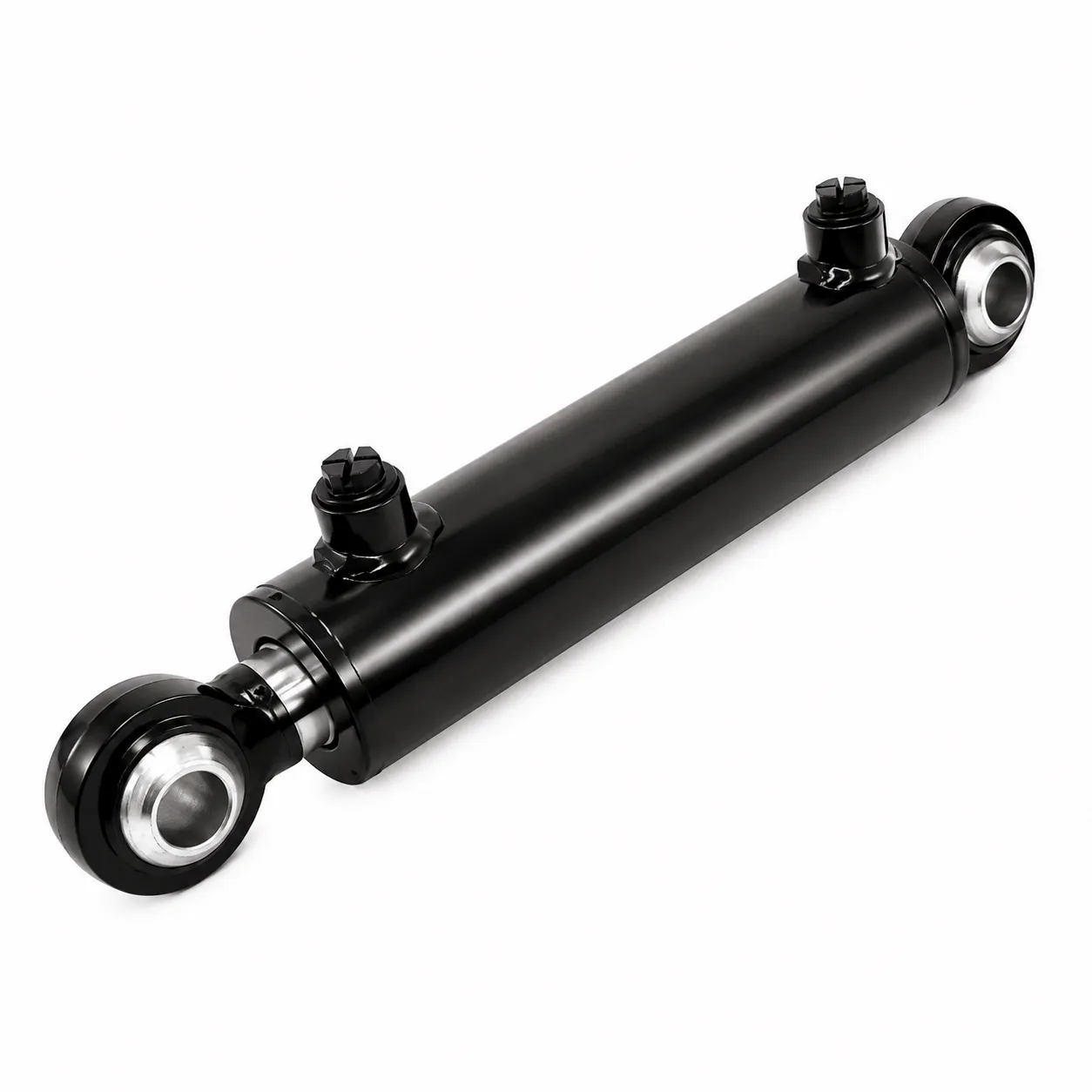
Mini Forklift Attachment Hydraulic Cylinder
Compact bore hydraulic cylinder suitable for attachment applications requiring precise positional control and extended seal life.
Related Product
Medium-Duty Forklift Attachment Hydraulic Cylinder
Engineered for mid-range load handling where hydraulic force must be delivered consistently across extended duty cycles.
Ever Power Manufacturing: Precision, Scale, and Custom Capability
Ever Power’s marine cylinder manufacturing facility operates to ISO 9001:2015 quality management standards, with a dedicated marine and defence production cell that is physically separated from the general industrial cylinder line to maintain the traceability and cleanliness standards required by classification society rules. Every marine cylinder barrel is individually pressure-tested and dimensional-inspected before assembly, with all test data logged against the cylinder’s unique serial number in our quality management system. This serial-number traceability allows any cylinder to be fully reconstructed in its history — from raw material heat number through to final hydrostatic test result — providing shipowners and classification surveyors with the complete audit trail that modern flag state regulations require.
Customisation is not an optional service at Ever Power — it is the standard mode of operation for marine projects. No two steering gear installations are identical: the tiller arm geometry, the port locations, the mounting flange bolt pattern, and the end fitting articulation all vary between vessel types, and these differences must be engineered correctly at the design stage rather than adapted in the field. Our technical team uses SolidWorks 3D modelling to produce installation drawings and clash-detection models for each custom project, ensuring that the physical cylinder integrates without modification into the steering gear framework as designed and that there are no hidden clearance issues that would only emerge during installation at a shipyard in Newcastle, Belfast, or Glasgow.
CNC Machining Tolerance
All bore and rod diameters held to H7/h6 tolerance using in-process gauging. Surface finish verified by profilometer to Ra ≤ 0.4 µm on bores, Ra ≤ 0.2 µm on rods.
Weld Qualification
All pressure-retaining welds are performed under qualified procedures to EN ISO 15614-1 by coded welders. 100% weld inspection by magnetic particle or dye penetrant testing on stainless steel assemblies.
Supply Chain Transparency
Raw material sourced from approved European mills with EN 10204 3.1 material certificates. Seal kits from Parker Hannifin, SKF, or Trelleborg as standard, with material certification available on request.
Delivery & Logistics
Standard sea freight via Felixstowe or Southampton with DDP Incoterms available. Airfreight expedite for emergency replacements. Packing to ISPM 15 fumigation standards for all timber crating.
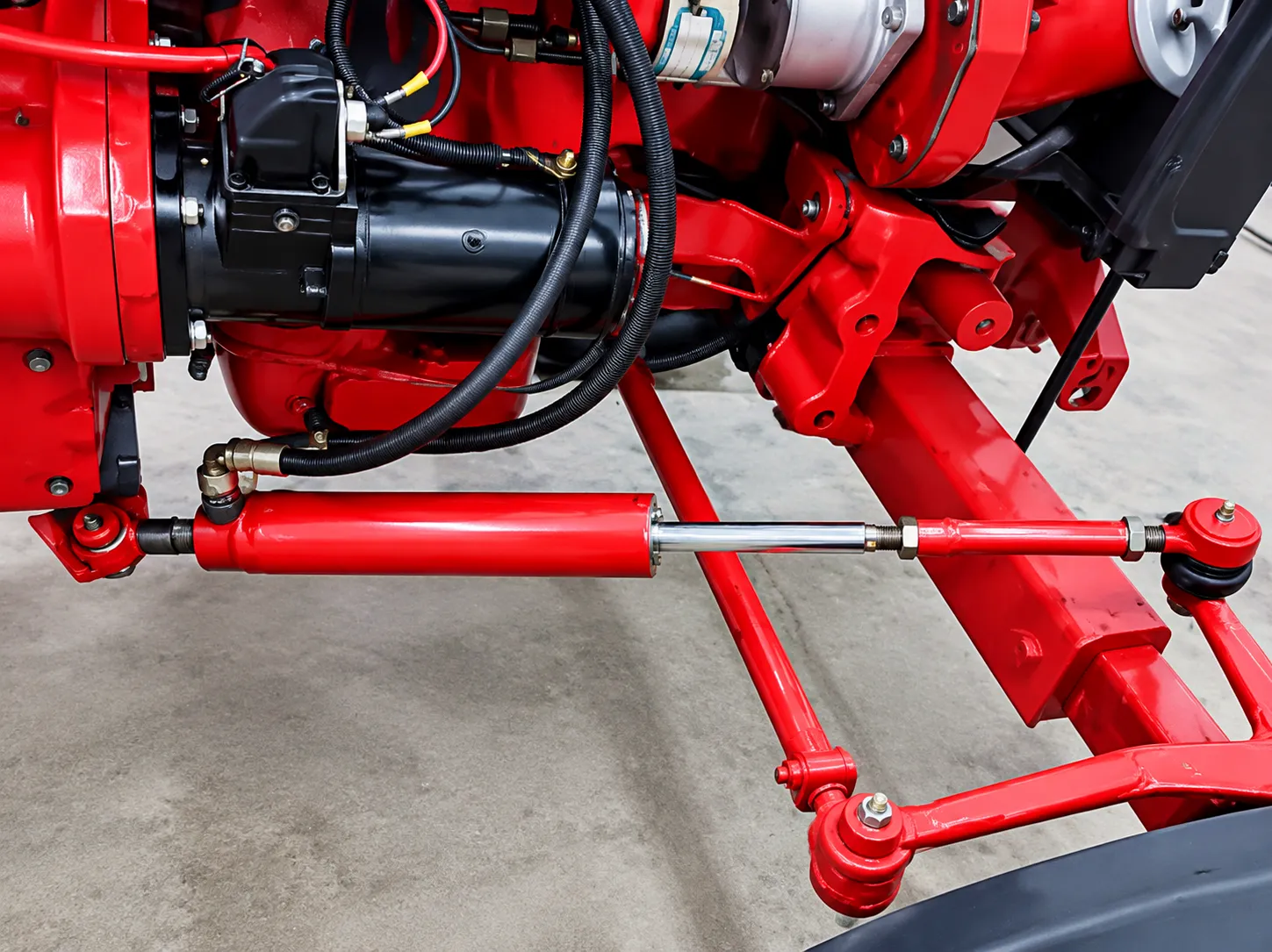
Ready to discuss a custom marine steering cylinder project?
Customer Success: Tyne River Dredging, Newcastle upon Tyne
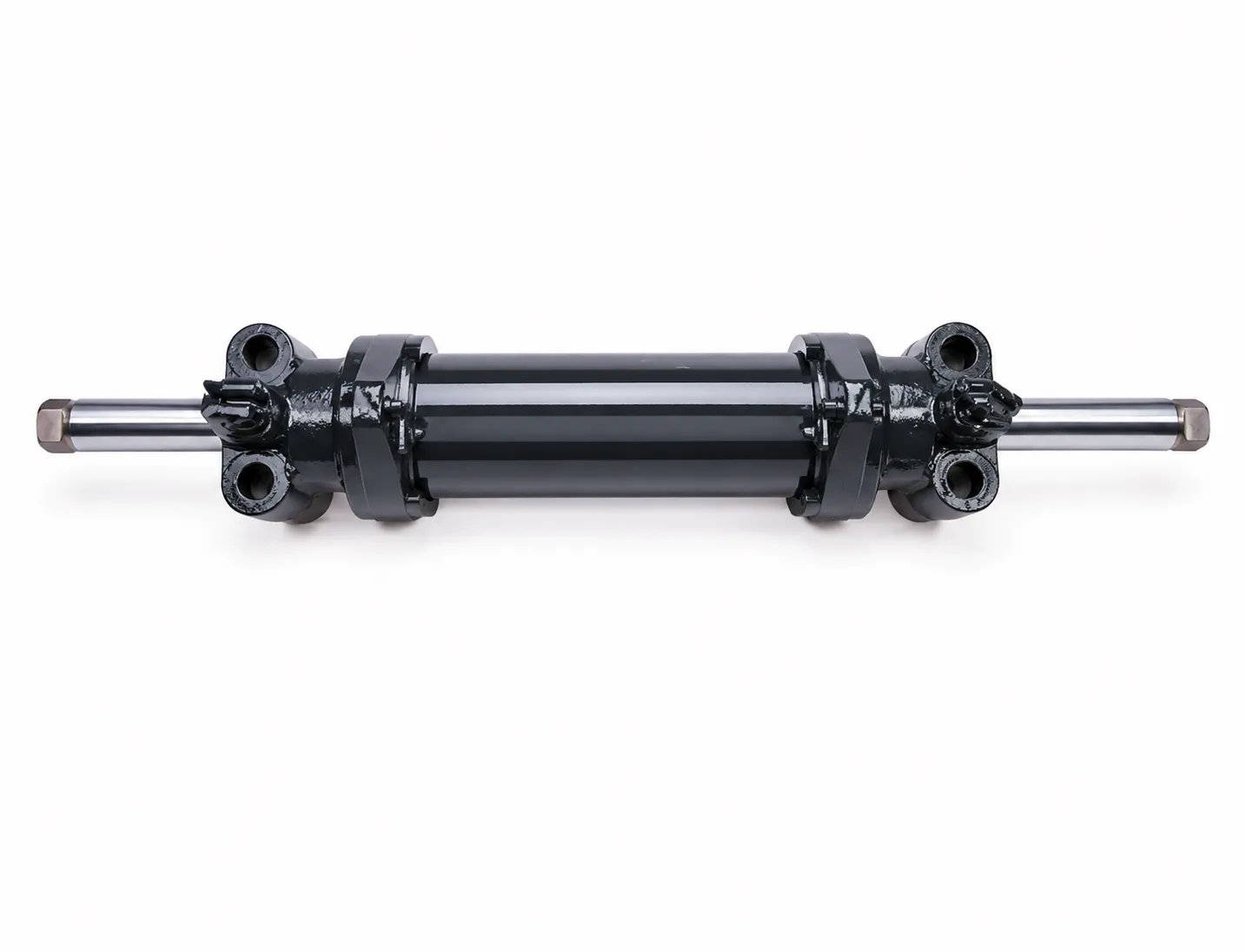
Tyne River Dredging Ltd, a specialist maintenance dredging contractor operating from their base in North Shields on the River Tyne, contacted Ever Power following a series of unplanned dry-dockings caused by repeated steering cylinder failures on their primary trailing suction hopper dredger, the MV Tyne Carrier. The vessel was operating around the clock on a contract to maintain navigable depth in the approaches to the Port of Tyne, a critical deep-water facility handling over 3 million tonnes of cargo annually. The original steering cylinders — sourced from a budget European supplier during the vessel’s 2018 refit — had failed three times in fourteen months, each time through rod seal failure attributed to the silty and chemically aggressive water conditions in the lower Tyne estuary. Each unplanned dry-docking cost Tyne River Dredging approximately £38,000 in lost contract revenue and direct repair costs, excluding the consequential costs of needing a standby vessel on short notice.
Ever Power’s marine engineering team conducted a site survey aboard the MV Tyne Carrier during a scheduled port call and identified two contributing factors: the original cylinders used standard NBR seals that were incompatible with the hydraulic oil blend in use, which contained a proportion of vegetable ester additive required under the Tyne’s environmental protection zone designation, and the original rod chrome plating had degraded to below 10 µm thickness in areas exposed to the continuous silt abrasion on each steering cycle. The custom replacement cylinders specified by Ever Power used HNBR seals fully compatible with all ester-containing fluid blends, a rod finish of electroless nickel rather than chrome to provide superior adhesion resistance in abrasive slurry conditions, and a redesigned scraper ring with a tungsten carbide-impregnated contact face to extend service life in the silt-laden environment.
The replacement cylinders were installed in February 2023. As of the time of writing, the MV Tyne Carrier has completed twenty-two months of continuous operation without a single steering system maintenance call-out, representing a saving of approximately £76,000 against the historical failure rate and allowing Tyne River Dredging to fulfil their contract obligations without interruption. The marine superintendent for Tyne River Dredging has since specified Ever Power cylinders for the company’s second vessel, the MV Tyne Pioneer, during its 2024 special survey refit in the dry dock at Smith’s at Blaydon.
What Our Clients Say
“
The custom seal specification that Ever Power recommended for our estuary dredger was something our previous supplier simply said wasn’t possible. The electroless nickel finish on the rod has performed beyond expectation — we’ve had zero rod scoring in twenty-two months of continuous silt-heavy operation on the Tyne. The documentation package they supplied passed the Lloyd’s survey inspection first time with no queries.
James Hartley, Marine Superintendent
Tyne River Dredging Ltd, North Shields
“
We specified Ever Power for the steering gear refit on our North Sea PSV during her 2023 special survey out of Aberdeen. The lead time of six weeks against a competitor’s quoted twelve weeks was the deciding commercial factor, but the build quality is what’s kept us coming back. The cylinders arrived with full 3.1 mill certs, weld records, and hydrostatic test certificates already collated — our surveyor commented it was the most complete documentation package he’d seen from an Asian supplier.
Sandra McAllister, Technical Purchasing Manager
Caledonian Offshore Services, Aberdeen
“
Our river cruise operation on the Thames runs vessels that steer constantly — entering locks, navigating bridges, manoeuvring in the Pool of London with tourist traffic around us all day. The compact Ever Power cylinder pack fitted our existing tiller geometry without any modification to the frame, which is remarkable given it was a custom stroke length. Eighteen months in, the seals show no sign of wear and we haven’t had a drop of oil loss. For a heritage waterway operation like ours, reliability and environmental performance are both critical.
Patrick Ogilvy, Fleet Operations Director
Thames Prestige Cruises, London
Frequently Asked Questions
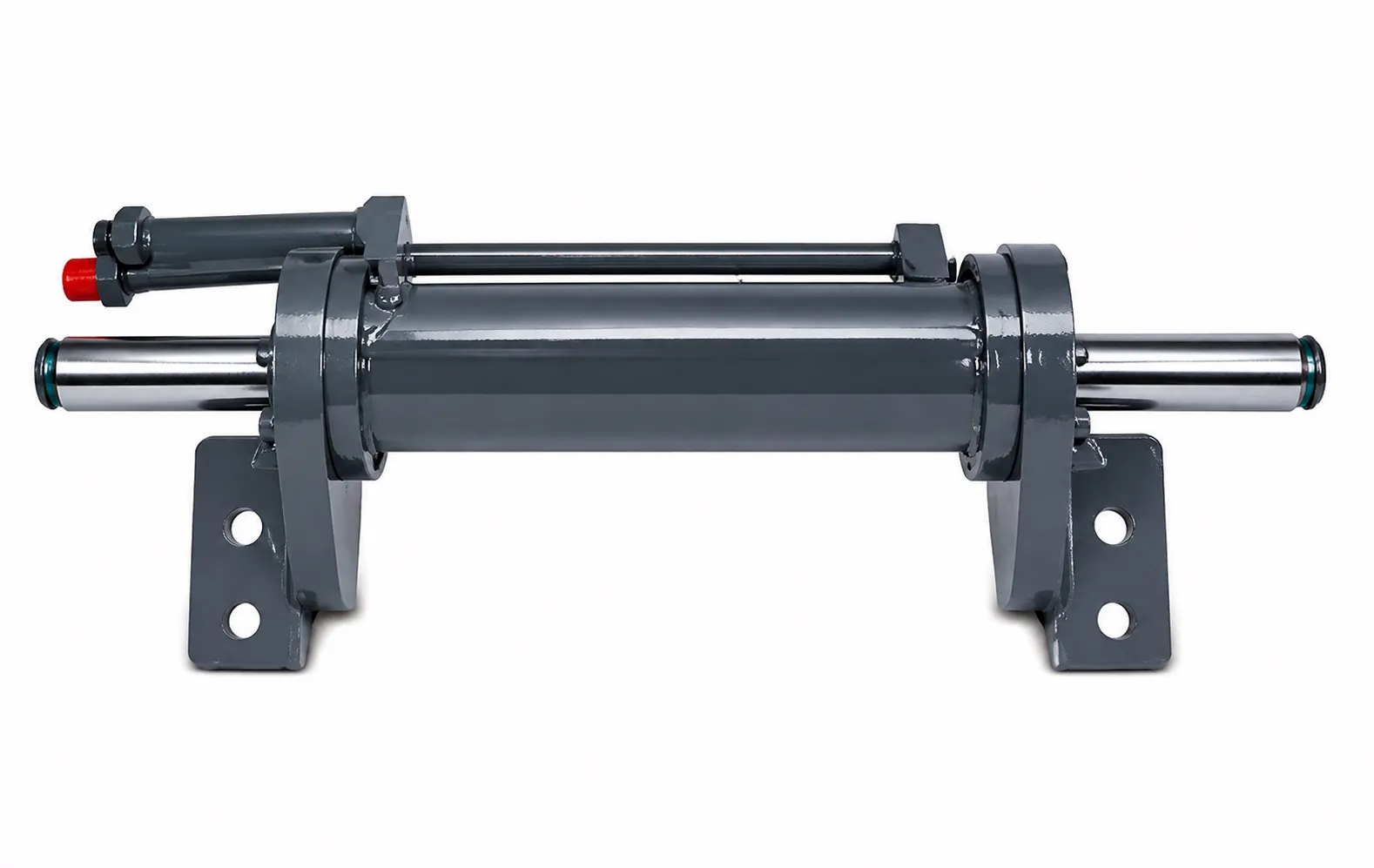
Engineered for the Sea. Built to Classification Standard.
Contact Ever Power’s marine engineering team for a technical consultation and custom quotation.
edit by gzl