Choosing Between Chrome-Plated and Stainless Steel Piston Rods for Steering Cylinders
A practical engineering guide for UK procurement teams, OEM engineers, and maintenance managers working across heavy industry, agriculture, and mobile machinery.
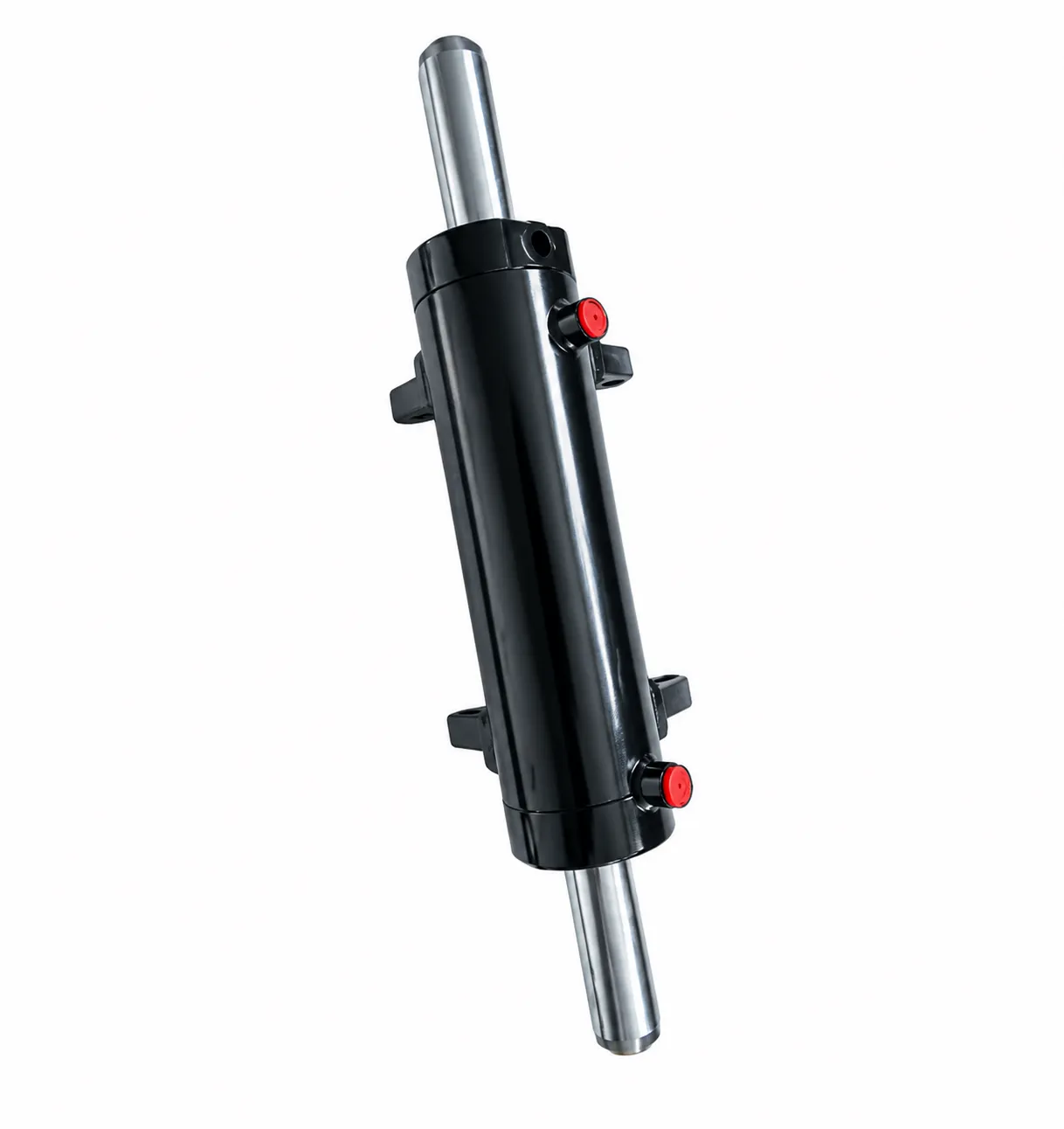 When engineers and procurement managers in the UK’s manufacturing heartlands sit down to specify a steering cylinder, one question surfaces with consistent regularity: does the piston rod need to be chrome-plated, or would stainless steel serve better? On the surface, this seems like a straightforward materials question. In practice, it touches on operating environment, cycle life, budget constraints, regulatory compliance, and the long-term reliability of a machine that may be working 10 or 12 hours a day in a Sheffield pressing shop, a Midlands agricultural cooperative, or a Bristol port handling facility. Getting this choice right has real financial and operational consequences — and getting it wrong can mean unplanned downtime, corrosion failures, and costly seal replacements far ahead of schedule.
How Piston Rod Material Choice Affects Steering Cylinder Performance
The piston rod in a steering cylinder does not merely transmit force — it is the primary dynamic sealing surface. Every time the rod extends or retracts, its outer surface passes through lip seals and rod wiper seals, and the surface quality at that contact zone determines how long those seals last, how much leakage occurs, and ultimately how consistent the steering response feels to the operator. A surface that is too rough will abrade seals prematurely; one that is too smooth may not retain a thin lubricating film. Chrome-plated rods are typically finished to Ra 0.1–0.4 µm, a range proven over decades of hydraulic engineering to balance seal life against lubrication retention. Stainless steel rods, when correctly finished, can match this range, but the finishing process is more involved and the cost difference is non-trivial for production runs.
Hard chrome electroplating deposits chromium metal from a hexavalent chromium bath onto the steel substrate at thicknesses typically ranging from 15 µm to 75 µm, depending on the duty cycle and exposure conditions specified. The deposit achieves Vickers hardness values in the range of 800–1000 HV, making it exceptionally resistant to wear from grit, debris, and the mechanical contact of rod seals. The key engineering advantage is the combination of that surface hardness with a relatively low coefficient of friction, which reduces stick-slip behaviour in slow-speed steering applications — a characteristic relevant to agricultural tractor front axle steering cylinders, for instance, where the operator’s steering feedback must feel progressive and predictable across a wide range of speeds and loads. The substrate steel — typically 45# or CK45 — provides the tensile strength and rigidity, while the chrome layer handles the surface demands.
The two stainless grades most commonly specified for hydraulic piston rods are 316L and 17-4 PH. 316L (austenitic, molybdenum-bearing) offers outstanding resistance to chloride-induced pitting corrosion — a critical property for cylinders operating near coastal regions, or in wash-down environments common in UK food processing facilities in areas like Lincolnshire and East Yorkshire. Its Vickers hardness in the annealed condition sits around 200 HV — far below hard chrome — so surface hardening through nitriding or hard anodising is sometimes applied. 17-4 PH (precipitation-hardened martensitic) brings a much more appealing hardness range of 350–450 HV after H900 heat treatment, combining reasonable corrosion resistance with mechanical properties closer to those of a chrome-plated carbon steel rod, making it the preferred choice when both corrosion resistance and wear resistance are non-negotiable in the same specification.
Core Material Advantages and Trade-offs
Every steering cylinder specification involves trade-offs, and the piston rod material decision sits at the intersection of performance, environment, and total cost of ownership. The list below frames the key engineering advantages of each option — not to declare a winner, but to give procurement and design engineers the precise vocabulary to match rod type to application reality. In practice, the majority of UK-based OEM manufacturers working across construction machinery, industrial vehicles, and agricultural equipment continue to specify hard chrome rods for general-purpose applications, while reserving stainless for clearly defined hostile environments.
- Surface hardness 800–1000 HV: exceptional wear resistance against particulate contamination
- Ra 0.1–0.4 µm finish achieved routinely at production scale
- Low friction coefficient reduces seal wear and extends service intervals
- Substrate steel provides high tensile strength (typically 600–900 MPa)
- Proven in high-cycle applications: agricultural and construction steering cylinders commonly achieve 5+ million cycles
- Cost-competitive at volume: significantly lower unit cost than stainless grades
- Compatible with the widest range of hydraulic seal materials including NBR, PTFE, and polyurethane
- Widely available supply chain across UK and European hydraulic component distributors
- Inherent corrosion resistance — no coating to delaminate or pit under chemical attack
- 316L grade resists chloride stress corrosion: essential for coastal and marine applications
- 17-4 PH achieves 350–450 HV without a separate plating process
- No REACH-regulated hexavalent chromium in manufacture — cleaner supply chain compliance
- Longer service life in wash-down environments: food processing, dairy, and beverage plants
- Reduced risk of substrate corrosion if surface is scratched or impacted
- Compatible with aggressive hydraulic fluids including water glycol and phosphate ester
- Lower long-term maintenance cost where corrosion is the dominant failure mode
Technical and Performance Parameters Table
The table below consolidates the key technical parameters that differentiate chrome-plated and stainless steel piston rods in the context of steering cylinder design. These values reflect representative production-specification data from Ever Power’s manufacturing facility and are provided as a working reference for engineering teams engaged in cylinder selection or redesign projects across the UK industrial sector. Parameters will vary based on bore size, stroke, operating pressure, and specific application duty cycle, and full technical datasheets are available on request.
Industrial Application Scenarios for Steering Cylinders in the UK
The selection between chrome-plated and stainless steel piston rods becomes significantly clearer when framed against specific application environments. The UK industrial landscape is diverse — from the precision engineering clusters of the West Midlands to the offshore support vessels operating out of Aberdeen, and from the expansive arable farming operations across East Anglia to the chemical processing plants concentrated along the Teesside corridor. Each environment places distinct demands on the steering cylinder’s piston rod material, and a specification that is conservative in one context may be wholly inappropriate in another.
Front axle steering cylinders on large-format tractors and self-propelled harvesting equipment in UK arable farming are among the highest-cycle applications in the sector. Chrome-plated rods are the standard here — they handle the constant dust and grit exposure effectively, and their wear resistance is well-matched to the demands of a machine logging 800–1200 operating hours per season. The key risk in this application is not corrosion but abrasive contamination: fine soil particles and crop debris can infiltrate past damaged wiper seals, and the chrome surface hardness is what prevents accelerated scoring of the rod. Rod diameters typically range from 30 mm to 70 mm in agricultural steering applications, with strokes of 150–350 mm covering the full lock-to-lock articulation range required by modern precision steering systems. Also relevant here: forklift tilt cylinders with chrome-plated rods share similar surface specification requirements in dusty indoor warehouse environments.
Steering cylinders fitted to harbour tugs, pilot vessels, and port handling equipment operating from UK harbours represent one of the clearest engineering cases for stainless steel piston rods. The combination of salt spray, tidal zone humidity, constant wet exposure, and periodic pressure washing creates a corrosive environment that will compromise chrome-plated rods within 12–18 months if maintenance is inconsistent. A delaminating chrome layer allows seawater to reach the steel substrate, triggering rapid corrosion that leads to catastrophic seal failure and hydraulic fluid loss — a serious safety event on any manned vessel. 316L stainless rods, specified with PTFE or FKM seals and appropriate corrosion-resistant end fittings, eliminate this failure mode. The slightly higher upfront cost is recovered within the first maintenance interval when comparing against the cost of a chrome rod replacement and the associated vessel downtime.
Wheeled loaders, articulated dump trucks, telehandlers, and compact track loaders operating across UK construction sites — where Birmingham’s HS2 infrastructure work and Sheffield’s ongoing urban regeneration schemes have driven sustained demand — are the natural home of chrome-plated steering cylinder piston rods. The operating cycle in construction machines is relentless: steering inputs are frequent, loads are high, and the environment involves mud, grit, stone dust, and occasional impact from debris. Chrome plating, backed by a high-strength 45# or 42CrMo4 steel substrate, handles these combined mechanical and environmental demands efficiently. Bore sizes from 50 mm to 140 mm and operating pressures up to 35 MPa cover the range of articulated and front-axle steering geometries common in this class of machine.
Steering and positioning cylinders used in automated guided vehicles (AGVs), wash-down conveyors, and process transfer equipment inside food processing plants and chemical manufacturing facilities represent a demanding and growing application area. UK food safety regulations and site hygiene standards require equipment surfaces to be cleanable with aggressive detergents — conditions that are incompatible with chrome-plated rods if the coating is even slightly compromised. A pinhole in the chrome allows cleaning solution to penetrate to the steel substrate, and corrosion rapidly undermines the coating adhesion from below. Stainless 316L rods, specified with EPDM or PTFE seals and stainless end connections, provide the wash-down resistance needed. Furthermore, the absence of hexavalent chromium in the manufacturing supply chain is increasingly a positive procurement signal for companies operating under ISO 14001 environmental management frameworks.
Counter-balanced forklifts operating in UK distribution centres — where the logistics boom driven by e-commerce and just-in-time supply chains has significantly expanded the installed base of industrial trucks — rely on steering cylinders that must deliver consistent, precise directional control across multi-shift operating schedules. Forklift steering cylinders in this class typically use chrome-plated rods with rod diameters of 20–45 mm, operating at pressures of 10–20 MPa. The indoor, temperature-controlled environment is not corrosive, making chrome-plated rods the cost-effective and technically appropriate choice. The higher cycle frequency compared to outdoor mobile equipment places a premium on seal life — making the chrome surface quality specification, particularly Ra 0.1–0.25 µm, the primary quality checkpoint for this application.
Ever Power: Precision Manufacturing and Custom Steering Cylinder Solutions
Ever Power operates a purpose-built hydraulic cylinder manufacturing facility equipped with CNC turning centres, deep-hole boring machines, automated internal honing lines, and a dedicated surface treatment department encompassing both hard chrome electroplating and stainless steel rod processing. Our production capability spans bore diameters from 20 mm to 500 mm and strokes from 50 mm to 4,000 mm, covering the full range of steering cylinder configurations demanded by UK and European OEM customers. What genuinely differentiates Ever Power from catalogue suppliers is the depth of our customisation service — not merely selecting from predefined options, but engineering custom rod material specifications, end connection geometries, seal stack configurations, and cylinder body designs from the ground up to match the customer’s application precisely.
Chrome-plated 45#, 42CrMo4, 316L stainless, 17-4 PH — all specified, sourced, and processed in-house. Mixed-rod configurations (chrome primary, stainless secondary) available for telescopic variants.
From bar stock procurement through machining, honing, chrome processing, assembly, pressure test, and export packing — all under one roof. DDP delivery to UK ports and warehouses via established freight partnerships.
Application review, rod material recommendation, bore/stroke calculation, and seal selection guidance available directly from our engineering team for qualified OEM and aftermarket enquiries.
ISO 9001 quality system. 100% pressure testing per ISO 10100. CMM-verified dimensional inspection. Material certification to EN 10204 3.1 available on request for critical applications.
Customer Success: Sheffield Fabrication Equipment Manufacturer Solves Steering Cylinder Corrosion Problem
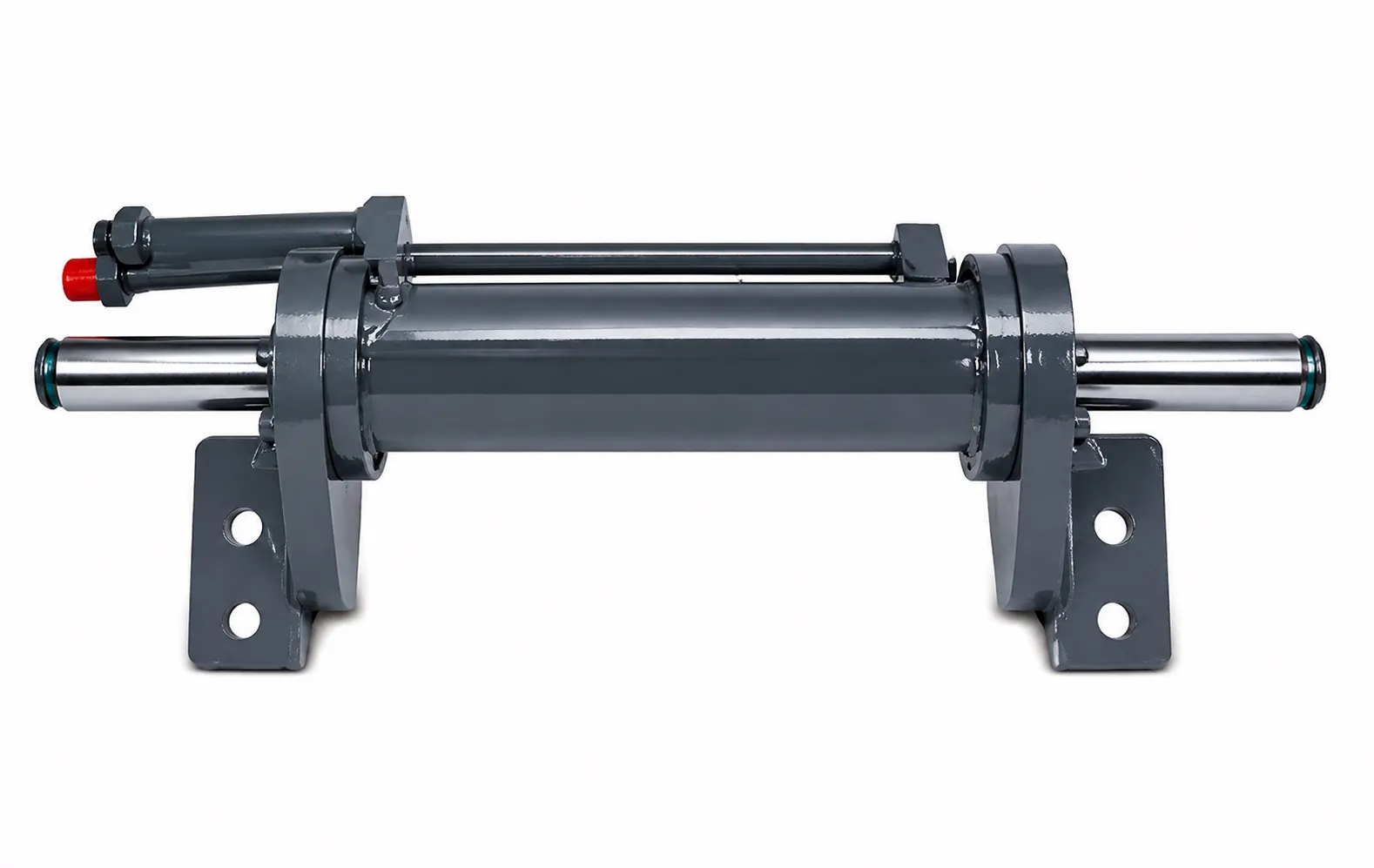 A Sheffield-based manufacturer of custom steel fabrication machinery — supplying transfer and positioning equipment to structural steel processors across Northern England — had been experiencing premature steering cylinder failures on their automated transfer vehicle (ATV) product line. The vehicles were operating inside a large-span fabrication shed where the combination of steel swarf mist, cooling emulsion spray, and seasonal humidity cycles created an aggressively corrosive environment. Their original steering cylinders used chrome-plated piston rods specified by their previous supplier, and the failure pattern was consistent: chrome delamination at the seal zone occurring between 8 and 14 months of service, followed by rod scoring, rapid seal failure, and hydraulic fluid loss that contaminated the factory floor — a serious housekeeping and safety issue under their ISO 45001 site management obligations.
The engineering team contacted Ever Power’s UK sales channel and submitted a detailed application questionnaire covering the fluid type (water-soluble cutting emulsion splash exposure), operating pressure (12 MPa), cycle frequency (approximately 800 cycles per 10-hour shift), rod diameter (40 mm), and stroke (120 mm). Ever Power’s application engineers recommended a custom steering cylinder specification using a 316L stainless steel piston rod finished to Ra 0.2 µm, combined with a PTFE/FKM composite seal stack selected for compatibility with the emulsion chemistry, and a wiper seal rated for swarf exclusion rather than standard dust wiping.
A pilot batch of 12 cylinders was delivered DDP to their Sheffield facility within six weeks of order confirmation — including mill certificates for the 316L rod material per EN 10204 3.1. Eighteen months into the evaluation period, zero cylinder failures had been recorded in the pilot-equipped vehicles. The customer subsequently converted their full ATV production line to the Ever Power specification, covering 60+ units annually. The extended service interval — from under 12 months to a projected 36-month maintenance cycle — delivered a total cost saving that more than offset the higher unit cost of the stainless rod specification, with the additional benefit of eliminating hydraulic fluid contamination events on the shop floor entirely.
What Our UK Customers Say
“We’d been through three different suppliers trying to solve our emulsion environment corrosion problem. Ever Power’s engineering team was the first to actually ask the right questions about our operating environment before quoting. The 316L rod specification they recommended has been running 18 months without a single seal failure. That’s a record for this application.”
“Our agricultural steering cylinders go through brutal seasons — clay soils, constant grit, and harvesting in wet conditions. We moved to Ever Power’s chrome-plated rod specification with the upgraded wiper seal, and the improvement in service life has been very noticeable. The quality of the chrome finish is measurably better than what we were getting domestically at a comparable price point.”
“We needed material test certificates to EN 10204 3.1 for a marine steering cylinder contract — something most suppliers struggle to provide without significant lead time. Ever Power had the documentation process integrated into their standard order workflow. The 316L rods arrived with full traceability, surface inspection report, and a pressure test certificate. That level of documentation made our own client sign-off process straightforward.”
Frequently Asked Questions
Ever Power | Precision Hydraulic Cylinders | Custom Steering Cylinder Solutions for UK Industrial Markets
edit by gzl