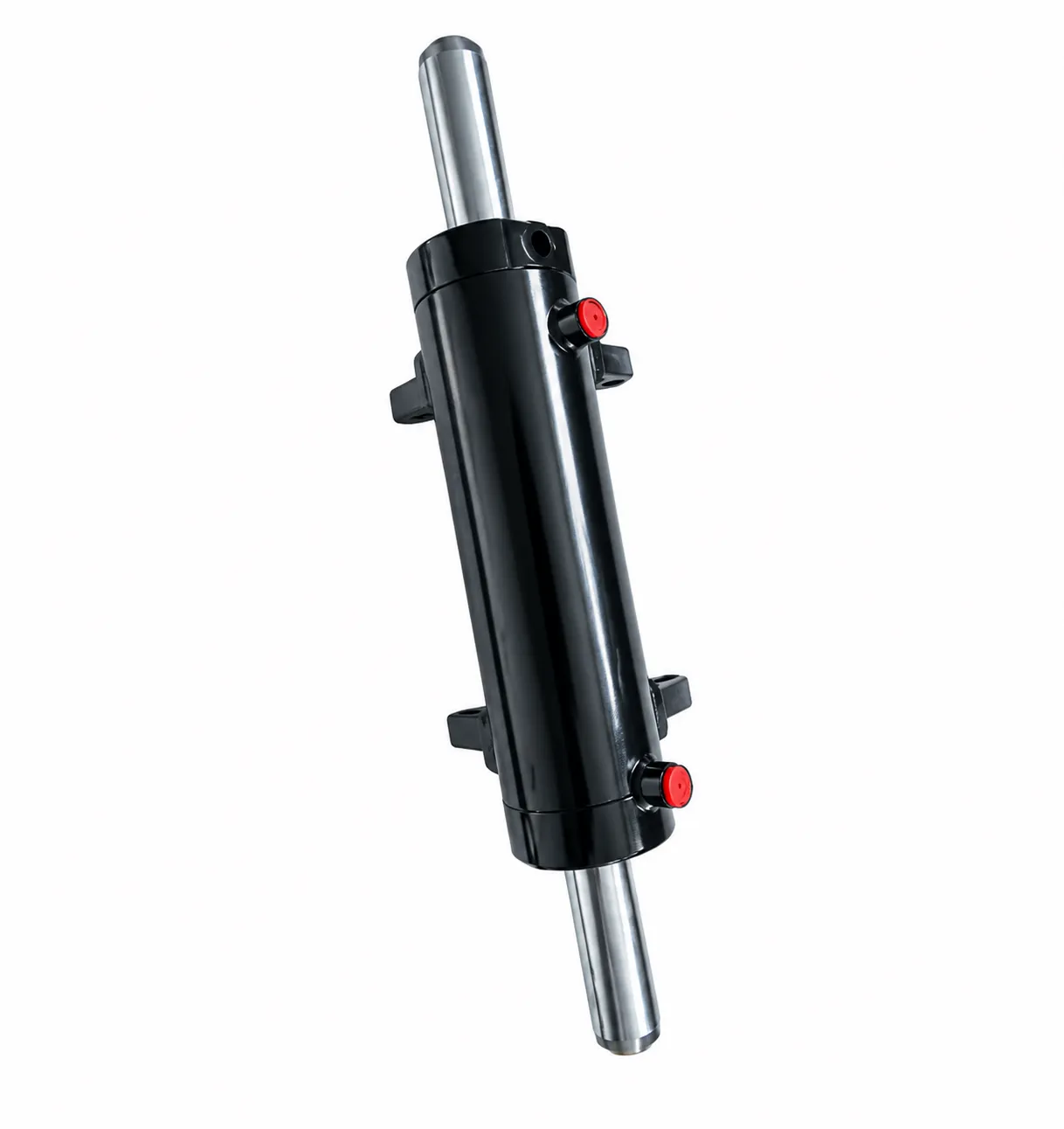
 In modern hydraulic engineering, the question of whether to specify a custom-engineered steering cylinder or reach for a standard catalogue unit is rarely straightforward. For plant engineers in Birmingham’s manufacturing belt or procurement managers sourcing components across Sheffield’s industrial supply chain, the decision carries real consequences — in cost, lead time, system compatibility, and long-term reliability. A misjudgement in either direction can mean overengineering a simple application, or worse, fitting an inadequate unit into a critical control loop where failure is not an option. The steering cylinder sits at the heart of any directional hydraulic system, translating fluid pressure into precise, repeatable mechanical motion. Whether it controls the axle geometry of an agricultural tractor working the flatlands of East Anglia, positions a crane boom on a North Sea supply vessel, or manages the articulation of a forestry harvester in the Scottish Highlands, this component must perform without hesitation across thousands of operating cycles. Understanding when the standard offering is genuinely sufficient — and when only a purpose-engineered solution will do — is the kind of specification intelligence that separates competent procurement from genuinely optimised system design.
How a Steering Cylinder Actually Works
Hydraulic Force Conversion
A steering cylinder operates as a double-acting linear actuator, converting hydraulic pressure differentials into controlled, bidirectional rod movement. Pressurised fluid enters through the port on one side of the piston, forcing it along the bore while the displaced fluid on the opposing side returns through the tank line. The rod, which is mechanically linked to the steering mechanism — whether a tie rod, pitman arm, or articulation pin — transmits this linear motion into angular displacement at the wheel, axle, or chassis pivot. The precision of this conversion depends critically on bore diameter, rod diameter, sealing integrity, and the internal surface finish of the cylinder tube. In a well-engineered unit, the relationship between input pressure and output force follows a highly predictable curve, which is exactly what steering system designers need when calibrating proportional valve response or load-sensing pump behaviour.
Internal Geometry and Sealing
The internal geometry of a steering cylinder is not arbitrary. The clearance between the piston and bore must be tight enough to prevent bypass leakage under dynamic loading, yet free enough to avoid stick-slip behaviour that would compromise steering feel. The seal stack — typically comprising a wiper seal, rod seal, buffer ring, and guide ring — performs multiple functions simultaneously: it excludes contamination, retains hydraulic fluid, controls pressure at the rod end, and guides the rod concentrically to prevent side-load damage to the piston. In demanding environments — such as the agricultural machinery sector where units must withstand ingress of grit, water, and silage effluent common across UK farming operations — seal material selection becomes a decisive engineering choice rather than a catalogue default. Polyurethane-based seals offer excellent wear resistance, while PTFE-backed designs provide lower friction for applications demanding precise, repeatable positioning.
Core Materials in Steering Cylinder Manufacturing
Cylinder Tube
Cold-drawn seamless steel (St52 / E355) is the industry benchmark. The bore is honed to Ra 0.2–0.4 µm, providing an optimal surface for seal running and minimising internal leakage. For corrosive environments — marine, coastal UK operations — 316L stainless steel or hard-anodised aluminium alloy tubes offer substantially improved service life without penalty on strength.
Piston Rod
Typically manufactured from 45# or 40Cr steel, induction-hardened and hard chrome-plated (HCr) to a surface hardness of 850–1000 HV and a plating thickness of 20–30 µm. This combination delivers exceptional wear resistance and a mirror finish that maximises seal service life. For applications where the rod is exposed to salt spray — common in UK coastal industrial sites — chrome-free alternatives using HVOF thermal spray coatings or ceramic coatings are gaining ground for environmental compliance.
End Caps & Glands
Forged or machined from ductile iron (GGG40) or carbon steel, with threaded or bolted retention to the tube. The rod gland carries the critical seal assembly and must maintain precise concentricity with the rod through the full stroke. High-specification applications — such as steering cylinders on heavy plant operating in the Scottish quarrying sector — may use integrated adjustable glands that allow field seal replacement without full cylinder disassembly, significantly reducing maintenance downtime.
Seal Compounds
Seal selection is inseparable from fluid and temperature compatibility. Nitrile (NBR) seals cover the standard mineral oil range up to 100°C. Polyurethane (PU) delivers superior dynamic wear life at higher working pressures. Fluorocarbon (FKM/Viton) handles synthetic and fire-resistant fluids, as well as elevated temperatures up to 200°C, making it the choice for certain industrial and marine UK applications. PTFE-back rings reduce friction in servo-valve integrated systems, where hysteresis caused by seal stick-slip would corrupt position feedback accuracy.
Standard vs. Custom: The Decision Framework
The choice between a catalogue unit and a purpose-built design comes down to five engineering axes. Misread any one of them and you either overspend on capability you do not need, or introduce a failure mode that a standard bore and stroke simply cannot accommodate.
A standard steering cylinder is the correct specification when operating conditions fall squarely within catalogue boundaries, the machine’s hydraulic circuit is designed around common bore/stroke combinations, and replacement availability is a priority criterion. UK plant hire fleets — whether operating JCB-compatible equipment from depots around Coventry or Wolverhampton, or running mixed agricultural machinery across Lincolnshire’s fenlands — often achieve excellent results with well-chosen standard units. Catalogue cylinders carry the advantage of proven design, validated seal kits, and short lead times from stocked inventory. When the application pressure is below 200 bar, the ambient temperature range is modest, the mounting configuration is a standard clevis or spherical eye, and the fluid is conventional mineral hydraulic oil, there is rarely a compelling engineering reason to pay the premium and wait for a custom build. The total cost of ownership often favours standard, provided the specification genuinely fits.
- Lead time: ex-stock or 3–7 days
- Cost: lowest unit price
- Seal kits: universally available
- Best for: high-volume OEM, replacement, standard mobile
- Risk: dimensional misfit, seal incompatibility, inadequate stroke
Custom-engineered steering cylinders become the correct specification the moment any single design parameter falls outside what catalogue ranges can reliably accommodate. This is not a rare scenario — in practice, a significant proportion of UK industrial OEM and special-purpose vehicle applications involve at least one requirement that disqualifies a standard unit. Extended stroke requirements that exceed catalogue maximums are common in large articulated forestry and quarrying equipment. Non-standard mounting centres arise whenever the cylinder must integrate into an existing chassis whose geometry was not designed around hydraulic component standards. High-cycle applications in press or injection moulding transfer systems may demand a rated seal life several times that of a standard unit. Extreme temperature environments — furnace-side material handling in Birmingham’s foundry industry, or outdoor year-round operation on Scottish wind farm maintenance vehicles — often require seal compounds and surface treatments unavailable in catalogue configurations. In each of these scenarios, attempting to force a standard cylinder into service represents not a cost saving but a reliability liability.
- Lead time: 2–6 weeks (engineered-to-order)
- Cost: 20–80% premium over standard (application-dependent)
- Best for: OEM design, special vehicles, harsh environments
- Advantage: optimised for the exact load, stroke, envelope, and fluid
- Risk: longer procurement cycle — plan ahead
Product Technical & Performance Parameters
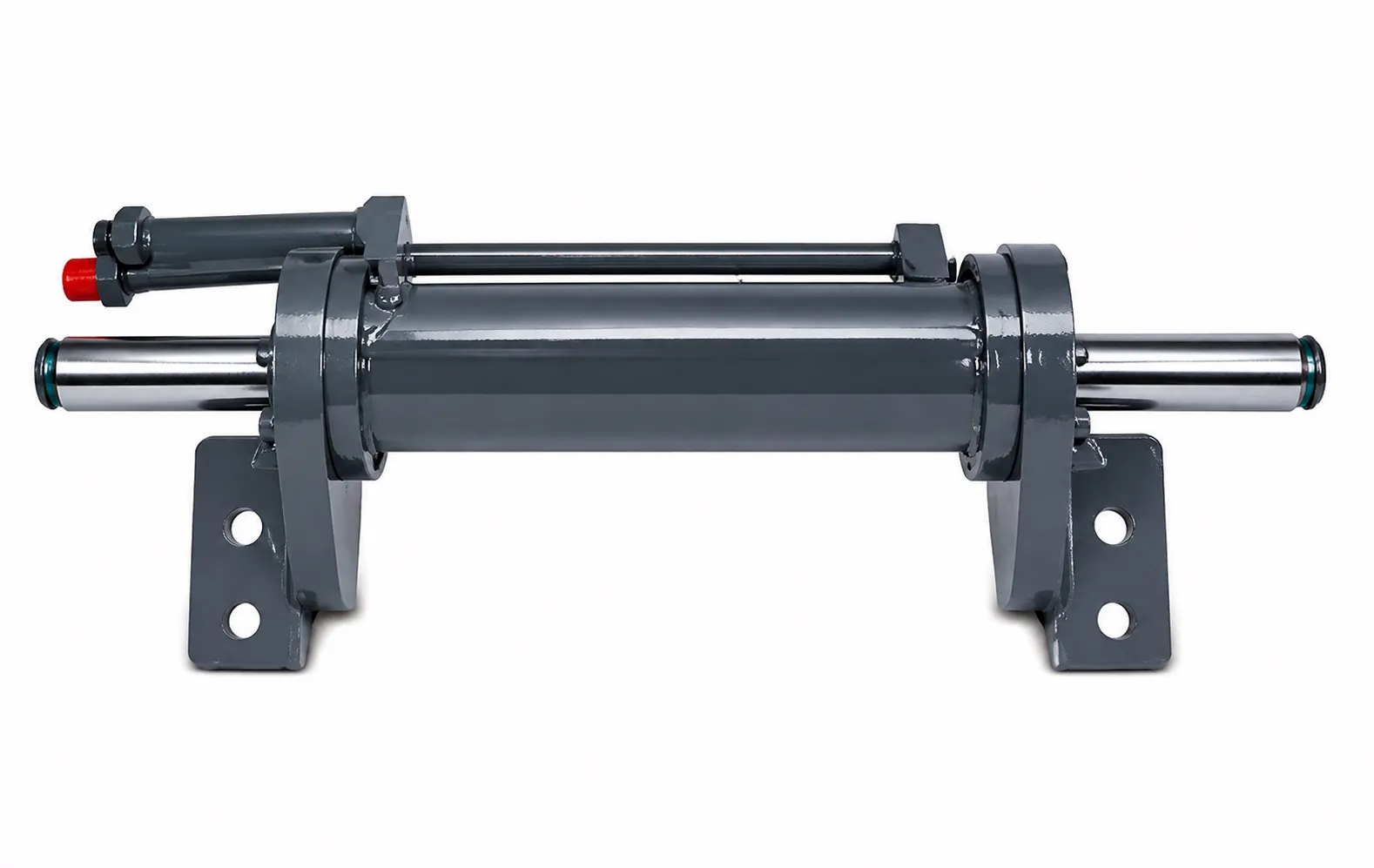
Core Technical Advantages
Whether specifying standard or custom, the ever power steering cylinder range is built around five non-negotiable performance principles that set them apart across the UK’s demanding industrial sectors.
Dimensional Precision
Bore tolerances maintained to H8, rod to h6 — ensuring consistent fit, reliable sealing, and predictable performance across the full operating pressure range. No batch-to-batch variation in envelope dimensions.
Zero Internal Leakage
Optimised piston seal geometry and precision honing ensure internal bypass remains below 0.5 cm³/min at rated pressure, preserving positional hold in load-holding steering geometries.
Extended Cycle Life
Validated to exceed 1,000,000 full-stroke cycles under dynamic load in production testing. Matched seal and surface pairings are selected per application to maximise the interval between planned maintenance interventions.
Load Capacity
Side-load resistant rod guidance systems and high-tensile end cap retention allow rated thrust forces from 2 kN (small-bore compact units) to over 2,400 kN (large-bore heavy industrial custom designs), without deflection or gland distortion.
Drop-In Compatibility
Standard units are manufactured to match the envelope dimensions and port standards of leading OEM platforms. Custom units are reverse-engineered to the customer’s drawing or sample — guaranteed dimensional compliance before despatch.
Industrial Application Scenarios
Agricultural Machinery — UK Arable Sector
Steering cylinders in self-propelled sprayers, large-frame tractors, and harvest combines operating across the flat arable belts of Lincolnshire and Yorkshire face a demanding combination of high steering load (arising from wide axle spread and aggressive tyre profiles) and severe contamination exposure. Custom units with FKM wiper seals, extended-life rod chrome, and oversize bore diameters to accommodate the side forces generated by large flotation tyres on soft ground are increasingly specified by UK machinery manufacturers. See also: forklift steering cylinder solutions for comparison in compact-vehicle contexts.
Construction Plant — Birmingham & West Midlands
Articulated dump trucks, compactor rollers, and large wheeled loaders operating on major infrastructure projects around Birmingham and the broader West Midlands conurbation require steering cylinders that can sustain continuous duty at pressures of 250 bar and above, while absorbing significant shock loads transmitted through the chassis from rough terrain. The standard range covers the commonest OEM replacement requirements, while articulation joint applications on machines with non-standard chassis geometry are well served by custom-stroke, custom-bore configurations that Ever Power engineers directly from customer-supplied chassis drawings.
Marine & Offshore — North Sea Operations
Supply vessels and offshore support craft operating out of UK North Sea ports require steering cylinders manufactured entirely from corrosion-resistant materials. For these applications, 316L stainless steel tube, ceramic-coated rods, and FKM seal stacks combined with external PTFE-treated wiper seals extend service intervals dramatically compared with standard carbon-steel units. Salt spray resistance, compliance with marine classification requirements, and the availability of low-temperature seals for North Sea winter operations are all specifiable through Ever Power’s custom engineering team.
Forklift & Warehouse Logistics — Nationwide UK
High-cycle warehouse and distribution centre operations — from the major logistics hubs around Daventry and Northampton to multi-storey automated storage systems in Greater London — place entirely different demands on a steering cylinder than field equipment. Here, cycle frequency is the primary driver. Standard forklift steering cylinder configurations cover the majority of reach truck, counterbalance, and VNA truck applications, while custom units allow OEMs to specify extended-rod-life designs for very high cycle-per-shift duty. Visit our forklift tilt cylinder page for complementary product specifications.
Special Purpose Vehicles — Sheffield Engineering Sector
Sheffield’s precision engineering and special vehicle manufacturing sector — encompassing everything from fire appliance chassis to military logistics support vehicles — regularly specifies steering cylinders that fall entirely outside catalogue parameters. Custom bore-to-rod ratios that optimise push/pull force ratios for a specific turning geometry, dual-rod configurations for synchronised steering of multiple axles, and integrated position transducer pockets for closed-loop steer-by-wire integration are all engineered and delivered by Ever Power’s specialist manufacturing division. These requirements are exactly what the custom programme is designed for.
Forestry & Land Management — Scottish Highlands
Forwarders, harvesters, and rough-terrain carriers operating in Scotland’s challenging upland forestry environment demand steering cylinders that combine large bore diameter (to handle the articulation forces of heavily loaded machines on steep gradients) with exceptional cold-weather seal performance. Temperatures regularly fall below -10°C in Highland winter operations, requiring low-temperature polyurethane or FKM seals that remain pliable and effective without hydraulic pre-heating. The combination of extreme cold, prolonged wet exposure, and high mud/bark debris contamination makes this one of the harshest duty cycles in UK industry — and a compelling case for custom specification over catalogue compromise.
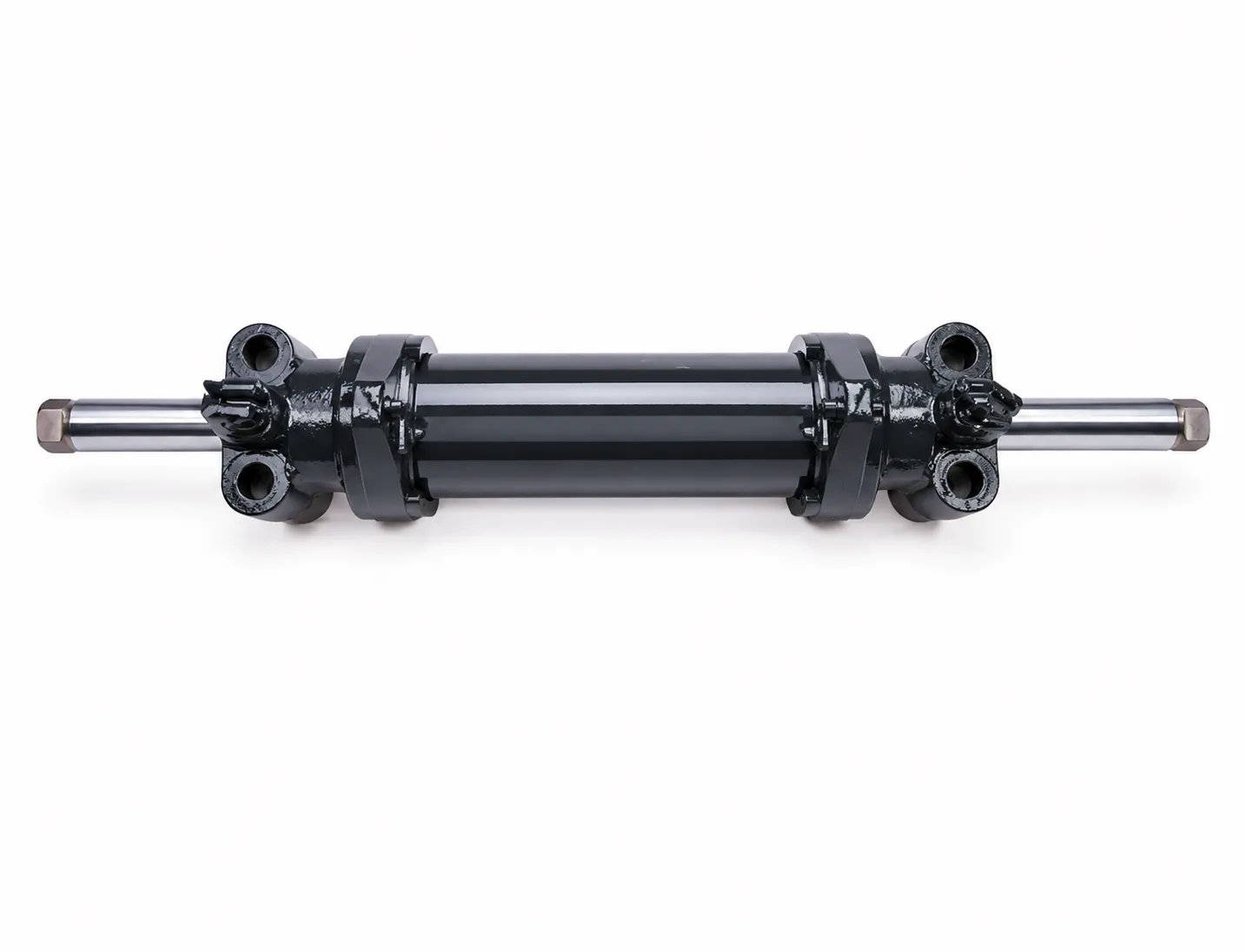
Ever Power — Manufacturing Capability & Custom Engineering
Ever Power’s steering cylinder manufacturing facility operates to ISO 9001:2015 quality management standards, with production capacity covering the full spectrum from high-volume standard production runs to single-off prototype and low-volume custom engineering contracts. This combination — rare in a single supplier — means UK procurement teams can consolidate their steering cylinder sourcing across both catalogue and engineered-to-order requirements without managing multiple vendor relationships or navigating different quality systems.
CNC Precision Machining
Bore honing to Ra 0.2 µm, rod grinding to ±0.01 mm diameter tolerance. All critical dimensions are CMM-verified on a batch and per-piece basis for custom orders, with full dimensional reports available to accompany shipment for customer QA integration.
Rapid Custom Quotation
Submit drawings, samples, or performance requirement sheets. Ever Power’s engineering team returns a costed proposal within 24–48 business hours, covering material selection, seal specification, surface treatment, and dimensional feasibility — with no commitment required at the quotation stage.
UK Logistics & Delivery
Standard orders ship by express air freight to UK mainland destinations within 7–10 business days. Custom orders ship within agreed project lead time, with DDP (Delivered Duty Paid) terms available to eliminate customs complexity for UK customers. Dedicated account management is available for ongoing supply arrangements.
Test & Validation
Every cylinder undergoes hydrostatic pressure testing at 1.5x rated working pressure before despatch. Custom units for safety-critical applications can be subjected to full-stroke endurance testing under customer-specified load and cycle conditions, with test data and acceptance certificates provided.
📩 Request a Custom Engineering Quote
[email protected] — Ever Power Engineering Team
Customer Success Story: Sheffield, South Yorkshire
Special Vehicle Division, Heavy Plant OEM — Articulated Quarry Hauler Steering System Redesign
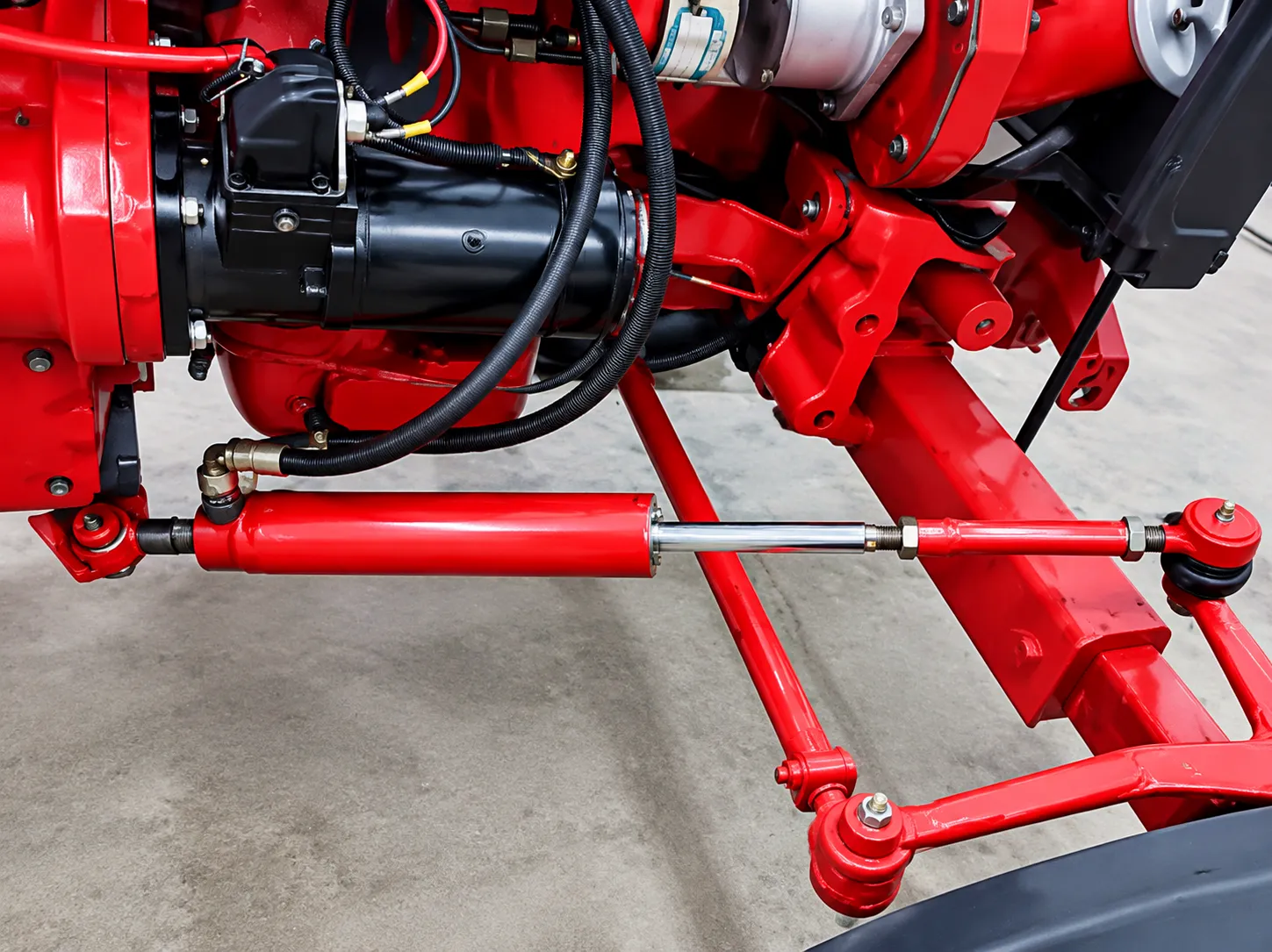 A special vehicle manufacturer based in Sheffield — producing articulated quarry haulers for the UK aggregates industry — came to Ever Power Engineering after experiencing recurring steering cylinder failures on a new 45-tonne chassis design. The problem was specific: the chassis articulation joint geometry created a combined side-load and moment loading on the cylinder rod that exceeded the rated capacity of the standard 80mm bore units originally specified, leading to rod scoring and premature seal failure after approximately 800 hours of service — well short of the 3,000-hour maintenance target.
Working directly from the OEM’s chassis drawing set and dynamic load analysis data provided by their engineering team, Ever Power’s engineers developed a custom 100mm bore, 70mm rod cylinder with an integrated twin-guide-ring system that dramatically reduced the lateral loading transmitted to the rod-to-gland interface. The tube was manufactured from E355 seamless steel with bore honing to Ra 0.25 µm, and the rod received a HVOF tungsten carbide coating in place of the standard hard chrome, providing superior impact resistance against the grit and stone particles airborne in a quarry operating environment. Seal compound was upgraded to FKM throughout, with a specialised external scraper seal added to the gland to exclude coarse quarry dust.
Prototype units were delivered within four weeks of design freeze, and after a 1,200-hour accelerated test programme conducted by the OEM’s own test facility near Rotherham, the custom cylinder was approved for full production fitment. The OEM subsequently extended the maintenance interval for the steering circuit to 4,000 hours — exceeding the original target — and Ever Power became the sole-source steering cylinder supplier for the product line’s ongoing production run. Lead time for volume production orders settled at 3 weeks from purchase order, supported by a pre-agreed component kanban arrangement that guarantees stock availability without the OEM carrying excessive buffer inventory.
What Our UK Customers Say
“The custom cylinder Ever Power delivered for our quarry hauler project was engineered precisely to our load data. Not a single failure in the first year of production — that’s a first for this chassis generation. Their technical team understood the brief without us having to over-specify.”
— Engineering Director, Special Vehicle OEM, Sheffield
“We’ve been sourcing standard steering cylinders from Ever Power for our agricultural machinery replacement parts business in Lincolnshire for three years. Delivery reliability is exceptional — DDP pricing removes all the import paperwork, and the seal kits are genuinely interchangeable with the OEM units we’re replacing.”
— Procurement Manager, Agricultural Parts Distributor, Lincoln
“Marine environment is unforgiving — we’ve tried multiple suppliers for stainless steering cylinders on our North Sea support vessels. Ever Power’s 316L tube and ceramic rod combination has outlasted every alternative. Two seasons without an unplanned seal change is genuinely impressive in that service environment.”
— Fleet Maintenance Engineer, Offshore Support Operator, Aberdeen
Frequently Asked Questions
How do I know whether I actually need a custom steering cylinder or if a standard unit from stock will work for my application in the UK?
The simplest starting point is to check five parameters against a supplier’s catalogue: bore diameter, rod diameter, stroke length, operating pressure, and mounting configuration. If all five fall within catalogue ranges and your fluid is standard mineral oil at moderate temperature, a stock unit is almost certainly the right choice. If even one parameter sits outside catalogue limits — or if your environment involves seawater, extreme cold, or very high cycle frequency — a custom specification conversation is worth having before committing to a stock unit that may underperform.
What is the typical price difference between a standard and a custom steering cylinder, and how can I get an accurate quote from a UK supplier?
Custom steering cylinders typically carry a price premium of 20–80% over comparable standard units, depending on the complexity of the specification and the order volume. Single-off prototypes for development programmes sit at the higher end; volume production runs of a fully defined custom design progressively approach standard pricing as the setup costs are amortised. To get an accurate quote, submit your drawing or dimensional requirements to [email protected] — Ever Power returns costed proposals within 24–48 hours.
Which seal material should I specify for a steering cylinder that will be operating in agricultural machinery around Birmingham and the West Midlands, where it gets exposed to silage effluent and water?
Polyurethane (PU) dynamic seals combined with an FKM wiper seal represent the most robust combination for this environment. Silage effluent is mildly acidic and contains abrasive organic particles that attack standard NBR seals relatively quickly. PU provides excellent wear resistance under dynamic sliding, while FKM’s broad chemical compatibility handles the fluid exposure at the wiper. Adding a PTFE-backed guide ring further reduces stick-slip behaviour on machines where steering feel precision is important.
How long does lead time typically run for a custom-engineered steering cylinder ordered from an overseas supplier, and what delivery options are available to customers across the UK?
For most custom steering cylinder specifications, production lead time runs 3–5 weeks from engineering sign-off and purchase order, though straightforward dimensional variations on familiar configurations can sometimes be completed in 2 weeks. Ever Power offers DDP (Delivered Duty Paid) terms to UK customers, which means all import duties, taxes, and customs clearance are handled before delivery — no unexpected charges on arrival. Express air freight covers most UK mainland destinations within 1–2 days of despatch.
Where can I source a replacement steering cylinder quickly for construction plant operating on a time-critical site in Sheffield or around Yorkshire when a standard unit has failed unexpectedly?
For urgent replacement requirements on standard configurations, contact Ever Power directly by email at [email protected] with the machine make, model, and cylinder dimensions. Standard bore units in common sizes are held in forward stock and can often be despatched within 24–48 hours for next-day delivery to Yorkshire addresses. For non-standard units where a custom replacement is needed urgently, Ever Power’s engineering team can discuss expedited production options — always worth a call before accepting a longer lead time from an alternative source.
What information does Ever Power need from me before they can produce a cost and lead time for a custom steering cylinder design for my UK manufacturing programme?
At minimum, Ever Power’s engineering team needs bore diameter, rod diameter, stroke, maximum working pressure, mounting configuration (with pin diameters where applicable), fluid type, and expected operating temperature range. If you have an existing sample or OEM drawing, those are the fastest route to an accurate quote. For applications with unusual loading — side-loaded rods, shock-heavy duty cycles, or very high cycle frequency — providing a brief description of the operating environment helps the engineers select the correct seal and surface treatment package from the outset, avoiding the need for a specification revision after quotation.
Ever Power — Hydraulic Cylinder Engineering
Precision-manufactured steering cylinders for UK industrial, agricultural, marine, and OEM applications.
edit by gzl