Need a steering cylinder solution tailored to your application?
How a Steering Cylinder Converts Flow into Motion
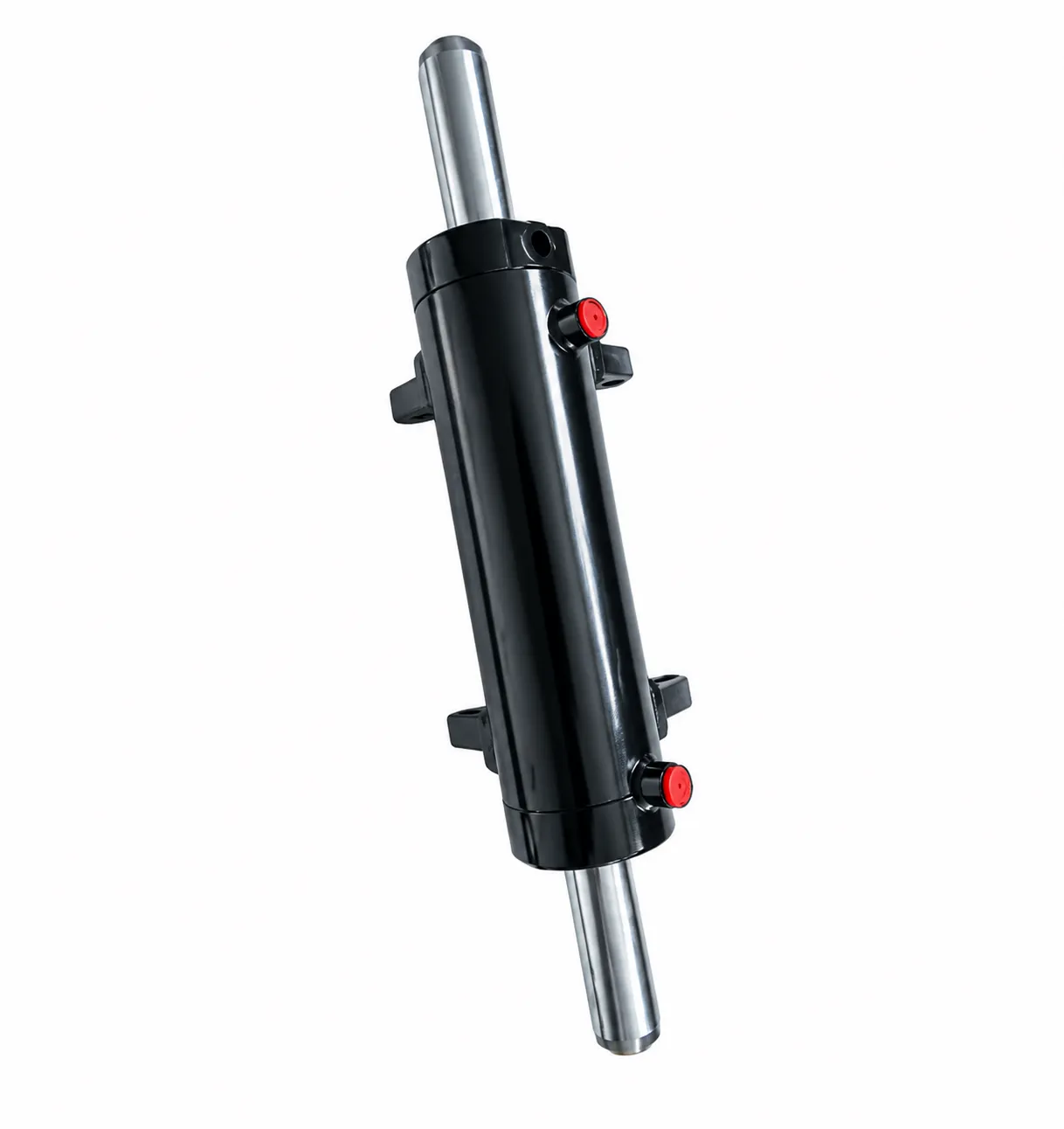
A hydraulic steering cylinder is a double-acting linear actuator, meaning it accepts pressurised oil on either side of the piston to extend or retract the rod. The orbitrol or steering control unit (SCU) upstream determines which port receives flow and at what proportion to the steering wheel input. The cylinder then translates that metered oil volume into a proportional rod displacement — which in turn rotates the steered wheels or slews an excavator boom mount through its mechanical linkage.
The speed at which that rod moves — the extension or retraction velocity — is governed entirely by the volumetric flow rate entering the port divided by the effective piston area. This is expressed as: v = Q / A, where v is piston velocity in m/s, Q is flow rate in m³/s, and A is the piston cross-sectional area in m². This equation is deceptively simple. In practice, Q is not constant — it varies with engine speed, pump displacement, load-sensing signals, and any pressure-compensating valves in the circuit. The steering cylinder therefore operates within a dynamic flow environment, and setting the nominal flow rate is only the starting point of a properly commissioned system.
The retraction stroke benefits from the annular area on the rod side of the piston, which is smaller than the full bore area on the cap end. This means the cylinder retracts faster than it extends for the same input flow rate — a differential that must be accounted for when calibrating lock-to-lock steering time. British machinery standards, particularly those covering agricultural vehicles and telescopic handlers operating under BSAU regulations, typically require the full steering travel to be completed within a defined time window at rated engine speed. Getting flow rate right is therefore a compliance question as much as a performance one.
Core Materials and Construction That Govern Flow Tolerance
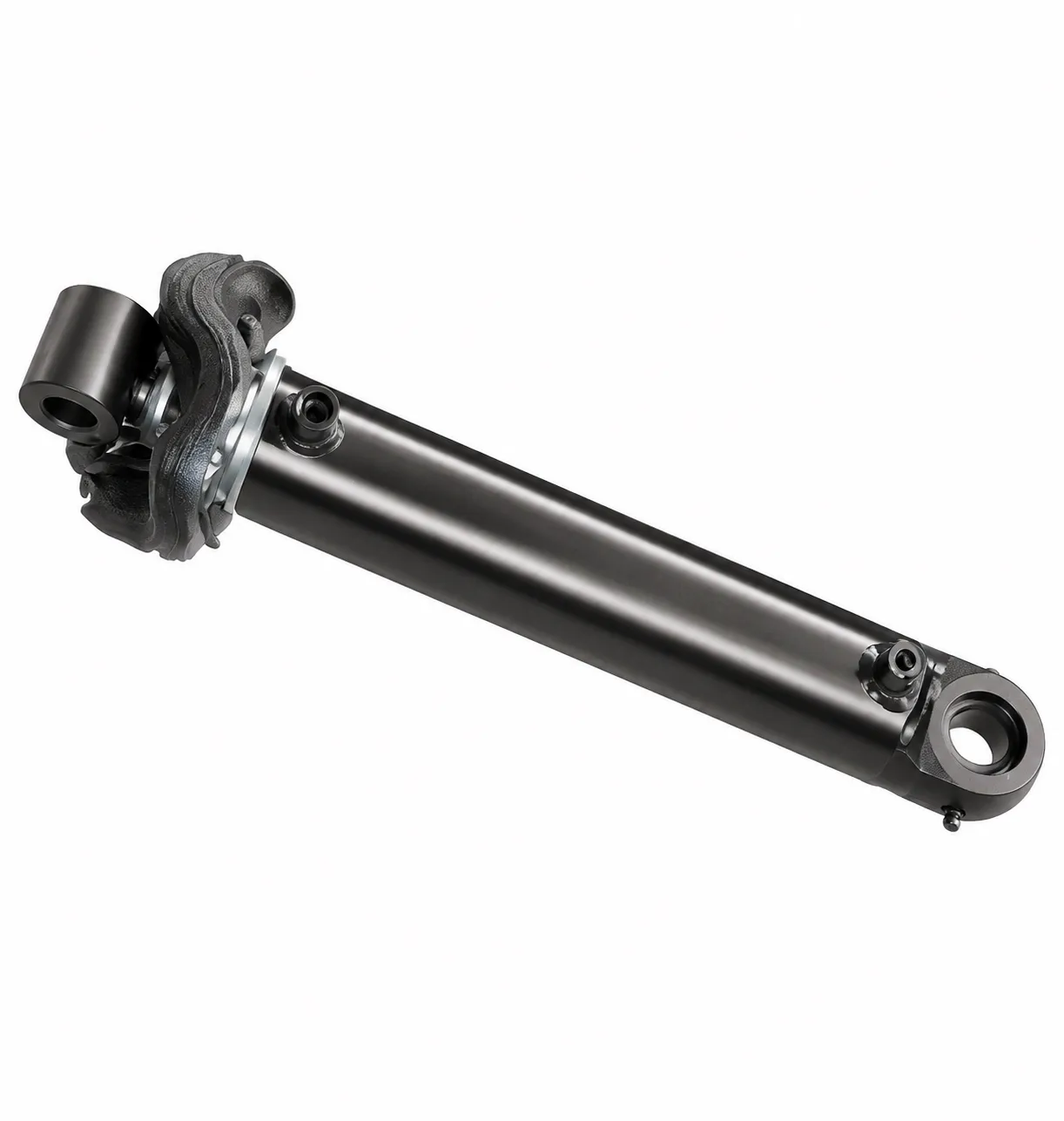
A steering cylinder’s ability to handle a wide flow-rate range without deterioration depends substantially on the quality and compatibility of its internal materials. The cylinder tube — almost universally produced from cold-drawn, honed seamless steel tube in precision grade EN 10305-1 — provides the bore surface against which the piston seal rides. The bore tolerance is typically held to H8/H9, a range that allows free seal movement at low flow velocities while maintaining radial clearance tight enough to prevent extrusion at peak system pressures up to 250 bar.
The piston rod is manufactured from C45E or 42CrMo4 alloy steel, hard chrome plated to a minimum depth of 25 µm and ground to Ra 0.2 or better. This surface finish is not merely aesthetic: a rod that enters and exits the rod seal at high velocity — as it does during aggressive steering at maximum flow — must present a surface free of micro-porosity that could otherwise trap contamination and abrade the polyurethane wiper seal. In environments typical of Scottish offshore support vessels or Yorkshire quarry vehicles, where fine silica dust and saline moisture are constant, this metallurgical specification is the primary barrier against ingress damage.
Piston seals in modern steering cylinders use composite PTFE-based profiles rather than the older rubber O-ring and backup ring assemblies. PTFE offers dramatically lower breakout friction — as little as 10–15% of a comparable rubber seal — which means the cylinder begins to move at significantly lower differential pressures. For flow-rate calibration, this translates into far more linear and predictable velocity response across the full stroke, because there is less static friction to overcome at the start of each steering input. The end-cap castings and tie rods are typically nodular cast iron or ductile steel, providing the structural rigidity needed to handle the bending moments generated when the cylinder operates at full lock under combined steering and traction forces.
Step-by-Step: Setting Hydraulic Flow Rate for Steering Cylinder Response
Calculate the Required Cylinder Velocity
Begin by establishing the maximum allowable lock-to-lock time for your application. For agricultural tractors certified under British Standard BS EN ISO 10998, a maximum of four seconds full-lock to full-lock at rated engine speed is typical. Measure your total cylinder stroke (in mm), convert to metres, divide by half the lock-to-lock time, and you have your required average rod velocity in m/s. This velocity, multiplied by the cap-end piston area (bore diameter² × π / 4), gives you the minimum flow rate in litres per minute at the pump outlet after accounting for line losses — typically add 8–12% for a well-maintained circuit.
Set the Priority Valve or Flow Divider
Most steering circuits draw from a shared pump that also supplies the working hydraulics — a loader, tipper, or crane function. A priority valve gives the steering circuit preferential flow access before diverting excess to the secondary circuit. The priority valve’s spring setting determines the fixed steering flow allocation. Adjust this setting using the manufacturer’s screw adjustment with a calibrated flow meter fitted downstream of the priority valve outlet and upstream of the steering control unit (SCU). Target the nominal SCU flow rating — typically 11–20 l/min for agricultural and construction vehicles — plus the 10% loss margin calculated in step 1. Confirm the adjustment holds stable across the operating RPM range by running the engine from idle to rated speed while observing the flow meter.
Check Cylinder Differential Flow on the Rod Side
Because the rod-side annular area is smaller than the cap-end bore area, the retraction stroke is faster for the same flow input. In many steering applications this asymmetry produces a noticeably quicker response when turning in one direction versus the other — something drivers quickly flag as “it steers sharper to the right than to the left” or vice versa. To compensate, some SCUs incorporate internal regenerative paths that equalise steering feel. If your SCU does not, a compensating needle valve can be fitted in the rod-side line, adjusted until lock-to-lock time is equal in both directions. Verify with a stopwatch across at least five cycles in both directions under identical loading conditions, and log the results before final commissioning sign-off.
Validate Oil Temperature Effects on Viscosity and Flow
Hydraulic oil viscosity drops sharply as temperature rises. A system calibrated at cold start (oil at 10–15 °C, common in a January morning start-up at a Sheffield steel plant) may deliver noticeably heavier steering response than the same system at full operating temperature (55–70 °C). The standard approach is to perform flow-rate calibration at two points: after a ten-minute warm-up and again after two hours of continuous operation. If the steering response differs materially between the two conditions, the system requires either a thermostatically controlled bypass valve to stabilise operating temperature, or a viscosity-indexed oil (typically ISO VG 46 HVI) that maintains tighter viscosity across the operating temperature band. Mineral HVI 46 and synthetic HVLP 46 are both widely available from UK distributors.
Final Road or Field Trial and Documentation
Once bench calibration is complete, the steering cylinder circuit must be validated under real working loads. On agricultural machinery this means turning at headland speed on a loaded implement; on a mining dump truck operating in the North of England, it means slewing under maximum payload on a typical site gradient. The operator should report no perceptible lag between steering wheel input and directional change, and no free-play or oscillation at full lock. Any hunting or oscillation at or near full lock typically indicates excessive flow rate or insufficient damping in the relief circuit — reduce flow by 5–10% increments until the behaviour is eliminated, then re-confirm lock-to-lock time remains within specification.
Application: Forklift Attachment Steering Cylinders
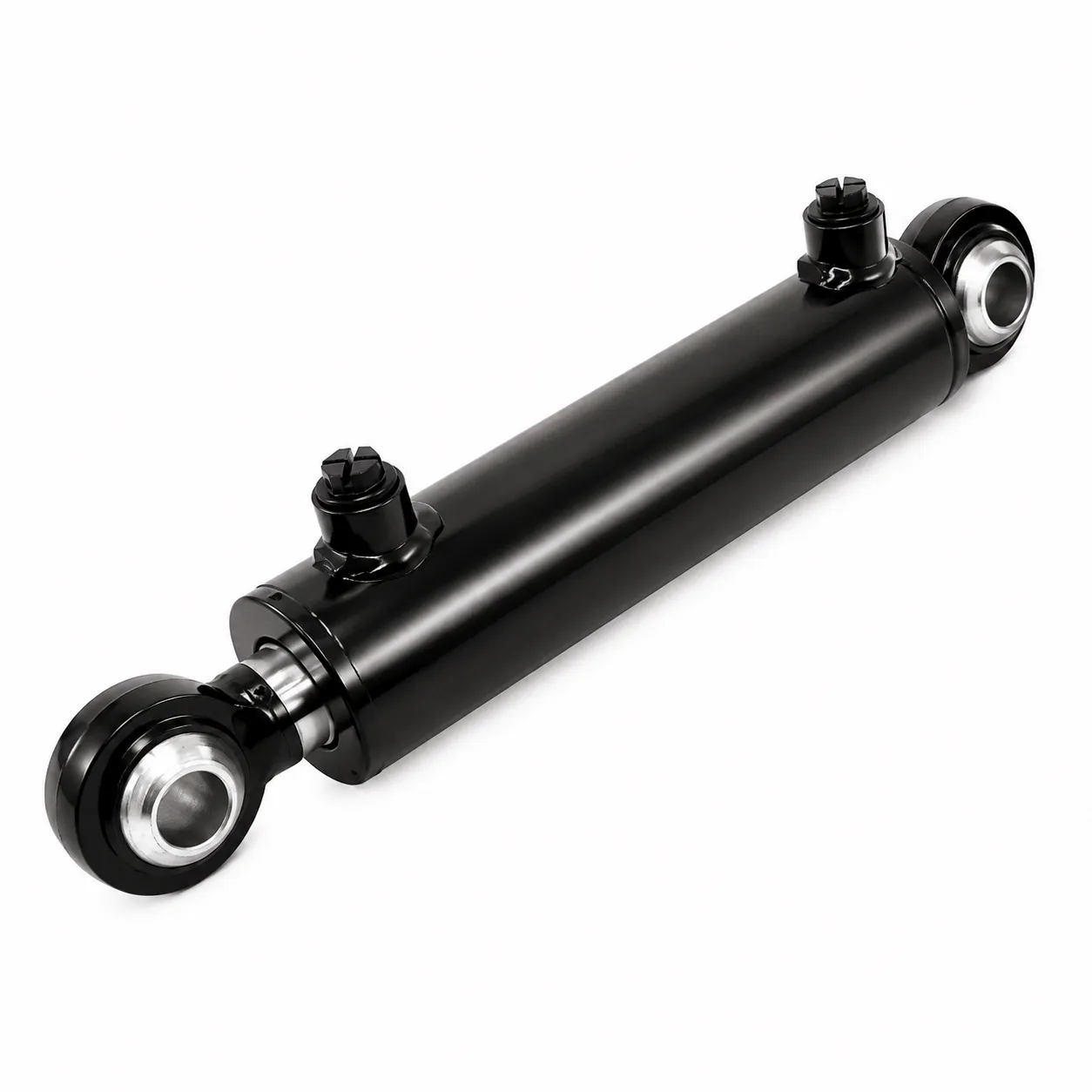
Forklift attachment applications represent one of the most demanding environments for steering cylinder flow-rate calibration. The combined mass of the vehicle and its suspended load creates significant centrifugal loading at the kingpin during a turn, requiring the steering circuit to maintain consistent directional control under variable back-pressure. Flow rates that are slightly too low produce a perceptible lag at low engine speed — a genuine safety concern in busy UK distribution warehouse environments where operators work continuously at near-idle throttle. The following products from Ever Power’s forklift attachment range are engineered specifically with the tight bore tolerances and high-quality sealing that make flow-rate calibration results repeatable and stable over thousands of operating cycles.
Steering Cylinder Technical & Performance Parameters
Industrial Application Scenarios Across the UK
Agricultural Machinery — Lincolnshire and East Anglia
High-output combine harvesters, self-propelled forage harvesters, and articulated tractors operating across the Fenland fields of Lincolnshire represent perhaps the highest-duty application for steering cylinders in UK agriculture. These machines make hundreds of headland turns per shift, often at maximum implement width with the full benefit of GPS-assisted precision steering. The hydraulic flow rate to the steering cylinder must be precisely calibrated not only for safe manual steering but also for compatibility with the autosteer system’s proportional valve input. Incorrect flow rate manifests as oscillation or overshoot in the autosteer tracking — problems that cost yield, damage tramlines, and trigger complaint escalations through agricultural machinery dealers. Ever Power supplies steering cylinders to East Anglian OEM assemblers with matched flow specifications agreed at the quotation stage.
Construction & Civil Engineering — Birmingham and West Midlands
The West Midlands construction supply chain — centred on Birmingham and extending through Coventry, Wolverhampton, and Walsall — is one of the UK’s most active markets for telescopic handlers, backhoe loaders, and compact excavators. Steering cylinders in these machines operate in short-cycle, high-frequency service, turning repeatedly at full lock during tight site manoeuvres. The load on the cylinder changes dramatically between a half-loaded bucket raised to maximum height and a returned empty bucket, creating large variations in the back-pressure that the steering circuit must absorb. A flow-rate setting that is correct at low back-pressure may appear marginally slow when back-pressure rises under heavy load — experienced plant operators in Birmingham describe this as the machine “stiffening up in a corner.” Correct load-sensing integration in the priority valve circuit, combined with properly specified steering cylinders, eliminates this behaviour entirely.
Steel Industry — Sheffield and Rotherham
Sheffield and Rotherham remain the heart of British special steel production, and the heavy-duty vehicles operating within steel melt shops, rolling mills, and service centres place exceptional demands on their steering circuits. Internal transfer vehicles — ranging from ladle carriers to coil transfer buggies — operate in ambient temperatures that regularly exceed 50 °C at floor level near the furnace bays, which drives oil temperature well above the range assumed during design. Ever Power’s FKM-sealed steering cylinders address this challenge directly, maintaining consistent seal integrity and bore lubrication at temperatures that would rapidly degrade standard NBR rubber seals. The flow-rate setup in these environments requires careful temperature compensation and the use of HVLP or synthetic hydraulic fluids to maintain stable viscosity through the full shift cycle.
Marine and Offshore — Aberdeen and North Sea Operations
North Sea supply vessels and offshore platform support equipment based from Aberdeen represent a specialist application where the steering cylinder faces simultaneous extremes of cold and corrosive exposure. Deck equipment operating during Scottish winter conditions may see cylinder rod temperatures at start-up of -10 °C or lower, with ambient air saturated with salt spray. The viscosity of standard ISO VG 46 oil at these temperatures rises sharply, effectively reducing the flow volume delivered by the pump even at the same nominal speed setting. Ever Power supplies Arctic-grade steering cylinders with low-temperature elastomer seals, rod corrosion protection to ISO 12944 C5-M class, and pressure-port arrangements that facilitate low-temperature bleeding to prevent air lock formation on start-up. Flow-rate calibration for these units specifies both a cold-start minimum and an operating-temperature nominal.
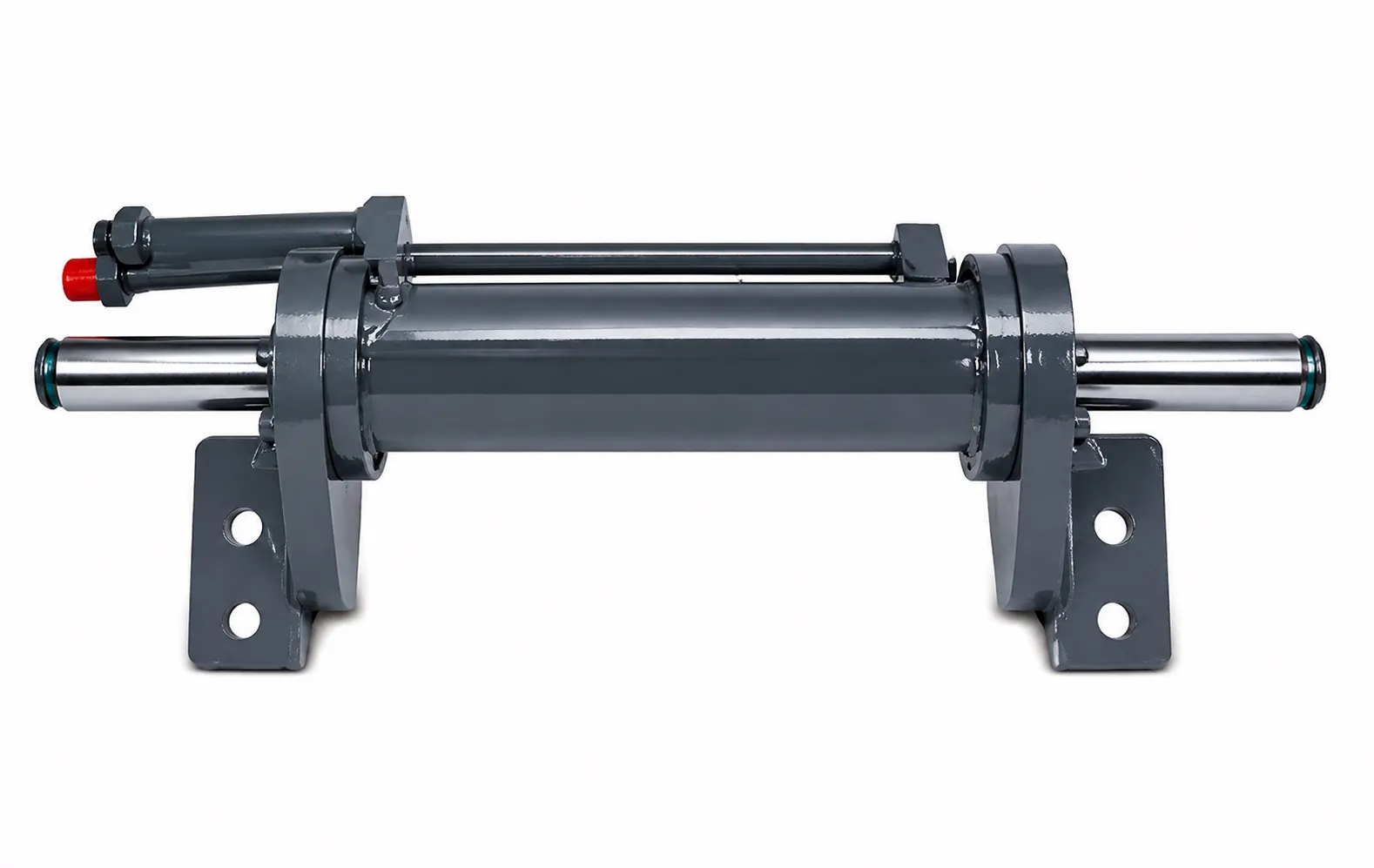
Core Technical Advantages of Ever Power Steering Cylinders
Flow-Linear Velocity Response
The PTFE composite piston seals used across the Ever Power range exhibit breakout friction as low as 10 N on standard bore sizes — dramatically below the 80–120 N typical of older rubber piston seals. This low breakout force means the cylinder begins moving smoothly and proportionally from the very first millilitre of flow, producing a linear velocity-to-flow relationship that makes calibration results stable and repeatable. Operators notice this as a smooth, “progressive” steering feel rather than an initial lag followed by a sudden lurch.
BSP Port Compatibility for UK Market
All standard Ever Power steering cylinders produced for the UK market are ported to BSP (British Standard Pipe) G-thread, eliminating the adapter fittings that are a common source of both pressure drop and leak points in systems originally designed to metric or NPSM standards. This matters directly for flow-rate calibration: every additional adapter in the circuit introduces a localised restriction that reduces actual flow to the cylinder below the pump-outlet reading on the calibration flow meter. By eliminating adapters entirely, the correlation between meter reading and cylinder inlet flow is tight and direct.
Integrated End-Stroke Cushioning
Every steering cylinder in the Ever Power standard range includes fully adjustable hydraulic cushioning at both ends of stroke. This deceleration feature captures the kinetic energy of the piston and dissipates it as heat within the oil rather than as a mechanical shock on the end cap. From a flow-rate calibration standpoint, the cushion eliminates the pressure spike that uncushioned cylinders generate at end of stroke — a spike that can temporarily override the priority valve’s flow allocation and create erratic readings during calibration bench runs. The result is cleaner, more consistent calibration data and longer component life.
Tight Bore Tolerance Holding Calibration Accuracy
The bore of an Ever Power steering cylinder is honed to H8 tolerance — a bandwidth of less than 50 µm on a 100 mm bore — and the honed surface finish is Ra 0.4 µm or better. This level of dimensional accuracy means the actual piston area deviates from the nominal design value by less than 0.1%, which in turn means that flow-rate calculations using the design bore diameter are accurate to within real system measurement error. Cheaper cylinders with H10 or wider bores introduce an inherent velocity error of up to 0.5% that compounds across multiple cylinders in a shared circuit.
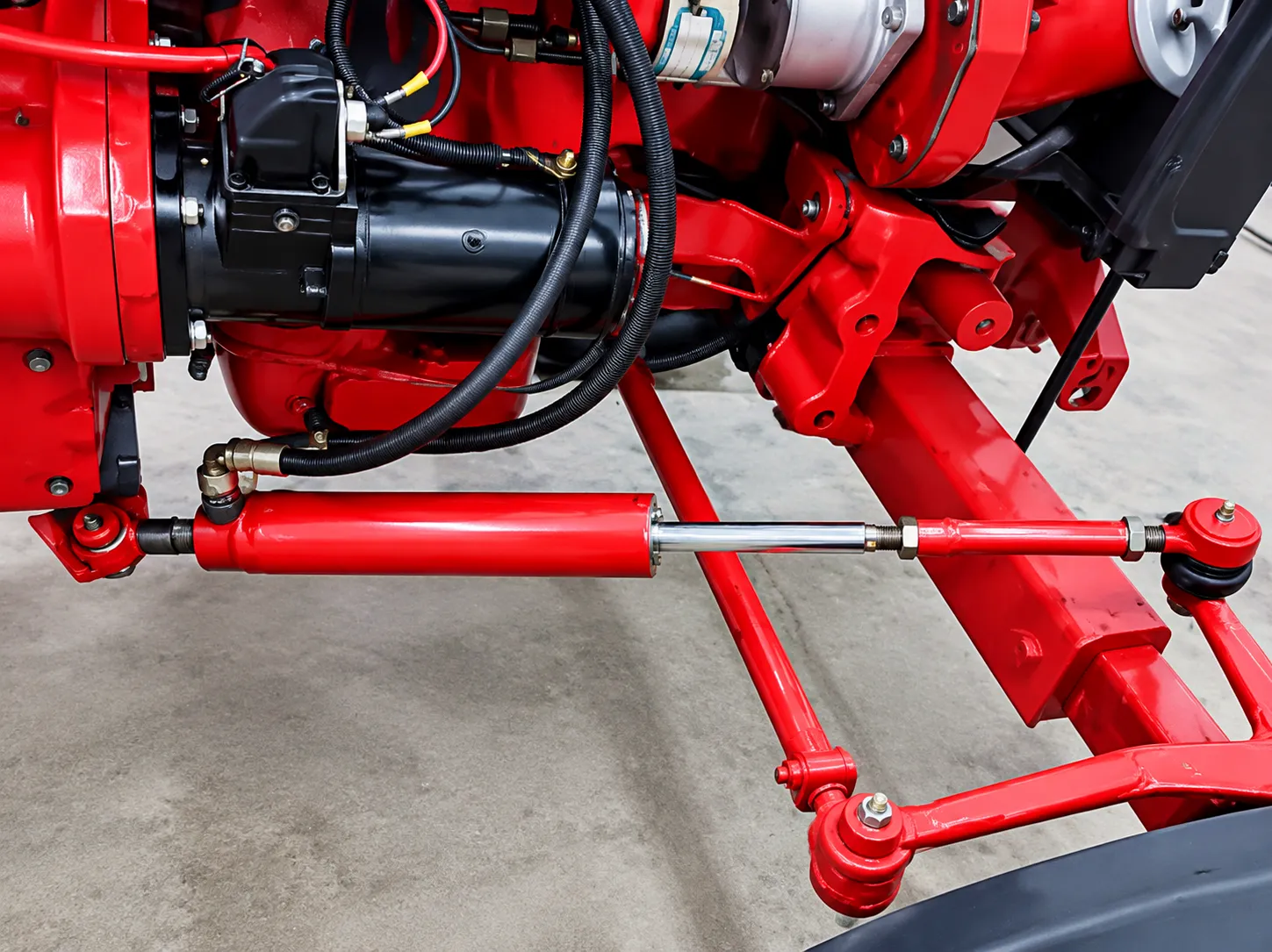
Customer Success Story: Coventry Agricultural OEM
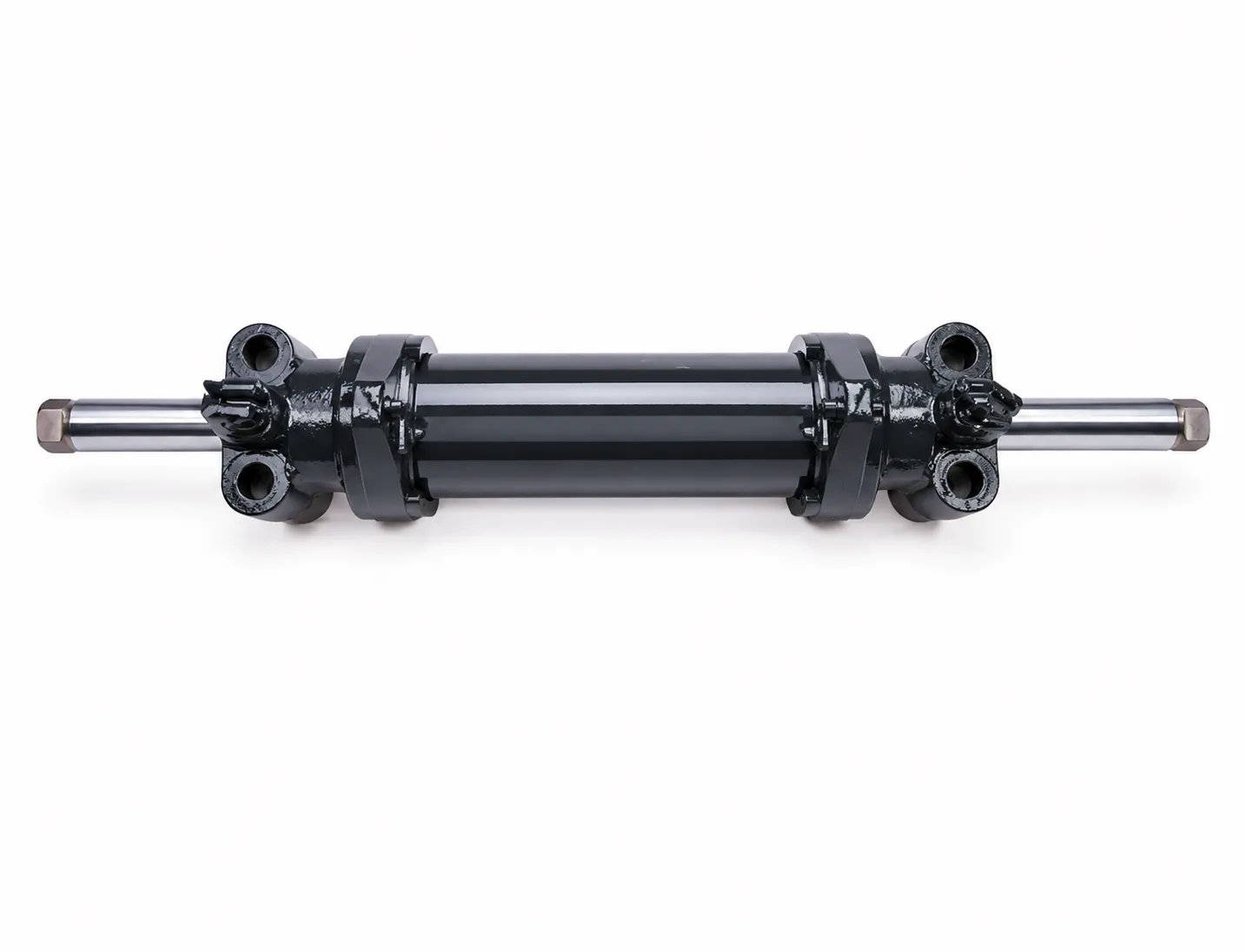
A Coventry-based manufacturer of self-propelled forage harvesters came to Ever Power with a recurring warranty issue: machines returned from the field with steering cylinder seals showing premature wear, consistently failing between 1,200 and 1,600 operating hours — well below the 3,000-hour design target. Inspection of returned units showed evidence of high-velocity rod entry at the rod seal — the characteristic parabolic scoring pattern caused by rod impact with the wiper seal lip under high flow velocity conditions. The root cause was traced to an OEM pump specification change made during a cost-reduction exercise: the replacement pump delivered 22% higher flow at rated engine speed, which with the existing 80 mm bore cylinder translated into a 22% higher rod velocity — sufficient to transition from laminar to turbulent flow conditions at the seal contact interface.
Ever Power’s application engineering team worked alongside the Coventry OEM’s hydraulic systems engineer over a four-week project cycle. The solution involved two parallel changes: an 88 mm bore replacement cylinder — replacing the 80 mm unit — which reduced rod velocity for the same flow rate by the square of the bore ratio, and a recalibration of the priority valve spring to reduce the nominal steering flow allocation from 18 l/min to 16 l/min. The combined effect reduced rod velocity at rated flow by 31%, returning the system well within the seal manufacturer’s safe velocity threshold of 0.5 m/s for the specified PTFE lip profile.
The new cylinders were installed in the next production run of 48 machines dispatched to UK and Irish agricultural dealers in spring. Follow-up field data from the first 18 months of operation showed zero seal-related warranty returns across the entire batch, and the OEM subsequently qualified Ever Power as its preferred steering cylinder supplier across three additional product lines. The total cost saving from eliminated warranty repairs exceeded the additional unit cost of the ever Power replacement cylinders by a factor of seven.
What UK Customers Say
The flow-rate matching Ever Power provided on our custom bore cylinder eliminated the left-right steering asymmetry we had struggled with for two production seasons. The lock-to-lock time is now identical within 0.1 seconds in both directions across the full engine speed range — that kind of repeatability makes a real difference when you’re running autosteer at headland speed.
We operate in a Sheffield melt shop environment where oil temperatures regularly peak above 70 °C mid-shift. The FKM-sealed steering cylinders from Ever Power have now completed 14 months of continuous shift service with no seal degradation visible during our last planned inspection. Previous standard NBR-sealed units were showing weeping at 8 months. The difference is significant enough that we’ve now standardised on Ever Power across all our internal transfer vehicles.
Getting a custom steering cylinder quoted, approved internally, and delivered in under five weeks is genuinely unusual — most of our UK suppliers quote six months for anything off-catalogue. Ever Power’s application data sheet request was thorough and professional, the DDP shipping meant no import surprises for our accounts department, and the serialised test certificates arrived with the shipment as agreed. We’ll be placing a second batch order shortly.
Frequently Asked Questions
© Ever Power · Precision Hydraulic Steering Cylinders · UK Market Specialist
edit by gzl