
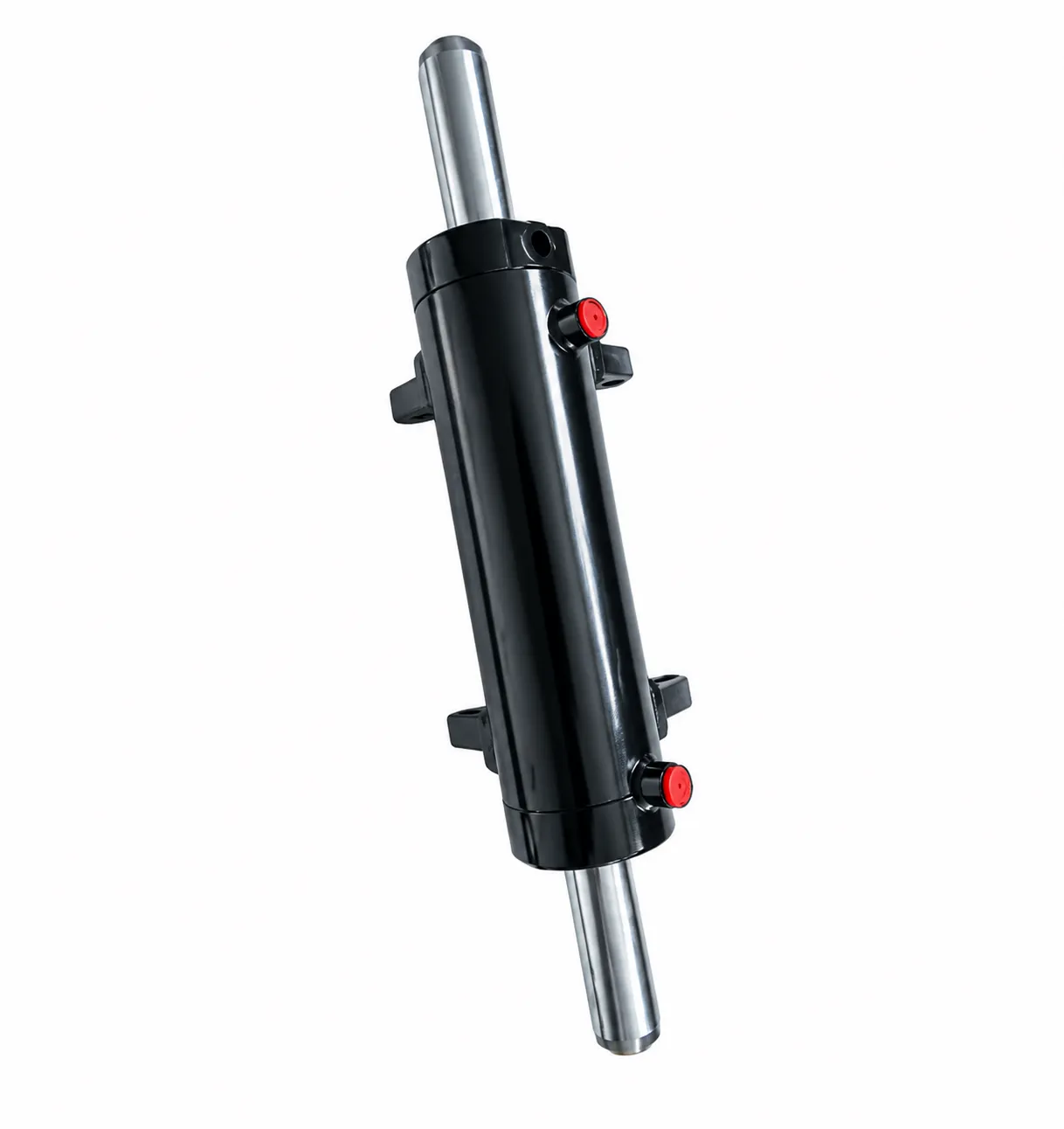
 Hydraulic steering cylinders are the mechanical backbone of directional control in a vast range of UK industrial machinery — from articulated dump trucks operating in the quarries of South Wales to forestry equipment navigating the upland terrain of Scotland, and the heavy-lift vehicles serving Birmingham’s automotive manufacturing hubs. These double-acting or single-acting cylinders translate hydraulic pressure into precise, repeatable linear motion, and when they fail, the consequences ripple across entire production lines, logistics chains, and on-site safety frameworks.
Why Preventive Maintenance Defines Steering Cylinder Longevity
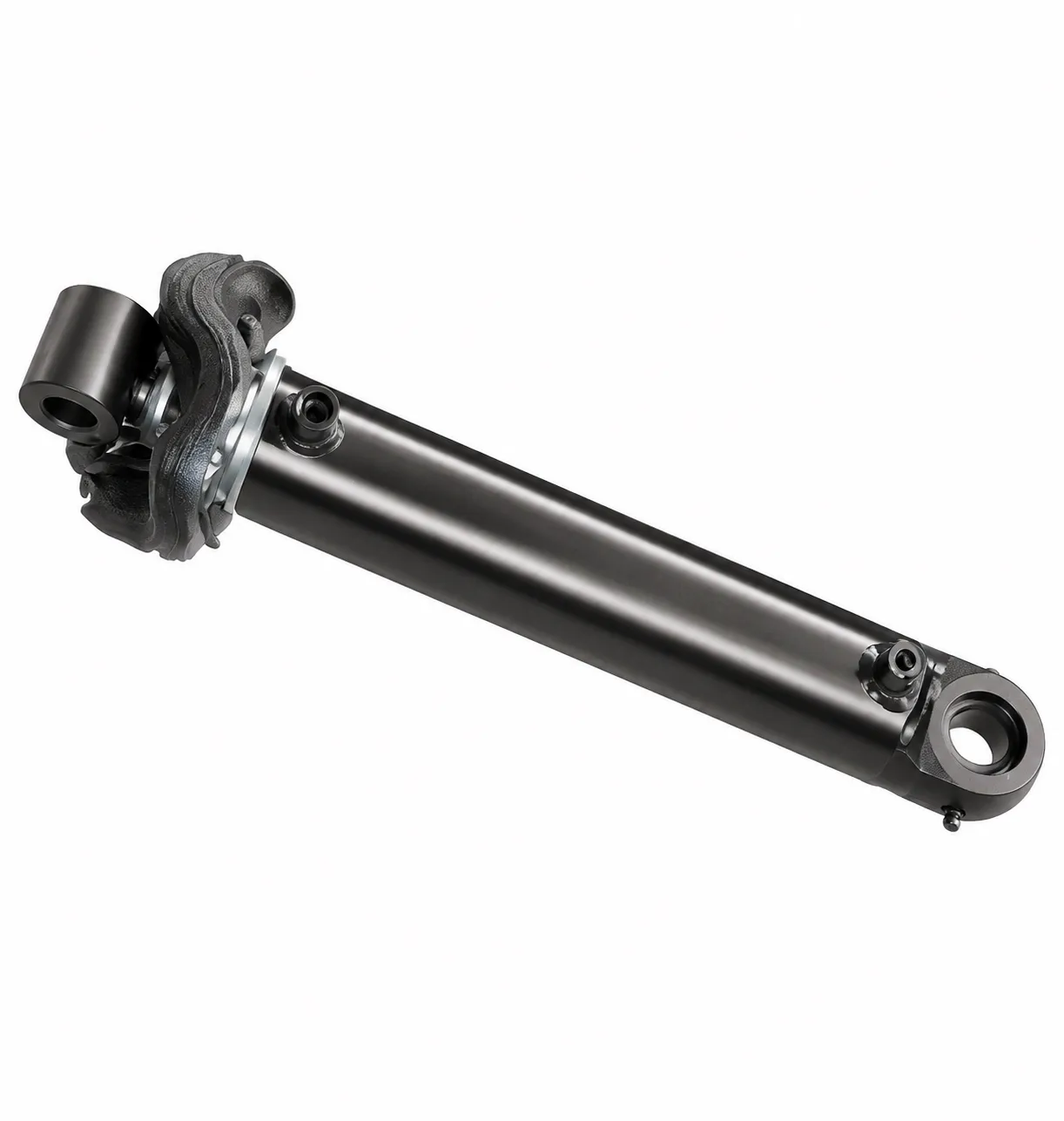 A hydraulic steering cylinder operates under relentless cyclic stress. Each actuation subjects the piston rod, seals, and cylinder bore to pressure spikes, side loads, temperature differentials, and the slow ingress of particulate contamination. In standard industrial environments, a steering cylinder in active service might cycle 500 to 2,000 times per shift. Over a 12-month period, that accumulates into millions of mechanical events — each one incrementally degrading seal integrity, rod chrome plating, and bearing surfaces. Without a structured maintenance programme, this degradation passes undetected until catastrophic failure occurs.
In the UK, the Engineering Equipment and Materials Users Association (EEMUA) has long advocated for condition-based and time-based maintenance hybrid strategies for hydraulic components in heavy industry. The reasoning is straightforward: the cost of a proactive seal replacement is a fraction of the cost of a blown-seal event that floods hydraulic fluid into a machine’s drive train, necessitates a full cylinder rebuild, and triggers an HSE incident report. Preventive maintenance is not simply good engineering practice — in many UK industrial contexts, it is a regulatory obligation under the Lifting Operations and Lifting Equipment Regulations (LOLER) and PUWER.
The sections that follow translate these principles into a working maintenance schedule with defined inspection intervals, clear pass/fail criteria, and actionable corrective steps. The framework is designed to be practical for maintenance teams operating in real field conditions — including the time-pressured environment of a Sheffield steel processing plant or a Birmingham automotive body assembly facility where production downtime has a measured hourly cost.
40–60%
Extended operational life with consistent preventive maintenance vs. reactive repair cycles
3×
Average cost differential: reactive seal failure vs. scheduled seal replacement under a PM programme
85%
Of hydraulic steering cylinder failures are attributable to contamination, seal degradation, or improper fluid condition — all preventable
Understanding Steering Cylinder Construction and Failure Modes
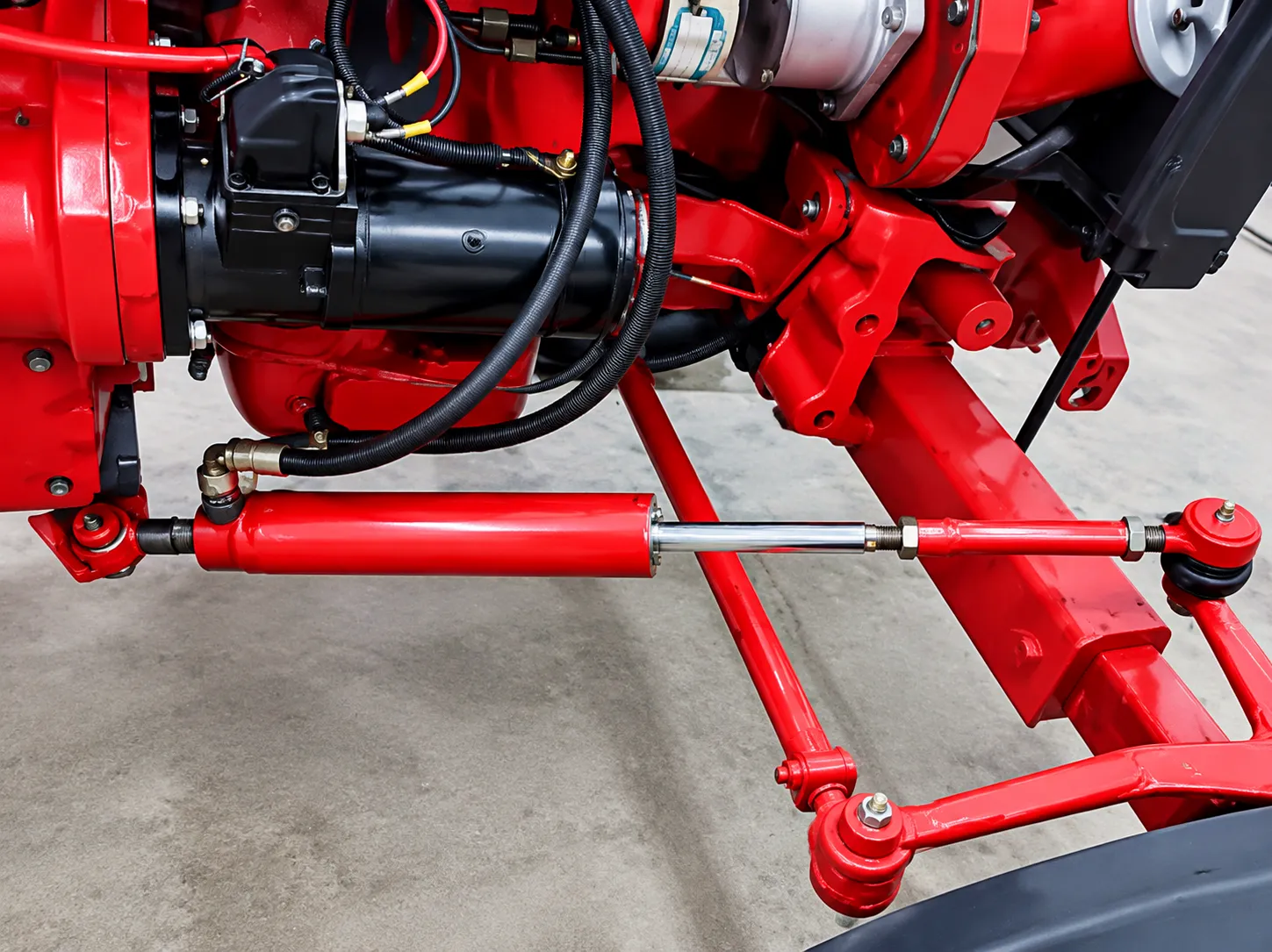
Before defining an effective maintenance schedule, it helps to understand what is being maintained. A hydraulic steering cylinder is a precision-engineered actuator comprising a chrome-plated piston rod, a honed cylinder bore, a piston assembly carrying dynamic seals, end caps with static seals, and bearing/bushing assemblies at each clevis mount. The interaction between these components determines both performance and longevity.
The chrome-plated piston rod — typically hard chrome to a depth of 20–40 microns over a medium-carbon or alloy steel substrate — is the most visible wear surface and the first indicator of maintenance needs. Any pitting, scoring, or chrome flaking creates a path for dynamic seal degradation and hydraulic fluid bypass. The cylinder bore, precision honed to Ra 0.2–0.4 µm, must remain free of corrosion, scoring, and ovality to maintain consistent piston seal contact.
Dynamic seals — typically polyurethane or PTFE-based in modern steering cylinders — degrade through thermal cycling, fluid incompatibility, side-load deformation, and simple age-related hardening. Static seals at end caps and ports are less stressed but are the source of many visible external leaks. Understanding which seal is leaking and why directs both the repair action and the root-cause investigation that prevents recurrence.
Common Failure Modes and Their Maintenance Implications
Rod Seal Leak
Visible oil weeping around rod exit. Caused by seal hardening, rod scoring, or side loading. Requires rod inspection and seal replacement before fluid loss escalates.
Internal Bypass
Piston seal failure allowing fluid to bypass between chambers. Presents as loss of force or drift under load. Requires cylinder disassembly and piston seal replacement.
Bore Corrosion
Internal rust from water-contaminated fluid or long idle periods. Destroys seal contact surfaces progressively. Prevention via fluid condition monitoring and correct storage protocols.
Bushing Wear
Excessive play at pivot pins and clevis mounts allows unintended side loads to transfer to the rod and seal area. Regular pin and bushing checks are a core inspection item.
Port Fitting Leak
Loose or corroded hydraulic port fittings cause external leaks that can be misdiagnosed as seal failures. Always torque check port fittings during routine inspections.
Contamination Damage
Particulate contamination above ISO 4406 Class 16/14/11 causes abrasive damage to bore surfaces and seal lips. Fluid sampling is the primary diagnostic tool.
Master Preventive Maintenance Schedule — Hydraulic Steering Cylinders
The table below provides a structured maintenance schedule suitable for heavy-duty industrial steering cylinders operating in standard UK conditions. Interval frequencies should be reduced by 30–40% in high-contamination environments such as mining, quarrying, or coastal operations where salt spray accelerates corrosion. All intervals assume correct hydraulic fluid specification and ambient temperatures within –10°C to +60°C.
| Inspection / Task | Daily | Weekly | Monthly | 6-Monthly | Annual | Pass Criterion |
|---|---|---|---|---|---|---|
| Visual rod inspection — oil film / weeping | ✓ | — | — | — | — | Thin oil film acceptable; active drip = fail |
| Rod surface check — scoring / pitting / chrome condition | — | ✓ | — | — | — | No visible pitting; chrome intact; Ra ≤ 0.4 µm |
| Hydraulic fluid level and colour check | ✓ | — | — | — | — | Clear amber; no milky/dark discolouration |
| Port fittings and hose connections torque check | — | ✓ | — | — | — | Per manufacturer torque spec ±5% |
| Pivot pin and clevis bushing play check | — | — | ✓ | — | — | Radial play ≤ 0.5 mm; lubricate per schedule |
| Hydraulic fluid sampling (particle count + water content) | — | — | ✓ | — | — | ISO 4406 ≤ 16/14/11; water ≤ 200 ppm |
| Dynamic seal replacement (piston + rod seals) | — | — | — | ✓ | — | Condition-triggered or 4,000 operating hours |
| Full cylinder pressure test (hold pressure 1.5× WP for 5 min) | — | — | — | — | ✓ | Zero pressure drop over 5 minutes at 1.5× WP |
| Complete overhaul or replacement assessment | — | — | — | — | ✓ | Based on bore condition, cumulative hours, and cost-benefit |
Hydraulic Fluid Management: The Invisible Maintenance Priority
Of all the maintenance actions in a hydraulic steering cylinder’s service life, fluid management delivers the highest return on effort. The hydraulic fluid is simultaneously the power transmission medium and the lubrication layer protecting every wetted metal surface inside the cylinder. When fluid condition degrades — through particulate contamination, thermal degradation, water ingress, or simple oxidation — the damage it causes is cumulative, invisible, and disproportionately expensive to repair.
UK industrial environments present specific fluid management challenges. Coastal operations in areas like Hull, Southampton, or Aberdeen contend with high atmospheric humidity that accelerates water ingress into vented hydraulic reservoirs. Agricultural machinery in the East Anglian fens and the Yorkshire Dales cycles through extreme temperature swings from winter cold starts to summer running temperatures, stressing additive packages and promoting oxidation. Construction sites in urban centres like Manchester or Leeds often operate equipment in dusty, abrasive environments that challenge even well-maintained filter systems.
The recommended approach combines monthly fluid sampling with laboratory analysis from a UK-based oil analysis service. ISO 4406 cleanliness targets of 16/14/11 or better are appropriate for most steering cylinder applications. Water content should be maintained below 200 ppm — above 500 ppm, hydraulic fluid begins to form emulsions that destroy lubricant film integrity. Acid number testing identifies oxidative degradation before it damages cylinder bores, and viscosity verification ensures the fluid remains within grade specification across the operating temperature range.
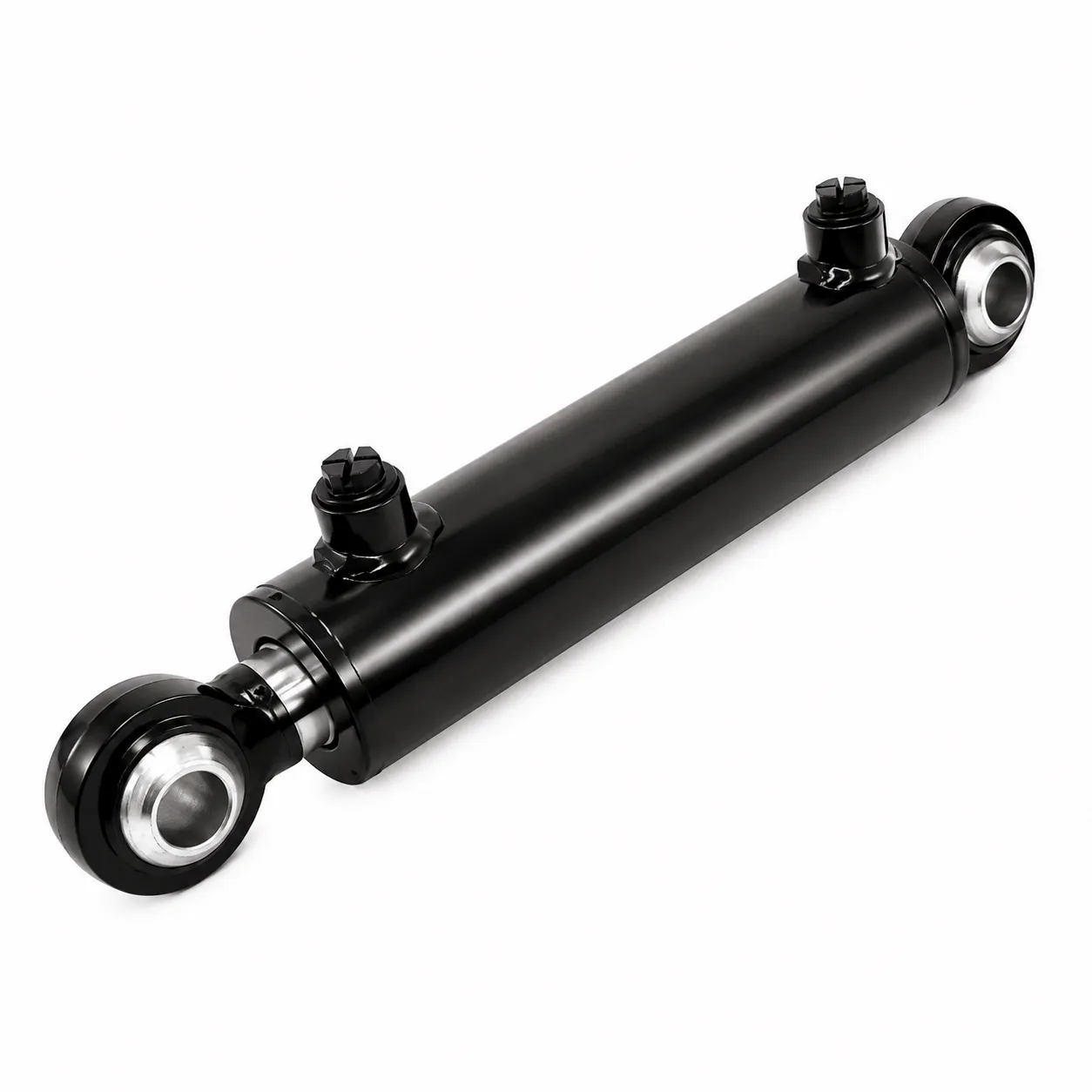
Fluid Specification Quick Reference
Viscosity grade: ISO VG 46 (general); ISO VG 32 (cold climates)
Cleanliness: ISO 4406 ≤ 16/14/11
Water content: < 200 ppm
Acid number: < 1.0 mg KOH/g
Filter rating: β10 ≥ 200 (10 µm absolute)
Change interval: 2,000 hr or annually (whichever first)
Seal Replacement Protocols for Hydraulic Steering Cylinders
Seal replacement is the single most impactful preventive maintenance action available for hydraulic steering cylinders, and the one most frequently deferred until too late. The economic argument for proactive seal replacement is straightforward: a complete seal kit for a medium-bore steering cylinder typically costs between £80 and £350 depending on seal material and cylinder size. A reactive seal failure that allows contaminated fluid to enter the hydraulic circuit and damage downstream components — the pump, directional control valve, or other actuators — can generate repair costs twenty to fifty times higher, plus the cost of unplanned downtime.
UK maintenance engineers operating in Birmingham’s automotive tier-1 supplier facilities, Sheffield’s precision engineering companies, and the agricultural equipment depots of Lincolnshire have broadly converged on a 4,000 operating hour or 18-month interval for dynamic seal replacement — whichever arrives first — as the practical sweet spot between proactive replacement and unnecessary expenditure. This interval should be brought forward whenever fluid sampling reveals contamination above specification, when visible weeping at the rod seal is observed, or when the machine’s operating environment has been unusually severe.
Step 1 — Depressurise and Isolate
Fully depressurise the hydraulic circuit before any work. Isolate the cylinder using lock-out/tag-out (LOTO) procedures compliant with UK health and safety requirements. Residual pressure in a steering circuit can be significant — never assume a stationary machine is at zero pressure.
Step 2 — Rod and Bore Assessment
Before installing new seals, inspect the rod surface for scoring, pitting, or chrome delamination using a profilometer or fine-grit indicator. Measure bore diameter at multiple points for ovality. Installing new seals against a damaged rod or bore guarantees premature failure and wastes the investment.
Step 3 — Seal Material Specification
Match seal material to fluid type and temperature range. Polyurethane seals offer excellent abrasion resistance for standard mineral oil applications. HNBR seals are appropriate for biodegradable or water-based fluids. PTFE-based composite seals suit high-temperature applications above 90°C. Never substitute seal materials without confirming compatibility with the cylinder manufacturer.
Step 4 — Installation Technique
Use appropriate seal installation tools to avoid lip distortion or twisting during fitting. Lightly coat new seals with clean hydraulic fluid before installation — never petroleum jelly, which can swell some seal compounds. Apply a consistent radial force when seating lip seals; uneven seating creates localised stress concentrations that cause early failure.
Step 5 — Post-Installation Testing
After reassembly, conduct a controlled pressure test to 1.5× working pressure, held for 5 minutes, before returning the cylinder to service. Cycle the cylinder slowly through full stroke six to eight times to bed in new seals before applying working loads. Record the date, seal materials used, and technician identity in the cylinder maintenance log.
Application Scenarios: Steering Cylinders Across UK Industries
Hydraulic steering cylinders serve across a wide range of UK industrial sectors, each presenting distinct maintenance challenges that must inform the preventive maintenance schedule. A maintenance regime adequate for agricultural use may be dangerously insufficient for underground mining equipment, while a schedule calibrated for heavy port equipment may over-service a precision agricultural tractor, creating unnecessary cost without proportional benefit.
Construction and Civil Engineering
Articulated dump trucks, motor graders, and wheeled excavators operating on UK construction sites from London’s Crossrail-era infrastructure projects to Scotland’s renewable energy construction sites rely on steering cylinders in demanding duty cycles. Maintenance schedule: weekly rod inspection, monthly fluid sampling, 6-monthly seal replacement due to abrasive contamination.
Agricultural Machinery
Tractors, combine harvesters, and specialist agricultural vehicles across Lincolnshire, Norfolk, and the Scottish lowlands depend on reliable steering cylinders for precision field work. Seasonal operation patterns demand thorough pre-season inspection and post-season storage preparation, including rod protection against winter corrosion and fluid change to remove water accumulated during harvest operations.
Port and Marine Logistics
Container handling equipment, reach stackers, and heavy port tractors at UK port facilities — including Felixstowe, Southampton, and Liverpool — operate in salt-laden atmospheres that aggressively attack unprotected steel and chrome surfaces. Corrosion protection of exposed rod surfaces with compatible rod coatings and biweekly rod cleaning are non-negotiable maintenance additions for these environments.
Automotive Manufacturing
Material handling vehicles and automated guided vehicle systems in Birmingham and Sunderland’s automotive assembly plants require extremely consistent steering cylinder performance to maintain production line throughput. These applications benefit from condition monitoring systems linked to production scheduling software, enabling maintenance to be planned during scheduled production breaks rather than causing reactive line stoppages.
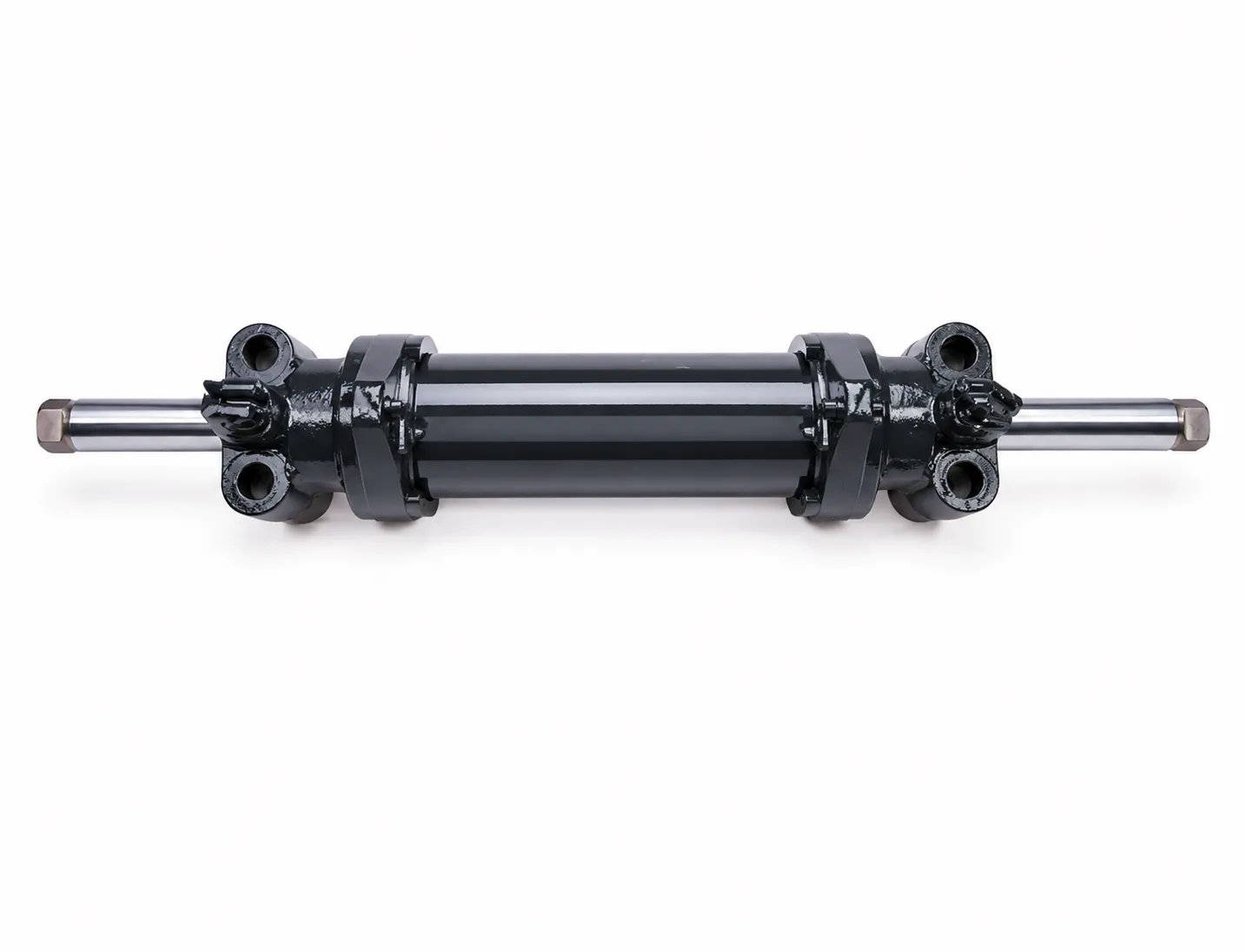
Featured Product
Mini Forklift Attachment Hydraulic Cylinder
Compact double-acting steering cylinder rated for forklift attachment duties. Ideal for warehouse and logistics operations requiring precise steering control in tight turning environments. Designed for straightforward seal replacement during scheduled maintenance intervals.
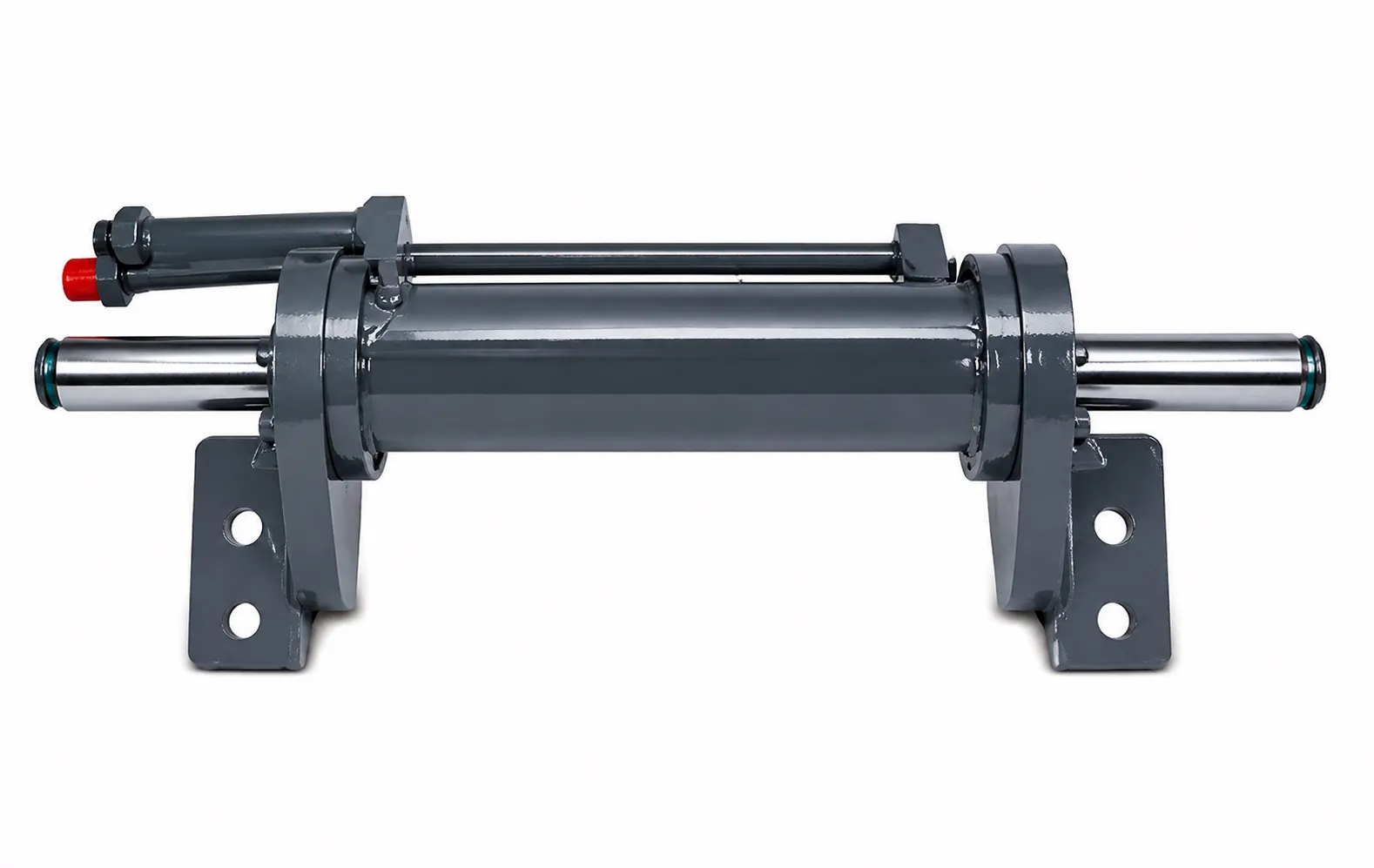
Featured Product
Medium-Duty Forklift Attachment Hydraulic Cylinder
Engineered for medium-duty forklift steering and attachment systems with extended seal life under moderate duty cycles. Features accessible port geometry and standardised seal dimensions that simplify scheduled maintenance and reduce service time by up to 30% compared to non-standardised cylinder designs.
Steering Cylinder Technical and Performance Parameters
The table below summarises the key technical parameters that govern both cylinder performance and maintenance requirements. Understanding these parameters is essential for selecting appropriate maintenance intervals and identifying when a cylinder’s operating conditions have moved outside its designed envelope — a situation that always demands an accelerated maintenance schedule regardless of the elapsed calendar time.
| Parameter | Typical Range | Maintenance Threshold | Action Required at Threshold |
|---|---|---|---|
| Working Pressure | 100–250 bar | ≥ 1.1× rated WP | Investigate relief valve setting; check for pressure spikes from load shock |
| Bore Diameter | 40–200 mm | Ovality > 0.05 mm | Bore rehoning or cylinder replacement assessment required |
| Rod Diameter | 25–120 mm | Surface roughness Ra > 0.6 µm | Rod re-chroming or replacement; do not install new seals over damaged rod |
| Chrome Plating Thickness | 20–40 µm nominal | < 8 µm remaining | Rod replacement or re-chroming; measure with eddy-current gauge |
| Operating Temperature | –10°C to +80°C | > 80°C continuous | Investigate heat source; upgrade to high-temp seal compounds; check cooling |
| Stroke Length | 100–1,200 mm | Rod deflection > L/500 | Check mounting alignment; assess for buckling risk under compressive load |
| Seal Life (Dynamic) | 3,000–6,000 hr | Any visible weeping | Proactive replacement regardless of scheduled interval; root-cause investigation |
| Cylinder Material | St52 / S355 / Alloy Steel | Any external corrosion | Treat and protect external surfaces; inspect weld zones under corrosion |
| Rod Material | Ck45 / 42CrMo4 steel | Any exposed base metal | Immediate re-chroming or replacement; base steel corrodes rapidly in service |
| Internal Leakage (Bypass) | < 5 cc/min at WP | > 10 cc/min | Piston seal replacement; inspect bore for scoring before reassembly |
Storage, Recommissioning, and Seasonal Preparation in UK Conditions
Agricultural machinery in the UK presents a unique challenge in steering cylinder maintenance: extended seasonal storage periods during which cylinders may sit idle for four to six months, often in unheated farm buildings where temperatures drop below zero and atmospheric moisture levels remain high. Without proper storage preparation, this period can cause more damage than equivalent operating time — corrosion attacks exposed rod surfaces, seals harden and lose elasticity through thermal cycling, and stagnant fluid promotes biological contamination in some fluid types.
Pre-storage preparation should include full stroke cycling to coat internal surfaces with fresh fluid, retraction of piston rods to their minimum exposed position where possible to minimise chrome surface exposure, application of approved rod protection spray over any exposed chrome, and blanking of all hydraulic ports with clean plugs to prevent atmospheric moisture entry. Fluid should be changed before storage rather than after, as end-of-season fluid contains accumulated contamination that would sit against metal surfaces throughout the winter.
Recommissioning in spring should not be treated as simply turning the key and driving away. A structured recommissioning check should include visual rod inspection for any winter corrosion, fluid sampling before first pressurisation, slow cycling through full stroke with the machine stationary before applying working loads, and verification of all port fitting torques. This approach, standard practice among the larger East Midlands agricultural contracting businesses, essentially eliminates the pattern of early-season seal failures that plague operations without a formal recommissioning procedure.
Ever Power: Manufacturing Capability and Customisation for UK Markets
Ever Power has spent over a decade building manufacturing competency in precision hydraulic actuator systems, with steering cylinders representing one of the most technically demanding product lines in the catalogue. The manufacturing facility operates CNC deep-hole drilling and boring lines capable of achieving bore tolerances of ±0.01 mm and surface finishes of Ra 0.2 µm on cylinder bores up to 300 mm diameter. Hard chrome plating is applied through a controlled electroplating process with continuous thickness monitoring, delivering uniform chrome layers of 25–35 µm on standard rods — thicker on request for high-corrosion environments like coastal UK installations.
What distinguishes Ever Power in the UK B2B market is not simply manufacturing precision but the depth of customisation capability the team brings to each project. UK customers regularly arrive with non-standard requirements: cylinders designed for retrofit into legacy equipment where space envelopes are constrained, seal material specifications driven by UK HSE biodegradable fluid mandates in environmentally sensitive areas, or port configurations dictated by existing hydraulic circuit designs. Ever Power’s engineering team works from customer drawings and field measurements to produce custom-specified steering cylinders that match the exact dimensional and performance envelope required — without the extended lead times and minimum order quantities typically associated with bespoke hydraulic components.
The supply chain capability behind Ever Power’s UK deliveries includes consolidated sea freight with UK customs pre-clearance handling, and the option of air freight for urgent replacement cylinders needed to minimise downtime in time-critical operations. Seal kits, matched replacement rods, and complete cylinder assemblies can be dispatched within 48 hours for standard configurations, and the technical support team is accessible to UK customers during normal UK business hours to assist with maintenance specification queries and urgency planning.
±0.01mm
Bore tolerance
48hr
Standard dispatch window
100%
Cylinders pressure-tested before despatch
Custom
Seal materials, ports, mountings, coatings
Discuss Your Maintenance Requirements
Ever Power’s engineering team can specify replacement cylinders, seal kits, and custom maintenance support agreements for UK industrial operations of any scale.
Customer Success: Sheffield Steel Fabrication — Preventive Maintenance Programme Implementation
A mid-sized steel fabrication business operating from a site in the Lower Don Valley area of Sheffield came to Ever Power in early 2024 with a recurring problem familiar across UK heavy manufacturing: their fleet of six overhead gantry cranes and four heavy-duty material handling vehicles was experiencing steering cylinder failures at an average rate of 2.3 events per quarter. Each failure event resulted in a minimum four-hour production stoppage, plus the cost of emergency hydraulic engineer callout — a regime that was costing the business approximately £18,000 per year in direct repair costs, plus estimated indirect costs from lost production time exceeding £45,000 annually.
The root-cause analysis conducted jointly with Ever Power’s technical team identified three primary failure drivers: hydraulic fluid that had been in service beyond its useful life due to the absence of a formal change schedule, pivot pin and bushing wear generating side loads that accelerated rod seal failure, and the absence of any rod surface protection protocol during the facility’s scheduled summer shutdown period. None of these were exotic problems — they were straightforward maintenance omissions that had accumulated into a significant cost burden.
Ever Power supplied replacement steering cylinders for the three units showing bore wear beyond the serviceable threshold, together with complete seal kits for the remaining vehicles. More significantly, the technical team developed a tailored preventive maintenance schedule aligned with the Sheffield facility’s three-shift operation pattern and existing planned maintenance windows. The schedule specified monthly fluid sampling, 6-monthly seal replacement for the highest-duty vehicles, and annual pressure testing timed to coincide with the facility’s existing annual LOLER inspection programme.
In the twelve months following programme implementation, the facility recorded zero unplanned steering cylinder failures. The total cost of the preventive maintenance programme — including replacement seals, fluid analysis, and the initial cylinder replacements — came to approximately £11,200. Against the previous annual repair and downtime cost of £63,000+, the return on the maintenance investment was clear. The Sheffield facility now treats preventive maintenance scheduling as a core part of its asset management strategy rather than an optional overhead.
What UK Customers Say About Ever Power Steering Cylinders
★★★★★
“We specified a non-standard bore diameter and required HNBR seals to comply with our biodegradable fluid mandate from the site environmental permit. Ever Power turned around a complete drawing review and confirmed they could match our specification within two weeks. The cylinders arrived correctly dimensioned, passed our in-house pressure testing immediately, and have been in service through two full seasons without any seal intervention. For custom hydraulic components at a sensible price point, they’ve become our go-to supplier.”
— Fleet Engineer, Agricultural Contracting Business
Lincolnshire, East Midlands
★★★★★
“The bore finish quality on the Ever Power cylinders is genuinely excellent — we measured Ra 0.22 µm on the first cylinder we opened for inspection, which is better than several European suppliers we’ve trialled at significantly higher cost. The maintenance schedule guidance their technical team provided helped us structure our PM programme in a way that maps directly onto our existing planned maintenance software. After 14 months, seal performance is tracking exactly as predicted. That’s the kind of reliability that matters when you’re running three shifts.”
— Maintenance Manager, Steel Fabrication Plant
Sheffield, South Yorkshire
★★★★★
“Operating in a port environment means our equipment faces constant salt exposure, and we’ve had persistent problems with chrome rod corrosion on cylinders from other suppliers. Ever Power agreed to apply a thicker chrome specification — 38 µm — on our order along with a hard chrome wipe polish that meets the surface finish we needed for the seal type we use. We’ve been eighteen months without rod corrosion issues on the new cylinders, which, given our previous history, is a genuine step change. Delivery was also faster than quoted.”
— Engineering Director, Port Logistics Operator
Felixstowe, Suffolk
Maintenance Record-Keeping and Documentation Requirements
Preventive maintenance is only as effective as the records that support it. Without detailed, consistent documentation, there is no way to identify emerging failure trends, verify compliance with PUWER and LOLER requirements, or make the business case for maintenance investment to operations management. UK companies operating under ISO 9001 quality management systems have an additional obligation to maintain documented evidence of equipment maintenance, making record-keeping both a practical and regulatory necessity.
A cylinder maintenance log should capture, at minimum: the date and technician identity for every inspection, a pass/fail result for each inspection item with measurement data where applicable (rod surface roughness readings, bore diameter measurements, fluid cleanliness ISO codes), the batch numbers of any seals, fluids, or components installed, the cumulative operating hours at the time of the inspection, and any corrective actions taken with their outcomes. This information builds a service history that supports both condition-trend analysis and the cylinder replacement decision when it eventually becomes necessary.
Digital maintenance management systems are increasingly standard in UK industrial facilities, and most can accommodate hydraulic component service records within their asset management modules. For operations without a formal CMMS, a structured spreadsheet template provides an adequate baseline — the content of the record matters more than the format. What matters is that the records exist, are date-stamped, are signed off by the responsible technician, and are accessible to both the maintenance team and any relevant inspection body.
Frequently Asked Questions — Hydraulic Steering Cylinder Maintenance (UK)
How often should I schedule preventive maintenance on a hydraulic steering cylinder used in a UK agricultural setting?+
For agricultural machinery in UK conditions — tractors, harvesters, and specialist field vehicles — a practical preventive maintenance schedule should include a daily visual check of the rod seal area during active season, a weekly rod surface and port fitting inspection, a full pre-season check before spring fieldwork begins, a post-harvest fluid change and seal inspection after the main harvest period, and a complete seasonal storage preparation procedure before winter lay-up. The combination of seasonal temperature swings, field contamination, and extended storage periods makes agricultural steering cylinders particularly maintenance-intensive compared to year-round industrial applications.
What are the tell-tale signs that a hydraulic steering cylinder on a Sheffield construction site needs immediate attention?+
Active dripping from the rod seal area — as opposed to a thin oil film which is normal — is the most obvious indicator. Other red flags include sluggish or inconsistent steering response under normal operating conditions (suggesting piston bypass), the machine’s steering drifting when held at a fixed position under load (internal leakage), unusual noise from the hydraulic circuit during actuation, visible rod pitting or chrome discolouration at any point along the exposed stroke length, and any drop in the hydraulic reservoir level that cannot be explained by hose or fitting leaks elsewhere in the circuit. Any of these on an active construction site should trigger an immediate investigation rather than a wait-and-see approach.
What is the typical price or cost of a preventive maintenance seal replacement for a hydraulic steering cylinder in the UK, and how does it compare to reactive repair?+
A preventive seal replacement for a medium-bore steering cylinder — including the seal kit from a supplier such as Ever Power plus a competent hydraulic engineer’s time — typically runs between £150 and £600 depending on cylinder size, seal material specification, and regional labour rates in the UK. A reactive failure that progresses to include bore scoring, contamination of the hydraulic circuit, and damage to downstream components can easily generate costs of £3,000 to £15,000 or more, plus the unplanned production downtime cost. The cost-benefit calculation almost always favours preventive intervention, particularly for cylinders in high-duty or safety-critical roles where failure consequences extend beyond repair cost alone. For pricing on specific seal kits or replacement cylinders from Ever Power, contact [email protected].
Which hydraulic fluid should I use in a steering cylinder operating at a Birmingham automotive plant to maximise seal life and reduce maintenance frequency?+
For automotive plant applications in Birmingham where temperature control is generally good and the fluid will be mineral-based, ISO VG 46 hydraulic fluid with a high viscosity index (VI > 150) and zinc-free additive package is a good standard choice. Zinc-free formulations are preferable where silver-coated components may be present in the circuit. The fluid must be maintained at ISO 4406 class 16/14/11 or better to protect steering cylinder bore surfaces and seals. For plants operating near food processing areas or with environmental spill sensitivity, fire-resistant or biodegradable fluid specifications may override the performance-only choice. Confirm seal compatibility with your cylinder supplier before changing fluid type — switching from mineral oil to synthetic ester, for example, requires verification that existing seals are compatible with the new fluid chemistry.
Where can I find a reliable UK supplier who can provide custom hydraulic steering cylinders with a short lead time and a proper quote process?+
Ever Power offers UK B2B customers a streamlined quote process for both standard and custom hydraulic steering cylinders. Custom specifications — including non-standard bore and rod diameters, alternative seal materials, modified port configurations, and enhanced chrome specifications for corrosive environments — can be quoted typically within 48 hours of receiving a complete technical specification. Standard configurations can often be dispatched within 48 hours of order confirmation. To start the quote process, send technical drawings or dimensional requirements to [email protected]. The engineering team will confirm feasibility, provide a cost breakdown, and advise on the most appropriate specification for your maintenance and performance requirements.
How do PUWER and LOLER regulations in the UK affect the maintenance schedule I need to follow for hydraulic steering cylinders on lifting equipment?+
PUWER (Provision and Use of Work Equipment Regulations 1998) requires that all work equipment — including machinery with hydraulic steering systems — is maintained in an efficient state and in good repair. This implies a documented maintenance regime, though it does not prescribe specific intervals. LOLER (Lifting Operations and Lifting Equipment Regulations 1998) applies specifically to lifting equipment and requires thorough examination at defined intervals — typically every 6 or 12 months depending on use — by a competent person. Hydraulic cylinders forming part of the lifting or stabilising mechanism of a crane, telehandler, or lift truck fall within LOLER’s scope. A preventive maintenance schedule that aligns its annual pressure test and full inspection with the LOLER thorough examination date is an efficient way to satisfy both regulatory requirements within a single planned maintenance window, minimising the number of times equipment needs to be taken out of service.
Ever Power Industrial · Hydraulic Steering Cylinders
Ready to Implement a Proper Maintenance Programme?
Our engineering team supports UK B2B customers with specification advice, replacement cylinders, seal kits, and custom maintenance support agreements. Contact us for a no-obligation technical discussion and quote.
Get a Quote: [email protected]
edit by gzl