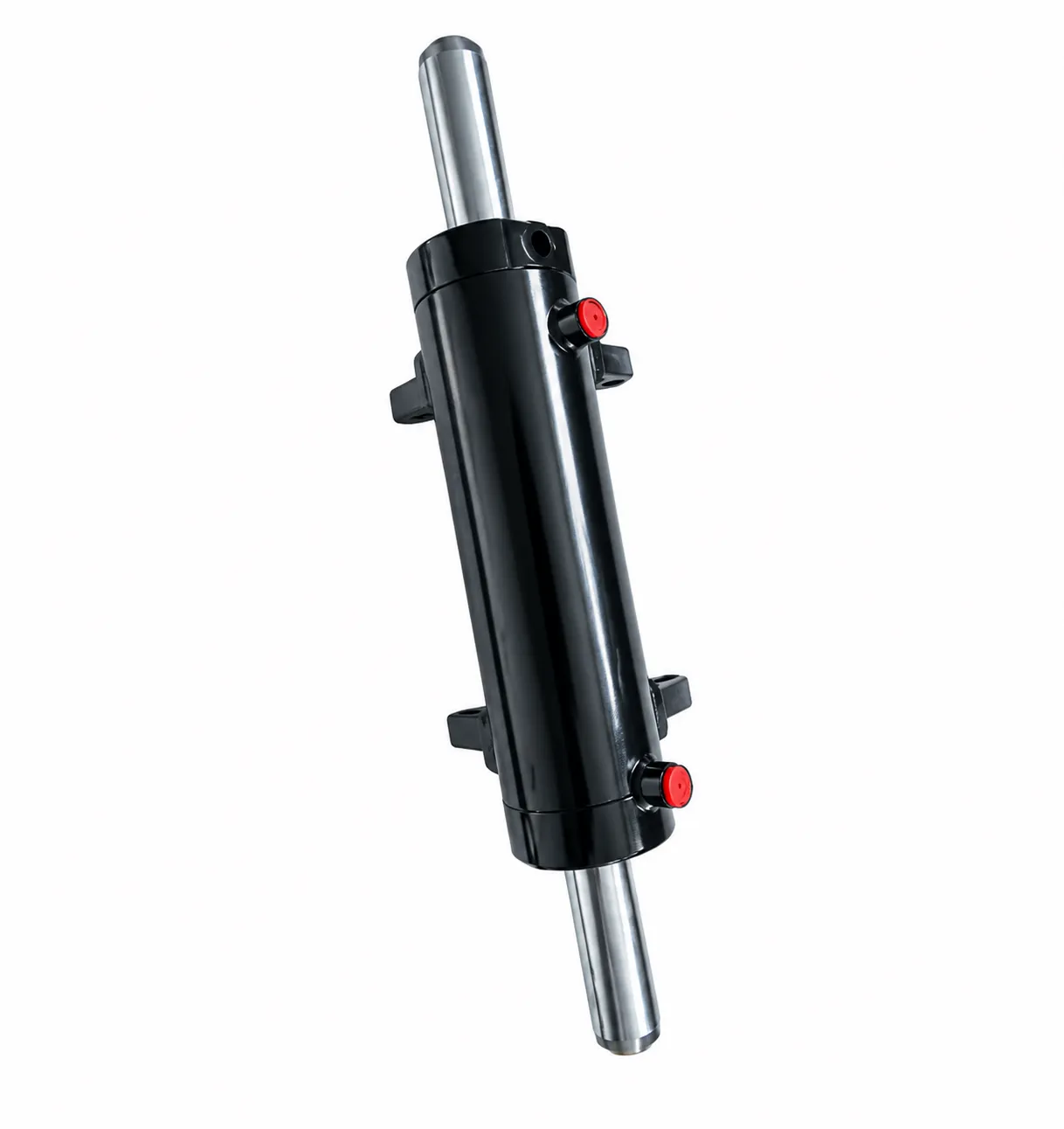
 Procurement teams across Birmingham, Sheffield, and the wider West Midlands manufacturing corridor are no strangers to the challenge of sourcing hydraulic steering cylinders that truly deliver under sustained industrial load. A steering cylinder is far more than a commodity component — it is the mechanical heart of directional control in everything from agricultural tractors and heavy-duty forklifts to off-highway construction rigs and marine steering systems. Getting the specification wrong at the procurement stage costs far more than a simple parts swap: unexpected downtime on a production line or a breakdown on a Norfolk farm during harvest season translates directly into financial loss and reputational damage.
How a Hydraulic Steering Cylinder Actually Works
Engineering Principle
Hydraulic Pressure Actuation
Hydraulic steering cylinders operate on Pascal’s law — pressurised fluid, typically mineral oil or bio-hydraulic fluid, is supplied from the vehicle’s power steering pump into one chamber of the cylinder. The pressure differential across the piston generates a linear force that translates through the piston rod to the steering linkage or rack. The magnitude of this force is determined by the bore diameter and the operating pressure, meaning that a larger bore at the same pressure delivers proportionally greater output force. In heavy plant machinery common across Yorkshire and the North West of England, operating pressures routinely reach 250 to 350 bar, demanding cylinders with robust wall thicknesses and precision-machined end caps to maintain structural integrity across thousands of actuation cycles.
Double-Acting vs. Single-Acting Design
Most steering cylinders used in vehicle and mobile equipment applications employ a double-acting configuration, where pressurised fluid acts on both sides of the piston to produce both push and pull movements without relying on spring return. This bilateral control is fundamental to precise directional response — particularly in articulated loaders or agricultural front axles where the operator demands immediate countersteering capability. Single-acting cylinders, which use spring or gravity return, appear occasionally in simpler hydraulic steering setups on trailers and light agricultural equipment, but the double-acting variant dominates commercial and heavy-duty UK market applications because of its superior controllability and feedback characteristics across a wide temperature range.
Sealing and Return Path
The integrity of the cylinder’s sealing system governs both performance and maintenance intervals. As high-pressure fluid enters the active chamber, low-pressure return oil flows back to the reservoir through the opposite port. The transition between these states must be managed by precision-lapped piston seals — typically polyurethane or PTFE composite materials — that minimise internal leakage (bypass) while generating minimal friction drag on the rod. Excessive bypass degrades steering response and generates heat; excessive friction causes hard steering feel. Well-engineered cylinders use stacked seal assemblies with a primary dynamic seal, a secondary anti-extrusion ring, and a wiper ring at the rod exit to prevent particulate ingress, especially critical given the muddy and dusty environments typical of UK agricultural and quarrying operations.
Core Materials That Define Cylinder Longevity
Material Science
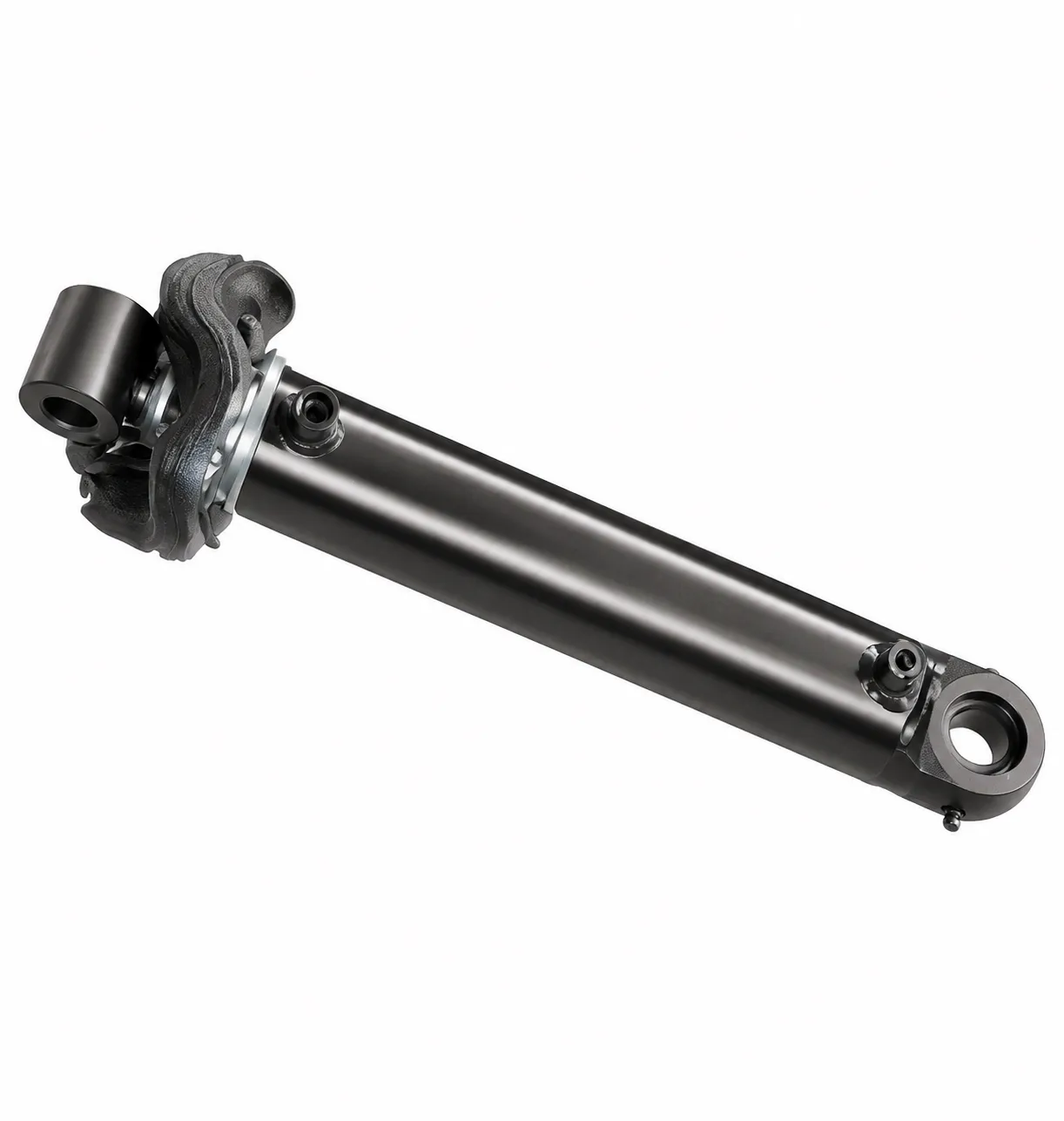
The material composition of each sub-assembly in a hydraulic steering cylinder is not an afterthought — it determines service life under cyclic loading, resistance to corrosion in the UK’s characteristically damp operating environments, and compatibility with modern synthetic and bio-hydraulic fluids increasingly specified by fleet operators seeking to meet environmental standards.
● Cylinder Barrel
Cold-drawn seamless steel tube (ST52 / E355 grade) is the industry standard for cylinder barrels. Its uniform grain structure eliminates weak points that welded tube introduces. Internally honed to Ra 0.4–0.8 µm surface finish, it provides the mirror-quality surface that polyurethane seals require to achieve tight bypass tolerances without premature wear. For corrosive marine or coastal applications — relevant for Scottish island ferry equipment and harbour machinery — 316L stainless steel barrels are specified, offering dramatically improved resistance to chloride-induced pitting.
● Piston Rod
Piston rods are typically manufactured from 42CrMo4 alloy steel (EN10083 specification), hardened and tempered to achieve tensile strength in the range of 900–1100 N/mm². The surface is hard-chrome plated to 20–30 µm thickness, ground and polished to Ra 0.2–0.4 µm, giving a wear-resistant, corrosion-resistant surface over which wiper seals run. For next-generation cylinders replacing chrome in high-specification procurement projects driven by REACH compliance requirements, laser-cladded tungsten carbide or HVOF-sprayed coatings are increasingly available as premium alternatives, offering equivalent hardness with significantly lower hexavalent chromium exposure risk during manufacture.
● End Caps & Ports
Front and rear end caps are commonly produced from S355J2 structural steel, with high-pressure applications calling for forged rather than cast components to eliminate porosity risk. Port connections are machined to BSP (British Standard Pipe) or SAE O-ring face seal standards — the latter increasingly preferred in UK OEM specifications for leak-free integrity under vibration. Thread form selection is critical: a mismatched port thread on a 300-bar system is a safety incident waiting to happen, and UK plant hire fleets have faced costly warranty claims precisely because of specification mismatches between cylinder ports and hose fittings at the procurement stage.
● Seal Pack
The seal assembly — comprising piston seals, rod seals, and wipers — is manufactured from polyurethane (PU), NBR (Nitrile Butadiene Rubber), or PTFE depending on operating temperature and fluid compatibility. PU seals offer the best abrasion resistance and are preferred in high-cycle duty like steering on articulated dump trucks. NBR seals are cost-effective and adequate for standard mineral oil systems. PTFE-composite seals are chosen for low-friction, high-speed applications. Operating temperature range for standard seals spans -20 °C to +80 °C, with low-temperature FKM (Viton) grades available for refrigerated warehouse equipment and cold-store logistics vehicles operating across Scotland and northern England.
Product Technical & Performance Specifications
Specification Table
The table below consolidates the primary technical parameters buyers should request from any hydraulic steering cylinder supplier. These values are reference ranges drawn from standard commercial and heavy-duty industrial categories — custom specifications outside these ranges are achievable through Ever Power’s engineering team, whose CNC machining capacity supports bore diameters from 25 mm to 500 mm and stroke lengths tailored to the mounting envelope of your specific application.
| Parameter | Light Duty | Medium Duty | Heavy Duty / Custom |
|---|---|---|---|
| Bore Diameter | 40 – 80 mm | 80 – 160 mm | 160 – 500 mm |
| Rod Diameter | 25 – 50 mm | 50 – 100 mm | 100 – 360 mm |
| Stroke Length | 50 – 250 mm | 150 – 600 mm | Up to 2,000 mm |
| Operating Pressure | Up to 150 bar | 150 – 250 bar | 250 – 400 bar |
| Test Pressure | 1.5× working pressure | 1.5× working pressure | 1.5× working pressure |
| Barrel Material | ST52 / E355 seamless | ST52 / E355 honed | ST52 / 316L SS / custom |
| Rod Surface Treatment | Hard chrome, Ra ≤ 0.4 µm | Hard chrome / HVOF | HVOF / laser clad |
| Seal Material | NBR / PU | PU / PTFE composite | FKM / custom fluid-grade |
| Operating Temperature | -20 °C to +80 °C | -30 °C to +100 °C | -40 °C to +120 °C |
| Mounting Style | Clevis / flange | Trunnion / side lug | Custom as specified |
| Port Thread Standard | BSP / SAE O-ring | BSP / SAE / metric | As specified by customer |
| Surface Protection | Zinc phosphate + primer | Epoxy paint + zinc | HDG / marine-grade epoxy |
The Specifications That Separate Good Cylinders from Great Ones
Evaluation Criteria
Bore Diameter & Stroke Length
These two dimensions define the cylinder’s output force and travel range respectively. Bore diameter determines thrust: a 100 mm bore at 200 bar generates approximately 157 kN of push force (F = P × A). Getting the bore wrong in either direction creates either an underpowered steering system that fatigues the pump and struggles at low speed, or an oversized cylinder that adds unnecessary weight, cost, and fluid volume. Stroke length must be matched precisely to the geometric arc of the steering linkage — too short and the axle cannot reach full lock; too long and end-of-stroke impacts transmit shock loads into the chassis. UK design engineers typically calculate required stroke using trigonometric analysis of the kingpin axis and tie rod geometry, and Ever Power’s application engineers can assist with this calculation as part of the pre-order engineering review process.
Rated & Test Pressure Ratings
Every hydraulic steering cylinder must carry a rated working pressure and a higher test pressure, with international standards like ISO 6020 specifying minimum proof pressure at 1.5× rated working pressure. For a 250-bar rated cylinder, this means factory testing at 375 bar for a defined dwell period without permanent deformation or leakage. When sourcing for UK plant hire applications — particularly for machinery working on infrastructure projects across the Midlands and North of England — buyers should always request the test certificates and confirm that testing was performed on the actual production batch, not on sample units from a separate qualification run. Pressure ratings must also account for dynamic shock loads that can momentarily exceed steady-state system pressure by 30–50% in hard-surface manoeuvreing conditions.
Mounting Configuration & Attachment
Mounting style governs how loads are transmitted between the cylinder and the vehicle chassis. Clevis mounts allow angular articulation at both ends, which is essential when the cylinder must accommodate steering geometry changes through its full travel range — this configuration dominates on agricultural front axles and forklift steering systems. Flange mounts provide rigid, high-load connections preferred in industrial machine tools and large construction equipment where misalignment is controlled by precision machining of the mounting face. Trunnion mounts offer mid-body pivot points suited to large cylinders in mining and offshore equipment. For UK buyers replacing existing cylinders, the mounting interface dimensions — clevis bore diameter, pin diameter, eye centre distance, and flange bolt pattern — must be measured and confirmed before ordering to prevent costly fitment errors.
Internal Leak Rate & Seal Quality
Internal leakage — measured in mL/min across the piston at rated pressure — is one of the most telling indicators of manufacturing quality and the precision of the seal-to-barrel interface. Premium hydraulic steering cylinders should demonstrate bypass rates of less than 3–5 mL/min at rated pressure and operating temperature. Excessive internal leakage manifests as steering drift, the need for constant correction, and elevated oil temperature — all symptoms well-recognised by fleet maintenance teams in the UK’s logistics and agricultural sectors. Ask any potential supplier for documented internal leakage test data. Quality manufacturers perform 100% end-of-line leak testing on every unit before despatch, and this data should be traceable to individual serial numbers on the certificate of conformity accompanying each cylinder.
Surface Finish & Corrosion Protection
External corrosion protection is not merely cosmetic — a corroded cylinder body can mask fatigue cracking in the barrel wall, and rust ingress into port threads can make field maintenance extremely difficult. For UK applications, where salt spread on roads during winter months, coastal sea spray in maritime counties, and the characteristically wet climate all accelerate corrosion, external protection should be specified carefully. Zinc phosphate conversion coating followed by epoxy primer and topcoat provides good protection for inland agricultural equipment. For vessels, harbour plant, and coastal construction machinery, hot-dip galvanising or marine-grade two-pack epoxy coating should be specified. Port plugs must remain fitted and intact during transport and storage — a detail that distinguishes quality-focused suppliers from commodity exporters shipping bare cylinders in inadequate packaging.
Documentation & Traceability
For UK buyers operating under supply chain due diligence obligations or maintaining ISO 9001-certified quality management systems, cylinder documentation is a non-negotiable part of the specification package. Each unit should be accompanied by a material certificate (EN 10204 3.1 or 3.2), a pressure test certificate with batch traceability, a certificate of conformity to the applicable design standard, and dimensional inspection records confirming critical dimensions fall within drawing tolerance. For projects on UK infrastructure or public sector contracts, CE or UKCA marking requirements may also apply depending on how the cylinder is classified under the machinery directive. Requesting this documentation upfront — before committing a purchase order — is the clearest way to separate genuine precision manufacturers from traders who source from multiple uncontrolled factories and rebrand.
Related Products
Explore Ever Power’s complementary hydraulic cylinder product lines used alongside steering cylinders in industrial vehicle applications:
Industrial Application Scenarios for Hydraulic Steering Cylinders
Application Scenarios
Core Technical Advantages to Look For in a Quality Steering Cylinder
Product Advantages
Precision Honing
Internal bore honing to Ra 0.4–0.8 µm reduces seal wear rate by up to 60% versus turned bores, directly extending service intervals and lowering lifetime maintenance cost — a significant procurement benefit for UK fleet operators on planned maintenance contracts.
High-Pressure Integrity
Forged end caps and CNC-machined thread forms maintain structural integrity under peak dynamic pressure spikes. 100% end-of-line pressure testing — not sampling — gives quality assurance that no marginal units reach the field, reducing warranty return rates and protecting reputation for UK distributors.
Fluid Compatibility Range
Seal compound selection across NBR, PU, FKM, and PTFE grades enables compatibility with mineral oil, phosphate ester, water-glycol, and bio-hydraulic fluids. This flexibility makes the same cylinder frame suitable for diverse UK fleet types without the need for complete cylinder redesigns between contracts.
Custom Stroke & Bore
Unlike catalogue-only suppliers, quality manufacturers offer custom stroke lengths, non-standard bore diameters, bespoke port positions, and non-standard mounting interface geometries. For OEM design teams at UK vehicle builders in Sheffield’s precision engineering sector, this flexibility eliminates compromise in packaging-constrained designs.
Full Traceability Documentation
EN 10204 3.1 material certificates, pressure test records, and dimensional inspection reports traceable to individual unit serial numbers support ISO 9001 supply chain requirements and simplify compliance audits. An advantage that UK buyers on public sector or defence-adjacent contracts particularly value.
Customer Success Story: Sheffield Precision Attachments Ltd
Case Study · UK Heavy Fabrication
Location
Sheffield, South Yorkshire
Industry
Heavy Fabrication / OEM Attachment Manufacturing
Application
Custom steering cylinder for articulated scrap handler
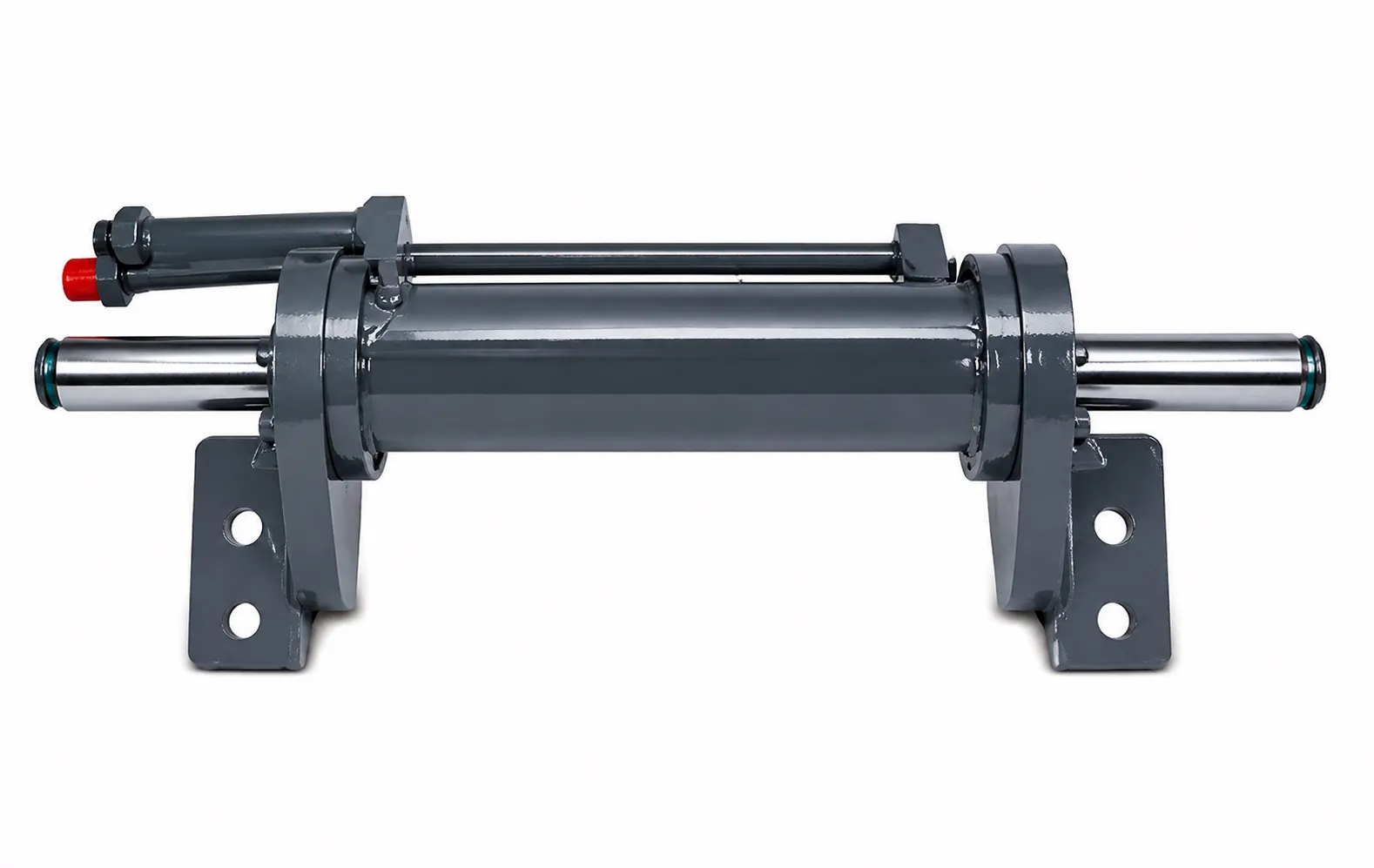
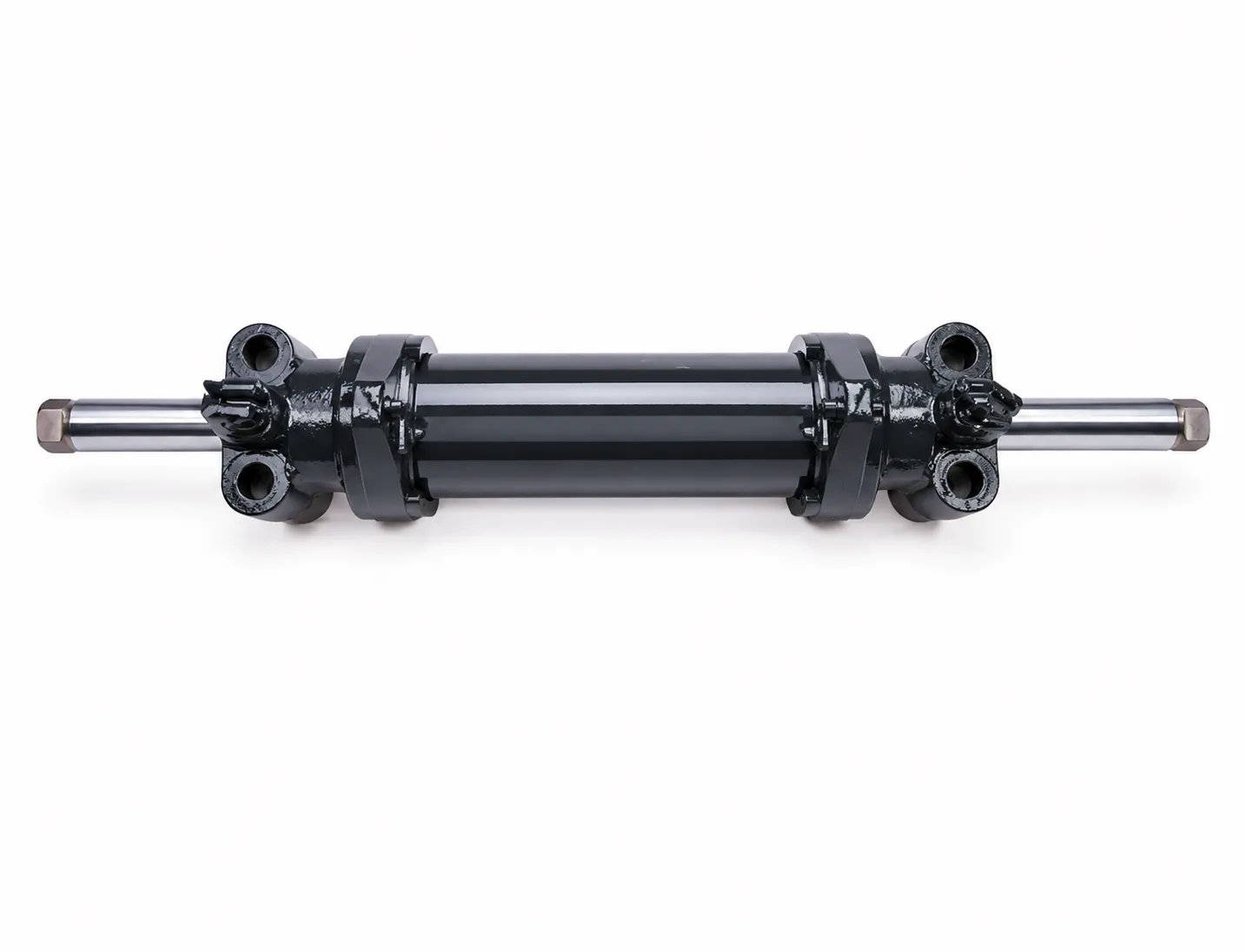 Sheffield Precision Attachments Ltd has operated in the South Yorkshire steel scrap processing and heavy materials handling sector for over twenty years, building custom hydraulic attachments and specialised vehicle configurations for the UK’s steel re-processing industry. When the company undertook a new design project for a purpose-built articulated scrap-yard handler — a machine intended to manoeuvre 20-tonne scrap bundles in confined yard spaces — the engineering team needed a hydraulic steering cylinder that met a demanding and unconventional specification: a 120 mm bore with 480 mm stroke, dual-pilot-operated check valves integrated into the port block, and a custom clevis configuration with an 80 mm pin bore to interface with their bespoke chassis fabrication.
Three UK-based distributors were unable to supply the cylinder from stock or commit to a custom manufacturing lead time under twelve weeks. Ever Power’s application engineering team responded within 18 hours with a fully dimensioned proposal drawing, confirming a 20-working-day lead time for two prototype units, with production tooling retained for future production batches. The prototype cylinders were supplied with full EN 10204 3.2 material certification, individual pressure test records at 375 bar, and a comprehensive dimensional inspection report allowing the Sheffield engineering team to verify compliance against drawing before installation.
The installed cylinders have now accumulated over 3,500 operating hours in the Sheffield scrap yard environment — an extremely abrasive, heavy-shock-load application — without any seal failure or dimensional degradation on rod surface measurement checks carried out at 1,000-hour maintenance intervals. Sheffield Precision Attachments has since placed production orders for a further twelve units and specified Ever Power as the preferred hydraulic cylinder supplier across their current product development programme.
What UK Customers Say About Ever Power
Customer Reviews
“We specified a non-standard bore and requested BSP ports on a medium-duty steering cylinder for a replacement programme on our articulated loader fleet. The dimensional accuracy on the first delivery batch was outstanding — every unit passed our incoming inspection without a single rejection. The rod chrome quality in particular has performed far beyond what we had with our previous European supplier.”
James R., Fleet Engineering Manager
Plant Hire Ltd · Birmingham, West Midlands
“Ever Power’s technical team worked through our steering geometry with us and identified that our original bore specification was actually undersized for the pressure spikes on our machine. They recommended a stepped-up bore and provided performance calculations showing the margin improvement. That kind of proactive engineering support is genuinely rare when dealing with overseas manufacturers — it saved us a significant amount of redesign cost.”
Dr Sarah K., Lead Hydraulics Engineer
OEM Vehicle Systems · Leeds, West Yorkshire
“Documentation was the deciding factor for us — we operate under a tier-one aerospace-adjacent supply chain audit regime and needed full EN 10204 3.2 material certs with pressure test traceability to individual cylinder serial numbers. Ever Power delivered exactly this, and the quality of the paperwork package was better than several European suppliers we had trialled previously. The cylinders have performed without issue across 14 months of field use.”
Mark T., Procurement Director
Advanced Ground Equipment Ltd · Bristol, South West England
Frequently Asked Questions
UK Buyer FAQs · Voice Search Optimised
Ever Power · Hydraulic Cylinder Engineering
Ready to Specify Your Steering Cylinder?
Send your drawing, functional specification, or replacement part request directly to our application engineering team.
[email protected] · DDP UK Delivery · EN 10204 Documentation · Custom Engineering
edit by gzl